Category: Knee ligaments

  • Asanas for Knee Pain Relief: Top Yoga Poses

    Asanas for Knee Pain Relief: Top Yoga Poses

    At some point in our lives, many of us experience knee pain. Whether it’s due to sitting for long periods, arthritis, injuries, or obesity, knee pain can be debilitating and affect our daily activities. To find relief, we often turn to natural remedies that promote healing and improve joint flexibility.

    Yoga, a popular practice known for its mind-body benefits, offers a range of poses specifically designed to alleviate knee pain. By targeting the muscles surrounding the knee joint, these yoga asanas can strengthen the area, improve balance, and reduce pressure on the knees.

    Here are seven highly effective yoga poses that can provide relief from knee pain:

    Key Takeaways:

    • Yoga poses can help reduce knee pain and improve joint flexibility.
    • The muscles around the knee joint play a crucial role in knee pain relief.
    • Bridge Pose, Triangle Pose, Chair Pose, Child’s Pose, Peaceful Warrior Pose, High Lunge, and Low Lunge are highly effective for relieving knee pain.
    • These poses strengthen the muscles around the knee, improve balance, and reduce knee pressure.
    • It’s important to practice yoga poses with proper form and breathing techniques.

    Bridge Pose

    Bridge pose, also known as Sethu Bandhasana, is a highly beneficial yoga pose for strengthening the muscles around the knee joint and energizing the body. This pose involves lifting the hips and knees while lying on your back, with the hands and shoulders providing support. Bridge pose can be an effective exercise for reducing knee pain, promoting flexibility, and improving overall joint health.

    How to Practice Bridge Pose

    To practice Bridge pose:

    1. Lie down on your back with your knees bent and feet flat on the ground, hip-width apart.
    2. Place your arms alongside your body, with palms facing down.
    3. Gently press your feet into the ground, engage your glutes, and lift your hips off the mat.
    4. Interlace your fingers underneath your body and press your arms into the ground for extra support.
    5. Allow your chest to open up towards the sky, but keep your chin tucked in slightly to maintain a neutral neck position.
    6. Breathe deeply and hold the pose for several breaths, gradually increasing the duration of the hold as you build strength and flexibility.
    7. To release, gently lower your hips back down to the mat.

    Remember to practice proper breathing techniques while holding the pose. Inhale deeply through the nose, expanding your belly, and exhale slowly through the mouth, releasing any tension in the body.

    Bridge Pose

    “Bridge pose can be a wonderful addition to your yoga practice if you’re looking to relieve knee pain and improve overall joint stability. Remember to listen to your body and modify the pose as needed. With regular practice, you’ll experience increased strength and flexibility in your knees and reap the many benefits of this rejuvenating pose.” – Yoga Instructor

    Bridge pose, or Sethu Bandhasana, is an essential yoga asana for individuals seeking relief from knee pain. By incorporating this pose into your regular practice, you can strengthen the muscles around the knee joint, improve joint stability, and experience greater overall well-being.

    Triangle Pose

    Triangle pose, or Trikonasana, is a powerful yoga asana that offers numerous benefits for knee pain relief. This pose fine-tunes the tissues around the knee, promoting efficient functionality and supporting joint health. By improving balance and alignment, Triangle pose helps strengthen the muscles surrounding the knee joint, leading to increased stability and reduced pain.

    Triangle pose

    To practice Trikonasana, begin by standing with your feet wide apart. Extend your arms parallel to the ground, forming a straight line with the shoulders. Then, gently bend your torso to the right side, keeping the left leg firm and straight. Place your right palm on the floor beside the outer edge of your right foot. As you hold the pose for at least 10 seconds, focus on the stretch and the elongation of the spine. Repeat the same sequence on the other side, bending the torso to the left and placing the left palm on the floor.

    Benefits of Triangle Pose Steps to Practice Trikonasana
    – Improves balance and alignment 1. Stand with feet wide apart
    – Strengthens the muscles around the knee joint 2. Extend arms parallel to the ground
    – Supports joint health 3. Bend torso to the right side
    – Increases stability 4. Place right palm on the floor beside the outer edge of the right foot
    5. Hold for at least 10 seconds
    6. Repeat on the other side

    Chair Pose

    Benefits Instructions
    • Strengthens the hamstrings and quadriceps
    • Improves balance and stability
    • Reduces knee pressure
    1. Stand with feet apart
    2. Slowly bend your knees to drop hips as if sitting on a chair
    3. Raise hands upwards
    4. Stay in this pose for at least 5 seconds

    Chair pose, also known as Utakatasana, is a powerful yoga pose that provides relief for knee pain. By shifting the body weight to the hip sockets, this pose reduces knee pressure and strengthens the hamstrings and quadriceps. Chair pose is an excellent way to improve balance and stability, which can also help alleviate knee discomfort. To practice Chair pose, start by standing with your feet apart. Slowly bend your knees, lowering your hips as if sitting on an invisible chair. As you sink deeper into the pose, raise your hands upwards. Hold this pose for at least 5 seconds, breathing steadily throughout the practice. Repeat the pose as desired, gradually increasing the duration over time for enhanced benefits.

    Child’s Pose

    Child’s pose, or Balasana, is a resting posture that helps release tension in the body. This simple yoga pose can be effective for knee pain relief, particularly in old age.

    To practice Child’s pose, sit on your feet with knees apart, bend forward, lower forehead to the ground, and stretch arms in the same direction touching the ground. Focus on maintaining steady breathing in this posture.

    Child’s pose provides a gentle stretch for the hips, thighs, and ankles while promoting relaxation and stress relief. By gently stretching the muscles around the knee joint, Balasana can help alleviate knee pain and discomfort. This pose also allows for deep breathing, which can calm the mind and foster a sense of tranquility.

    “Child’s pose is a wonderful posture for finding comfort and grounding in your yoga practice. It encourages a sense of surrender and peacefulness, allowing the body and mind to relax,” says yoga instructor Emily White.

    Peaceful Warrior Pose

    Peaceful Warrior pose, or Veerasana, is an excellent yoga posture for joint pain relief. This pose helps stabilize the knee joints and tones the muscles around them, promoting strength and stability.

    To practice Peaceful Warrior pose:

    1. Stand with your feet hip-distance apart.
    2. Extend your arms straight out to the sides, parallel to the ground.
    3. Slowly bend your right knee forward while stretching your left leg backward.
    4. Keep your gaze forward and hold the posture for at least 10 seconds.
    5. Repeat the pose with the other knee, ensuring you maintain balance and stability.

    Peaceful Warrior pose is a powerful asana that not only improves joint health but also enhances overall body alignment. Incorporating this pose into your yoga practice can provide relief from joint pain and promote a sense of calmness and balance.

    High Lunge

    High lunge, or Ashwa Sanchalanasana, is a powerful yoga pose that offers numerous benefits for knee pain relief and overall strength. By incorporating high lunge into your yoga practice, you can improve balance, stability, and flexibility in the legs, back, arms, and core muscles.

    To perform high lunge, start by stepping your left foot back into a deep lunge position, keeping the right knee bent at a 90-degree angle. Engage your core muscles and raise your arms overhead, palms facing each other. Gaze forward and hold the pose for at least 10 seconds, focusing on your breath.

    High lunge not only stretches the muscles around the knee joint but also strengthens them, providing much-needed support for knee stability. Regular practice of this pose can help alleviate knee pain and enhance overall physical function.

    Remember to maintain proper form while performing high lunge. Keep your front knee aligned with your ankle, and avoid letting it extend beyond your toes. If you have any knee issues or discomfort, you can modify the pose by reducing the depth of the lunge or using props for support.

    Practice high lunge on both sides to ensure balance and symmetry in your yoga practice. Alternating between the left and right sides will help improve strength and flexibility in both legs, contributing to overall knee health.

    Integrate high lunge into your yoga routine to experience the benefits it offers for knee pain relief and strengthening. Regular practice of this powerful pose can enhance your overall well-being and contribute to a healthier, more flexible body.

    Conclusion

    Incorporating specific yoga poses into your daily routine can be an effective way to find relief from knee pain. Yoga helps strengthen the muscles around the knee joint, improve balance and alignment, and reduce knee pressure. By practicing the recommended yoga poses, such as Bridge Pose, Triangle Pose, Chair Pose, Child’s Pose, Peaceful Warrior Pose, High Lunge, and Low Lunge, you can alleviate knee pain and increase joint flexibility.

    Remember to listen to your body and modify the poses as necessary. Pay attention to your breathing and practice mindfulness during each pose. It is also important to complement your yoga practice with other natural remedies for knee pain, such as maintaining a healthy weight, avoiding prolonged sitting, and practicing good posture. These lifestyle changes can further support your knee health.

    If knee pain persists or worsens despite your efforts, it is crucial to consult with a healthcare professional for a proper diagnosis and personalized treatment plan. They can provide further guidance and recommend additional therapies or interventions to address your specific condition.

    FAQ

    What are some effective yoga poses for knee pain relief?

    Some effective yoga poses for knee pain relief include Bridge Pose, Triangle Pose, Chair Pose, Child’s Pose, Peaceful Warrior Pose, High Lunge, and Low Lunge.

    How does Bridge pose help relieve knee pain?

    Bridge pose, also known as Sethu Bandhasana, strengthens the muscles around the knee joint and energizes the body. It is an effective yoga exercise for reducing knee pain when practiced with proper breathing techniques.

    What is the purpose of Triangle pose in relieving knee pain?

    Triangle pose, or Trikonasana, fine-tunes the tissues around the knee to function efficiently. This pose improves balance, alignment, and strengthens the muscles around the knee joint.

    How does Chair pose reduce knee pressure?

    Chair pose, or Utakatasana, shifts the body weight to the hip sockets and reduces knee pressure. This pose strengthens the hamstrings and quadriceps while improving balance.

    Can Child’s pose be effective for knee pain relief?

    Yes, Child’s pose, or Balasana, is a resting posture that can help release tension in the body. It can be effective for knee pain relief, particularly in old age.

    What is the purpose of Peaceful Warrior pose in managing knee pain?

    Peaceful Warrior pose, or Veerasana, helps stabilize the knee joints and tone the muscles around them. This pose also improves balance and stability.

    How does High Lunge help with knee pain relief?

    High lunge, or Ashwa Sanchalanasana, improves balance, stability, and strengthens the legs, back, arms, and core muscles. This pose is highly effective for knee pain relief when practiced with proper form.

    Is yoga a natural remedy for knee pain relief?

    Yes, incorporating specific yoga poses into your daily routine can be an effective way to find relief from knee pain. Yoga helps strengthen the muscles around the knee joint, improve balance and alignment, and reduce knee pressure.

    What are some other natural remedies for knee pain?

    In addition to yoga, other natural remedies for knee pain include maintaining a healthy weight, avoiding excessive sitting, and practicing good posture.

    When should I consult a healthcare professional for knee pain?

    If knee pain persists, it is crucial to consult with a healthcare professional for a proper diagnosis and personalized treatment plan.
  • Top Women’s Walking Shoes for Knee Pain 2024

    Top Women’s Walking Shoes for Knee Pain 2024

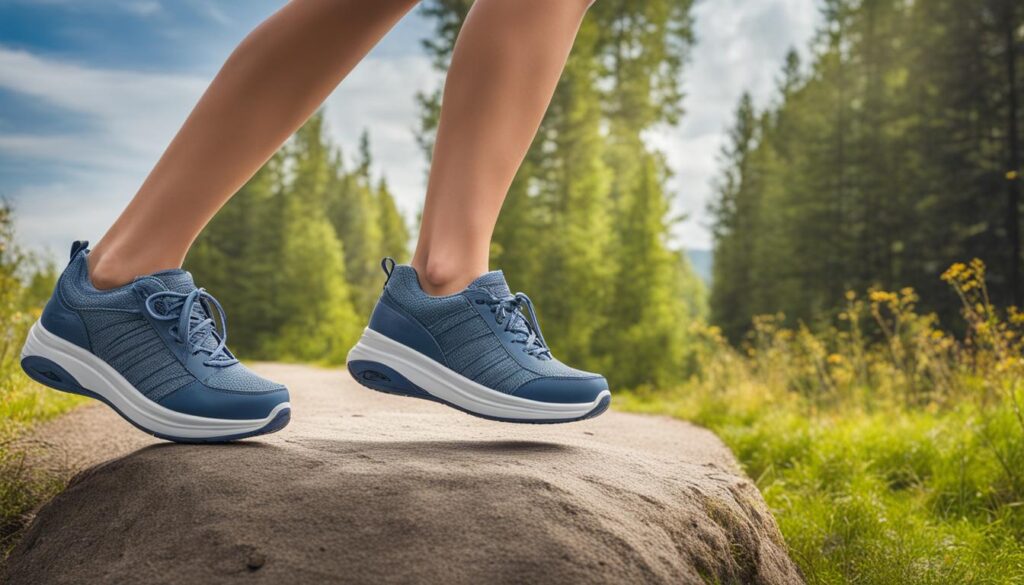
    When it comes to finding the best walking shoes for knee pain, comfort and support are crucial. You need shoes that are designed to alleviate knee pain and provide the necessary cushioning and stability for walking. At our company, we have conducted extensive research to identify the top-rated women’s walking shoes that are specifically recommended for knee pain relief. These shoes are known for their comfort, innovative design, and exceptional support.

    Key Takeaways:

    • Choosing the right walking shoes can help alleviate knee pain during walks.
    • Look for shoes that provide comfort, cushioning, and support for your specific needs.
    • Top-rated women’s walking shoes for knee pain relief offer innovative design and excellent stability.
    • Consider factors such as arch support, toe box space, and breathability when selecting walking shoes.
    • Consult experts’ recommendations and consider your individual preferences when choosing the best fit for you.

    Ryka Devotion X Walking Shoe – Best Overall

    When it comes to finding the best walking shoes for knee pain relief, the Ryka Devotion X Walking Shoe takes the top spot. This shoe is lightweight, breathable, and offers exceptional responsiveness, making it ideal for those seeking comfort and support during their walks. With its excellent arch support, the Devotion X provides the necessary stability and alignment to alleviate knee pain.

    The spacious toe box of the shoe adds an extra element of comfort, allowing your toes to move naturally while walking. The soft mesh upper enhances breathability, ensuring that your feet stay cool and dry even during long walks. Not to mention, the Devotion X is highly durable and available in a variety of stylish color options, so you can look good while taking care of your knees.

    Key Features of the Ryka Devotion X Walking Shoe:

    • Lightweight and breathable design
    • Excellent arch support for proper alignment
    • Spacious toe box for enhanced comfort
    • Soft mesh upper for breathability
    • Durable construction and stylish color options

    Experience the ultimate comfort and support with the Ryka Devotion X Walking Shoe, the top-rated choice for knee pain relief. This shoe is designed to provide the necessary cushioning and stability for a pain-free walking experience. Say goodbye to knee discomfort and hello to enjoyable walks with the Ryka Devotion X.

    Skechers Go Walk Flex Alani – Best Value

    When it comes to finding the best walking shoes for knee pain relief, the Skechers Go Walk Flex Alani is a top choice. These shoes offer excellent value without compromising on comfort or support. Whether you suffer from bad knees or simply need some relief after a long day on your feet, these shoes are designed to provide the necessary cushioning and stability.

    The Skechers Go Walk Flex Alani features ample cushioning throughout, ensuring a soft and comfortable walking experience. The shoe also offers great arch support, which is crucial for individuals with knee issues. By providing the right amount of support to the arch, these shoes help alleviate knee pain and prevent further discomfort.

    One of the main features of the Go Walk Flex Alani is its slip-on style. This makes it incredibly convenient to put on and take off the shoes, especially for those with mobility issues or limited dexterity. The stretchy upper further enhances the ease of use, allowing for a secure yet flexible fit.

    Not only are these shoes comfortable, but they are also lightweight and flexible. This ensures that your feet are not weighed down and can move naturally while walking. The flexibility of the shoe also allows for a greater range of motion, reducing strain on the knees and promoting a more comfortable walking gait.

    For added convenience, the Skechers Go Walk Flex Alani is machine-washable. This means that you can easily clean your shoes and keep them looking and smelling fresh without any hassle. Simply toss them in the washing machine, and they’ll be ready to go for your next walk.

    While the Go Walk Flex Alani may not be the most breathable shoe on the market, it more than makes up for it with its overall comfort and cushioning. These shoes prioritize providing a comfortable walking experience, making them an excellent choice for individuals seeking relief from knee pain.

    If you’re looking for women’s walking shoes for bad knees or knee pain relief, the Skechers Go Walk Flex Alani is an affordable option that doesn’t compromise on quality or comfort. Its ample cushioning, great arch support, slip-on style, and flexibility make it a top contender in the market. Give your knees the support they deserve and enjoy a pain-free walking experience with the Skechers Go Walk Flex Alani.

    New Balance Fresh Foam 1080 V12 – Best New Balance

    The New Balance Fresh Foam 1080 V12 is our top pick for the best New Balance walking shoe for knee pain relief. With its well-cushioned support and lightweight design, this shoe offers the perfect blend of comfort and functionality. The wide toe box allows for natural toe splay, promoting a more stable and comfortable walking experience.

    This shoe is available in wide and extra-wide sizes, ensuring a perfect fit for those who need more space. The padding and mesh upper provide breathability and moisture-wicking properties, keeping your feet cool and comfortable during walks. However, it’s important to note that the New Balance Fresh Foam 1080 V12 may not offer as much protection in cold weather conditions.

    Whether you’re dealing with knee osteoarthritis or general knee pain, the New Balance Fresh Foam 1080 V12’s arch support and cushioning make it an ideal choice for walkers seeking relief. Its streamlined design and quality construction make it a durable and reliable option for long-term use.

    Experience the comfort and support of the New Balance Fresh Foam 1080 V12 for yourself and take your walking routine to the next level.

    best arch support walking shoes for knee pain

    Key Features:

    • Well-cushioned support
    • Lightweight and streamlined design
    • Wide toe box for toe splay
    • Available in wide and extra-wide sizes
    • Padded and breathable mesh upper

    Orthofeet Kita Hands-Free Sneakers – Best for Plantar Fasciitis

    The Orthofeet Kita Hands-Free Sneakers are the best walking shoes for women with plantar fasciitis. These shoes offer good support and cushioning in the heel area, which is crucial for preventing a recurrence of plantar fasciitis. The hands-free, slip-on system makes them convenient to put on and take off, and the customizable arch support ensures a perfect fit. The Kita also provides good stability and traction, although it could be more breathable.

    When it comes to finding the best walking shoes for knee pain relief, it’s essential to consider the specific needs of individuals. For those with plantar fasciitis, the Orthofeet Kita Hands-Free Sneakers offer a winning combination of support, cushioning, and convenience. By prioritizing heel support and comfort, these shoes help prevent further strain on the foot and relieve plantar fasciitis symptoms, allowing you to walk comfortably and pain-free.

    The Kita Hands-Free Sneakers feature an innovative slip-on design that eliminates the hassle of laces and allows for easy on and off. Individuals with plantar fasciitis often experience discomfort when bending over or tying shoelaces, making slip-on shoes a practical choice. Additionally, these shoes offer customizable arch support, allowing you to adjust the fit to suit your specific foot needs. By providing proper arch support, the Kita Sneakers promote proper foot alignment, reducing strain and pressure on the plantar fascia.

    While the Orthofeet Kita Hands-Free Sneakers excel in providing support and comfort for plantar fasciitis, their breathability could be improved. Proper ventilation is essential to prevent excessive perspiration and foot odor. However, the numerous benefits they offer make them an excellent choice for individuals seeking relief from plantar fasciitis and overall walking comfort.

    best walking shoes for knee pain relief

    Investing in high-quality walking shoes specifically designed for plantar fasciitis, such as the Orthofeet Kita Hands-Free Sneakers, can significantly alleviate pain, provide support, and make your walking experience more enjoyable. By choosing the right shoes, you can take care of your feet, reduce discomfort, and stay active without hindering your plantar fasciitis recovery.

    Nike Motiva Walking Shoes – Best Nike

    The Nike Motiva Walking Shoes are our top recommendation for the best Nike walking shoes for knee pain relief. Designed with advanced features, these shoes offer exceptional comfort and support for individuals dealing with knee pain.

    The Nike Motiva Walking Shoes are engineered to provide cushioning and stability, ensuring a comfortable walking experience while reducing stress on the knees. With ample arch support and cushioning, these shoes are suitable for both walking and running, making them versatile options for individuals with various activity levels.

    The Motiva Walking Shoes feature a unique rocker shape outsole, which facilitates a smooth walking cadence and helps propel the stride forward. This innovative design promotes a natural gait and minimizes impact, further reducing strain on the knees.

    “The Nike Motiva Walking Shoes provide excellent comfort and stability, making them ideal for individuals seeking relief from knee pain.” – Our Expert

    While the sole of the Nike Motiva Walking Shoes may be thick and clunky, they prioritize superior cushioning and support. This feature contributes to the overall comfort and stability offered by these shoes.

    Key Features:

    • Ample arch support and cushioning for knee pain relief
    • Unique rocker shape outsole for a smooth walking cadence
    • Durable construction for long-lasting performance
    • Available in various color options to suit personal style

    With their emphasis on cushioning, arch support, and stability, the Nike Motiva Walking Shoes have become a favorite among individuals seeking relief from knee pain. Whether you enjoy brisk walks or prefer a light jog, these shoes provide the necessary features to support your active lifestyle.

    Pros Cons
    • Ample arch support
    • Superior cushioning
    • Versatile for walking and running
    • Helps reduce knee pain
    • Sole may be thick and clunky
    • Limited color range

    Best Walking Shoes for Knee Pain Based on Experts’ Recommendations

    Along with our top picks, there are other walking shoes that receive high recommendations from experts for knee pain relief. These shoes have been identified based on their cushioning, support, and stability, making them excellent options for individuals seeking the best walking shoes for knee pain in 2024.

    • HOKA Bondi 8
    • Skechers Go Walk Arch Fit
    • New Balance 928v3

    These shoes are specifically designed to alleviate knee pain and provide the necessary comfort for long walks or extended periods of standing. Each shoe offers unique features and styles to cater to individual preferences and needs, ensuring a personalized walking experience.

    Mentioned Features:

    HOKA Bondi 8: Known for its exceptional cushioning and support.

    Skechers Go Walk Arch Fit: Provides optimum comfort and stability.

    New Balance 928v3: Offers reliable cushioning and support, with different width options.

    These expert-recommended walking shoes are devised to alleviate knee pain and ensure you have the best walking experience possible. By choosing shoes that prioritize cushioning, support, and stability, you can find relief from knee pain and enjoy your walks without discomfort or limitations.

    Conclusion

    When it comes to finding the best walking shoes for knee pain, comfort, support, and cushioning should be your top priorities. The top-rated women’s walking shoes mentioned in this article are specifically designed to alleviate knee pain and provide the necessary features for a comfortable walking experience.

    Whether you’re dealing with knee osteoarthritis, plantar fasciitis, or general knee pain, these shoes offer the support and cushioning you need to stay active and pain-free. From the Ryka Devotion X Walking Shoe, known for its excellent arch support and responsiveness, to the Skechers Go Walk Flex Alani, offering great value and ample cushioning, there are options to suit every preference and budget.

    For those who prefer New Balance, the Fresh Foam 1080 V12 is a top choice, providing well-cushioned support and a wide toe box for added comfort. And if you’re dealing with plantar fasciitis, the Orthofeet Kita Hands-Free Sneakers offer the necessary support and cushioning in the heel area to prevent a recurrence of this painful condition.

    When selecting your ideal walking shoes, remember to consider your specific needs and preferences. Whether you prioritize arch support, cushioning, or breathability, there is a pair of walking shoes that will cater to your unique requirements. By investing in the right shoes, you can enjoy a comfortable and pain-free walking experience, making every step a pleasure.

    FAQ

    What are the best walking shoes for knee pain in 2024 for women?

    The top women’s walking shoes for knee pain in 2024 are the Ryka Devotion X Walking Shoe, the Skechers Go Walk Flex Alani, the New Balance Fresh Foam 1080 V12, the Orthofeet Kita Hands-Free Sneakers, and the Nike Motiva Walking Shoes.

    What makes the Ryka Devotion X Walking Shoe the best overall walking shoe for knee pain relief?

    The Ryka Devotion X is lightweight, breathable, and offers excellent responsiveness. It provides great arch support, has a spacious toe box for added comfort, and comes in stylish colors.

    Why is the Skechers Go Walk Flex Alani considered the best value walking shoe for knee pain relief?

    The Skechers Go Walk Flex Alani offers ample cushioning, great arch support, and a slip-on style for convenience. It is lightweight, flexible, and machine-washable.

    What makes the New Balance Fresh Foam 1080 V12 the best New Balance walking shoe for knee pain relief?

    The New Balance Fresh Foam 1080 V12 offers well-cushioned support, is lightweight and streamlined, and has a wide toe box for toe splay. It comes in wide and extra-wide sizes and provides comfort and breathability.

    Why are the Orthofeet Kita Hands-Free Sneakers recommended for women with plantar fasciitis?

    The Orthofeet Kita Hands-Free Sneakers offer good support and cushioning in the heel area, which is crucial for preventing plantar fasciitis recurrence. The hands-free, slip-on system and customizable arch support make them convenient and comfortable.

    What makes the Nike Motiva Walking Shoes the best Nike walking shoes for knee pain relief?

    The Nike Motiva Walking Shoes offer ample arch support and cushioning, with a rocker shape outsole for a smooth walking cadence. They provide excellent comfort and stability.

    What are some other walking shoes recommended for knee pain relief?

    Other recommended walking shoes for knee pain relief include the HOKA Bondi 8, Skechers Go Walk Arch Fit, and New Balance 928v3. These shoes are known for their cushioning, support, and stability.

    What should I prioritize when looking for walking shoes for knee pain?

    When searching for the best walking shoes for knee pain, it’s important to prioritize comfort, support, and cushioning. Consider the specific features and needs that cater to your individual preferences and conditions.

  • Eliminating body checks has been positive;  However, female ice hockey players are still at risk!

    Eliminating body checks has been positive; However, female ice hockey players are still at risk!

    Factors associated with concussion rates in youth ice hockey players: data from the largest longitudinal cohort study in Canadian youth ice hockey

    Eliason P, Galarneau JM, Shill I, Kolstad A, Babul S, Mrazik M, Lebrun C, Dukelow S, Schneider K, Hagel B, Emery C. Clin J Sports Med. 2023 Sep 1;33(5):497-504. doi: 10.1097/JSM.0000000000001177. Epub Jul 11 ​​2023. PMID:37432327.
    Full text freely available

    Take home message

    Youth hockey policies that eliminate body checks reduce the risk of concussions; however, concussion rates are still high among female ice hockey players.

    Background

    Concussion injuries account for a high percentage of sports-related injuries in Canada’s youth population. Smaller studies have identified a number of risk factors underlying policy changes, such as eliminating body checks at certain levels and age groups. However, we need larger long-term studies to determine additional risk factors and confirm whether rule changes help limit the risk of concussion in this population.

    Study aim

    The authors examined risk factors associated with concussions in >4,400 youth ice hockey players aged 11 to 17 years.

    Methods

    The authors followed 46 Canadian youth leagues over five seasons (2013/14 to 2017/18). All participants completed a baseline Sport Concussion Assessment Tool (SCAT), and one person from each team collected exposure information and identified injured players. The authors evaluated the incidence of game-related concussions, game-related concussions that resulted in >10 days of lost time, and all exercise-related concussions.

    Results

    A total of 4,418 players were recruited to participate. Of these, 1,344 participated in more than 1 season for a total of 6,584 player seasons. The athletes had 617 suspected concussions (554 game-related and 63 practice-related), of which approximately 84% were diagnosed by a doctor. A greater proportion of women competing on all-female teams suffered a concussion (64/431; 15%) than women competing on mostly male teams (17/168; 10%). Additionally, compared to men, women had a higher rate of game-related concussions and concussions with >10 days of lost time. In competitions, the burden of concussion was highest among players under 18 years of age. During training, the burden of concussion was highest among players under the age of 13. Policies that disallowed body checks were associated with a 46% lower rate of gaming-related concussions. Players with a history of concussion had a higher risk of concussion. Goalkeepers had a lower risk of concussion during a match compared to attackers. Age group, year of play and player weight were not related to the risk of concussion.

    Viewpoints

    The good news is that a policy that bans body checking reduces the risk of concussion in both games and training. However, the authors found that women were at greater risk of concussion than men during both play and training, regardless of body control policies. In addition, because the rate of concussions during training is still high in the under-13 age group, we need to find ways to reduce body checks and understand what mechanisms lead to a higher risk of concussion during under-13 training. Finally, future studies should evaluate additional biomechanical, anatomical, hormonal, and psychosocial factors to identify sex-specific risk factors among female ice hockey players and thus help inform prevention strategies.

    Clinical implications

    Medical professionals can continue to advocate for limiting or eliminating body checks to limit the risk of concussions in youth ice hockey leagues. More research is needed to reduce the risk for female ice hockey players.

    Questions for discussion

    Do you talk to coaches about strategies to prevent concussions during training?

    related posts

    1. Less body control may protect adolescent ice hockey players
    2. Abolishing controls can have positive financial consequences.
    3. Even more evidence to stay off the boards
    4. Cut out the dangerous checking… Check

    Written by Jane McDevitt
    Reviewed by Jeffrey Driban

    Source link

  • Athletic trainers can assist with communication between coach and athlete

    Athletic trainers can assist with communication between coach and athlete

    Provision of concussion information by coaches and attendance of athletic trainers: Findings from the 2021 YouthStyles Survey

    Daugherty J, Waltzman D, Sarmiento KJ Athl Trein. January 16, 2023. doi: 10.4085/1062-6050-0454.22. E-publishing prior to printing. PMID: 36645830.

    Full text freely available

    Take home message

    More than 40% of adolescents participating in sports reported that their coach had not provided them with concussion information in the past year. This lack of communication may be linked to a lack of access to athletic trainers during games and practices.

    Background

    Coaches can provide concussion education and make a positive impact by translating concussion knowledge into healthy behaviors, such as reporting suspected concussions. Coaches who complete concussion training and relay that information to their athletes positively impact an athlete’s perspective on concussions. However, it is unknown how often coaches discuss concussion education with the athletes and whether the presence of an athletic trainer helps with better communication between coach and athlete.

    Study aim

    The authors used survey data to examine how often coaches provided concussion safety information to their athletes and whether this varied based on the presence of athletic trainers at games and practices.

    Methods

    In June 2021, adolescents living with Ipsos Knowledge Panel member parents were invited to complete the annual YouthStyle Web-based survey. Approximately 48% of invited adolescents completed survey questions about history of concussions, information about concussion safety, how concerned they think their coach is about concussion safety, and the frequency of athletic trainers at games and practices in the past year . The authors took statistical steps to ensure that the data represented adolescents across the United States.

    Results

    Of the 829 adolescents, 39% reported having participated in sports in the past twelve months: 1) only in school sports (19%), 2) only in sports competitions (13%), or both (7%). The most commonly reported sports were basketball and football. Nearly half (47%) of youth athletes reported that their coach discussed concussions. Additionally, 32% reported receiving a handout, and 23% said their coach had sent them an email or had them watch a video in the past 12 months. Overall, 58% of adolescent athletes reported that their coach discussed or provided information about concussions. More youth athletes who participated in school sports (65%) reported receiving this information, compared to athletes who only participated in non-school sports competitions (39%). About half of youth athletes indicate that they have an athletic trainer during training (55%) or competitions (55%). Youth athletes who participated in school sports were more likely to report having access to athletic trainers (72%) than those who participated on non-school sports teams (49%). Of youth athletes who always/sometimes had an athletic trainer, 63% reported that the coach talked to them about concussions, compared to 24% of youth athletes who rarely or never had access to athletic trainers.

    Viewpoints

    Four in 10 athletes report that their coaches do not discuss concussions or provide concussion information. The authors found that access to an athletic trainer can improve communication between coaches and youth athletes. It would be interesting to know if the athletic trainer increases the amount of communication as they provide resources for the coaches to share with athletes. It would be helpful to understand how athletic trainers can improve a coach’s concussion communication with athletes. Furthermore, this study focused on whether the coach provided information, and not on the quality of that information. It would be interesting to know how well the education worked. Coaches without access to athletic trainers may provide concussion information to the athletes, but the athlete does not remember it because it was not helpful.

    Clinical implications

    We must encourage coaches to consistently educate athletes about concussions to improve reporting behavior among youth athletes. In addition, sports trainers have a positive influence on communication between coach and youth. So when we encourage administrators to hire full-time athletic trainers, we can remind them that athletic trainers can help coaches better communicate about concussions and other injuries with their athletes.

    Questions for discussion

    Are you trying to get coaches to talk to the athletes about concussions? If so, have you seen better results in communication, knowledge and reporting behavior?

    related posts

    1. Improving Concussion Education: Consensus from the NCAA Department of Defense Mind Matters Research and Education Grand Challenge
    2. CDC Heads Up program increases concussion knowledge and injury communication
    3. Peer-led concussion education can improve concussion knowledge and reporting behavior
    4. Concussion Education Videos. Viewing once does not help with Info Stick
    5. Coaches are provided with information about concussions with a five-minute fact sheet
    6. Concussion knowledge is getting better, but concussion reporting is getting worse
    7. Better attitudes can improve reporting habits
    8. Center for Concussion Education and Research – Peer Concussion Education

    Written by Jane McDevitt
    Reviewed by Jeffrey Driban

    Evidence-based assessment of concussion course - 5 EBP CEUs

    Source link

  • Longitudinal changes in youth baseball batting based on body rotation and separation |  BMC Sports sciences, medicine and rehabilitation

    Longitudinal changes in youth baseball batting based on body rotation and separation | BMC Sports sciences, medicine and rehabilitation

    Attendees

    We initially recruited 230 junior baseball players from six teams in Tokyo, Japan in April 2018. The inclusion criteria were males between 6 and 12 years old. The exclusion criteria were injury and illness that prevented the participant from taking measurements. Participants were divided into age groups during the baseball season according to little league eligibility rules – players were classified by age as of July 31 of a given year. Subsequently, the period up to and including July 31 of the second year of primary school was defined as Under 8 (U8), and then the period was divided by year up to and including U13. They played and practiced baseball at least twice a week (Saturday and Sunday) for 3 to 6 hours. Before the study, all participants completed a data questionnaire that asked for the following information: birth, age when they first started playing baseball, and the side they hit. In addition, all participants and their guardians were given a detailed explanation of the experimental procedures and risks of the study before any measurements were taken. In addition, written informed consent was obtained from all participants and their guardians who agreed to the study. This study was approved by the Ethics Committee of Waseda University (No. 2018 − 208).

    Batting procedure

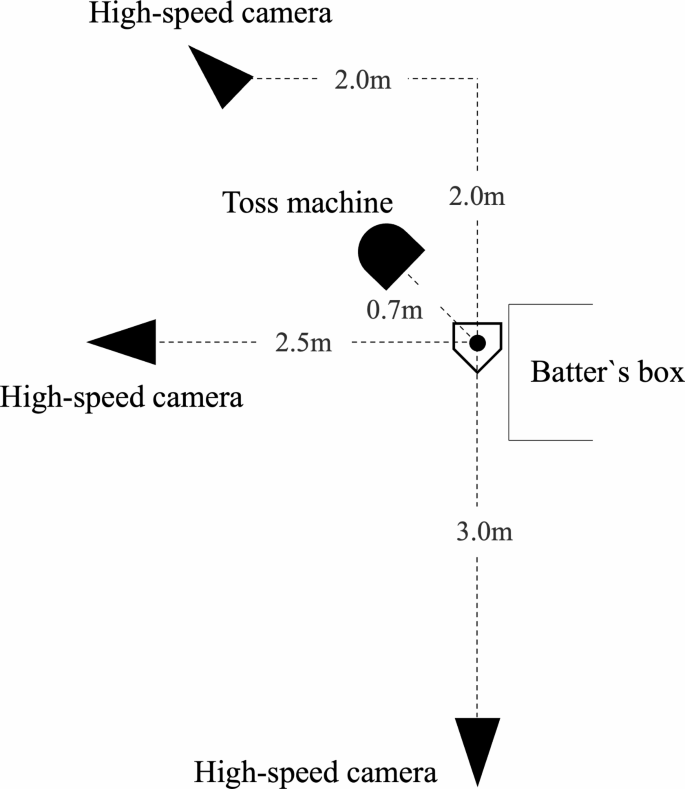
    Testing was conducted between 9:00 AM and 4:00 PM on an outdoor baseball field maintained under standard environmental conditions. In addition, testing took place between January and March, spread over 4 to 6 days per season. First, we measured the participant’s height and weight while wearing clothes. Then, without shoes on, height was measured to the nearest 0.1 cm without shoes on using a stadiometer (YG200DN, Yagami Co., Nagoya, Japan); and weight was measured to the nearest 0.1 kg using a digital scale (BC622, TANITA Co., Tokyo, Japan). The hitting test was then performed after simple warm-up exercises including dynamic stretching, jogging, light throwing and swinging for approximately 20 minutes. Each participant received unreflected white markers on the top of the head, both lateral acromion points, and the anterior and superior iliac spines. The trial involved toss batting with an automatic toss machine (FTM-240; Field Force Company, China). The toss machine was placed 0.7 m from the center of home plate on the opposite side of the batter and 1.1 m toward the pitcher; it was positioned to launch diagonally in front of the batter. The height of the throwing machine was adjusted to the participant’s height as follows: 45% of the height minus 52.5 cm. Then, after one practice trial, actual testing was performed twice and the hitting motion was recorded at 240 Hz with three high-speed cameras (Ex-100PRO, Casio Co., Tokyo Japan) placed on the side, back, and front of the hitter (oblique). The environment of the impact test environment was shown in Figure 1.

    figure 1
    Figure 1

    Environment of batting test (in case of left-handed batsman)

    In addition, swing speed, a component of hitting performance, was measured using a Zepp sensor (ZEP-BT-000002; Zepp Company, Cupertino, California, USA), which has been shown to have high reliability (ICC, 0. 88). [13]and indicated that it correlates moderately to strongly with data analyzed by 3D motion tracking [14]. Participants were allowed to retry the hitting test if they missed the ball while swinging or made timing errors. During the batting test, participants used the bat they would normally use in baseball practice and games, and consistently used the same bat throughout their trials. Data were collected from the highest swing speed test.

    Variables

    The rotation angles of the head, trunk, pelvis and arm direction in the horizontal plane during the stroke movement and the separation angle between each segment, the amount of head movement and the step width were analyzed by manual digitizing using a motion analysis. system (Frame-Dias V; DKH, Tokyo, Japan). In addition, we visualized the body markers attached to the head, both the lateral acromion points, the anterior and superior iliac spines, the nose, the toes and the midpoint between both hands on the screen using a digital format. Then, three-dimensional coordinates were obtained using the direct linear transformation method [15], and the right orthogonal reference frame was defined as the X-axis, Y-axis, and Z-axis. The Y axis was directed from the pitcher’s mound to home plate, and the Z axis indicated a vertical direction (bottom to top). Furthermore, the X-axis was defined as the cross product of the Y-axis and the Z-axis. For calibration, posts with nine markers (from 0 to 2.0 m at 25 cm intervals) were placed vertically in a 4 x 4 grid at 40 cm intervals (the standard errors were as follows: x = 0.22 cm; y = 0.28 cm; z = 0.34 centimeter). From the beginning to the end of the at bat, a recording of the calibration points was performed using the three high-speed cameras. The analysis data was collected at five points: stance, load, foot contact, front swing and ball contact. Stance and foot contact were defined as the point of the toe of the stepping leg on the Z axis at which the Z axis value began to increase in a positive direction. In addition, load and foreswing were defined as the midpoints between stance and foot contact and between foot contact and ball contact, respectively.

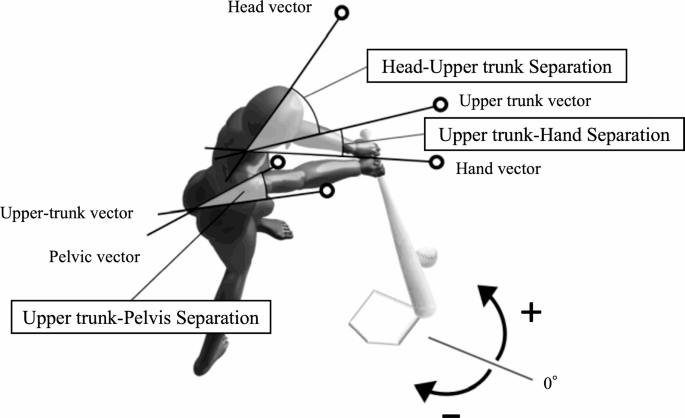
    All rotation angles were calculated using values ​​corresponding to spaces in global coordinates, because batting is an operation initiated by responding to a thrown ball and is defined as the projected angle on the horizontal plane relative to the X axis ( Fig. 2). Additionally, the rotation angles were set as positive/negative relative to the pitcher/catcher.

    Fig. 2
    Figure 2

    Definitions of rotation and separation variables

    The variables analyzed in this study and their definitions are as follows:

    • Head rotation: the angle between the head vector (top of the head to the nose) and the X-axis.

    • Upper torso rotation: the angles between the upper torso vector (through the center of both acromions and perpendicular to the line joining both points) and the X-axis.

    • Arm direction: the angle between the hand vector (center of both acromions to a point between both hands) and the X-axis.

    In addition, the separation angle was expressed as the difference between each rotation angle, and the separation between head and upper trunk was calculated by subtracting the head rotation from the upper trunk rotation. In addition, the separation between the torso and arms was calculated by subtracting the rotation of the upper torso from the arm direction. The upper to pelvic separation was calculated by subtracting the rotation of the upper torso from the rotation of the pelvis. The linear head movement distance (head movement) from stance to foot contact and foot contact to ball contact was calculated as the resulting displacement of the top of the head. Finally, stance widths during stance and foot contact were calculated as the distance between the toes.

    static analysis

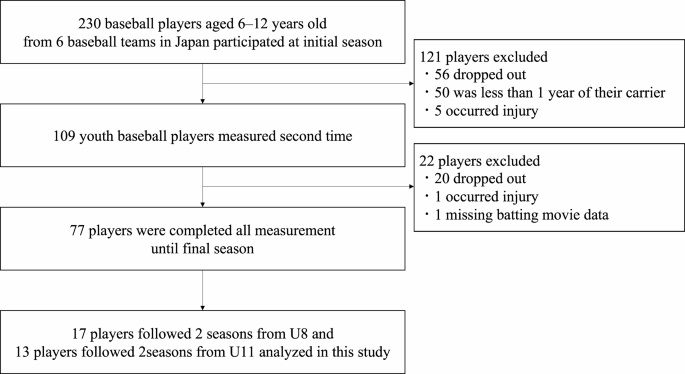
    Statistical power analysis was performed to estimate the sample size. For this study, we needed more than twelve players to perform a comparison between the three groups with 80% power, an alpha of 0.05. and a partial η of 0.14. Seventy-seven baseball players who met inclusion criteria completed three measurements over three seasons. Of these, 17 players formed group 1 (U8 to U10) and 13 players formed group 2 (U11 to U13) (Fig. 3).

    Fig. 3
    figure 3

    Flowchart of exclusion criteria and final participants

    Descriptive statistics (mean ± standard deviation) were performed. After confirming that all data were normally distributed using the Kolmogorov-Smirnov test and confirming homoscedasticity using the Levene test, we performed a one-way analysis of variance (ANOVA) to determine chronological age, height, body weight, years of competition, rotation, and separation comparable. angles, swing speed, head movement and step width at stances, load, foot contact, pre-swing and ball contact between the initial, second and final measurements over three seasons. Additionally, we performed multiple comparisons of the means of the controlled variables using the Bonferroni test. Partial η2 was calculated for the effect size of the one-way ANOVA, with values ​​of ≥ 0.01 to < 0.06, ≥ 0.06 to < 0.14, and ≥ 0.14, indicating small, medium, and large effects, respectively [16]. Finally, the alpha level was set at 0.05 and all statistical analyzes were performed using SPSS Statistics 27.0 (IBM, Armonk, New York, USA).

    Source link

  • Non-arthritic hip pain with Keelan Enseki

    Non-arthritic hip pain with Keelan Enseki

    Hip pain is common in athletes, especially in sports such as ice hockey.

    Non-arthritic hip pain includes a variety of intra-articular diagnoses commonly seen in these athletes that are not directly related to osteoarthritis. These include dysplasia, bony changes, femoroacetabular impingement, labral tears, and more.

    A recent clinical practice guideline on this topic was published in JOSPT to help us. In this episode, I talk to the lead author, Keelan Enseki, about the CPG findings.

    Show notes

    Keelan works at the Rooney Center for Sports Medicine at the University of Pittsburgh Medical Center. He currently serves as director of clinical practice innovation and administrative director of physical therapy residency programs. Keelan is also an adjunct professor at the University of Pittsburgh. In these roles, he divides time between clinical practice, teaching, research/writing, and clinical program design. His clinical interests focus on the nonoperative and postoperative care of individuals with injuries to the hip region. These interests are also represented through collaboration with the Orthopedic and Sports Physiotherapy Academies and the International Society of Hip Arthroscopy (ISHA).

    Social tools for COS:
    – Instagram: @keelan_enseki


    Source link

  • Scanlan AT, Berkelmans DM, Vickery WM, Kean CO. An overview of the internal and external physiological demands of batting in cricket. Int J Sports Physiol Perform. 2016;11(8):987–97.

    Article PubMed Google Scholar

  • Ali K, Khan MH. The effects of plyometric training on grass and clay on jumping, sprinting and agility in collegiate cricketers. Int J Biomed Adv Res. 2013;4(12):902–8.

    Article Google Scholar

  • Medicine ACoS. American College of Sports Medicine Position Standard. Progression models in resistance training for healthy adults. Med Sci Sports Exercise. 2009;41(3):687–708.

    Article Google Scholar

  • Grgic J, Schoenfeld BJ, Davies TB, Lazinica B, Krieger JW, Pedisic Z. Effect of resistance training frequency on gains in muscle strength: a systematic review and meta-analysis. Sports Med. 2018;48(5):1207–2020.

    Article PubMed Google Scholar

  • Chu DA, Panariello RA. Jumping plyometrics: Sport-specific plyometrics: Baseball pitching. Nat Strength Cond Assn J. 1989; 11:81–5.

    Article Google Scholar

  • Markovic G. Does plyometric training improve vertical jump height? A meta-analytic review. Br J Sports Med. 2007;41(6):349–55.

    Article PubMed PubMed Central Google Scholar

  • Baechle TR, Earle RW. Basics of strength training and conditioning. 3rd edition. Human kinetics; 2008. p. 417.

  • Luebbers PE, Potteiger JA, Hulver MW, Thyfault JP, Carper MJ, Lockwood RH. Effects of plyometric training and recovery on vertical jump performance and anaerobic strength. J Strength Cond Res. 2003;17(4):704–9.

    PubMed Google Scholar

  • MacDonald CJ, Lamont HS, Garner JC. A comparison of the effects of six weeks of traditional resistance training, plyometric training, and complex training on strength measurements and anthropometry. J Strength Cond Res. 2012;26(2):422–31.

    Article PubMed Google Scholar

  • Thapa RK, Lum D, Moran J, Ramirez-Campillo R. Effects of complex training on the sprinting, jumping and change of direction ability of football players: a systematic review and meta-analysis. Front Psychol. 2021;11:627869.

    Article PubMed PubMed Central Google Scholar

  • Baker D. Acute effect of alternating heavy and light resistance on power output during complex upper body strength training. J Strength Cond Res. 2003;17(3):493–7.

    PubMed Google Scholar

  • French DN, Kraemer WJ, Cooke CB. Changes in dynamic exercise performance after a series of preconditioning isometric muscle actions. J Strength Cond Res. 2003;17(4):678–85.

    PubMed Google Scholar

  • Fatouros IG, Jamurtas AZ, Leontsini D, Taxildaris K, Aggelousis N, Kostopoulos N, et al. Evaluation of plyometric exercise training, strength training and their combination on vertical jumping performance and leg strength. J Strength Cond Res. 2000;14(4):470–6.

    Google Scholar

  • Ingle L, Sleap M, Tolfrey K. The effect of a complex training and detraining program on selected strength and power variables in early pubertal boys. J Sports science. 2006;24(9):987–97.

    Article PubMed Google Scholar

  • Ebben WP, Jensen RL, Blackard DO. Electromyographic and kinetic analysis of complex training variables. J Strength Cond Res. 2000;14(4):451–6.

    Google Scholar

  • Anant S, Choudhary R, ​​Venugopal R. Effect of core training on anaerobic strength, explosiveness, repetitive strength and endurance of male players. Int Human Res J 2014;2(3):1–8.

  • Dallas GC, Pappas P, Ntallas CG, Paradisis GP, Exell TA. The effect of four weeks of plyometric training on the reactive strength index and leg stiffness is sport-dependent. J Sports Med Phys Fitness. 2020;60(7):979–84.

    Article PubMed Google Scholar

  • Anant SK, Venugopal R. Effect of eight-week Swiss ball training on the core muscles of male players. Int J Mov Educ Soc Sci. 2015;3(2):53–5.

  • Army LA, Lambert J. A 20 m maximum multi-stage shuttle run test to predict $$\dot V$$ O2 max. Eur J Appl Physiol. 1982;49(1):1–12.

    Article CAS Google Scholar

  • Lau C, Yu R, Woo J. Effects of a 12-week hatha yoga intervention on cardiorespiratory endurance, muscle strength and endurance and flexibility in Chinese adults in Hong Kong: a controlled clinical trial. Evid-based complement Alternat Med. 2015;2015:12. Article ID 958727. https://doi.org/10.1155/2015/958727.

  • Rahimi R, Behpur N. The effects of plyometric, weight and plyometric strength training on anaerobic strength and muscular strength Facta universitatis series. Physical Edu Sports. 2005;3(1):81–91.

    Google Scholar

  • Ali K, Verma S, Ahmad I, Singla D, Saleem M, Hussain ME. Comparison of complex versus contrast training on steroid hormones and sports performance in male football players. J Chiropr Med. 2019;18(2):131–8.

    Article PubMed PubMed Central Google Scholar

  • Gabriel DA, Kamen G, Frost G. Neural adaptations to resistance exercise. Sports Med. 2006;36(2):133–49.

    Article PubMed Google Scholar

  • Freitas TT, Martinez-Rodriguez A, Calleja-Gonzalez J, Alcaraz PE. Short-term adaptations after complex training in team sports: a meta-analysis. PLoS One. 2017;12(6): e0180223.

    Article PubMed PubMed Central Google Scholar

  • Hrysomallis C, Kidgell D. Effect of heavy dynamic resistance exercise on acute upper body strength. J Strength Cond Res. 2001;15(4):426–30.

    CAS PubMed Google Scholar

  • Holm L, Reitelseder S, Pedersen TG, Dossing S, Petersen SG, Flyvbjerg A, et al. Changes in muscle size and MHC composition in response to resistance exercise with heavy and light loading intensity. J Appl. Physiol. 2008;105(5):1454–61.

    Article CAS PubMed Google Scholar

  • Evans AK, Durham MP, Hodgkins TD, Sinclair DR, Adams KJ. Acute effects of bench press on power output during a subsequent ballistic bench throw. Med Sci Sports Exercise. 2001;33(5):S325.

    Article Google Scholar

  • Ritchie D, Keogh JWL, Reaburn P, Bartlett JD. The use of one and four minutes of recovery when using the contrast method of resistance training does not negatively impact subsequent jump performance when concurrent training is involved. PeerJ. 2020;13(8):e10031. https://doi.org/10.7717/peerj.10031.PMID:33083124;PMCID:PMC7566756.

    Article Google Scholar

  • McKendry J, Pérez-López A, McLeod M, Luo D, Dent JR, Smeuninx B, et al. Short rest between sets attenuates resistance exercise-induced increases in myofibrillar protein synthesis and intracellular signaling in young men. Exp Physiol. 2016;101(7):866–82.

    Article CAS PubMed Google Scholar

  • Jensen RL. Kinetic responses during landings of plyometric exercises. In Proceedings of the XXVI Congress of the International Society of Biomechanics in Sports (Kwon, YH, Shim, J, Shim, JK, and Shin, IS, editors). 2008; 393–6.

  • Adams K, O’Shea JP, O’Shea KL, Climstein M. The effect of six weeks of squat, plyometric, and squat-plyometric training on energy production. J Applied Sports Sci Res. 1992;6(1):36–41.

    CAS Google Scholar

  • Herrero J, Izquierdo M, Maffiuletti N, Garcia-Lopez J. Electromyostimulation and plyometric training effects on jumping and sprinting time. Int J Sport Med. 2006;27(07):533–9.

    Article CAS PubMed Google Scholar

Source link

  • Activity affected urinary incontinence;  Let’s talk about it!

    Activity affected urinary incontinence; Let’s talk about it!

    Prevalence and normalization of stress urinary incontinence in female strength athletes.

    Mahoney K, Heidel RE, and Olewinski LJ Good luck Cond2023 [epub ahead of print].

    Full text freely available

    Take home message

    Seven in ten female strength training athletes report stress urinary incontinence (SUI) in some aspect of their lives. However, fewer than 2 in 10 athletes talk to their doctor or seek treatment for SUI.

    Background

    Very intensive physical activity can increase the risk of SUI, an involuntary loss of urine due to increased intra-abdominal pressure. Up to 2 in 5 women may experience SUI throughout their lives, which can negatively impact an individual’s quality of life. Pelvic floor training can treat SUI. Although female strength training athletes may be at greater risk for SUI, it remains unclear how many of these athletes experience SUI and seek treatment, as well as how they would prefer to learn about SUI.

    Study aim

    The researchers conducted a cross-sectional study to assess female strength training athletes’ understanding and normalization of SUI, including how often female strength training athletes sought treatment for SUI.

    Methods

    The researchers developed a new study, which was expertly reviewed, to share on various social media platforms. The survey asked respondents about demographic information, risk factors for SUI, experience with SUI, favorite sources of information about SUI, and whether the respondent had sought treatment for SUI. Respondents to the survey were women over the age of 18 who considered powerlifting, weightlifting or strongman as their main activity.

    Results

    Of the 425 respondents, 69% reported experiencing SUI in some aspects of their lives. Of the athletes who experienced SUI, 61% reported that they first experienced SUI after starting their sport. About two-thirds of athletes thought SUI was a normal part of their sport. Only 17% of respondents reported talking to their doctor about SUI, and 9% sought treatment. Nearly 30% of respondents reported seeking advice about SUI from videos and articles on the internet, 23% spoke to friends and 13% spoke to their coach about SUI.

    Viewpoints

    Overall, the results of this study indicated that SUI is common among female strength training athletes, and most consider it a normal part of their sport. However, very few athletes turn to healthcare to address their SUI. It would be interesting to see this study replicated by asking athletes to complete the survey during competitions, as it is unclear whether women with SUI are more likely to complete the online survey. So the online survey may overestimate how many women have SUI, but the answers about engaging the health care system and where they seek advice are still likely to be informative.

    Clinical implications

    Clinicians who work with athletes who are at high risk for developing SUI should educate athletes about effective treatments. It can also be helpful to educate strength and conditioning coaches about SUI and available treatments.

    Questions for discussion

    How do you talk to your athletes about SUI? Have you noticed that other athletes have high SUI rates?

    Written by Kyle Harris
    Reviewed by Jeffrey Driban

    related posts

    Check the lights before you check that urine!
    Throw away your strips for better urine density results
    Altered hydration status may impact concussion assessment
    Cheers! The more you exercise, the more you should drink

    9 EBP CEU courses

    Source link

  • Tested positive for COVID?  Be careful out there

    Tested positive for COVID? Be careful out there

    Higher concussion rates following COVID-19 infection in high school athletes.

    Bullock GS, Emery CA, Nelson VR, etc. al, Br J Sports Med2023; [epub ahead of print]. two: 10.1136/brjsports-2022-106436.

    Full text freely available

    Take home message

    Athletes who tested positive for a COVID-19 infection were more likely to suffer a concussion within 60 days of recovering from the infection than athletes who did not contract COVID-19.

    Background

    COVID-19 affects the respiratory, cardiovascular and nervous systems. In some cases, COVID-19 can lead to long-term consequences (e.g. impaired cognition). It is currently unknown whether COVID-19 infection affects the risk of sports-related concussions.

    Study aim

    Bullock and colleagues completed a prospective cohort study to compare concussion rates between high school athletes who recently tested positive for COVID-19 and those who did not.

    Methods

    The authors recruited athletes from high schools in six states. A certified athletic trainer recorded all cases of COVID-19 infection or concussion. If an athlete reported COVID-like symptoms or had an elevated temperature during a daily screening, the athletic trainer administered a COVID test. The research team also recorded when an athlete participated in a training or competition. The authors focused on the number of concussions within 60 days after an athlete returned to play following a COVID-19 infection. All data was recorded in the Players Health Rehab system, including demographic information, sports and illness data for all athletes.

    Results

    A total of 72,522 athletes participated in high school sports at the affected school during the 2020-2021 school year. Of these athletes, 430 had COVID-19 infections. Of the athletes with a COVID-19 infection, 32 had a concussion, and 1,241 athletes without COVID-19 had a concussion. An athlete with a history of COVID-19 was approximately 3 times more likely to suffer a concussion within 60 days of returning to play than an athlete without COVID-19.

    Viewpoints

    Overall, the authors found that prior COVID-19 infection increased the risk of concussion during the first 60 days after recovery from COVID-19. Therefore, the effects of a COVID-19 infection may linger after returning to play. Knowing whether this applies to other sports-related injuries would be interesting. Additionally, learning why these athletes are at greater risk for concussion (e.g., deconditioning, persistent symptoms) can help us develop prevention strategies and make informed decisions about when and how to release an athlete to play following a COVID-19 infection.

    Clinical implications

    Doctors should explain to patients with COVID-19 that they may experience lingering effects that predispose them to concussion. We need to help the patient make an informed decision about when to return to play after COVID-19 infection. Once an athlete returns, doctors should monitor these patients for concussions.

    Questions for discussion

    What other measures have you implemented in your clinical practice to monitor athletes after COVID-19 infection? Is a COVID-19 infection something you are currently documenting?

    Written by Kyle Harris
    Reviewed by Jeffrey Driban

    related posts

    COVID recovery may require injury prevention training!
    Use of cardiovascular magnetic resonance (CMR) imaging for return to athletic activities after COVID-19 infection: an expert consensus document on behalf of the American Heart Association Council on Cardiovascular Radiology and Intervention (CVRI) Leadership and endorsed by the Society for Cardiovascular Magnetic Resonance (SCMR)
    Adapted physical activity in subjects and athletes recovering from Covid-19: a position statement of the Società Italiana Scienze Motorie e Sportive
    Cardiopulmonary Considerations for High School Athletes During the COVID-19 Pandemic: Update to the NFHS-AMSSM Guidelines

    Evidence-based assessment of concussion course - 5 EBP CEUs

    Source link

  • Sports managers need sports trainers for a better heat policy

    Sports managers need sports trainers for a better heat policy

    Exercise-induced heat illness: policy adoption and influence on contextual factors reported by athletic administrators

    Scarneo-Miller SE, Adams WM, Coleman KA, Lopez RM. Sports Health. Mar 5, 2023: 19417381231155107. doi: 10.1177/19417381231155107. E-publishing prior to printing. PMID: 36872595.

    https://journals.sagepub.com/doi/10.1177/19417381231155107

    Take home message

    Most high school athletic administrators reported having a written heat illness policy in place, but they were often missing key components. The presence of an athletic trainer helped create a written policy that included more components.

    Background

    Sports administrators play an important role in policy acceptance. Policy measures such as addressing acute heat illness are critical as improper management can lead to poor outcomes. Unfortunately, we know little about the factors that promote and hinder the implementation of heat illness policies.

    Study aim

    The authors surveyed high school athletic administrators in the United States to describe the adoption of exertional heat illness policies and to examine factors that influence the adoption of these policies.

    Methods

    During the 2018-2019 academic school year, the research team emailed nearly 7,000 athletic administrators inviting them to complete a questionnaire asking about 1) demographics, 2) exercise-related illness policies, 3) monitoring and modification of written policy, and 4) enablers and barriers to policy development. The researchers used the precautionary adoption process model to assess an athletics administrator’s willingness to adopt policies. The adoption model is based on 8 phases, from not being aware to maintaining a written policy for more than 6 months.

    Results

    Of 466 athletics administrators (~48 years old, 82% male, 77% worked in the field for more than 15 years), 78% reported having a written policy on the prevention and treatment of exertional heat illness. Only 6% adopted all eleven essential elements of an exertional heat illness policy. Almost half of the managers indicated that they adopted fewer than 5 essential elements.

    Older athletics administrators, those who had previously dealt with heat illness, or those with an athletic trainer on their staff were more likely to have a written policy. Additionally, state mandates and having a medical professional were the most commonly cited facilitators for adopting policies on exertional illness prevention and use of a rectal thermometer. Similarly, the most commonly reported barrier to comprehensive heat illness management was the lack of a full-time athletic trainer (11). Administrators also recognized budget constraints that limited the use of a cold water immersion pool (23%), and the top barriers to using a rectal thermometer were discomfort using the thermometer (32%), parent/guardian resistance (30 %), resistance from parents/guardians (30%). coaches (30%) and liability issues (27%).

    Viewpoints

    Nearly 80% of athletics administrators surveyed reported that they had a written policy on exertional heat illness. Few integrated or were aware of all the necessary components to meet best clinical practices. The authors found that access to athletic training services was associated with better adoption of exercise health policies. This finding is consistent with it being an athletic trainer who would implement such a policy. It’s worth recognizing that only 7% of administrators contacted completed the survey. Therefore, these results may not accurately reflect what is happening in high schools across the country. One possibility is that people more interested in policy or heat illness completed the survey. So these results may show us the best-case scenario for written policies (78%) that include all components (6%) – which is a worrying sign.

    Clinical implications

    Encouraging state mandates and schools to hire athletic trainers can ensure that there are written policies to address heat illness. Clinicians may also want to consider strategies to educate coaches and parents/guardians about the reasons for this policy, such as rectal thermometers and cold water plunge pools.

    Questions for discussion

    Are you having trouble adding rectal temperature to your exercise heat illness protocol? Do you communicate with your athletics administrator regarding the approval, implementation and annual review/practice of your emergency policy?

    related posts

    1. Management of exertional heat stroke still leaves something to be desired
    2. A little more education about heat stroke due to exertion could go a long way
    3. Clinical Pearl: prevention and treatment of exertional heat stroke
    4. Tag us! What do coaches know about heat stroke during exertion and the role of the athletic trainer?
    5. Follow guidelines to prevent exertional heat illness? Let’s reconsider these guidelines

    Written by Jane McDevitt
    Reviewed by Jeffrey Driban

    9 EBP CEU courses

    Source link