
• |

    Anti-inflammatory diet for knee arthritis

    What if the key to easing your joint discomfort wasn’t in your medicine cabinet, but in your kitchen? This question is vital for millions. According to the CDC, arthritis affects 23% of all adults in the United States. That’s over 54 million people. Today, one in four American adults lives with this condition. Most experience pain that interferes with daily life. anti-inflammatory foods for joint health We recognize that managing chronic joint pain is a major priority. The choices we make at the grocery store can be a powerful tool. What we consume directly impacts our body and systemic inflammation. By focusing on the right foods, we can help our overall health. Our goal is to provide a clear, evidence-based path. We want to help you understand the complex link between your plate and your well-being. This approach aims to manage symptoms and improve quality of life through smart nutritional choices. Key Takeaways Arthritis is a common condition, affecting over 54 million adults in the U.S. Daily pain from this issue significantly impacts many people’s lives. The foods we eat play a direct role in our body’s inflammatory response. Making strategic nutritional choices can be a key part of managing discomfort. Evidence-based eating patterns aim to reduce systemic inflammation and support joint health. This guide provides a clear path to using your diet as a tool for better well-being. Understanding Knee Arthritis and Inflammation Our body’s defense system can sometimes turn against us, leading to persistent joint issues. This is the core of many joint health challenges. What is Knee Arthritis? We recognize two main forms. Rheumatoid is an autoimmune condition. The immune system mistakenly attacks joint tissues. Osteoarthritis involves mechanical wear. Protective cartilage wears down, causing bones to rub together. Type Primary Cause Key Characteristic Rheumatoid Arthritis Autoimmune response Systemic inflammation Osteoarthritis Mechanical wear Cartilage degradation understanding knee arthritis inflammation How Inflammation Affects Our Joints Nancy Oliveira, a dietitian at Brigham and Women’s Hospital, explains that inflammation is an essential part of our natural defense. However, chronic inflammation leads to joint pain. Certain foods can reduce this response. When we choose the right options, we influence inflammatory markers. This eating pattern, like the Mediterranean diet, offers significant benefits. It helps manage discomfort for many people. Our focus shows why whole dietary approaches work better than single nutrients for joint health. Anti-inflammatory diet for knee arthritis: Essential Foods Certain powerhouse foods act as natural allies in managing joint discomfort. Our focus shifts to specific categories that deliver potent nutritional support. These items form the core of a joint-friendly eating plan. They provide the building blocks our body needs. Omega-3 Fatty Acids and Fatty Fish Fatty fish are a premier source of omega-3 fatty acids. These essential fats are renowned for their ability to reduce inflammation. Health authorities like the American Heart Association advise eating three to four ounces of fatty fish at least twice weekly. Salmon, mackerel, and sardines are excellent choices. omega-3 fatty acids and fatty fish for…
  • |

    Knee replacement recovery week by week

    What if the key to a successful knee surgery wasn’t just the operation itself, but how you navigate the healing process afterward? Total joint arthroplasty is a life changing solution for chronic pain and limited mobility. This major procedure offers a new beginning. Yet, the path to regaining your active life is a unique journey for every patient. knee replacement recovery timeline We provide this ultimate guide to help you navigate your post-operative phase with confidence. Understanding the nuances of your operation is the first step. Our comprehensive resource covers every stage. We ensure you are prepared for the challenges and milestones ahead. Your personal healing timeline is influenced by individual health factors. By following a structured approach, you can better manage expectations. This focus is on achieving a successful long-term outcome. We are committed to supporting your transition back to favorite activities. This guide serves as your roadmap. It provides essential insights into the rehabilitation process. Being well-informed is the most effective way to reduce anxiety. Key Takeaways Total knee arthroplasty is a transformative procedure for ending pain and restoring movement. Every patient’s healing journey is personal and follows its own timeline. A clear, week-by-week guide can build confidence and reduce post-surgery anxiety. Understanding what to expect after the operation is crucial for a smooth rehabilitation. Proper preparation and information are your best tools for a successful outcome. The goal is a structured return to mobility and the activities you enjoy. Introduction to Our Knee Replacement Recovery Journey The foundation for a smooth rehabilitation is laid well before you enter the operating room. We recognize your decision to pursue this operation is a major step toward a life with less pain. Our goal is to demystify what comes next. The healing process can seem overwhelming at first. We are here to provide clarity and set the stage for your success….

  • |

    Knee replacement rehab timeline

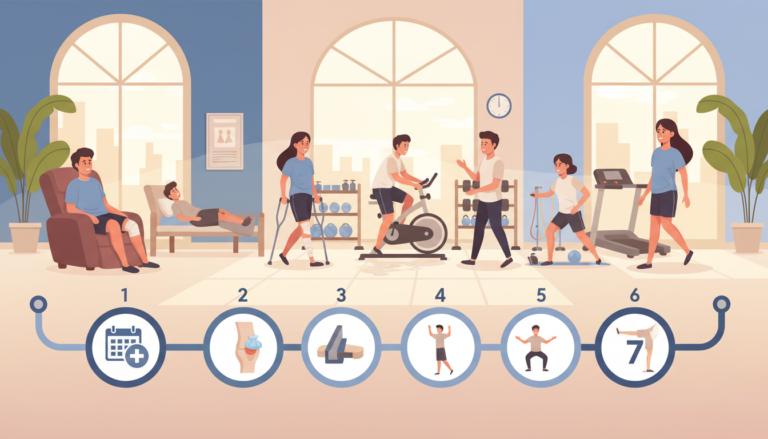
    What if the most critical part of your joint procedure happens after you leave the operating room? We understand that navigating the path to healing can feel overwhelming. Our guide is here to provide the clarity you need for a successful journey. knee replacement rehab timeline Data shows that movement often starts very quickly. Physical therapy typically begins within 24 hours after your procedure. This early step is vital for promoting faster healing and restoring mobility. For most people, the complete process of regaining strength spans several months. It’s a journey from the initial post-operative phase to full recovery, often taking between six and twelve months. We aim to help you manage expectations about the time required to return to the activities you love. While every patient’s experience is unique, understanding the general phases can significantly reduce anxiety. By following a structured plan, you can improve function and regain the independence you enjoyed before joint pain began. Your commitment to rehabilitation directly influences the long-term success of your new joint and overall health. Key Takeaways Physical activity often starts within a day of your procedure to aid healing. The full recovery process generally takes between six months and a year. Your personal journey is unique, but knowing common stages reduces worry. A structured plan is crucial for regaining function and independence. Your dedication to the process directly impacts your long-term results. This guide provides clarity to navigate each stage with confidence. Understanding Knee Replacement Surgery We believe informed patients are empowered patients, starting with the details of the operation itself. Knowing which procedure is right for you is a crucial first step in preparing for your healing journey. Differences Between Total and Partial Knee Replacement A total knee replacement involves resurfacing the entire joint with an artificial structure. Surgeons cut away worn cartilage and bone to create a new surface. In contrast, a partial knee replacement focuses only on the damaged compartment. This targeted approach often leads to a quicker recovery process with less discomfort. What to Expect During Surgery and Initial Recovery During your replacement surgery, the medical team precisely aligns the new components. This careful work is done to restore smooth movement and function. Your personal recovery timeline is influenced by factors like your age and general health. Understanding these differences helps you set realistic goals for after your knee surgery. The ultimate goal of this joint procedure is to provide lasting relief from chronic pain and improve your mobility. Immediate Post-Surgery Recovery The journey to regain your mobility starts the moment you wake from anesthesia. Your active participation is vital from these first hours. immediate post surgery recovery We emphasize that structured support begins almost immediately. This early phase sets the foundation for your entire healing process. Day 1: Initiating Rehabilitation and Mobility Physical therapy often starts within 24 hours of your procedure. Your physical therapist will help you take those first, crucial steps. They guide you in standing and walking with a walker or crutches. These initial sessions focus on basic, safe movements. You’ll practice sitting at the bedside and transferring your weight. This early activity promotes circulation and helps prevent complications. Transitioning from Hospital to Home Your medical team must see you meet specific safety criteria before discharge. You need to manage pain well and demonstrate independent movement. Key goals include standing from a chair and using the bathroom alone. Navigating a short flight of stairs is also a common requirement. Some individuals may leave the hospital on the same day as their operation. This is possible if all safety boxes are checked. Your care team will provide clear instructions for protecting your new joint. They will also give you simple exercises to continue at home. The First Week: Early Rehabilitation Steps Navigating the initial week after your operation requires a clear focus on gentle movement and symptom management. We guide you through this period where your routine prioritizes restoring a natural walking pattern and improving joint flexibility. early rehabilitation steps Guided Physical Therapy Exercises for Range of Motion During the first 48 hours, the primary goal is achieving full extension and increasing flexion. Your physical therapist will recommend specific movements to help. These early exercises are designed to prevent stiffness and promote circulation. Your daily routine is crucial for maintaining flexibility in this joint. Managing Pain, Swelling, and Initial Activity Controlling discomfort is a priority. Your doctor may advise using ice packs, elevating your leg, and taking medication as directed. You must monitor your incision site closely. The American Association of Hip and Knee Surgeons suggests waiting 5 to 7 days before showering if non-waterproof dressings are used. We encourage gentle activity, like using a stationary bike. This helps the area regain strength without overexertion. If you experience severe pain or excessive swelling, stop and consult your physical therapist or surgeon immediately. Following a structured rehabilitation timeline is key for a successful recovery….

  • |

    Knee replacement age limit

    Is there a magic number that determines when you’re too old for a joint procedure? This is one of the most common questions we hear from individuals struggling with persistent pain. Many believe a strict cutoff exists. In reality, the decision for this surgical intervention is far more nuanced. Nearly one million of these procedures are performed each year in the United States. knee replacement age limit discussion We find the timing is based on your unique health profile, not just the calendar. Your specific joint condition and how it impacts your daily mobility are the true guides. While concerns about being “too old” are frequent, we see successful outcomes across a wide spectrum of years. The focus should be on your overall wellness and the level of disability you’re experiencing. Key Takeaways There is no universal, strict age cutoff for considering a joint procedure. The decision is highly individual, based on health and lifestyle factors. Successful outcomes are achieved for patients of various ages. Your specific level of pain and disability is a more critical factor than your birth year. Nearly one million of these surgeries are performed annually in the U.S. A consultation focuses on your overall wellness, not just a number. Understanding Knee Replacement Surgery When pain from joint degeneration becomes debilitating, many consider surgical intervention as a viable solution. This procedure, formally called arthroplasty, removes damaged bone and cartilage. Artificial implants are then secured to restore smooth movement. understanding knee replacement surgery What Is Knee Replacement? Arthroplasty is a major operation performed by orthopedic specialists. During this surgery, the ends of the thigh and shin bones are reshaped. Metal and plastic components are fixed in place to create a new joint surface. The goal is to eliminate discomfort and improve mobility. According to Toni Golen, M.D., and Hope Ricciotti, M.D., these artificial joints typically function well for 15 to 20 years. This durability influences the timing of the operation. Who Are the Ideal Candidates? We identify suitable candidates based on several key factors. The severity of arthritis discomfort is a primary consideration. Individuals whose chronic pain persists despite medications or injections are often good candidates. Doctors also examine how the joint has deteriorated over time. When non-surgical options no longer provide relief, this procedure may be recommended. Research shows 80% to 90% of individuals report positive outcomes after their operation. Evaluation Factor Description Importance Level Pain Level Chronic discomfort that limits daily activities High Treatment Response Lack of improvement with conservative therapies High Joint Damage Visible degeneration on X-rays or scans High Overall Health Ability to tolerate anesthesia and recovery Critical Activity Goals Desire to return to specific functions Moderate Younger patients may be advised to wait for optimal timing. This ensures the implant lasts for many years. The decision ultimately balances current suffering with long-term health outcomes. Medical Factors Beyond Age Medical professionals look beyond the calendar to evaluate a person’s fitness for a major joint operation. Your specific health profile and daily function are the true guides. Overall Health and Its Role We emphasize that your overall health is critical. It determines if you can handle the demands of surgery and recovery. Clinics like Integrity Spine & Orthopedics stress trying conservative options first. These treatments include physical therapy and joint injections for pain relief. Exhausting these paths is a key step before considering an operation. medical factors beyond…

  • Sex after knee replacement

    Is it true that most people regain an active intimate life after major joint surgery? This question is on the minds of many, yet it’s rarely discussed in the doctor’s office. We believe honest information is the first step toward healing. Recent data shows a hopeful picture: 84% of people in the United States who have had this procedure are sexually active. sex after knee replacement recovery Chronic joint pain from conditions like arthritis can severely limit physical closeness. It often dampens desire and comfort. A successful knee replacement aims to remove that barrier. Our guide provides clear insights. We focus on how to safely resume activity while protecting your new joint. Understanding your recovery journey empowers you to move forward with confidence. You are not alone in your concerns. By addressing them early, you can better prepare for a return to comfort and connection with your partner. Key Takeaways Most patients successfully return to an active intimate life following their procedure. Open communication with your healthcare provider and partner is crucial for a smooth transition. Using careful positioning and taking things slowly helps protect your new joint. Relief from chronic pain can significantly improve overall comfort and libido. Planning and gradually resuming activities lead to safer and more satisfying outcomes. Addressing your questions and anxieties early in the process reduces stress. Improved physical well-being directly boosts your confidence and quality of life. Understanding the Impact of Knee Replacement on Sexual Health The connection between physical mobility and intimate well-being is profound, yet frequently overlooked in medical consultations. Chronic discomfort from conditions like arthritis doesn’t just hinder walking. It can make finding comfortable positions for closeness a real challenge. How Knee Replacement Affects Mobility and Pain Debilitating joint pain severely limits movement. A study in the Journal of Arthroplasty found knee pain and the inability to kneel are primary factors limiting physical intimacy. Research indicates 70% of individuals with osteoarticular knee problems report a loss of libido due to these issues. knee replacement mobility pain The main goal of a knee replacement is to eliminate this source of constant pain. Successful surgery aims to restore your range of motion. The Importance of Discussing Intimacy with Your Surgeon Having an open dialogue with your medical team is vital. Your surgeon can offer personalized advice on resuming intimacy based on your specific case. Some people worry their new joint might be damaged. Modern implant design makes dislocation during normal movements highly unlikely. Factor Before Procedure After Recovery Pain Level High, chronic Significantly reduced Mobility Limited, stiff Improved range of motion Comfort in Positions Difficult, painful More adaptable Libido Often decreased Typically improves Addressing these limitations helps you transition from a life dominated by pain. You can move toward enjoying physical connection without fear. Safe Strategies and Positions for Resuming Intimacy A careful approach to intimacy can protect your new joint while fostering closeness with your partner. We focus on gentle techniques and supportive setups. safe positions after knee surgery…