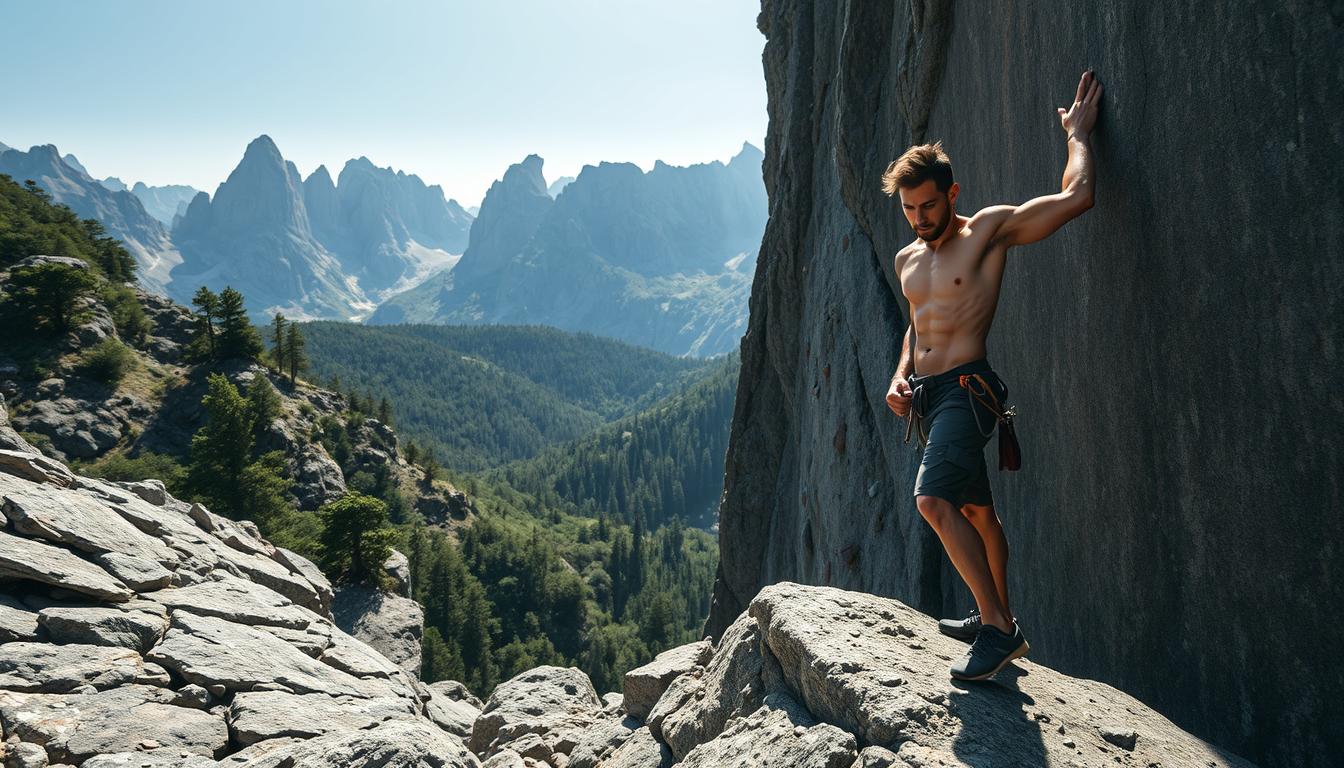
Are you aware that a strong knee is as crucial as a strong grip for rock climbers? Many climbers focus on building upper body strength, but neglect the importance of knee health.
Climbing places unique demands on the knee joint, making it prone to injuries that can significantly impact performance and long-term health.
We will explore the critical importance of knee health for climbers and provide a comprehensive guide on strengthening exercises essential for both performance and injury prevention.
Key Takeaways
- Understanding the unique demands of climbing on the knee joint
- The importance of strengthening exercises for knee health
- Common knee injuries in climbers and how to prevent them
- A roadmap for treating and preventing knee issues
- Advanced rehabilitation techniques for climbers
Why Knee Injuries Happen in Rock Climbing
Understanding why knee injuries occur in rock climbing is crucial for developing effective prevention strategies. We examine the common causes of knee injuries in climbers, focusing on the specific movements and incidents that lead to these issues.
Common Climbing Movements That Stress the Knees
Rock climbing involves a variety of movements that can stress the knee joint. High-impact landings and awkward body positions during climbing can put significant strain on the knees. The repetitive nature of climbing movements, such as bending and straightening the knees, can also contribute to the wear and tear on the knee joint over time.
Specifically, movements that involve deep knee bends or twisting can increase the risk of knee injuries. Climbers often perform complex maneuvers that require precise control and strength, which can sometimes lead to overuse or acute injuries if not managed properly.
Impact of Falls and Repetitive Strain
Falls are a significant risk factor for knee injuries in rock climbing. When climbers fall, the impact of landing can cause sudden, unpredictable forces through the knee joint, potentially leading to severe injuries like ACL tears. Our data indicates that all ACL tears within the study group occurred during uncontrolled falls onto the ground, highlighting the importance of proper fall training and landing techniques.
Repetitive strain from thousands of climbing movements also plays a critical role in knee injuries. The accumulation of stress over time can lead to overuse injuries, even in the absence of a single traumatic event. Climbers with less experience or lower levels of leg strength and stability are particularly at risk, as they may not have the necessary body control to mitigate the impact of falls or the strain from repetitive climbing movements.
Understanding Knee Anatomy for Climbers
The knee joint is an intricate structure that plays a vital role in climbing, making its understanding essential for climbers. The knee’s complex anatomy is subjected to various stresses during climbing activities, particularly during specific movements like the heel hook and drop knee positions.
Key Structures in the Knee
The knee is composed of several key structures, including the menisci, ligaments, and tendons. The medial meniscus is particularly susceptible to injury during climbing due to the high mechanical load it experiences, especially in the drop knee position. The iliotibial band and lateral collateral ligament are also under significant stress, particularly during heel hook movements.
How Climbing Movements Affect These Structures
Climbing movements exert specific forces on knee structures, potentially leading to injury. For instance, the heel hook position creates lateral rotation of the knee under load, placing significant stress on the iliotibial band and lateral collateral ligament. In contrast, drop knee positions combine internal rotation with knee flexion, creating shear forces that particularly affect the medial meniscus.
| Climbing Movement | Knee Structure Affected | Type of Stress |
|---|---|---|
| Heel Hook | Iliotibial Band, Lateral Collateral Ligament | Lateral Rotation |
| Drop Knee | Medial Meniscus | Shear Forces |
| High Stepping | Menisci | Compression |
Understanding these movement-specific stresses allows climbers to modify their technique and implement targeted strengthening exercises for vulnerable structures. By doing so, climbers can reduce their risk of knee injury and maintain optimal performance.
Common Knee Injuries in Rock Climbers
Understanding the most common knee injuries in rock climbing is crucial for prevention, early diagnosis, and effective treatment. We examine the types of knee injuries that frequently affect climbers and discuss their causes and implications.
Meniscus Tears
Meniscus tears are a prevalent issue among rock climbers. The meniscus is a cartilage structure in the knee that can be damaged due to twisting movements or direct trauma. Symptoms include pain, swelling, and limited mobility. We find that meniscus tears often result from the repetitive strain and high-impact landings associated with climbing.
Iliotibial Band (ITB) Syndrome
ITB syndrome is another common knee injury in climbers, characterized by pain on the outside of the knee. This condition is often caused by friction between the ITB and the lateral femoral condyle, exacerbated by repetitive knee flexion and extension. Proper training and equipment can help mitigate this risk.
Biceps Femoris Strains
The biceps femoris, part of the hamstring muscles, is prone to strains in climbers. Strains occur due to overstretching or sudden contraction of the muscle. We note that strengthening the hamstrings and improving flexibility can reduce the risk of such strains.
Ligament Sprains and Tears
Ligament injuries, including ACL tears and collateral ligament sprains, are serious knee injuries that can occur in climbing. ACL tears often result from falls, while MCL and LCL injuries can be caused by specific climbing movements like drop knee positions and aggressive heel hooks. We discuss the symptoms and rehabilitation timelines for these injuries to help climbers plan their recovery.
By understanding these common knee injuries, climbers can take proactive steps to prevent them and manage their recovery effectively if an injury occurs.

Identifying Your Knee Pain: Self-Assessment Guide
Knee pain is a common issue among climbers, and self-assessment is the first step towards addressing it. We will guide you through a series of simple yet effective tests to help identify the cause of your knee pain.
Location-Based Pain Diagnosis
Understanding where your knee hurts can provide valuable insights into the potential cause. Pain on the inner knee might indicate a meniscus issue, while pain on the outer knee could be related to ITB syndrome. We recommend paying close attention to the location and nature of your pain.
The location of pain can be a significant indicator of the underlying issue. For instance, pain during or after climbing could be related to the range of motion or the specific motion involved in climbing.
Movement Tests You Can Do at Home
Performing specific movement tests can help diagnose knee issues. One such test is the Resisted Knee Flexion test. To perform this test, sit on the ground with your knee bent at 90 degrees. Slowly increase the force on your heel, pressing it into the ground, and note the location of any pain this causes.
| Test | Description | Potential Issue |
|---|---|---|
| Resisted Knee Flexion | Sit with knee bent at 90 degrees, press heel into ground | Hamstring or Biceps Femoris strain |
| Modified Varus Testing | Apply stress to the knee in a varus direction | LCL injury |
| Meniscus Test Cluster | Series of tests to assess meniscus integrity | Meniscus tear |
These tests can be performed several times to ensure accuracy. If you experience persistent pain, it’s crucial to consult a medical professional for a thorough evaluation.
Knee Strengthening for Rock Climbers: Essential Exercises

Effective knee strengthening for rock climbers involves a combination of foundational exercises and climbing-specific movements. To improve performance and reduce the risk of injury, climbers must focus on building strong knees.
Foundational Strength Builders
Foundational strength is crucial for supporting the knee during climbing activities. One effective exercise involves using a resistance band to strengthen the muscles around the knee. Loop the resistance band around both legs at the ankles, then assume a squat position. Take side steps to increase the resistance, moving in both directions. This exercise targets the muscles that stabilize the knee, improving overall knee strength.
Another key exercise is the squat, which works multiple muscle groups that support the knee. By strengthening these muscles, climbers can improve their overall stability and reduce the strain on their knees during climbing.
Climbing-Specific Knee Exercises
Climbing-specific exercises are designed to mimic the movements and stresses encountered during rock climbing. For example, practicing heel hooks and drop knees with controlled intensity can help build both technique and strength. These exercises should be progressed gradually to avoid putting excessive strain on the knee.
Using resistance bands to simulate climbing movements can also be beneficial. By mimicking the exact motion patterns used on the climbing wall, climbers can build specific strength that translates directly to improved performance and reduced injury risk.
Stability and Balance Training for Knee Health
Stability and balance training are crucial components of a comprehensive knee health program for rock climbers. These exercises help in strengthening the muscles around the knee, improving proprioception, and enhancing overall stability.
Single-Leg Exercises
Single-leg exercises are vital for improving knee stability. They strengthen the muscles around the knee, particularly the stabilizers, which are essential for maintaining balance during climbing.
To progress these exercises, climbers can use unstable surfaces such as a balance pad or a BOSU ball.
Balance Board and Proprioception Work
Balance board training is another effective method for enhancing knee stability. By standing on a balance board with feet shoulder-width apart and keeping the board level, climbers can strengthen the stabilizing muscles in their ankles and legs.
Balance exercises on unstable surfaces train the small stabilizing muscles around the knee. Proprioception training is particularly important for climbers recovering from knee injuries.
| Exercise | Repetitions | Surface |
|---|---|---|
| Single-Leg Squat | 10-15 | Stable |
| Single-Leg Deadlift | 10-15 | Stable |
| Balance Board Training | 3 sets of 30 seconds | Unstable |
Mobility and Flexibility Routines
To maintain optimal knee health, mobility and flexibility routines are essential for rock climbers. These exercises not only improve range of motion but also reduce the risk of injury by enhancing the overall resilience of the knee joint.
Hip Mobility for Knee Protection
The hip and knee are intricately linked, making hip mobility crucial for maintaining healthy knees. Tight hip flexors and rotators can alter climbing mechanics, putting unnecessary stress on the knee joint. Incorporating exercises that target hip mobility can help mitigate this risk.
We recommend incorporating exercises like lunges and leg swings to improve hip flexibility. These movements help maintain a healthy range of motion in the hip, thereby reducing the strain on the knees during climbing activities.
Knee and Ankle Flexibility Exercises
Knee and ankle flexibility are equally important for climbers. Improving flexibility in these areas can enhance overall climbing performance and reduce the risk of injury. Ankle mobility, in particular, directly impacts knee positioning during high steps and drop knees.
To improve knee and ankle flexibility, climbers can engage in exercises such as calf raises and knee bends. These exercises not only enhance range motion but also strengthen the muscles around the knee and ankle, providing additional support and stability.
| Exercise | Target Area | Benefits |
|---|---|---|
| Lunges | Hip Flexors | Improves hip mobility, reduces strain on knees |
| Calf Raises | Ankle | Enhances ankle flexibility, supports knee health |
| Knee Bends | Knee | Improves knee flexibility, strengthens surrounding muscles |
Rehabilitation Protocols for Specific Knee Injuries
Rehabilitation protocols tailored to specific knee injuries can make a substantial difference in a climber’s recovery journey. Knee injuries, such as meniscus tears, ITB syndrome, and hamstring strains, require targeted approaches to ensure effective healing and prevent reinjury.
Meniscus Rehab Protocol
A meniscus rehab protocol typically begins with reducing pain and inflammation, followed by exercises to improve knee mobility and strengthen the surrounding muscle. Gentle exercises such as straight leg raises and heel slides are recommended initially.
- Reduce pain and inflammation
- Improve knee mobility
- Strengthen surrounding muscles
ITB Syndrome Recovery Plan
Recovery from ITB syndrome involves reducing friction between the IT band and the lateral femoral condyle. This is achieved through foam rolling, stretching, and strengthening the hip abductors and gluteal muscles.
Hamstring and Biceps Femoris Rehabilitation
For hamstring and biceps femoris injuries, rehabilitation involves gentle standing hamstring stretches with leg rotation, followed by strengthening exercises like heel bridges and Nordic hamstring curls. Progressive strengthening with single-leg Romanian deadlifts (RDLs) is also crucial, with a gradual return to heel hooking on the wall.
Preventing Knee Injuries While Climbing
Effective prevention of knee injuries in climbing involves a combination of strength training, technique refinement, and safe falling practices. Climbers can minimize their risk of knee injuries by adopting proper techniques and training methods.
Proper Technique for High-Risk Movements
Mastering proper technique is essential for reducing the stress on climbers’ knees during high-risk movements. This includes understanding how to move efficiently and safely, distributing the load across the body, and avoiding unnecessary strain on the knee joint. Proper body positioning and alignment are critical in minimizing the risk of injury.
For instance, during dynamic movements, climbers should focus on controlled landings and soft landings to reduce the impact on their knees. This involves bending the knees to absorb the shock and keeping the weight centered over the feet.
Fall Training and Safe Landing Techniques
Fall training is a crucial aspect of preventing knee injuries in climbing. By practicing safe landing techniques, climbers can develop the muscle memory needed to land safely even during unexpected falls. Safe landing techniques involve keeping the feet slightly wider than hip-width, the butt back, and the knees tracking over the toes to distribute impact forces.
Progressive fall training exercises can help climbers develop the necessary skills to land safely. These exercises should be practiced regularly to build confidence and competence. Understanding how to properly use crash pads and spotters further reduces the risk of knee injuries during bouldering sessions.
Integrating Knee Strengthening into Your Climbing Training
Effective rock climbing training includes a well-structured knee strengthening program to improve overall performance and reduce injury risk. To achieve this, climbers must balance knee exercises with other training components.
Weekly Training Schedule Example
A sample weekly schedule might include:
- Monday: Foundational strength training (e.g., squats, lunges)
- Wednesday: Climbing-specific knee exercises (e.g., single-leg squats, balance boards)
- Friday: Stability and balance training (e.g., single-leg deadlifts, proprioception exercises)
| Day | Training Focus | Example Exercises |
|---|---|---|
| Monday | Foundational Strength | Squats, Lunges |
| Wednesday | Climbing-Specific | Single-Leg Squats, Balance Boards |
| Friday | Stability and Balance | Single-Leg Deadlifts, Proprioception Exercises |
Progression and Periodization Tips
To avoid plateaus and prevent overtraining, it’s essential to periodize your knee strengthening program. This involves alternating between phases of mobility, stability, strength, and power. For example, start with low-intensity exercises and gradually increase resistance or repetitions as your knees become stronger.
As you progress, incorporate more complex movements that mimic rock climbing actions, ensuring continued adaptation without risking injury.
Getting Back on the Wall: A Recovery Timeline
Recovering from a knee injury and getting back to rock climbing involves a careful balance between rehabilitation and progressive training. We provide realistic timelines for returning to climbing after various types of knee injuries, from minor strains to major surgeries. The recovery timeline includes specific milestones that climbers should achieve before progressing to more demanding climbing movements.
Gradually reintroducing climbing-specific movements like heel hooks and drop knees during the later stages of rehabilitation is crucial. Our guidelines help climbers avoid the common mistake of returning to full climbing too quickly, which often leads to reinjury. Understanding that recovery is not linear helps climbers maintain motivation through the inevitable plateaus and setbacks of the rehabilitation process. In one case, all athletes had returned to sports within 12 months.
Leave a Reply