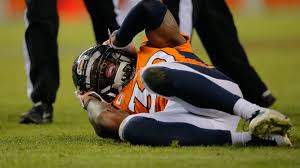
Former professional football players who reported experiencing concussion symptoms during their playing careers were found to perform worse on a battery of cognitive tests than non-players, according to a study led by Mass General Brigham researchers at McLean Hospital and Spaulding Rehabilitation Network . The results of the study will be published on March 2NLinClinical Neuropsychologist Archivesj.
Of more than 350 former National Football League (NFL) players studied an average of 29 years after the end of their playing careers, those who reported experiencing concussion symptoms during their careers performed worse on assessments of episodic memory, sustained attention, processing speed, and vocabulary. However, the number of concussions diagnosed by a medical professional or the length of playing career had no observed effect on cognition.
A follow-up analysis compared the former players to more than 5,000 male volunteers in the general population who did not play professional football, showing that cognitive performance was generally worse for former players than for non-players. While younger former players performed better than non-players on some tests, older retired players likely performed worse than controls on cognitive tasks.
The researchers who led the study said their results underscore the importance of tracking concussion symptoms, as opposed to diagnosed concussions in research. This work also adds evidence of the impact a professional football career can have on accelerating cognitive aging.
“It is well known that people experience some cognitive impairment in the hours and days after a concussion. However, when you look decades ahead, the data on the long-term impact is mixed,” said study senior author Laura Germine. PhD, director of the Laboratory for Brain and Cognitive Health Technology at McLean Hospital and associate professor of psychiatry at Harvard Medical School. “These new findings from the largest study of its kind show that professional football players can still experience cognitive problems associated with head injuries decades after they retire.”
Concussion Symptoms Linked to Cognitive Performance
For the study, 353 retired NFL players completed one-hour neuropsychological tests through an online platform called TestMyBrain, which is supported by McLean Hospital and Harvard Medical School. Players were completely remote and completed tests on a laptop or desktop, including assessments that measured processing speed, visuospatial and working memory, and aspects of short- and long-term memory and vocabulary.
Recalled concussion symptoms were measured by asking the players how often they experienced any of the following symptoms after a blow to the head during play or practice: headache, nausea, dizziness, loss of consciousness, memory problems, disorientation, confusion, seizures, visual problems, or a shaky feeling on the feet. They were also asked if they lost consciousness during their career and if they had ever been diagnosed with a concussion by a medical professional.
The results showed that the cognitive performance of the former players (for example on memory tasks) was associated with the symptoms of a football concussion. For example, the observed differences in visual memory scores between former players with the highest and lowest reported concussion symptoms were equivalent to the differences in cognitive performance between a typical 35-year-old and a 60-year-old.
However, poor cognitive performance was not associated with diagnosed concussions, years of playing professionally or age of first exposure to football. The researchers noted that many head injuries or sub-concussions may not have been diagnosed as concussions due to a lack of awareness at the time or under-reporting of symptoms by players.
When the retired players were compared to a group of 5,086 men who did not play football, the cognitive performance of former players was generally poorer. On two tests of processing speed, age-related differences in cognitive performance were greater among the former player group than among the non-player group, with older players performing worse.
This comparison data suggests that exposure to football could accelerate age-related cognitive decline and cause greater disadvantages in old age, according to the researchers, who added that more studies are needed to track the cognitive performance of former players as they age. Another possibility is that improved awareness and management of head injuries has saved younger retired players more than older players. The researchers also noted that this comparative finding is limited by a lack of data on cognition prior to head injury, and that more research is needed that closely matches former players and non-players and measures their cognitive performance across the lifespan.
“For former players and researchers alike, we can glean some important insights from this study,” said Football Players Health Study principal investigator Ross Zafonte, DO. “Former players can support their cognitive health as they age by taking proactive steps, continuing to consult with their healthcare providers and educating themselves about the symptoms of head injuries. For researchers and healthcare providers, these findings support efforts to develop ways to improve diagnosis and define long-term diagnoses. term consequences of concussion.” Zafonte is president of Spaulding Rehabilitation Network, a Mass General Brigham sports medicine physician, and Earle P. and Ida S. Charlton professor and chairman of the Harvard Medical School Department of Physical Medicine and Rehabilitation.
“The Community Based Participatory Research (CBPR) approach taken in this study is where this field is going,” says Germine. “We are grateful to the players and how much they have taught us. It would not have been possible to conduct a study like this without involving and deeply involving their community.”
Research driven by input from former NFL players
Launched in 2014, the Football Players Health Study at Harvard University is a comprehensive research program aimed at investigating the multifactorial causes that impact the health of former NFL players. The research is based on the players themselves, who provided input on the health issues and conditions they face after a career in football. An interdisciplinary team of researchers from Harvard University and Harvard Medical School and their affiliated teaching hospitals, including those of the Mass General Brigham System, conducts research in neurology, cardiology, sports medicine, rehabilitation medicine, chronic pain and public health . While concussions and head injuries are of paramount importance, the study examines all aspects of players’ health throughout their lives. Former players can find important resources to support their health in this section of the study’s website.
Leave a Reply