Tag: Causes of knee pain

  • Knee pain after flying

    Knee pain after flying

    Traveling can be a fun adventure, but it can also be troublesome if you suffer from joint discomfort, such as stiffness and muscular cramping or osteoarthritis.

    Whether by plane, train, or car, traveling far typically means that you’ll be sitting for an extended period in one position, which can be stressful on your joints, especially if your seat is tight or uncomfortable.

    We’ll explore the reasons behind this common issue and discuss effective strategies to minimize discomfort when traveling by air.

    Key Takeaways

    • Understand why knee discomfort occurs after flying.
    • Learn how the airplane environment affects knee health.
    • Discover the link between prolonged sitting and joint pain.
    • Identify factors that contribute to post-flight knee discomfort.
    • Find strategies to minimize knee pain when traveling by air.

    Why Flying Causes Knee Pain

    Air travel can have several adverse effects on the body, particularly on the joints. We will explore the specific factors that contribute to knee pain during and after flying.

    Prolonged Sitting and Limited Space

    One of the primary reasons flying can cause knee pain is the prolonged sitting and limited legroom on airplanes. When we sit for extended periods, our joints are not moving, which can lead to stiffness and discomfort. The cramped seating on many flights exacerbates this issue, putting additional stress on the knee joint.

    Cabin Pressure and Dehydration Effects

    The cabin pressure and low humidity on airplanes also play a significant role in knee pain. Dehydration can lead to a reduction in synovial fluid, which is essential for reducing friction and ensuring smooth joint movement. A lack of this fluid can cause stress on the joints, leading to pain and discomfort. Furthermore, dehydration can cause muscular cramping and spasms, indirectly contributing to joint pain.

    The combination of cabin pressure changes and dehydration creates a challenging environment, especially for individuals with existing joint conditions like arthritis. These factors can impact blood circulation to the extremities, further contributing to joint discomfort. Understanding these factors can help us take preventive measures to mitigate knee pain during and after flying.

    Common Risk Factors for Knee Pain After Flying

    Several factors can increase the likelihood of experiencing knee pain after flying. Understanding these risk factors can help travelers take preventive measures to reduce discomfort during and after their journey.

    Existing Medical Conditions

    Pre-existing medical conditions play a significant role in determining the likelihood of experiencing knee pain during flights. Conditions such as arthritis, previous knee injuries, or chronic joint pain can exacerbate discomfort during air travel. It’s essential for individuals with these conditions to consult with a healthcare professional before flying. For those experiencing persistent knee pain, finding the best knee pain doctor near me can be crucial in managing their condition.

    Age and Physical Fitness Considerations

    Age-related changes in joint structure and function can increase susceptibility to knee pain during and after flights. Maintaining muscle strength around the knee joint is crucial as a protective factor against travel-related discomfort. Overall physical fitness levels also impact how well individuals tolerate the physical challenges of air travel. Regular exercise routines can prepare the body for the stresses of air travel, while weight management plays a role in knee health during travel.

    Risk Factor Description Preventive Measure
    Existing Medical Conditions Pre-existing conditions like arthritis or previous knee injuries Consult a healthcare professional before flying
    Age Age-related changes in joint structure and function Maintain muscle strength around the knee joint
    Physical Fitness Overall fitness levels and muscle strength Regular exercise and weight management

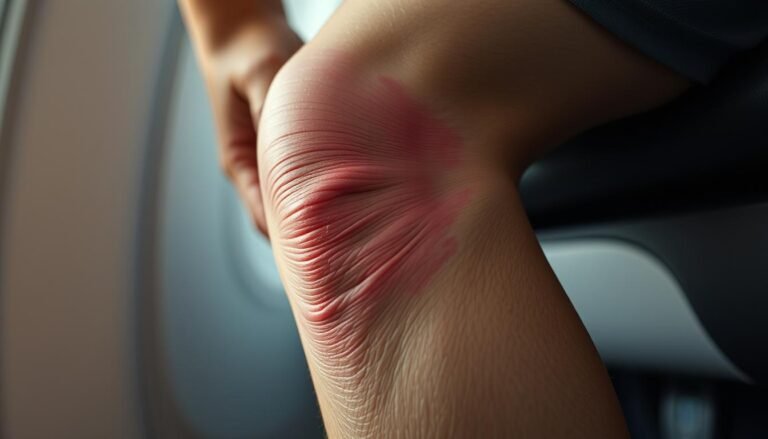
    A detailed illustration of common risk factors for knee pain after flying, captured in a clean, minimalist style. In the foreground, a person's lower leg is prominently featured, showcasing the knee joint from various angles. The middle ground highlights key risk factors such as prolonged sitting, dehydration, and swelling, using simple yet informative icons and subtle labels. The background features a softly blurred airplane cabin interior, conveying the travel-related context. The lighting is warm and natural, creating a calming, educational atmosphere. The composition is well-balanced, guiding the viewer's attention to the essential information. The overall aesthetic is designed to complement the article's professional, informative tone.

    Preparing for Your Flight to Prevent Knee Pain

    Taking proactive measures before your flight can help reduce knee pain. As we prepare for air travel, there are several steps we can take to minimize discomfort and ensure a more enjoyable journey.

    Pre-Flight Medical Consultation

    Before embarking on your trip, it’s advisable to consult with a healthcare professional, especially if you have existing knee issues. They can provide personalized advice and treatment options to help reduce knee pain during the flight. Make sure to discuss your travel plans and any concerns you may have.

    Packing Supportive Equipment

    Packing the right equipment can make a significant difference in managing knee pain during your travels. Consider bringing a portable heating pad or ice packs to apply heat or cold therapy as needed. Although applying heat during the flight might not be feasible, using it before or after can provide relief. You can also pack supportive knee sleeves or braces to provide stability and comfort.

    Medication and Treatment Options

    Managing knee pain during air travel often involves a combination of medication and other treatment options. Taking your prescription medication before and during travel is essential. It’s recommended to take it about 30 minutes before travel and to keep it on hand in case you need more later in your trip. Additionally, consider alternative treatments like topical pain relievers that can be applied during the flight to provide quick relief.

    By being prepared with the right medication and treatment options, you can significantly reduce knee pain and enjoy your trip.

    Effective Strategies to Manage Knee Pain During and After Flying

    Managing knee pain during and after flying requires a combination of preparation, in-flight strategies, and post-flight recovery techniques. To minimize discomfort, it’s crucial to understand the causes of knee pain when traveling by air and implement effective management strategies.Regular movement is keyto reducing knee pain during flights. We recommend getting up and walking frequently to avoid stiffness and cramping. Simple exercises like stretching your legs, ankles, and toes can also help. Even small movements, such as sliding your feet back and forth while seated, can make a significant difference.

    Choosing the right seat can also contribute to reduced knee pain. Opting for anaisle seat or exit rows with additional legroomcan provide more comfort and allow for easier movement. Wearingloose, stretchy clothing and supportive shoescan also enhance comfort and reduce pressure on knee joints.

    During layovers, taking breaks to stretch and move around can help restore knee mobility. We also recommend incorporating simple stretching routines into your flight time to maintain circulation and reduce stiffness.

    After the flight,post-flight recovery techniquescan help knees readjust after long periods of restricted movement. Continuing to stretch and move around can help alleviate any remaining discomfort.

    By following these tips and being mindful of your knee health during air travel, you can minimize knee pain and enjoy your travels more comfortably. If knee pain becomes severe, it’s essential to seek medical attention to address any underlying issues.

    FAQ

    What can we do to reduce knee discomfort during long periods of travel?

    We can take regular breaks to stretch our legs, wear compression stockings to improve blood circulation, and perform simple exercises to loosen our joints.

    Are there any specific exercises we can do to alleviate knee stiffness while traveling?

    Yes, we can do some simple exercises like rotating our ankles, lifting our legs, and bending our knees to keep our joints mobile and reduce stiffness.

    How can we manage knee pain caused by osteoarthritis or arthritis during travel?

    We can consult our doctor before traveling to discuss medication and treatment options, and consider packing supportive equipment like a heating pad or compression sleeves to help manage our condition.

    Can wearing compression socks really make a difference in reducing knee pain during travel?

    Yes, wearing compression socks can help improve blood circulation, reduce swelling, and alleviate knee discomfort during long periods of sitting.

    What are some tips for choosing a comfortable seat to minimize knee pain during travel?

    We can opt for a seat with more legroom, avoid seats near the lavatory or galley, and consider upgrading to a seat with more comfort features to reduce knee discomfort.

    How can we prevent cramping and stiffness in our legs and knees during long trips?

    We can stay hydrated, avoid crossing our legs, and take regular breaks to stretch and move around to reduce the risk of cramping and stiffness.

  • Why Does My Knee Hurt When Walking? Understanding Intermittent Pain

    Why Does My Knee Hurt When Walking? Understanding Intermittent Pain

    That familiar twinge in your knee that appears when you’re walking, only to mysteriously vanish when you rest, can be both puzzling and frustrating. Knee pain that comes and goes while walking affects millions of people, disrupting daily activities and diminishing quality of life. Whether it strikes during your morning stroll, while climbing stairs, or after standing for extended periods, intermittent knee pain can limit your mobility and prevent you from enjoying activities you love.

    Understanding why this on-again, off-again pain occurs is the first step toward finding relief. In this comprehensive guide, we’ll explore the common causes of intermittent knee pain while walking, help you distinguish between different types of pain, and provide practical strategies for both immediate relief and long-term management.

    Common Causes of On-and-Off Knee Pain While Walking

    Intermittent knee pain while walking rarely appears without reason. Several conditions can cause this pattern of discomfort that comes and goes. Understanding these potential causes can help you identify what might be happening in your own knee joint.

    Patellofemoral Pain Syndrome

    Often called “runner’s knee,” patellofemoral pain syndrome is one of the most common causes of knee pain that comes and goes while walking. This condition occurs when the kneecap (patella) doesn’t track properly over the femur (thigh bone), creating friction and irritation. The pain typically worsens when walking uphill or climbing stairs and improves with rest. You might notice aching around or behind the kneecap that intensifies after sitting for long periods with bent knees.

    Meniscus Tears

    The meniscus is a C-shaped piece of cartilage that cushions your knee joint. Small tears in this cartilage can cause intermittent pain, especially during twisting movements or when bearing weight on the affected leg. A torn meniscus might cause clicking or catching sensations in addition to pain that comes and goes while walking. The discomfort often worsens after activity and improves with rest.

    Early Osteoarthritis

    While osteoarthritis is typically associated with constant pain, in its early stages it can manifest as intermittent discomfort. This degenerative joint condition involves the breakdown of cartilage that normally cushions the bones in your knee joint. The resulting pain often starts gradually, coming and going during activities like walking, before potentially becoming more persistent as the condition progresses.

    IT Band Syndrome

    The iliotibial (IT) band is a thick band of tissue that runs from your hip to the outside of your knee. When this band becomes tight or inflamed, it can cause sharp pain on the outside of the knee that typically comes and goes during walking or running. The pain often starts after you’ve been active for a while and may disappear with rest.

    Bursitis

    Tiny fluid-filled sacs called bursae cushion the bones, tendons, and muscles near your joints. When these become inflamed, the condition is called bursitis. In the knee, this inflammation can cause pain that worsens with movement and pressure but may subside when resting. The discomfort often comes and goes depending on your activity level.

    Mechanical vs Inflammatory Pain: Key Differences

    Understanding whether your intermittent knee pain is mechanical or inflammatory in nature can help guide treatment approaches. These two types of pain have different characteristics and often respond to different interventions.

    Characteristic Mechanical Pain Inflammatory Pain
    Onset Usually sudden, often related to specific movement Typically gradual, builds over time
    Timing Worse with activity, better with rest Often worse after inactivity (morning stiffness)
    Swelling Minimal or localized Often more pronounced and diffuse
    Warmth Rarely present Area may feel warm to touch
    Response to NSAIDs Moderate improvement Often significant improvement

    Mechanical Pain Explained

    Mechanical knee pain is typically caused by physical issues within the joint structure. This might include cartilage tears, bone alignment problems, or issues with how the kneecap tracks. The hallmark of mechanical pain is that it’s directly related to movement and weight-bearing. When you rest, the pain often subsides completely, only to return when you resume walking or other activities that stress the knee joint.

    Illustration showing mechanical stress on knee joint during walking causing knee pain that comes and goes

    Inflammatory Pain Explained

    Inflammatory knee pain results from the body’s immune response causing inflammation in the joint tissues. This type of pain often includes swelling, warmth, and stiffness, particularly after periods of inactivity. While it may also come and goes while walking, inflammatory pain tends to have a less direct relationship with specific movements and may persist to some degree even at rest, especially in the morning or after sitting for extended periods.

    When to Worry: Red Flags for Serious Conditions

    While most intermittent knee pain while walking isn’t cause for immediate alarm, certain symptoms should prompt you to seek medical attention without delay. Being aware of these warning signs can help you determine when self-care is appropriate and when professional evaluation is necessary.

    Seek immediate medical attention if you experience:

    • Severe pain that makes weight-bearing impossible
    • Significant swelling that develops rapidly
    • Visible deformity of the knee joint
    • Inability to bend or straighten the knee
    • Fever accompanying knee pain
    • Redness and significant warmth around the joint
    • Pain following a traumatic injury or fall

    Even if your symptoms don’t require emergency care, certain patterns of knee pain that comes and goes while walking warrant professional evaluation. Consider consulting a healthcare provider if:

    • Your knee pain persists for more than 1-2 weeks despite home treatment
    • The pain interferes significantly with daily activities or sleep
    • You experience recurrent episodes of knee pain with increasing frequency
    • Your knee repeatedly “gives way” or feels unstable when walking
    • You notice progressive worsening of symptoms over time
    • You have a history of arthritis or previous knee injuries
    Doctor examining patient with knee pain that comes and goes walking

    Not Sure About Your Knee Pain?

    If you’re experiencing persistent or concerning knee pain that comes and goes while walking, a professional evaluation can provide clarity and peace of mind. Our knee specialists can help determine the exact cause and create a personalized treatment plan.

    Schedule a Consultation

    At-Home Relief Strategies

    For many cases of knee pain that comes and goes while walking, simple at-home measures can provide significant relief. These strategies can help manage symptoms while addressing the underlying causes of your intermittent knee discomfort.

    The RICE Protocol

    The RICE method remains one of the most effective first-line treatments for knee pain, especially when it’s related to minor injuries or overuse:

    • Rest: Reduce activities that aggravate your knee pain, but avoid complete inactivity which can lead to stiffness and muscle weakness
    • Ice: Apply ice to the painful area for 15-20 minutes every 2-3 hours to reduce inflammation and numb pain
    • Compression: Use an elastic bandage to provide support and reduce swelling, but not so tight that it impairs circulation
    • Elevation: Keep your leg elevated when sitting or lying down to help minimize swelling
    Person applying ice pack to knee for pain relief from knee pain that comes and goes walking

    Stretching and Strengthening Exercises

    Gentle stretching and targeted strengthening exercises can help address muscle imbalances that may contribute to knee pain that comes and goes while walking:

    • Quadriceps stretch: Stand holding onto a wall for balance, bend your knee and bring your foot toward your buttock, hold for 30 seconds
    • Hamstring stretch: Sit with one leg extended, reach toward your toes while keeping your back straight, hold for 30 seconds
    • Straight leg raises: Lie on your back, keep one knee bent and the other straight, lift the straight leg about 12 inches off the ground
    • Wall sits: Stand with your back against a wall, slide down until your knees are bent at about 45 degrees, hold for 10-30 seconds
    • Calf raises: Stand with feet shoulder-width apart, rise onto your toes, then slowly lower back down

    Start slowly with any new exercise routine. Begin with 5-10 repetitions of each exercise, gradually increasing as your strength improves. Stop immediately if any exercise causes sharp pain.

    Footwear and Support

    Proper footwear can significantly impact knee pain that comes and goes while walking:

    • Choose shoes with good arch support and cushioning
    • Replace walking or running shoes every 300-500 miles
    • Consider specialized insoles or orthotics if you have flat feet or high arches
    • Use a knee brace or sleeve for additional support during activities
    • Avoid high heels and completely flat shoes that lack support
    Supportive walking shoes that help with knee pain that comes and goes walking

    Over-the-Counter Pain Relief

    Non-prescription medications can help manage pain and inflammation:

    • Nonsteroidal anti-inflammatory drugs (NSAIDs) like ibuprofen or naproxen can reduce both pain and inflammation
    • Acetaminophen (Tylenol) can help with pain but doesn’t address inflammation
    • Topical analgesics (creams, gels) can provide localized relief without systemic side effects

    Always consult with your healthcare provider before starting any new medication regimen, especially if you have other health conditions or take other medications.

    Get Our Free Knee-Friendly Exercise Guide

    Download our comprehensive guide to gentle exercises specifically designed to strengthen the muscles supporting your knee joint and reduce pain while walking.

    Download Free Exercise Guide

    Professional Treatment Options

    When at-home measures aren’t enough to address knee pain that comes and goes while walking, several professional treatment options can provide relief and address underlying causes.

    Physical therapist helping patient with exercises for knee pain that comes and goes walking

    Physical Therapy

    A physical therapist can develop a customized program to address the specific causes of your knee pain that comes and goes while walking. This typically includes:

    • Targeted exercises to strengthen muscles supporting the knee joint
    • Manual therapy techniques to improve joint mobility
    • Gait analysis to identify and correct walking patterns that may contribute to pain
    • Education on proper body mechanics for daily activities
    • Modalities such as ultrasound or electrical stimulation for pain relief

    Medical Interventions

    Depending on the underlying cause of your intermittent knee pain, a doctor might recommend:

    • Prescription-strength anti-inflammatory medications
    • Corticosteroid injections to reduce inflammation in the joint
    • Hyaluronic acid injections to supplement joint lubrication
    • Platelet-rich plasma (PRP) therapy to promote healing
    • Bracing or taping techniques to improve joint alignment

    Surgical Options

    Surgery is typically reserved for cases where conservative treatments haven’t provided relief. Depending on the specific condition causing your knee pain that comes and goes while walking, surgical options might include:

    • Arthroscopy to repair damaged cartilage or remove loose fragments
    • Partial or total knee replacement for advanced joint degeneration
    • Ligament reconstruction for instability issues
    • Realignment procedures to correct structural problems
    Arthroscopic knee surgery procedure for treating severe knee pain that comes and goes walking

    Most cases of knee pain that comes and goes while walking can be successfully managed with non-surgical approaches. Surgery is typically considered only after conservative treatments have been given adequate time to work.

    5 Key Prevention Strategies for Intermittent Knee Pain

    Preventing knee pain that comes and goes while walking is often easier than treating it once it develops. These five strategies can help keep your knees healthy and pain-free.

    1. Maintain a healthy weight

      Every extra pound puts additional stress on your knee joints. Even modest weight loss can significantly reduce pressure on your knees and decrease pain while walking. For every pound lost, there’s a four-pound reduction in the load exerted on the knee during daily activities.

    2. Build strength in supporting muscles

      Strong quadriceps, hamstrings, and calf muscles help stabilize the knee joint and absorb shock during walking. Incorporate low-impact strength training exercises like swimming, cycling, or using an elliptical machine at least 2-3 times per week.

    3. Improve flexibility and range of motion

      Regular stretching helps maintain proper joint function and prevents the muscle tightness that can contribute to knee pain. Focus on stretching the quadriceps, hamstrings, calves, and iliotibial band to support healthy knee movement.

    4. Use proper footwear and walking technique

      Wear supportive shoes appropriate for your foot type and walking surface. Pay attention to your walking mechanics—maintain good posture, take reasonably sized steps, and allow your foot to roll naturally from heel to toe.

    5. Progress activity levels gradually

      Sudden increases in walking distance or intensity can overwhelm your knee joints. Follow the 10% rule—don’t increase your activity level by more than 10% per week—to give your body time to adapt to new demands.

    Person performing gentle knee strengthening exercises to prevent knee pain that comes and goes walking

    Frequently Asked Questions

    Is walking good for knee pain?

    Walking can be beneficial for many types of knee pain, as it strengthens the muscles supporting the joint without high impact. However, if walking consistently worsens your knee pain that comes and goes, it’s important to modify your approach. Try walking shorter distances, walking on softer surfaces like grass or a track instead of concrete, or using walking poles to reduce knee stress. If pain persists or worsens with walking, consult a healthcare professional to rule out conditions that might be aggravated by walking.

    Why does my knee pain come and go while walking but not at rest?

    Knee pain that appears during walking but subsides at rest typically indicates a mechanical issue within the joint. When you walk, your knee bears weight and moves through its range of motion, which can trigger pain if there are problems with alignment, cartilage, or tracking of the kneecap. Common causes include patellofemoral pain syndrome, meniscus tears, or early osteoarthritis. The absence of pain at rest suggests that inflammation might not be the primary driver of your symptoms, though some inflammatory conditions can also follow this pattern in their early stages.

    How long should I rest my knee if I experience pain while walking?

    For knee pain that comes and goes while walking, complete rest is rarely the best approach. Instead, consider relative rest—reducing activities that provoke pain while maintaining gentle movement to prevent stiffness and muscle weakness. If you experience a sudden increase in knee pain, taking 1-2 days of reduced activity followed by a gradual return to walking is often appropriate. Apply ice after walking if pain occurs, and consider using a knee brace for support during activities. If pain persists beyond 1-2 weeks despite these measures, consult a healthcare provider for evaluation.

    Person discussing knee pain that comes and goes walking with a healthcare provider

    The 3 Most Likely Diagnoses for Intermittent Knee Pain While Walking

    Patellofemoral Pain Syndrome

    This condition, often called “runner’s knee,” is characterized by pain around or behind the kneecap that typically worsens when walking upstairs, hiking uphill, or after sitting with bent knees for extended periods.

    Key Symptoms:

    • Dull, aching pain around the kneecap
    • Pain worsens with stairs, squatting, or kneeling
    • Occasional grinding sensation when bending the knee
    • Pain that comes and goes depending on activity level
    • Often affects both knees
    Most Common in Ages 15-45

    Meniscus Tear

    The meniscus is a C-shaped piece of cartilage that cushions your knee joint. Tears can occur from sudden twisting movements or develop gradually with age, causing pain that comes and goes while walking, especially with pivoting or twisting motions.

    Key Symptoms:

    • Pain along the joint line (inside or outside of knee)
    • Catching or locking sensations
    • Swelling that develops hours after activity
    • Difficulty fully straightening the knee
    • Pain that worsens with pivoting or twisting
    Common in Athletes & Adults 40+

    Early Osteoarthritis

    In its early stages, knee osteoarthritis often manifests as intermittent pain during weight-bearing activities like walking. This degenerative condition involves the gradual breakdown of cartilage in the knee joint.

    Key Symptoms:

    • Pain that develops gradually over months or years
    • Morning stiffness that improves within 30 minutes
    • Pain that worsens toward the end of the day
    • Mild swelling after extended activity
    • Occasional clicking or crunching sounds
    Most Common After Age 50

    Symptom Comparison Patellofemoral Pain Meniscus Tear Early Osteoarthritis
    Pain Location Around or behind kneecap Joint line (side of knee) Throughout knee, often deep
    Pain Onset Gradual Often sudden with injury Very gradual
    Age Group Most Affected 15-45 years All ages (traumatic in young, degenerative in older) Usually over 50
    Swelling Minimal Often present Mild to moderate
    Locking/Catching Rare Common Occasional
    Morning Stiffness Minimal Minimal Common (usually

    Taking Control of Your Knee Health

    Knee pain that comes and goes while walking doesn’t have to limit your mobility or quality of life. By understanding the potential causes, recognizing warning signs, and implementing appropriate self-care strategies, you can effectively manage many types of intermittent knee pain. Remember that early intervention often leads to better outcomes, so don’t hesitate to seek professional guidance if your symptoms persist or worsen despite home treatment.

    Whether your knee pain stems from a mechanical issue like patellofemoral pain syndrome, a cartilage problem like a meniscus tear, or early degenerative changes, there are effective treatment approaches available. By combining proper self-care with professional guidance when needed, you can develop a comprehensive plan to address your specific knee condition and return to pain-free walking.

    Active older adult walking comfortably after recovering from knee pain that comes and goes walking

    Ready to Address Your Knee Pain?

    Our team of specialists can help diagnose the exact cause of your knee pain that comes and goes while walking and develop a personalized treatment plan to get you back to the activities you love.