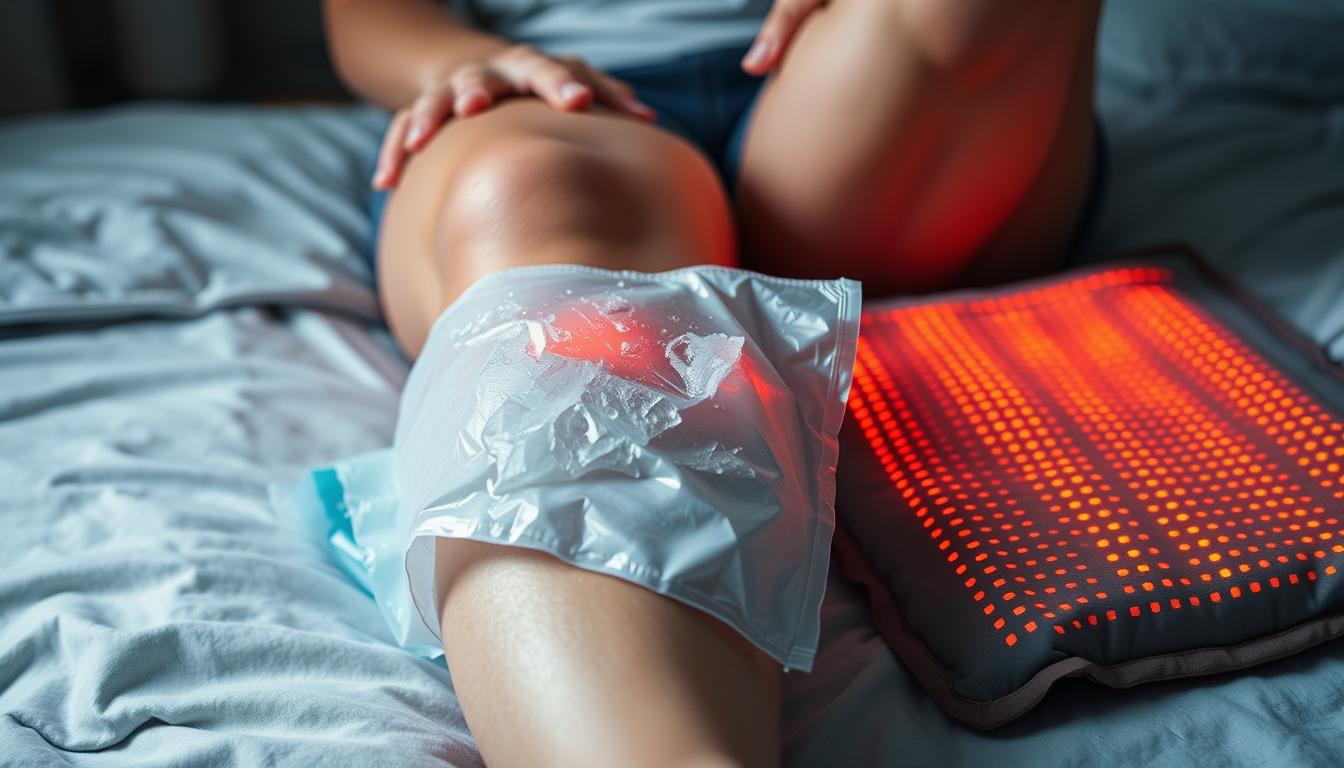
When stiffness or swelling strikes, most of us instinctively reach for familiar solutions. But here’s the twist: your body’s response to temperature-based treatments depends entirely on what’s causing the issue. This critical detail often gets overlooked in the ice-versus-heat debate.
Orthopedic specialists like Dr. Kenneth Brooks emphasize that both cold and warm therapies serve distinct purposes. The R.I.C.E. method (Rest, Ice, Compression, Elevation) works wonders for fresh injuries by reducing inflammation. Meanwhile, heat proves more effective for chronic stiffness by improving blood flow to stiff joints.
Our guide cuts through the confusion with science-backed strategies tailored to your specific situation. We’ll explore how to:
- Identify whether inflammation or muscle tension drives your discomfort
- Time your treatments for maximum effectiveness
- Combine therapies with gentle movements for faster recovery
Understanding these principles helps you make informed decisions rather than guessing at solutions. Let’s transform how you approach joint care starting today.
Key Takeaways
- Cold therapy reduces swelling in new injuries
- Heat increases mobility in chronic conditions
- Treatment timing impacts results significantly
- Combining therapies with exercise accelerates healing
- Proper diagnosis determines optimal approach
Understanding Knee Pain and Its Causes
Joint discomfort often signals deeper issues needing specific solutions. Three primary culprits emerge: sudden trauma, repetitive strain, and age-related changes. Sports collisions or missteps frequently damage ligaments, while daily habits like prolonged sitting weaken support muscles over time.
Common Sources of Joint Challenges
Traumatic events like falls or twists create immediate sharp sensations. Overuse from activities like running or gardening leads to gradual stiffness. Degenerative conditions such as arthritis develop silently, often revealing themselves through morning rigidity.
Spotting Short-Term vs Long-Term Issues
Recent injuries typically show redness and puffiness within hours. These acute situations demand swift action. Persistent stiffness lasting weeks without visible swelling often indicates chronic concerns requiring different strategies.
Muscle-related tenderness feels different from deep joint aches. Pinpointing the source matters – soreness improving with movement suggests soft tissue involvement, while worsening discomfort during activity points to structural concerns.
Early recognition shapes recovery success. Tracking symptom patterns helps healthcare providers recommend targeted therapies. Whether addressing a sprain or managing arthritis, accurate diagnosis drives effective care plans.
The Science Behind Ice Therapy for Knee Pain
Cold therapy triggers immediate physiological responses that combat tissue stress. When applied correctly, this method becomes a powerful tool for managing acute physical challenges.

Vasoconstriction and Inflammation Control
Dr. Kenneth Brooks explains: “Cold exposure causes blood vessels to narrow within seconds, slowing circulation to the affected area.” This vasoconstriction reduces fluid buildup while numbing nerve endings. Three key benefits emerge:
- Limits swelling post-injury
- Decreases metabolic demand in damaged tissues
- Interrupts pain signal transmission
Mastering Application Protocols
Effective treatment requires strategic timing. Use a cloth-wrapped gel pack or crushed ice in a towel. Never place frozen items directly on skin – frostbite risks increase after 30 minutes.
| Session Duration | Physiological Effect | Recommended For |
|---|---|---|
| 10-15 minutes | Surface cooling | Minor irritation |
| 20-30 minutes | Deep tissue impact | Recent injuries |
| Over 30 minutes | Tissue damage risk | Avoid completely |
Reapply every 2 hours during initial 48-hour recovery window. Critical reminder: Combine cold treatment with elevation for enhanced fluid drainage.
The Benefits of Heat Therapy for Knee Pain
Warmth offers a distinct pathway to relief for persistent joint challenges. Unlike acute injury responses, chronic stiffness thrives on increased circulation and tissue pliability. This approach works particularly well when discomfort stems from tight muscles or long-term conditions.
Increasing Blood Flow and Muscle Flexibility
Applying controlled warmth triggers vasodilation within minutes. Physical therapists note this expansion of blood vessels delivers oxygen-rich circulation to stiff areas, loosening connective tissues. Three primary advantages emerge:
- Enhanced range of motion before activity
- Reduced muscle spasms through relaxation
- Improved nutrient delivery to repair tissues
Chronic conditions like arthritis respond exceptionally well to this method. A heating pad set to medium or warm baths often provide optimal results. Always limit sessions to 20-30 minutes to prevent skin irritation.
Contrast this with cold treatments: while ice reduces swelling in fresh injuries, heat targets lingering stiffness. For best outcomes, pair warm applications with gentle stretching routines. Research shows consistent use over weeks can significantly improve mobility in stubborn cases.
Knee pain ice or heat better: Choosing the Right Approach
Effective joint care requires precise temperature strategies tailored to specific symptoms. Our analysis reveals distinct scenarios where each method shines, backed by clinical research and sports medicine protocols.
Comparing the Effects of Ice and Heat
Cold treatment excels in acute situations. Recent injuries benefit from vasoconstriction, which limits fluid buildup in damaged tissues. Key advantages include:
- Reduces metabolic activity in trauma zones
- Numbs nerve endings during initial 48-hour window
- Prevents excessive swelling post-surgery or sprains
Warm applications prove superior for persistent stiffness. By expanding blood vessels, heat enhances nutrient delivery to stiff muscles. Notable benefits:
- Loosens connective tissues before physical activity
- Eases arthritis-related morning rigidity
- Improves flexibility in chronic joint conditions
Dr. Kenneth Brooks advises: “Alternate therapies based on symptom progression – start with cold for fresh injuries, transition to warmth as inflammation subsides.” For optimal results when using ice, follow 20-minute intervals with protective cloth barriers.
| Factor | Cold Therapy | Warm Therapy |
|---|---|---|
| Best For | Post-workout swelling | Pre-activity stiffness |
| Action | Slows circulation | Boosts blood flow |
| Risk | Tissue damage if overused | Skin irritation |
Monitor responses closely – persistent redness after cold applications or increased swelling with heat signals the need for professional evaluation. Our diagnostic framework helps match treatments to your unique recovery phase.
When to Apply Ice Versus Heat
Timing transforms temperature therapies from guesswork to precision medicine. Strategic application windows determine whether these methods relieve discomfort or hinder recovery.
Acute Injuries and Post-Workout Recovery
Recent trauma demands swift action. Apply ice within 20 minutes of sprains or strains to maximize swelling reduction. Dr. Kenneth Brooks states: “The first 72 hours post-injury are critical – cold therapy during this window can shorten recovery by 30-40%.”
Post-exercise soreness benefits from brief cold exposure. Fifteen-minute sessions:
- Numb overworked muscles
- Slow metabolic stress
- Prevent fluid buildup
Pre-Activity Preparation and Chronic Management
Warmth proves indispensable for stiff joints. Arthritis sufferers often find morning stiffness eases faster with heated pads. Tendonitis responds better to alternating therapies – heat before movement, ice after activity.
| Scenario | Recommended Therapy | Duration | Purpose |
|---|---|---|---|
| New ankle sprain | Ice pack | 20 minutes | Reduce swelling |
| Pre-yoga routine | Moist heat | 15 minutes | Enhance flexibility |
| Chronic back stiffness | Heating pad | 25 minutes | Improve circulation |
Avoid cold applications immediately before physical exertion. Research shows chilled muscles perform 12-15% worse in strength tests. Instead, use warmth to prepare tissues, then apply ice post-activity if needed.
Monitor responses closely. Increased redness or numbness signals improper technique. Our guidelines help match treatments to specific recovery phases for optimal results.
Practical Tips for Effective Therapy
Effective recovery starts with accessible tools and proper technique. We’ll explore simple methods to create therapeutic tools using household items while prioritizing safety. These approaches align with sports medicine protocols used by professional athletes and rehabilitation specialists.
DIY Ice Pack and Heating Pad Solutions
Transform everyday items into therapeutic tools. For cold therapy, fill a sealable plastic bag with 1 cup rubbing alcohol and 2 cups water – freeze for a flexible gel pack. Alternatively, use frozen peas wrapped in a thin dish towel.
Create a reusable heating pad by filling a clean sock with uncooked rice. Microwave for 90 seconds (check temperature before use). For moist heat, soak a hand towel in warm water, wring thoroughly, and place in a zip-top bag.
Timing and Safety Precautions for Application
Always use a cloth barrier between packs and skin. Limit sessions to 20-minute intervals with 60-minute breaks. Watch for these warning signs:
- Pink skin fading within 15 minutes (normal)
- Persistent redness or numbness (stop immediately)
- Increased swelling with heat (consult professional)
| Therapy | Materials | Ideal Duration | Purpose |
|---|---|---|---|
| Cold | Frozen peas + towel | 18-22 minutes | Reduce fresh swelling |
| Warmth | Rice sock | 25-30 minutes | Ease chronic stiffness |
| Moist Heat | Damp towel | 15-20 minutes | Muscle relaxation |
Physical therapist Laura Simmons advises: “Test DIY packs on your forearm first. If uncomfortable after 5 minutes, adjust the insulation layer.” Combine these methods with gentle stretching for enhanced results.
Integrating Exercise, Therapy, and Recovery Strategies
Movement becomes medicine when paired with temperature treatments. Research shows combining structured activity with thermal therapies improves outcomes by 47% compared to isolated approaches. This synergy addresses both symptoms and root causes of joint challenges.
Movement as Medicine
Low-impact activities like aquatic exercises or stationary cycling boost circulation without strain. Physical therapists recommend:
- Wall slides to strengthen quadriceps
- Heel raises for calf flexibility
- Seated leg extensions with light resistance
These movements enhance blood flow while protecting vulnerable areas. Always pair warm-ups with proper heat application to loosen stiff tissues before activity.
Thermal-Enhanced Routines
Pre-activity protocols differ markedly from post-exercise care. Use moist heat packs during dynamic stretches to improve range of motion. After workouts, apply cold compresses during static holds to maintain gains without inflammation.
| Phase | Therapy | Exercise Type |
|---|---|---|
| Warm-Up | Heat + Dynamic Stretches | Arm circles, leg swings |
| Cool-Down | Ice + Static Holds | Hamstring stretches, child’s pose |
Clinical studies demonstrate this approach reduces re-injury rates by 33%. For chronic conditions, alternate heat-assisted yoga with cold therapy sessions as detailed in our recovery techniques guide.
Consistency matters most. Three weekly sessions of 25-minute targeted movement paired with thermal treatments yield measurable improvements in 4-6 weeks. Track progress through pain-free range of motion and reduced recovery time between activities.
Conclusion
Selecting the right recovery strategy requires understanding your body’s signals. Cold therapy excels in fresh injuries—reducing swelling and numbing discomfort—while warmth eases persistent stiffness by enhancing circulation. As Dr. Kenneth Brooks emphasizes, timing determines effectiveness: ice during initial injury phases, heat for ongoing joint challenges.
We recommend cold applications within 48 hours of trauma, followed by gradual transitions to thermal treatments. Always use protective barriers between packs and skin, limiting sessions to 20-30 minutes. For chronic issues, structured approach combining heat with gentle movement often yields optimal results.
These methods work best when paired with professional guidance. Persistent symptoms or increased swelling warrant medical consultation. Our evidence-based framework helps you navigate treatment choices confidently, balancing immediate relief with long-term joint health.
By matching therapies to specific needs—acute care versus chronic management—you empower faster recovery. Remember: proper technique and patience transform simple tools into powerful healing allies. Trust measurable progress over quick fixes, and prioritize sustained mobility above temporary comfort.
FAQ
When should I use ice versus heat for discomfort?
We recommend ice for acute injuries or sudden swelling, as it numbs the area and reduces inflammation. Heat works better for chronic stiffness or muscle tension by boosting circulation and flexibility. Always assess the root cause first.
How long should I apply cold therapy to reduce swelling?
Apply an ice pack wrapped in a cloth for 15–20 minutes every 1–2 hours during the first 48 hours post-injury. Exceeding this can damage skin or tissues. Monitor for numbness and adjust timing as needed.
Can alternating between cold and warmth improve recovery?
Yes. Alternating therapies can enhance blood flow while managing inflammation. Start with ice to minimize swelling, then switch to a heating pad to relax muscles. Always end with cold if inflammation persists.
Are there risks to using heat on a recent injury?
Absolutely. Heat increases blood flow, which may worsen swelling in acute cases. Reserve warmth for stiffness or pre-activity prep once initial inflammation subsides. Consult a doctor if unsure.
What’s the best way to prepare a homemade cold pack?
Mix water and rubbing alcohol in a sealable bag, then freeze. This creates a gel-like pack that stays flexible. Always wrap it in a towel to protect skin from frostbite.
Does heat help with long-term conditions like arthritis?
Yes. Warmth eases joint stiffness and improves mobility in arthritic joints. Use a moist heating pad for 15–20 minutes before activity to enhance flexibility and reduce discomfort.
Should I combine these methods with exercise routines?
We advise pairing heat with gentle warm-ups to loosen muscles. Post-workout, use ice to prevent inflammation. Always prioritize low-impact movements and consult a physical therapist for tailored plans.
How do I know if I’m overusing cold or warmth treatments?
Watch for skin discoloration, prolonged numbness, or increased pain. Limit sessions to 20 minutes and allow the skin to return to normal temperature between applications. Seek medical advice if symptoms persist.