Category: Knee ligaments

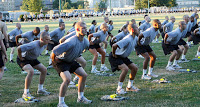
  • Injury prevention warm-up programs, one size fits some?

    Injury prevention warm-up programs, one size fits some?

    Who doesn’t respond to warm-up programs for injury prevention? A secondary analysis of pilot data from neuromuscular training programs in youth basketball, football, and physical education.

    Anu M. Raisänen, Jean-Michel Galarneau, Carla Van Den Berg, Paul Eliason, Lauren C. Benson, Oluwatoyosi BA Owoeye, Kati Pasanen, Brent Hagel and Carolyn A. Emery. Journal of orthopedic and sports physiotherapy 0 0:0, 1-28

    Full article available for free

    Take home message

    Although neuromuscular training warm-up programs for injury prevention are effective in reducing one’s risk of injury, not everyone reaps the same benefits. Women and youth with a history of injury in the previous year are more likely to not respond to these programs.

    Background

    Preventive neuromuscular training programs can effectively reduce an active person’s risk of injury. However, these programs can be more effective if they are tailored to a person’s physical capabilities and characteristics.

    Study aim

    Räisänen and colleagues conducted a secondary analysis of data from young active individuals (11–18 years old) who performed a neuromuscular training warm-up program during one of four previous clinical trials. They examined whether differences in adherence were associated with non-response to the program (injury) and which factors were associated with non-response.

    Methods

    The authors used data collected across four studies (1793 participants), including high school basketball (18-week intervention), community football (20 weeks), and two separate high school physical education studies (12-14 weeks). The authors examined age, gender, body mass index (BMI), height, weight, lower limb dominance and balance. They also monitored participants throughout the season for injuries, number of warm-up sessions completed, number of weeks of warm-up completed, and sports participation or exposure. The warm-up programs all lasted 15 minutes and were tailored to the sport or class. All warm-ups include an aerobic and balance component. However, basketball included static and dynamic stretches, while the other two used only dynamic stretches. In addition, the soccer and gym classes included various strengthening exercises, and soccer was the only warm-up that included agility.

    Results

    The authors found that women and participants with a history of injury in the previous 12 months were more likely to fail to respond to a neuromuscular training warm-up. Furthermore, greater weekly compliance with warm-up reduced the risk of injury, only in football.

    Viewpoints

    Fifteen-minute neuromuscular training warm-up programs reduce the risk of injury in organized sports activities and general physical education courses. Consistent with existing literature, the authors demonstrated the importance of adherence (performing the program more times per week) in reducing the risk of injury in football players. However, adherence may be less relevant in high school physical education and basketball classes. The authors also found that women and people with a previous injury were more likely to be non-responders than men and people without a previous injury, respectively. We should avoid suggesting that women or people with a history of injury won’t benefit from these programs, because they could – just less so than their peers. Instead, we must find ways to optimize these programs for these populations. We should also note that the authors examined all injuries, not just lower extremity injuries, as these programs are typically designed. So it is possible that a ‘non-responder’ in the study was a ‘lower extremity responder’ if he or she had suffered an upper extremity or other injury.

    Clinical implications

    Clinicians should encourage the use of neuromuscular training programs and consider how these can be better tailored to women or those with a history of injury.

    Questions for discussion

    Would an ‘a la carte’ approach work for those identified as high risk? This means that a general warm-up can be created with a few additional movements added specifically to the participants and considered high risk?

    Written by Shelly Fetchen DiCesaro
    Reviewed by Jeffrey Driban

    related posts

    Coach the coach, make ACL injury prevention programs stick!|
    Back-to-school injury prevention programs
    Forget about 7 minutes of Abs. What about the 10-minute lower extremity injury prevention program?

    Source link

  • Psychological stress hinders performance, even for Olympic athletes

    Psychological stress hinders performance, even for Olympic athletes

    The 2020 Tokyo Olympics were unique not only because they took place during the COVID-19 pandemic, but also because they were the first athletics event to measure and broadcast competitors’ heart rates as world-class archers made a bid for Olympic gold. Analysis of these biometric data by Yunfeng Lu (Nanjing University) and Songfa Zhong (National University of Singapore, New York University Abu Dhabi) in Psychological Science provides empirical support for something sports fans have long suspected: when athletes feel the pressure, their performance suffers.

    “We found that high non-contact real-time heart rate is associated with poor performance,” Lu and Zhong said in an interview. “This suggests that even the best professional athletes are negatively affected by psychological stress, even though they are generally well trained to deal with pressure.”

    Olympic archery includes several types of individual and team-based competitions, but for this study, Lu and Zhong focused on individual competitions within the gender for which heart rate data was available. During these competitions, the heartbeats of 122 male and female archers were broadcast as they completed 2,247 shots. The World Archery Federation, in collaboration with Panasonic, measured athletes’ heart rates using high frame rate cameras designed to detect skin reflection and can determine a person’s heart rate 96% as accurately as a pulse oximeter or electrocardiogram.

    During each competition, individual archers shot a certain number of arrows at a target, with a time limit of 20 seconds for each shot. Archers could earn a maximum of 10 points for a perfect bull’s-eye, with the number of points decreasing the further an arrow landed from the center of the target.

    Lu and Zhong found that athletes whose heart rates were higher before taking a shot consistently scored lower on those shots. Although the age and gender of the archers did not appear to significantly influence the relationship between stress and performance, a number of factors related to the nature of the competition did.

    Higher heart rates are more likely to reduce the performance of lower-ranked archers and of any archers who shot second in a match or who had a lower score than their opponent at that point in the match. There was also a stronger relationship between stress and performance closer to the end of each competition, possibly due to the increase in pressure as athletes progressed through the competition, the authors wrote.

    “Elite athletes typically receive training to cope with psychological stress, but our results suggest that they are still subject to the influence of psychological stress,” Lu and Zhong wrote.

    This study not only provides evidence for the link between stress and real-world performance, but also shows that heart rate captured by high frame rate cameras can serve as a reliable source of biometric data, Lu and Zhong said. in situations such as the COVID-19 pandemic where researchers and participants may not be able to meet in person.

    “This method could become increasingly important in diverse settings ranging from sports and business to mental health and medicine,” the researchers wrote. “In this regard, our study can be seen as a proof of concept by showing that non-contact real-time heart rate induced psychological stress.”

    In future work, this technology could be used to observe how psychological stress affects athletic performance in different sports, Lu and Zhong said. The researchers also want to further investigate how contactless real-time heart rate can be incorporated into behavioral studies in laboratory and field settings.

    Source link

  • Can PRP help reduce the risk of rotator cuff re-injury?

    Can PRP help reduce the risk of rotator cuff re-injury?

    Platelet-rich plasma does not improve clinical outcomes in patients with rotator cuff disease, but reduces relapse rates. A systematic review and meta-analysis

    Feltri P, Gonalba GC, Boffa A, Candrian C, Menon A, Randelli PS, Filardo G. Knee Surgery Sports Traumatol Arthrosc. December 11, 2022. doi: 10.1007/s00167-022-07223-9. E-publishing prior to printing. PMID: 36496450.

    Full text freely available

    Take home message

    Including platelet-rich plasma (PRP) with rotator cuff surgery reduced the number of relapses compared to surgery without PRP. However, PRP had no other apparent clinical benefits during conservative or surgical treatment.

    Background

    Rotator cuff injuries are common injuries that can be treated with numerous conservative or surgical treatment options; However, these options are not always effective and can lead to persistent symptoms or retreats. Platelet-rich plasma (PRP) has attracted interest due to its high concentration of proteins involved in the healing process and low rate of side effects. There is mixed evidence regarding the effectiveness of PRP in reducing pain, improving function, and reducing the risk of hernia. Therefore, a systematic review may shed light on the role of PRP in the treatment of people with rotator cuff disorders.

    Study aim

    The authors conducted a systematic review and meta-analysis to evaluate the efficacy of PRP in terms of functional improvement, pain reduction, and retrauma after conservative or surgical treatment of rotator cuff disorders.

    Methods

    An initial database search yielded 1,229 articles, and the authors subsequently identified 36 clinical trials eligible for the systematic review. The authors then used 18 of those studies for the meta-analysis. The inclusion criteria required a randomized trial (published in English) that included specific outcomes (functional scores, pain scores and retear rate) and the use of PRP among people receiving conservative or surgical treatment of rotator cuff disease. The authors extracted 1) publication information (e.g. authors, journal), 2) population characteristics (age, gender, type of lesion, tendon involved), 3) tear characteristics (type of lesion, tendon(s) involved), 4) PRP characteristics, 5) repair technique (if applicable), 5) follow-up [split into short term (<6.5 months) and long term (>12 months)]and 6) clinical outcomes.

    Results

    The 36 clinical trials included 2,443 participants (~49% female, ~54 years old, ~16 months follow-up). Of the 36 articles from the randomized control trial, 16 examined PRP within the context of conservative treatment, and 20 examined PRP within the context of surgical treatment. The authors could not perform a meta-analysis among the studies with conservative management because they varied too much in outcomes, number of PRP injections, PRP volume used, and alternative treatments offered (e.g., corticosteroids, saline, exercise, or physiotherapy). Overall, PRP had mixed results in pain and function compared with other conservative treatments. Nineteen of the twenty surgical studies were included in the meta-analysis. The authors found no differences in self-reported pain or function between participants who underwent surgery with or without PRP. The patients who received PRP and surgery had a recurrence rate of ~7%, while the control group had a recurrence rate of ~14%.

    Viewpoints

    PRP can be an effective treatment for rotator cuff surgery to reduce the risk of re-tear compared to surgery without PRP. Interestingly, the PRP failed to provide better self-reported pain or function than surgery alone. Unfortunately, it remains unclear whether PRP reduces pain and improves function in people treated conservatively. When a doctor reviews the various studies among people managed conservatively, the doctor must take into account what the other treatment group received, the PRP protocol, and follow-up visits. Clinicians should focus on the studies that reflect their PRP protocol (or what they can offer) and patient population, and also consider whether they want to see how their results compare to usual care, placebo, or an active intervention (e.g., corticosteroids) . Finally, it’s worth remembering that in a clinical trial you should focus on the differences between groups. This comparison is the only one that takes advantage of why we want to classify people into different groups. Results examining changes within a group over time may be influenced by placebo effects, regression to the mean, or other factors unrelated to treatment.

    Clinical implications

    The use of PRP may reduce the risk of re-tear if used in conjunction with surgery. If a patient is receiving conservative treatment, doctors may look for specific studies that simulate their practice and treatment goals to help patients decide. However, patients receiving conservative care should also understand that the evidence for PRP is murky, but the risk of side effects is low.

    Questions for discussion

    Have any of your patients received PRP injections? If so, what were their thoughts? Would you use or recommend PRP therapy?

    related posts

    1. Common medications can affect the effectiveness of PRP
    2. The positive effects of various platelet-rich plasma methods on human muscle, bone and tendon cells
    3. Platelet-rich plasma is inadequate compared to exercise therapy

    Written by Jane McDevitt
    Reviewed by Jeffrey Driban

    EBP CEU upper extremity course

    Source link

  • NFL players who experienced concussion symptoms during their careers show decreased cognitive performance decades after retirement

    NFL players who experienced concussion symptoms during their careers show decreased cognitive performance decades after retirement

    Former professional football players who reported experiencing concussion symptoms during their playing careers were found to perform worse on a battery of cognitive tests than non-players, according to a study led by Mass General Brigham researchers at McLean Hospital and Spaulding Rehabilitation Network . The results of the study will be published on March 2NLinClinical Neuropsychologist Archivesj.

    Of more than 350 former National Football League (NFL) players studied an average of 29 years after the end of their playing careers, those who reported experiencing concussion symptoms during their careers performed worse on assessments of episodic memory, sustained attention, processing speed, and vocabulary. However, the number of concussions diagnosed by a medical professional or the length of playing career had no observed effect on cognition.

    A follow-up analysis compared the former players to more than 5,000 male volunteers in the general population who did not play professional football, showing that cognitive performance was generally worse for former players than for non-players. While younger former players performed better than non-players on some tests, older retired players likely performed worse than controls on cognitive tasks.

    The researchers who led the study said their results underscore the importance of tracking concussion symptoms, as opposed to diagnosed concussions in research. This work also adds evidence of the impact a professional football career can have on accelerating cognitive aging.

    “It is well known that people experience some cognitive impairment in the hours and days after a concussion. However, when you look decades ahead, the data on the long-term impact is mixed,” said study senior author Laura Germine. PhD, director of the Laboratory for Brain and Cognitive Health Technology at McLean Hospital and associate professor of psychiatry at Harvard Medical School. “These new findings from the largest study of its kind show that professional football players can still experience cognitive problems associated with head injuries decades after they retire.”

    Concussion Symptoms Linked to Cognitive Performance

    For the study, 353 retired NFL players completed one-hour neuropsychological tests through an online platform called TestMyBrain, which is supported by McLean Hospital and Harvard Medical School. Players were completely remote and completed tests on a laptop or desktop, including assessments that measured processing speed, visuospatial and working memory, and aspects of short- and long-term memory and vocabulary.

    Recalled concussion symptoms were measured by asking the players how often they experienced any of the following symptoms after a blow to the head during play or practice: headache, nausea, dizziness, loss of consciousness, memory problems, disorientation, confusion, seizures, visual problems, or a shaky feeling on the feet. They were also asked if they lost consciousness during their career and if they had ever been diagnosed with a concussion by a medical professional.

    The results showed that the cognitive performance of the former players (for example on memory tasks) was associated with the symptoms of a football concussion. For example, the observed differences in visual memory scores between former players with the highest and lowest reported concussion symptoms were equivalent to the differences in cognitive performance between a typical 35-year-old and a 60-year-old.

    However, poor cognitive performance was not associated with diagnosed concussions, years of playing professionally or age of first exposure to football. The researchers noted that many head injuries or sub-concussions may not have been diagnosed as concussions due to a lack of awareness at the time or under-reporting of symptoms by players.

    When the retired players were compared to a group of 5,086 men who did not play football, the cognitive performance of former players was generally poorer. On two tests of processing speed, age-related differences in cognitive performance were greater among the former player group than among the non-player group, with older players performing worse.

    This comparison data suggests that exposure to football could accelerate age-related cognitive decline and cause greater disadvantages in old age, according to the researchers, who added that more studies are needed to track the cognitive performance of former players as they age. Another possibility is that improved awareness and management of head injuries has saved younger retired players more than older players. The researchers also noted that this comparative finding is limited by a lack of data on cognition prior to head injury, and that more research is needed that closely matches former players and non-players and measures their cognitive performance across the lifespan.

    “For former players and researchers alike, we can glean some important insights from this study,” said Football Players Health Study principal investigator Ross Zafonte, DO. “Former players can support their cognitive health as they age by taking proactive steps, continuing to consult with their healthcare providers and educating themselves about the symptoms of head injuries. For researchers and healthcare providers, these findings support efforts to develop ways to improve diagnosis and define long-term diagnoses. term consequences of concussion.” Zafonte is president of Spaulding Rehabilitation Network, a Mass General Brigham sports medicine physician, and Earle P. and Ida S. Charlton professor and chairman of the Harvard Medical School Department of Physical Medicine and Rehabilitation.

    “The Community Based Participatory Research (CBPR) approach taken in this study is where this field is going,” says Germine. “We are grateful to the players and how much they have taught us. It would not have been possible to conduct a study like this without involving and deeply involving their community.”

    Research driven by input from former NFL players

    Launched in 2014, the Football Players Health Study at Harvard University is a comprehensive research program aimed at investigating the multifactorial causes that impact the health of former NFL players. The research is based on the players themselves, who provided input on the health issues and conditions they face after a career in football. An interdisciplinary team of researchers from Harvard University and Harvard Medical School and their affiliated teaching hospitals, including those of the Mass General Brigham System, conducts research in neurology, cardiology, sports medicine, rehabilitation medicine, chronic pain and public health . While concussions and head injuries are of paramount importance, the study examines all aspects of players’ health throughout their lives. Former players can find important resources to support their health in this section of the study’s website.

    Source link

  • Sports specialization in high schools may increase the risk of depression

    Sports specialization in high schools may increase the risk of depression

    The Association of Sports Specialization and Concussion History on self-reported depressive symptoms and quality of life among high school athletes.

    Chou TY, Biese K, Leung W, Bell D, Kaminski T, McGuine T. [published online ahead of print, 2022 Nov 11]. Clin J Sport Med. 2022; doi:10.1097/JSM.0000000000001092

    https://journals.lww.com/cjsportsmed/Abstract/9900/The_Association_of_Sport_Specialization_and.61.aspx

    Take home message

    Sports specialization in high school student-athletes may worsen depressive symptoms and decrease quality of life. History of concussions may not be related to mental health in this population.

    Background

    As sports participation increases, so do sports specialization and sports-related concussions. Adverse psychosocial outcomes associated with these factors include burnout, depression and reduced quality of life. Although published studies suggest that concussion and sport specialization may be associated with adverse mental health outcomes, no studies exist on student-athletes with either risk factor.

    Study aim

    The researchers wanted to determine whether sport specialization and concussion history are associated with depressive symptoms and quality of life in high school students.

    Methods

    The authors recruited student-athletes from 31 high schools in Wisconsin during the 2016-2018 school years. All participants met inclusion criteria by participating in interscholastic sports, enrolling in grades 9–12, and being medically eligible to participate in sports on the day of study recruitment. After meeting these criteria and consenting to participate, researchers collected participant demographic data, including concussion and sports history (participation in one or more sports). Athletic Trainers validate the information provided by the participant. Researchers used the Patient Health Questionnaire-9 to collect data regarding depressive symptoms and the Pediatric Quality of Life 4.0 Scale to assess the participants’ quality of life.

    Results

    Of the 2,453 athletes, 19% reported a previous concussion and 57% specialized in a sport. Athletes who participated in only one sport reported more depressive symptoms and lower quality of life than their counterparts who played multiple sports. Specifically, single-sport athletes were 50% more likely to report higher depression scores than athletes who played multiple sports in high school. The sports-related concussion was not related to depressive symptoms and quality of life.

    Viewpoints

    This research adds to the growing body of literature suggesting that sport specialization can lead to negative mental health outcomes for student-athletes. This relationship could explain increased concerns about athletes’ mental health in recent years. This study also adds to the literature that history of concussion is not associated with mental health problems in non-elite athletes. However, this is not intended to downplay the fact that some patients may experience depressive symptoms following a concussion and that we should carefully monitor all patients for mental well-being following an injury. This study is not without limitations. The authors relied on patients’ ability to recall a previous concussion history, raising concerns about the accuracy of one’s memory. The cross-sectional nature of this study also limits the authors’ ability to determine whether sport specialization (playing a single sport) has negative consequences for mental health and quality of life, or whether depressive symptoms make an athlete less often participates in multiple sports. .

    Clinical implications

    Sports medicine professionals must advocate for diverse sports experiences for youth, adolescent, and teen athletes while ensuring readiness to manage mental health issues in this population. Additionally, these professionals should avoid suggesting that sports-related concussions lead to mental health consequences, including depression.

    Questions for discussion

    What are your experiences with sports specialization athletics and mental health care? How do you deal with sports specialization in athletics? How does this study change your perspectives regarding sport specialization and concussions in athletics?

    related posts

    1. We must break the stigma of seeking mental health care among student-athletes
    2. Mom and Dad say specialization is important
    3. Playing high school football should not lead to impaired cognition or depression

    Written by: Cade Watts
    Review by: Jeffrey Driban


    Psychosocial Factors EBP CEU Course

    Source link

  • The marathon runners of the immune system

    The marathon runners of the immune system

    When it comes to chronic infections and cancer, a certain type of immune cell plays a central role in our defenses. Researchers from the University of Basel have discovered the key to the tenacity of these immune cells in dealing with the marathon fighting a chronic infection. Their results lay the foundation for more effective therapies and vaccination strategies.

    Infected and abnormal cells should disappear. And as quickly as possible, before any more damage is done. This is the task of so-called cytotoxic T cells. The question of how these cells fight chronic infections is being investigated by the team around Professor Daniel Pinschewer from the Department of Biomedicine at the University of Basel, in collaboration with several national and international partners.

    “These T cells can specialize in two different ways: as a kind of sprinter or as a marathon runner,” Pinschewer explains. “However, the latter can also transform into sprinters at any time in order to eradicate an infection.”

    Chronic infections are a special case: the T cells are activated and a strong inflammatory response occurs at the same time. “This tends to ‘shock’ the T cells and develop them into sprinters, which can only intervene effectively in the short term to remove infected cells,” says the virologist. “If all T cells behaved this way, our immune defenses would break down quite quickly.”

    Biological messenger counteracts the ‘shock’

    This is evident from a study that is now published in the journal Immunity, the researchers investigated how the immune system can nevertheless supply sufficient T cells for the endurance race against chronic infections. According to their results, a biological messenger called interleukin-33 (IL-33) plays a key role. It allows the T cells to remain in their ‘marathon runner’ state. “IL-33 essentially takes away the shock of inflammation,” explains Dr. Anna-Friederike Marx, lead author of the study, explains.

    In addition, the biological messenger causes the marathon T cells to multiply, making more endurance runners available to fight the infection. “Thanks to IL-33, there are enough long-term cytotoxic T cells that can still make a final sprint after their marathon,” says Marx.

    The findings could help improve the treatment of chronic infections such as hepatitis C. It is conceivable that IL-33 could be administered to support an effective immune response. Thinking along the same lines, IL-33 could be a key to improving cancer immunotherapy, allowing T cells to mount an efficient and long-lasting offensive against tumor cells.

    Source link

  • Not all compressions are the same

    Not all compressions are the same

    An evaluation of the quality of CPR chest compressions performed on football-equipped and obese simulation manikins.

    Longo JA, Lyman KJ, Hanson TA, et. already. Prehosp Emergency Room. 2023 February 3:1-6. doi: 10.1080/10903127.2023.2172494. E-publishing prior to printing.

    https://pubmed.ncbi.nlm.nih.gov/36692382/

    Take home message

    Rescuers provide more superficial CPR chest compressions to obese manikins wearing American Football chest/shoulder pads than to those without equipment or obesity.

    Background

    Immediate administration of high-quality CPR is a critical part of the cardiac chain of survival. Both body size and protective equipment influence the effectiveness of chest compressions. However, few researchers have examined how protective equipment (e.g., shoulder pads) affects the performance of chest compressions in obese individuals.

    Study aim

    The researchers conducted a study to assess the quality of CPR chest compressions by a rescuer during four randomized conditions that varied whether the manikin represented someone with obesity or was wearing American football equipment.

    Methods

    The researchers recruited a convenience sample of 50 first responders with varying levels of education (medical first responder to paramedic). The rescuers then made four resuscitation attempts. Each trial lasted 2 minutes, with a 3-minute break between each trial. Participants completed manikin testing simulating four conditions: (1) traditional manikin without equipment, (2) traditional manikin with American football chest/shoulder pads, (3) obese manikin with American football chest/shoulder pads, and (4) obese manikin without equipment. The researchers measured the effectiveness of the compressions using a Laerdal CPRmeter 2 device, which records compression rate, delivery and depth. During tests without equipment, rescuers had to remove protective equipment before starting chest compressions. This protocol allowed the research team to measure how long it took for a rescuer to remove protective equipment.

    Results

    The depth of chest compressions suffered when the obese manikin had American Football chest/shoulder pads. Rescuers used more force during chest compressions on the obese manikin without electrodes than in the other three conditions. The mean rate of delivery and number of compressions were similar regardless of excess weight and protective equipment. Regardless of manikin or protective equipment, rescuers only met the recommended compression rate at 40% (obese with electrodes) to 51% (non-obese with electrodes) of compressions and the recommended depth at 7% (obese with electrodes) to 22%. % non-obese with pads) of compressions.

    Viewpoints

    The hired, trained responders often failed to provide effective chest compressions to simulated patients, especially if they were obese and wearing American football chest/shoulder pads. Therefore, rescuers may benefit from additional training regarding CPR on different body types, with and without protective sports equipment. Furthermore, we need more research to reproduce these results, to look at other types of equipment that may influence the quality of chest compressions, and to investigate the benefit of regular training with on-field scenarios with first responders and athletic trainers.

    Clinical implications

    Clinicians must consider the patients they treat and how equipment, body types, and other factors can affect the quality of CPR chest compressions. Clinicians may benefit from incorporating bariatric resuscitation exercises into their training.

    Questions for discussion

    Do you include equipment-specific scenarios or obese manikins in your CPR training? If not, what barriers would you encounter when incorporating exercise models that are obese or in equipment-specific scenarios?

    Written by Kyle Harris
    Reviewed by Jeffrey Driban

    related posts

    To delete or not to delete? That’s the question when dealing with resuscitation emergencies in football
    Resuscitation Quality: Improving Cardiac Resuscitation Outcomes Both In and Out of Hospital: An American Heart Association Consensus Statement
    We can do better. Improving the chance of survival after exercise-related sudden cardiac arrest for everyone

    9 EBP CEU courses

    Source link

  • CDC HEADS UP program increases concussion knowledge and injury communication

    CDC HEADS UP program increases concussion knowledge and injury communication

    Randomized evaluation of CDC HEADS UP concussion education materials for youth sports coaches.

    Kroshus E, Zhou H, Ledsky R, Sarmiento K, DePadilla LJ Neurotrauma. January 24, 2023. doi: 10.1089/neu.2022.0504. E-publishing prior to printing. PMID: 36694461.
    https://pubmed.ncbi.nlm.nih.gov/36694461/

    Take home message

    After youth sports coaches were introduced to the Centers for Disease Control and Prevention (CDC) HEADS UP materials for a season, more coaches reported better concussion knowledge and communication with athletes about concussion safety than before the season.

    Background

    Coaches play a key role in shaping the way athletes learn and report concussions. One of the most prominent and comprehensive forms of concussion education for youth coaches is the CDC HEADS UP program’s online training. Although the educational content has been evaluated, randomized control trials are lacking to assess how the CDC HEADS UP program influences behavioral changes during a sports season.

    Study aim

    The authors examined youth sports coaches’ communications with youth athletes regarding concussion safety during a sports season in the presence of the CDC HEADS UP program and a typical education strategy.

    Methods

    The authors randomized 75 YMCA chapters in 15 regional associations (764 youth sports coaches) to receive the CDC HEADS UP training or control (their typical teaching strategy). The coaches answered demographic questions such as sex, the sport they coach and history of concussion claims. The CDC youth sports materials consist of four main components: 1) an online training module completed before the start of the season, 2) additional resources (stickers, poster, fact sheet), 3) 8 weekly CDC Heads-up messages for coaches to relay the athletes, and 4) guidance on how local organizations can integrate HEADS UP resources and messages with existing YMCA values. The coaches completed surveys before and after a competitive season. The authors then assessed communication behavior with three questions:

    1. “Have you met your athletes?” (Yes No)
    2. “Have you reviewed the YMCA rules regarding concussion safety with your athletes?” (Yes No),
    3. “How many times have you talked informally with athletes on your team about concussion safety?” (never/occasionally/often).

    The authors also evaluated communication intention by rating how likely they are to hold a team meeting to talk formally or informally about concussion safety. They also evaluated concussion identification (knowledge of signs/symptoms), concussion management (likelihood to return an athlete to sport), and exposure to concussion information without intervention (app, TV/movie, website information) .

    Results

    A total of 537 coaches (82% male, 93% coached high-contact sports, 20% concussion diagnosed) completed pre-season surveys (432 in intervention, 105 in control) and completed 411 post-season surveys (295 in intervention). . , 116 under control). Unfortunately, only 184 coaches completed the pre- and post-season surveys (148 during the intervention, 36 during the control). Overall, demographics were similar between groups, although coaches in the intervention group were more likely to coach a high-contact sport.

    After coaches were introduced to the HEADS UP program, more coaches communicated with athletes about concussion safety than before the season. Those in the control group may also have more coaches communicating with athletes, but most likely this improvement was less than in the Heads Up group. Concussion knowledge and communication intent were greater at season’s end among coaches who received the HEADS UP program. The authors did not observe this improvement among coaches in the control group.

    Viewpoints

    The CDC HEADS UP program is the most widely used concussion program in the United States. The program has important content and increases a coach’s knowledge immediately after completion of the program. This study suggests that the program can also improve communication and knowledge over a season. To know for sure, however, we need a large randomized trial comparing changes in communication behavior and knowledge over a season between a group of coaches who completed the HEADS UP program and another group who received regular training. Understanding how well the HEADS UP program performs in the real world can help us determine if any additional educational materials are needed during the season. In the meantime, this research provides further support for the CDC Heads UP youth sports materials.

    Clinical implications

    Clinicians should encourage youth sports organizations to adopt and adapt the CDC HEADS UP program. If a doctor is concerned about the effectiveness of the material, he can supplement the material with his resources.

    Questions for discussion

    Do you use CDC Heads Up Materials to train your student-athletes to be coaches? If so, have you seen similar results in communication and knowledge? If not, what do you use for your concussion education?

    related posts

    1. Improving Concussion Education: Consensus from the NCAA Department of Defense Mind Matters Research and Education Grand Challenge
    2. Peer-led concussion education can improve concussion knowledge and reporting behavior
    3. Concussion education videos. Viewing once does not help with Info Stick
    4. Coaches are provided with information about concussions with a five-minute fact sheet
    5. Concussion knowledge is getting better, but concussion reporting is getting worse
    6. Better attitudes can improve reporting habits
    7. Center for Concussion Education and Research – Peer Concussion Education

    Written by Jane McDevitt
    Reviewed by Jeffrey Driban

    Evidence-based assessment of concussion course - 5 EBP CEUs

    Source link

  • Fewer sports injuries with digital information

    Fewer sports injuries with digital information

    Injuries in youth athletics are significantly reduced when coaches and parents have access to digital information about adolescent growth. It also takes twice as long for the first injury to occur. This is evident from a study by Linköping University, published in the British Journal of Sports Medicine.

    Many promising athletes have had their careers ruined by injuries. One thing that almost all athletic events have in common is high loads for a short period of time, such as jumping, throwing and running. This leads to overuse injuries such as groin pain and sore shoulders, but also to sudden injuries such as ankle sprains and hamstring tears.

    Jenny Jacobsson is a physiotherapist and visiting researcher at the Athletics Research Center of Linköping University. She has worked for many years as a medical coordinator for the Swedish national athletics team and has seen the impact of injuries on athletes.

    “Before the 2008 Beijing Olympics, we saw a lot of injuries in our national team and tried to find out why. At the time, no research had been done into the incidence of injuries in track and field athletes. But we wanted to know what was happening among our elite. athletes aged 16 and over, including adult elite athletes,” says Jenny Jacobsson.

    The research into injuries in Swedish athletics showed that one of the main causes of injuries was previous injuries. This means that the earlier an athlete is injured in their career, the more likely they are to be injured later and more often. But the causes of injuries in youth sports are a complex issue, involving everything from training amount and load to equipment and even sleep.

    Together with her colleagues at the Athletics Research Center, Jenny Jacobsson has developed a digital health platform with information for parents and youth coaches about adolescent growth and how it is influenced by training, with a focus on track and field athletes aged 12-15.

    To investigate whether this type of platform can prevent injuries, the researchers conducted a study in which 21 athletics clubs with athletes aged 12 to 15 were randomized into two groups: an intervention group and a control group. During the preseason, the parents and coaches of the intervention group were given access to the digital information platform for four months, which was not accessible to outsiders at the time (but is now accessible to everyone). They were also regularly encouraged to log in and explore its content.

    The researchers noted that the clubs that accessed the information showed significantly lower injury incidence and took twice as long for the first injury to occur. Moreover, the effect was greater at large clubs. The results, published in the British Journal of Sports Medicine, could point the way to more injury-free athletics.

    “We have not investigated the mechanism that leads to change, but we see that digital information works when it comes to injury prevention. If coaches and parents learn to recognize the problems, it is possible to reduce the training burden in time. Medically speaking, we do know.” what happens in growing bodies, but spreading the information to those who could benefit from it has been a challenge. This platform can bridge that gap,” says Jenny Jacobsson.

    The research was funded by the Swedish Research Council for Sports Sciences (Centrum för idrottsforskning).

    Source link

  • Your meniscus is probably not affected by your ACL reconstruction

    Your meniscus is probably not affected by your ACL reconstruction

    Meniscus procedures do not increase with delayed ACL reconstruction and rehabilitation: results from a randomized controlled trial.

    van der Graaff SJA, Reijman M, van Es EM, Bierma-Zeinstra SMA, Verhaar JAN, Meuffels DE. The British Journal of Sports Medicine, 2023; 57:78-82.

    Full text freely available

    Take home message

    People who initially receive rehabilitation with optional delayed anterior cruciate ligament (ACL) reconstruction are at a similar risk for meniscal surgery than those treated with early ACL reconstruction.

    Background

    Nonoperative treatment for ACL rupture is a viable option for many patients. However, some physicians have expressed concern that nonoperative treatment of ACL rupture or delayed ACL reconstruction may increase the risk of meniscal injury.

    Study aim

    van der Graaff and colleagues completed a secondary analysis of data from the COMPARE trial to evaluate whether treating ACL rupture with a delayed reconstruction option leads to more meniscal procedures than early ACL reconstruction.

    Methods

    The authors used data collected from the COMPARE study. The study included people who had suffered an acute ACL rupture in the previous two months. Eight-five participants randomly received early ACL reconstruction (within six weeks of study enrollment). Eighty-two participants were randomly assigned to receive nonoperative treatment with optional delayed ACL reconstruction. All participants in the non-operative group received at least three months of supervised physiotherapy. After 3 months of structured physiotherapy, participants could opt for ACL reconstruction. The authors recorded whether someone had undergone a meniscal procedure during ACL reconstruction or other surgery. In addition, all participants underwent a baseline MRI, which the research team assessed for signs of a meniscus tear.

    Results

    Half of the participants who started in the nonoperative group elected to undergo ACL reconstruction during the two-year follow-up period. At baseline, approximately 41% of participants had a meniscus tear, regardless of group. Approximately 30% of knees underwent a meniscal procedure during ACL reconstruction, regardless of whether it was early or delayed reconstruction. After reconstruction, 5% of knees required a new meniscal procedure, regardless of group. These subsequent surgeries were due to new trauma or knee complaints, but there was always a meniscus that the authors noted was damaged in the original ACL reconstruction. Approximately 10% of participants who never underwent ACL reconstruction underwent separate meniscal surgery.

    Viewpoints

    This study makes it clear that someone who attempts non-operative treatment is not at greater risk for a new meniscal injury than someone who receives early ACL reconstruction. These results are consistent with the results of the KANON study, which found similar rates of meniscal surgery over a five-year period after people were randomly assigned to early or optionally delayed ACL reconstruction.

    Clinical implications

    Clinicians should be aware that initially attempting non-operative treatment in someone with an ACL injury will not increase the risk of a meniscus tear requiring surgery. Educating patients about the pros and cons of delaying ACL reconstruction can help a patient better evaluate their options after an ACL rupture and allow them to choose the option that best suits their lifestyle.

    Questions for discussion

    How soon after an ACL injury do you discuss surgery as a possible outcome with your patients? Do you also discuss the options for patients to be treated non-operatively?

    Written by Kyle Harris
    Reviewed by Jeffrey Driban

    related posts

    Why patients treated nonoperatively after an ACL injury decide to undergo surgery
    Who gets a blood clot after ACL reconstruction?
    Does sex influence the psychological willingness to return to sports after ACL reconstruction?
    What happens in the family, stays in the family: inheriting the risk of ACL tears
    People with ACL reconstruction are five times more likely to need a knee replacement later

    ACL EBP CEUs

    Source link