Blog

  • Athletic trainers can assist with communication between coach and athlete

    Athletic trainers can assist with communication between coach and athlete


    Provision of concussion information by coaches and attendance of athletic trainers: Findings from the 2021 YouthStyles Survey

    Daugherty J, Waltzman D, Sarmiento KJ Athl Trein. January 16, 2023. doi: 10.4085/1062-6050-0454.22. E-publishing prior to printing. PMID: 36645830.

    Full text freely available

    Take home message

    More than 40% of adolescents participating in sports reported that their coach had not provided them with concussion information in the past year. This lack of communication may be linked to a lack of access to athletic trainers during games and practices.

    Background

    Coaches can provide concussion education and make a positive impact by translating concussion knowledge into healthy behaviors, such as reporting suspected concussions. Coaches who complete concussion training and relay that information to their athletes positively impact an athlete’s perspective on concussions. However, it is unknown how often coaches discuss concussion education with the athletes and whether the presence of an athletic trainer helps with better communication between coach and athlete.

    Study aim

    The authors used survey data to examine how often coaches provided concussion safety information to their athletes and whether this varied based on the presence of athletic trainers at games and practices.

    Methods

    In June 2021, adolescents living with Ipsos Knowledge Panel member parents were invited to complete the annual YouthStyle Web-based survey. Approximately 48% of invited adolescents completed survey questions about history of concussions, information about concussion safety, how concerned they think their coach is about concussion safety, and the frequency of athletic trainers at games and practices in the past year . The authors took statistical steps to ensure that the data represented adolescents across the United States.

    Results

    Of the 829 adolescents, 39% reported having participated in sports in the past twelve months: 1) only in school sports (19%), 2) only in sports competitions (13%), or both (7%). The most commonly reported sports were basketball and football. Nearly half (47%) of youth athletes reported that their coach discussed concussions. Additionally, 32% reported receiving a handout, and 23% said their coach had sent them an email or had them watch a video in the past 12 months. Overall, 58% of adolescent athletes reported that their coach discussed or provided information about concussions. More youth athletes who participated in school sports (65%) reported receiving this information, compared to athletes who only participated in non-school sports competitions (39%). About half of youth athletes indicate that they have an athletic trainer during training (55%) or competitions (55%). Youth athletes who participated in school sports were more likely to report having access to athletic trainers (72%) than those who participated on non-school sports teams (49%). Of youth athletes who always/sometimes had an athletic trainer, 63% reported that the coach talked to them about concussions, compared to 24% of youth athletes who rarely or never had access to athletic trainers.

    Viewpoints

    Four in 10 athletes report that their coaches do not discuss concussions or provide concussion information. The authors found that access to an athletic trainer can improve communication between coaches and youth athletes. It would be interesting to know if the athletic trainer increases the amount of communication as they provide resources for the coaches to share with athletes. It would be helpful to understand how athletic trainers can improve a coach’s concussion communication with athletes. Furthermore, this study focused on whether the coach provided information, and not on the quality of that information. It would be interesting to know how well the education worked. Coaches without access to athletic trainers may provide concussion information to the athletes, but the athlete does not remember it because it was not helpful.

    Clinical implications

    We must encourage coaches to consistently educate athletes about concussions to improve reporting behavior among youth athletes. In addition, sports trainers have a positive influence on communication between coach and youth. So when we encourage administrators to hire full-time athletic trainers, we can remind them that athletic trainers can help coaches better communicate about concussions and other injuries with their athletes.

    Questions for discussion

    Are you trying to get coaches to talk to the athletes about concussions? If so, have you seen better results in communication, knowledge and reporting behavior?

    related posts

    1. Improving Concussion Education: Consensus from the NCAA Department of Defense Mind Matters Research and Education Grand Challenge
    2. CDC Heads Up program increases concussion knowledge and injury communication
    3. Peer-led concussion education can improve concussion knowledge and reporting behavior
    4. Concussion Education Videos. Viewing once does not help with Info Stick
    5. Coaches are provided with information about concussions with a five-minute fact sheet
    6. Concussion knowledge is getting better, but concussion reporting is getting worse
    7. Better attitudes can improve reporting habits
    8. Center for Concussion Education and Research – Peer Concussion Education

    Written by Jane McDevitt
    Reviewed by Jeffrey Driban

    Evidence-based assessment of concussion course - 5 EBP CEUs

    Source link

  • Tyber Medical takes home a competitive award for workplace safety

    Tyber Medical takes home a competitive award for workplace safety


    BETHLEHEM, Pa., Nov. 28, 2023 /PRNewswire/ — Tyber Medical has been selected to receive the Governor’s Award for Safety Excellence (GASE) – a highly competitive program that recognizes exceptional workplace safety and prevention initiatives, as well as the effective and successful management of these initiatives by its employees.

    “Tyber Medical is committed to developing global products to help people recover from trauma and degenerative diseases. In order for our team to create these great products, the company must provide a safe, efficient workplace that keeps our ‘Work Hard, Play Hard’ mentality on track,” said Jeff Tyber, CEO and President of Tyber Medical . “The GASE Award recognizes that spirit and our commitment to maintaining an industry-leading approach to safety and performance.”

    The eligibility criteria for the GASE is extensive, starting with a nomination process followed by an initial evaluation of each company by an assessment committee. To become a semifinalist, companies must undergo a multifaceted assessment of accident and illness rates, safety program innovation, and strategic safety policy development and approach. They are then compared to industry-wide rates and standards for those conditions.

    Only after being approved by PA Labor & Industry Department officials will the semifinalists have the opportunity to host members of the GASE Review Committee for an on-site review. These reports help determine the finalists, who are then recommended to the Secretary of Labor and Industry for final review and decision-making.

    Among the impressive factors noted by the review committee were Tyber Medical’s comprehensive safety policies and procedures, as well as their virtual reality training and online safety video reference – all accessible via a QR code. With these measures, employees have worked an outstanding total of 280,000 hours in 2021 and 2022 and 330,000 hours in 2022 without incident.

    “I am so grateful to Tyber Medical, which puts employee well-being at the forefront of its mission. The team won this award by empowering its members to use creativity and technology in new ways to create the safest and most fun work environment I have ever been a part of,” said Toby Borcoman, Head of Culture and Vice President of Human Resources at Tyber. Medical. “Our culture promotes creativity and the implementation of new ideas. The company is willing to try out new ideas every day!”

    Tyber Medical received the award from representatives of the Department of Labor and Industry at the Governor’s Occupational Safety and Health (GOSH) Conference last October, and the safety practices used at Tyber Medical facilities are now shared across the state as a model for reference for companies within the industry.

    “Building a safe work environment is not a one-person endeavor,” Tyber noted in response to the recognition. “It will take a team of leaders, such as our safety officers and champions, and a corporate commitment not only to implement this policy, but also to train our people on the policy and ensure everyone can benefit from its positive impacts .”

    About Tyber Medical LLC

    Tyber Medical LLC is a leading orthopedic device manufacturer providing rapid access to FDA-cleared and CE-marked private label, portfolio-expanding, regulatory-approved orthopedic implants for the spine, limb and trauma markets. Tyber Medical offers customers a fast and seamless path to market. Since its founding in 2012, the company has introduced more than 50 spine, extremity and trauma systems. Tyber Medical strives to develop and utilize differentiated technologies to create advanced orthopedic implants.

    Contact person: Toby Borcoman, Tyber Medical
    Email: tborcoman@tybermed.com

    SOURCE Tyber Medical

    rt

    Source link

  • Longitudinal changes in youth baseball batting based on body rotation and separation |  BMC Sports sciences, medicine and rehabilitation

    Longitudinal changes in youth baseball batting based on body rotation and separation | BMC Sports sciences, medicine and rehabilitation


    Attendees

    We initially recruited 230 junior baseball players from six teams in Tokyo, Japan in April 2018. The inclusion criteria were males between 6 and 12 years old. The exclusion criteria were injury and illness that prevented the participant from taking measurements. Participants were divided into age groups during the baseball season according to little league eligibility rules – players were classified by age as of July 31 of a given year. Subsequently, the period up to and including July 31 of the second year of primary school was defined as Under 8 (U8), and then the period was divided by year up to and including U13. They played and practiced baseball at least twice a week (Saturday and Sunday) for 3 to 6 hours. Before the study, all participants completed a data questionnaire that asked for the following information: birth, age when they first started playing baseball, and the side they hit. In addition, all participants and their guardians were given a detailed explanation of the experimental procedures and risks of the study before any measurements were taken. In addition, written informed consent was obtained from all participants and their guardians who agreed to the study. This study was approved by the Ethics Committee of Waseda University (No. 2018 − 208).

    Batting procedure

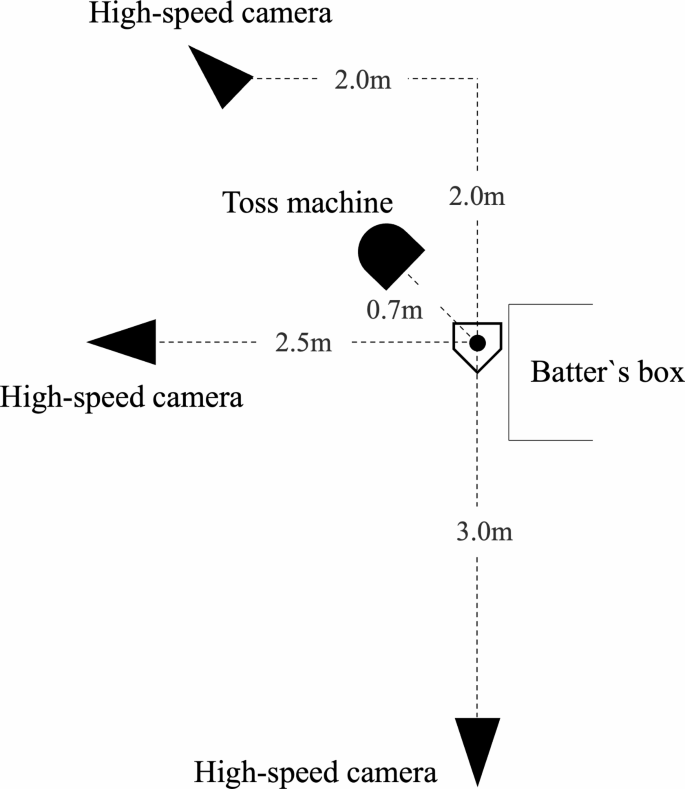
    Testing was conducted between 9:00 AM and 4:00 PM on an outdoor baseball field maintained under standard environmental conditions. In addition, testing took place between January and March, spread over 4 to 6 days per season. First, we measured the participant’s height and weight while wearing clothes. Then, without shoes on, height was measured to the nearest 0.1 cm without shoes on using a stadiometer (YG200DN, Yagami Co., Nagoya, Japan); and weight was measured to the nearest 0.1 kg using a digital scale (BC622, TANITA Co., Tokyo, Japan). The hitting test was then performed after simple warm-up exercises including dynamic stretching, jogging, light throwing and swinging for approximately 20 minutes. Each participant received unreflected white markers on the top of the head, both lateral acromion points, and the anterior and superior iliac spines. The trial involved toss batting with an automatic toss machine (FTM-240; Field Force Company, China). The toss machine was placed 0.7 m from the center of home plate on the opposite side of the batter and 1.1 m toward the pitcher; it was positioned to launch diagonally in front of the batter. The height of the throwing machine was adjusted to the participant’s height as follows: 45% of the height minus 52.5 cm. Then, after one practice trial, actual testing was performed twice and the hitting motion was recorded at 240 Hz with three high-speed cameras (Ex-100PRO, Casio Co., Tokyo Japan) placed on the side, back, and front of the hitter (oblique). The environment of the impact test environment was shown in Figure 1.

    figure 1
    Figure 1

    Environment of batting test (in case of left-handed batsman)

    In addition, swing speed, a component of hitting performance, was measured using a Zepp sensor (ZEP-BT-000002; Zepp Company, Cupertino, California, USA), which has been shown to have high reliability (ICC, 0. 88). [13]and indicated that it correlates moderately to strongly with data analyzed by 3D motion tracking [14]. Participants were allowed to retry the hitting test if they missed the ball while swinging or made timing errors. During the batting test, participants used the bat they would normally use in baseball practice and games, and consistently used the same bat throughout their trials. Data were collected from the highest swing speed test.

    Variables

    The rotation angles of the head, trunk, pelvis and arm direction in the horizontal plane during the stroke movement and the separation angle between each segment, the amount of head movement and the step width were analyzed by manual digitizing using a motion analysis. system (Frame-Dias V; DKH, Tokyo, Japan). In addition, we visualized the body markers attached to the head, both the lateral acromion points, the anterior and superior iliac spines, the nose, the toes and the midpoint between both hands on the screen using a digital format. Then, three-dimensional coordinates were obtained using the direct linear transformation method [15], and the right orthogonal reference frame was defined as the X-axis, Y-axis, and Z-axis. The Y axis was directed from the pitcher’s mound to home plate, and the Z axis indicated a vertical direction (bottom to top). Furthermore, the X-axis was defined as the cross product of the Y-axis and the Z-axis. For calibration, posts with nine markers (from 0 to 2.0 m at 25 cm intervals) were placed vertically in a 4 x 4 grid at 40 cm intervals (the standard errors were as follows: x = 0.22 cm; y = 0.28 cm; z = 0.34 centimeter). From the beginning to the end of the at bat, a recording of the calibration points was performed using the three high-speed cameras. The analysis data was collected at five points: stance, load, foot contact, front swing and ball contact. Stance and foot contact were defined as the point of the toe of the stepping leg on the Z axis at which the Z axis value began to increase in a positive direction. In addition, load and foreswing were defined as the midpoints between stance and foot contact and between foot contact and ball contact, respectively.

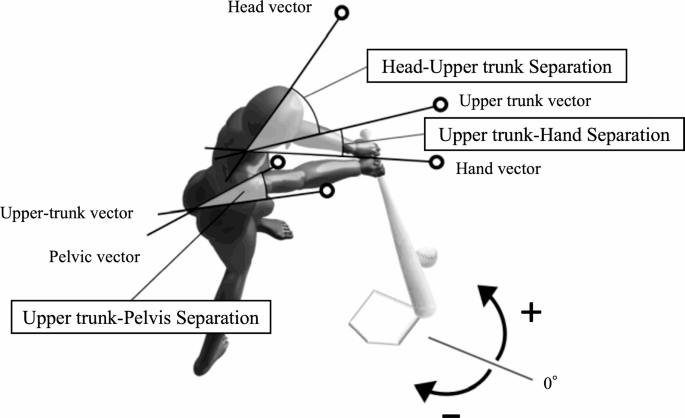
    All rotation angles were calculated using values ​​corresponding to spaces in global coordinates, because batting is an operation initiated by responding to a thrown ball and is defined as the projected angle on the horizontal plane relative to the X axis ( Fig. 2). Additionally, the rotation angles were set as positive/negative relative to the pitcher/catcher.

    Fig. 2
    Figure 2

    Definitions of rotation and separation variables

    The variables analyzed in this study and their definitions are as follows:

    • Head rotation: the angle between the head vector (top of the head to the nose) and the X-axis.
    • Upper torso rotation: the angles between the upper torso vector (through the center of both acromions and perpendicular to the line joining both points) and the X-axis.
    • Arm direction: the angle between the hand vector (center of both acromions to a point between both hands) and the X-axis.

    In addition, the separation angle was expressed as the difference between each rotation angle, and the separation between head and upper trunk was calculated by subtracting the head rotation from the upper trunk rotation. In addition, the separation between the torso and arms was calculated by subtracting the rotation of the upper torso from the arm direction. The upper to pelvic separation was calculated by subtracting the rotation of the upper torso from the rotation of the pelvis. The linear head movement distance (head movement) from stance to foot contact and foot contact to ball contact was calculated as the resulting displacement of the top of the head. Finally, stance widths during stance and foot contact were calculated as the distance between the toes.

    static analysis

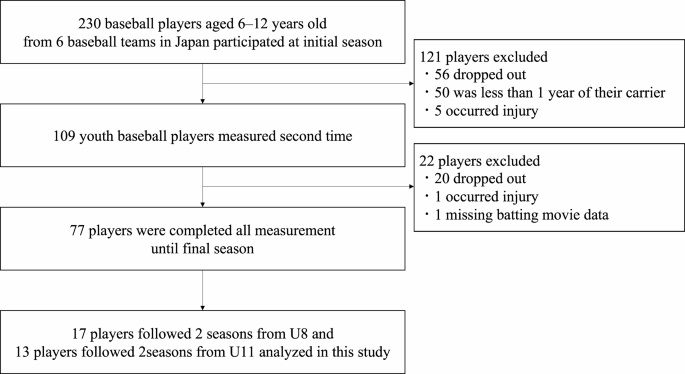
    Statistical power analysis was performed to estimate the sample size. For this study, we needed more than twelve players to perform a comparison between the three groups with 80% power, an alpha of 0.05. and a partial η of 0.14. Seventy-seven baseball players who met inclusion criteria completed three measurements over three seasons. Of these, 17 players formed group 1 (U8 to U10) and 13 players formed group 2 (U11 to U13) (Fig. 3).

    Fig. 3
    figure 3

    Flowchart of exclusion criteria and final participants

    Descriptive statistics (mean ± standard deviation) were performed. After confirming that all data were normally distributed using the Kolmogorov-Smirnov test and confirming homoscedasticity using the Levene test, we performed a one-way analysis of variance (ANOVA) to determine chronological age, height, body weight, years of competition, rotation, and separation comparable. angles, swing speed, head movement and step width at stances, load, foot contact, pre-swing and ball contact between the initial, second and final measurements over three seasons. Additionally, we performed multiple comparisons of the means of the controlled variables using the Bonferroni test. Partial η2 was calculated for the effect size of the one-way ANOVA, with values ​​of ≥ 0.01 to < 0.06, ≥ 0.06 to < 0.14, and ≥ 0.14, indicating small, medium, and large effects, respectively [16]. Finally, the alpha level was set at 0.05 and all statistical analyzes were performed using SPSS Statistics 27.0 (IBM, Armonk, New York, USA).

    Source link

  • Monogram Orthopedics delivers first surgical robot

    Monogram Orthopedics delivers first surgical robot


    – First sale to major global distributor represents major revenue milestone and paves way for broader commercialization –

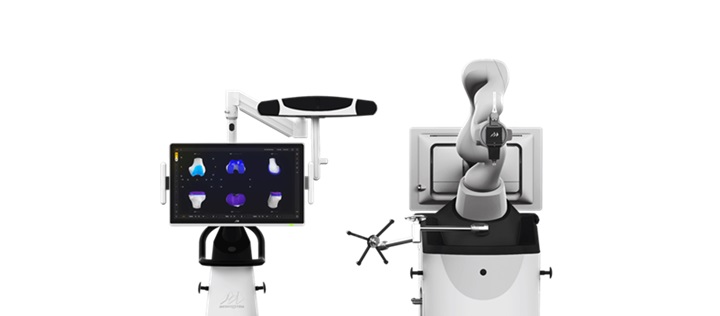
    AUSTIN, TX / ACCESS WIRE / November 28, 2023 / Monogram Orthopedics Inc. (NASDAQ:MGRM) (“Monogram” or the “Company”), a medical technology company focused on reconstructive joint procedures and surgical robotics, has delivered its first surgical robot to one of the world’s largest global robotics distributors.

    “Delivering our first robot and achieving our first commercial revenues validates our technology and represents a critical milestone for our strategic roadmap,” said Ben Sexson, Chief Executive Officer of Monogram Orthopedics. “Our system performs at an extremely high level. We now look forward to seeing how our robot competes and scales in the real world. We hope that the mBôs robot will contribute to improving the standard of care for orthopedic patients worldwide.”

    Monogram aims to improve the standard of care in orthopedic joint replacement surgery with advanced, next-generation active surgical robotics. About 88% of knee replacement surgeries (the company’s first target group) are still performed manually. The mBôs robot aims to combine safety, ease of use, streamlined costs, novel implant design, broad clinical functionality and speed to help drive the next wave of robot adoption in orthopedics.

    About Monogram Orthopedics

    Monogram Orthopedics (NASDAQ: MGRM) is developing a product solution architecture with the long-term goal of enabling patient-optimized orthopedic implants at scale by coupling 3D printing and robotics with advanced pre-operative imaging. The company has a robot prototype that can autonomously perform optimized paths for high-precision insertion of implants into synthetic bone specimens. Monogram plans to manufacture and market robotic surgical equipment and related software, orthopedic implants, tissue ablation devices, navigation consumables and other miscellaneous instruments required for reconstructive joint replacement procedures. The company has not yet filed a 510(k) premarket notification or obtained 510(k) approvals for its robotic products. Marketing these products requires FDA approval, and the Company has not obtained FDA approval for any of its robotic products, and it cannot estimate the timing or guarantee the ability to obtain such approvals.

    Monogram Orthopedics is working to improve the way orthopedic surgery is performed. Our system is being developed to combine personalized knee implants with precision robotic surgical assistants to hopefully provide patients with a more appropriate knee replacement with minimally invasive surgery. One hundred thousand knee replacements that fail each year in a $19.4 billion market represent a huge opportunity for us.

    For more information, visit www.monogramorthopedics.com.

    Forward-Looking Statements

    This press release may contain “forward-looking statements.” To the extent that the information presented in this presentation discusses financial projections, information or expectations about Monogram Orthopedics Inc.’s business plans, results of operations, products or markets, or otherwise makes statements regarding future events, such statements are forward-looking. . Such forward-looking statements can be identified by the use of words such as “should”, “may”, “intend”, “anticipate”, “believe”, “estimate”, “project”, “predict”, “expect” , ”planning” and ”making proposals”.

    Although Monogram Orthopedics Inc. believes that the expectations reflected in these forward-looking statements are based on reasonable assumptions, there are a number of risks and uncertainties that could cause actual results to differ materially from such forward-looking statements. You are urged to carefully review and consider all cautionary statements and other disclosures, including the statements under the heading “Risk Factors” and elsewhere in the offering statement filed with the SEC. Forward-looking statements speak only as of the date of the document in which they appear, and Monogram Orthopedics Inc. assumes no obligation to update any forward-looking statements, except as may be required by law.

    Investor Relations

    Chris Tyson
    Executive Vice President
    MZ North America
    Direct: 949-491-8235
    MGRM@mzgroup.us

    SOURCE: MONOGRAM ORTHOPEDICS INC

    Source link

  • New Shotel™ medical ankle arthrodesis device significantly improves patient quality of life

    New Shotel™ medical ankle arthrodesis device significantly improves patient quality of life


    Reduces time to weight bearing to two weeks from the current six to eight weeks

    ATLANTA , Nov. 28, 2023 /PRNewswire/ — Shotel Medical today announced its Shotel™ Ankle Arthrodesis Nail System, which utilizes a novel device design for the treatment of end-stage ankle arthritis. It was used for the first time in Florida last month during a procedure in Delray Beach. Two weeks postoperatively, the patient was weight-bearing with the use of a CAM walking shoe, a significant improvement over the six- to eight-week time to weight-bearing offered by traditional ankle arthrodesis systems.

    The patented Shotel Nail System, manufactured and distributed by BioPro Implants, differs from traditional ankle arthrodesis devices because its unique curved design allows for a minimally invasive approach with very small incisions. It is designed to achieve fusion at the tibiotalar joint while allowing unrestricted motion at all other joints. This benefits the patient with faster healing, faster recovery and faster loading. End-stage ankle arthritis is becoming increasingly common and can lead to significant physical disability. There are an estimated 50,000 new cases of ankle arthritis in the US each year1

    “We designed our ankle fusion nail system so that patients have smaller incisions, allowing them to heal faster and function much earlier, giving them a better quality of life. The improvement in time to weight bearing for the patient is meaningful,” said Christopher Weathers, Chief Commercial Officer. “We are pleased to see our Shotel nailing system gaining traction among surgeons across the country. So far, 24 operations have been performed with it.”

    Kevin Palmer, DPM, dual board certified podiatrist from Boca Raton and Delray Beach, FL, who performed the procedure, said, “The patient presented with progressively worsening ankle disease and pre-existing structurally compromised hardware. The new design of the Shotel Nail System gave me confidence that it would be stable and would hold up over the long term. During the procedure, after I removed the patient’s current hardware, the Shotel Nail System was inserted smoothly, with a smaller incision and a much less invasive approach than traditional ankle fusion systems. I also like that it provides multiple layers of compression, which is needed at the fusion site to speed healing.

    “I cannot emphasize enough how important it is that the patient started walking with a CAM walking shoe within two weeks,” added Dr. Palmer added. “This will be a game changer – and life changing – for many patients in the future.”

    For more information about the Shotel™ Ankle Arthrodesis Nailing System or for surgical training, visit www.shotelmedical.com.

    About Shotel Medical
    Shotel Medical is the developer of the Shotel™ Ankle Arthrodesis Nail System, an entirely new device that has the potential to transform patient care and have a significant impact on the healthcare landscape. Developed in collaboration with a team of biomechanical engineers, orthopedic surgeons and industry thought leaders, the device addresses the needs of patients with end-stage ankle arthritis. The unique design allows patients to heal faster, function sooner and improve quality of life compared to current treatment options. Founded in 2017, the company has offices in New Orleans and Atlanta.

    About BioPro
    For more than three decades, BioPro has been at the forefront of orthopedic innovation, focused on improving the lives of patients suffering from orthopedic conditions. The company is committed to developing advanced implants and surgical devices that reduce pain and restore function, providing patients and surgeons with a diverse portfolio of established solutions and emerging technology. For more information, visit https://bioproimplants.com/.

    Media contact:
    Barbara Bikkel
    305-215-2121
    369140@email4pr.com

    ___________________________________
    1 Smyth, Niall A. MD; Dawkins, Brody J.BA; Goldstein, Joshua P.B.S.; Kaplan, Jonathan R. MD; Schon, Lew C. MD; Aiyer, Amiethab A. MD. Consumer prices for surgical treatment of ankle arthritis: limited availability and high variability. JAAOS: Global Research and Reviews 3(7):p e011, July 2019. | DOI: 10.5435/JAAOSGlobal-D-19-00011

    SOURCE Shotel Medical

    rt

    Source link

  • DISC Surgery Center in Newport Beach is now enrolling patients in a clinical trial of artificial disc replacement

    DISC Surgery Center in Newport Beach is now enrolling patients in a clinical trial of artificial disc replacement


    Drs. Ali H. Mesiwala and Grant D. Shifflett participate in the pivotal two-level study of the safety and effectiveness of the Orthofix M6-C™ artificial cervical disc compared to anterior cervical discectomy and fusion.

    NEWPORT BEACH, Calif., Nov. 28, 2023 /PRNewswire/ – DISC Surgery Center of Newport Beach (“DISC”), committed to supporting research vital to the field of spine care, has announced its participation in a clinical trial to artificial disc replacement and is now enrolling qualified patients. Candidates may include patients between the ages of 18 and 75 who have been told they need cervical (neck) surgery at two consecutive levels (among other requirements).

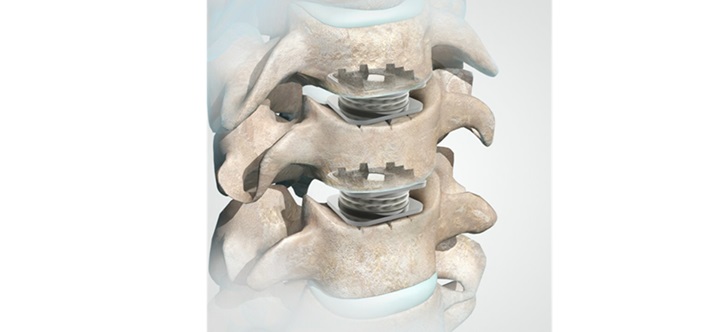
    Drs. Ali H. Mesiwala and Grant D. Shifflett – both board-certified, fellowship-trained spine surgeons at DISC – join other experts at approximately 30 clinical sites participating in this study across the country. The primary objective of the study is to evaluate the safety and effectiveness of the Orthofix M6-C™ artificial cervical disc (already FDA-approved for single-level surgery) in patients with contiguous symptomatic bilevel cervical radiculopathy, with or without umbilical cord compression. The results will then be compared with those in patients undergoing anterior cervical discectomy and fusion (ACDF).

    Artificial disc replacement surgery is very similar to ACDF surgery. Both procedures remove the damaged disk. However, when the damaged disc is removed to replace the disc, the space between the vertebrae is filled with a specialized implant called an artificial disc, instead of a bone graft. The artificial disc is designed to restore the distance between the vertebrae while still allowing some movement.

    With its track record as a national leader in outpatient spine and its team’s extensive experience performing advanced motion maintenance techniques, DISC is ideally positioned to participate in such research.

    “The DISC Surgery Center in Newport Beach has placed more than 3,000 cervical discs since 2018 and we are well versed in the motion-preserving qualities of the surgery,” said Dr. Mesiwala. “I think it is important to stay actively involved in research to improve patient care, so I wanted to be part of a study that will improve our learnings and discoveries.”

    Dr. Shifflett added, “As pioneers in minimally invasive spine surgery and techniques, we always welcome the opportunity to advance the field while informing the treatment options available to patients.”

    Patients who would like to know if they are eligible for this study can visit https://www.discmdgroup.com/adr-clinical-study/.

    About DISC Surgery Center in Newport Beach
    DISC Surgery Center in Newport Beach is a purpose-built outpatient clinic focused on providing patients with the safest, most advanced minimally invasive spine surgery, orthopedic sports medicine, total joint replacement and pain management. DISC is a subsidiary of TriasMD, a portfolio company of Chicago Pacific Founders, and also an official partner of Red Bull Athlete Performance Center. For more information, call 949-988-7800, visit www.discmdgroup.com or follow @DISCMD on Instagram.

    Media contact:
    Kristien Brada-Thompson
    760-274-6393
    369218@email4pr.com

    SOURCE DISC Sports and Spine Center

    rt

    Source link

  • Researchers develop $1 cancer treatment using engineered bacteria

    Researchers develop $1 cancer treatment using engineered bacteria

    bacteria Sebastian Kaulitzki 46826fb7971649bfaca04a9b4cef3309

    What if a single dollar dose could cure cancer?

    A multi-university team of researchers, supported by federal funding, is developing a highly efficient bacterial therapeutic to target cancer more precisely and make treatment safer via a single $1 dose.

    Traditionally, cancer therapies have been limited in their effectiveness in treating patients. Some, such as radiation and chemotherapy, cause harmful side effects, while others tend to result in low patient responsiveness, not to mention the expense required to receive treatment. Findings from the American Cancer Society’s Cancer Action Network show that 73% of cancer survivors and patients worried about how they would pay for their cancer care, and 51% said they had medical debt due to treatment. For example, state-of-the-art cancer therapy can cost up to $1,000,000.

    Texas A&M University and the University of Missouri are leading the effort to develop a low-cost, safe and controlled cancer treatment. Researchers received a $20 million grant from the Advanced Research Projects Agency for Health (ARPA-H) to fight cancer. The four-year project is part of the current administration’s Cancer Moonshot initiative, an effort to promote and increase funding for cancer research. It is one of the first projects funded by the newly created agency, which aims to accelerate better health outcomes for all by supporting the development of high-impact solutions to society’s most challenging health problems.

    Quickly analyze cells

    $12 million of the grant will go to the Texas A&M Engineering Experiment Station/Texas A&M, where co-principal investigators Drs. Arum Han, Jim Song, and Chelsea Hu develop synthetic programmable bacteria for immune-targeted killing in tumor environments (SPIKEs). The idea is to develop bacteria that help T cells kill cancerous tissue, destroy themselves once the cancer is gone, and leave the body safely as human waste.


    SPIKEs can specifically target tumor cells. And because it only targets cancerous tissue and not the surrounding healthy cells, patient safety is increased exponentially. It is a great honor to be on this team and tackle a major health problem that affects many people.”


    Arum Han, the Texas Instruments professor in the Department of Electrical and Computer Engineering


    Han’s laboratory develops high-throughput microfluidic systems that can rapidly process and screen vast bacterial therapeutic libraries, cell by cell, to quickly identify the most promising treatments. These systems are made possible by integrating microfabrication methods and biotechnology to realize a picoliter volume liquid handling system that can accurately analyze single cells with high precision and high speeds, creating devices to rapidly analyze individual cells.

    “The biggest challenge is figuring out how to actually develop these advanced microdevices that allow us to run millions and millions of fully automated tests without manual or human intervention,” Han said. “That’s the technical challenge.”

    Rescuing anti-tumor immune cells

    While Han innovates and designs microdevices, Song -; an immunologist with a background in microbial pathogenesis, T cell biology and T cell-based immunotherapy -; has been working on immunotherapy against bacteria for the past five years. A certain bacteria known as Brucella melitensis can manipulate the human body microenvironment and promote T cell-mediated anti-tumor immunity to treat at least four types of cancer.

    “We are working on improvement Brucella melitensis to more efficiently prevent or suppress tumor growth,” said Song, a professor at Texas A&M School of Medicine. “Our current approach involves figuring out how to engineer bacteria to rescue anti-tumor immune cells, thereby increasing their effectiveness in killing tumor cells.

    ‘That is evident from the data so far BrucellaIts efficiency is dramatically higher than that of other cancer treatments, such as chimeric antigen receptor T-cell therapy and T-cell receptor therapies, with a responsiveness of more than 70%,” said Song.

    Safe and controllable therapies

    While Song continues to test the bacteria’s efficiency using cancer models, Hu, an assistant professor in the Artie McFerrin Department of Chemical Engineering and a synthetic biologist, is working to ensure the live bacterial therapy is safe and controllable.

    “The Brucella The strain we use has been shown to be safe for the hosts because it is an attenuated version, meaning an important gene necessary for bacterial virulence has been deleted,” Hu said. Ultimately, we want to control the speed of the bacteria. growth, where it grows within the tumor environment, and its ability to self-destruct when its mission is complete.”

    To control growth rates, the bacteria’s genes will be adjusted to regulate the population and oscillate around a specific set point. Hu also plans to build biosensors into the bacteria, allowing them to distinguish between healthy tissue and tumor tissue, to ensure they grow only within the tumor microenvironment.

    The bacterium will be engineered to have a receptor that ensures that once the cancer is gone, the patient can take antibiotics that signal the bacterium to cut itself up and be safely removed from the patient’s body.

    “As humans, we are actually covered in bacteria, and many diseases are caused by an imbalance in these bacterial communities,” Hu said. “For example, while some people have incredibly fragile stomachs, others have robust stomachs. The science behind this is that people with a strong immune system and digestive system have a healthy community of bacterial cells in their intestines. There is a lot of potential in living therapies. .”

    “It’s really a great opportunity to have an incredible team that has expertise and can push this technology to the front lines,” Hu said. “So that kind of goal is to reach the clinic and provide patients with effective cancer treatment for less than $1 per dose.”

    Tackling difficult issues using unconventional approaches

    Other collaborators include Dr. Zhilei Chen of the Texas A&M Health Science Center and Dr. Xiaoning Qian of the Department of Electrical and Computer Engineering, along with the principal investigator, Dr. Paul de Figueiredo, of Missouri University.

    “The three main advantages of this work are high safety, low cost and specific targeting of cancer tumors,” Han said. “We are very excited to be one of the first teams to receive support from ARPA-H, a brand new agency created and supported by Congress to really tackle tough problems across broad areas of healthcare. We attack difficult problems. problems using unconventional approaches. High risk and high impact is the hallmark of our approach.”

    And the future applications of technical bacteria that this research opens up are limitless.

    For our next big project, we will work together to develop bacteria against autoimmune diseases such as type 1 diabetes and rheumatoid arthritis,” Song said. Bacteria-based immunotherapy represents a groundbreaking frontier in medicine and offers the potential to revolutionize the treatment of autoimmune diseases. Now that we have harnessed the power of beneficial microbes to modulate the immune system, we are about to change the future of medicine. Our research and expertise hold the promise of transforming the lives of millions of people, offering them new hope and a healthier future.”

    Source link

  • Effect of plyometric versus complex training on core, lower extremity and upper extremity strength in male cricketers: a randomized controlled trial  BMC Sports sciences, medicine and rehabilitation

    Effect of plyometric versus complex training on core, lower extremity and upper extremity strength in male cricketers: a randomized controlled trial BMC Sports sciences, medicine and rehabilitation


    • Scanlan AT, Berkelmans DM, Vickery WM, Kean CO. An overview of the internal and external physiological demands of batting in cricket. Int J Sports Physiol Perform. 2016;11(8):987–97.

      Article PubMed Google Scholar

    • Ali K, Khan MH. The effects of plyometric training on grass and clay on jumping, sprinting and agility in collegiate cricketers. Int J Biomed Adv Res. 2013;4(12):902–8.

      Article Google Scholar

    • Medicine ACoS. American College of Sports Medicine Position Standard. Progression models in resistance training for healthy adults. Med Sci Sports Exercise. 2009;41(3):687–708.

      Article Google Scholar

    • Grgic J, Schoenfeld BJ, Davies TB, Lazinica B, Krieger JW, Pedisic Z. Effect of resistance training frequency on gains in muscle strength: a systematic review and meta-analysis. Sports Med. 2018;48(5):1207–2020.

      Article PubMed Google Scholar

    • Chu DA, Panariello RA. Jumping plyometrics: Sport-specific plyometrics: Baseball pitching. Nat Strength Cond Assn J. 1989; 11:81–5.

      Article Google Scholar

    • Markovic G. Does plyometric training improve vertical jump height? A meta-analytic review. Br J Sports Med. 2007;41(6):349–55.

      Article PubMed PubMed Central Google Scholar

    • Baechle TR, Earle RW. Basics of strength training and conditioning. 3rd edition. Human kinetics; 2008. p. 417.

    • Luebbers PE, Potteiger JA, Hulver MW, Thyfault JP, Carper MJ, Lockwood RH. Effects of plyometric training and recovery on vertical jump performance and anaerobic strength. J Strength Cond Res. 2003;17(4):704–9.

      PubMed Google Scholar

    • MacDonald CJ, Lamont HS, Garner JC. A comparison of the effects of six weeks of traditional resistance training, plyometric training, and complex training on strength measurements and anthropometry. J Strength Cond Res. 2012;26(2):422–31.

      Article PubMed Google Scholar

    • Thapa RK, Lum D, Moran J, Ramirez-Campillo R. Effects of complex training on the sprinting, jumping and change of direction ability of football players: a systematic review and meta-analysis. Front Psychol. 2021;11:627869.

      Article PubMed PubMed Central Google Scholar

    • Baker D. Acute effect of alternating heavy and light resistance on power output during complex upper body strength training. J Strength Cond Res. 2003;17(3):493–7.

      PubMed Google Scholar

    • French DN, Kraemer WJ, Cooke CB. Changes in dynamic exercise performance after a series of preconditioning isometric muscle actions. J Strength Cond Res. 2003;17(4):678–85.

      PubMed Google Scholar

    • Fatouros IG, Jamurtas AZ, Leontsini D, Taxildaris K, Aggelousis N, Kostopoulos N, et al. Evaluation of plyometric exercise training, strength training and their combination on vertical jumping performance and leg strength. J Strength Cond Res. 2000;14(4):470–6.

      Google Scholar

    • Ingle L, Sleap M, Tolfrey K. The effect of a complex training and detraining program on selected strength and power variables in early pubertal boys. J Sports science. 2006;24(9):987–97.

      Article PubMed Google Scholar

    • Ebben WP, Jensen RL, Blackard DO. Electromyographic and kinetic analysis of complex training variables. J Strength Cond Res. 2000;14(4):451–6.

      Google Scholar

    • Anant S, Choudhary R, ​​Venugopal R. Effect of core training on anaerobic strength, explosiveness, repetitive strength and endurance of male players. Int Human Res J 2014;2(3):1–8.

    • Dallas GC, Pappas P, Ntallas CG, Paradisis GP, Exell TA. The effect of four weeks of plyometric training on the reactive strength index and leg stiffness is sport-dependent. J Sports Med Phys Fitness. 2020;60(7):979–84.

      Article PubMed Google Scholar

    • Anant SK, Venugopal R. Effect of eight-week Swiss ball training on the core muscles of male players. Int J Mov Educ Soc Sci. 2015;3(2):53–5.

    • Army LA, Lambert J. A 20 m maximum multi-stage shuttle run test to predict $$\dot V$$ O2 max. Eur J Appl Physiol. 1982;49(1):1–12.

      Article CAS Google Scholar

    • Lau C, Yu R, Woo J. Effects of a 12-week hatha yoga intervention on cardiorespiratory endurance, muscle strength and endurance and flexibility in Chinese adults in Hong Kong: a controlled clinical trial. Evid-based complement Alternat Med. 2015;2015:12. Article ID 958727. https://doi.org/10.1155/2015/958727.

    • Rahimi R, Behpur N. The effects of plyometric, weight and plyometric strength training on anaerobic strength and muscular strength Facta universitatis series. Physical Edu Sports. 2005;3(1):81–91.

      Google Scholar

    • Ali K, Verma S, Ahmad I, Singla D, Saleem M, Hussain ME. Comparison of complex versus contrast training on steroid hormones and sports performance in male football players. J Chiropr Med. 2019;18(2):131–8.

      Article PubMed PubMed Central Google Scholar

    • Gabriel DA, Kamen G, Frost G. Neural adaptations to resistance exercise. Sports Med. 2006;36(2):133–49.

      Article PubMed Google Scholar

    • Freitas TT, Martinez-Rodriguez A, Calleja-Gonzalez J, Alcaraz PE. Short-term adaptations after complex training in team sports: a meta-analysis. PLoS One. 2017;12(6): e0180223.

      Article PubMed PubMed Central Google Scholar

    • Hrysomallis C, Kidgell D. Effect of heavy dynamic resistance exercise on acute upper body strength. J Strength Cond Res. 2001;15(4):426–30.

      CAS PubMed Google Scholar

    • Holm L, Reitelseder S, Pedersen TG, Dossing S, Petersen SG, Flyvbjerg A, et al. Changes in muscle size and MHC composition in response to resistance exercise with heavy and light loading intensity. J Appl. Physiol. 2008;105(5):1454–61.

      Article CAS PubMed Google Scholar

    • Evans AK, Durham MP, Hodgkins TD, Sinclair DR, Adams KJ. Acute effects of bench press on power output during a subsequent ballistic bench throw. Med Sci Sports Exercise. 2001;33(5):S325.

      Article Google Scholar

    • Ritchie D, Keogh JWL, Reaburn P, Bartlett JD. The use of one and four minutes of recovery when using the contrast method of resistance training does not negatively impact subsequent jump performance when concurrent training is involved. PeerJ. 2020;13(8):e10031. https://doi.org/10.7717/peerj.10031.PMID:33083124;PMCID:PMC7566756.

      Article Google Scholar

    • McKendry J, Pérez-López A, McLeod M, Luo D, Dent JR, Smeuninx B, et al. Short rest between sets attenuates resistance exercise-induced increases in myofibrillar protein synthesis and intracellular signaling in young men. Exp Physiol. 2016;101(7):866–82.

      Article CAS PubMed Google Scholar

    • Jensen RL. Kinetic responses during landings of plyometric exercises. In Proceedings of the XXVI Congress of the International Society of Biomechanics in Sports (Kwon, YH, Shim, J, Shim, JK, and Shin, IS, editors). 2008; 393–6.

    • Adams K, O’Shea JP, O’Shea KL, Climstein M. The effect of six weeks of squat, plyometric, and squat-plyometric training on energy production. J Applied Sports Sci Res. 1992;6(1):36–41.

      CAS Google Scholar

    • Herrero J, Izquierdo M, Maffiuletti N, Garcia-Lopez J. Electromyostimulation and plyometric training effects on jumping and sprinting time. Int J Sport Med. 2006;27(07):533–9.

      Article CAS PubMed Google Scholar

    Source link

  • Stronger thigh muscles can prevent knee replacement surgery

    Stronger thigh muscles can prevent knee replacement surgery


    CHICAGO, Nov. 27, 2023 /PRNewswire/ — Stronger quadriceps muscles, compared to the hamstrings, may lower the risk of total knee replacement, according to research presented today at the annual meeting of the Radiological Society of North America (RSNA). Researchers said the findings could inform strength training programs for people with advanced knee arthritis.

    Advanced knee osteoarthritis is a leading cause of pain and disability worldwide. In the US alone, 14 million adults have symptomatic knee osteoarthritis, and more than half of diagnosed patients are expected to eventually undergo total knee replacement surgery.

    Although stronger muscle groups are generally thought to be associated with a lower rate of total knee replacements, their relative importance is not well established. Of particular importance is the relationship between the extensors and the hamstrings, the two main muscle groups in the knee.

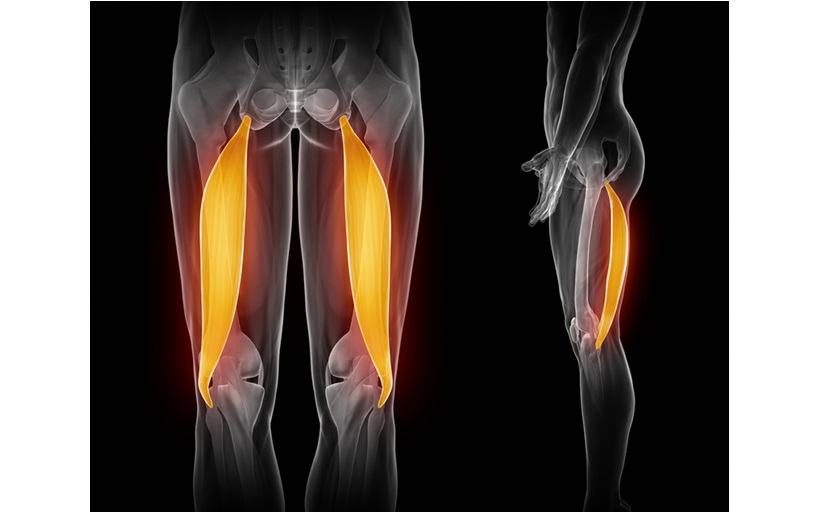
    The extensors, the muscles at the front of the thigh, commonly called the quadriceps, are the strongest muscle group in the body and have a vital influence on walking, other activities and biomechanics. The muscles around the back of the thigh, known as the hamstrings, are responsible for the extension of the hip and flexion of the knee, making them equally essential for physical activity.

    “The two muscle groups act as opposing forces, and the balance between them allows for a wide range of activities while protecting the knee joint,” says lead study author Upasana Upadhyay Bharadwaj, MD, of the University of California, San Francisco (UCSF). “An imbalance, among other factors, leads to a change in biomechanics, resulting in the progression of osteoarthritis.”

    Dr. Upadhyay Bharadwaj and colleagues evaluated thigh muscle volume in 134 participants in the Osteoarthritis Initiative, a nationwide study sponsored by the National Institutes of Health. They compared 67 patients who underwent total knee replacement of one knee with 67 control participants who did not undergo knee replacement. The cases and controls were matched on variables such as age and gender.

    The researchers obtained 3T MRI of the thigh at the time of surgery. They also evaluated MRI findings two years and four years before surgery. They used a previously trained deep learning model to segment and calculate the volumes of the muscles of the thigh – measurements that are difficult to calculate manually.

    When comparing patients who had undergone total knee replacement with the control group, a higher ratio of quadriceps to hamstring volume was significantly associated with a lower likelihood of total knee replacement. Higher hamstring and gracilis volumes, a long, thin muscle on the inside of the thigh, were also associated with a lower likelihood of total knee replacement.

    “Our research shows that in addition to strong individual muscles, larger extensor muscle groups – compared to hamstring muscle groups – are significantly associated with a lower likelihood of total knee replacement surgery within two to four years,” said Dr. Upadhyay Bharadwaj.

    The study results have implications for both the interpretation of imaging studies and clinical management. The results suggest that training programs that strengthen the quadriceps in relation to the hamstrings may be beneficial.

    “Although we assume that total muscle volume is important as a surrogate marker of muscle strength, the relationship, and therefore balance, between the extensor and hamstring muscles may be more important and significantly associated with a lower likelihood of total knee replacement,” Dr. Upadhyay Bharadwaj said.

    Although the study focused on people with arthritis, the findings could also help inform strength training for a broader segment of the population.

    “While these results are essential for targeted therapy in a population at risk for osteoarthritis, even the general public can benefit from our results by preventively incorporating appropriate strengthening exercises,” said Dr. Upadhyay Bharadwaj.

    Co-authors are John A. Lynch, Ph.D., Gabby B. Joseph, Ph.D., and Thomas M. Link, MD, Ph.D.

    Note: Copies of RSNA 2023 news releases and electronic images will be available online at RSNA.org/press23.

    RSNA is an association of radiologists, radiation oncologists, medical physicists and related scientists who promote excellence in patient care and health care through education, research and technological innovation. The association is located in Oak Brook, Illinois. (RSNA.org)

    Editor’s note: The data in these publications may differ from the data in the published abstract and the data actually presented at the meeting, as researchers continue to update their data up until the meeting. To ensure you are using the most current information, please call the RSNA Newsroom at 1-312-791-6610.

    For patient-friendly information about musculoskeletal imaging, please visit RadiologyInfo.org.

    SOURCE Radiological Society of North America (RSNA)

    rt

    Source link

  • MCRA Announces Launch of Integrated AI & Imaging Center

    MCRA Announces Launch of Integrated AI & Imaging Center


    Led by former FDA Imaging Experts, MCRA AI & Imaging Center is the first and only integrated solution covering the medical device lifecycle with 24/7 customer support

    WASHINGTON , Nov. 27, 2023 /PRNewswire/ — MCRA, the leading private independent Clinical Research Organization (CRO) and medical device, diagnostics and biologics consulting firm, is pleased to announce the launch of its AI & Imaging Center, the first and only integrated solution, led by former FDA imaging experts, covering the entire medical device lifecycle.

    MCRA’s AI & Imaging Center is designed to better meet the emerging and complex needs of imaging technologies. By combining innovation, expertise and speed, we accelerate customers’ AI/ML needs faster and more efficiently.

    Led by former FDA regulatory and imaging experts, the Integrated AI & Imaging Center provides critical services to medical device customers developing AI/ML-enabled devices and new imaging technologies. The AI ​​& Imaging Center works with an extensive network of radiologists and specialists to provide world-class diagnostic and therapeutic imaging laboratory services.

    MCRA’s AI & Imaging Center services address the entire lifecycle of medical device studies, including regulatory support, study design and design, data collection and aggregation, expert recruitment and training, statistical analyses, performance testing, and project and data management . MCRA’s AI & Imaging Center has already provided services ranging from protocol development to study execution and regulatory submissions for more than 50 imaging clients. As a fully integrated solution, MCRA AI & Imaging Center uses proven zero-print, advanced image analysis and data management software with 24/7 support for customers and network specialists.

    Alex Cadotte, Ph.D., Senior Director, Digital Health and Imaging Regulatory Affairs, said: “As the only fully integrated AI & Imaging Center, our value lies in the expertise of our team, which consists of former FDA experts who have navigated the regulatory landscape to understand. and clinical processes. Our value proposition is to ensure that the study is designed and conducted in a manner that meets FDA expectations and ultimately reduces time to market by conducting the right study the first time.”

    MCRA is excited to continue advancing imaging and digital health innovation in the medical device industry by helping customers navigate the evolving AI/ML imaging landscape. Read more about the MCRA AI & Imaging Center here.

    MCRA customer Richie Christian, Head of Regulatory and Quality at Formus Labs says: “The MCRA AI & Imaging Center has provided our technologies with real insights into how the FDA thinks about best practices for AI MedTech. This deep insight allowed us to be more innovative and deliver a best-in-class product to the AI ​​marketplace.”

    Anthony Viscogliosi, CEO of MCRA said: “The MCRA AI & Imaging Center truly integrates our deep regulatory experience with clinical trial execution, technology and performance testing. This new addition to MCRA will only allow us to improve our customers’ success throughout the entire product lifecycle, with a focus on the main goal: FDA approval.”

    About MCRA, LLC: MCRA is the leading private, independent clinical research organization (CRO) and consulting firm for medical devices, diagnostics and biologics. MCRA delivers its client’s industry experience and integrates its seven business value creators: regulatory, clinical research, reimbursement, healthcare compliance, quality assurance, cybersecurity and distribution logistics to deliver a dynamic, market-leading effort from concept of innovation to commercialization . MCRA’s integrated application of these key value-creating initiatives provides unparalleled value to its customers. MCRA has offices in Washington, DC, Hartford, CT, New York, NY, London, England, Winterthur, Switzerland, Eschborn, Germany and Tokyo, Japan and serves nearly 1,000 customers worldwide. Key areas of therapeutic experience include orthopedics, spine, biologics, cardiovascular, diagnostic imaging, wound care, artificial intelligence, dentistry, anesthesia, respiratory, ENT, general surgery, digital health, neurology, robotics, oncology, general and plastic surgery. urology and in vitro diagnostic (IVD) devices. www.mcra.com

    About Viscogliosi Brothers, LLC: Viscogliosi Brothers, LLC (VB), founded MCRA in 2004. Headquartered in New York City, VB specializes in financing venture capital, private equity and investment banking activities for the neuromusculoskeletal industry. VB is committed to financing healthcare innovation. www.vbllc.com

    For more information please contact:
    Erinn Grable, business development manager
    Phone: 202.552.5821 | Email: egrable@mcra.com

    SOURCE MCRA, LLC

    rt

    Source link