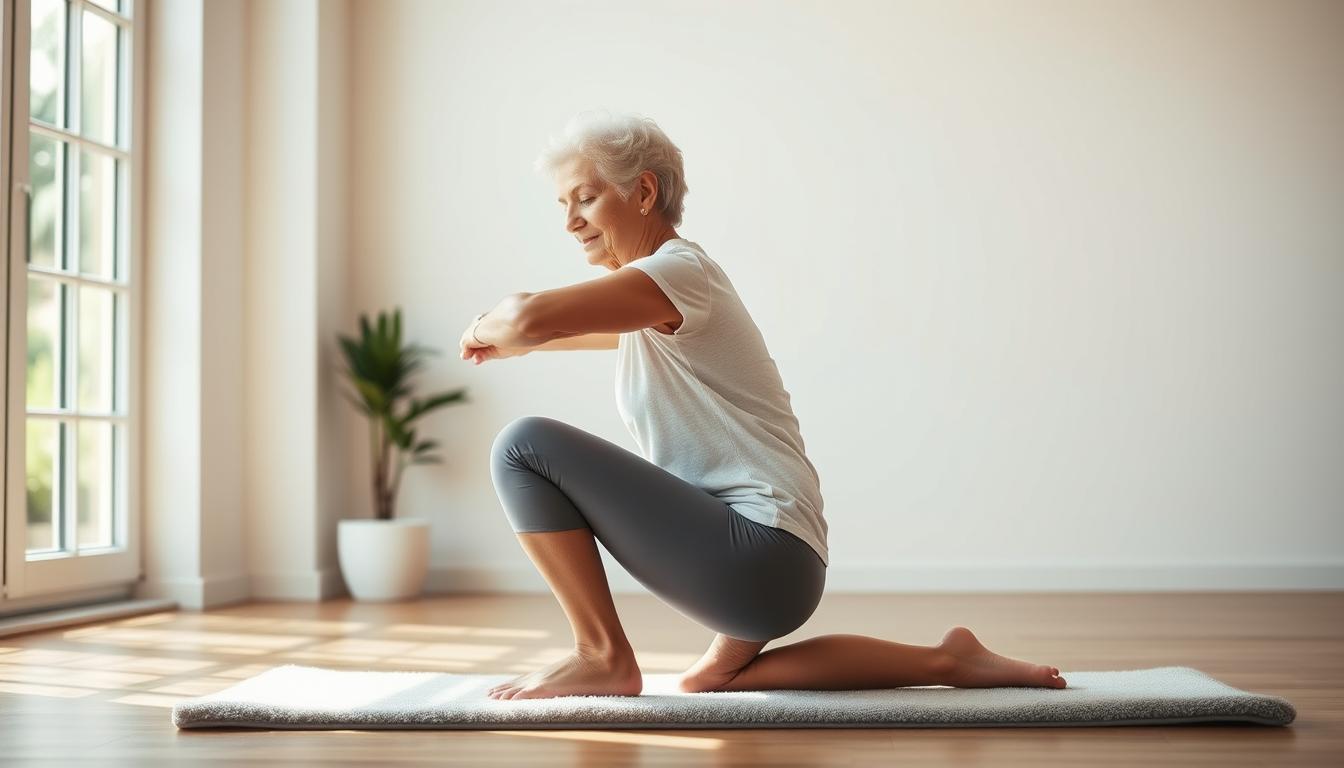
Are you or a loved one struggling with knee pain as you age? You’re not alone. Knee pain is a common issue among seniors, often hindering their ability to stay active and maintain independence.
We explore how yoga can be a beneficial practice for seniors experiencing knee discomfort. By strengthening the muscle groups that support the knee joint, yoga can help reduce or eliminate pain. There are various ways to modify yoga poses to make them accessible even with knee sensitivity.
Our guide will introduce gentle, modified yoga poses designed to accommodate the needs of older adults with knee concerns, helping to strengthen supporting muscles, improve flexibility, and enhance stability around the knee joint.
Key Takeaways
- Yoga can help strengthen the muscles that support the knee joint, reducing pain.
- Modified yoga poses can be adapted to various mobility levels and knee sensitivity.
- Regular practice of knee-friendly yoga poses can improve flexibility and stability.
- Using props like blocks, bolsters, or chairs can provide support and reduce pressure on the knees.
- Our guide focuses on safety and accessibility for seniors practicing yoga.
Understanding Knee Health in Seniors
The health of our knees plays a vital role in maintaining independence and mobility as we grow older. As we age, our knees undergo natural wear and tear, which can lead to pain and decreased mobility.
Common Causes of Knee Pain in Older Adults
Knee pain in older adults is often caused by a combination of factors, including osteoarthritis, previous injuries, and the natural aging process. As cartilage wears down over time, many seniors experience osteoarthritis, a condition that affects the knee joint. “Osteoarthritis is a leading cause of disability among older adults, significantly impacting their quality of life,” as noted by health experts. Previous injuries can also contribute to knee pain later in life as supporting tissues weaken.
The Importance of Maintaining Knee Mobility
Maintaining knee mobility is crucial for seniors to remain active and independent. Regular movement helps deliver nutrients to the cartilage and prevents stiffness, reducing the risk of further injury. By keeping the knee joint flexible, seniors can continue to perform everyday activities without significant discomfort. As knee pain can create a cycle of decreased activity leading to muscle weakness and more knee strain, proactive knee care is essential.
How Yoga Benefits Aging Knees
For seniors, incorporating yoga into their routine can lead to improved knee function and reduced pain. Yoga strengthens the muscles around the knee joints, improves flexibility, and boosts alignment, all while reducing pain and stiffness. This makes it a fantastic, low-impact exercise for older adults with knee issues.
Strengthening Supporting Muscles
Yoga poses for knee pain focus on the knees’ supporting muscles, such as the quadriceps, hamstrings, and calf muscles. Stronger muscles provide better joint support and reduce knee stress. By targeting these areas, yoga helps to stabilize the knee joint and improve overall knee health.
Improving Flexibility and Range of Motion
Yoga also improves flexibility and gradually increases the range of motion in stiff joints, reducing discomfort. Regular practice can help maintain or even improve knee mobility, making daily activities easier for seniors.
Enhancing Balance and Stability
Furthermore, yoga’s focus on balance training helps seniors maintain proper alignment during movement, reducing the risk of falls that could damage knees. By enhancing balance and stability, yoga practice contributes to overall physical confidence and mobility.
| Benefits of Yoga for Knee Health | Description |
|---|---|
| Strengthening Supporting Muscles | Yoga targets quadriceps, hamstrings, and calf muscles to support knee joints. |
| Improving Flexibility | Yoga increases range of motion and reduces stiffness in the knees. |
| Enhancing Balance | Yoga’s balance training reduces the risk of falls and improves overall stability. |
Key Muscle Groups That Support Healthy Knees
The health of our knees is significantly influenced by the strength and coordination of surrounding muscle groups. Three major muscle groups play a crucial role in maintaining knee health: the quadriceps, hamstrings, and gluteal muscles.
Quadriceps: The Main Drivers of Knee Stability
The quadriceps, or quads, are the main drivers of the knee joint. Located on the front of the thigh, they run from the hip to the knee, straightening the knee from a bent position and helping maintain proper patella alignment. Weakness in the quads can create instability in the knees.
Hamstrings: Critical for Knee Movement
The hamstrings are critically important for moving and stabilizing the knees. They enable the knee to bend safely and effectively. When tight, the hamstrings can create an imbalance in the forces across the knee, potentially leading to pain and instability.
Glutes: The Foundation for Proper Knee Alignment
The gluteal muscles are the largest muscle group in the body and are essential for everyday movements. They provide the foundation for proper leg alignment. Weak glutes can allow the thigh to rotate inward, resulting in knock knees and excessive stress on the knee joint.
Understanding the role of these muscle groups is crucial for maintaining healthy knees. A balanced strength between the front and back of the thigh, along with strong glutes, helps prevent uneven forces on the knee joint, reducing the risk of pain and injury.
Knee-friendly yoga poses for seniors
Yoga offers a variety of poses that are particularly beneficial for seniors, focusing on knee health and stability. These poses can help strengthen the muscles around the knee, improve flexibility, and enhance balance.
Warrior II Pose (Virabhadrasana II)
Warrior II Pose works multiple muscle groups, including the abductor muscles of the outer hip. To practice, stand with your feet about four feet apart, turn your right foot out, and bend your right knee so it’s over your ankle. Extend your arms at shoulder height and hold for three breaths.
Bridge Pose (Setu Bandha Sarvangasana)
Bridge Pose strengthens the glutes and inner thighs. Lie on your back with knees bent and feet hip-distance apart. Press into your feet to lift your hips, squeezing the glutes.
Chair-Supported Poses
Chair-supported poses provide stability for those with balance concerns. Using a chair allows seniors to practice with confidence, building knee strength without full weight-bearing on the joints.
Reclined Leg Exercises
Reclined leg exercises, like Staff Pose Leg Lifts, help strengthen the quadriceps for better knee alignment without putting pressure on the knees.
Gentle Seated Yoga Poses for Knee Health
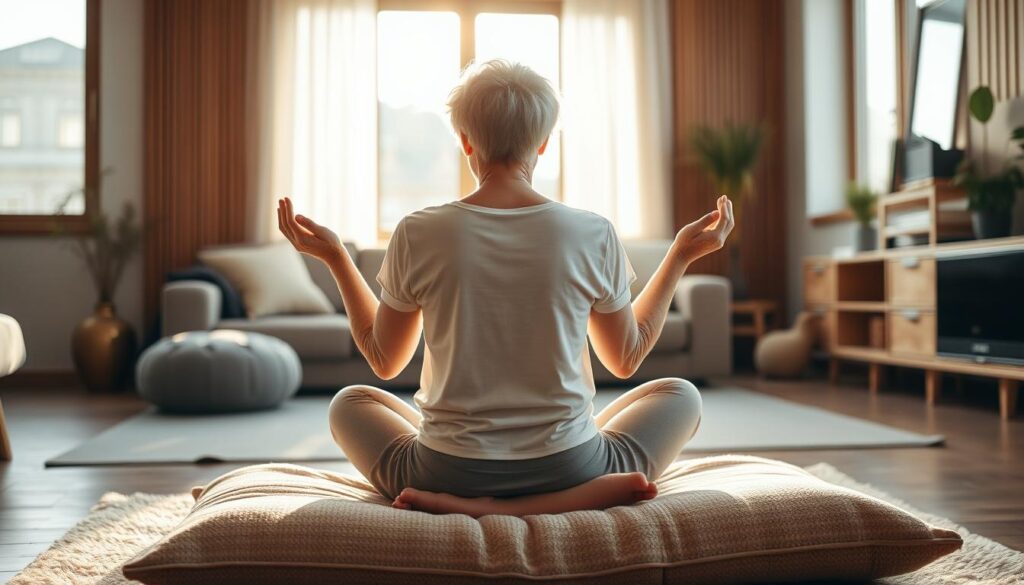
Seated yoga poses offer a gentle and effective way to support knee health in seniors. These poses can be practiced either on the floor or in a chair, making them accessible for individuals with varying mobility levels. We will explore several seated yoga poses that are beneficial for knee health, along with modifications to accommodate different needs.
Staff Pose Variations (Dandasana)
Staff Pose, or Dandasana, is a foundational seated pose that helps to stretch tight hamstrings and strengthen core muscles. To practice, sit with your back against a wall, legs straight in front of you, and feet flexed. This pose builds core strength that supports proper knee alignment. For those who cannot get down on the floor, chair versions can be practiced by sitting on the edge of a chair with feet flat on the floor or on a block, engaging the core, and keeping the spine long.
- Modification for Tight Hamstrings: If you find it challenging to keep your legs straight due to tight hamstrings, you can sit on a folded blanket or cushion to elevate your hips.
- Engaging Core: Ensure that you engage your core muscles to support your lower back and maintain proper posture.
Seated Forward Bends with Modifications
Seated Forward Bends can be beneficial for stretching the hamstrings and calves. However, it’s crucial to modify the pose to protect the knees. If your knee is lifted off the ground and you feel strain in your hip, knee, or groin, consider placing a support such as a blanket or block under your thigh. This adjustment helps to maintain proper alignment and reduces strain on the knee joint.
To practice a modified Seated Forward Bend, bend from the hips rather than rounding the spine. This technique ensures that the movement is distributed evenly and doesn’t put undue stress on the knees.
Gentle Seated Twists
Gentle seated twists are another excellent way to maintain flexibility without putting torque on the knee joints. It’s essential to rotate from the spine rather than twisting the knee. The knee is a hinge joint primarily designed for flexion and extension, so avoiding unnecessary rotation is crucial.
To practice a gentle seated twist, sit with your feet flat on the floor if using a chair, or cross-legged on the floor. Twist your torso gently, keeping your hips facing forward, and use your arms to support the twist. Be mindful of your knee position and adjust as necessary to avoid any discomfort.
Essential Modifications for Knee Protection
When practicing yoga, especially for seniors, modifying poses to protect the knees is crucial for a safe and beneficial practice. As we age, our knees become more susceptible to strain and injury, making it essential to adapt our yoga practice to support knee health.
Finding the Right Degree of Knee Bend
For individuals with knee issues, the degree of knee bend can significantly impact comfort and safety. Experimenting with different depths of knee bends in poses like Warrior I and II can help determine the optimal position for individual needs. A 90-degree bend is often cited as a goal, but this may not be suitable for everyone. It’s crucial to listen to your body and adjust accordingly.
Proper Alignment Techniques
Proper alignment is vital for preventing unnecessary stress on the knees. Tracking the knee in line with the second toe helps maintain proper alignment and reduces the risk of lateral stress on the joint. Common alignment mistakes, such as letting the knee extend past the toes, can be corrected by being mindful of the knee’s position relative to the foot.
Using Props for Support and Stability
Props can play a significant role in supporting knee-friendly yoga practices. Using blocks, blankets, straps, and chairs can help reduce strain on the knees while maintaining the benefits of various poses. For example, placing padding under the shins in kneeling poses can keep the patellae free from ground contact, reducing discomfort.
| Prop | Usage | Benefit |
|---|---|---|
| Blocks | Support hands or feet | Reduces strain on knees |
| Blankets | Padding under shins | Protects patellae |
| Straps | Assists in maintaining alignment | Prevents overstretching |
Poses to Avoid or Modify with Knee Sensitivity
Knee sensitivity requires careful consideration when practicing yoga, as some poses can worsen the condition. The knee is a hinge joint, primarily designed for flexion and extension, making certain movements potentially detrimental if not performed correctly.
Deep Knee Flexion Poses
Deep knee flexion poses, such as full squats and hero pose (Virasana), can compress sensitive structures within the knee joint, leading to discomfort or pain. Alternatives like chair squats or supported squats can offer similar benefits without the extreme flexion.
Poses That Twist the Knee
Poses that involve twisting or torqueing the knee, such as lotus pose (Padmasana) or Bharadvajasana, can overstretch the ligaments around the knee. Modifications or alternatives that keep the rotation in the hip joint instead can help mitigate this risk.
Weight-Bearing Positions
Weight-bearing positions, including kneeling poses and lunges, place significant pressure on the knees. Using props or alternative positions that distribute weight differently can help reduce the strain.
Integrating Knee-Friendly Yoga Into Your Wellness Routine
The journey to healthier knees through yoga involves more than just the poses; it’s about creating a balanced routine that works for you. To achieve this, we recommend starting with a consistent yoga practice that focuses on knee-friendly poses, which can help alleviate knee pain and improve overall mobility.
Begin by incorporating gentle yoga poses into your daily routine, ideally 2-3 times a week, and gradually increase frequency as your body adapts. It’s also beneficial to combine yoga with other low-impact exercises like walking or swimming to maintain a well-rounded fitness regimen. Always warm up your body before practicing yoga to prepare your knees.
Consult with a healthcare provider or a qualified yoga therapist to tailor a practice that suits your knee health needs, and don’t hesitate to communicate your limitations to your yoga instructor to ensure appropriate modifications.
Leave a Reply