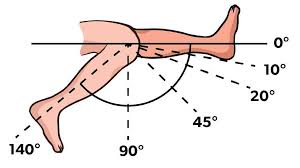
Your definitive guide to understanding knee flexibility, functional requirements for daily life, and recovery milestones for patients in our community and beyond.
Understanding Knee Mobility
Whether you are recovering from a recent injury, preparing for surgery, or simply monitoring your joint health, understanding your Knee Range of Motion (ROM) is critical. Range of motion refers to the measurement of movement around a specific joint—in this case, the knee. At Knee Hurt, we provide the residents of our service areas with the evidence-based data they need to track their progress effectively.
Measurement is typically broken down into two components: Flexion (bending the knee) and Extension (straightening the knee). Achieving a full range of motion is not just about flexibility; it’s about maintaining the ability to perform basic daily tasks like walking, sitting, and climbing stairs without pain or mechanical interference.
The Master Benchmarks Chart
The following table outlines the standard benchmarks used by physical therapists and orthopedic surgeons to evaluate knee health.
| Category | Target Degree | Clinical Significance |
|---|---|---|
| Full Extension | 0° | The “gold standard” for a straight leg. Essential for a normal gait. |
| Hyperextension | 1° to 6° | Normal for many (especially females); movement beyond “straight.” |
| Functional Flexion | 110° – 125° | Required for most Activities of Daily Living (ADLs). |
| Full Healthy Flexion | 135° – 145° | Standard for a healthy adult with no underlying joint issues. |
| Extension Gap | > 5° from zero | Known as a “flexion contracture”; often leads to limping and back pain. |
Functional ROM: What You Need for Daily Life
Many patients ask, “How much do I really need to bend my knee?” The answer depends on your lifestyle. While 135° is ideal, you can be quite functional with less. Here is what is required for common tasks:
Walking & Movement
- Level Ground Walking: 60° – 75°
- Climbing Stairs: 80° – 90°
- Descending Stairs: 90° – 100°
Domestic Activities
- Sitting in a Chair: 90° – 95°
- Tying Shoelaces: 105° – 110°
- Getting in/out of a Bathtub: 135°
Advanced Mobility
- Full Squat: 115° – 165°+
- Sitting Cross-legged: 120°+
- Cycling (Standard Bike): 110° – 115°
Post-Surgical Recovery Milestones
If you are recovering from Total Knee Replacement (TKR) or ACL reconstruction, your recovery timeline is often dictated by ROM targets. While every patient in our service area recovers at a different pace, these are the standard clinical windows:
| Phase | Flexion Goal | Extension Goal |
|---|---|---|
| Weeks 1–2 | 90° | 0° (Straight) |
| Weeks 3–6 | 110° – 115° | 0° (Maintenance) |
| Months 3+ | 120° – 125°+ | 0° (Stable) |
It is important to note that achieving 135° after a total knee replacement is rare; a range of 115°–120° is typically considered a major functional success.
Why Use the Knee Hurt Master Guide?
At Knee Hurt, we bridge the gap between clinical data and practical home management. Residents looking for comprehensive knee pain guides rely on us for accurate, easy-to-digest information.
Localized Context
We understand the specific needs of our community, from hikers needing squat depth to office workers requiring comfortable sitting ROM.
Expert Research
Our benchmarks are based on data from the AAOS, CDC, and NIH, ensuring you get the same information your doctor uses.
Holistic Health
We link ROM to broader health issues, such as how hormonal levels can impact joint health and recovery.
Factors Influencing Your Results
Not everyone will reach 145° of flexion. Several biological and clinical factors influence your specific “Master Benchmark”:
- Gender: On average, females exhibit 2–5° more flexibility than males across all age groups.
- Age: ROM naturally decreases as we age. Children may reach 150°, while adults over 65 often plateau near 130°.
- Symmetry: Your best benchmark is your healthy leg. A difference of 10° or more between your knees is usually a sign that clinical intervention is needed.
- Active vs. Passive ROM: Active ROM (moving the leg yourself) is usually 5–10° less than Passive ROM (when a therapist moves the leg for you).
For those managing inflammatory conditions, staying informed on new tools like quality-of-life exercise tests can provide additional metrics for success.
Frequently Asked Questions
Why is my knee extension “stuck” and not reaching 0°?
Difficulty straightening the knee is often caused by swelling, hamstring tightness, or, in post-surgical cases, scar tissue like “cyclops lesions.” Achieving 0° is often more important for a normal walk than deep bending.
Is 120 degrees of flexion considered good?
Yes. 120° is considered a highly “functional” range of motion. It allows you to perform almost all daily activities, including most sports and cycling, without significant restriction.
What is Arthrofibrosis?
Arthrofibrosis is the clinical term for excessive scar tissue that “locks” the joint. If your range of motion stops progressing or starts to decrease suddenly, you should consult your orthopedic specialist.
How is Range of Motion measured?
Physical therapists use a tool called a Goniometer—a specialized protractor. You can also use various smartphone apps designed to track joint angles at home to monitor your progress between sessions.
Take Control of Your Knee Health Today
Don’t let limited mobility hold you back. Explore our comprehensive library of resources to manage pain and improve your quality of life.
Knee Hurt: Your Trusted Online Educational Resource for Orthopedic Wellness.