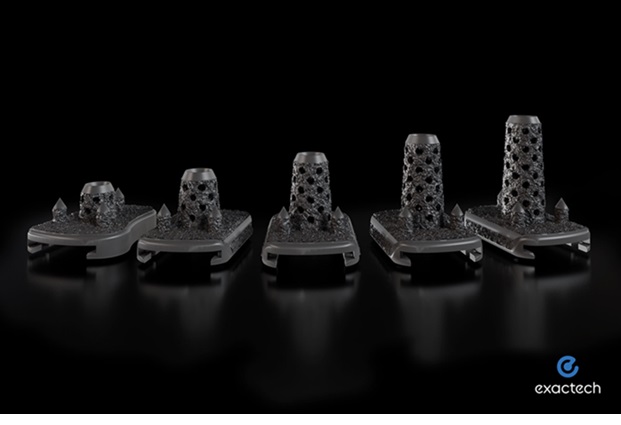

Medacta announces the launch of GMK SpheriKA, the world’s first knee implant optimized for kinematic alignment (KA)
Castel San Pietro, October 30, 2023 – Medacta Group SA (“Medacta”, SIX: MOVE), a Swiss company providing innovative, personalized and sustainable solutions for joint replacement, sports medicine and spine surgery, is pleased to announce the launch of GMK SpheriKA, the world’s first KA-optimized femoral component indicated for total knee replacement. GMK SpheriKA will make its global debut on November 2 at the American Association of Hip and Knee Surgeons (AAHKS) 2023 Annual Meeting.
“GMK SpheriKA reinforces Medacta’s commitment to providing surgeons with personalized solutions for each of their patients,” says Francesco Siccardi, Chief Executive Officer of Medacta International.“Working with an international team of expert orthopedic surgeons, we have introduced a product that builds on our clinically proven GMK Sphere and incorporates the foundations of Kinematic Alignment to ensure every patient receives an implant that is suitable for his or her unique anatomy.”
Medacta’s continued commitment to making a positive impact on patients requiring a total knee procedure has evolved with the development of the concept of Kinematic Alignment, which restores the original pre-arthritic alignment through anatomical resurfacing, making it ligament release is minimized and more natural knee kinematics are enabled. This approach has been shown to improve patient satisfaction compared to more traditional techniques [1-3]. In recent years, clinical studies have shown that GMK Sphere is a particularly suitable implant for kinematic alignment, with the potential to further improve patient outcomes compared to other knee designs [4-6].
Building on the legacy of the GMK Sphere’s ball-in-socket design, GMK SpheriKA offers patients an implant that potentially feels more natural and stable during daily activities, replicating the movement of the healthy knee.In addition,GMK SpheriKA provides optimized femoral coverage and patellar tracking for kinematic alignment procedures, making it the first implant on the market specifically designed for this technique.
“I am happy to offer the GMK SpheriKA to my patients,” said surgeon developer and Kinematic Alignment pioneer Stephen Howell, MD.“The implant design provides a personalized option that takes into account each patient’s unique anatomy and patellofemoral kinematics, restoring a more normal-feeling knee and quickly returning motion and daily activities.”
MyKA, Medacta’s Kinematic Alignment Platform, offers surgeons the most comprehensive solution for performing Kinematic Alignment safely and reproducibly. In addition to GMK SpheriKA, it includes special instruments and a tailor-made education program offered by the MORE Institute, supported by an international network of expert surgeons. In addition, the platform is enhanced by advanced technologies, such as a special planning protocol for the MyKnee 3D printed patient-tailored manuals and NextAR Knee, our Augmented Reality surgical application, which provides unique real-time data to efficiently supplement the surgical workflow. . Both NextAR Knee and MyKnee are part of the MySolutions Personalized Ecosystem, Medacta’s network of advanced digital solutions designed to improve patient outcomes and healthcare efficiency.
For more information, visit Medacta at AAHKS, Dallas (TX), November 2-5, 2023, at booth #1016, or register at spherika-aahks23.medacta.com to receive updates on GMK’s product developments, resources and events SpheriKA .
REFERENCES
[1] Dosset et al. A randomized controlled trial of kinematically and mechanically aligned total knee replacements. Bone Joint J 2014; 96-B: 907–13
[2] Lee et al. Early results of kinematic alignment in primary total knee arthroplasty: a meta-analysis of the literature, The Journal of Arthroplasty 32 (2017) 2028-2032
[3] Yaron, Bar Ziv et al. “Patients undergoing staged bilateral knee arthroplasty are less aware of their kinematically aligned knee compared to their mechanical knee.” Journal of Orthopedics vol. 23 155-159. January 20, 2021
[4] Scott, David F. and Celeste G. Gray. “Results are better with a medially stabilized versus a posteriorly stabilized total knee implanted with kinematic alignment.” The Journal of Arthroplasty 37.8 (2022): S852-S858
[5] Scott, David F. and Amy A. Hellie. “Midflexion, Anteroposterior Stability of Total Knee Replacement Implanted with Kinematic Alignment: A Randomized, Quantitative, Radiographic Laxity Study with Posteriorly Stabilized and Medially Stabilized Implants.” JBJS 105.1 (2023): 9-19.
[6] JONES, Brett K.; CARLSON, Brian J.; SCOTT, David F. Better flexion and early recovery with medial stabilized versus single-radius total knee arthroplasty with kinematic alignment: two-year clinical results. The Knee, 2023, 43: 217-223
Contact
Medacta International SA
Gianluca Olgiati
Senior Director of Global Marketing
Phone: +41 91 696 60 60
media@medacta.ch
ABOUT MEDACTA
Medacta is an international company specialized in the design, production and distribution of innovative orthopedic products, as well as the development of associated surgical techniques. Founded in 1999 in Switzerland, Medacta is active in the fields of joint replacement, spine surgery and sports medicine. Medacta is committed to improving the care and well-being of patients and has a strong focus on the sustainability of healthcare. Medacta’s innovation, created through close collaboration with surgical experts around the world, started with minimally invasive surgical techniques and has evolved into personalized solutions for every patient. Through the MORE Institute, Medacta supports surgeons with a comprehensive and tailor-made program aimed at advancing medical education. Medacta is headquartered in Castel San Pietro, Switzerland, and operates in more than 50 countries. Follow us on Medacta TV, YouTube, LinkedIn and Twitter.
RELATED TRADEMARKS
The trademarks related to Medacta Group are in any case registered in Switzerland. The products and services listed below may not be all-inclusive, and other Medacta products and services not listed below may be covered by one or more trademarks. The products and services listed below may be covered by additional trademarks not listed below. Please note that Swiss trademarks may have foreign counterparts. GMK® SpheriKA, GMK® Sphere, MyKA™, MyKnee®MySolutions™ personalized ecosystem, NextAR™ knee.