Knee replacement infection signs
What if the biggest threat to your new joint isn’t the surgery itself, but something that can surface weeks or even years later? Being aware of Knee replacement infection signs is crucial.
Total hip and knee arthroplasties are among the most common elective operations. For most people, they are a resounding success. Yet, data shows about 1 in 100 patients will face a serious complication after their procedure.

monitoring knee replacement healing
We recognize that a successful outcome relies on two things: the surgical skill and your long-term vigilance. Our goal is to empower you with knowledge.
By learning to monitor your recovery, you can protect your investment in a pain-free life. This guide helps you distinguish between normal healing and the early warning signals of a problem. Understanding these signs allows you to seek timely medical attention for a joint replacement.
Understanding the Knee replacement infection signs can make a significant difference in your recovery journey.
Key Takeaways
- While highly successful, about 1% of joint replacement patients develop an infection.
- Early detection of complications is critical for protecting your surgical results.
- Patient awareness during the recovery process is as important as the initial procedure.
- Knowing the difference between normal healing and potential warning signs is key.
- Common indicators include increased pain, new swelling, warmth, redness, or fever.
- Prompt action and communication with your healthcare team are essential.
- Long-term joint health requires ongoing attention and care.
Overview of Knee Replacement Surgery and Infection Risks
With millions of Americans opting for this surgery each year, understanding its scope and associated risks is fundamental. This procedure is a cornerstone of modern orthopedics, offering renewed mobility to those with severe joint conditions.

knee replacement surgery overview
Introduction to Knee Replacement Procedures
Medical projections suggest that by 2030, the number of these operations performed annually in the United States will reach 3.48 million. This type of intervention is highly common and successful. It involves replacing damaged joint surfaces with artificial components.
Why Infections Occur Around Implants
Bacteria are abundant on our skin and in our bodies. They can enter during surgery or later through the bloodstream. Once they reach the artificial joint, they can form a sticky biofilm.
This biofilm makes it extremely difficult for the body’s natural defenses to clear the germs. Implants are made of metal and plastic, which are non-organic materials. The immune system struggles to fight bacteria that colonize these surfaces.
Such complications can occur in the surgical wound or deep around the implant itself. Understanding these underlying conditions is the first step in prevention.
Knee Replacement Infection Signs: What to Watch For
Your vigilance in the weeks and months following the procedure is your first line of defense against potential problems. We empower you to become an expert in your own recovery. Knowing what to expect makes it easier to spot when something is wrong.
Common Symptoms and Warning Signals
Certain symptoms should prompt immediate contact with your care team. A fever above 100°F (37.8°C) is a classic red flag. Chills or night sweats often accompany it.
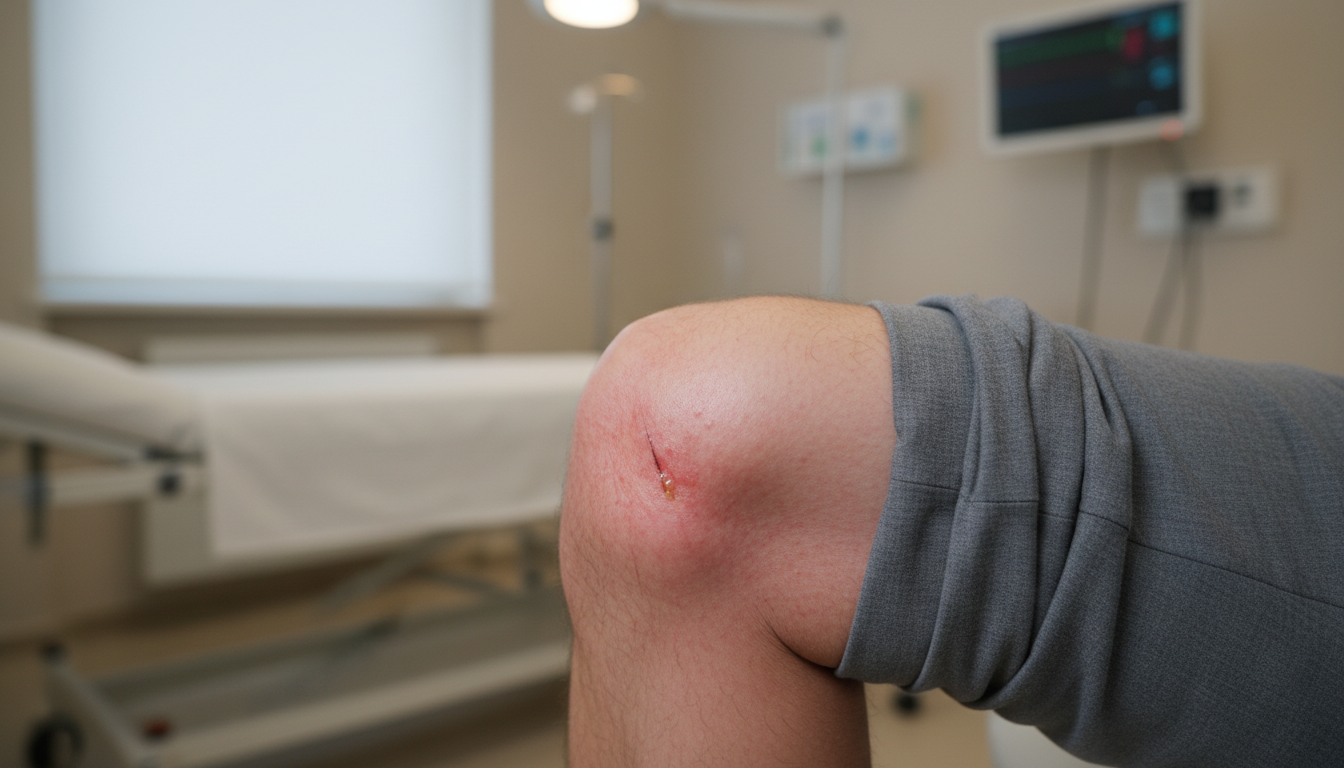
Pay close attention to the surgical wound. Any foul-smelling or grey liquid drainage is not normal. Increased pain or stiffness that doesn’t improve after several weeks is a concern.
A deep joint infection might make walking painful long after your expected recovery period. We remind you that these issues can surface months or years later.

knee replacement infection signs
| Normal Post-Surgery Effects | Warning Signs of Infection |
| Mild swelling and redness near the incision | Redness that spreads away from the site |
| Some warmth around the wound that fades | Increasing warmth, swelling, or pain |
| Gradual improvement week by week | Fever, chills, or foul drainage |
| Manageable discomfort with medication | Persistent, severe pain or inability to bear weight |
Distinguishing Normal Post-Surgery Effects from Infection
Typical healing involves mild inflammation, warmth, and swelling. These signs should steadily get better, not worse.
If symptoms intensify or new ones appear, it’s time to act. Excessive redness spreading from the incision site needs a professional evaluation.
Your awareness is critical. Monitoring these changes helps protect your implant and your long-term mobility. Always err on the side of caution and communicate with your surgeon.
Monitoring Your Health After Knee Replacement
Your active participation in recovery begins with simple, daily checks that can safeguard your new joint. We believe consistent self-monitoring is a powerful tool for protecting your surgical results.

daily self-assessment techniques
This proactive approach makes you a partner in your own healing process.
Daily Self-Assessment Techniques
Start with a visual inspection of your incision site every day. Look for clear edges and normal healing. Watch for any cloudy fluid or separation.
Check your entire body for new cuts, scrapes, or rashes. Even minor skin breaks can let bacteria enter your bloodstream. The American Academy of Orthopaedic Surgeons advises reporting any irritations to your doctor promptly.
During the first four to six weeks, be extra vigilant. Keep a brief log of your pain levels and mobility progress. This record helps your care team spot trends over time.
Maintaining strict hygiene around the surgical area is crucial. Simple habits significantly lower the risk of a complication affecting your implant.
Diagnostic Tests and Assessing Infection
Accurate identification of a problem is the cornerstone of effective treatment for any surgical complication. When symptoms suggest an issue, we follow a clear diagnostic protocol to find the cause.
This process typically starts with simple, non-invasive tests and progresses as needed. Our goal is to confirm or rule out an issue quickly and precisely.
Utilizing Blood Tests and Inflammatory Markers
We often begin with blood work. Tests like C-reactive protein (CRP) and erythrocyte sedimentation rate (ESR) measure systemic inflammation in your body.
Elevated levels can be a red flag. Normal results are highly reassuring. They make it unlikely a deep-seated problem is present at that time.
These inflammatory markers are a crucial first step. They help us decide if more invasive testing is necessary.
Role of Imaging and Joint Aspiration in Diagnosis
If blood tests suggest trouble, we look closer. A joint aspiration procedure is key. We use a needle to draw fluid from the area.
This fluid is analyzed for white blood cells and harmful bacteria. Advanced tools like Synovasure can detect specific infection proteins.
Imaging studies, including X-rays and bone scans, show the implant’s condition. They reveal if bacteria have affected the surrounding bone.
Early diagnosis lets us start the right antibiotics promptly. This action can prevent permanent damage to your new joint.
Treatment Options for Knee Replacement Infections
The path to resolving an issue with your implant depends on whether it’s caught early or has become established. We tailor our approach based on the severity and depth of the problem.
Non-Surgical Methods: Antibiotics and Early Intervention
For superficial issues, a course of antibiotics may be sufficient. We often prescribe these medications intravenously or orally to clear harmful bacteria.
This non-surgical treatment requires close monitoring. We collaborate with infectious disease specialists to select the right drug and duration.
Early intervention is key to preventing a minor problem from becoming a major one.
Surgical Interventions: Debridement and Revision Procedures
If the issue is deep, a surgical washout called debridement is needed. We remove contaminated tissue and thoroughly clean the implant.
For a long-standing joint infection, a two-stage revision surgery is often the best course. The first stage involves removing the old prosthesis.
We then place a temporary antibiotic spacer. This device is made of bone cement mixed with antibiotics.
It maintains joint space and alignment while delivering medication directly to the site. This treatment phase typically lasts at least six weeks.
Once the area is clear, we perform a second surgery to implant a new joint. This comprehensive approach has a success rate of 80-90%.
Preventative Measures to Reduce Infection Risk
We build safety into every stage of your care, starting with rigorous protocols long before you enter the operating suite. Our goal is to create multiple layers of protection against complications.
This proactive approach involves both our team and you, the patient. Together, we can significantly lower the chance of a problem.
Preoperative Hygiene and Chlorhexidine Wash
Skin preparation is a critical first step. Patients are instructed to use special chlorhexidine cloths for several days before the operation.
This wash reduces harmful bacteria on the skin’s surface. Our team may also screen for nasal colonization by germs like Staphylococcus.
If found, we provide antibacterial ointment. These simple actions help ensure the surgical site is as clean as possible.
Strict Sterile Techniques and Perioperative Antibiotics
In the operating room, we maintain a sterile environment and limit traffic. This minimizes the risk of contamination during the procedure.
We strictly follow national guidelines for prophylactic antibiotics. The right dose is given within one hour of the surgery’s start.
This medication continues for about 24 hours to protect your body. Excellent long-term dental care is also advised to prevent bacteria from traveling to the implant.
By following these evidence-based treatments, we protect your health and your new joint’s success.
Patient Factors and Recovery Considerations
A successful outcome depends as much on managing chronic conditions as on surgical skill. We carefully evaluate your personal health profile before any procedure. This allows us to tailor our approach and minimize potential complications.
Managing Risk Factors like Diabetes and Obesity
Certain health factors increase the risk of problems after an operation. Conditions like poorly controlled diabetes or a high BMI can challenge healing. A compromised immune system also makes it harder for the body to fight bacteria.
We take these factors seriously for every patient. Our team works with you to optimize your health before surgery. This is true for both hip and knee procedures.
Smoking or using nicotine is a major concern. These habits impair blood flow and the body’s natural healing capacity. We strongly advise quitting well before your joint replacement date.
By controlling blood sugar and maintaining a healthy weight, you improve your results. Managing these elements is a powerful way to protect your new joint’s long-term success.
Understanding the Role of the Immune System and Implant Materials
Modern implant materials have revolutionized mobility, but they also create an environment where bacteria can gain a dangerous foothold. The body’s natural defenses are designed to fight invaders in living tissue, not on artificial surfaces.
How Bacteria Interact with Metal and Plastic Implants
Harmful germs can adhere to the smooth surfaces of these components. Once attached, they secrete a sticky, protective layer called a biofilm.
This shield makes it nearly impossible for your immune system to reach and destroy the bacteria. White blood cells and antibodies simply cannot penetrate this barrier effectively around the joint.
This is why a chronic issue often requires a revision surgery. The procedure involves removing the contaminated metal and plastic parts and any affected tissue.
| Bacterial Strategy | Immune System Challenge | Clinical Consequence |
| Forms a biofilm shield | Cannot penetrate the layer | Chronic, deep-seated problem |
| Adheres to artificial surfaces | Recognizes foreign material | Requires implant removal |
| Compromises nearby bone | Limited access to the site | Needs longer stems for support |
During a revision, we often use specialized bone cement and temporary spacer devices. These tools deliver high-dose medication directly to the area and maintain joint stability.
The complexity of these operations highlights why preventing an initial issue is paramount for long-term health in any hip knee joint replacement. We continue to research new materials that are more resistant to bacterial colonization.
Conclusion
We believe that an educated patient is the strongest defender of their own recovery and well-being. This guide aimed to provide the essential knowledge for recognizing potential issues and taking proactive steps.
Remember, while problems are rare, early detection through physical monitoring and blood tests is key to successful treatment. Our team is dedicated to supporting you through every stage, from preoperative care to long-term joint maintenance.
If you ever suspect an issue with your implant, even years after your original procedure, contact your surgeon immediately for evaluation. Staying informed and following preventative measures lets you enjoy the full benefits of your new joint for many years.
We are committed to providing the highest standard of care. Your mobility and quality of life remain our top priorities.