download 2026 03 25T220906.246

Study uses motion capture to determine the best free throw shooters

Every basketball coach has told his players that free throws win games. A new study from the University of Kansas used innovative, markerless motion capture technology to determine the mechanics of skilled free throw shooters and better understand one of the biggest keys to success in the game.

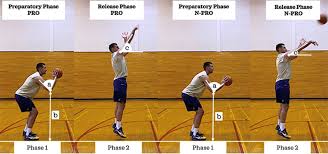
According to the study, skilled free throw shooters – who could make more than 70% of their shots – performed the shooting motion in a more controlled manner. They had lower knee and center of mass peaks and average angular velocities compared to non-experienced shooters. Also, skilled shooters achieved a greater release height and had less forward torso lean at the point of ball release.

“These findings imply that the movement of basketball shooting is not as simple as some may think. Shooting efficiency cannot simply be attributed to one biomechanical variable. It is based on a mix of multiple segmental body movements performed in a controlled manner,” says Dimitrije. Cabarkapa, lead author of the study and deputy director of the Jayhawk Athletic Performance Laboratory.

The study examined 34 men with at least four years of basketball experience, ranging from recreational to collegiate competitive levels. Each participant attempted 10 free throws with a 10-15 second rest interval between each attempt. A three-dimensional markerless motion capture system developed by the Southwest Research Institute (SwRI Enable, San Antonio, Texas), consisting of nine high-definition cameras (120 fps), was used to capture the biomechanical characteristics of free throw shooting movements and to analyse. .

“We are very interested in analyzing basketball shooting mechanics and what performance parameters distinguish skilled and non-skilled shooters,” Cabarkapa said. “High-speed video analysis is one way we can do that, but innovative technological tools like markerless motion capture systems can allow us to dig even deeper into that. In my opinion, the future of sports science is based on the use of non-invasive and time-efficient testing methods.”

The study, conducted at the Jayhawk Athletic Performance Laboratory, also found that when differentiating between made and missed shots by skilled free throw shooters, an overemphasis on release height could be counterproductive.

“These findings can be metaphorically represented by some healthy habits of daily life. Exercise, drinking water and consuming enough vitamins and minerals are all very beneficial to our health. However, overdoing these things can be harmful in certain cases and can even production of the disease. the opposite effect than expected,” Cabarkapa said.

The study, published in the journal Limits in sports and active life, was co-authored with Damjana Cabarkapa and Andrew Fry of the Jayhawk Performance Athletic Laboratory at KU; Jonathan Miller of KU’s Higuchi Biosciences Center; and Tylan Templin, Lance Frazer and Daniel Nicolella of the Southwest Research Institute.

Using motion capture technology without markers is useful for several reasons, the authors said, because other motion capture systems that use markers to be placed on the skin or clothing have several problems, such as not staying in place and the participant’s awareness of the markers. which can change normal movement patterns. This is crucial when testing in a sport-specific environment, where efficiency is key. The use of markerless motion capture technology enables non-invasive assessment.

Dimitrije Cabarkapa said that, to the authors’ knowledge, this is the first study to use this motion capture system to investigate the biomechanical characteristics of skilled free throw shooters. Previous research has shown that teams with better free-throw skills, especially late in the game, are more likely to win. Although the current study did not include the effects of fatigue on shooting mechanics and accuracy, researchers hope to investigate that factor in upcoming studies, as well as the effect of the presence of a defender on shooting mechanics and accuracy.

The laboratory is part of the Wu Tsai Human Performance Alliance, a consortium of researchers investigating optimal human performance. This alliance includes Stanford University, University of Oregon, Boston Children’s Hospital, Salk Institute, University of California San Diego and KU.

“These findings add to the work we have done in the past and to the body of scientific literature related to basketball shooting performance that we are continually expanding in our laboratory,” said Dimitrije Cabarkapa. “We have found that both the preparation and release phases of the shooting motion are critical to achieving solid levels of shooting efficiency. The implementation of innovative technology can allow us to understand the transition phase of the shooting motion and the kinematic chain in more detail Ultimately, our goal is to have an answer to the question every basketball fan wants to know: ‘Why did Steph Curry miss that shot?'”
Source link

Similar Posts

  • | |

    The histone acetyltransferases CBP and p300 regulate stress response pathways in synovial fibroblasts at transcriptional and functional levels

      Hypoxia, the formation of reactive oxygen species (ROS) and subsequent oxidative stress in synovial tissues are key events in the pathogenesis of RA1. We provide evidence here that CBP and p300 are critical regulators of the adaptive response of SF that integrate the transcriptional and functional regulation of stress response pathways throughout the cell….

  • | |

    7 things I want my daughter to know within 24 hours of tearing an ACL

      As my daughter continues to process the injury, I would do my best to gauge where she is mentally. Is she still focused on the injury itself, or has she opened a window to talk about the recovery process? If I feel like a window has opened to talk about the recovery process, here’s…

  • |

    Knee replacement age limit

    Is there a magic number that determines when you’re too old for a joint procedure? This is one of the most common questions we hear from individuals struggling with persistent pain. Many believe a strict cutoff exists. In reality, the decision for this surgical intervention is far more nuanced. Nearly one million of these procedures are performed each year in the United States. knee replacement age limit discussion We find the timing is based on your unique health profile, not just the calendar. Your specific joint condition and how it impacts your daily mobility are the true guides. While concerns about being “too old” are frequent, we see successful outcomes across a wide spectrum of years. The focus should be on your overall wellness and the level of disability you’re experiencing. Key Takeaways There is no universal, strict age cutoff for considering a joint procedure. The decision is highly individual, based on health and lifestyle factors. Successful outcomes are achieved for patients of various ages. Your specific level of pain and disability is a more critical factor than your birth year. Nearly one million of these surgeries are performed annually in the U.S. A consultation focuses on your overall wellness, not just a number. Understanding Knee Replacement Surgery When pain from joint degeneration becomes debilitating, many consider surgical intervention as a viable solution. This procedure, formally called arthroplasty, removes damaged bone and cartilage. Artificial implants are then secured to restore smooth movement. understanding knee replacement surgery What Is Knee Replacement? Arthroplasty is a major operation performed by orthopedic specialists. During this surgery, the ends of the thigh and shin bones are reshaped. Metal and plastic components are fixed in place to create a new joint surface. The goal is to eliminate discomfort and improve mobility. According to Toni Golen, M.D., and Hope Ricciotti, M.D., these artificial joints typically function well for 15 to 20 years. This durability influences the timing of the operation. Who Are the Ideal Candidates? We identify suitable candidates based on several key factors. The severity of arthritis discomfort is a primary consideration. Individuals whose chronic pain persists despite medications or injections are often good candidates. Doctors also examine how the joint has deteriorated over time. When non-surgical options no longer provide relief, this procedure may be recommended. Research shows 80% to 90% of individuals report positive outcomes after their operation. Evaluation Factor Description Importance Level Pain Level Chronic discomfort that limits daily activities High Treatment Response Lack of improvement with conservative therapies High Joint Damage Visible degeneration on X-rays or scans High Overall Health Ability to tolerate anesthesia and recovery Critical Activity Goals Desire to return to specific functions Moderate Younger patients may be advised to wait for optimal timing. This ensures the implant lasts for many years. The decision ultimately balances current suffering with long-term health outcomes. Medical Factors Beyond Age Medical professionals look beyond the calendar to evaluate a person’s fitness for a major joint operation. Your specific health profile and daily function are the true guides. Overall Health and Its Role We emphasize that your overall health is critical. It determines if you can handle the demands of surgery and recovery. Clinics like Integrity Spine & Orthopedics stress trying conservative options first. These treatments include physical therapy and joint injections for pain relief. Exhausting these paths is a key step before considering an operation. medical factors beyond…

  • Impact of different triathlon races on the systemic cytokine profile and metabolic parameters in healthy individuals: a systematic review | BMC Sports sciences, medicine and rehabilitation

      In the current systematic review, we aimed to evaluate the impact of different triathlon events on the profile of cytokines (pro- and anti-inflammatory) and metabolic markers in triathletes. First, we verified the increase in pro-inflammatory cytokines including IL-1, IL-2, IL-6, IL-8, IL-12p40, INF-γ, MCP-1, TNF-α in PBMC, serum and plasma levels after different triathlon…

  • |

    Shift towards personalized treatment approaches for chronic inflammatory diseases

    Chronic inflammatory diseases affect 5% to 7% of the population, regardless of age or gender, from children to the elderly. Chronic inflammatory diseases include a range of conditions. The most common inflammatory diseases include rheumatoid arthritis, Crohn’s disease, psoriasis and multiple sclerosis. Few of the current therapies for chronic inflammatory diseases are effective and while…

Leave a Reply

Your email address will not be published. Required fields are marked *