Tag: Comfortable shoes for knee pain

  • Best shoes for knee arthritis in women

    Best shoes for knee arthritis in women

    For millions of people worldwide, knee pain is a debilitating condition that affects daily life. Whether you’re an athlete, a fitness enthusiast, or simply someone who spends a lot of time on their feet, the right shoes can make a significant difference in alleviating discomfort.

    We explore the critical connection between proper footwear and knee health, and how the right shoes can reduce pain and improve mobility for those suffering from knee arthritis.

    Finding the best shoes tailored to your specific needs can be challenging, but understanding what to look for can simplify the process.

    Key Takeaways

    • Understanding the link between footwear and knee health
    • Key features to look for in shoes to alleviate knee pain
    • Importance of proper fit and cushioning technology
    • How the right shoes can improve mobility for arthritis sufferers
    • Factors to consider when selecting the best shoes for knee arthritis

    Understanding the Connection Between Footwear and Knee Pain

    The shoes you wear can have a significant impact on your knee health and overall well-being. Proper footwear provides support and cushioning for your feet and legs, which can help distribute weight evenly and reduce stress on your knees.

    This reduces the risk of pain and injury. One key aspect of proper footwear is stability, which helps keep feet neutral and prevents excessive pronation or supination.

    How Improper Shoes Affect Your Knees

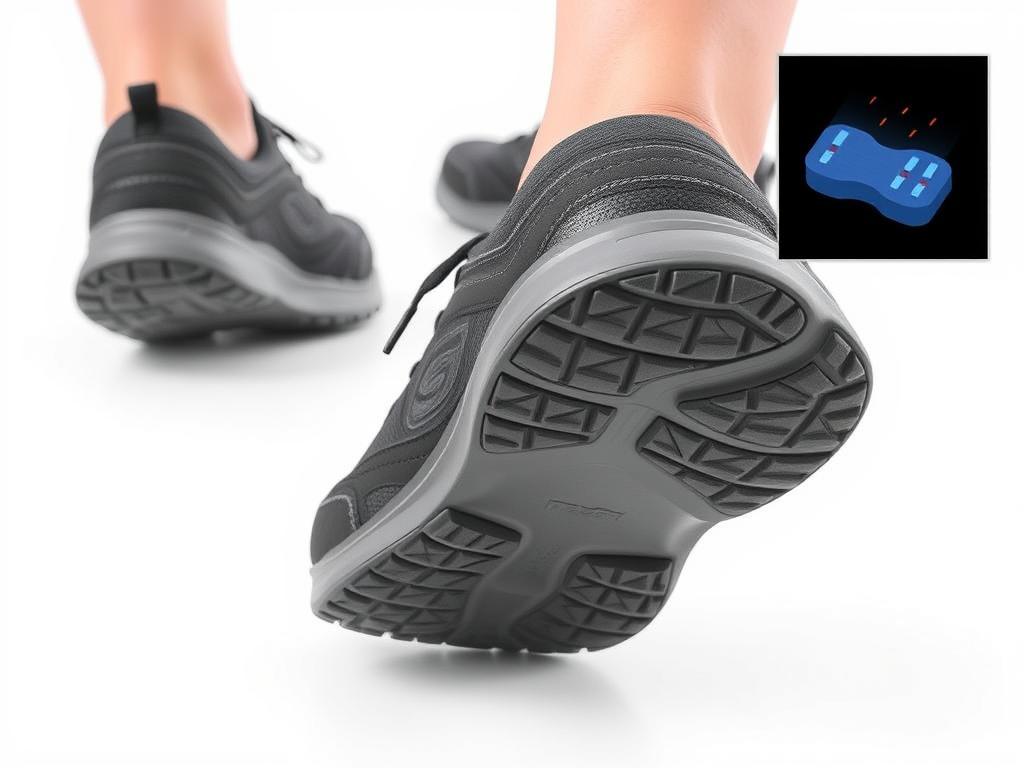
    Improper shoes can directly contribute to knee pain by failing to provide adequate support, cushioning, and alignment. Shoes with worn-out soles or inadequate arch support can cause misalignment that affects the knees.

    • Excessive pronation or supination can exacerbate arthritis symptoms.
    • Poor footwear choices can lead to increased stress on knee joints.

    The Impact of Arthritis on Knee Joints

    Arthritis affects the knee joint structure, causing cartilage breakdown, inflammation, and pain during weight-bearing activities. Proper footwear is essential for managing these symptoms.

    By understanding the connection between footwear and knee health, individuals can make informed choices to alleviate knee pain and improve their overall quality of life.

    Why Proper Footwear Matters for Arthritis Sufferers

    For individuals suffering from knee arthritis, the right footwear can make a significant difference in managing pain and improving mobility. Proper shoes can help alleviate some of the stress and discomfort associated with arthritic knee joints.

    Reducing Joint Stress Through Shoe Selection

    Shoes with adequate cushioning help absorb the shock that occurs with each step, reducing the impact on your knees. This is particularly important for individuals with arthritis knee pain, as the cushioning can help alleviate some of the pressure on the joints.

    Benefits of Supportive Shoes for Daily Activities

    Supportive shoes can significantly improve stability and balance, which is crucial for arthritis sufferers who may have altered gait patterns due to pain. By wearing the right shoes, women with knee arthritis can experience increased mobility and independence, making daily activities less painful.

    Research has shown that appropriate footwear can reduce osteoarthritis symptoms and potentially slow disease progression by minimizing joint stress. The table below highlights the key benefits of proper footwear for arthritis sufferers.

    Feature Benefit
    Cushioning Reduces impact on knees
    Supportive Design Improves stability and balance
    Proper Fit Reduces pressure on joints

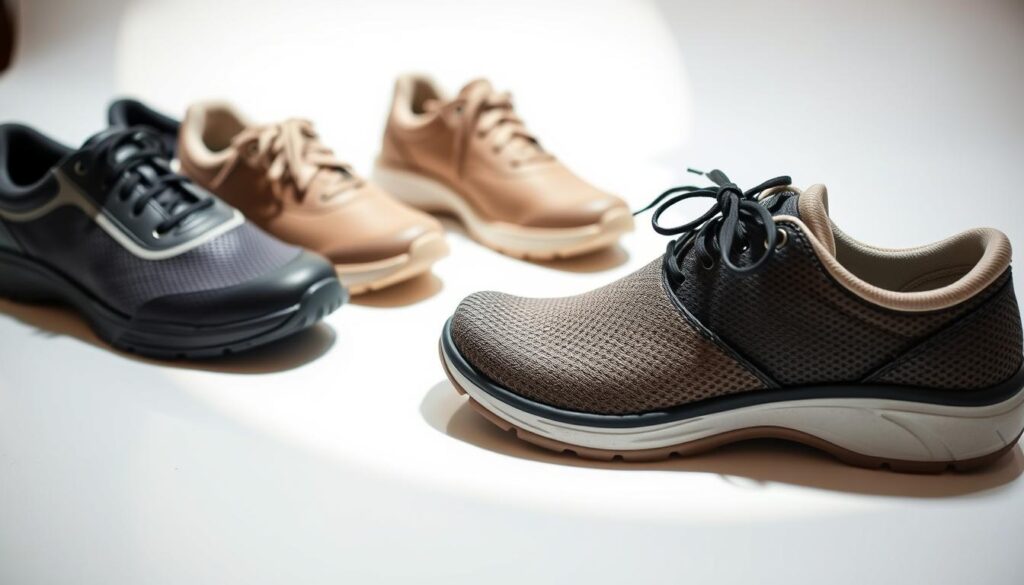
    A well-lit, close-up product shot of several different types of supportive, cushioned shoes designed for women with knee arthritis. The shoes are placed on a clean, light-colored surface, allowing the details and materials to be clearly visible. The lighting accentuates the contours and textures of the footwear, showcasing features like extra padding, arch support, and flexible soles. The image has a clean, minimalist aesthetic, with a focus on the shoes themselves to highlight their orthopedic and therapeutic qualities for knee joint pain relief.

    Key Features to Look for in Knee-Friendly Shoes

    Knee-friendly shoes are designed with particular features that help reduce knee pain; understanding these features is vital. When it comes to managing knee arthritis, the right footwear can play a significant role in alleviating discomfort.

    Cushioning and Shock Absorption

    Adequate cushioning is crucial for absorbing shock and reducing the impact on the knees. Different midsole materials like EVA foam, gel inserts, and air pockets vary in their effectiveness for arthritis sufferers. These materials help in providing the best shock absorption for knee pain relief.

    Stability and Support Features

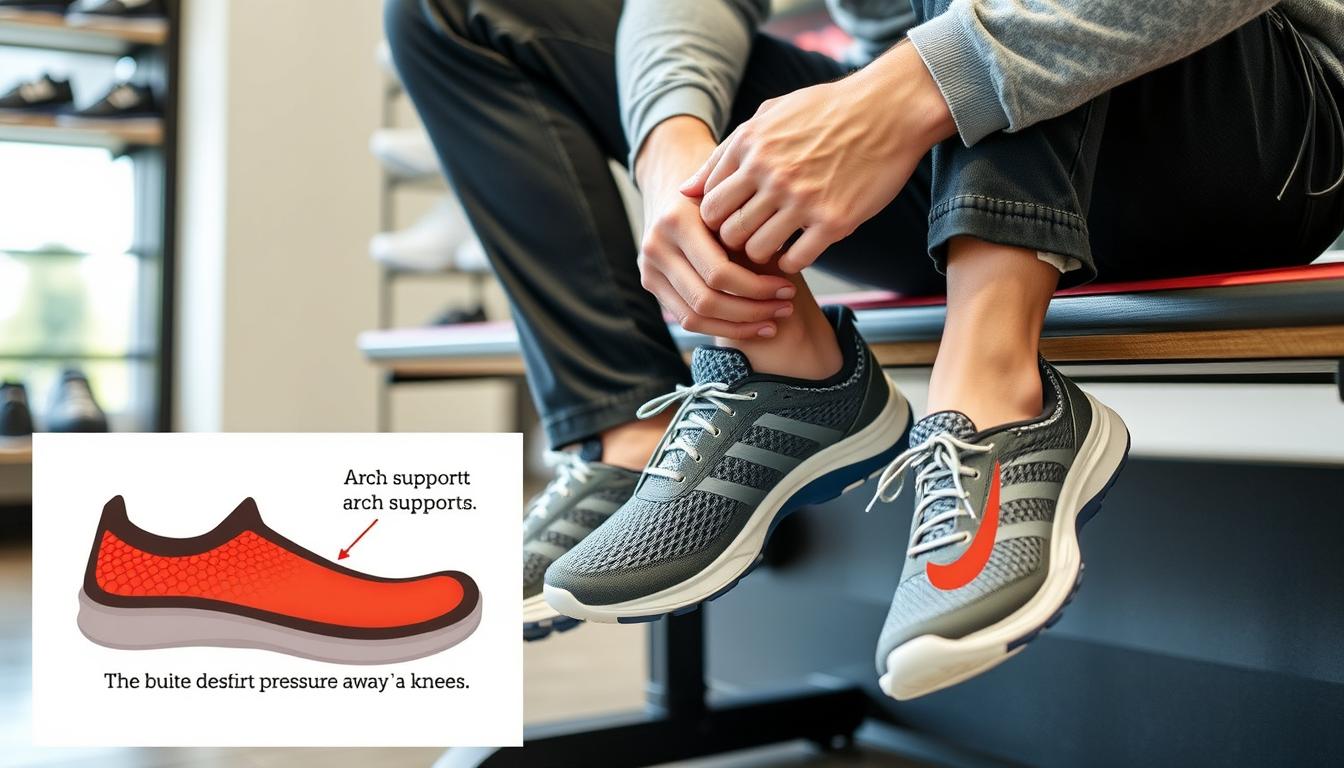
    Stability features such as medial posts, guide rails, and structured heel counters help maintain proper foot alignment. This prevents excessive pronation or supination, which can exacerbate knee pain. Proper arch support is also essential in maintaining foot alignment and reducing strain on the knee joint.

    Proper Fit and Toe Box Width

    A proper fit and adequate toe box width allow for natural foot movement. This prevents compensatory gait patterns that can worsen knee pain. Ensuring a comfortable fit is crucial for overall knee health.

    Common Shoe Mistakes That Worsen Knee Arthritis

    Many individuals unintentionally exacerbate their knee arthritis by making simple shoe-related mistakes. The shoes we wear play a significant role in our overall knee health, and certain choices can either alleviate or aggravate knee pain.

    Wearing the right shoes is crucial for managing knee arthritis. Unfortunately, many people make mistakes that can worsen their condition. Let’s examine some of these common errors.

    Wearing Shoes with Worn-Out Soles

    Shoes with worn-out soles lack adequate cushioning and shock absorption, leading to increased stress on the knees. Over time, the soles of our shoes wear down, reducing their ability to absorb shock. Typically, shoes should be replaced every 300-500 miles or 6-12 months, depending on usage.

    Choosing Shoes Without Proper Arch Support

    Shoes that lack proper arch support can cause the feet to become misaligned, leading to body imbalances and additional stress on the knee joints. Proper arch support is essential for maintaining alignment and reducing knee pain.

    Selecting Ill-Fitting Footwear

    Ill-fitting shoes, whether too tight, too loose, or of improper width, can force the foot and leg to compensate with unnatural movements. This can exacerbate arthritis symptoms and lead to increased knee pain.

    By avoiding these common shoe mistakes, individuals with knee arthritis can take a significant step towards managing their condition and reducing knee pain.

    10 Best Shoes for Knee Arthritis in Women

    When it comes to managing knee arthritis, the right shoes can make all the difference. Our selection of the best footwear is based on a comprehensive evaluation that considers various factors crucial for alleviating knee pain.

    How We Selected These Shoes

    We chose shoes that fit a wide range of foot sizes, including narrow, wide, and extra-wide feet. Our selections are based on podiatrist recommendations, customer reviews, and brand reputation for producing supportive footwear that addresses knee pain.

    Our Evaluation Criteria

    Our evaluation criteria included assessing the quality of cushioning, stability features, arch support, durability, weight, flexibility, and overall value for money. We considered different activity levels and lifestyle needs to ensure our recommendations cater to various requirements, from daily walking to fitness activities. This approach allowed us to identify the best shoes that not only alleviate knee arthritis discomfort but also suit different budgets.

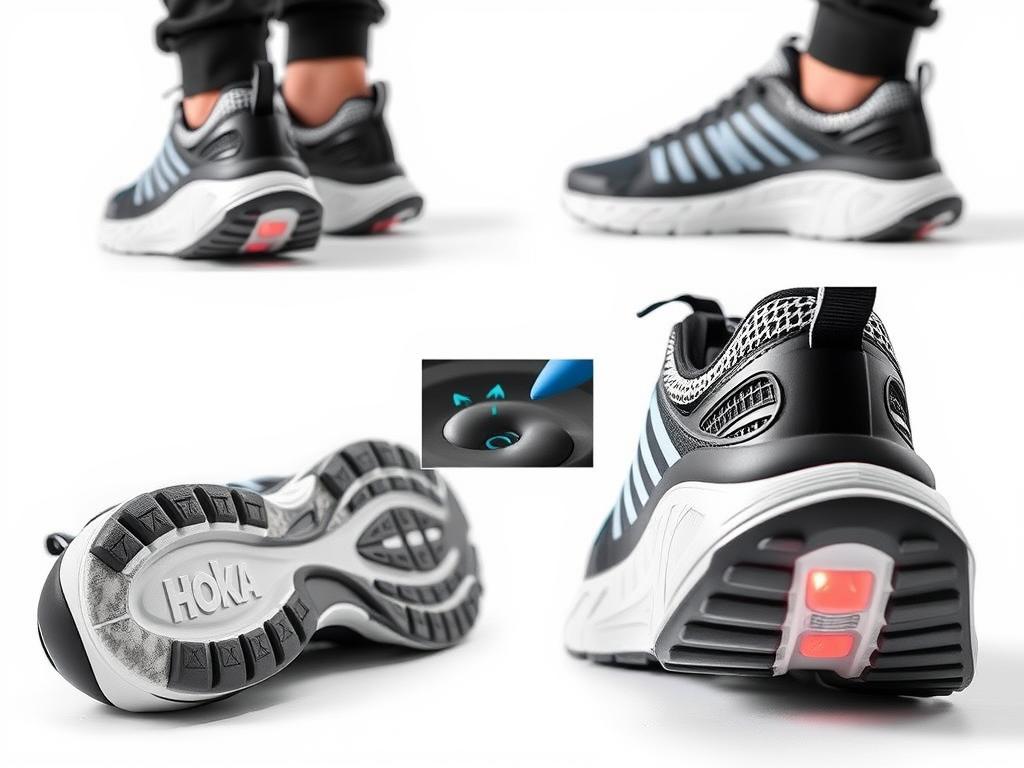
    Hoka Bondi 8: Maximum Cushioning for Arthritic Knees
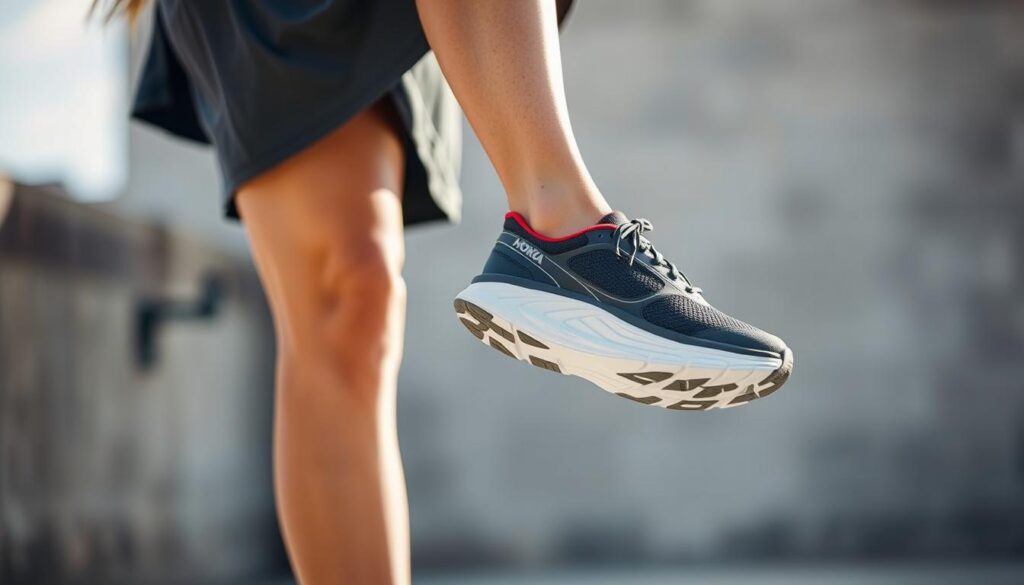
    Generate an image of a woman wearing Hoka Bondi 8 shoes, with a subtle background that highlights the shoe's cushioning feature.

    Buy Now

    The Hoka Bondi 8 stands out for its ultra-resistant, plush cushioning foam, making it an ideal choice for women with severe knee arthritis. This shoe is designed to provide maximum comfort and support, reducing the impact on the knees.

    Key Features and Benefits

    The Hoka Bondi 8 features ultra-resistant, plush cushioning foam that is both soft and bouncy, effectively reducing the shock from the foot hitting the ground. The memory foam collar cradles the ankle, providing additional support and comfort. Furthermore, the rear crash pad helps in transitioning the force from the heel to the forefront of the toe, ensuring a smooth stride.

    Pros and Cons

    The Hoka Bondi 8 offers several benefits, including exceptional cushioning and stability, making it suitable for women with knee arthritis. It also has the APMA Seal of Acceptance, validating its benefits for foot health. However, it comes with a higher price point and may have a bulkier appearance. Some users might also experience a potential break-in period.

    Who Should Choose This Shoe

    This shoe is particularly beneficial for women with moderate to severe knee pain who prioritize maximum cushioning over weight and sleek design. It’s ideal for those seeking shock absorption and support for their knees.

    New Balance Fresh Foam X 1080v14: Superior Support and Comfort
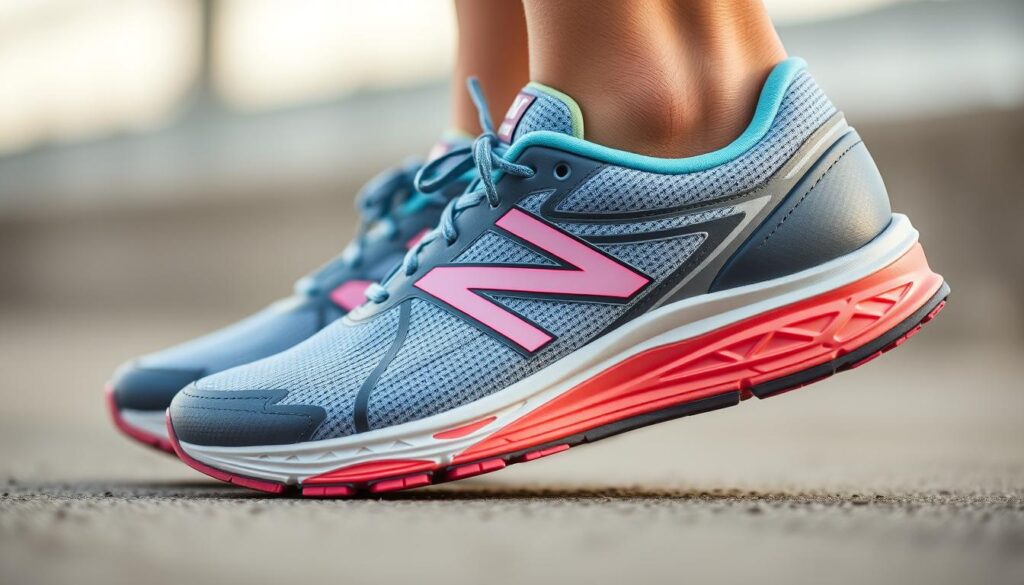
    Generate an image of the New Balance Fresh Foam X 1080v14 women's shoes for knee pain.

    Learn More

    The New Balance Fresh Foam X 1080v14 is a top contender for women seeking relief from knee pain through superior cushioning and support. This shoe is designed for everyday running, whether on roads or trails, and its flexible sole provides softer support and extra flexibility, making it more comfortable for those who find stiffer shoes painful.

    Key Features and Benefits

    The New Balance Fresh Foam X 1080v14 features a pinnacle underfoot cushioning system and strategic midsole mapping. This design places increased foam in the wider areas of the midsole and enhanced flexibility in narrower points, optimizing comfort and support. As a result, women with knee arthritis can enjoy a more stable and cushioned ride.

    Pros and Cons

    The benefits of the New Balance Fresh Foam X 1080v14 include its superior cushioning, excellent flexibility, and availability in multiple widths. However, some users may be deterred by the higher price point and potential durability concerns associated with softer materials.

    Who Should Choose This Shoe

    This shoe is ideal for women who need a balance of cushioning and flexibility for everyday activities and light exercise. If you’re looking for a shoe that provides support and comfort for arthritic knees, the New Balance Fresh Foam X 1080v14 is worth considering. For more options, you can explore our guide on the best walking shoes for knee pain.

    Brooks Adrenaline GTS 23: Stability for Overpronators
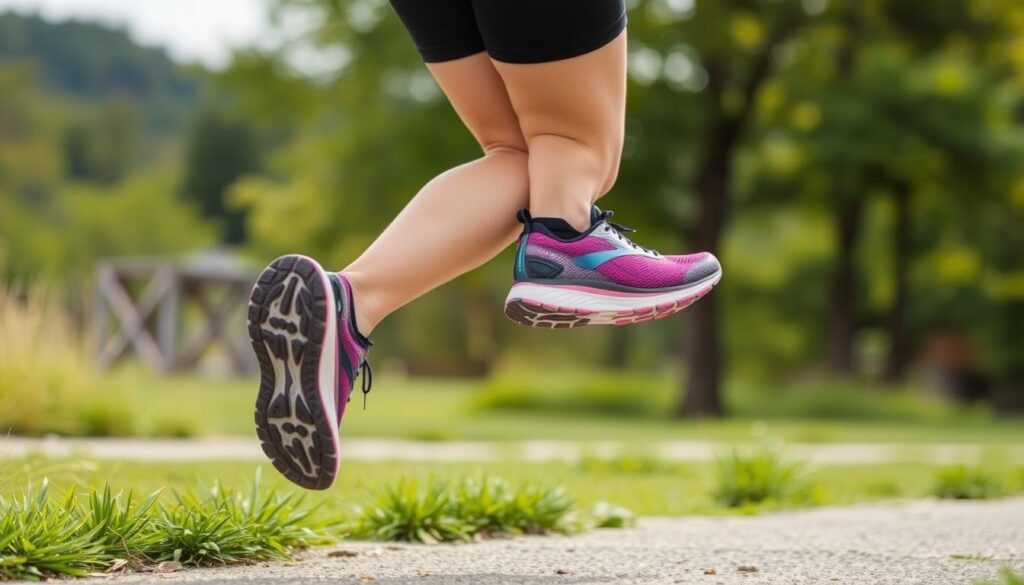
    Generate an image of a woman wearing Brooks Adrenaline GTS 23 shoes, engaging in a physical activity like running or walking.

    Learn More

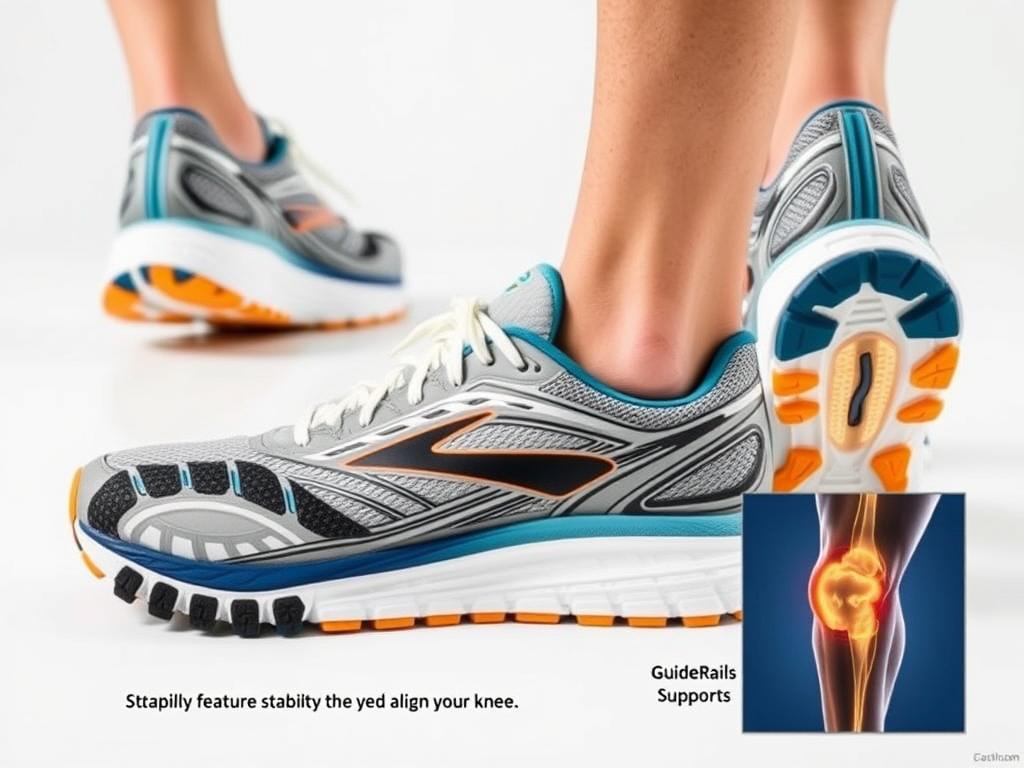
    For women suffering from knee arthritis and overpronation, the Brooks Adrenaline GTS 23 offers a compelling solution with its advanced stability features. This shoe is designed to provide support and comfort, making it ideal for both walking and running activities.

    Key Features and Benefits

    The Brooks Adrenaline GTS 23 features a GuideRails® support system that helps keep excess movement in check, reducing stress on the knees by maintaining proper foot alignment throughout the gait cycle. Additionally, it boasts balanced cushioning technology that provides comfort without sacrificing stability.

    Pros and Cons

    The shoe’s excellent stability and good cushioning make it a great choice for overpronators with knee arthritis. However, it may feel firmer than max-cushioned shoes, and its motion control features might be too controlling for those with neutral feet.

    Who Should Choose This Shoe

    This model is particularly beneficial for women with knee arthritis who need motion control features to correct overpronation while maintaining comfort for arthritic knees. If you’re an overpronator seeking a reliable running shoe that offers both support and stability, the Brooks Adrenaline GTS 23 is an excellent choice.

    Asics Gel-Kayano 31: Structured Support for Daily Wear
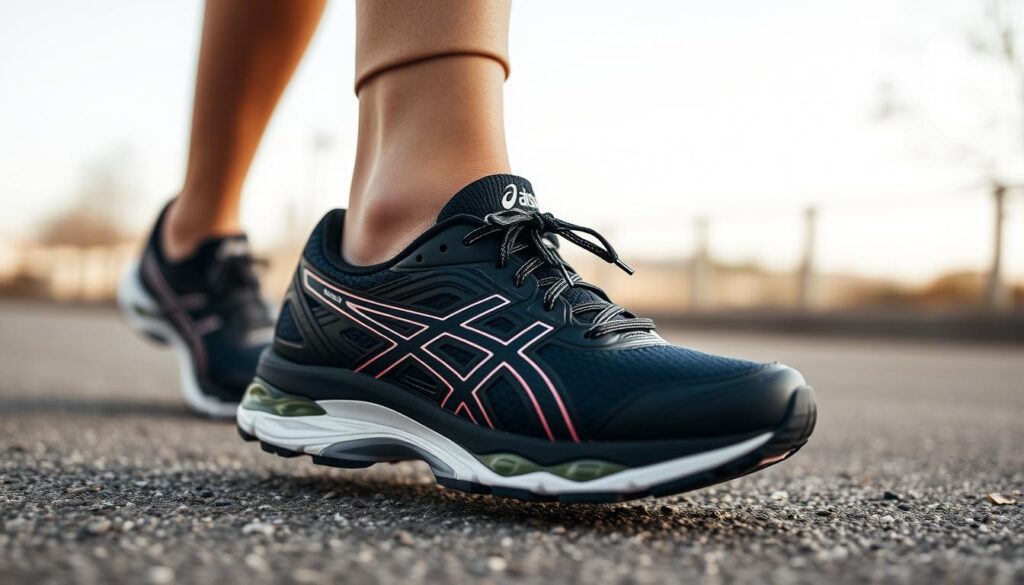
    Generate an image of a woman wearing Asics Gel-Kayano 31 shoes, engaging in a daily activity like walking or jogging.

    Learn More

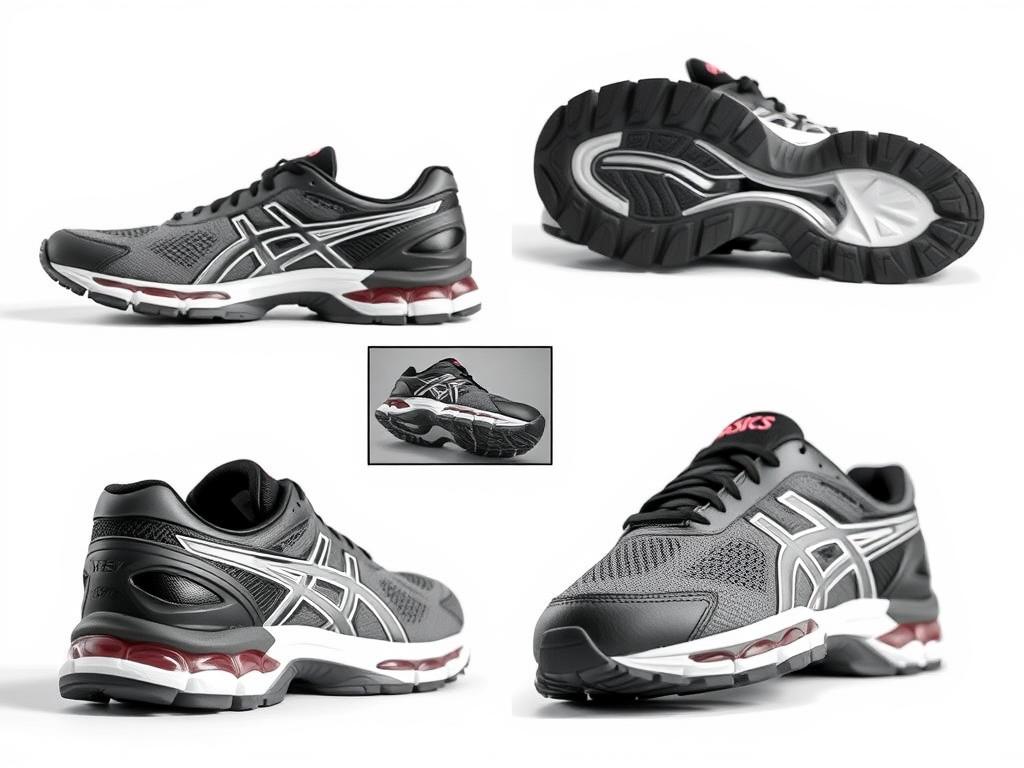
    With its emphasis on support and stability, the Asics Gel-Kayano 31 is a top contender for women with knee arthritis looking for reliable daily wear. This shoe is designed to provide excellent support and cushioning, making it ideal for various daily activities.

    Key Features and Benefits

    The Asics Gel-Kayano 31 features a proprietary GEL® technology cushioning system that effectively absorbs shock during impact and toe-off phases, reducing stress on arthritic knee joints. Additionally, the Dynamic DuoMax® Support System enhances stability and support without adding significant weight to the shoe.

    Pros and Cons

    The benefits of the Asics Gel-Kayano 31 include its excellent support, proven GEL cushioning technology, and durable construction. However, it comes with a higher price point and may be too structured for some users.

    Who Should Choose This Shoe

    This model is particularly suited for women with knee arthritis who need reliable daily support for various activities and have moderate pronation issues. The Asics Gel-Kayano 31 is ideal for those prioritizing support and stability in their footwear.

    Skechers Max Cushioning Elite 2.0: Budget-Friendly Option
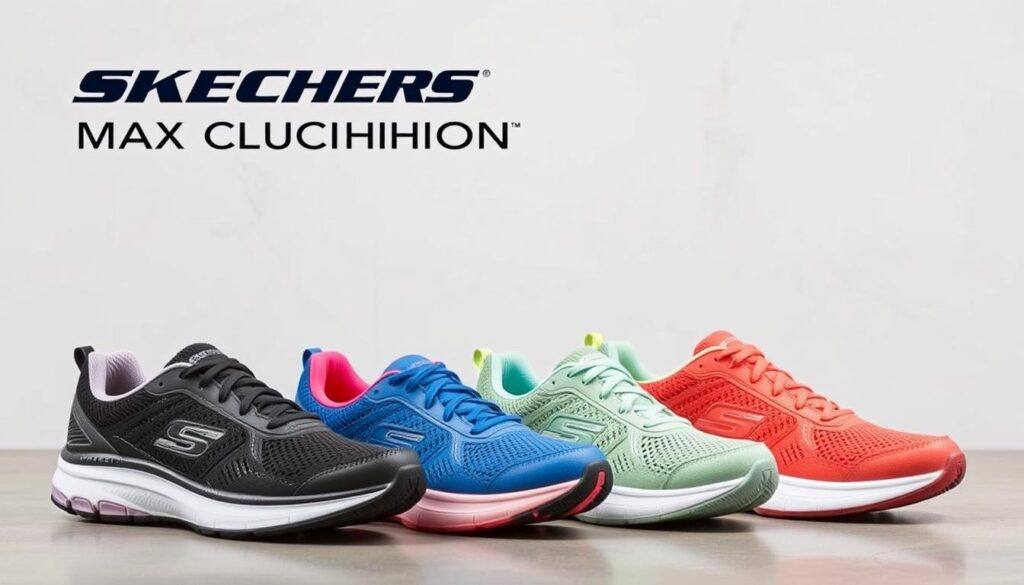
    Image of Skechers Max Cushioning Elite 2.0 women's shoes

    Buy Now

    With its focus on cushioning and comfort, the Skechers Max Cushioning Elite 2.0 is a great option for women with knee arthritis looking for a budget-friendly shoe. This laceless, slip-on design is particularly beneficial for individuals who struggle with tying laces due to limited mobility.

    Key Features and Benefits

    The Skechers Max Cushioning Elite 2.0 features responsive 5GEN cushioning and a high rebound cushioned insole, designed to absorb impact and reduce knee pain during walking. The outsole offers flexible traction, making it easier to navigate slippery areas. Additionally, the breathable mesh upper helps reduce sweating and swelling.

    Pros and Cons

    The advantages of the Skechers Max Cushioning Elite 2.0 include its affordable price, excellent cushioning, and convenient slip-on design. However, it may lack the structured support found in some premium models, and there are potential concerns regarding its durability.

    Who Should Choose This Shoe

    This shoe is ideal for women with knee arthritis who are on a budget but still require significant cushioning and prefer the convenience of a slip-on design. It’s particularly suitable for walking and everyday activities.

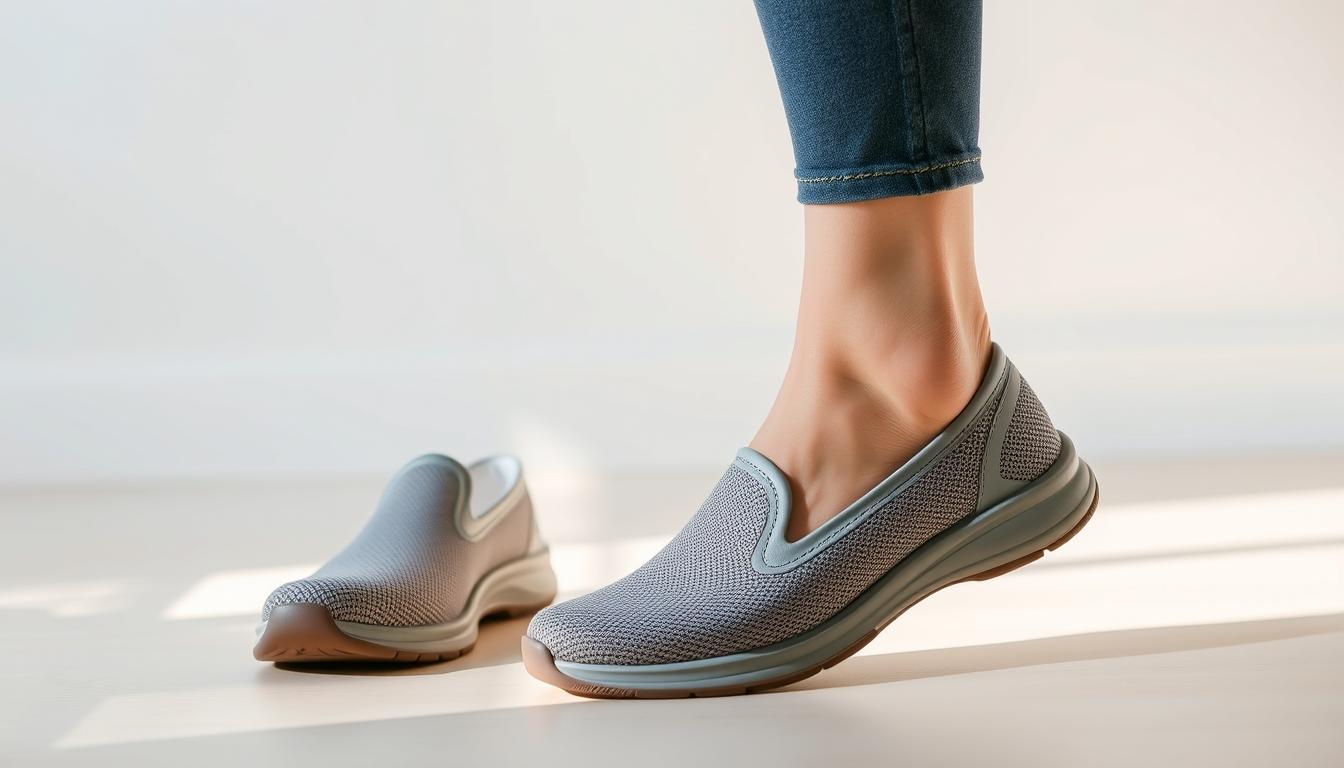
    Vionic Slip-On Shoes: Orthotic Support for Everyday Use
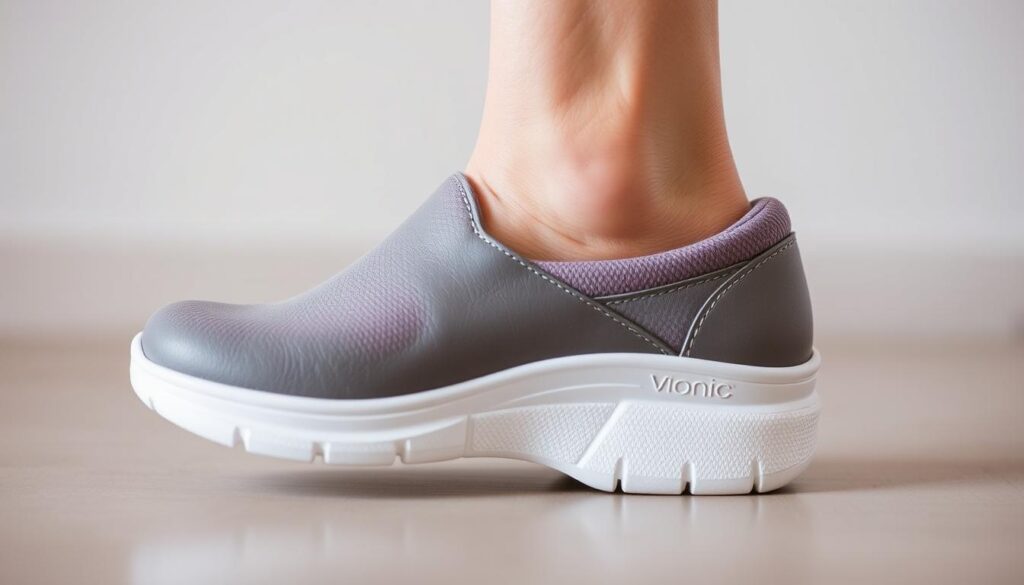
    Generate an image of Vionic Slip-On Shoes for women with knee arthritis.

    Learn More

    Vionic Slip-On Shoes offer orthotic support for everyday use, making them an excellent choice for women with knee arthritis. These shoes are designed with Vio-Motion technology, which hugs the arches and provides more structured support, helping to maintain proper foot alignment and reduce stress on the knees.

    Key Features and Benefits

    The built-in orthotic in Vionic Slip-On Shoes may help reduce pain from plantar fasciitis, a condition that often co-occurs with knee problems. These shoes come in a wide range of colors and textures, including leather, suede, and textile, offering both style and comfort. The company recommends wearing these shoes for a couple of hours a day until you become accustomed to the more supportive feel.

    Pros and Cons

    The advantages of Vionic Slip-On Shoes include excellent arch support, stylish designs, and a variety of materials. However, some users may require an adjustment period, and the shoes might have less cushioning compared to running shoes.

    Who Should Choose This Shoe

    Vionic Slip-On Shoes are ideal for women with knee arthritis who need orthotic support in a stylish, everyday shoe rather than an athletic design. They are perfect for daily activities and offer a comfortable, supportive solution for those seeking relief from knee pain.

    Nike Invincible 3: Responsive Cushioning for Active Women
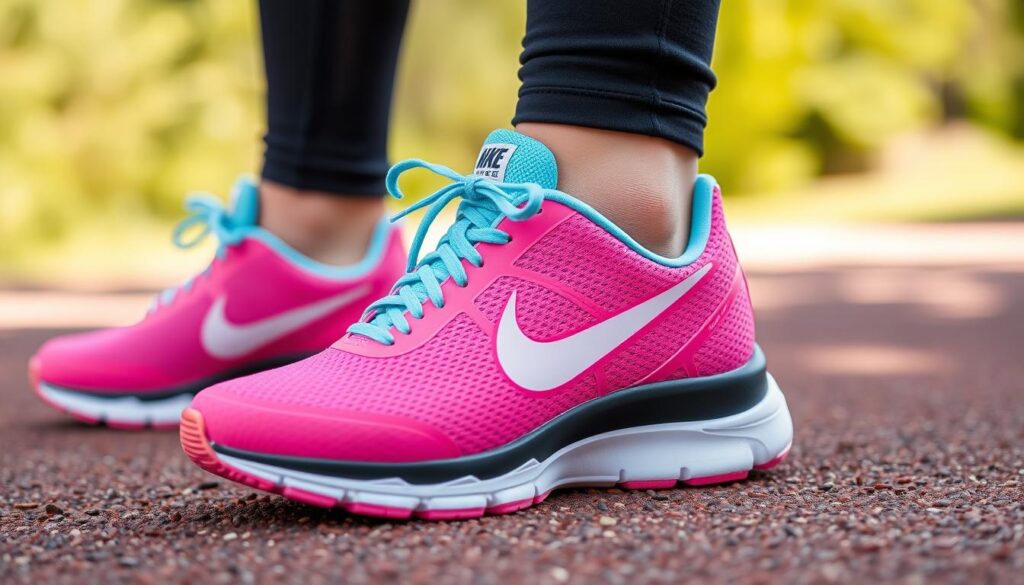
    Generate an image of Nike Invincible 3 women's shoes for knee support

    Learn More

    For women with knee arthritis who remain active, the Nike Invincible 3 offers a compelling combination of cushioning and performance. This shoe is designed to provide responsive cushioning that absorbs impact and returns energy, making it ideal for various activities.

    Key Features and Benefits

    The Nike Invincible 3 features ZoomX foam cushioning that not only absorbs the impact of the foot hitting the ground but also provides energy return. This helps in reducing fatigue and joint stress during active pursuits. Additionally, the shoe’s rubber waffle outsole provides excellent traction and stability without adding excessive weight.

    Pros and Cons

    The Nike Invincible 3 has several advantages, including exceptional responsive cushioning and energy return, making it versatile for various activities. However, it also has some drawbacks, such as a higher price point and potentially being too soft for those needing maximum stability.

    Who Should Choose This Shoe

    This shoe is particularly beneficial for more active women who need impact protection but still want energy return and responsiveness in their footwear. Women who engage in regular running or high-impact activities will find the Nike Invincible 3 to be an excellent choice.

    Altra Experience Wild Trail: Supportive Option for Outdoor Activities
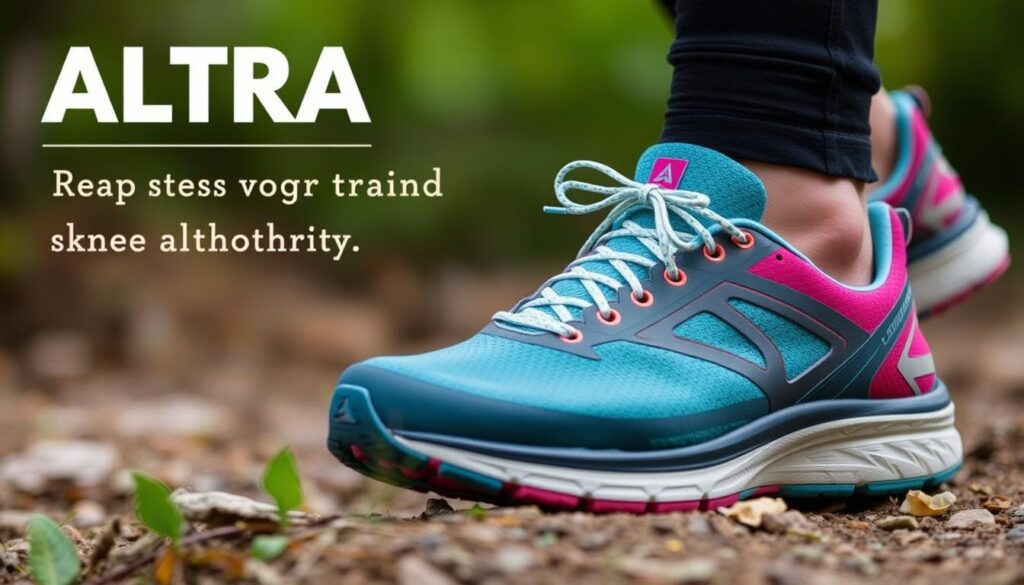
    Generate an image of Altra Experience Wild Trail women's shoes for knee arthritis

    Learn More

    Altra’s Experience Wild Trail offers a unique blend of cushioning and natural foot positioning, making it ideal for women with knee arthritis.

    Key Features and Benefits

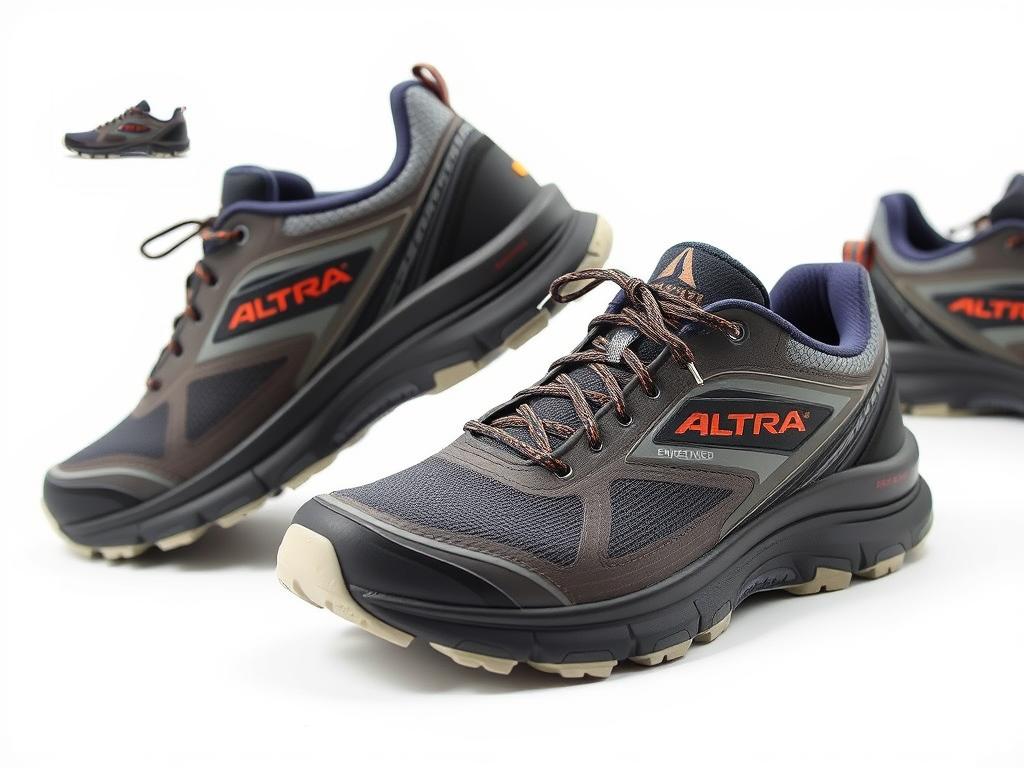
    The Altra Experience Wild Trail features a balanced cushioning platform that encourages proper alignment and reduces impact on the knees. Its FootShape™ toe box allows toes to spread naturally, enhancing stability and comfort on uneven terrain.

    Pros and Cons

    The shoe offers excellent traction and good cushioning for trails, making it perfect for outdoor activities. However, the zero-drop platform may require an adjustment period, and the fit is wider than some brands.

    Who Should Choose This Shoe

    Women with knee arthritis who enjoy hiking and outdoor activities will benefit from the Altra Experience Wild Trail. It’s particularly suitable for those needing protection on uneven terrain.

    Tips for Transitioning to New Supportive Footwear

    The key to alleviating knee pain lies not just in choosing the right shoes, but also in adapting to them gradually. When transitioning to new supportive footwear, it’s essential to start slowly. We recommend wearing these shoes for a couple of hours a day until you become accustomed to the more supportive feel.

    This gradual adjustment period allows your feet and knees to adapt to the different support patterns and cushioning levels. The break-in period may vary depending on the type of shoe, with highly cushioned running shoes potentially requiring a shorter adjustment time compared to more structured orthotic designs.

    During this transition, you may experience temporary soreness or changes in your gait. It’s crucial to distinguish between normal adjustment discomfort and signs that a shoe isn’t right for you. To maintain the knee-protecting properties of your supportive footwear, replace them every 300-500 miles or 6-12 months, depending on usage, and assess their condition regularly.

    By following these guidelines and being mindful of your body’s response, you can enjoy the benefits of your new shoes while minimizing potential discomfort.

    FAQ

    What type of shoes are best for alleviating knee pain caused by osteoarthritis?

    We recommend shoes with extra cushioning and shock absorption features, such as the Hoka Bondi 8, to help reduce the impact on knee joints.

    How do I know if my shoes are contributing to my knee pain?

    If your shoes lack proper arch support or have worn-out soles, they may be exacerbating your knee pain. Look for shoes with stability features and a comfortable fit.

    Can running shoes help with knee arthritis?

    Yes, some running shoes, such as the Brooks Adrenaline GTS 23, are designed to provide superior support and cushioning, which can help alleviate knee pain caused by arthritis.

    What is the importance of ankle support in shoes for knee arthritis?

    Ankle support can help stabilize the foot and reduce stress on the knee joint. Shoes with good ankle support, such as the Asics Gel-Kayano 31, can be beneficial for individuals with knee arthritis.

    How often should I replace my shoes to maintain optimal support and cushioning?

    We recommend replacing your shoes every 300-500 miles or every 3-6 months, depending on your activity level and wear. Worn-out shoes can lead to reduced support and increased stress on your knee joints.

    Can orthotics be used in conjunction with supportive shoes?

    Yes, orthotics can be used with supportive shoes to provide additional comfort and support. Some shoes, such as the Vionic Slip-On Shoes, are designed to accommodate orthotics.

    Are there any specific features I should look for in shoes to help alleviate knee pain?

    We recommend looking for shoes with cushioning, shock absorption, stability features, and a comfortable fit. These features can help reduce stress on the knee joint and alleviate pain.
  • Top 10 Best Shoes for Knee Pain Relief in 2023: Expert-Approved Picks

    Top 10 Best Shoes for Knee Pain Relief in 2023: Expert-Approved Picks

    Finding the best shoes for knee pain relief can be life-changing for those suffering from chronic discomfort. Every step you take puts pressure on your knees, and wearing improper footwear can exacerbate existing issues or even create new ones. The right shoes, however, can significantly reduce pain by providing essential cushioning, proper arch support, and effective shock absorption that takes pressure off your knee joints.

    Whether you’re dealing with arthritis, runner’s knee, or general knee discomfort, investing in appropriate footwear is one of the most effective non-invasive approaches to managing pain. In this comprehensive guide, we’ll explore expert-recommended shoes specifically designed to alleviate knee pain and help you return to your daily activities with greater comfort and confidence.

    Proper footwear with adequate cushioning and support can significantly reduce knee pain by improving alignment and absorbing impact.

    Key Features to Look for in Shoes for Knee Pain Relief

    Before diving into our top recommendations, it’s important to understand what makes a shoe effective for knee pain relief. Orthopedic specialists and podiatrists agree that certain features are crucial when selecting footwear to minimize stress on your knees.

  • Shock-absorbing soles: Cushioning that absorbs impact with each step, reducing the force transmitted to your knees
  • Proper arch support: Maintains correct foot alignment and prevents overpronation or supination that can stress knees
  • Motion control: Stability features that prevent excessive foot movement and maintain proper alignment
  • Cushioned midsole: Provides additional padding and comfort, especially important for those with arthritis
  • Rocker soles: Curved bottoms that help with forward motion and reduce pressure on the knee joint
  • Heel support: Stabilizes the rear foot and prevents unnecessary movement that can strain knees
  • Lightweight design: Reduces the effort needed to lift your feet, decreasing stress on knee joints
  • Flexible forefoot: Allows natural foot movement while maintaining support
  • Wide toe box: Provides room for toes to spread naturally, improving balance and stability
  • Important: The right shoes for knee pain depend on your specific condition, foot type, and activity level. What works perfectly for one person may not be ideal for another. Consider consulting with a podiatrist or orthopedic specialist for personalized recommendations.

    Our Top 10 Best Shoes for Knee Pain Relief

    After extensive research and consultation with orthopedic specialists, we’ve compiled this list of the best shoes for knee pain relief. Each recommendation includes detailed information about key features, benefits, and ideal use cases to help you find the perfect match for your needs.

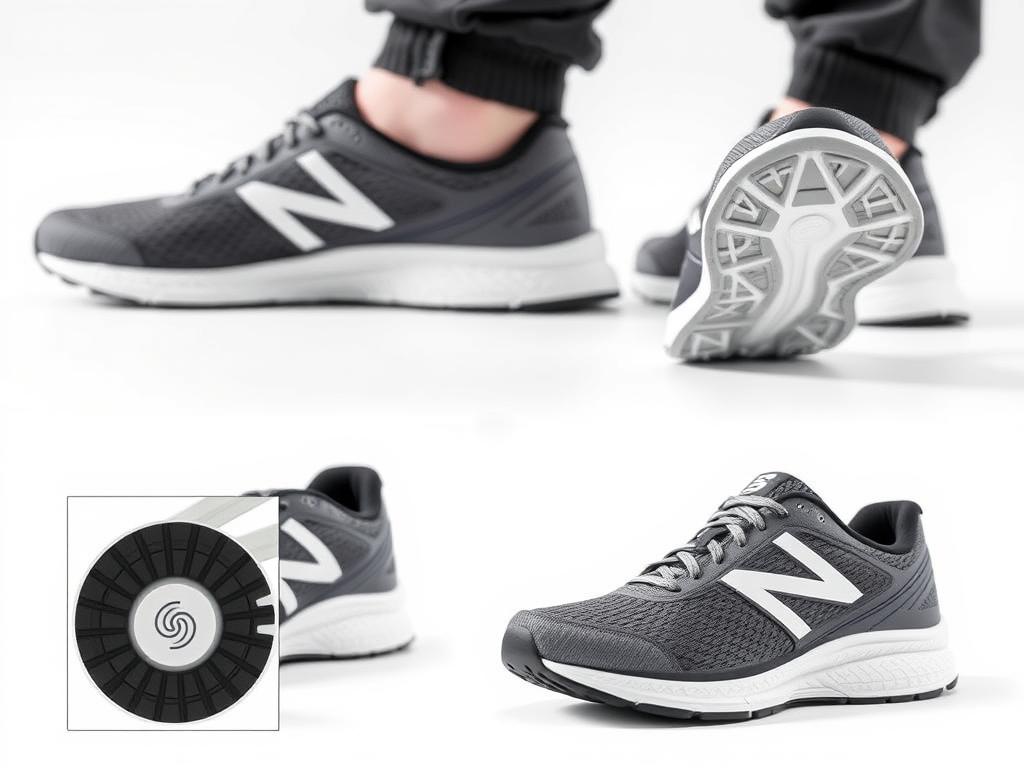
    New Balance Fresh Foam X 1080v14 shoes showing cushioning technology and supportive design for knee pain relief

    1. New Balance Fresh Foam X 1080v14

    The New Balance Fresh Foam X 1080v14 stands out as our top overall pick for knee pain relief thanks to its exceptional cushioning and stability features. The plush Fresh Foam X midsole provides cloud-like comfort while effectively absorbing impact with each step.

    With a low 4.2mm heel-to-toe drop, these shoes encourage a more natural forefoot strike that reduces stress on the knees. The generous 32.8mm of cushioning at the forefoot (21% higher than average) creates an excellent buffer between your feet and the ground.

    4.8
    Excellent
    Cushioning
    4.8/5
    Stability
    4.5/5
    Arch Support
    4.7/5
    Durability
    4.6/5

    Pros

    • Exceptional cushioning for impact absorption
    • Low heel drop reduces knee stress
    • Excellent stability features
    • Breathable upper material
    • Wide width options available

    Cons

    • Premium price point
    • Slightly heavier than some alternatives
    • May feel too soft for some users

    Best for: Daily walking, recovery runs, and all-day wear for those with moderate to severe knee pain, especially arthritis and patellofemoral pain syndrome.

    Hoka Bondi 8 shoes with maximum cushioning for knee pain relief

    2. Hoka Bondi 8

    The Hoka Bondi 8 has earned the American Podiatric Medical Association (APMA) Seal of Acceptance and is widely recommended by podiatrists for knee pain relief. These shoes feature maximum cushioning with a thick, oversized sole that provides exceptional shock absorption.

    With a moderate 4mm heel-to-toe drop and a wide, stable base, the Bondi 8 offers excellent stability while reducing impact forces that can aggravate knee pain. The Meta-Rocker technology promotes a smooth transition from heel to toe, further reducing stress on the knees.

    4.7
    Excellent
    Cushioning
    4.9/5
    Stability
    4.6/5
    Arch Support
    4.5/5
    Durability
    4.5/5

    Pros

    • Maximum cushioning for superior shock absorption
    • APMA Seal of Acceptance
    • Wide, stable base for improved balance
    • Meta-Rocker technology for smooth transitions
    • Memory foam collar for secure fit

    Cons

    • May feel bulky for some users
    • Premium price point
    • Limited color options

    Best for: Those with severe knee pain, arthritis, or recovering from knee surgery who need maximum cushioning and impact protection.

    Brooks Adrenaline GTS 23 stability shoes for knee pain relief

    3. Brooks Adrenaline GTS 23

    The Brooks Adrenaline GTS 23 is a standout stability shoe that excels at knee pain relief through its innovative GuideRails® support system. This technology helps keep excess movement in check, preventing the knee from moving into positions that can cause pain and discomfort.

    With DNA LOFT cushioning throughout the midsole, these shoes provide soft yet responsive padding that absorbs impact effectively. Available in four width options (narrow to extra-wide), the Adrenaline GTS 23 accommodates various foot shapes while maintaining excellent support.

    4.6
    Excellent
    Cushioning
    4.5/5
    Stability
    4.8/5
    Arch Support
    4.7/5
    Durability
    4.6/5

    Pros

    • GuideRails® technology for knee alignment
    • Excellent stability for overpronators
    • Multiple width options available
    • Balanced cushioning for comfort
    • Durable construction

    Cons

    • Higher heel-to-toe drop (12mm)
    • Slightly firm for those wanting maximum softness
    • Heavier than some alternatives

    Best for: Overpronators and those with knee pain related to alignment issues or instability. Ideal for walking, everyday use, and moderate running.

    Asics Gel-Kayano 31 shoes with gel cushioning technology for knee pain relief

    4. Asics Gel-Kayano 31

    The Asics Gel-Kayano 31 combines advanced stability features with exceptional cushioning to create a shoe that excels at knee pain relief. The signature GEL® technology in both the forefoot and rearfoot effectively absorbs shock during impact and toe-off phases.

    The Dynamic DuoMax® Support System enhances stability and support, while the FlyteFoam Propel technology provides lightweight cushioning with excellent bounce-back. Despite its structured support, the Gel-Kayano 31 maintains a surprisingly lightweight feel.

    4.5
    Excellent
    Cushioning
    4.6/5
    Stability
    4.7/5
    Arch Support
    4.5/5
    Durability
    4.4/5

    Pros

    • GEL® technology for superior shock absorption
    • Excellent stability for overpronators
    • Lightweight despite substantial support
    • Available in multiple width options
    • Durable construction

    Cons

    • Higher heel-to-toe drop (10mm)
    • Premium price point
    • May feel firm for some users

    Best for: Runners and walkers with moderate overpronation who need reliable stability and impact protection for knee pain relief.

    Skechers Max Cushioning Elite 2.0 shoes with thick cushioning for knee pain relief

    5. Skechers Max Cushioning Elite 2.0

    The Skechers Max Cushioning Elite 2.0 offers exceptional value for those seeking knee pain relief without breaking the bank. These shoes feature Skechers’ ULTRA GO® cushioning technology that provides plush comfort and excellent shock absorption.

    With a moderate 6mm heel-to-toe drop and a roomy toe box, these shoes promote natural foot movement while maintaining stability. The Air-Cooled Goga Mat insole adds additional cushioning and breathability for all-day comfort.

    4.4
    Very Good
    Cushioning
    4.7/5
    Stability
    4.2/5
    Arch Support
    4.3/5
    Durability
    4.1/5

    Pros

    • Excellent value for money
    • Maximum cushioning for impact absorption
    • Lightweight design
    • Roomy toe box
    • Breathable upper material

    Cons

    • Less stability than some competitors
    • Some durability concerns with heavy use
    • Limited color options

    Best for: Budget-conscious shoppers seeking maximum cushioning for knee pain relief during walking and everyday activities.

    New Balance Fresh Foam X More v4 shoes with maximum cushioning for knee pain relief

    6. New Balance Fresh Foam X More v4

    The New Balance Fresh Foam X More v4 takes cushioning to the extreme with the highest stack height in our recommendations. This maximalist shoe features an incredibly plush Fresh Foam X midsole that excels at absorbing impact and reducing stress on the knees.

    With a low 4.6mm heel-to-toe drop and substantial sidewalls for stability, these shoes provide a secure yet cushioned platform. The 27.9mm of midsole at the forefoot ensures excellent protection during the push-off phase of your stride.

    4.7
    Excellent
    Cushioning
    4.9/5
    Stability
    4.5/5
    Arch Support
    4.6/5
    Durability
    4.7/5

    Pros

    • Maximum cushioning for superior impact protection
    • Excellent stability despite high stack height
    • Low heel drop reduces knee stress
    • Durable construction
    • Wide width options available

    Cons

    • Runs warm in hot weather
    • Bulky appearance
    • Premium price point

    Best for: Those with severe knee pain who need maximum cushioning for long walks, standing all day, or recovery from knee injuries.

    Hoka Gaviota 5 stability shoes for knee pain relief

    7. Hoka Gaviota 5

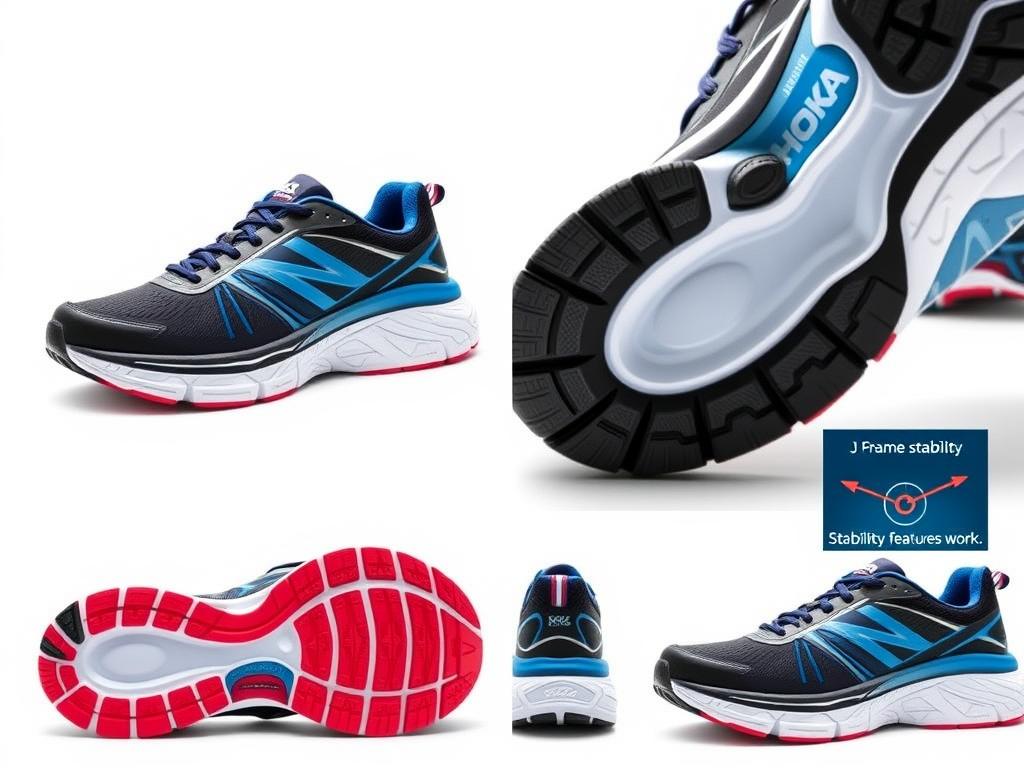
    The Hoka Gaviota 5 combines maximum stability with plush cushioning to create an excellent option for knee pain sufferers who overpronate. The innovative J-Frame™ technology provides support by using firmer foam in a J-shape pattern to prevent excessive inward foot rolling.

    With an ultra-low 2.2mm heel-to-toe drop and 32.7mm of cushioning at the forefoot, these shoes encourage a more natural stride while providing exceptional impact protection. The wide platform (125.1mm at the forefoot) further enhances stability.

    4.5
    Excellent
    Cushioning
    4.7/5
    Stability
    4.8/5
    Arch Support
    4.6/5
    Durability
    4.0/5

    Pros

    • Superior stability for overpronators
    • Plush cushioning for impact absorption
    • Ultra-low heel drop reduces knee stress
    • Extra-wide platform for balance
    • Breathable upper material

    Cons

    • Toebox durability concerns
    • Premium price point
    • May feel too wide for narrow feet

    Best for: Overpronators with knee pain who need maximum stability and cushioning for walking, standing, and everyday activities.

    Nike Invincible 3 shoes with reactive cushioning for knee pain relief

    8. Nike Invincible 3

    The Nike Invincible 3 offers a unique combination of plush cushioning and energy return that makes it excellent for knee pain relief during active use. The ZoomX foam provides the highest energy return of any Nike foam, helping to reduce fatigue while absorbing impact.

    With a wide, stable base and a moderate 9mm heel-to-toe drop, these shoes balance cushioning with stability. The rocker geometry promotes smooth transitions and reduces stress on the knees during the push-off phase.

    4.4
    Very Good
    Cushioning
    4.7/5
    Stability
    4.3/5
    Arch Support
    4.2/5
    Durability
    4.4/5

    Pros

    • Exceptional energy return
    • Plush cushioning for impact absorption
    • Wide, stable platform
    • Rocker geometry for smooth transitions
    • Breathable upper material

    Cons

    • Runs narrow (consider sizing up)
    • Higher heel drop than some options
    • Premium price point

    Best for: Active individuals with knee pain who need cushioning that doesn’t sacrifice energy return for walking, jogging, and fitness activities.

    Altra Experience Wild trail shoes with zero drop design for knee pain relief

    9. Altra Experience Wild

    The Altra Experience Wild offers excellent knee pain relief for those who enjoy hiking and trail walking. With a low 4.3mm heel-to-toe drop and generous 30.2mm cushioning at the forefoot, these shoes encourage a natural stride while providing ample impact protection.

    Altra’s signature FootShape™ toe box allows toes to spread naturally for improved balance and stability on uneven terrain. The moderate 3.6mm lugs provide reliable traction without being aggressive, making these shoes versatile for both light trails and everyday use.

    4.3
    Very Good
    Cushioning
    4.5/5
    Stability
    4.4/5
    Arch Support
    4.2/5
    Durability
    4.3/5

    Pros

    • Excellent for hiking and trail walking
    • Low heel drop reduces knee stress
    • Wide toe box for natural foot splay
    • Versatile for mixed terrain
    • Durable construction

    Cons

    • May be too wide for narrow feet
    • Limited energy return
    • Low heel collar allows debris entry

    Best for: Hikers and outdoor enthusiasts with knee pain who need cushioning and stability on varied terrain.

    Nike Waffle Debut stylish casual shoes for knee pain relief

    10. Nike Waffle Debut

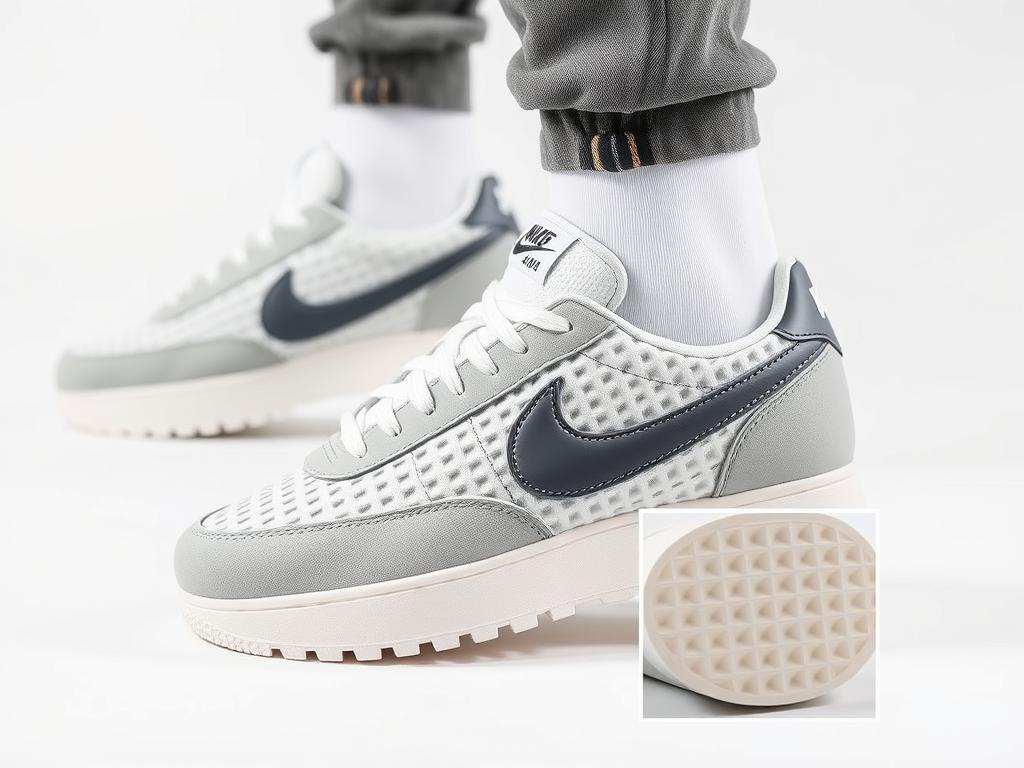
    The Nike Waffle Debut proves that shoes for knee pain relief don’t have to sacrifice style for function. These retro-inspired sneakers feature a cushioned footbed and shock-absorbing midsole that effectively reduces impact forces transmitted to the knees.

    With a comfortable fit and versatile design, these shoes transition seamlessly from casual outings to light exercise. The waffle-pattern outsole provides reliable traction on various surfaces while adding an additional layer of impact absorption.

    4.2
    Very Good
    Cushioning
    4.2/5
    Stability
    4.1/5
    Arch Support
    4.0/5
    Durability
    4.3/5

    Pros

    • Stylish retro design
    • Good cushioning for casual wear
    • Affordable price point
    • Versatile for various activities
    • Lightweight construction

    Cons

    • Less cushioning than specialized options
    • Runs small (consider sizing up)
    • Limited arch support

    Best for: Style-conscious individuals with mild knee pain who need comfortable shoes for everyday wear and light activities.

    Expert Recommendations for Choosing Shoes for Knee Pain Relief

    “When patients come to me with knee pain, I often start by examining their footwear. The right shoes can make a tremendous difference in reducing pain and improving mobility. I typically recommend shoes with adequate cushioning, proper arch support, and stability features that match the individual’s foot mechanics.”

    Dr. Elizabeth Daughtry, DPM, FACFAS, Podiatrist

    Orthopedic specialists emphasize that the best shoes for knee pain relief should address your specific condition and foot type. According to experts, several factors are particularly important:

  • Foot strike pattern: Research shows that forefoot striking can reduce stress on the knees compared to heel striking. Shoes with a lower heel-to-toe drop (under 5mm) encourage a more natural forefoot or midfoot strike.
  • Cushioning location: For those who tend to land on their forefoot, adequate cushioning in that area is crucial. Look for shoes with at least 20mm of stack height in the forefoot.
  • Stability needs: Overpronation (excessive inward rolling of the foot) can contribute to knee pain. If you overpronate, stability shoes with supportive features can help maintain proper alignment.
  • Activity type: Different activities place different demands on your knees. Running shoes, walking shoes, and hiking shoes are designed with specific movement patterns in mind.
  • “Many patients don’t realize that worn-out shoes can contribute significantly to knee pain. I recommend replacing athletic shoes every 300-500 miles or every 6-12 months, depending on use. The cushioning and support materials break down over time, even if the shoes still look good externally.”

    Dr. Jacob Smith, PT, DPT, COMT, Orthopedic Physical Therapy Specialist

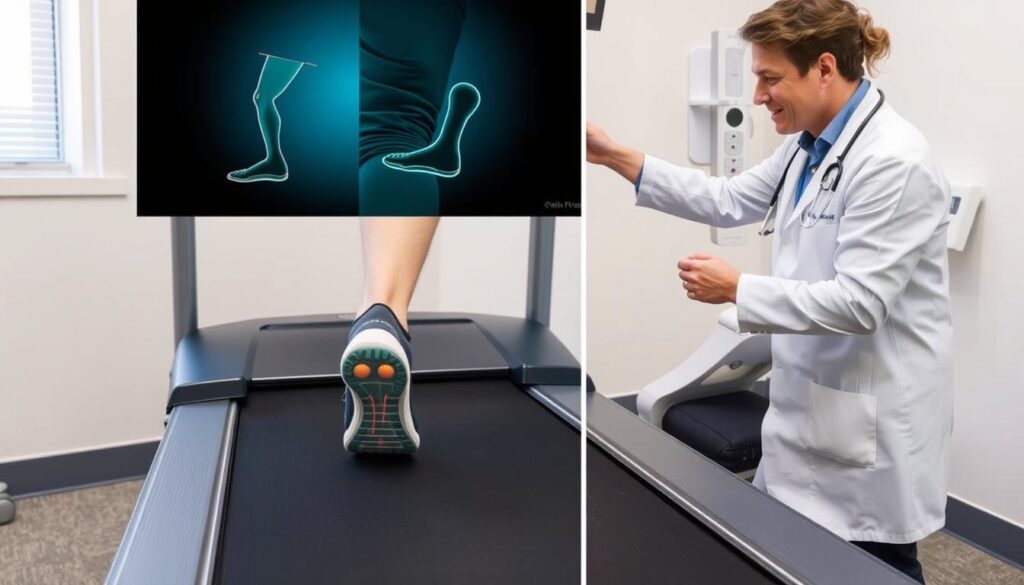
    Orthopedic specialist examining a patient's gait while wearing supportive shoes for knee pain relief

    Orthopedic specialists often analyze gait patterns to recommend the most appropriate footwear for individual knee conditions.

    Buying Guide: Finding the Best Shoes for Knee Pain Relief

    Selecting the right shoes for your specific knee condition requires understanding the different types available and how they address various causes of knee pain. Here’s a comprehensive comparison to help guide your decision:

    Types of Shoes for Knee Pain Relief

    Shoe Type Best For Key Features Limitations
    Walking Shoes Everyday use, moderate activity Balanced cushioning, arch support, flexible forefoot Less suitable for high-impact activities
    Running Shoes Jogging, running, high-impact exercise Enhanced shock absorption, responsive cushioning May be overbuilt for casual use
    Stability Shoes Overpronation, alignment issues Motion control elements, structured support Can feel restrictive for neutral feet
    Maximalist Shoes Severe knee pain, arthritis Maximum cushioning, rocker soles Bulky appearance, less ground feel
    Hiking/Trail Shoes Outdoor activities, uneven terrain Rugged outsole, ankle support, cushioning Heavier, less suitable for everyday use

    Midsole Materials and Their Impact on Knee Pain

    EVA (Ethylene Vinyl Acetate)

    A lightweight foam that provides good cushioning and shock absorption. It’s commonly used in many athletic shoes and offers a good balance of comfort and support. However, EVA can compress over time, reducing its effectiveness.

    PU (Polyurethane)

    More durable than EVA and maintains its cushioning properties longer. PU provides excellent stability and support but tends to be heavier. It’s often used in shoes designed for long-term wear and support.

    TPU (Thermoplastic Polyurethane)

    Offers a good balance of cushioning, durability, and energy return. TPU maintains its properties across a wide temperature range and is resistant to compression. It’s becoming increasingly popular in performance shoes.

    Proprietary Foams

    Many brands have developed their own cushioning technologies (like New Balance’s Fresh Foam, Hoka’s CMEVA, or Nike’s ZoomX). These often combine the benefits of traditional materials with enhanced properties like energy return or targeted cushioning.

    Finding Your Perfect Fit

  • Shop later in the day when feet are naturally more swollen, similar to how they might be after activity.
  • Wear the socks you plan to use with the shoes when trying them on.
  • Allow a thumb’s width of space between your longest toe and the end of the shoe.
  • Test the shoes by walking or jogging in the store if possible.
  • Consider your foot width – many knee-friendly shoes come in multiple width options.
  • Check for pressure points or areas of discomfort that could become problematic with extended wear.
  • Evaluate arch support by ensuring it matches your foot’s natural arch.
  • Pro Tip: If you have custom orthotics or inserts, bring them with you when trying on new shoes. Remove the shoe’s original insole and insert your orthotic to ensure proper fit and function.

    Frequently Asked Questions About Shoes for Knee Pain Relief

    Can shoes really help with knee pain?

    Yes, proper footwear can significantly help reduce knee pain. Research has shown that shoes with appropriate cushioning, support, and stability features can reduce the impact forces transmitted to the knees by up to 25%. For many people with conditions like osteoarthritis, patellofemoral pain syndrome (runner’s knee), or general knee discomfort, wearing the right shoes is an effective non-invasive intervention.

    Shoes work by improving alignment, absorbing shock, and promoting proper biomechanics during walking and other activities. However, it’s important to note that while shoes can help manage symptoms, they should be part of a comprehensive approach that might include physical therapy, appropriate exercise, and medical treatment when necessary.

    How often should I replace my shoes to maintain knee pain relief?

    Even the best shoes for knee pain relief will eventually lose their cushioning and support properties. Most experts recommend replacing athletic shoes every 300-500 miles of use or every 6-12 months, depending on your activity level and body weight. For everyday walking shoes, replacement is typically recommended every 8-12 months with regular use.

    Signs that it’s time to replace your shoes include:

    • Visible compression or creasing in the midsole
    • Uneven wear patterns on the outsole
    • Reduced cushioning or “flat” feeling when walking
    • Return or worsening of knee pain that was previously managed
    • Breakdown of the upper material or heel counter

    If you’re using shoes specifically for knee pain relief, it’s especially important not to wait until they’re visibly worn out, as the internal supportive structures may deteriorate before external signs appear.

    Are expensive shoes always better for knee pain?

    Not necessarily. While premium shoes often incorporate advanced technologies and materials that can benefit those with knee pain, price isn’t always an indicator of how well a shoe will work for your specific condition. Some moderately priced options, like the Skechers Max Cushioning Elite 2.0 in our list, provide excellent cushioning and support at a more accessible price point.

    The most important factors are finding shoes with features that address your specific needs and ensuring proper fit. Sometimes, a mid-range shoe that fits your foot perfectly will provide better relief than a more expensive option that doesn’t match your foot shape or gait pattern.

    Should I choose different shoes for different activities if I have knee pain?

    Yes, activity-specific shoes are recommended for those with knee pain. Different activities create different movement patterns and impact forces on your knees. For example:

    • Walking shoes are designed for the heel-to-toe motion of walking and moderate impact
    • Running shoes provide enhanced shock absorption for the higher impact of running
    • Cross-training shoes offer multi-directional support for varied movements
    • Hiking shoes provide stability and protection on uneven terrain

    Using the appropriate shoe for each activity ensures your knees receive the right kind of support and protection for those specific movements, potentially reducing pain and preventing further injury.

    What’s the relationship between heel-to-toe drop and knee pain?

    Heel-to-toe drop (the height difference between the heel and forefoot of a shoe) can significantly impact knee stress. Research suggests that shoes with lower drops (under 5mm) may help reduce knee pain for many people by encouraging a more natural forefoot or midfoot strike pattern that decreases impact forces on the knees.

    However, if you’ve been wearing traditional higher-drop shoes (8-12mm) for years, switching suddenly to a low-drop shoe could cause calf and Achilles strain. It’s best to transition gradually, starting with moderate activities in your new shoes and slowly increasing duration as your body adapts.

    Conclusion: Finding Your Ideal Shoes for Knee Pain Relief

    Selecting the best shoes for knee pain relief is a personal journey that depends on your specific condition, foot mechanics, and activity needs. The recommendations in this guide provide excellent starting points based on expert input and proven features that help alleviate knee discomfort.

    Remember that proper footwear is just one component of knee pain management. For comprehensive relief, consider combining supportive shoes with appropriate exercise, proper body mechanics, and professional medical advice when needed.

    By investing in quality footwear with features like adequate cushioning, proper arch support, and stability elements that match your needs, you can take significant steps toward reducing knee pain and improving your mobility and quality of life.

    Ready to find relief for your knee pain?
    Explore our top recommendations and experience the difference proper footwear can make

    View Top Recommendations