Can a revolutionary gene-editing tool hold the key to repairing damaged knee cartilage? Cartilage damage, often resulting from trauma or degenerative conditions, poses a significant clinical challenge due to its limited regenerative capacity.
Current treatments often lead to the formation of fibrocartilage, which lacks the mechanical properties of native hyaline cartilage. The advent of CRISPR technology has opened new avenues for treating various medical conditions, including knee cartilage regeneration.
The potential of gene editing for knee injuries is vast, offering new hope for patients suffering from cartilage damage.
Key Takeaways
- Cartilage damage is a significant clinical challenge.
- Current treatments have limitations, leading to fibrocartilage formation.
- CRISPR technology offers a new approach for knee cartilage regeneration.
- Gene editing has the potential to treat knee injuries effectively.
- CRISPR may provide a breakthrough in regenerative medicine.
Introduction to CRISPR Technology
CRISPR-Cas9 gene editing has emerged as a groundbreaking tool in molecular biology, with significant implications for regenerative medicine. This technology has the potential to treat a wide range of genetic diseases and injuries, including those affecting the knee cartilage.
What is CRISPR?
CRISPR-Cas9 is a gene-editing tool that allows for precise modifications to the genome. According to recent studies, such as those found on PubMed Central, CRISPR-Cas9 has revolutionized the field of genetics by providing a relatively simple and efficient method for editing genes.
The CRISPR-Cas9 system consists of two main components: the Cas9 enzyme, which cuts the DNA, and a guide RNA, which directs Cas9 to the specific location in the genome where the edit is to be made. This precision editing capability is what makes CRISPR-Cas9 so powerful.
How Does CRISPR Work?
The process of gene editing with CRISPR-Cas9 involves several key steps:
- Designing a guide RNA that is complementary to the target DNA sequence.
- Introducing the Cas9 enzyme and guide RNA into the cell.
- The Cas9 enzyme cuts the DNA at the targeted location.
- The cell’s natural repair machinery is activated, allowing for the introduction of edits or corrections to the gene.
This technology has far-reaching implications for gene editing for knee injuries and other orthopedic conditions. By enabling precise edits to genes involved in cartilage health and regeneration, CRISPR-Cas9 could potentially be used to develop new treatments for cartilage damage.
As researchers continue to explore the capabilities of CRISPR-Cas9, we can expect to see significant advancements in the field of regenerative medicine for joints. The potential applications of this technology are vast, ranging from the treatment of genetic disorders to the regeneration of damaged tissues.
Understanding Knee Cartilage and Its Importance
Understanding the complexities of knee cartilage is essential for appreciating its significance in joint health. Knee cartilage plays a crucial role in maintaining the integrity and function of the knee joint.
It is responsible for several key functions that impact overall mobility and quality of life. Damage to this cartilage can lead to conditions such as osteoarthritis, significantly affecting an individual’s ability to perform daily activities.
Anatomy of Knee Cartilage
Knee cartilage is composed of several types, including articular cartilage, which covers the ends of bones, and meniscal cartilage, found between the bones. Articular cartilage facilitates smooth movement by reducing friction between the bones.
The structure of knee cartilage is designed to absorb shock, distribute loads, and enable frictionless movement. It is made up of water, collagen, and cells called chondrocytes.
Functions of Knee Cartilage
The primary functions of knee cartilage include:
- Providing lubrication to reduce friction between bones
- Absorbing shock to cushion the joint during movement
- Facilitating smooth movement by ensuring a smooth gliding surface
These functions are critical for maintaining healthy joint function and preventing degenerative conditions like knee osteoarthritis. Effective cartilage repair techniques are being researched to address cartilage damage and promote knee cartilage regeneration.
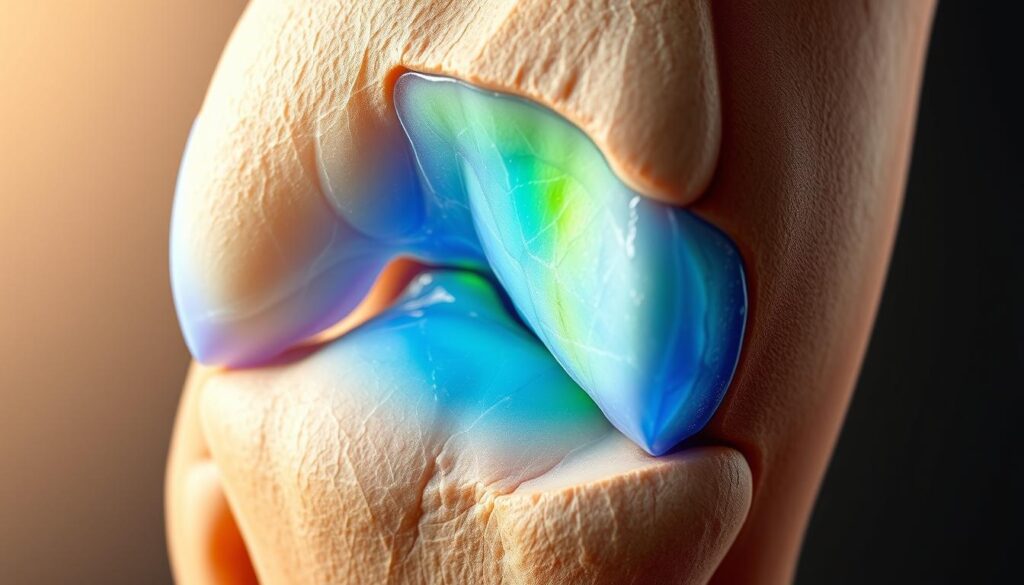
In summary, knee cartilage is vital for joint health, and understanding its anatomy and functions is crucial for appreciating the importance of knee cartilage regeneration and cartilage repair techniques in treating conditions like knee osteoarthritis.
The Problem of Cartilage Damage
Damage to knee cartilage is a significant health concern, often resulting in pain, limited mobility, and potentially leading to osteoarthritis. Cartilage damage can significantly impact an individual’s quality of life, making everyday activities challenging.
Causes of Knee Cartilage Damage
Knee cartilage damage can result from various factors, including trauma, degenerative conditions, and genetic predispositions. Traumatic injuries, such as those sustained during sports, can cause immediate damage. Degenerative conditions, like osteoarthritis, gradually wear down the cartilage over time.
- Trauma or injury
- Osteoarthritis
- Genetic predispositions
- Age-related wear and tear
Symptoms of Cartilage Degradation
The symptoms of cartilage degradation can vary but often include pain, dyskinesia (difficulty with movement), and loss of function. As cartilage deteriorates, individuals may experience increased stiffness and reduced mobility in the affected knee.
| Cause | Symptoms | Potential Treatment |
|---|---|---|
| Trauma/Injury | Pain, swelling, limited mobility | Physical therapy, cartilage repair techniques |
| Osteoarthritis | Gradual pain, stiffness, loss of function | Knee osteoarthritis treatment, stem cell therapy for knee cartilage |
| Genetic Predispositions | Early onset of osteoarthritis symptoms | Monitoring, early intervention with cartilage repair techniques |
Understanding the causes and symptoms of cartilage damage is crucial for developing effective cartilage repair techniques and knee osteoarthritis treatment plans. Advances in medical technology, including stem cell therapy for knee cartilage, offer promising solutions for patients suffering from cartilage damage.
Current Treatments for Cartilage Damage
The management of cartilage damage involves a range of approaches, from conservative to surgical interventions. Current treatments aim to alleviate symptoms, improve function, and potentially regenerate damaged cartilage.
Physical Therapy
Physical therapy is often the first line of treatment for cartilage damage. It focuses on strengthening the muscles around the knee, improving flexibility, and reducing pain. A physical therapist can create a personalized exercise program to help patients regain knee function and mobility.
Surgical Options
When conservative management fails, surgical options may be considered. These include cartilage repair techniques such as microfracture, autologous chondrocyte implantation (ACI), and osteochondral autograft transplantation (OAT). Stem cell therapy for knee cartilage is also being explored as a potential treatment, aiming to promote cartilage regeneration.
Surgical interventions for cartilage damage can be effective but vary in their outcomes and suitability for individual patients.
| Surgical Technique | Description | Indications |
|---|---|---|
| Microfracture | A procedure that stimulates cartilage growth by creating small fractures in the underlying bone. | Small cartilage defects |
| Autologous Chondrocyte Implantation (ACI) | A two-step surgery involving the implantation of cultured chondrocytes into the cartilage defect. | Large cartilage defects |
| Osteochondral Autograft Transplantation (OAT) | A procedure that involves transplanting healthy cartilage and bone from one part of the knee to the damaged area. | Small to medium-sized cartilage defects |
Limitations of Traditional Treatments
While current treatments for cartilage damage can provide relief and improve function, they have limitations. Knee osteoarthritis treatment often focuses on managing symptoms rather than addressing the underlying cause. Surgical complications and variable efficacy are also concerns.
Understanding these limitations highlights the need for innovative and more effective treatments, such as those potentially offered by CRISPR technology.
The Role of CRISPR in Regenerative Medicine
Regenerative medicine is on the cusp of a breakthrough, thanks to CRISPR’s ability to edit genes with unprecedented precision. This technology has the potential to revolutionize the treatment of various medical conditions, including knee cartilage damage.
The precision of CRISPR allows for targeted gene editing, which can be used to repair or regenerate damaged tissues. By leveraging this capability, researchers are exploring new approaches to addressing cartilage degradation and other joint-related issues.
Gene Editing for Tissue Repair
CRISPR’s gene-editing capabilities enable scientists to modify genes responsible for tissue damage or degeneration. This can lead to the development of novel therapies that promote tissue repair and regeneration.
For instance, researchers can use CRISPR to edit genes involved in the inflammatory response, potentially reducing cartilage degradation and promoting a more favorable environment for cartilage regeneration.
Potential Applications in Cartilage Regeneration
The application of CRISPR in cartilage regeneration holds significant promise. By enabling the precise editing of genes involved in cartilage health, CRISPR can facilitate the development of new treatments for cartilage damage.
- Enhanced cartilage repair through gene editing
- Potential for regenerative therapies that address the root causes of cartilage degradation
- New avenues for treating knee injuries and degenerative joint diseases
As research continues to advance, the integration of CRISPR technology into regenerative medicine is likely to open up new possibilities for treating knee cartilage damage and other joint-related conditions.
Research Advancements in CRISPR and Cartilage
CRISPR technology is revolutionizing the field of regenerative medicine, particularly in knee cartilage regeneration. Recent studies have explored the potential of CRISPR in treating cartilage damage, showing promising results.
Recent Studies and Findings
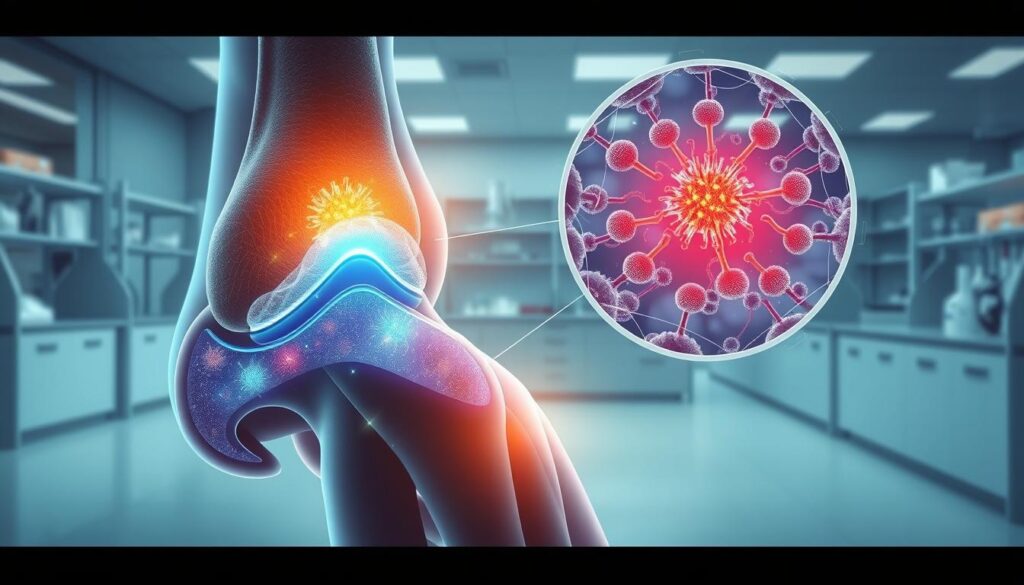
Several recent studies have investigated the efficacy of CRISPR technology in knee cartilage regeneration. These studies have shown that CRISPR can be used to edit genes responsible for cartilage degradation, potentially halting or reversing the damage.
For instance, a study published in a reputable scientific journal demonstrated the successful use of CRISPR-Cas9 in editing out genes that contribute to osteoarthritis.
Case Studies in Regeneration
Case studies have further elucidated the potential of CRISPR in cartilage regeneration. One notable case involved the use of CRISPR to treat a patient with significant knee cartilage damage.
The treatment resulted in noticeable improvements in the patient’s condition, with follow-up examinations showing regeneration of cartilage tissue.
These advancements underscore the potential of CRISPR technology in knee cartilage regeneration and highlight the need for continued research in this area.
Challenges Facing CRISPR Technology
CRISPR technology, while promising, faces significant hurdles in the realm of regenerative medicine. As researchers explore its potential for gene editing for knee injuries and regenerative medicine for joints, several challenges come to the forefront.
Ethical Considerations
The application of CRISPR-Cas9 technology in humans raises several ethical concerns. One of the primary issues is the potential for off-target effects, where unintended parts of the genome are edited. This could lead to unforeseen consequences, including the introduction of new mutations or the disruption of vital gene functions.
Another ethical consideration is the possibility of germline editing, where changes made to an individual’s genome could be passed on to future generations. This raises questions about the long-term impacts and the need for careful consideration and regulation.
- Potential for off-target effects
- Risk of germline editing
- Need for transparent regulation
Technical Limitations
From a technical standpoint, CRISPR-Cas9 technology faces several limitations. One of the main challenges is the efficiency and specificity of the CRISPR system. Ensuring that the CRISPR-Cas9 complex accurately targets the desired gene without affecting other parts of the genome is crucial.
Additionally, the delivery mechanism of CRISPR-Cas9 into cells is another significant technical hurdle. Researchers are exploring various methods, including viral vectors and nanoparticles, to improve delivery efficiency and reduce potential side effects.
| Technical Challenge | Description |
|---|---|
| Efficiency and Specificity | Ensuring accurate targeting without off-target effects |
| Delivery Mechanism | Improving the method of delivering CRISPR-Cas9 into cells |
Future Prospects of CRISPR in Knee Regeneration
Emerging innovations in CRISPR are expected to significantly enhance its potential in regenerating knee cartilage. As researchers continue to advance the capabilities of CRISPR technology, the prospects for its application in orthopedic medicine are becoming increasingly promising.
Innovations on the Horizon
Several innovations are on the horizon that could further bolster the role of CRISPR in knee cartilage regeneration. These include improvements in gene editing precision, which could reduce off-target effects and enhance the safety profile of CRISPR-based treatments.
According to recent studies, advancements in CRISPR technology are not only improving the efficacy of gene editing but also expanding its potential applications in regenerative medicine. As noted by experts, “the precision and efficiency of CRISPR/Cas9 systems are critical for their therapeutic applications”
“The precision and efficiency of CRISPR/Cas9 systems are critical for their therapeutic applications, including the regeneration of damaged cartilage.”
- Enhanced specificity of gene editing tools
- Development of novel delivery mechanisms
- Integration of CRISPR with other regenerative technologies
These advancements are expected to play a crucial role in overcoming current limitations and unlocking the full potential of CRISPR in knee cartilage regeneration.
Long-term Impacts on Joint Health
The long-term impacts of CRISPR technology on joint health could be transformative. By enabling the regeneration of healthy cartilage, CRISPR has the potential to reduce the incidence of osteoarthritis and other degenerative joint diseases.
| Potential Benefits | Description |
|---|---|
| Regeneration of Healthy Cartilage | CRISPR enables the precise editing of genes responsible for cartilage health, potentially leading to the regeneration of healthy cartilage. |
| Reduction in Osteoarthritis Incidence | By regenerating cartilage, CRISPR could reduce the incidence of osteoarthritis, a common degenerative joint disease. |
| Improved Joint Function | Successful cartilage regeneration could lead to improved joint function and reduced pain for patients. |
As CRISPR technology continues to evolve, its impact on joint health is likely to be significant, offering new hope for patients suffering from cartilage damage and related conditions.
Patient Perspectives on CRISPR Treatments
As CRISPR technology advances towards clinical applications, patient perspectives on its potential benefits and risks are becoming increasingly important. The prospect of using gene editing for knee injuries to regenerate damaged cartilage is particularly exciting for individuals suffering from chronic knee pain or degenerative joint diseases.
Patients who have undergone traditional treatments for knee cartilage damage often report limited success and a significant recovery time. In contrast, the potential for regenerative medicine for joints using CRISPR technology offers a promising alternative that could revolutionize treatment outcomes.
Success Stories
There are already early indications of success in using CRISPR and related gene editing technologies for treating various medical conditions. For knee cartilage regeneration, stem cell therapy for knee cartilage has shown potential in preliminary studies, offering hope for patients with severe cartilage damage.
- Patients with significant cartilage loss have reported improvements in joint function and reductions in pain after undergoing experimental stem cell therapies.
- Advances in gene editing technologies like CRISPR are expected to further enhance the efficacy and safety of these treatments.
Concerns and Misconceptions
Despite the promising outlook, there are several concerns and misconceptions about CRISPR treatments that need to be addressed. Some patients worry about the ethical implications of gene editing or fear unintended consequences of such powerful technology.
- Ethical concerns: The use of CRISPR raises questions about the ethics of altering human genes, particularly for non-life-threatening conditions.
- Misconceptions about the technology: There’s a need for clear, accurate information to dispel myths and misunderstandings about how CRISPR works and its potential applications.
By understanding patient perspectives on CRISPR treatments, healthcare providers can better address these concerns, offering more personalized and informed care. As research continues to advance, it’s likely that CRISPR will play an increasingly significant role in regenerative medicine for joints, potentially transforming the treatment landscape for knee cartilage damage.
Regulatory Landscape for CRISPR Applications
As CRISPR technology advances, regulatory guidelines are being developed to ensure safe applications. The regulatory landscape for CRISPR-Cas9 technology is complex and varies globally. Regulatory frameworks, including FDA guidelines, play a crucial role in the approval and implementation of CRISPR technologies.
FDA Guidelines
The FDA has been actively involved in shaping the regulatory environment for gene therapies, including CRISPR-based treatments. Recent guidelines have clarified the approval process, emphasizing safety and efficacy.
“The FDA’s guidance on gene therapy products is intended to help ensure that these products are safe and effective, and that they meet the FDA’s standards for approval.”
The guidelines cover various aspects, including:
- Preclinical testing requirements
- Clinical trial design
- Manufacturing standards
Global Comparisons
Regulatory approaches to CRISPR technology vary significantly across different regions.
| Region | Regulatory Body | Approach to CRISPR |
|---|---|---|
| United States | FDA | Stringent guidelines for gene therapies |
| European Union | EMA | Emphasis on risk assessment and public consultation |
| China | NMPA | Rapid approval process with a focus on innovation |
Conclusion: The Future of CRISPR and Knee Cartilage
With ongoing advancements in CRISPR, the future of knee cartilage regeneration looks increasingly hopeful. The potential of CRISPR technology in improving outcomes for knee cartilage damage is significant, with ongoing research aiming to translate these advancements into clinical practice.
Recap of Key Points
The article has explored the vast landscape of CRISPR technology and its application in regenerative medicine, particularly in knee cartilage regeneration. Key points include the mechanism of CRISPR, its role in gene editing for tissue repair, and the current state of research in this field.
- The precision of CRISPR in editing genes offers a promising solution for cartilage repair.
- Ongoing research is focused on overcoming the technical and ethical challenges associated with CRISPR technology.
- The potential long-term impacts of CRISPR on joint health are substantial, offering new hope for the treatment of cartilage-related disorders.
The Potential for Better Outcomes
As CRISPR technology continues to evolve, it is likely to lead to significant improvements in knee cartilage regeneration. By enabling precise gene editing, CRISPR holds the potential to revolutionize the treatment of cartilage damage, moving beyond current limitations in regenerative medicine.
Continued research and investment in CRISPR technology are crucial for realizing its full potential in improving patient outcomes. As we move forward, the integration of CRISPR into clinical practice could mark a significant shift in the management of knee cartilage disorders.
Call to Action
As research into CRISPR technology and its applications in knee cartilage regeneration continues to advance, staying informed about the latest developments is crucial. Gene editing for knee injuries is becoming a promising area of study, with biotechnology for joint health playing a significant role.
Staying Informed About CRISPR Developments
To stay updated, individuals can follow reputable scientific journals and research institutions that publish studies on CRISPR and its medical applications. Engaging with online forums and attending conferences related to gene editing and regenerative medicine can also provide valuable insights.
Engaging with Research Communities
Engaging with research communities is vital for both professionals and patients. By participating in discussions and sharing information, individuals can contribute to a better understanding of CRISPR technology and its potential benefits for knee cartilage regeneration.
FAQ
What is CRISPR-Cas9 technology and how does it work?
CRISPR-Cas9 is a gene editing tool that enables precise modifications to the genome by targeting specific DNA sequences. It works by using a guide RNA to locate the target sequence, and then the Cas9 enzyme cuts the DNA, allowing for editing or repair.
How can CRISPR technology be used for knee cartilage regeneration?
CRISPR can be used to edit genes involved in cartilage development and maintenance, potentially leading to new approaches for regenerating damaged cartilage. By modifying genes that contribute to cartilage health, CRISPR may help to repair or replace damaged tissue.
What are the current treatments for cartilage damage, and what are their limitations?
Current treatments for cartilage damage include physical therapy, microfracture, and autologous chondrocyte implantation. However, these treatments often result in the formation of fibrocartilage, which can deteriorate over time, highlighting the need for more effective regenerative therapies.
What are the potential benefits of using CRISPR for cartilage regeneration?
The potential benefits of using CRISPR for cartilage regeneration include the ability to precisely edit genes involved in cartilage health, potentially leading to more effective and durable repairs. CRISPR may also enable the development of new therapies that can be tailored to individual patients.
What are the challenges facing CRISPR technology in the context of cartilage regeneration?
Challenges facing CRISPR technology include technical limitations, such as off-target effects, and ethical considerations, such as the potential for unintended consequences. Additionally, the regulatory landscape for CRISPR applications is still evolving and may impact the development of new therapies.
How is CRISPR technology being used in research related to cartilage regeneration?
Researchers are using CRISPR to study the genetic mechanisms underlying cartilage development and maintenance, and to explore new approaches for regenerating damaged cartilage. Recent studies have shown promising results in using CRISPR to edit genes involved in cartilage health.
What are the potential long-term impacts of CRISPR technology on joint health?
The potential long-term impacts of CRISPR technology on joint health include the possibility of more effective and durable treatments for cartilage damage and osteoarthritis. CRISPR may also enable the development of new therapies that can be used to prevent or treat a range of joint-related disorders.
What is the current regulatory landscape for CRISPR applications in the United States?
The FDA has established guidelines for the use of CRISPR technology in humans, and is working to clarify the regulatory framework for CRISPR-based therapies. The regulatory landscape is still evolving, and may impact the development of new therapies.
How can patients stay informed about the latest developments in CRISPR technology and its applications in cartilage regeneration?
Patients can stay informed by engaging with research communities, following reputable sources of information, and discussing their options with healthcare professionals. By staying informed, patients can make more informed decisions about their care and potentially benefit from new therapies as they become available.