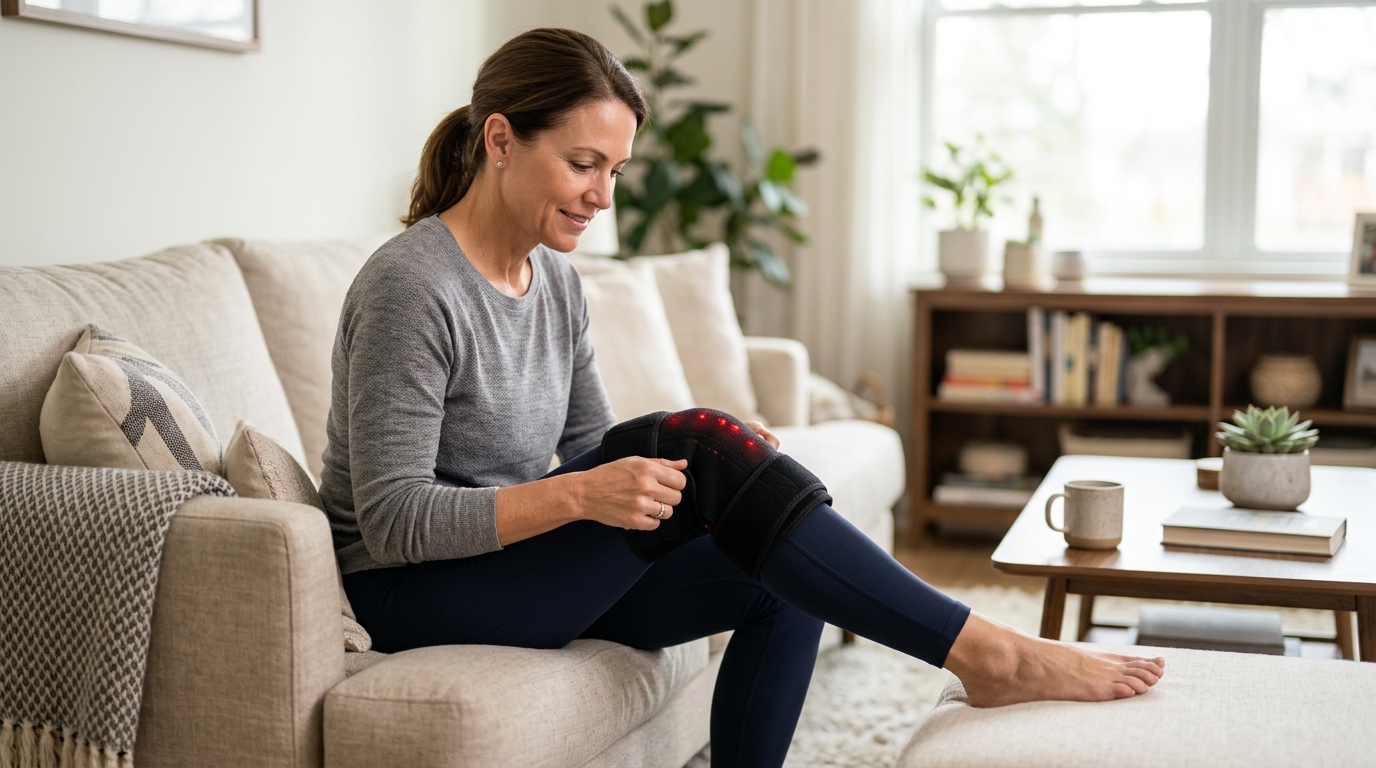
Infrared biohacking is gaining traction in 2026 as a non-invasive way to reduce knee pain, and research shows a 1-week photobiomodulation protocol can produce significant pain reduction with an effect size of −1.0, highlighting how quickly the knee can respond to targeted light therapy.
Key Takeaways
| Question | Answer |
|---|---|
| What is infrared biohacking for knee inflammation? | It uses light therapy to reduce inflammation and support tissue repair in the knee. |
| Does infrared therapy help knee pain? | Yes, studies show measurable reductions in pain and improved function. |
| Is it safe for daily use? | Generally yes, when used within recommended exposure times. |
| What conditions benefit most? | Arthritis, cartilage wear, and injuries like torn meniscus. |
| Can it replace rehab? | No, combine it with structured rehab like this comprehensive knee pain guide. |
| Where should beginners start? | Start with education on knee pain causes and treatments. |
What Is Infrared Biohacking for Knee Inflammation?
Infrared biohacking focuses on using light wavelengths to influence how your knee heals and responds to stress. It targets inflammation at the cellular level.
This approach is often called photobiomodulation, and it works by stimulating energy production in damaged knee tissues. The result is better recovery and less discomfort.
We see it used alongside traditional rehab for people dealing with persistent knee hurt. It is not a replacement for diagnosis or structured care.

How Infrared Therapy Reduces Knee Pain
Infrared light penetrates deep into the knee joint, reaching cartilage and soft tissue. This helps reduce inflammation and improve circulation.
Better circulation means more oxygen and nutrients reach damaged areas. That directly supports healing and reduces stiffness.
Many people notice reduced swelling after consistent sessions. This is especially helpful in chronic knee pain cases.

Best Wavelengths for Knee Inflammation Relief
Not all infrared light works the same. Research shows specific ranges deliver better results for knee inflammation.
-
904–905 nm: strongest pain reduction outcomes
-
785–850 nm: consistent improvement in knee pain
-
Multi-wavelength: less predictable results
Choosing the right device matters more than most people think. Incorrect settings limit effectiveness.
This infographic highlights three benefits of infrared therapy for knee inflammation. It explains how infrared biohacking may support recovery.


Did You Know?
904–905 nm infrared therapy showed the strongest pain reduction compared to placebo in knee osteoarthritis studies.
Source: Fan et al. 2024
Infrared Therapy vs Traditional Heat for Knee Hurt
Traditional heat warms the surface of the knee. Infrared penetrates deeper into tissues.
| Method | Depth | Best Use |
|---|---|---|
| Heating pads | Surface | Muscle relaxation |
| Infrared therapy | Deep tissue | Inflammation and joint recovery |
Both can be useful, but infrared therapy offers a more targeted approach. This is why it is gaining attention in 2026.

Conditions That Respond Best to Infrared Therapy
Infrared biohacking works best for inflammation-driven conditions. These include both acute and chronic issues.
-
Cartilage degeneration
-
Ligament injuries
-
Overuse inflammation
-
Post-surgical recovery
If your symptoms come from instability or trauma, combine therapy with structured rehab. Learn more about ligament knee injuries.


How to Use Infrared Therapy Safely
Start with short sessions and monitor your symptoms daily. Most protocols recommend 5 to 15 minutes per area.
Do not apply excessive heat or extend sessions unnecessarily. More is not always better.
Consistency matters more than intensity. Regular use produces better outcomes than occasional long sessions.

Combining Infrared Biohacking With Rehab
Infrared therapy works best when paired with movement and strength training. It prepares the tissue for loading.
Focus on controlled exercises that improve joint stability. Avoid aggressive loading during flare-ups.
For deeper insight, review strategies for traumatic knee recovery.

Did You Know?
Photobiomodulation reduced resting knee pain by an average of 0.7 points across randomized trials.
Source: Oliveira et al. 2024
Common Mistakes With Infrared Knee Therapy
Mistake #1: Using the wrong wavelength. Not all devices deliver effective penetration.
Mistake #2: Inconsistent use. Skipping sessions reduces cumulative benefits.
Mistake #3: Ignoring underlying causes of knee pain. Therapy alone cannot fix biomechanical issues.


Who Should Avoid Infrared Biohacking?
Infrared therapy is generally safe, but some individuals should use caution. This includes people with certain medical conditions or sensitivities.
Always consult a professional if you have severe or unexplained knee pain. This is especially important after trauma.
Structured evaluation helps identify serious issues early. Do not rely on self-treatment alone.


Future of Infrared Therapy for Knee Inflammation
Research in 2026 continues to explore how infrared therapy can delay more invasive treatments. Clinical trials are ongoing.
We expect better device precision and personalized protocols. This will improve outcomes for people with chronic knee pain.
The focus is shifting toward combining therapies rather than relying on one solution. That approach delivers more consistent results.


Conclusion
Infrared biohacking offers a practical, evidence-based way to manage knee inflammation. It supports healing, reduces pain, and fits easily into a broader recovery plan.
We recommend combining it with strength work, mobility, and proper diagnosis. Monitor your symptoms daily and adjust based on how your knee responds.
Your knee does not need guesswork. It needs consistent, targeted care.