Tag: Knee hyperextension

  • Kinesio Taping for Knee Hyperextension

    Kinesio Taping for Knee Hyperextension

    Are you one of the many individuals suffering from knee pain due to knee hyperextension? This common injury can significantly impact one’s quality of life, especially for athletes and individuals with active lifestyles. Kinesio taping has emerged as a potential therapeutic solution, offering support and stability to the knee joint.

    The application of kinesio taping for knee hyperextension has been studied for its benefits, including enhanced cadence, stride length, and walking speed, as well as its role in rehabilitation by potentially increasing quadriceps muscle torque generation. According to a study published on the National Institutes of Health website, kinesio taping application can have various effects on knee mechanics, suggesting its utility in knee hyperextension treatment.

    Key Takeaways

    • Kinesio taping supports and stabilizes the knee joint.
    • It can enhance cadence, stride length, and walking speed.
    • The technique may increase quadriceps muscle torque generation.
    • Kinesio taping has various effects on knee mechanics.
    • It is a potential treatment option for knee hyperextension.

    Understanding Knee Hyperextension and Its Effects

    Understanding knee hyperextension is crucial for identifying its causes, symptoms, and effective treatment options. Knee hyperextension occurs when the knee joint is bent backward beyond its normal range, potentially causing damage to the ligaments and surrounding tissues.

    What is Knee Hyperextension?

    Knee hyperextension is a condition characterized by the excessive backward bending of the knee joint. This can lead to strain or tears in the ligaments, particularly the anterior cruciate ligament (ACL) and the posterior cruciate ligament (PCL).

    The knee joint’s stability is compromised when it is hyperextended, making it challenging to perform daily activities or engage in sports without experiencing discomfort or pain.

    Causes of Knee Hyperextension

    Several factors can contribute to knee hyperextension, including:

    • Sports injuries, particularly those involving sudden stops or changes in direction
    • Accidents or falls that cause the knee to bend backward
    • Overuse or repetitive strain on the knee joint
    • Poor biomechanics or alignment of the lower extremities

    Identifying the underlying cause of knee hyperextension is essential for developing an effective knee hyperextension treatment plan.

    Symptoms and Diagnosis

    The symptoms of knee hyperextension can vary depending on the severity of the condition. Common symptoms include:

    1. Pain and swelling around the knee
    2. Instability or feeling of the knee giving way
    3. Limited range of motion or stiffness
    4. Bruising or inflammation

    A diagnosis of knee hyperextension typically involves a physical examination, medical history, and potentially imaging tests such as X-rays or an MRI to assess the extent of the injury. Knee stability taping may be recommended as part of the treatment to provide support and stability to the knee.

    Understanding the causes and symptoms of knee hyperextension is crucial for effective management and prevention of further knee injuries.

    The Role of Kinesio Taping in Rehabilitation

    Kinesio taping has emerged as a supportive technique in the rehabilitation of various knee injuries, including hyperextension. This method involves the application of a specific type of tape designed to support the body’s natural movements and healing processes.

    What is Kinesio Taping?

    Kinesio taping, also known as kinesiology taping, is a therapeutic technique used by physical therapists, athletes, and healthcare professionals to support injured muscles and joints. The tape used is made from a breathable, elastic material that can be stretched in one direction, allowing for a full range of motion while providing support.

    The primary function of kinesio tape is to assist in the body’s natural healing process by reducing pain, inflammation, and muscle oscillation. It is designed to be worn for several days, making it a convenient treatment option for individuals undergoing rehabilitation.

    Benefits of Kinesio Taping for Knee Hyperextension

    The application of kinesio taping for knee hyperextension offers several benefits, including:

    • Reduced pain and inflammation
    • Improved joint stability
    • Enhanced proprioception (the perception of the position and movement of one’s body)
    • Support for the surrounding muscles, thereby aiding in the recovery process

    A comparative analysis of the benefits of kinesio taping for knee hyperextension is presented in the following table:

    Benefit Description Impact on Rehabilitation
    Pain Reduction Kinesio taping helps in reducing pain by alleviating stress on the knee joint. Enhances the ability to perform rehabilitation exercises.
    Improved Stability The tape provides additional support to the knee, improving stability. Facilitates movement and weight-bearing activities during rehabilitation.
    Enhanced Proprioception Kinesio taping stimulates sensory receptors, enhancing proprioception. Aids in regaining normal movement patterns and reducing the risk of further injury.

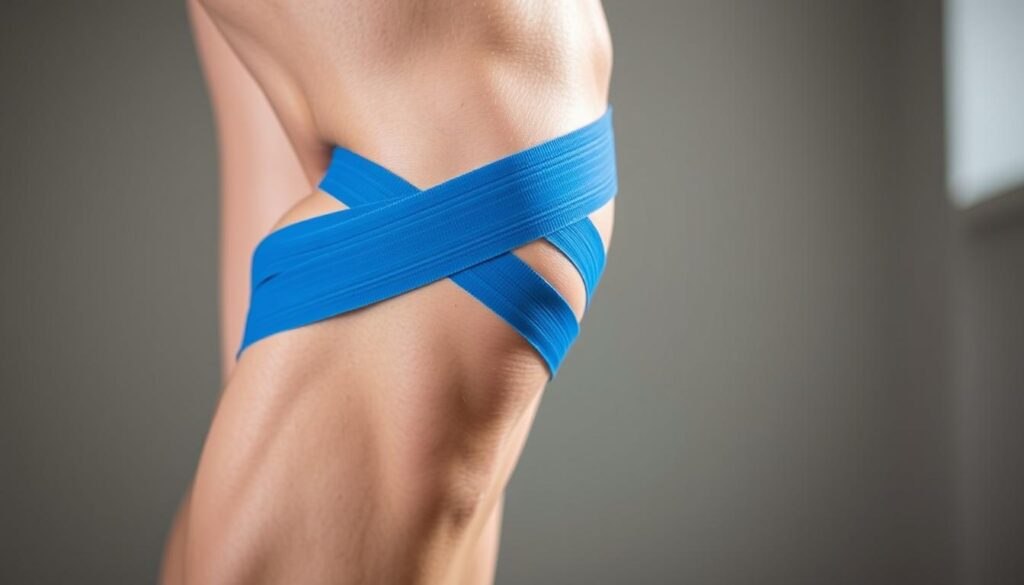
    kinesio taping for knee hyperextension

    How Kinesio Taping Works

    Understanding the mechanics behind kinesio taping is crucial for appreciating its role in treating knee hyperextension and other related injuries. Kinesio taping has gained popularity as a supportive therapy for various musculoskeletal conditions, including knee injuries.

    The Mechanism Behind Kinesio Taping

    Kinesio taping works by applying a specific type of tape directly to the skin over the affected area. The tape is designed to lift the skin and underlying tissues, thereby reducing pressure on the pain receptors and promoting blood flow. This mechanism is believed to contribute to pain relief and enhanced healing.

    The tape’s elasticity allows for a range of motion while providing support to the knee joint. By reducing the strain on the knee, kinesio taping can help individuals with knee hyperextension to move more comfortably.

    Types of Kinesio Tape Available

    There are various types of kinesio tape available, each with different properties and uses. Some tapes are designed for specific conditions or activities, while others are more versatile.

    Type of Kinesio Tape Description Use Case
    Standard Kinesio Tape Basic kinesio tape for general use Suitable for most knee injuries, including hyperextension
    Pre-cut Kinesio Tape Convenient, pre-cut strips for easy application Ideal for quick taping or for those new to kinesio taping
    Waterproof Kinesio Tape Designed to withstand water exposure Perfect for individuals who need to tape during water activities or in humid conditions

    As noted by a leading physiotherapist, “Kinesio taping is a valuable adjunct to traditional rehabilitation techniques, offering patients an additional tool for managing knee injuries.”

    “The use of kinesio tape can significantly enhance the recovery process by providing continuous support and promoting proper biomechanics.”

    By understanding the different types of kinesio tape and their applications, individuals can make informed decisions about their treatment options.

    Application Techniques for Knee Hyperextension

    Mastering the application of kinesio tape is a key step in treating knee hyperextension successfully. The effectiveness of kinesio taping largely depends on its correct application. Proper technique ensures that the tape provides the necessary support without causing additional discomfort.

    Preparing the Skin for Taping

    Before applying kinesio tape, it’s crucial to prepare the skin. This involves cleaning the area thoroughly to remove dirt, oils, or lotions that could interfere with the tape’s adhesive. Ensure the skin is dry and free of any irritants. For individuals with sensitive skin, a barrier layer or a hypoallergenic underwrap can be used to prevent skin irritation.
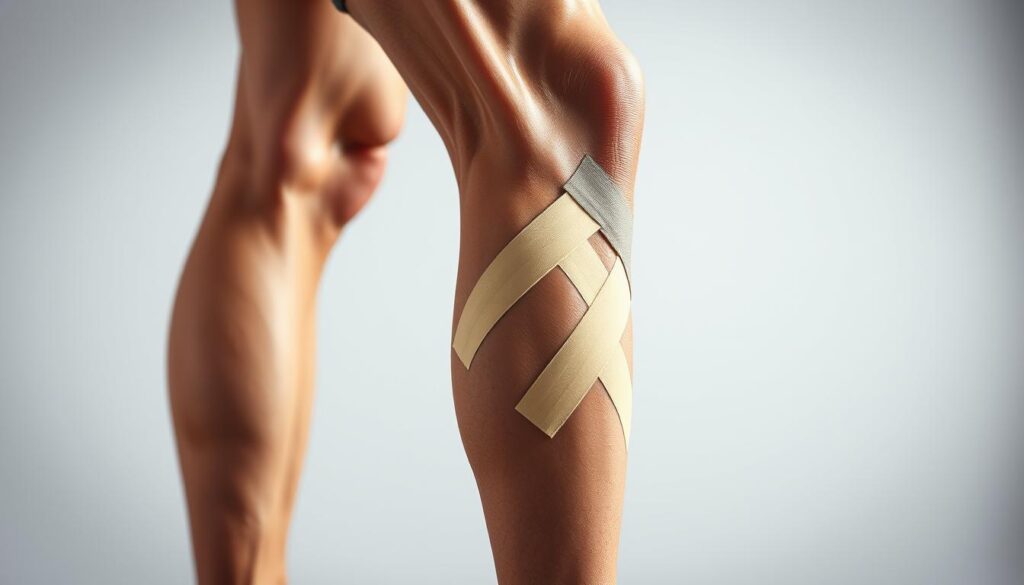
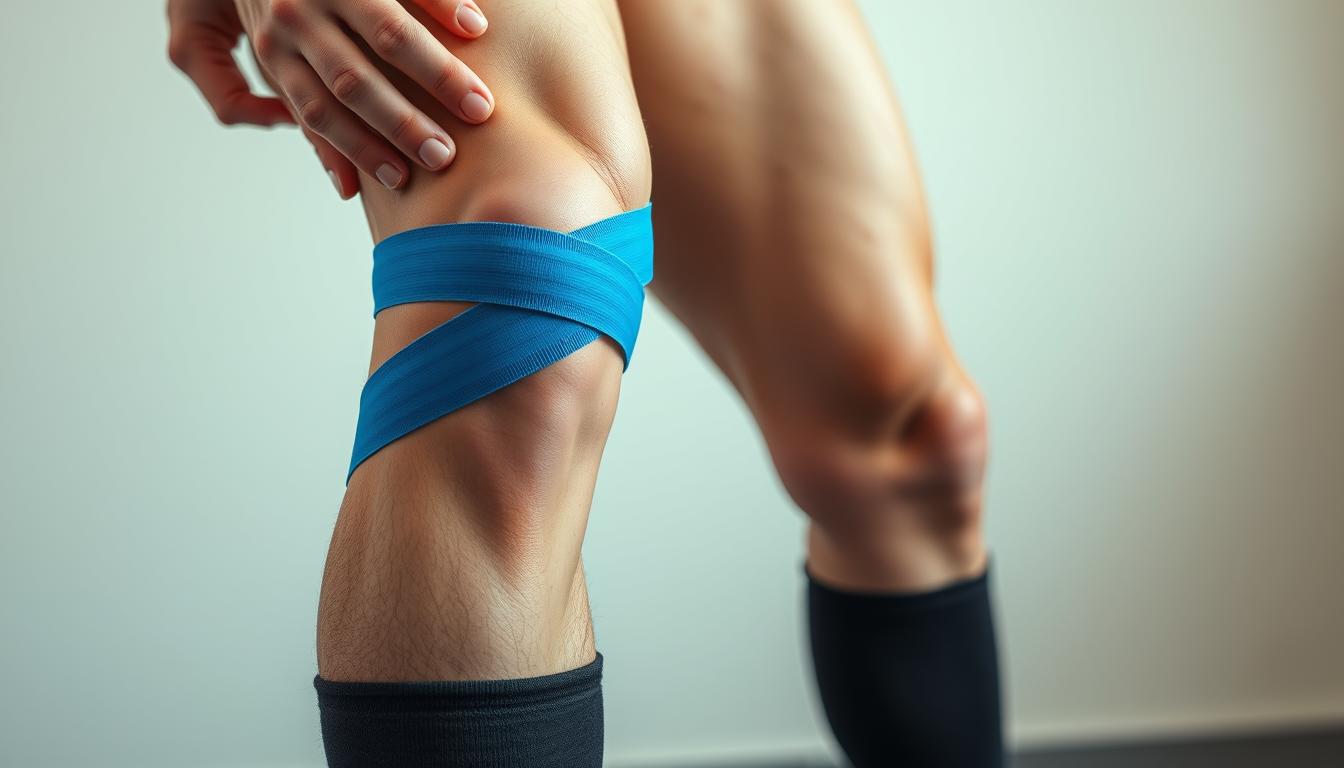
    kinesio taping for knee hyperextension

    Step-by-Step Guide to Taping the Knee

    Applying kinesio tape to the knee for hyperextension involves a specific technique. Here’s a step-by-step guide:

    • Begin by cutting a piece of kinesio tape to the appropriate length, typically from the mid-thigh to just below the knee.
    • Have the knee slightly bent to facilitate the application.
    • Apply the tape along the front of the knee, starting from the top and working downwards, ensuring it’s not too tight.
    • Rub the tape firmly to activate the adhesive.

    As

    “The correct application of kinesio tape can significantly reduce the strain on the knee joint, providing immediate relief for individuals suffering from knee hyperextension.”

    , says experts in the field of sports medicine.

    Tips for Optimal Tape Adhesion

    To ensure the kinesio tape adheres well and lasts longer, follow these tips:

    1. Avoid applying the tape to broken or irritated skin.
    2. Ensure the tape is not twisted or stretched too tightly, as this can cause discomfort or reduce its effectiveness.
    3. For better adhesion, rub the tape gently after application.

    By following these guidelines, individuals can effectively use kinesio taping as part of their knee hyperextension treatment plan, benefiting from enhanced support and stability.

    Kinesio Taping vs. Other Treatment Methods

    In the realm of knee hyperextension treatment, kinesio taping stands out as a popular choice, but how does it compare to other methods? Knee hyperextension is a condition that requires careful management to prevent further injury and promote healing.

    Kinesio taping has gained popularity for its non-invasive nature and the support it provides to the knee. But how does it stack up against other common treatment methods like bracing and physiotherapy?

    Comparing Kinesio Taping with Bracing

    Bracing is a traditional method used to treat knee hyperextension by providing rigid support to the knee joint. Kinesio taping, on the other hand, offers a more flexible and less restrictive alternative. While bracing can be effective, it may limit the range of motion, potentially leading to stiffness and weakening of the surrounding muscles.

    “Kinesio taping provides the necessary support without hindering movement, making it an attractive option for athletes and individuals who wish to maintain their activity level while recovering.”

    Efficacy of Taping vs. Physiotherapy

    Physiotherapy is a cornerstone in the rehabilitation of knee hyperextension, focusing on strengthening the muscles around the knee and improving joint mobility. Kinesio taping can be used in conjunction with physiotherapy to provide additional support and proprioceptive feedback, potentially enhancing the recovery process.

    A study comparing the efficacy of kinesio taping and physiotherapy found that a combination of both yielded better outcomes than either treatment alone. This suggests that kinesio taping can be a valuable adjunct to physiotherapy in the treatment of knee hyperextension.

    “The integration of kinesio taping with physiotherapy can offer a comprehensive approach to managing knee hyperextension, addressing both the symptoms and the underlying causes.”

    Expert Opinion

    In conclusion, kinesio taping offers a unique set of benefits for individuals with knee hyperextension, particularly when compared to or used in conjunction with other treatment methods like bracing and physiotherapy. Understanding the relative advantages of each treatment modality can help individuals make informed decisions about their care.

    Identifying When to Use Kinesio Taping

    For individuals dealing with knee hyperextension, understanding when to utilize kinesio taping can be crucial for effective management and recovery. Kinesio taping is not a one-size-fits-all solution; its application depends on various factors, including the severity of the condition and the individual’s specific needs.

    Situations Beneficial for Taping

    Kinesio taping can be particularly beneficial in several situations:

    • During sports activities: Athletes can benefit from kinesio taping as it provides additional support and stability to the knee, potentially reducing the risk of further injury.
    • When experiencing knee pain: For individuals with knee hyperextension, kinesio taping can help alleviate pain by providing support and reducing strain on the affected area.
    • Post-rehabilitation: After undergoing rehabilitation for knee hyperextension, kinesio taping can be used as a preventive measure to support the knee during the recovery phase.

    It’s also worth noting that kinesio taping can be used in conjunction with other treatment methods, such as knee bracing, to enhance its effectiveness.
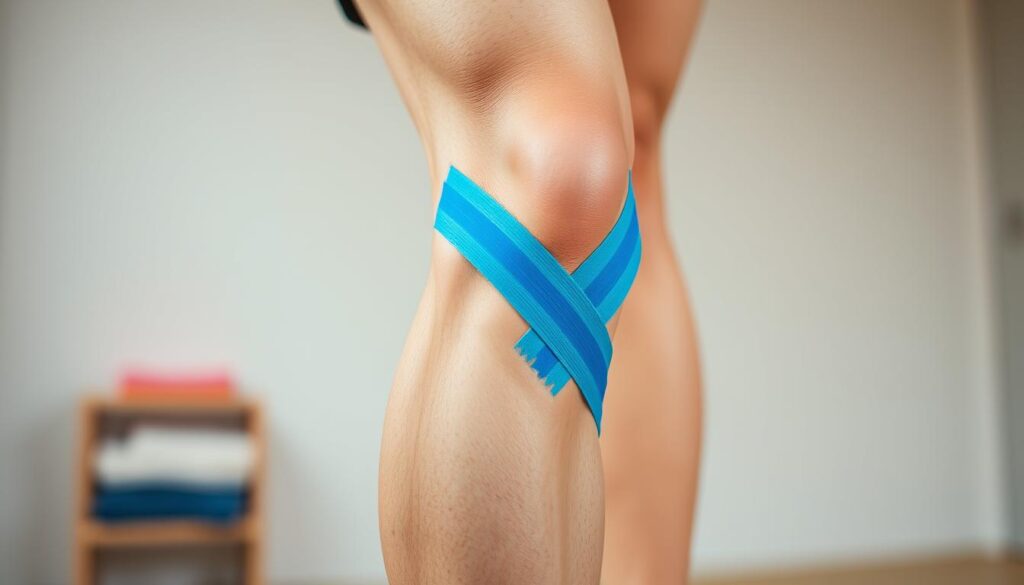
    kinesio taping for knee hyperextension

    When to Consult a Professional

    While kinesio taping can be beneficial, it’s essential to know when to consult a professional for proper evaluation and guidance. If you’re experiencing any of the following, it’s recommended to seek professional advice:

    1. Persistent or severe knee pain
    2. Increased instability or weakness in the knee
    3. Uncertainty about the proper application of kinesio taping

    A healthcare professional can provide personalized guidance on using kinesio taping as part of a comprehensive treatment plan for knee hyperextension.

    Potential Risks and Considerations

    The application of kinesio taping for knee hyperextension is generally safe, but understanding the potential side effects is essential for safe usage. Kinesio taping has gained popularity for its non-invasive approach to supporting joints and muscles, but like any therapeutic method, it’s not without its risks.

    Possible Side Effects of Kinesio Taping

    Some users may experience side effects from kinesio taping, including skin irritation and allergic reactions to the tape’s adhesive. Common side effects may include:

    • Skin redness and irritation
    • Itching or rashes under the tape
    • In some cases, the tape may cause minor bruising if it is applied or removed too aggressively

    To minimize the risk of these side effects, it’s recommended to follow proper knee taping techniques and to remove the tape gently.

    Allergies and Skin Reactions

    Individuals with sensitive skin or allergies to certain adhesives are at a higher risk of experiencing adverse reactions to kinesiology tape for knee pain. Symptoms of an allergic reaction can include:

    • Severe itching or burning sensation under the tape
    • Blisters or rashes that are severe or spread beyond the taped area
    • In rare cases, an allergic reaction can lead to more serious skin conditions related to allergies

    If you experience any of these symptoms, it’s advisable to discontinue use and consult a healthcare professional. They can provide guidance on alternative treatments or recommend hypoallergenic tape options.

    Maintaining Kinesio Tape During Activities

    Maintaining kinesio tape during activities is vital for ensuring its effectiveness in supporting knee health. Proper care and maintenance can significantly impact the longevity and performance of the tape.

    Best Practices for Caring for Taped Areas

    To maximize the benefits of kinesio taping, it’s essential to follow best practices for caring for the taped area. Here are some tips:

    • Keep the taped area clean and dry to prevent the tape from losing its adhesive properties.
    • Avoid exposing the tape to excessive heat or moisture, as this can cause it to degrade.
    • Gently clean the area around the tape with soap and water, avoiding harsh chemicals.
    • After showering or bathing, gently pat the tape dry with a towel.

    How Long Should Kinesio Tape Stay On?

    The duration for which kinesio tape should stay on can vary depending on several factors, including the type of tape used and individual skin conditions. Generally, kinesio tape can last for several days, but it’s recommended to:

    1. Follow the manufacturer’s guidelines for the specific tape product.
    2. Monitor the tape’s condition and remove it if it starts to lose its adhesive or causes skin irritation.
    3. Typically, kinesio tape can be worn for 3 to 5 days, but this may vary.

    By following these guidelines, individuals can ensure that their knee support tape remains effective throughout its intended use, providing continuous support and relief from knee hyperextension symptoms.

    Real-Life Success Stories

    The effectiveness of kinesio taping in treating knee hyperextension is best illustrated through real-life success stories. Individuals who have incorporated kinesio taping into their treatment regimen often report significant improvements in knee stability and a reduction in pain.

    Case Studies of Individuals with Knee Hyperextension

    Several case studies have demonstrated the positive impact of kinesio taping on knee hyperextension. For instance, a study involving athletes with knee hyperextension injuries found that kinesio taping, when used in conjunction with physiotherapy, accelerated recovery and allowed for a quicker return to sports activities.

    “Kinesio taping was a crucial component of my rehabilitation,” said one athlete. “It provided the necessary support to my knee, enabling me to train without exacerbating the injury.”

    Feedback from Physiotherapists

    Physiotherapists have also observed the benefits of kinesio taping in their practice. “We’ve seen a notable difference in patients’ recovery when kinesio taping is included in their treatment plan,” commented a physiotherapist. “It’s a valuable tool for managing knee hyperextension.”

    The feedback from both individuals and physiotherapists underscores the potential of kinesio taping as a complementary treatment for knee hyperextension. By providing additional support and facilitating proper knee alignment, kinesio taping can be an effective component of a comprehensive knee hyperextension treatment plan.

    As more individuals and healthcare professionals become aware of the benefits of kinesio taping, its application is likely to continue growing. With its non-invasive nature and ease of use, kinesio taping stands out as a promising option for those seeking relief from knee hyperextension.

    Conclusion and Next Steps

    Kinesio taping has emerged as a valuable technique for managing knee hyperextension, offering numerous kinesio taping benefits for knees, including enhanced stability and reduced pain. By understanding the proper knee taping techniques and application methods, individuals can effectively utilize this tool in their rehabilitation journey.

    Effective Treatment Decisions

    To make informed decisions about treatment, it’s essential to consider the benefits and potential risks associated with kinesio taping. Knee stability taping can be a crucial component of a comprehensive treatment plan, providing support and promoting healing.

    Further Learning Resources

    For those seeking to deepen their understanding of kinesio taping, various resources are available. Physiotherapy journals, online tutorials, and healthcare professionals can provide valuable insights into knee taping techniques and best practices. By exploring these resources, individuals can optimize their use of kinesio taping and enhance their overall recovery.

    FAQ

    What is kinesio taping, and how does it help with knee hyperextension?

    Kinesio taping is a therapeutic technique that provides support and stability to the knee joint, helping to alleviate pain and promote healing in cases of knee hyperextension. It works by lifting the skin to reduce pressure on the underlying tissues.

    How do I apply kinesio tape for knee hyperextension?

    To apply kinesio tape for knee hyperextension, start by preparing the skin around the knee area. Then, follow a step-by-step guide to tape the knee, ensuring the tape is applied correctly to provide the necessary support and stability.

    What are the benefits of using kinesio taping for knee hyperextension?

    The benefits of kinesio taping for knee hyperextension include reduced pain, improved stability, and enhanced support for the knee joint during the rehabilitation process. It can also be used in conjunction with other treatments like physiotherapy.

    Can kinesio taping be used for other knee injuries besides hyperextension?

    Yes, kinesio taping can be used for various knee injuries, including ligament sprains, strains, and other conditions that cause pain and instability. Its versatility makes it a valuable tool in sports medicine and rehabilitation.

    How long should I leave kinesio tape on my knee?

    The duration for which kinesio tape should be left on varies, but generally, it can stay on for several days. It’s essential to follow the manufacturer’s guidelines and consult with a healthcare professional for specific advice on tape duration and maintenance.

    Are there any potential side effects or risks associated with kinesio taping?

    While kinesio taping is generally considered safe, potential side effects include skin irritation, allergic reactions to the tape adhesive, and skin reactions. It’s crucial to monitor the skin under the tape and remove it if any adverse reactions occur.

    Can I use kinesio tape during sports activities?

    Yes, kinesio tape can be used during sports activities to provide support and stability to the knee. However, it’s essential to ensure the tape is applied correctly and to follow best practices for maintaining the tape during activities.

    How does kinesio taping compare to bracing for knee hyperextension?

    Kinesio taping and bracing are both used to support the knee, but they work in different ways. Kinesio taping provides a more flexible and less restrictive form of support compared to bracing, which can be more rigid. The choice between the two often depends on the severity of the injury and personal preference.

    Can kinesio taping replace physiotherapy for knee hyperextension?

    Kinesio taping is not a replacement for physiotherapy but can be used as a complementary therapy. Physiotherapy provides a comprehensive approach to rehabilitation, including exercises and manual therapy, which are essential for full recovery from knee hyperextension.

    Where can I learn more about kinesio taping techniques for knee hyperextension?

    There are various resources available to learn more about kinesio taping, including online tutorials, physiotherapy clinics, and sports medicine professionals. Consulting with a healthcare professional can provide personalized guidance on using kinesio taping effectively for knee hyperextension.

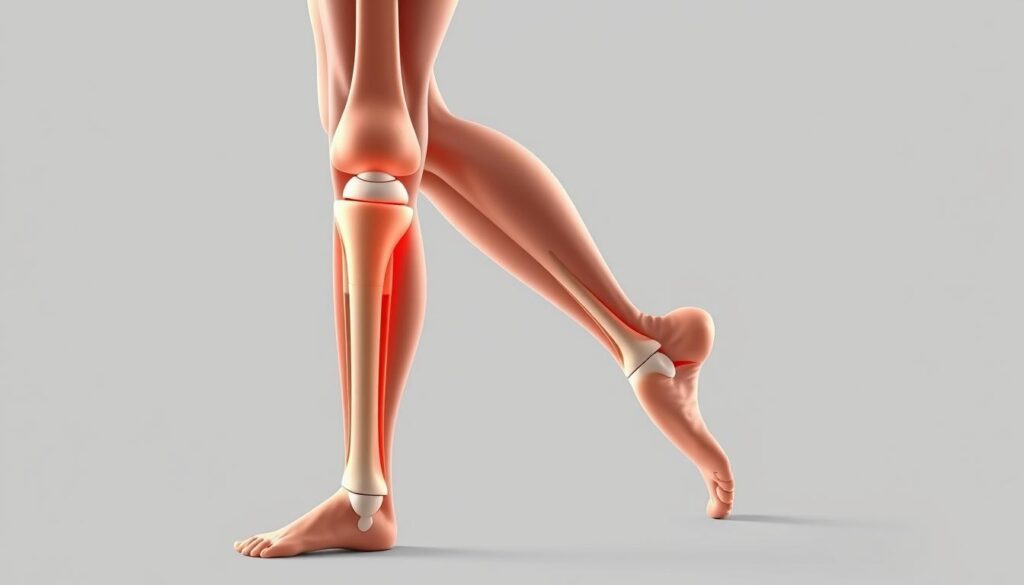
  • Knee hyperextension in dancers

    Knee hyperextension in dancers

    Can a physical attribute be both a dancer’s greatest asset and a potential liability? For many dancers, particularly those in the world of ballet, knee hyperextension is a characteristic that embodies this paradox.

    Hyperextension occurs when a dancer’s straightened knee is pushed backward, creating a distinctive curved line in the legs. This trait is often celebrated for the elegant aesthetic it brings to a dancer’s position, especially in first position and the tightly closed fifth position.

    However, this coveted trait also raises concerns regarding its impact on a dancer’s health and longevity in their career. As we explore the complexities of knee hyperextension, we will examine its effects on dancers and the dance community.

    Key Takeaways

    • Understanding the concept of knee hyperextension and its implications for dancers.
    • The dual perception of hyperextension as both an aesthetic asset and a potential health risk.
    • The importance of distinguishing between natural anatomical hyperextension and forced positioning.
    • Managing hyperextended knees for aesthetic achievement and physical longevity.
    • Educational resources for dancers, teachers, and parents on knee hyperextension.

    Understanding Knee Hyperextension in Dance

    Knee hyperextension, a condition where the knee joint extends beyond its normal range, is a significant concern for dancers. It affects not only their technique but also their overall knee health and stability.

    What Is Knee Hyperextension?

    Knee hyperextension occurs when the knee joint extends too far backward, often resulting in an altered center of gravity. This condition can lead to challenges in maintaining proper alignment, particularly during movements that require balance and turns.

    When a dancer has hyperextended knees, their weight distribution changes. Instead of their weight being evenly distributed through the leg, it shifts forward, putting additional stress on the anterior portion of the knee joint.

    The Biomechanics Behind Hyperextended Knees

    The biomechanics of knee hyperextension involve complex interactions between various anatomical structures, including ligaments and bones. The Posterior Cruciate Ligament (PCL) plays a crucial role in stabilizing the knee joint, especially when it is hyperextended.

    To understand the impact of hyperextension, let’s examine how it affects the body’s alignment and movement:

    Alignment Aspect Normal Alignment Hyperextended Alignment
    Center of Gravity Aligned with hips Shifted forward
    Weight Distribution Evenly distributed through the leg Concentrated on the anterior knee joint
    Movement Impact Stable turns and balances Challenged balance and stability

    Detailed anatomical illustration of a human knee joint, featuring precise alignment of the femur, patella, and tibia. Depicted in high-resolution, photorealistic style with a clean, clinical aesthetic. Lit from the side to accentuate the contours and structures, using soft, directional lighting. Captured at a neutral, slightly elevated angle to provide a clear, unobstructed view of the knee's mechanics. The background is a plain, neutral backdrop, allowing the subject to be the sole focus. The overall tone is one of informative clarity, designed to effectively convey the essential details of knee hyperextension for a dance-focused medical article.

    The practice of knee hyperextension in dance is a complex issue, bringing both visual appeal and potential harm to the dancer’sbody. On one hand, it can enhance the aesthetic quality of a performance; on the other, it poses significant risks to the dancer’s health.

    Aesthetic Benefits in Dance Performance

    Knee hyperextension can create a visually appealing line in dance, making the legs appear longer and more elegant. This can be particularly beneficial in styles that emphasize grace and fluid movement. Dancers with hyperextended knees may appear to have more controlled and precise movements, which can be an asset in certain choreographies.

    Physical Risks and Potential Injuries

    However, hyperextension causes you to push yourkneestoo far back, which can overstretch and even weaken yourkneesand ligaments. As a result, the wrong areas of yourlegare at work, potentially leading toinjury. Some common issues associated with knee hyperextension include shin splints, patella displacement, and tibial stress fractures. Over time, continued inactivation of the quadriceps can lead to quad weakness and ligament laxity or tears.

    Injury Type Description Potential Long-term Effect
    Shin Splints Medial tibial stress syndrome causing pain in the lower leg Chronic pain, potential for stress fractures
    Patella Displacement Abnormal tracking of the kneecap Knee pain, potential for chronic instability
    Tibial Stress Fractures Small cracks in the tibia Prolonged recovery, risk of complete fracture

    By understanding the risks and benefits,dancersand instructors can work together to minimize the negative impacts of knee hyperextension while maintaining its aesthetic benefits.

    Managing Hyperextended Knees Safely

    Hyperextended knees can be both an asset and a liability for dancers, necessitating a balanced approach to their management. Effective management involves understanding the importance of proper alignment and weight distribution, as well as implementing strengthening exercises to enhance stability.

    Proper Alignment and Weight Distribution

    Proper alignment and weight distribution are critical in managing hyperextended knees. When a dancer’s knees are hyperextended, their leg muscles are engaged to absorb pressure, often leading to an overreliance on calf musculature. This can result in issues such as Achilles tendonitis and knee instability. To mitigate these risks, dancers should focus on maintaining proper alignment, ensuring that their weight is evenly distributed across their feet and legs.

    By doing so, dancers can reduce the strain on their knee joints and surrounding muscles. This involves developing awareness of their body positioning and making adjustments as necessary to maintain optimal alignment.

    Strengthening Exercises for Stability

    Strengthening exercises play a vital role in enhancing the stability of hyperextended knees. Targeted exercises that focus on the quadriceps, hamstrings, and core can help dancers maintain the aesthetic benefits of hyperextension while reducing the risk of injury. Examples of beneficial exercises include squats, lunges, and leg press, which strengthen the muscles around the knee joint.

    Additionally, exercises that improve proprioception and joint position sense can help dancers develop better awareness of when they are hyperextending versus maintaining proper alignment. This can be achieved through balance training and other functional exercises that challenge the dancer’s ability to control their movements.

    Training Approaches for Long-Term Knee Health

    To ensure long-term knee health, dancers must prioritize comprehensive training methods that address hyperextension. As a dancer who is slightly hyperextended, I have had to be rather careful, and in return, my knees are no longer overworked but at ease and free of tension.

    We believe that a well-rounded training approach is crucial for dancers to maintain healthy knees and achieve their full potential. This involves adapting teaching methods to accommodate students with varying degrees of hyperextension without compromising technique or aesthetics.

    Effective dance training also requires addressing the psychological aspects of hyperextension management, including body image concerns and the pressure to achieve certain aesthetic ideals. By doing so, dancers can develop a more positive body image and reduce the risk of injury.

    To achieve this, dance educators can incorporate hyperextension awareness into regular dance classes without singling out specific students. This can be done by emphasizing proper alignment, weight distribution, and strengthening exercises for stability.

    Ultimately, each dancer’s body is unique and requires personalized strategies for optimal performance and health. By adopting a comprehensive and individualized approach to training, dancers can reduce the risk of knee injuries and maintain a long and healthy career.

    As the dance world continues to evolve, there is a growing emphasis on sustainable technique rather than extreme aesthetics. By prioritizing long-term knee health, dancers can enjoy a successful and injury-free career.

    FAQ

    What causes ligament strain when a dancer’s knee is hyperextended?

    When our knee is hyperextended, the ligaments surrounding the knee joint are stretched beyond their normal range, potentially leading to strain or injury, particularly on the back of the leg.

    How can dancers maintain proper leg alignment to prevent hyperextension?

    We can prevent hyperextension by ensuring our weight is evenly distributed on both feet and maintaining a correct position with our legs, engaging our core and keeping our body aligned.

    Are there specific ballet classes or exercises that can help strengthen the muscles around the knee to prevent hyperextension?

    Yes, certain exercises and dance classes focus on strengthening the muscles around the knee, such as those that target the surrounding ligaments and improve overall leg strength.

    Can hyperextended knees affect a dancer’s overall dance performance or line?

    Hyperextended knees can impact our overall movement and line, as it can alter the aesthetic of our dance and potentially cause discomfort or pain, affecting our ability to perform at our best.

    How can dancers modify their foot and leg position to reduce the risk of hyperextension?

    By being mindful of our foot placement and ensuring our legs are properly aligned, we can reduce the risk of hyperextension and maintain a safe, healthy dance practice.

  • Genu Recurvatum Strengthening Exercises

    Genu Recurvatum Strengthening Exercises

    Are you experiencing knee instability or pain due to hyperextension? Knee hyperextension, also known as Genu recurvatum, can significantly impact daily activities. This condition occurs when the knee extends too far backward, often resulting in discomfort and reduced functionality.

    Strengthening the muscles around the knee is crucial for managing this condition. Knee rehabilitation exercises can help alleviate symptoms and improve knee function. By focusing on preventing knee hyperextension, individuals can regain stability and reduce pain.

    Key Takeaways

    • Understanding Genu recurvatum and its effects on the knee
    • The importance of strengthening exercises in managing the condition
    • Role of knee rehabilitation exercises in alleviating symptoms
    • Preventing knee hyperextension through targeted exercises
    • Improving knee function and stability

    Understanding Genu Recurvatum: What You Need to Know

    Knee hyperextension, or genu recurvatum, is a condition that necessitates a thorough comprehension of its causes, symptoms, and treatment options. Genu recurvatum is characterized by an excessive backward bending of the knee, often resulting in instability and potentially leading to further injuries if not properly addressed.

    Definition of Genu Recurvatum

    Genu recurvatum refers to a condition where the knee extends too far backward, beyond the normal range of motion. This hyperextension can put strain on the knee joint and surrounding muscles, potentially leading to discomfort and decreased functionality.

    The condition can be caused by various factors, including muscle imbalances, ligament laxity, and structural abnormalities. Understanding the underlying causes is crucial for developing effective treatment plans.

    Common Causes and Risk Factors

    Several factors contribute to the development of genu recurvatum, including:

    • Muscle Imbalances: Weakness in the muscles around the knee, particularly the hamstrings, can lead to hyperextension.
    • Ligament Laxity: Loose ligaments can fail to provide adequate support to the knee joint, resulting in excessive extension.
    • Structural Abnormalities: Certain bone or joint deformities can predispose individuals to genu recurvatum.
    • Previous Injuries: Trauma or injuries to the knee can lead to hyperextension if not properly rehabilitated.

    Symptoms and Diagnosis

    Symptoms of genu recurvatum may include knee pain, instability, and a visible hyperextension of the knee during standing or walking. Diagnosis typically involves a physical examination by a healthcare professional, potentially supplemented by imaging tests to assess the extent of the condition.

    Accurate diagnosis is critical for determining the appropriate treatment, which may include physical therapy, strengthening exercises, and in some cases, orthotics or bracing to support the knee.

    The Importance of Strengthening Exercises

    The importance of strengthening exercises for genu recurvatum cannot be overstated. Strengthening exercises are crucial for improving joint stability, preventing further injuries, and enhancing mobility and function in individuals with genu recurvatum. By targeting the muscles around the knee, these exercises help to provide additional support to the joint, reducing the risk of further strain or damage.

    genu recurvatum strengthening exercises

    Benefits for Joint Stability

    Strengthening the muscles around the knee, particularly through knee rehabilitation exercises, is vital for improving joint stability. When the muscles are strong, they can better support the knee joint, reducing the likelihood of hyperextension and other complications associated with genu recurvatum. Exercises that strengthen the quadriceps, hamstrings, and calf muscles are especially beneficial.

    Prevention of Further Injuries

    Engaging in genu recurvatum strengthening exercises can significantly reduce the risk of further injuries. By enhancing the strength and stability of the knee, individuals can better withstand stresses and strains, making it less likely for the condition to worsen or for new injuries to occur.

    Enhanced Mobility and Function

    Strengthening exercises also play a key role in improving mobility and function. As the muscles around the knee become stronger, individuals may find it easier to perform daily activities and maintain a more active lifestyle. This improvement in mobility and function can greatly enhance overall quality of life. Learning how to strengthen knee ligaments through appropriate exercises is a crucial step in this process.

    Key Muscle Groups to Target

    The effectiveness of genu recurvatum exercises largely depends on targeting the right muscle groups that contribute to knee function and stability. Strengthening these muscles can help improve knee alignment and reduce the risk of further injuries.

    Several key muscle groups are crucial for addressing genu recurvatum. These include the quadriceps, hamstrings, calves, and core muscles, each playing a unique role in knee stability and overall lower limb function.

    Quadriceps

    The quadriceps muscles are essential for knee extension and stability. Strengthening the quadriceps through exercises like straight leg raises can help improve knee function and reduce the symptoms of genu recurvatum.

    Hamstrings

    The hamstrings are vital for knee flexion and controlling the knee joint during movements. Knee flexion exercises that target the hamstrings can help balance the strength around the knee, improving overall knee stability.

    Calves

    The calf muscles contribute to ankle stability and indirectly affect knee alignment. Strengthening the calves through calf raises can help improve lower limb alignment and reduce the strain on the knee.

    Core Muscles

    The core muscles play a significant role in overall lower limb stability, including the knee. A strong core can help maintain proper posture and alignment, reducing the risk of genu recurvatum and associated discomfort.

    By targeting these key muscle groups, individuals with genu recurvatum can develop a comprehensive strengthening program that addresses the root causes of their condition, leading to improved knee stability and function.

    Recommended Genu Recurvatum Strengthening Exercises

    For individuals dealing with genu recurvatum, incorporating specific strengthening exercises into their routine can significantly improve knee stability. Strengthening the muscles around the knee is crucial for managing genu recurvatum. The following exercises are recommended:

    Straight Leg Raises

    Straight leg raises are an effective exercise for strengthening the quadriceps without putting excessive strain on the knee joint. To perform a straight leg raise:

    • Lie on your back with one leg straight and the other bent.
    • Lift the straight leg to about 12 inches off the ground.
    • Hold for a few seconds, then lower it back down.

    Regular practice of straight leg raises can enhance quadriceps strength, which is vital for knee stability.

    Hamstring Curls

    Hamstring curls target the hamstrings, which are essential for knee flexion and stability. To perform a hamstring curl:

    • Stand or sit with your legs hanging off the edge of a surface.
    • Curl your heels towards your buttocks, then return to the starting position.

    Strengthening the hamstrings through curls can help balance the strength around the knee, reducing the risk of further injury.

    Calf Raises

    Calf raises strengthen the calf muscles, which play a role in ankle stability and, by extension, can affect knee alignment. To perform a calf raise:

    • Stand on the edge of a step or curb with your heels hanging off.
    • Raise up onto your tiptoes, then lower back down.

    Calf raises are simple yet effective for improving lower leg strength.

    Squats

    Squats are a compound exercise that strengthens multiple muscle groups around the knee, including the quadriceps, hamstrings, and glutes. To perform a squat:

    • Stand with your feet shoulder-width apart.
    • Lower your body down into a squatting position, keeping your back straight.
    • Push through your heels to return to standing.

    For more detailed guides on knee strengthening exercises, you can visit knee strengthening exercise guides.

    genu recurvatum strengthening exercises

    How to Create an Effective Routine

    An effective exercise routine is key to preventing knee hyperextension and improving overall knee health. When dealing with genu recurvatum, it’s crucial to structure your exercises in a way that promotes strengthening without causing further strain.

    To achieve this, consider the following aspects of your exercise routine: frequency, duration, and progression of intensity. Each of these elements plays a vital role in ensuring that your exercises are both effective and safe.

    Frequency of Exercise

    For genu recurvatum strengthening exercises to be effective, consistency is key. It’s generally recommended to perform these exercises 3 to 4 times a week, allowing for adequate recovery time between sessions. This frequency helps in gradually strengthening the muscles around the knee without overexertion.

    Duration of Each Session

    The duration of each exercise session should be long enough to be effective but not so long as to cause fatigue. Typically, sessions can last between 20 to 30 minutes, focusing on knee flexion exercises and other relevant strengthening activities. It’s essential to start with manageable durations and gradually increase as your strength and endurance improve.

    Progression of Intensity

    Progressing the intensity of your exercises is crucial for continuous improvement. This can be achieved by increasing the number of repetitions, adding resistance, or modifying exercises to make them more challenging. For instance, you can start with bodyweight exercises and move to resistance band exercises or light weights as you get stronger. For more information on exercises that can help with knee pain relief, you can visit this resource.

    By carefully planning your exercise routine and paying attention to frequency, duration, and progression, you can effectively strengthen your knees and reduce the risk of further injuries.

    Tips for Safe Exercise Practices

    Safe exercise practices are essential for individuals with genu recurvatum to ensure effective strengthening and prevent injuries. When engaging in knee rehabilitation exercises, it’s crucial to be mindful of your body’s limitations and take necessary precautions.

    Warming Up Properly

    Before starting any exercise routine, warming up properly is vital. This can include light cardio activities such as jogging in place or cycling, followed by dynamic stretches that target the knee and surrounding muscles. A proper warm-up increases blood flow to the muscles, reducing the risk of strains and improving overall performance.

    Listening to Your Body

    Listening to your body is another critical aspect of safe exercise practices. If you experience any pain or discomfort during exercises for back of the knee, stop immediately. It’s essential to differentiate between the normal discomfort associated with exercising and pain that could indicate an injury.

    Cool Down and Stretching

    After completing your exercise routine, cooling down and stretching are essential. This helps in gradually bringing your heart rate back to normal and improving flexibility. Focus on static stretches that target the quadriceps, hamstrings, and calf muscles, all of which are crucial for how to strengthen knee ligaments.

    The following table summarizes key points for safe exercise practices:

    Exercise Phase Activity Benefits
    Warming Up Light cardio and dynamic stretches Increases blood flow, reduces injury risk
    Exercise Routine Knee rehabilitation exercises Strengthens knee and surrounding muscles
    Cool Down Static stretches Improves flexibility, reduces muscle soreness

    knee rehabilitation exercises

    Modifications for Different Fitness Levels

    Adapting genu recurvatum strengthening exercises for different fitness levels is key to preventing injuries and promoting progress. Individuals with knee hyperextension need to tailor their workout routines to their specific needs, ensuring they can strengthen their knees safely and effectively.

    Modifying exercises according to fitness levels allows individuals to progress at their own pace. This personalized approach is crucial for physical therapy for hyperextended knee cases, where the goal is to strengthen the surrounding muscles without exacerbating the condition.

    Beginner Adaptations

    For beginners, it’s essential to start with low-intensity exercises that focus on building strength and stability around the knee. Straight leg raises and wall squats are excellent starting points, as they are low-impact and can be modified further based on individual comfort levels.

    • Begin with bodyweight exercises to build initial strength.
    • Use resistance bands for added resistance without heavy weights.
    • Focus on slow, controlled movements to engage the correct muscles.

    Intermediate Options

    Once initial strength is built, intermediate exercises can be introduced to continue challenging the muscles around the knee. Squats and lunges are effective for strengthening the quadriceps, hamstrings, and glutes, all of which are crucial for knee stability.

    • Incorporate weights or resistance bands to increase the intensity.
    • Increase the depth of squats and lunges, ensuring proper form.
    • Add variations like single-leg squats to challenge balance and stability.

    Advanced Exercises

    For advanced individuals, the focus shifts to high-intensity exercises that further challenge knee stability and strength. Plyometric exercises and agility drills can be incorporated to enhance knee function and overall lower body strength.

    • Include plyometric squats and box jumps to improve power.
    • Use agility ladder drills to enhance speed and coordination.
    • Continue to increase the intensity of workouts, always maintaining proper form.

    By modifying genu recurvatum strengthening exercises according to fitness levels, individuals can ensure a progressive and safe workout routine. This tailored approach is fundamental in managing knee hyperextension and enhancing overall knee health through physical therapy for hyperextended knee practices.

    When to Consult a Professional

    Understanding the limits of self-exercise and recognizing when to consult a professional is vital for safely managing genu recurvatum. While many genu recurvatum strengthening exercises can be performed at home, certain signs and symptoms may indicate the need for professional guidance to prevent further injury and ensure effective knee rehabilitation exercises.

    Signs You Should Seek Help

    If you experience persistent pain or discomfort that does not improve with exercise, it may be a sign that you need to consult a professional. Additionally, if you notice increased instability or knee hyperextension during activities, seeking help is advisable. Other signs include significant swelling, redness, or warmth around the knee joint.

    It’s also important to seek professional advice if you’re unsure about the correct form or technique for genu recurvatum strengthening exercises, as improper form can lead to further injury.

    Types of Professionals to Contact

    For genu recurvatum, it’s beneficial to consult professionals who specialize in musculoskeletal health. This may include orthopedic specialists, physical therapists, or sports medicine physicians. These professionals can provide a thorough assessment and recommend knee rehabilitation exercises tailored to your specific needs.

    A physical therapist, for instance, can help design a personalized exercise program focusing on preventing knee hyperextension and improving overall knee function.

    Importance of Personalized Programs

    A personalized exercise program is crucial for effectively managing genu recurvatum. Professionals can create a customized plan that addresses your specific condition, fitness level, and goals, ensuring that you’re performing the most effective genu recurvatum strengthening exercises.

    By having a tailored program, you can improve your knee stability, reduce the risk of further injuries, and enhance your overall mobility and function. This personalized approach is key to achieving successful outcomes in knee rehabilitation exercises and preventing knee hyperextension.

    Success Stories and Testimonials

    The effectiveness of genu recurvatum strengthening exercises is best illustrated through the success stories of those who have benefited from them. Individuals who have incorporated these exercises into their daily routines have reported significant improvements in their condition.

    Real Experiences from Individuals

    Many people have shared their positive experiences with genu recurvatum strengthening exercises, highlighting the relief and improved mobility they’ve gained. For instance, one individual reported a significant reduction in knee pain after consistently performing knee flexion exercises.

    Exercise Benefit Testimonial
    Straight Leg Raises Improved quadriceps strength “I’ve seen a huge difference in my knee stability since starting straight leg raises.”
    Hamstring Curls Enhanced hamstring strength “Hamstring curls have helped me regain balance and reduce knee pain.”
    Calf Raises Better ankle mobility and strength “Calf raises have improved my overall lower leg strength and reduced strain on my knee.”

    Impact on Daily Life

    The impact of genu recurvatum strengthening exercises on daily life is profound. By improving knee stability and reducing pain, individuals can perform daily tasks with greater ease and confidence. Exercises for the back of the knee play a crucial role in this improvement.

    Encouragement for New Practitioners

    For those just starting out with genu recurvatum strengthening exercises, the success stories and testimonials serve as a powerful encouragement. Consistency and patience are key, as the benefits of these exercises are realized over time with regular practice.

    Additional Resources

    To manage genu recurvatum effectively, it’s essential to have access to a variety of resources that can provide guidance and support. The following resources can be invaluable in your journey to strengthen your knee and improve overall knee health through physical therapy for hyperextended knee and knee rehabilitation exercises.

    Comprehensive Guides

    Several books and guides offer in-depth information on knee health, including how to strengthen knee ligaments and manage genu recurvatum. These resources can provide detailed exercises and rehabilitation programs tailored to individual needs.

    Support Networks

    Online communities and forums can connect individuals with others who are experiencing similar challenges. These platforms offer a space to share experiences, ask questions, and gain support from people who understand the complexities of knee injuries and rehabilitation.

    Visual Tutorials

    Videos and tutorials can be particularly helpful for understanding the proper form and technique for knee rehabilitation exercises. These resources can be found on various health and fitness websites, providing visual guidance to complement written instructions.

    FAQ

    What is genu recurvatum and how does it affect the knee?

    Genu recurvatum is a condition where the knee hyperextends, causing the leg to straighten too far backward. This can lead to instability, pain, and increased risk of injury. Strengthening exercises can help manage the condition.

    What are the benefits of strengthening exercises for genu recurvatum?

    Strengthening exercises can improve joint stability, prevent further injuries, and enhance mobility and function. They target key muscle groups such as the quadriceps, hamstrings, calves, and core muscles.

    What exercises are recommended for genu recurvatum?

    Recommended exercises include straight leg raises, hamstring curls, calf raises, and squats. These exercises help strengthen the muscles around the knee, improving stability and reducing the risk of hyperextension.

    How often should I perform genu recurvatum strengthening exercises?

    The frequency of exercise depends on individual fitness levels and goals. Generally, exercising two to three times a week is a good starting point, with the option to increase frequency as the body adapts.

    How can I modify genu recurvatum strengthening exercises for different fitness levels?

    Exercises can be modified by adjusting the intensity, duration, or type of exercise. Beginners can start with lower intensity versions, while advanced individuals can progress to more challenging exercises.

    What are some tips for safe exercise practices with genu recurvatum?

    It’s essential to warm up properly before exercising, listen to your body and stop if you experience pain, and cool down with stretching after each session to prevent injury and promote recovery.

    When should I consult a professional for genu recurvatum?

    If you experience persistent pain, significant instability, or if you’re unsure about the best exercises for your condition, it’s advisable to consult a healthcare professional or physical therapist for personalized guidance.

    Can knee hyperextension be prevented through strengthening exercises?

    Yes, strengthening the muscles around the knee through exercises like hamstring curls and squats can help prevent knee hyperextension by improving joint stability.

    What role do physical therapy exercises play in managing genu recurvatum?

    Physical therapy exercises are crucial in managing genu recurvatum as they help strengthen the knee ligaments, improve knee flexion, and enhance overall knee function, reducing the risk of further injury.

    Are there any additional resources available for learning genu recurvatum strengthening exercises?

    Yes, there are various resources available, including books, online communities, and video tutorials, that can provide guidance and support for individuals managing genu recurvatum through strengthening exercises.