Types of Knee Surgery
Different knee surgeries require specific recovery approaches. Understanding your procedure is the first step toward effective rehabilitation.efore and after comparison of knee joint replacement surgery
Meniscus Repair
Meniscus tear surgery typically involves arthroscopic techniques, where small incisions allow surgeons to trim or repair the damaged cartilage. This minimally invasive approach usually results in faster recovery times compared to more extensive procedures.
- Arthroscopic partial meniscectomy: Removal of damaged meniscus tissue
- Meniscus repair: Stitching the torn meniscus back together
- Meniscus transplantation: Replacing the meniscus with donor tissue
ACL Reconstruction
ACL (Anterior Cruciate Ligament) reconstruction involves replacing the torn ligament with a tissue graft. Your surgeon may use different graft options:
- Autograft: Using your own tissue (patellar tendon, hamstring tendon, or quadriceps tendon)
- Allograft: Using donor tissue
- Synthetic graft: Using artificial materials (less common)
Total Knee Replacement
Total knee replacement (arthroplasty) becomes necessary when knee damage is severe and other treatments haven’t provided relief. During this procedure, damaged bone and cartilage are removed and replaced with artificial components.
- Total knee replacement: Replacing all three compartments of the knee
- Partial knee replacement: Replacing only the damaged portion of the knee
- Revision knee replacement: Surgery to replace a failed previous knee replacement
Day-by-Day Recovery Timeline
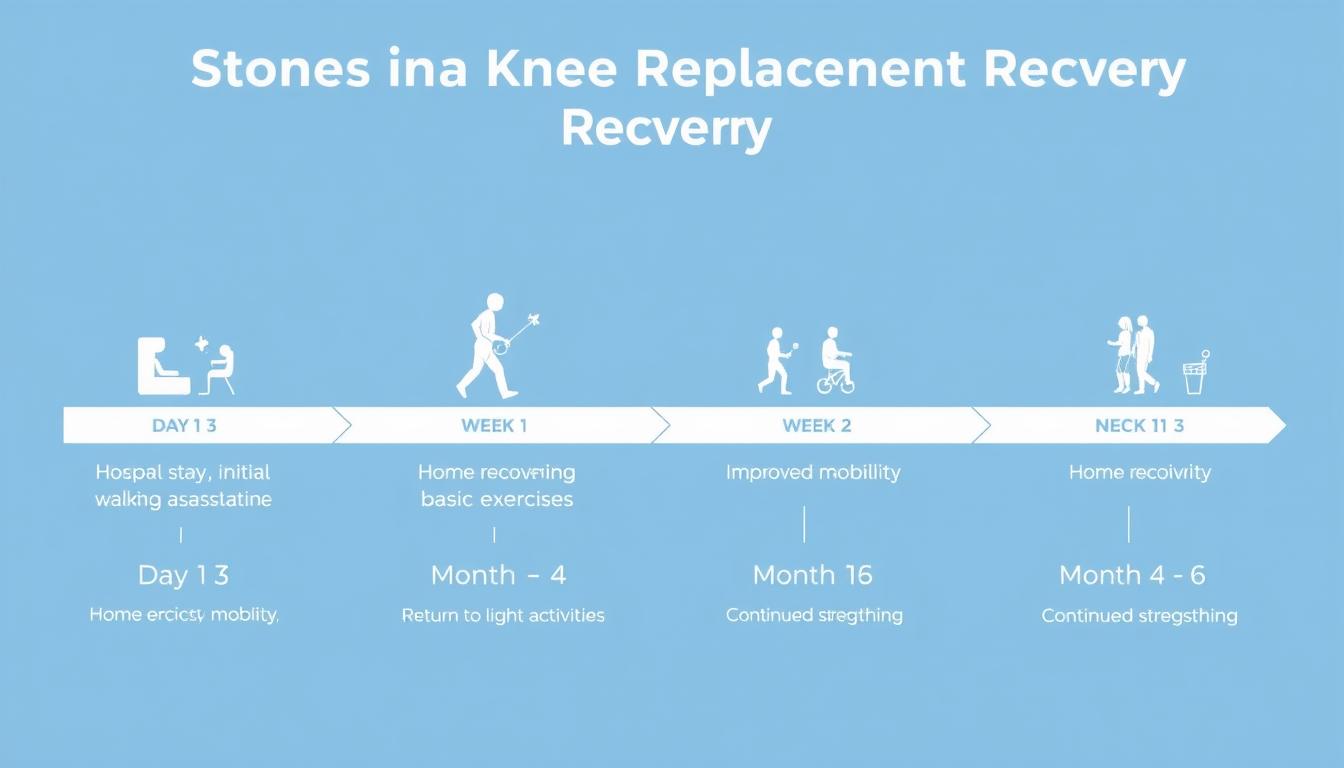
Recovery from knee surgery follows a general timeline, though individual experiences may vary based on surgery type, overall health, and commitment to rehabilitation.
Milestones in Knee Replacement Recovery
Days 1-7: Initial Recovery
The first week focuses on managing pain, protecting your incision, and beginning gentle movement.
- Pain management: Your doctor will prescribe medication to help control post-surgery pain relief
- Wound care: Keep the incision clean and dry, changing bandages as instructed
- Initial movement: You’ll likely begin standing and taking a few steps with assistance
- Swelling control: Apply ice packs and elevate your leg regularly

Proper elevation and icing technique for post-surgery swelling management
Weeks 2-4: Early Rehabilitation
During this phase, you’ll begin more structured physical therapy for knee recovery and gradually increase your activity level.
- Physical therapy sessions: Working with a therapist 2-3 times weekly
- Home exercises: Daily routine of prescribed movements
- Assistive devices: Transitioning from walker to crutches or cane
- Incision healing: Stitches or staples typically removed around 10-14 days
Months 3-6: Advanced Recovery
The focus shifts to rebuilding strength, improving range of motion, and returning to normal activities.
- Strengthening exercises: More challenging routines to rebuild muscle
- Increased mobility: Working toward normal walking patterns
- Return to activities: Gradually resuming daily tasks and light recreation
- Continued monitoring: Regular follow-ups with your surgeon
Need a Personalized Recovery Plan?
Our specialists can create a customized rehabilitation program based on your specific surgery and health needs.
Essential Physical Therapy Exercises
Consistent physical therapy for knee recovery is crucial for restoring function and strength. These foundational exercises form the core of most rehabilitation programs.
Ankle Pumps
This simple exercise improves circulation and helps prevent blood clots.
- Lie on your back with your leg straight
- Move your foot up and down by flexing and pointing your toes
- Repeat 10-15 times, several times daily
Ankle pump exercise to improve circulation after knee surgery
Heel Slides
Heel slides help restore knee flexion (bending) gradually and safely.
- Lie on your back with your leg straight
- Slowly slide your heel toward your buttocks, bending your knee
- Hold for 5 seconds, then slowly straighten
- Repeat 10 times, 3 times daily
Quad Sets
This isometric exercise activates and strengthens the quadriceps muscles without moving the knee joint.
- Sit or lie with your leg straight
- Tighten the muscle on top of your thigh by pushing the back of your knee down
- Hold for 5-10 seconds, then relax
- Repeat 10 times, several times daily
Proper form for quad set exercise to strengthen thigh muscles
Complete Exercise Guide
Download our comprehensive knee rehabilitation exercise guide with detailed instructions and progression plans.
Pain & Swelling Management
Effective post-surgery pain relief strategies are essential for comfortable recovery and successful rehabilitation.
Medication Schedules
Following your prescribed medication schedule is crucial, especially in the early recovery phase.
- Take pain medications as prescribed, not just when pain becomes severe
- Transition from prescription pain relievers to over-the-counter options as directed
- Consider taking pain medication 30 minutes before physical therapy sessions
- Alert your doctor if pain isn’t adequately controlled or if you experience side effects
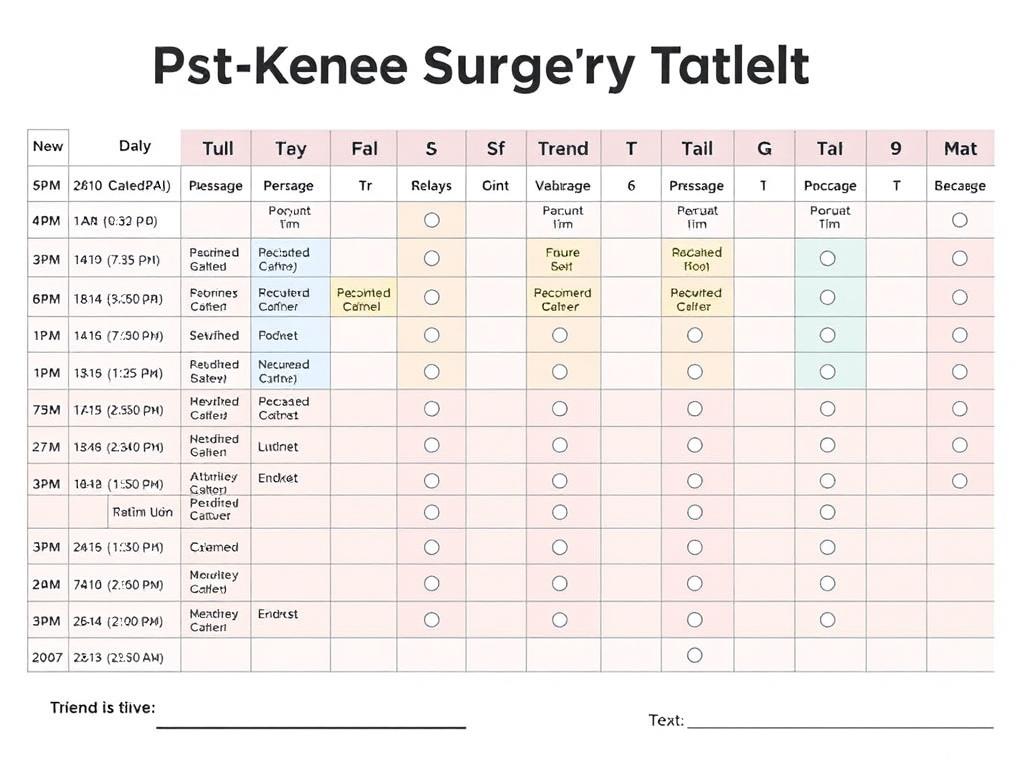
Sample medication schedule for managing post-operative pain
Cryotherapy Benefits
Cold therapy (cryotherapy) is highly effective for reducing pain and swelling after knee surgery.
- Apply ice packs for 15-20 minutes every 2-3 hours during initial recovery
- Always place a thin towel between ice and skin to prevent tissue damage
- Consider specialized cold therapy systems for consistent temperature
- Continue ice application after exercise sessions even weeks into recovery
Compression Gear Recommendations
Compression helps control swelling and provides joint stability during recovery.
- Compression bandages or sleeves reduce fluid accumulation
- Graduated compression stockings help prevent blood clots
- Ensure proper fit—compression should be firm but not painful
- Remove compression gear periodically to check skin condition

Different compression options for post-surgical swelling control
Discover our curated pain-relief products specifically selected to support knee surgery recovery.
Common Healing Mistakes
Avoiding these common pitfalls can help ensure a smoother recovery process and better long-term outcomes.

Common mistakes that can delay knee surgery recovery
Overloading the Joint Too Soon
Pushing too hard too quickly can damage your surgical site and delay healing.
- Follow weight-bearing restrictions exactly as prescribed
- Increase activity gradually according to your surgeon’s timeline
- Avoid high-impact activities until cleared by your healthcare team
- Listen to your body—pain is often a signal to slow down
Skipping Physical Therapy Sessions
Consistent rehabilitation is crucial for optimal recovery and long-term function.
- Attend all scheduled therapy appointments
- Complete home exercise programs as prescribed
- Communicate challenges with your therapist rather than abandoning exercises
- Track your progress to stay motivated
Ignoring Nutritional Needs
Proper nutrition provides the building blocks your body needs for healing.
- Consume adequate protein to support tissue repair
- Stay hydrated to promote circulation and healing
- Include vitamin C and zinc-rich foods to support collagen formation
- Manage calorie intake to prevent weight gain during reduced activity

Nutrient-rich meal supporting tissue repair and reducing inflammation
Returning to Sports
Returning to athletic activities requires a careful, progressive approach to protect your knee and ensure long-term function.

Functional testing with professional supervision before sports return
Sport-Specific Tests
Before returning to sports, you should pass functional tests that assess your knee’s readiness for specific movements.
- Single-leg hop tests: Measuring distance and stability
- Figure-8 running: Assessing turning and pivoting ability
- Vertical jump assessment: Evaluating power and landing mechanics
- Sport-specific drills: Mimicking movements of your particular activity
Brace Usage Guidelines
Braces can provide additional support and protection when returning to physical activities.
- Functional braces offer stability during activity
- Prophylactic braces help prevent re-injury
- Follow your surgeon’s recommendations for brace type and duration
- Gradually reduce dependence on braces as strength improves

Types of knee braces for different recovery stages and activities
Long-Term Joint Protection
Implementing strategies to protect your knee can help maintain surgical results for years to come.
- Maintain healthy weight to reduce joint stress
- Choose low-impact activities when possible (swimming, cycling)
- Incorporate proper warm-up and cool-down routines
- Consider activity modification to reduce joint stress
Athletes: See our Sports Rehab Protocol for specialized guidance on returning to competitive activities.
Your Path to Recovery
Successful knee surgery recovery requires patience, dedication, and proper guidance. By following the rehabilitation protocols outlined by your healthcare team and implementing the strategies in this guide, you can maximize your healing potential and return to the activities you enjoy.
Remember that recovery timelines vary based on individual factors, including age, overall health, and the specific procedure performed. Stay in regular communication with your healthcare providers throughout your recovery journey.
Need Professional Guidance?
Our knee specialists can help you navigate your recovery with personalized care and expert advice.
Recovery is not just about healing physically, but also about rebuilding confidence in your mobility and returning to the activities that bring you joy.
For additional resources on knee health and recovery, visit the American Academy of Orthopedic Surgeons or learn more about meniscus tear surgery recovery.