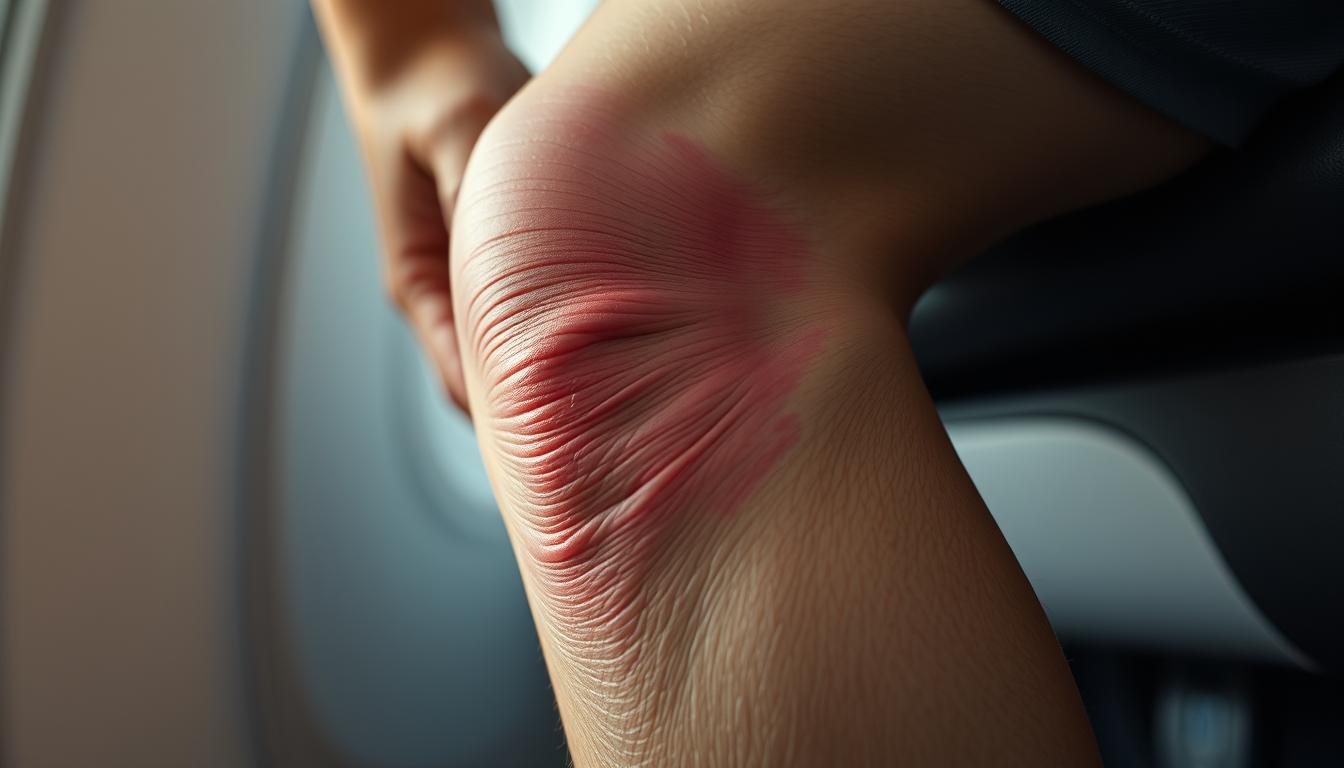
Traveling can be a fun adventure, but it can also be troublesome if you suffer from joint discomfort, such as stiffness and muscular cramping or osteoarthritis.
Whether by plane, train, or car, traveling far typically means that you’ll be sitting for an extended period in one position, which can be stressful on your joints, especially if your seat is tight or uncomfortable.
We’ll explore the reasons behind this common issue and discuss effective strategies to minimize discomfort when traveling by air.
Key Takeaways
- Understand why knee discomfort occurs after flying.
- Learn how the airplane environment affects knee health.
- Discover the link between prolonged sitting and joint pain.
- Identify factors that contribute to post-flight knee discomfort.
- Find strategies to minimize knee pain when traveling by air.
Why Flying Causes Knee Pain
Air travel can have several adverse effects on the body, particularly on the joints. We will explore the specific factors that contribute to knee pain during and after flying.
Prolonged Sitting and Limited Space
One of the primary reasons flying can cause knee pain is the prolonged sitting and limited legroom on airplanes. When we sit for extended periods, our joints are not moving, which can lead to stiffness and discomfort. The cramped seating on many flights exacerbates this issue, putting additional stress on the knee joint.
Cabin Pressure and Dehydration Effects
The cabin pressure and low humidity on airplanes also play a significant role in knee pain. Dehydration can lead to a reduction in synovial fluid, which is essential for reducing friction and ensuring smooth joint movement. A lack of this fluid can cause stress on the joints, leading to pain and discomfort. Furthermore, dehydration can cause muscular cramping and spasms, indirectly contributing to joint pain.
The combination of cabin pressure changes and dehydration creates a challenging environment, especially for individuals with existing joint conditions like arthritis. These factors can impact blood circulation to the extremities, further contributing to joint discomfort. Understanding these factors can help us take preventive measures to mitigate knee pain during and after flying.
Common Risk Factors for Knee Pain After Flying
Several factors can increase the likelihood of experiencing knee pain after flying. Understanding these risk factors can help travelers take preventive measures to reduce discomfort during and after their journey.
Existing Medical Conditions
Pre-existing medical conditions play a significant role in determining the likelihood of experiencing knee pain during flights. Conditions such as arthritis, previous knee injuries, or chronic joint pain can exacerbate discomfort during air travel. It’s essential for individuals with these conditions to consult with a healthcare professional before flying. For those experiencing persistent knee pain, finding the best knee pain doctor near me can be crucial in managing their condition.
Age and Physical Fitness Considerations
Age-related changes in joint structure and function can increase susceptibility to knee pain during and after flights. Maintaining muscle strength around the knee joint is crucial as a protective factor against travel-related discomfort. Overall physical fitness levels also impact how well individuals tolerate the physical challenges of air travel. Regular exercise routines can prepare the body for the stresses of air travel, while weight management plays a role in knee health during travel.
| Risk Factor | Description | Preventive Measure |
|---|---|---|
| Existing Medical Conditions | Pre-existing conditions like arthritis or previous knee injuries | Consult a healthcare professional before flying |
| Age | Age-related changes in joint structure and function | Maintain muscle strength around the knee joint |
| Physical Fitness | Overall fitness levels and muscle strength | Regular exercise and weight management |
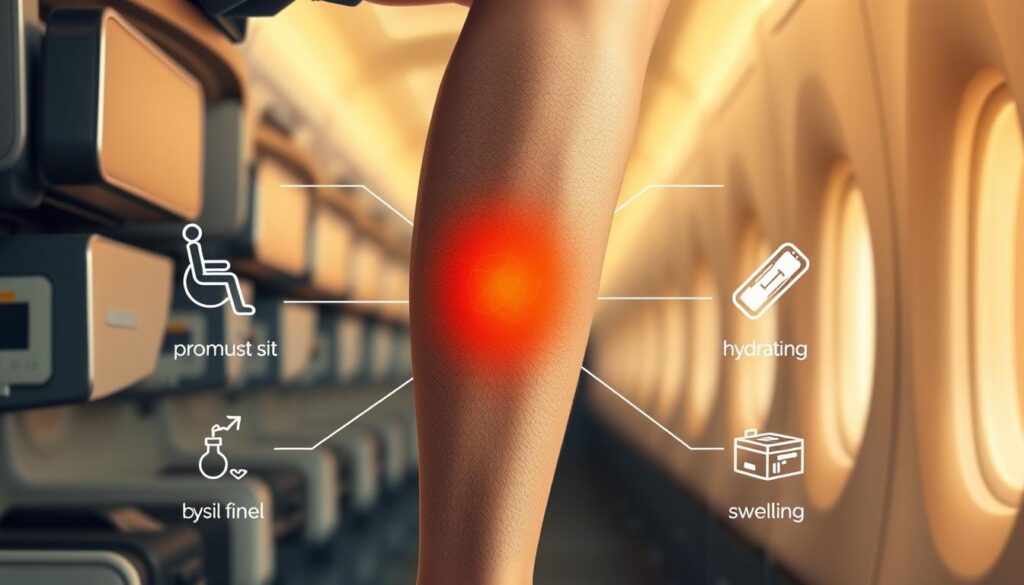
Preparing for Your Flight to Prevent Knee Pain
Taking proactive measures before your flight can help reduce knee pain. As we prepare for air travel, there are several steps we can take to minimize discomfort and ensure a more enjoyable journey.
Pre-Flight Medical Consultation
Before embarking on your trip, it’s advisable to consult with a healthcare professional, especially if you have existing knee issues. They can provide personalized advice and treatment options to help reduce knee pain during the flight. Make sure to discuss your travel plans and any concerns you may have.
Packing Supportive Equipment
Packing the right equipment can make a significant difference in managing knee pain during your travels. Consider bringing a portable heating pad or ice packs to apply heat or cold therapy as needed. Although applying heat during the flight might not be feasible, using it before or after can provide relief. You can also pack supportive knee sleeves or braces to provide stability and comfort.
Medication and Treatment Options
Managing knee pain during air travel often involves a combination of medication and other treatment options. Taking your prescription medication before and during travel is essential. It’s recommended to take it about 30 minutes before travel and to keep it on hand in case you need more later in your trip. Additionally, consider alternative treatments like topical pain relievers that can be applied during the flight to provide quick relief.
By being prepared with the right medication and treatment options, you can significantly reduce knee pain and enjoy your trip.
Effective Strategies to Manage Knee Pain During and After Flying
Managing knee pain during and after flying requires a combination of preparation, in-flight strategies, and post-flight recovery techniques. To minimize discomfort, it’s crucial to understand the causes of knee pain when traveling by air and implement effective management strategies.Regular movement is keyto reducing knee pain during flights. We recommend getting up and walking frequently to avoid stiffness and cramping. Simple exercises like stretching your legs, ankles, and toes can also help. Even small movements, such as sliding your feet back and forth while seated, can make a significant difference.
Choosing the right seat can also contribute to reduced knee pain. Opting for anaisle seat or exit rows with additional legroomcan provide more comfort and allow for easier movement. Wearingloose, stretchy clothing and supportive shoescan also enhance comfort and reduce pressure on knee joints.
During layovers, taking breaks to stretch and move around can help restore knee mobility. We also recommend incorporating simple stretching routines into your flight time to maintain circulation and reduce stiffness.
After the flight,post-flight recovery techniquescan help knees readjust after long periods of restricted movement. Continuing to stretch and move around can help alleviate any remaining discomfort.
By following these tips and being mindful of your knee health during air travel, you can minimize knee pain and enjoy your travels more comfortably. If knee pain becomes severe, it’s essential to seek medical attention to address any underlying issues.
FAQ
What can we do to reduce knee discomfort during long periods of travel?
We can take regular breaks to stretch our legs, wear compression stockings to improve blood circulation, and perform simple exercises to loosen our joints.
Are there any specific exercises we can do to alleviate knee stiffness while traveling?
Yes, we can do some simple exercises like rotating our ankles, lifting our legs, and bending our knees to keep our joints mobile and reduce stiffness.
How can we manage knee pain caused by osteoarthritis or arthritis during travel?
We can consult our doctor before traveling to discuss medication and treatment options, and consider packing supportive equipment like a heating pad or compression sleeves to help manage our condition.
Can wearing compression socks really make a difference in reducing knee pain during travel?
Yes, wearing compression socks can help improve blood circulation, reduce swelling, and alleviate knee discomfort during long periods of sitting.
What are some tips for choosing a comfortable seat to minimize knee pain during travel?
We can opt for a seat with more legroom, avoid seats near the lavatory or galley, and consider upgrading to a seat with more comfort features to reduce knee discomfort.
How can we prevent cramping and stiffness in our legs and knees during long trips?
We can stay hydrated, avoid crossing our legs, and take regular breaks to stretch and move around to reduce the risk of cramping and stiffness.