Tag: Knee Pain in Athletes

  • knee pain in athletes

    knee pain in athletes

    Knee pain is a common issue for athletes at all levels. It can affect their performance and even stop them from playing sports1. Young athletes, especially girls, often face anterior knee pain, also known as patellofemoral pain syndrome1. This pain is not usually from a physical problem. Instead, it’s often due to overusing muscles or not stretching and strengthening enough1.

    Key Takeaways

    • Knee pain is a common problem for athletes, impacting their sports performance and ability to play.
    • Young athletes, especially girls, often experience anterior knee pain from overusing muscles or not training properly.
    • Symptoms include dull pain during activity, sounds when moving the knee, and pain at night or during certain activities.
    • Treatments include low-impact exercises, strengthening, ice therapy, and sometimes medication or physical therapy.
    • Preventing knee pain means warming up properly, staying at a healthy weight, wearing the right shoes, and slowly increasing exercise intensity.

    Understanding Patellofemoral Pain Syndrome

    Patellofemoral pain syndrome (PFPS), also known as “runner’s knee,” is a common injury. It affects the knee joint2. This condition causes pain in the front of the knee, near the kneecap. It’s especially common in athletes who do a lot of knee bending and straightening, like running, cycling, and skiing.

    What is Patellofemoral Pain Syndrome?

    Patellofemoral pain syndrome is a disorder that affects the muscles around the knee2. It happens when these muscles are weak or out of balance. This can make the kneecap move wrongly, causing friction and irritation in the joint.

    Causes of Patellofemoral Pain Syndrome

    The main reasons for patellofemoral pain syndrome are:

    • Muscle weakness, especially in the quadriceps and hip muscles2
    • Misalignment or instability of the kneecap2
    • Overuse, from doing too much training or suddenly increasing activity2
    • Trauma, like a fall or injury2
    • Tight muscles, in the quadriceps and hamstrings2

    These issues can lead to patellofemoral pain syndrome. This causes discomfort, less mobility, and could lead to more serious problems if not treated2.

    Key Findings Study
    Patellofemoral pain syndrome often doesn’t fully heal with just conservative treatment. Rathleff MS et al., 20122
    Adolescent basketball players show different signs of anterior knee pain based on gender. Foss KD et al., 20142
    Studies show structural issues on MRI in people with patellofemoral pain. van der Heijden RA et al., 20162

    Understanding patellofemoral pain syndrome helps athletes and healthcare workers find ways to prevent, manage, and treat it23.

    Knee Pain in Athletes: Symptoms and Diagnosis

    Knee pain is a big issue for athletes who push their bodies hard. The main signs include pain, swelling, and trouble moving the knee4. Athletes might hear a popping sound, feel unstable, or weak4.

    Doctors check for tenderness, alignment problems, and muscle imbalances during a physical exam4. They might use X-rays or MRI scans to see what’s going on inside4.

    About 30% of teens get knee pain that doctors often check out4. Girls are 2–10 times more likely to get it than boys4.

    1. Things like an odd Q angle, flat feet, tight Achilles, and muscle imbalances can cause knee pain4.
    2. Many knee injuries in young athletes come from too much stress on the muscles and bones4.
    3. Intrinsic causes of knee pain include various conditions like anterior knee pain syndrome and Osgood-Schlatter disease4.

    Patellofemoral pain syndrome makes going up or down stairs, sitting a long time, and squatting hard4. It might take two years to fully get better4.

    “Patellofemoral pain syndrome is a big reason for knee pain in young athletes5. It’s common in sports that involve running, jumping, or squatting5.”

    Doing activities like squatting can put over 1,000 pounds of pressure on the kneecap5. Flat feet and other issues can make the kneecap track wrongly, causing pain5.

    Risk Factors for Patellofemoral Pain Syndrome Other Knee Conditions
    • Flatfeet
    • Intoeing
    • Knock-knees
    • Tight hamstring
    • Weak thigh and hip muscles
    • Osgood-Schlatter disease
    • Patellar tendonitis
    • Iliotibial band friction syndrome

    Athletes with patellofemoral pain syndrome often play sports like basketball and volleyball5. The pain gets worse with running, jumping, and squatting5.
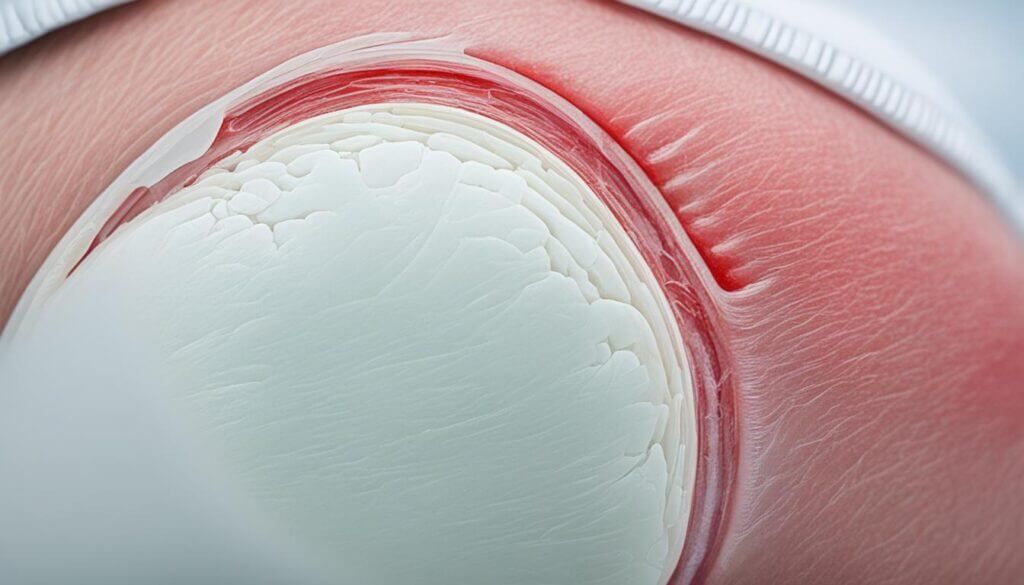
    knee pain symptoms

    To fix patellofemoral pain syndrome, find and fix the root cause with help from a doctor or physical therapist5. Treatment includes resting, icing, taking anti-inflammatory drugs, and doing other exercises5.

    Patellofemoral pain syndrome, also known as runner’s knee, causes pain in front of the knee6. It can come from kneecap misalignment, too much training, injury, or muscle weakness6.

    Runner’s knee symptoms include pain when moving, after sitting a long time, and sounds from the kneecap6. Doctors use a health history, physical exam, and might do X-rays to diagnose it6.

    Treatment for runner’s knee depends on how bad it is and what symptoms you have6. It might include resting, exercises, cold therapy, using a knee brace, and taking medication6. To prevent it, stay at a healthy weight, warm up, and wear good shoes6.

    Important things to know about PFPS: it causes pain and noises around the knee, can come from overuse or structural problems, and treatment includes rest, exercises, cold therapy, and medication6.

    When visiting a healthcare provider, prepare by asking questions, bring someone with you, take notes, and understand what they tell you about your condition and treatment6.

    Conclusion

    Knee pain is a big issue for athletes, caused by things like patellofemoral pain syndrome, overuse, and injuries7. Knowing why kids and teens often get chronic knee pain7 and what makes young athletes more likely to get knee injuries7 helps us find better ways to prevent and treat it.

    Using the right exercises7 and injury management can help athletes get over knee pain and lower the chance of it happening again7. Also, things like strength training, proper warm-ups, and the right gear can help prevent knee pain from starting7.

    Patellofemoral pain syndrome, or anterior knee pain, is really common in teen athletes, affecting up to 39% of those in sports like basketball and tennis8. Over half of these teens still had pain after 2 years8. By understanding this, we can help young athletes stay healthy and perform well in sports.

    FAQ

    What is knee pain in athletes?

    Knee pain is a common issue for athletes. It affects their performance and ability to play sports. It can come from patellofemoral pain syndrome, overuse, or traumatic injuries.

    What is patellofemoral pain syndrome (PFP syndrome)?

    Patellofemoral pain syndrome, or “runner’s knee,” is pain in the front of the knee near the kneecap. It’s a common injury for athletes who do a lot of knee bending and straightening.

    What causes patellofemoral pain syndrome?

    Causes include muscle weakness, especially in the quadriceps and hip muscles. Misalignment of the kneecap is another factor. Overuse from too much training or suddenly doing more can also cause it. Trauma, like a fall, can lead to it too.

    What are the symptoms of knee pain in athletes?

    Symptoms include pain, swelling, and less movement. Athletes might hear a popping or cracking sound in their knee. They may also feel unstable or weak.

    How is knee pain in athletes diagnosed?

    Healthcare providers do a detailed physical check to find tenderness, alignment problems, and muscle imbalances. They might use X-rays or MRI scans to see what’s really going on.

    Source Links

    1. Adolescent Anterior Knee Pain – OrthoInfo – AAOS – https://orthoinfo.aaos.org/en/diseases–conditions/adolescent-anterior-knee-pain/
    2. Patellofemoral pain in athletes – https://www.ncbi.nlm.nih.gov/pmc/articles/PMC5476763/
    3. Patellofemoral pain in athletes: clinical perspectives – https://www.ncbi.nlm.nih.gov/pmc/articles/PMC5640415/
    4. Evaluation and management of knee pain in young athletes: overuse injuries of the knee – https://www.ncbi.nlm.nih.gov/pmc/articles/PMC5532199/
    5. Knee Pain and Patellofemoral Pain Syndrome – https://www.healthychildren.org/English/health-issues/injuries-emergencies/sports-injuries/Pages/Knee-Pain-and-Patellofemoral-Pain-Syndrome.aspx
    6. Patellofemoral Pain Syndrome (Runner’s Knee) – https://www.hopkinsmedicine.org/health/conditions-and-diseases/patellofemoral-pain-syndrome-runners-knee
    7. Knee pain in young sports players aged 6–15 years: a cross-sectional study in Japan – https://www.ncbi.nlm.nih.gov/pmc/articles/PMC9906902/
    8. Nearly 40% of adolescent athletes report anterior knee pain regardless of maturation status, age, sex or sport played – https://www.sciencedirect.com/science/article/abs/pii/S1466853X21001097
  • Knee Pain in Athletes: Causes and Treatment Options

    Knee Pain in Athletes: Causes and Treatment Options

    Knee pain is a common complaint among athletes, both amateur and professional. In fact, knee injuries are one of the most common reasons for athletes to seek medical attention. Knee pain can be caused by a variety of factors, including overuse, trauma, and degenerative conditions. Regardless of the cause, knee pain can be a significant obstacle for athletes, preventing them from participating in their chosen sport and impacting their overall quality of life.

    v2 3n7ya

    At its most basic level, knee pain in athletes is caused by wear and tear on the knee joint. This wear and tear can be the result of repetitive motions, such as running or jumping, or it can be caused by a single traumatic event, such as a fall or collision. In some cases, knee pain may be the result of an underlying medical condition, such as arthritis or a ligament tear. Regardless of the cause, knee pain can be debilitating and impact an athlete’s ability to perform at their best.

    At WebMD, they note that knee pain is particularly common among runners and other athletes who engage in activities that involve a lot of jumping, twisting, or pivoting. These activities can put a lot of stress on the knee joint, leading to pain, inflammation, and other symptoms. Additionally, athletes who are overweight or who have poor conditioning may be at a higher risk for knee injuries, as their joints are not able to withstand the same level of stress as those who are in better shape.

    Understanding Knee Pain in Athletes

    As athletes, we are always pushing our bodies to the limit. However, with this comes the risk of injury, particularly to the knee joint. Knee pain is a common complaint among athletes of all ages and can be caused by a variety of factors. In this section, we will explore the anatomy of the knee, common causes and types of knee injuries, as well as risk factors and prevention.

    Anatomy of the Knee

    To understand knee pain, it is essential to have a basic understanding of the knee’s anatomy. The knee joint is made up of three bones: the femur, tibia, and patella. These bones are connected by ligaments, tendons, and cartilage. The quadriceps muscles are located on the front of the thigh and attach to the patella via the quadriceps tendon. The hamstrings are located on the back of the thigh and attach to the tibia and fibula bones.

    Common Causes and Types of Knee Injuries

    There are several common causes of knee pain in athletes. Overuse and stress on the knee joint are common culprits. Injuries to the knee can also be caused by a traumatic event, such as a fall or collision. Common types of knee injuries include:

    • Osgood-Schlatter Disease: A condition that causes pain and swelling below the knee.
    • Patellofemoral Pain Syndrome: A condition that causes pain in the front of the knee.
    • Chondromalacia Patella: A condition that causes the cartilage on the underside of the patella to soften and break down.
    • Tendinitis: Inflammation of a tendon, often caused by overuse.
    • Anterior Knee Pain Syndrome: A condition that causes pain in the front of the knee, often due to overuse.
    • Juvenile Osteochondritis Dissecans (JOCD): A condition that causes a piece of cartilage and bone to separate from the end of a bone within the knee joint.
    • Bipartite Patella: A condition where the patella bone is made up of two separate bones that fail to fuse together.
    • Plica Syndrome: A condition where the plica, a fold in the synovial membrane of the knee joint, becomes inflamed and irritated.
    • Patellar Tendinitis: Inflammation of the patellar tendon, often caused by overuse.
    • Jumper’s Knee: A condition that causes pain and tenderness at the bottom of the kneecap, often due to repetitive jumping or running.

    Risk Factors and Prevention

    Several risk factors can increase an athlete’s risk of developing knee pain or injury. Biomechanical factors, such as poor alignment or technique, can put added stress on the knee joint. Tight Achilles tendons and hamstrings can also contribute to knee pain. Training techniques can also play a role, with overtraining or improper rest leading to overuse injuries.

    Preventing knee pain and injury is essential for athletes of all levels. Proper stretching and warm-up before physical activity can help prevent knee pain. Maintaining proper technique and alignment during exercise can also help prevent injury. Adequate rest and recovery time are also essential for preventing overuse injuries.

    In conclusion, knee pain is a common complaint among athletes of all ages. Understanding the anatomy of the knee, common causes and types of knee injuries, as well as risk factors and prevention, can help athletes prevent and manage knee pain.

    Diagnosis and Treatment Options

    At the onset of knee pain, it is important to seek medical attention from a doctor or physical therapist who specializes in orthopedic injuries. The diagnosis of a knee injury typically begins with a clinical assessment, which includes a physical examination to assess the severity of the injury and identify any swelling, tenderness, or tightness in the muscles or tendons surrounding the knee joint.

    Clinical Assessment and Imaging

    In addition to a physical examination, imaging tests such as X-rays or MRIs may be performed to help diagnose the underlying cause of the knee pain. X-rays can help identify any fractures or bone abnormalities, while MRIs are particularly useful in revealing injuries to soft tissues such as ligaments, tendons, cartilage, and muscles [1].

    Conservative and Surgical Treatments

    Conservative treatments for knee pain may include rest, ice, compression, and elevation (RICE), as well as nonsteroidal anti-inflammatory drugs (NSAIDs) such as ibuprofen or naproxen to help reduce pain and swelling [2]. Physical therapy and rehabilitation exercises may also be recommended to help strengthen the muscles and improve flexibility around the knee joint.

    If conservative treatments are not effective, surgical options may be considered. Orthopedic surgeons may perform arthroscopic surgery to repair or remove damaged tissue, or a knee replacement surgery may be necessary for more severe cases [1].

    Rehabilitation and Return to Activity

    Rehabilitation and physical therapy are crucial components of recovery for athletes with knee injuries. Strengthening exercises, such as those targeting the hamstring muscles, can help improve knee stability and reduce the risk of future injuries [3]. Orthotics and knee braces may also be recommended to provide additional support during physical activity.

    It is important to note that complications can arise during the recovery process, including swelling, tenderness, and limited range of motion. It is important to work closely with a physical therapist or orthopedic surgeon to ensure a safe and successful return to physical activity.

    In summary, a clinical assessment and imaging tests are important tools in diagnosing knee injuries. Conservative treatments such as RICE, NSAIDs, and physical therapy may be effective in treating mild to moderate knee pain, while surgical options may be necessary for more severe cases. Rehabilitation and physical therapy are crucial components of recovery for athletes with knee injuries, and it is important to work closely with a medical professional to ensure a safe and successful return to physical activity.

    [1] Mayo Clinic. Knee pain – Diagnosis and treatment. Retrieved from https://www.mayoclinic.org/diseases-conditions/knee-pain/diagnosis-treatment/drc-20350855

    [2] Healthline. Knee Joint Pain: Causes, Treatments, and When to Get Help. Retrieved from https://www.healthline.com/health/knee-pain/knee-joint-pain

    [3] Johns Hopkins Medicine. Knee Pain and Problems. Retrieved from https://www.hopkinsmedicine.org/health/conditions-and-diseases/knee-pain-and-problems

    Frequently Asked Questions

    v2 3n7yz un5et

    What are common causes of knee pain in young athletes?

    Knee pain is a common complaint among young athletes. The most common cause of knee pain is overuse injuries, which occur when athletes engage in repetitive activities that put stress on their knees. Other common causes of knee pain include ligament sprains, meniscus tears, patellofemoral pain syndrome, and Osgood-Schlatter disease. WebMD provides a detailed explanation of the causes of knee pain in young athletes.

    How is patellofemoral pain syndrome treated in athletes?

    Patellofemoral pain syndrome (PFPS) is a common cause of knee pain in athletes. Treatment for PFPS typically involves rest, ice, compression, and elevation of the affected knee. Physical therapy exercises that focus on strengthening the quadriceps muscle group can also be helpful. WebMD provides more information on the treatment of PFPS in athletes.

    What is the typical location of pain in runner’s knee?

    Runner’s knee is a common condition that causes pain around the kneecap. The pain is typically located at the front of the knee and may be accompanied by a popping or grinding sensation. WebMD provides more information on the symptoms and treatment of runner’s knee.

    What are the differential diagnoses for knee pain in adolescents?

    Knee pain in adolescents can be caused by a variety of conditions, including Osgood-Schlatter disease, patellofemoral pain syndrome, meniscus tears, and ligament sprains. It is important to accurately diagnose the cause of knee pain in adolescents in order to provide appropriate treatment. PubMed Central provides a detailed discussion of the differential diagnosis for knee pain in adolescents.

    What are effective pain relief methods for athletic knee pain?

    Effective pain relief methods for athletic knee pain include rest, ice, compression, and elevation of the affected knee. Nonsteroidal anti-inflammatory drugs (NSAIDs) can also be helpful in reducing pain and inflammation. Healthline provides more information on effective pain relief methods for athletic knee pain.

    Are there specific treatments recommended for sports-related knee injuries?

    The treatment for sports-related knee injuries depends on the type and severity of the injury. Treatment options may include rest, ice, compression, and elevation of the affected knee, physical therapy, and surgery in some cases. OrthoGeorgia provides more information on the treatment of sports-related knee injuries.