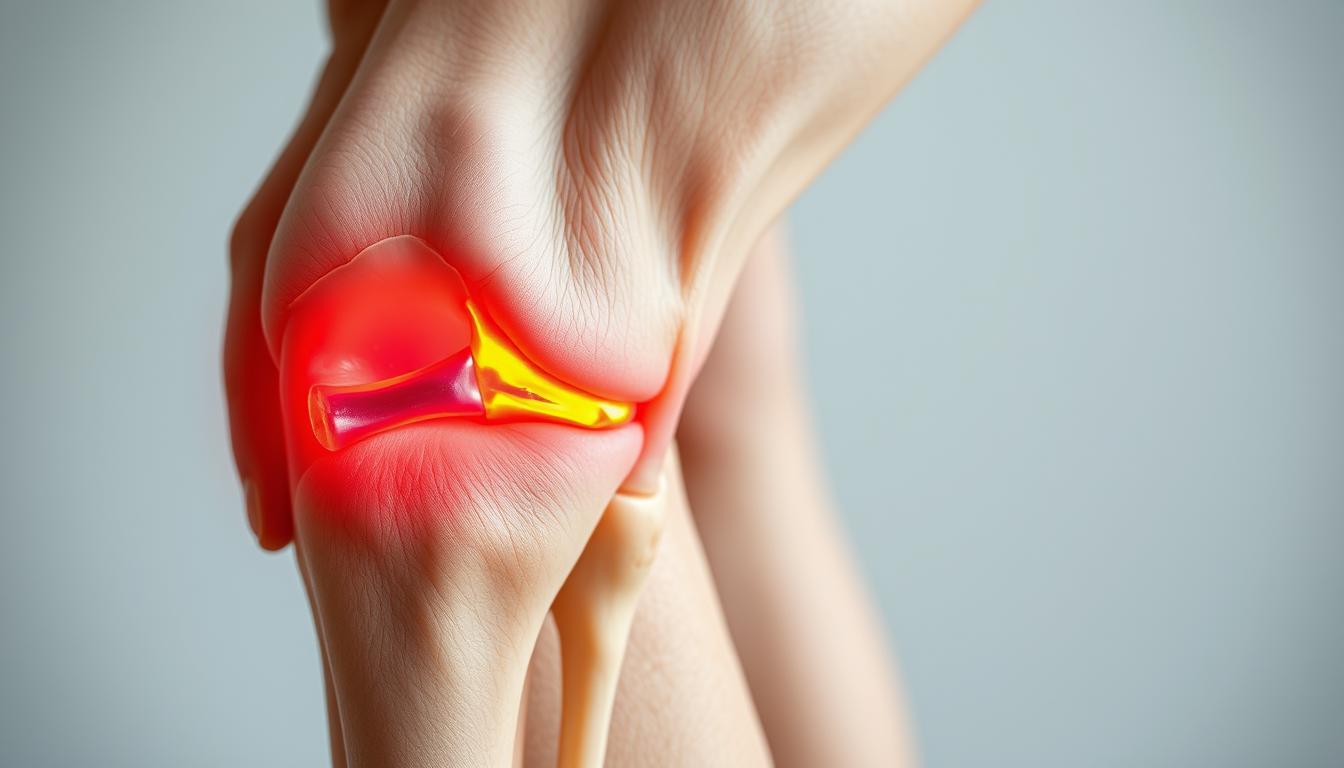
Are you one of the millions of people suffering from a meniscus tear, wondering if surgery is the only way to find relief? We understand that a meniscus injury can be debilitating, affecting not just your knee but your overall quality of life.
Fortunately, there are alternative approaches to managing and recovering from a meniscus tear without resorting to surgery. Our focus is on exploring these non-invasive methods that can help alleviate pain and restore knee function.
We will delve into the various treatment options available, providing insights into effective recovery strategies.
To address meniscus tears effectively, it’s vital to understand their causes and implications. Meniscus tears are a prevalent knee injury that can significantly impact an individual’s quality of life.
What Is the Meniscus and How Does It Function?
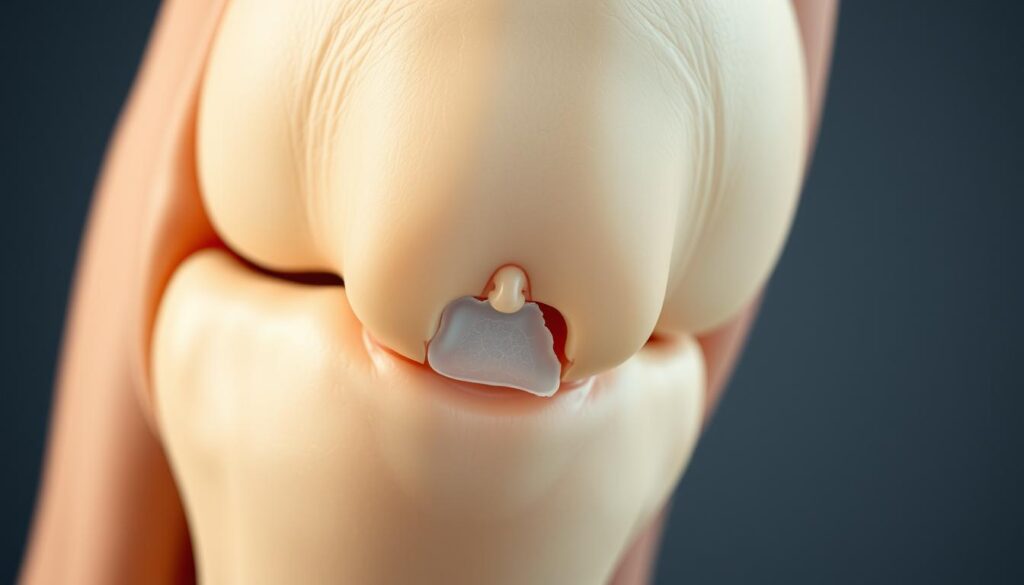
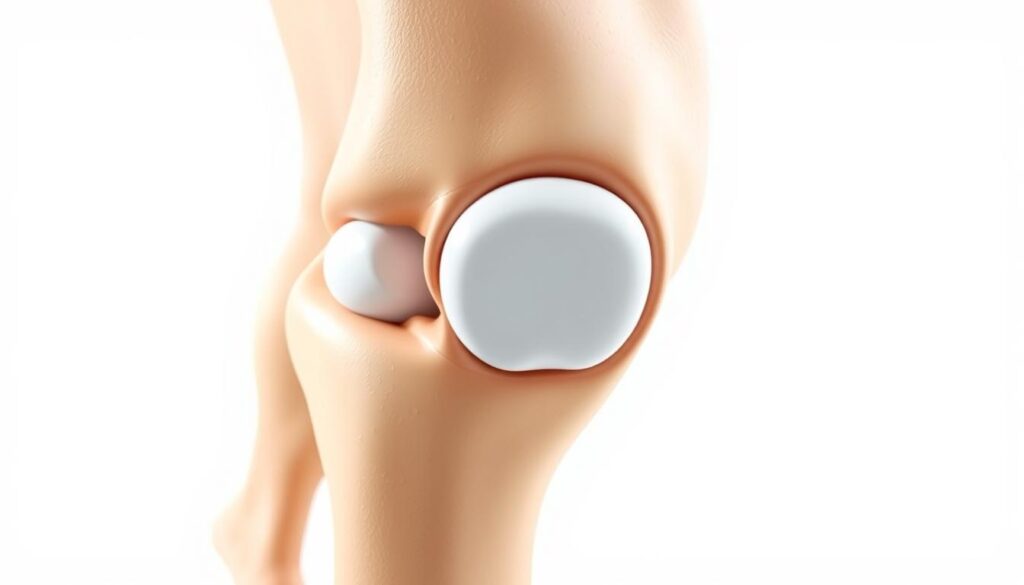
The meniscus is a piece of cartilage in the knee that cushions and stabilizes the joint. It acts as a shock absorber between the bones, facilitating smooth movement and reducing friction. A healthy meniscus is crucial for maintaining knee health and preventing conditions such as osteoarthritis.
The meniscus is a semilunar cartilage structure in the knee joint. There are two menisci in each knee, one medial (inner aspect) and one lateral (outer aspect). They are crucial for load transmission, shock absorption, and stability of the knee. The meniscus also plays a role in proprioception (the sense of the relative position of neighboring parts of the body).
Common Causes of Meniscus Tears
Meniscus tears can occur due to various reasons. Traumatic injuries, such as sudden twists or bends, are common causes. Degenerative changes over time, especially in older adults, can also lead to meniscus tears. Other factors include sports injuries, poor knee alignment, and repetitive strain on the knee joint.
Some common causes include:
A sudden twist or bend
Degenerative changes over time
Sports injuries
Types of Meniscus Tears and Their Severity
Meniscus tears can be classified based on their location, size, and pattern. Vertical, horizontal, and complex tears are some of the types. The severity of the tear can impact the treatment approach and recovery time. Understanding the type and severity is crucial for determining the best course of action.
Type of Tear
Description
Typical Treatment
Vertical Tear
A tear that occurs vertically in the meniscus
Often treated with conservative management or arthroscopic surgery
Horizontal Tear
A tear that occurs horizontally, often due to degenerative changes
May be treated with conservative management or surgery, depending on symptoms
Complex Tear
A combination of different tear patterns
Often requires surgical intervention
“The meniscus plays a vital role in knee health, and injuries to it can have significant implications for mobility and quality of life.”
Recognizing Symptoms and Getting Diagnosed
Meniscus tears often present with distinct symptoms that necessitate a thorough diagnosis. We will explore the key signs that may indicate a meniscus tear and the diagnostic processes involved.
Key Signs You May Have a Meniscus Tear
A meniscus tear can cause several noticeable symptoms. Common signs include pain, especially when twisting or rotating the knee, swelling, and stiffness. Some people may also experience a locking or catching sensation in the knee.
Other indicators can be a feeling of instability or weakness in the knee, making it difficult to perform daily activities or sports. If you’re experiencing any of these symptoms, it’s essential to consider the possibility of a meniscus tear.
Diagnostic Process and Tests
Diagnosing a meniscus tear typically involves a combination of physical examination and imaging tests. A healthcare professional may perform tests such as the McMurray test to assess knee function and pain response.
Imaging tests like MRI (Magnetic Resonance Imaging) are commonly used to confirm the diagnosis by providing detailed images of the knee structures.
When to Seek Medical Attention
If you’re experiencing persistent knee pain, swelling, or limited mobility, it’s crucial to seek medical attention. Early diagnosis and treatment can significantly improve recovery outcomes.
Meniscus tear recovery doesn’t always require surgery; several non-surgical methods can be effective. We will explore these options in detail, providing insights into how they can aid in the recovery process.
The RICE Method: Rest, Ice, Compression, and Elevation
The RICE method is a widely recognized approach for managing injuries such as meniscus tears. It involves giving the knee rest to prevent further injury, applying ice to reduce pain and inflammation, using compression to help reduce swelling, and keeping the knee in an elevated position to improve blood flow.
By following the RICE method, individuals can significantly alleviate the initial symptoms of a meniscus tear. It’s a simple yet effective first step in the recovery process.
Medications for Pain and Inflammation Management
For managing pain and inflammation associated with meniscus tears, various medications can be prescribed or recommended over-the-counter. These include nonsteroidal anti-inflammatory drugs (NSAIDs) like ibuprofen, which can help reduce both pain and inflammation.
Supportive devices and mobility aids play a crucial role in the non-surgical recovery process for meniscus tears. These can include knee braces to provide stability, crutches to reduce weight-bearing stress on the knee, and orthotics to correct any biomechanical issues that may have contributed to the injury.
By utilizing these devices, individuals can protect the knee during the healing process, reduce pain, and improve mobility. It’s advisable to consult with a healthcare professional to determine the most appropriate devices for individual needs.
Physical Therapy and Rehabilitation Exercises
A well-structured physical therapy program is vital for effective non-surgical meniscus tear recovery, incorporating various exercises tailored to individual needs. This comprehensive approach ensures that the knee regains its strength, flexibility, and range of motion.
Strengthening the Muscles Around Your Knee
Strengthening the muscles around the knee is crucial for supporting the joint and enhancing its stability. Exercises such as squats, lunges, and leg press are commonly recommended. It’s essential to start with low-intensity exercises and gradually increase the intensity to avoid further injury.
We can also incorporate specific exercises like straight leg raises and hamstring curls to target the muscles around the knee without putting excessive strain on the meniscus.
Improving Flexibility and Range of Motion
Improving flexibility and range of motion is another critical aspect of rehabilitation. Gentle stretching exercises can help maintain or improve knee mobility. Regular practice of these exercises can significantly reduce stiffness and improve overall knee function.
Activities such as cycling on a stationary bike or using an elliptical machine can also be beneficial, as they promote knee movement without high-impact stress.
Gradual Return to Normal Activities
A gradual return to normal activities is advised to prevent re-injury and ensure that the knee is adequately prepared for more demanding tasks. This involves a phased approach, starting with low-impact activities like walking or swimming.
As the knee becomes more stable and less painful, we can gradually introduce more strenuous activities, including running or jumping, under the guidance of a healthcare professional.
Here’s a summary of a typical rehabilitation program:
Phase
Goals
Exercises/Activities
1
Reduce pain and inflammation
Rest, ice, compression, elevation (RICE)
2
Improve knee strength and flexibility
Squats, lunges, leg press, straight leg raises
3
Enhance range of motion and return to activities
Cycling, elliptical trainer, gradual introduction to running or jumping
Moving Forward: Recovery Timeline and When Surgery Might Be Necessary
Recovering from a meniscus tear without surgery requires patience, the right treatment approach, and an understanding of when surgical intervention might be necessary. The recovery timeline can vary significantly depending on the severity of the tear, the effectiveness of the chosen non-surgical treatments, and individual factors such as overall health and adherence to rehabilitation protocols.
Generally, individuals can expect to see improvement within 6 to 8 weeks with non-surgical treatments. However, some may recover more quickly, while others may require more time. It’s essential to work closely with healthcare providers to monitor progress and adjust treatment plans as necessary.
Factors influencing the decision to proceed with surgery include the persistence of symptoms despite non-surgical treatments, the extent of the meniscus tear, and the impact on daily activities and quality of life. Understanding these factors and maintaining open communication with healthcare providers can help individuals make informed decisions about their care.
By combining the right non-surgical treatments with a well-structured rehabilitation program, many individuals can achieve significant recovery and return to their normal activities. However, being aware of the potential need for surgical intervention is also crucial for long-term knee health.
FAQ
What is the typical recovery time for a meniscus tear without surgery?
We typically see knee pain subsiding and knee function improving within 6-8 weeks with proper physical therapy and rehabilitation exercises. However, this timeframe may vary depending on the severity of the meniscal tear and individual factors.
Will a meniscus tear heal on its own without any treatment?
While some minor tears may heal with rest and conservative management, more severe tears often require some form of treatment, such as physical therapy or surgery, to alleviate pain and restore knee function.
Can osteoarthritis be a result of a meniscus tear?
Yes, a meniscus tear can increase the risk of developing osteoarthritis in the affected knee joint over time, especially if left untreated or not properly managed. This is because the meniscus plays a crucial role in absorbing shock and distributing pressure within the joint.
How can I strengthen my quadriceps to support my knee after a meniscus tear?
We recommend a series of exercises that target the quadriceps and other surrounding muscles, such as squats, lunges, and leg press, to improve knee stability and reduce pain. A physical therapist can help you develop a personalized exercise program.
Are there any supportive devices that can help with meniscus tear recovery?
Yes, supportive devices such as knee braces, crutches, or a cane can help alleviate pain and improve mobility during the recovery process. These devices can also help reduce stress on the affected knee joint.
Can I still walk with a meniscus tear?
While it’s possible to walk with a meniscus tear, it’s essential to avoid putting excessive stress on the affected knee joint to prevent further injury. We recommend using supportive devices and following a physical therapy program to improve knee function and reduce pain.
Persistent discomfort below the kneecap can derail even the simplest activities. But what if the key to overcoming it lies in understanding how your body heals—not just waiting for time to pass? This guide explores practical steps to address irritation in the sensitive tissue cushioning your joint, helping you regain mobility faster.
When this protective layer becomes inflamed, everyday motions like walking or climbing stairs feel challenging. While rest matters, active management plays a bigger role than many realize. We’ll break down methods to reduce swelling, improve flexibility, and prevent setbacks.
From ice therapy to targeted exercises, recovery isn’t one-size-fits-all. Factors like activity levels and treatment consistency shape timelines. By blending short-term relief with lasting strengthening, you can rebuild confidence in your movements.
Key Takeaways
Active management speeds up healing more effectively than passive rest alone.
Personalized rehab plans adapt to individual lifestyles and goals.
Early symptom relief focuses on reducing inflammation and strain.
Long-term joint health relies on strengthening surrounding muscles.
Consistency in treatment routines minimizes recurrence risks.
Understanding Hoffa’s Fat Pad Impingement
Misunderstood knee pain often stems from overlooked soft tissue. Fat pad syndrome involves irritation of the cushioning layer beneath the kneecap, which absorbs shock during movement. Unlike tendon injuries, discomfort here feels sharp and centralized—like a pinpoint below the patella during knee extension or prolonged sitting.
Many confuse this condition with runner’s knee or arthritis. A key difference lies in pain triggers: climbing stairs or squatting worsens fat pad irritation, while tendon issues flare during repetitive impacts. Diagnostic errors occur because swelling patterns and tenderness locations overlap with other syndromes.
Condition
Primary Pain Location
Aggravating Activities
Fat Pad Syndrome
Below kneecap
Knee extension, prolonged sitting
Runner’s Knee
Front of kneecap
Downhill running, squatting
Jumper’s Knee
Lower patellar tendon
Jumping, sudden stops
Nerve endings in the fat pad amplify discomfort when inflamed. This hypersensitivity explains why even light pressure—like tight clothing—can provoke symptoms. Accurate identification requires assessing movement patterns and response to targeted pressure tests.
Without proper diagnosis, treatments for similar conditions often fail. For example, stretching hamstrings might help tendon issues but increase strain on an irritated fat pad. Precision matters—missteps delay healing and worsen tissue sensitivity.
Anatomy of the Infrapatellar Fat Pad
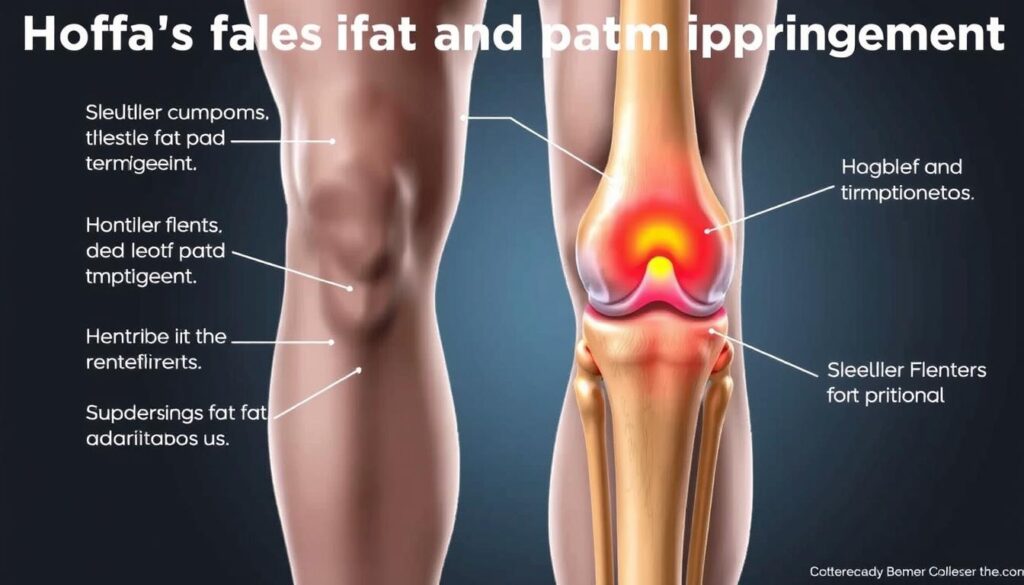
The knee’s intricate design relies on components working in harmony—including a small but vital structure often overshadowed by larger tissues. Positioned just below the kneecap, the infrapatellar fat pad nestles between three critical bones: the femur, tibia, and patella. This triangular-shaped cushion consists primarily of flexible fatty tissue, allowing it to adapt during motion while protecting surrounding areas.
Location and Structure Around the Knee
Think of this structure as a natural shock absorber wedged where bones meet. Its placement allows it to compress during knee bends and shifts in weight distribution. Unlike rigid connective tissues, its soft composition absorbs forces that could otherwise damage cartilage or tendons.
Role in Joint Stability and Cushioning
Every step, jump, or squat generates impact. The infrapatellar fat pad disperses these pressures evenly, reducing wear on joint surfaces. It also fills empty spaces between bones, preventing excessive friction during movement. When functioning properly, it acts like a hydraulic cushion—expanding and contracting to maintain smooth motion.
However, its dynamic nature means it moves with each knee flexion. This constant repositioning increases vulnerability to compression injuries, especially during abrupt stops or repetitive strain. Understanding this balance between protection and vulnerability clarifies why targeted care matters for long-term mobility.
What Causes Fat Pad Syndrome?
Knee injuries often have clear triggers, but some stem from hidden vulnerabilities. This condition arises when forces overwhelm the knee’s natural shock absorbers, creating a cascade of irritation. Let’s explore the mix of triggers—from sudden impacts to subtle imbalances—that set the stage for discomfort.
Direct Trauma and Repetitive Overuse
A hard fall or collision can compress the sensitive tissue below the kneecap instantly. Athletes in contact sports frequently experience this after tackles or awkward landings. Even daily actions like kneeling on hard surfaces or twisting sharply may strain the area over time.
Repetitive motions—think cycling, jumping, or frequent stair climbing—gradually wear down the cushioning structures. Workers who squat often or lift heavy loads face similar risks. Each movement adds micro-stress, inflaming tissues until even routine tasks become painful.
Biomechanical and Metabolic Contributors
Weak hip muscles or flat feet alter how weight distributes across the knee. This misalignment forces the fat pad to absorb uneven pressures, leading to chronic irritation. Poor posture during exercise, like letting knees cave inward during squats, compounds the issue.
Metabolic factors also play a role. Excess body weight increases joint strain, while conditions like osteoarthritis reduce the knee’s ability to manage impact. Hormonal changes or systemic inflammation may further slow healing, creating a cycle of discomfort.
Understanding these varied causes helps tailor treatments. For example, addressing fat pad impingement in athletes might focus on form corrections, while those with metabolic triggers benefit from weight management strategies. Every case demands a unique approach.
Recognizing Signs and Symptoms
Spotting the difference between common knee issues and this specific condition starts with precise symptom tracking. Three markers stand out: pinpoint discomfort location, pressure sensitivity, and activity-linked flare-ups. Learning these distinctions helps avoid misdiagnosis and guides effective treatment choices.
Localized Pain and Tenderness
Sharp sensations directly below the kneecap often signal trouble. Unlike general joint soreness, this pain concentrates at the front of the knee—like a thumb pressing under the patella during full leg extension. Patients frequently report tenderness when touching this area, even through clothing.
Simple tests reveal telltale signs. Pressing gently on the lower patellar region typically reproduces the discomfort. “The pain isn’t diffuse—it’s a specific spot you could cover with a quarter,” notes a sports medicine specialist. This precision helps differentiate it from tendon strains.
Swelling and Movement-Related Discomfort
Visible puffiness often accompanies stiffness, particularly after prolonged sitting or repetitive motions. Unlike arthritis swelling that persists all day, this inflammation usually peaks during or after activity. Knee extension becomes challenging, like struggling to fully straighten your leg after climbing stairs.
Movement patterns predict symptom intensity. Squatting, jumping, or sudden stops amplify pressure on the affected area. Some describe a catching sensation when bending, though true locking mechanisms are absent. Early recognition of these patterns prevents chronic irritation and speeds recovery.
Diagnosis and Clinical Assessment
Accurate diagnosis forms the foundation of effective knee care. Clinicians combine hands-on evaluations with advanced tools to pinpoint the source of discomfort. This dual approach ensures treatment plans address root causes rather than just masking symptoms.
Physical Examination Techniques
We start by assessing the knee joint’s stability through specific maneuvers. The patellar tilt test reveals imbalances in soft tissue tension around the kneecap. Patients often wince when pressure is applied directly below the patella—a hallmark sign of fat pad irritation.
Range of motion tests help identify movement restrictions. Limited extension usually signals inflammation, while pain during deep flexion suggests impingement. Clinicians compare affected and healthy knees to spot subtle differences.
Assessment Method
Purpose
Key Indicator
Palpation
Locate tender areas
Sharp pain below kneecap
Active Extension
Test joint mobility
Stiffness at 20-30° bend
Resisted Motion
Check muscle involvement
Pain without weakness
Imaging and Palpation Methods
While physical exams provide immediate clues, imaging confirms soft tissue changes. MRI scans show inflammation patterns in the knee joint that X-rays miss. Ultrasound offers real-time views of the kneecap’s movement during flexion.
Palpation around the patellar edges helps differentiate this condition from tendon issues. “The pain localizes precisely here,” explains a orthopedic specialist, pressing two fingers below the kneecap. This precision guides targeted treatment strategies.
Immediate At-Home Management Tips
Taking control of sudden discomfort requires immediate and informed steps. Managing acute symptoms effectively combines simple methods with consistency. Let’s explore practical approaches to stabilize the area while laying groundwork for longer-term healing.
Applying Ice for Inflammation
Cold therapy remains a frontline defense against swelling. Apply an ice pack wrapped in a thin towel for 15-20 minutes every 2-3 hours during flare-ups. This method helps reduce inflammation by constricting blood vessels and numbing localized pain receptors.
Using NSAIDs Safely
Over-the-counter medications like ibuprofen temporarily reduce pain and swelling. However, consult a physician before prolonged use—especially if you have stomach or kidney concerns. Pairing NSAIDs with ice amplifies their effectiveness without over-relying on medication.
Method
Primary Benefit
Considerations
Ice Therapy
Reduces inflammation quickly
Avoid direct skin contact
NSAIDs
Targets pain and swelling
Limit to 3-5 days unless directed
Consistency matters most during acute phases. Repeating these strategies within the first 72 hours prevents symptom escalation. Pair them with gentle movement to maintain joint mobility without strain.
These approaches help reduce discomfort while preparing tissues for rehabilitative exercises. “Early intervention stops minor irritation from becoming chronic,” notes a physical therapist. Track responses daily—improvement within 48-72 hours signals proper management.
Strategies to Reduce Inflammation Effectively
Effective inflammation control requires a layered approach combining clinical expertise with daily habits. While initial ice and rest help, advanced methods target persistent swelling while protecting joint function. Let’s explore techniques that address both immediate discomfort and underlying triggers.
Bracing and taping provide external support to maintain proper alignment around the knee. A 2023 study found custom sleeves reduced strain by 27% during walking compared to unsupported motion. Pair these with posture adjustments—like avoiding locked knees when standing—to prevent tissue compression.
Track progress using symptom journals or wearable tech. Note changes in morning stiffness or pressure sensitivity. “Consistent monitoring helps us adjust treatments before setbacks occur,” explains a sports medicine physician.
Combine these strategies with professional care for lasting results. Clinicians might use ultrasound-guided cortisone injections for stubborn cases or prescribe pulsed electromagnetic field therapy. Remember—what works for acute flare-ups often differs from long-term management plans.
Exercises to Prevent and Manage Impingement
Rebuilding knee resilience starts with targeted movement strategies. We focus on enhancing flexibility and building strength in areas that stabilize the joint. This dual approach reduces strain on sensitive tissues while improving alignment during daily motions.
Stretching for Muscle Flexibility
Tight hamstrings and quads pull unevenly on the knee, increasing pressure. Gentle hamstring stretches while lying on your back with a resistance band help lengthen these muscles. Hold each stretch for 30 seconds, repeating 3 times per side.
Quadriceps stretches against a wall improve range of motion. Pair these with calf stretches to address lower-leg tightness. “Consistent flexibility work is like oiling a hinge—it keeps everything moving smoothly,” notes a physical therapist.
Stability and Strengthening Workouts
Step-ups onto a low platform engage glutes and thighs without jarring impacts. Start with 2 sets of 10 reps, focusing on controlled movements. Side-lying clamshells with a resistance band strengthen hip abductors, which stabilize the knee during walking or pivoting.
Exercise
Target Area
Frequency
Wall Sits
Quadriceps
3x weekly
Single-Leg Balances
Ankle/Knee Stability
Daily
Incorporate these routines into regular activities like walking or gym sessions. Progress gradually—overloading too soon risks setbacks. Pair strengthening with mobility drills for balanced results.
Optimizing Hoffa’s fat pad impingement recovery time
Tailored interventions can significantly reduce downtime from joint discomfort. Combining immediate symptom relief with corrective strategies creates a roadmap for efficient rehabilitation. Early action prevents minor inflammation from becoming chronic, while addressing root causes promotes lasting results.
Structured programs start by correcting movement patterns that strain sensitive tissues. For example, adjusting foot positioning during squats or lunges redistributes pressure away from the front knee area. A 2023 clinical trial showed patients using gait retraining reduced healing timelines by 34% compared to rest alone.
Strategy
Application
Impact
Joint Alignment Drills
Daily 10-minute sessions
Reduces tissue compression
Activity Modification
Limit deep bending
Prevents flare-ups
Progress Tracking
Weekly mobility checks
Guides adjustments
Consistent monitoring helps identify what works. “Patients who log daily symptoms and exercise responses heal 22% faster,” notes a sports medicine researcher. Pairing professional guidance with home care ensures treatments evolve as mobility improves.
Focus on maintaining neutral knee positioning during daily tasks. Simple cues like “knees over toes” during stairs or chair transitions protect vulnerable areas. These habits, combined with targeted strengthening, build resilience against future irritation.
Developing a Rehabilitation and Long-Term Recovery Plan
Building lasting joint health demands more than temporary fixes—it requires strategic planning. We create adaptable routines that grow with your progress, blending strength training with smart monitoring to sustain results.
Progressive Exercise Routines
Start with low-impact movements like seated leg extensions using light resistance bands. Gradually introduce weight-bearing activities as strength improves. Phase-based programs prevent overloading sensitive tissues while rebuilding stability.
Week 1-3 might focus on isometric holds and balance drills. By week 4-6, add controlled squats to 45 degrees. “Progress hinges on pain-free execution, not speed,” advises a physical therapist. Track improvements in range of motion and endurance weekly.
Phase
Focus
Sample Exercise
Foundation
Mobility
Wall-assisted knee slides
Intermediate
Strength
Step-ups with 2-second pause
Advanced
Function
Single-leg deadlifts
Monitoring Recovery Benchmarks
Use objective measures like daily step counts or pain-free squat depth. Compare these to baseline measurements taken during initial assessments. Apps that log workout intensity help spot trends in flexibility gains or recurring stiffness.
Re-evaluate goals every 4-6 weeks. If climbing stairs becomes easier but prolonged sitting still triggers discomfort, adjust your plan. Personalized programs succeed when they address both physical milestones and lifestyle factors.
Treatment Options and When to Seek Professional Help
Navigating knee discomfort requires knowing when home care isn’t enough. Early intervention often starts with conservative approaches but may escalate if symptoms persist. We outline strategies that balance immediate relief with sustainable solutions.
Physiotherapy Techniques
Manual therapy improves joint mobility by releasing tight muscles around the kneecap. Therapists use techniques like soft tissue mobilization to reduce pressure on inflamed areas. Custom exercise plans focus on strengthening hip stabilizers and improving gait patterns.
Modalities like ultrasound or electrical stimulation may accelerate healing. “Over 78% of patients see improvement within 6 weeks when combining hands-on therapy with targeted exercises,” reports a 2023 clinical study. Consistent sessions help retrain movement habits that contribute to strain.
Surgical Interventions and Outcomes
When non-surgical methods fail, arthroscopic procedures remove scar tissue or realign problematic structures. This minimally invasive approach allows precise adjustments with smaller incisions. Most patients resume light activities within 2-4 weeks post-operation.
Treatment Type
Duration
Success Rate
Physical Therapy
6-12 weeks
82%
Arthroscopic Surgery
1-2 hour procedure
91%
Seek professional guidance if pain disrupts sleep or limits daily tasks for over 3 weeks. Specialists assess whether knee surgery recovery timelines align with your activity goals. Combining treatments often yields better long-term results than isolated approaches.
Every case demands personalized planning. While surgery addresses mechanical issues, lasting recovery depends on addressing underlying causes like muscle imbalances or repetitive strain patterns. Regular follow-ups ensure your strategy evolves with progress.
The Role of Biomechanics and Movement Patterns
How we move shapes joint health more than we realize. Poor walking patterns or slouched posture redistribute forces through the knee unevenly. This strains the cushioning structures designed to handle balanced loads.
Abnormal gait—like overpronation or hip dropping—forces the pad beneath the kneecap to absorb excessive pressure. Over time, this creates chronic irritation. “Even a 5-degree shift in knee alignment doubles stress on sensitive tissues,” notes a biomechanics researcher.
Movement Pattern
Impact on Knee
Corrective Action
Knock-kneed stance
Compresses inner joint
Hip abductor strengthening
Flat-footed walking
Overworks front knee
Arch support inserts
The infrapatellar fat adapts to natural motion but struggles with jerky movements. Sudden pivots or uneven surfaces push it beyond its protective capacity. This explains why athletes with poor landing mechanics often develop recurrent issues.
Thorough movement assessments uncover hidden risks. Physical therapists analyze squat depth, single-leg balance, and stair navigation. These tests reveal imbalances that home exercises can address. For example, step-down drills with proper form retrain muscles to stabilize joints.
Prioritizing symmetrical strength and fluid motion patterns reduces strain. Simple adjustments—like shortening stride length or engaging core muscles—make daily activities gentler on vulnerable areas. Consistent attention to biomechanics builds lasting protection.
Lifestyle Adjustments for Sustaining Knee Health
Everyday choices play a pivotal role in preserving joint function and comfort. Small, consistent changes protect against strain while promoting long-term mobility. Let’s explore practical habits that keep movements smooth and reduce recurrence risks.
Low-impact activities like swimming or cycling strengthen muscles without jarring impacts. These exercises improve circulation while maintaining joint flexibility. Aim for 30-minute sessions 4-5 times weekly to build endurance safely.
Dietary choices directly influence inflammation levels. Focus on omega-3-rich foods like salmon and walnuts to combat swelling. In severe cases, even modest weight loss significantly reduces pressure on joints. A 10-pound decrease lowers knee stress by 40 pounds per step.
Daily Activity
Recommended Adjustment
Benefit
Stair Climbing
Use handrails, step lightly
Reduces impact force
Gardening
Kneel on cushioned pads
Prevents direct compression
Desk Work
Set hourly stretch reminders
Maintains joint lubrication
Mobility routines should become non-negotiable, like brushing teeth. Morning calf stretches and evening hip openers maintain tissue elasticity. Pair these with posture checks during prolonged sitting—keep feet flat and knees at 90 degrees.
“Prevention isn’t complicated—it’s about intentional repetition,” notes a physical therapist. Swap high-risk motions like deep squats for modified lunges. Carry groceries in a backpack instead of hand-held bags to distribute weight evenly.
Consistency transforms these adjustments into lasting protection. Track progress through pain-free activity duration or reduced morning stiffness. Over time, these habits become second nature, safeguarding your joints through life’s demands.
Conclusion
Navigating knee challenges requires both knowledge and action. Through understanding Hoffa syndrome, we empower ourselves to address discomfort at its source rather than masking symptoms. This condition demands attention to movement patterns, inflammation control, and personalized care strategies.
Early intervention proves critical—identifying triggers like repetitive strain or biomechanical imbalances prevents chronic issues. Combining ice therapy with targeted exercises creates a foundation for healing. Professional guidance ensures treatments align with individual needs, whether through physiotherapy or activity modifications.
Lasting results emerge from consistency. Tracking progress helps refine approaches while maintaining joint-friendly habits safeguards against recurrence. Remember: every step toward balanced strength and mobility builds resilience.
We encourage partnering with healthcare providers to craft plans addressing your unique lifestyle. By prioritizing comprehensive care—from symptom management to long-term prevention—you reclaim pain-free movement. Let this knowledge guide your journey toward enduring knee health.
FAQ
How long does it typically take to heal from this condition?
Recovery varies based on severity, treatment adherence, and individual health. Mild cases often improve within 4–6 weeks with rest and therapy, while chronic issues may require 3–6 months of structured rehabilitation.
Are there specific movements we should avoid during recovery?
Yes. Deep squats, excessive kneeling, or hyperextending the joint can aggravate tissue irritation. Focus on low-impact activities like swimming or cycling until inflammation subsides.
Can this injury be confused with other knee problems?
Absolutely. Symptoms overlap with patellar tendonitis or meniscus tears. A thorough clinical exam and imaging, like MRI, help differentiate the source of front knee pain.
Do ice and NSAIDs provide enough relief for acute flare-ups?
They help reduce swelling and discomfort short-term. However, combining them with targeted exercises and biomechanical adjustments improves long-term outcomes and prevents recurrence.
What role do footwear choices play in managing symptoms?
Supportive shoes with proper arch alignment reduce stress on the joint. Avoid flat soles or unstable designs that strain muscles and ligaments during walking or running.
When is surgery considered for persistent cases?
If conservative treatments fail after 6–12 months, arthroscopic debridement might be recommended to remove inflamed tissue. Surgery is rare but effective for restoring pain-free movement in severe scenarios.
Can strengthening exercises worsen the impingement?
Incorrect form or overloading muscles too soon can increase pressure on the infrapatellar region. Work with a physiotherapist to design stability workouts that protect the area while rebuilding strength.
How do we know if our rehabilitation plan is working?
Track benchmarks like reduced tenderness, improved range of motion, and ability to perform daily tasks without swelling. Regular check-ins with a specialist ensure progress aligns with recovery goals.