Tag: Senior fitness

  • knee exercises for seniors

    knee exercises for seniors

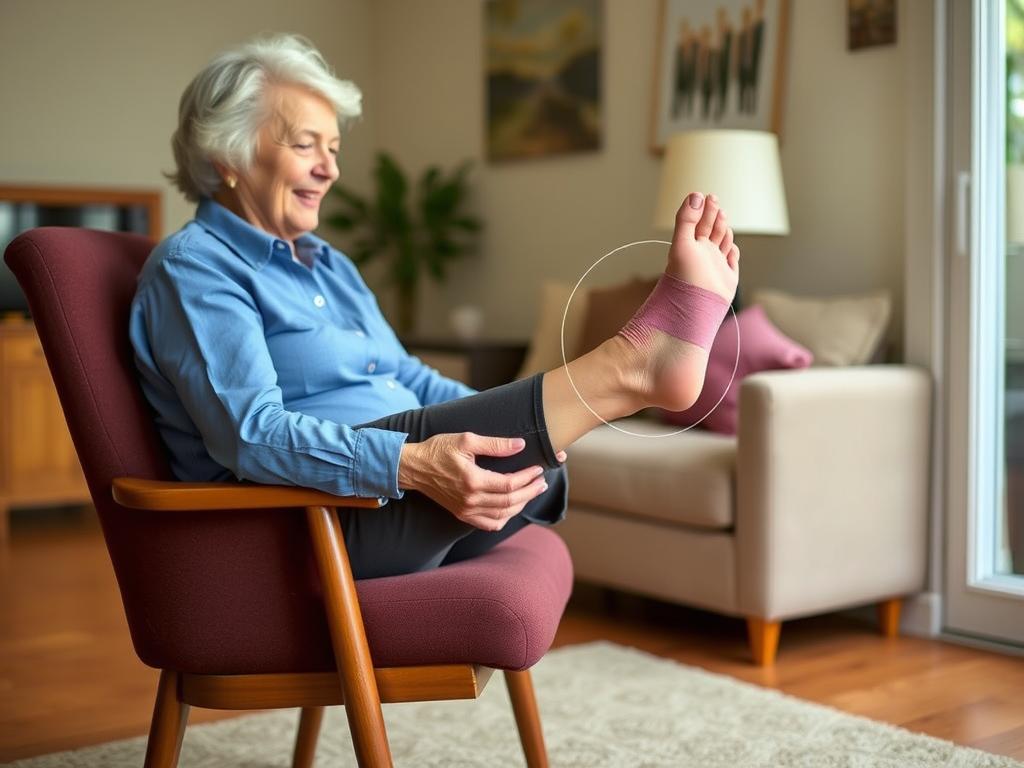
    What if the key to staying active in your golden years isn’t about pushing harder—but moving smarter? For many older adults, joint discomfort creates a frustrating barrier to fitness. We’ve discovered that strategic, low-impact routines often deliver better results than traditional workouts, especially for improving mobility.

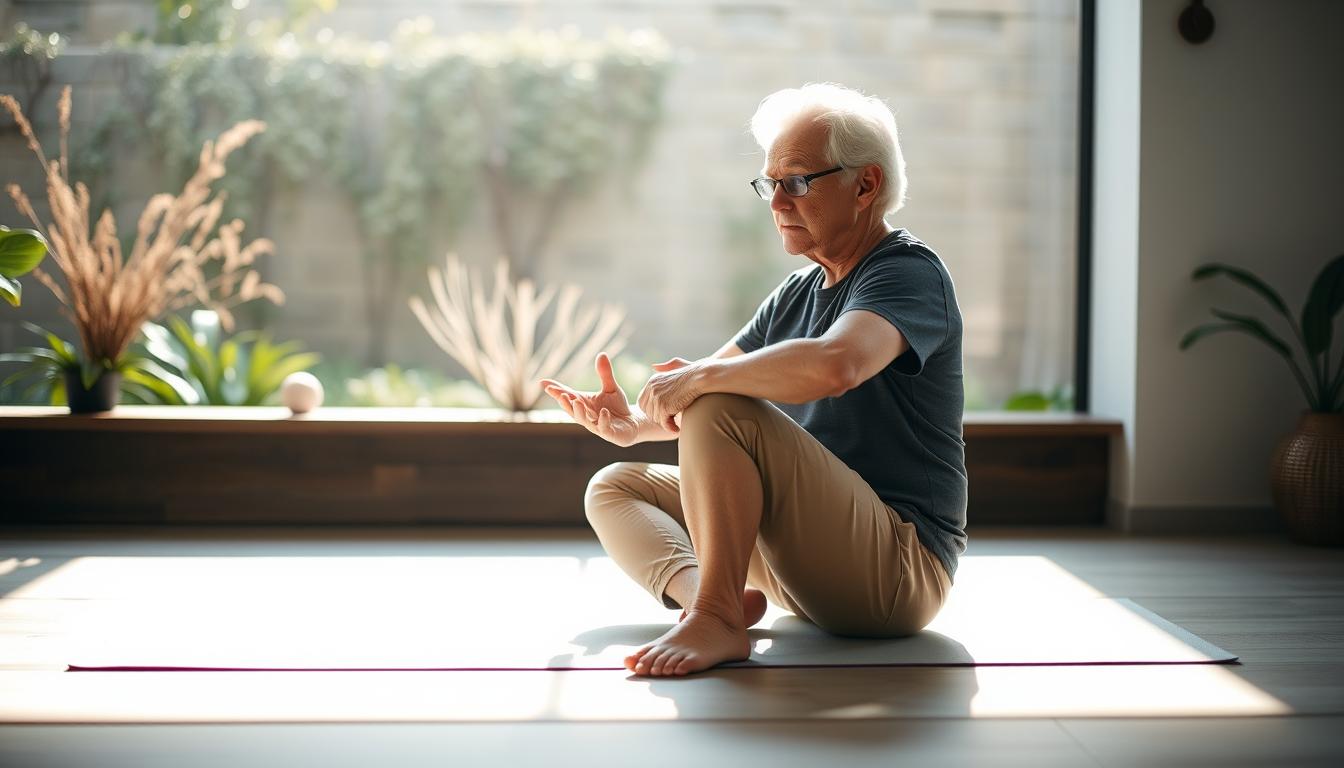
    Research from experts like Karen Blum at AARP highlights how tailored movement plans reduce strain while building strength. Take Nancy Volkers, who transformed her daily routine by blending yoga with light cardio. Her story proves that small adjustments can lead to lasting comfort and flexibility.

    This guide focuses on sustainable methods backed by physical therapists. You’ll learn how to strengthen supporting muscles, protect cartilage, and avoid common mistakes. Whether you’re gardening or climbing stairs, the right approach makes every motion smoother.

    Key Takeaways

    • Low-impact workouts minimize stress while improving joint health.
    • Combining strength, flexibility, and balance activities yields the best results.
    • Personalized routines adapt to individual needs and fitness levels.
    • Expert guidance reduces injury risks and enhances progress.
    • Consistency matters more than intensity for long-term benefits.

    Understanding Knee Pain and Its Causes

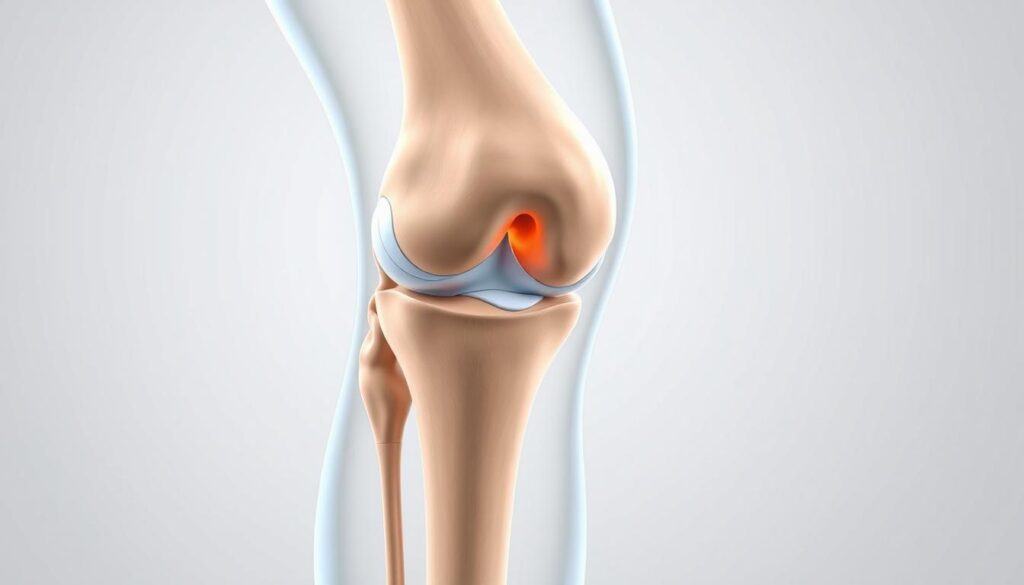
    Joint discomfort often stems from multiple factors working together. Orthopedic surgeon Dr. Bruce Stewart notes that muscle weakness and poor alignment create a domino effect, stressing vulnerable areas over time. Let’s explore why this happens—and how to break the cycle.
    leg joint health

    Common Causes and Contributing Factors

    Injuries from falls or repetitive motions frequently trigger initial discomfort. Osteoarthritis—a natural wearing down of cartilage—affects 1 in 3 adults over 60. Physical therapist Kari Orlandi explains: “Improper joint position during daily tasks accelerates wear. Think of movement as lubrication—motion is lotion.”

    Weak leg muscles fail to absorb shock effectively. This forces joints to compensate, leading to stiffness. Simple fixes like adjusting posture while standing or sitting can redistribute pressure.

    Impact of Aging on Joint Health

    Muscle mass declines by 3-8% per decade after 30, reducing support for joints. Cartilage also thins naturally, making bones more susceptible to friction. Regular walking maintains circulation, which delivers nutrients to these tissues.

    Maintaining proper alignment during activities like climbing stairs protects vulnerable areas. As Dr. Stewart emphasizes: “Strong muscles act like shock absorbers—they’re your first line of defense.” Targeted routines that address root causes offer the most sustainable relief.

    Effective Knee Exercises for Seniors

    Maintaining joint health requires smart movement strategies that prioritize safety and adaptability. We’ve designed routines focusing on three pillars: strength-building, flexibility enhancement, and injury prevention. These methods work together to create a balanced approach for daily comfort.
    senior home leg exercises

    Strengthening and Stability Routines

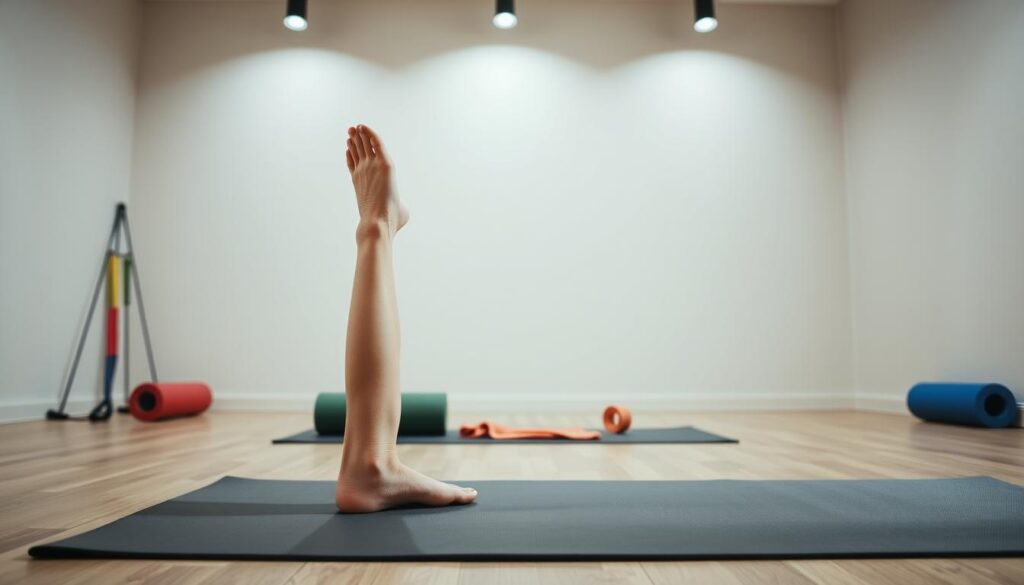
    Building leg muscles reduces strain on joints by distributing weight more evenly. The quad set is ideal for beginners: Sit with legs extended, tighten thigh muscles for 5 seconds, then relax. Repeat 10 times. For added support, use a sturdy chair during seated squats—lower halfway, hold 3 seconds, then rise slowly.

    Flexibility and Range-of-Motion Movements

    Gentle motion maintains joint lubrication and prevents stiffness. Try heel slides: Lie on your back, slide one heel toward hips until a mild stretch occurs. Hold 8 seconds, then return to start. Pair with ankle pumps (pointing toes up/down) to improve circulation.

    Home-Based Modifications and Safety Tips

    Always position furniture or walls within reach for balance support. Reduce injury risks by avoiding sudden twists and locking joints. Physical therapist Lori Zucker advises: “Focus on controlled movements rather than speed. Quality trumps quantity every time.” Incorporate these routines into daily life—practice while watching TV or waiting for coffee to brew.

    Consistent, low-impact activity strengthens legs while managing body weight naturally. This lifestyle adjustment not only supports joints but enhances overall life quality through pain-free movement.

    Incorporating a Balanced Knee Health Routine

    Building lasting joint health requires more than isolated movements—it demands a holistic strategy. Research from Hinge Health shows that blending different activity types improves stability and reduces discomfort better than single-focus approaches. Dr. Caleb Wolters notes: “Variety prevents overuse injuries while addressing multiple aspects of mobility.”

    Integrating Cardio, Resistance, and Balance Workouts

    Low-impact cardio like seated marching boosts circulation without strain. Pair this with resistance bands or bodyweight moves—such as wall-assisted squats—to strengthen muscles around joints. A sturdy back chair or wall provides stability during side leg lifts or single-leg stands.

    Balance drills matter too. Try shifting weight from heels to toes while holding a counter’s edge. These small challenges build coordination, reducing fall risks. For step-by-step guidance, explore our guide on safe movement patterns tailored for older adults.

    Lifestyle Adjustments to Minimize Knee Pain

    Daily habits amplify exercise benefits. Anti-inflammatory foods like berries and fatty fish support tissue repair. Staying hydrated keeps cartilage supple—aim for 6-8 glasses daily.

    Modify home setups to reduce joint stress. Place frequently used items at waist height to avoid excessive bending. When sitting, use a firm cushion to maintain proper alignment. As Dr. Wolters advises: “Consistency in these tweaks creates compounding benefits over time.”

    Real-Life Success Stories and Expert Advice

    Transformative results often emerge when professional guidance meets lived experience. We’ve gathered insights from therapists and older adults who’ve reshaped their mobility journeys through simple, sustainable strategies.

    Physical Therapy Insights and Expert Recommendations

    Physical therapist Kari Orlandi stresses proper form: “Keeping knees bent at safe angles during movements protects joints while building strength.” Her clients use chairs for support during seated marches, maintaining 30-degree bends to reduce strain.

    Focus Area Expert Tip Community Tip
    Proper Form Align hips over ankles during squats Use mirrors to check posture
    Consistency 3x weekly 15-minute sessions Pair exercises with daily habits
    Progression Add resistance bands gradually Track improvements in a journal

    Community Experiences and Practical Tips

    Margaret, 68, regained stair-climbing ability through seated leg extensions. “Starting with knees bent at 90 degrees made all the difference,” she shares. AARP contributors echo this—short daily sessions often outperform intense workouts.

    Hinge Health members highlight lifestyle tweaks: placing exercise bands near reading chairs or doing heel slides during TV ads. Dr. Bruce Stewart notes: “Strong muscles don’t just support joints—they unlock fuller participation in life.” These small wins collectively elevate quality of life.

    Conclusion

    Maintaining mobility as we age hinges on smart choices that prioritize joint care. Strengthening muscles around knee joints and managing body weight transforms daily comfort. Research from Hinge Health shows consistent movement habits reduce arthritis symptoms while boosting balance and strength.

    Proper form ensures safety. Always begin from a secure starting position and slowly lower into movements to protect vulnerable areas. This approach builds resilience without strain.

    Our program offers exercise help tailored to aging bodies, focusing on progress over intensity. Small adjustments—like using chairs for support—make routines accessible yet effective.

    Regular activity preserves independence and enhances well-being. By integrating these strategies, you’ll invest in long-term joint health and a more vibrant lifestyle.

    FAQ

    What causes joint discomfort as we age?

    Over time, cartilage naturally wears down, reducing cushioning between bones. Conditions like arthritis, reduced muscle strength, and past injuries can also contribute. Maintaining mobility through gentle activity helps slow this process.

    How can we strengthen muscles around joints safely?

    Low-impact routines like seated leg lifts, wall sits, or resistance band workouts build stability without straining sensitive areas. Focus on controlled motions and proper form to avoid overloading the body.

    Are home-based workouts effective for improving flexibility?

    Yes! Chair yoga, calf stretches, and slow heel slides can enhance range of motion. Always use stable surfaces like a countertop or sturdy chair for balance support during movements.

    Can daily habits reduce strain on our lower body?

    Simple adjustments like wearing supportive footwear, avoiding prolonged sitting, and managing body weight ease pressure. Incorporating short walks or swimming also promotes circulation and joint lubrication.

    Why include balance training in a fitness plan?

    Activities like standing on one leg or tai chi improve coordination, preventing falls. Stronger stabilizing muscles help distribute weight evenly, reducing wear on vulnerable areas.

    How does physical therapy support long-term joint health?

    Experts design personalized programs to address stiffness, weakness, or alignment issues. Techniques like manual therapy or guided strengthening restore function while minimizing re-injury risks.

  • 10 Safe and Effective Exercises to Strengthen Knees for Seniors

    10 Safe and Effective Exercises to Strengthen Knees for Seniors

    Strong knees are essential for maintaining mobility, independence, and quality of life as we age. For seniors, knee strength directly impacts the ability to walk, climb stairs, and perform daily activities without pain. Whether you’re dealing with arthritis, recovering from an injury, or simply want to maintain healthy joints, these exercises to strengthen knees for seniors can make a significant difference in your mobility and comfort.

    Proper form and support are essential when performing knee exercises

    Safety First: Preparing for Knee Exercises

    Before diving into any exercise routine, safety should be your top priority. These precautions will help ensure you strengthen your knees without risking injury:

    • Consult your healthcare provider before starting any new exercise program, especially if you have existing knee pain, arthritis, or have had knee surgery.
    • Start slowly with fewer repetitions and gradually increase as your strength improves.
    • Use stable support like a sturdy chair or countertop when performing standing exercises.
    • Warm up properly with 5-10 minutes of gentle walking or marching in place to increase blood flow to your muscles.
    • Stop if you feel pain that goes beyond mild discomfort. Some muscle fatigue is normal, but sharp pain is not.

    Need Professional Guidance?

    If you’re unsure about which exercises are right for you, consider consulting with a physical therapist who can create a personalized program for your specific needs.

    Find a Physical Therapist Near You

    10 Effective Exercises to Strengthen Knees for Seniors

    These exercises target the muscles that support your knees, including the quadriceps (front thigh), hamstrings (back thigh), and calf muscles. Strengthening these muscle groups helps stabilize your knee joints and improve overall function.

    Seated exercises are excellent for beginners and those with balance concerns

    1. Seated Knee Extensions

    Seated knee extensions strengthen the quadriceps muscles, which are crucial for knee stability and support.

    How to perform:

    1. Sit in a sturdy chair with your back straight and feet flat on the floor.
    2. Slowly extend your right leg until it’s as straight as possible without locking the knee.
    3. Hold for 3-5 seconds, focusing on tightening the thigh muscle.
    4. Slowly lower your leg back to the starting position.
    5. Repeat with the left leg.

    Recommended: 8-10 repetitions per leg, 2-3 sets

    Muscles targeted: Quadriceps (front thigh muscles)

    Safety modifications:

    • If extending your leg fully causes discomfort, only extend as far as feels comfortable.
    • Place a rolled towel under your knee for support if needed.
    • For added resistance as you progress, consider using light ankle weights (1-2 pounds).

    2. Seated Marches

    Seated marches improve hip flexor strength, which helps with knee alignment and stability during walking.

    Senior woman performing seated marches for knee and hip strength

    How to perform:

    1. Sit tall in a chair with your feet flat on the floor.
    2. Lift your right knee up toward your chest without leaning back.
    3. Lower your right foot back to the floor.
    4. Lift your left knee up toward your chest.
    5. Continue alternating legs in a marching motion.

    Recommended: 10-15 repetitions per leg, 2 sets

    Muscles targeted: Hip flexors, quadriceps, core muscles

    Safety modifications:

    • Hold onto the sides of the chair for added stability.
    • Lift your knees only as high as is comfortable.
    • Focus on maintaining good posture throughout the exercise.

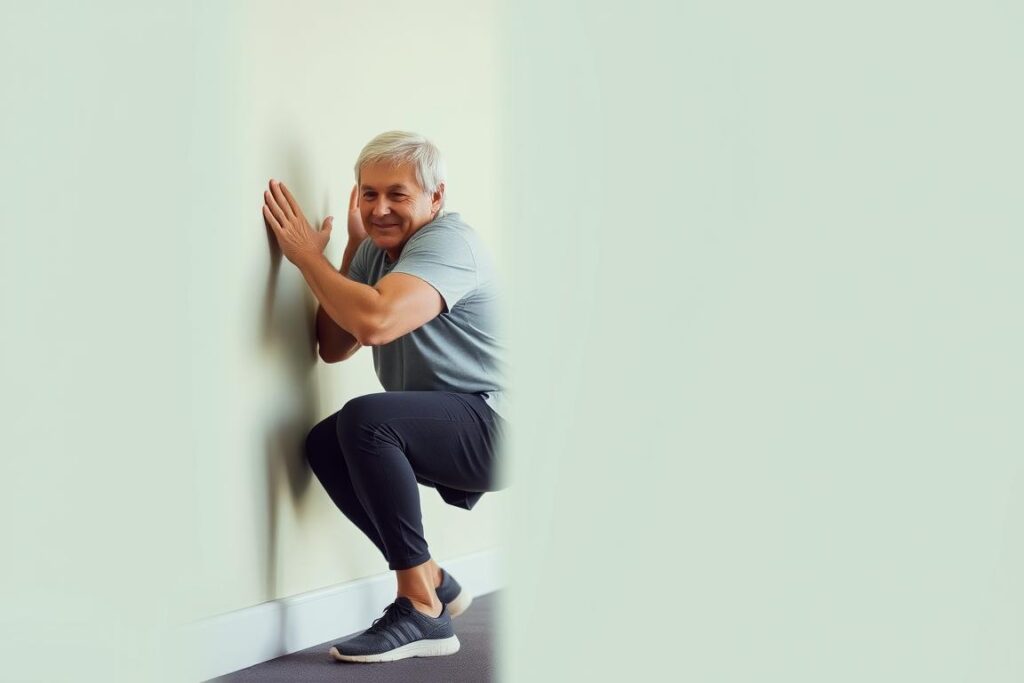
    3. Wall Slides

    Wall slides (modified wall squats) strengthen multiple leg muscles while providing back support.

    Senior man performing wall slides exercise for knee strengthening

    How to perform:

    1. Stand with your back against a wall, feet shoulder-width apart and about 12 inches from the wall.
    2. Slowly slide down the wall until your knees are bent at about a 30-45 degree angle (not a full squat).
    3. Hold this position for 5-10 seconds.
    4. Slowly slide back up to the starting position.

    Recommended: 5-8 repetitions, 2 sets

    Muscles targeted: Quadriceps, hamstrings, glutes

    Safety modifications:

    • Don’t slide down too far – a slight bend is sufficient to start.
    • Keep your feet far enough from the wall so your knees don’t extend past your toes.
    • Place a small exercise ball between your back and the wall for added comfort.

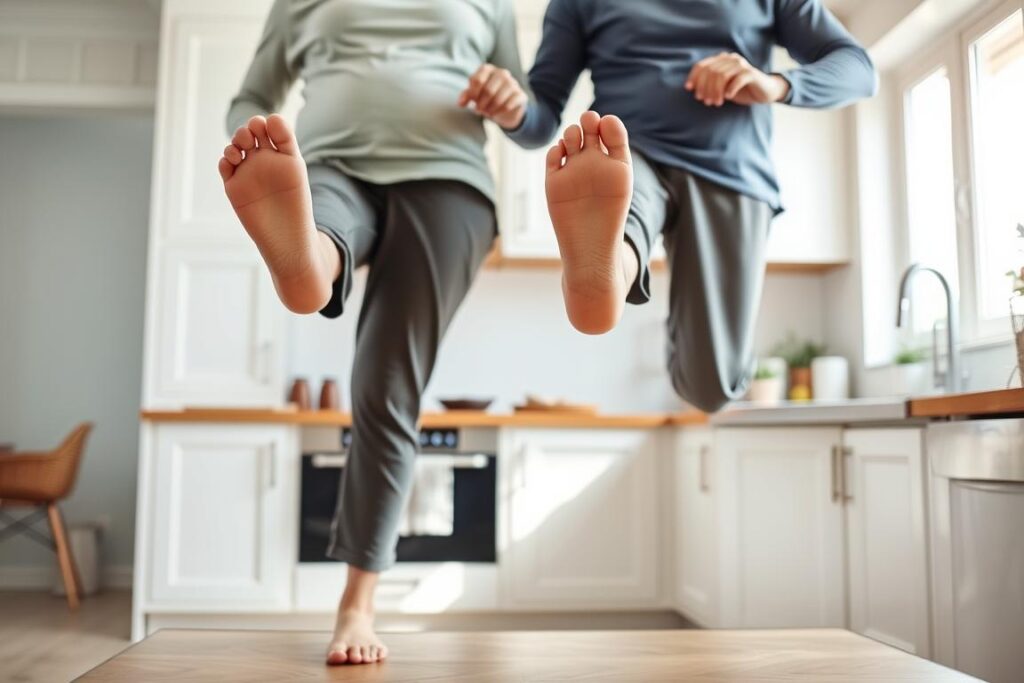
    4. Calf Raises

    Calf raises strengthen the lower leg muscles that help support the knee during walking and standing.

    Senior couple performing calf raises while holding onto counter for support

    How to perform:

    1. Stand behind a sturdy chair or counter, holding on for balance.
    2. Slowly rise up onto your toes, lifting your heels off the ground.
    3. Hold the raised position for 2-3 seconds.
    4. Slowly lower your heels back to the floor.

    Recommended: 10-12 repetitions, 2 sets

    Muscles targeted: Calf muscles (gastrocnemius and soleus)

    Safety modifications:

    • If standing calf raises are too challenging, try seated calf raises.
    • Rise only as high as is comfortable and stable.
    • Ensure you have a sturdy support that won’t move during the exercise.

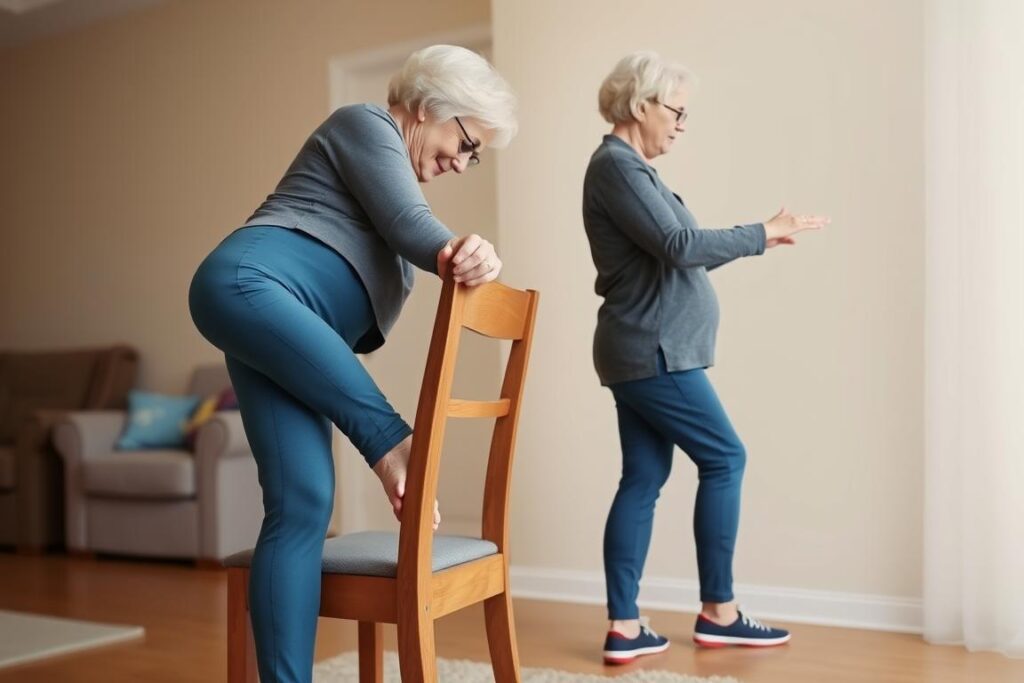
    5. Hamstring Curls

    Hamstring curls strengthen the muscles at the back of the thigh that help support and stabilize the knee joint.

    Senior woman performing standing hamstring curls with chair support

    How to perform:

    1. Stand behind a sturdy chair or counter, holding on for balance.
    2. Shift your weight to your left leg.
    3. Slowly bend your right knee, bringing your heel toward your buttocks.
    4. Hold for 2-3 seconds, then slowly lower your foot.
    5. Repeat with the left leg.

    Recommended: 8-10 repetitions per leg, 2 sets

    Muscles targeted: Hamstrings

    Safety modifications:

    • Keep a slight bend in your supporting leg.
    • Don’t bend your knee beyond what’s comfortable.
    • Focus on the muscle contraction rather than how high you can lift your heel.

    Track Your Progress

    Keeping a simple exercise journal can help you stay motivated and see your improvement over time. Note how many repetitions you complete and how your knees feel after each session.

    Download Our Free Exercise Tracker

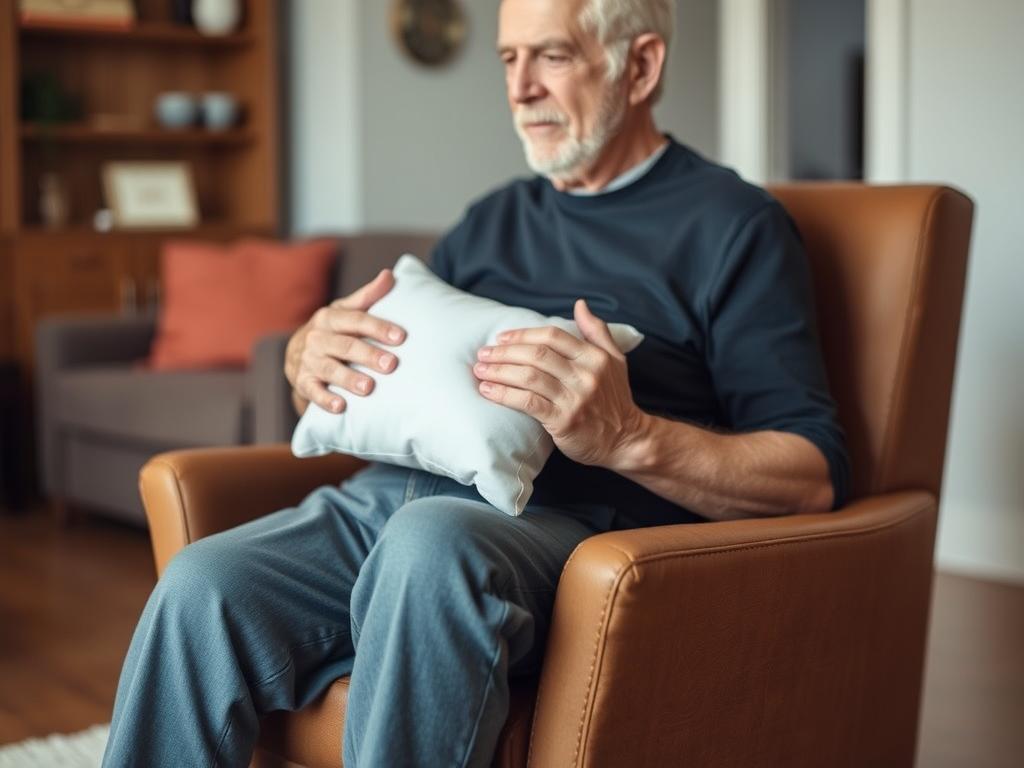
    6. Pillow Squeezes

    Pillow squeezes strengthen the inner thigh muscles (adductors) which help stabilize the knee joint.

    Senior man performing pillow squeeze exercise while seated

    How to perform:

    1. Sit in a chair with good posture, feet flat on the floor.
    2. Place a small pillow or folded towel between your knees.
    3. Squeeze your knees together, compressing the pillow.
    4. Hold for 5-10 seconds, then relax without completely releasing pressure.

    Recommended: 10-12 repetitions, 2 sets

    Muscles targeted: Adductors (inner thigh muscles)

    Safety modifications:

    • Use a thinner pillow or folded towel if a regular pillow is too thick.
    • Focus on gentle, controlled pressure rather than maximum force.
    • Keep your back straight and avoid leaning forward during the squeeze.

    7. Straight Leg Raises

    Straight leg raises strengthen the quadriceps while minimizing knee joint stress.

    How to perform:

    1. Lie on your back on a mat or firm bed with your left leg bent and foot flat.
    2. Keep your right leg straight and tighten the thigh muscle.
    3. Slowly raise your right leg to the height of your bent knee (about 12 inches).
    4. Hold for 3-5 seconds, then slowly lower.
    5. Repeat with the other leg.

    Recommended: 8-10 repetitions per leg, 2 sets

    Muscles targeted: Quadriceps, hip flexors

    Safety modifications:

    • Place a rolled towel under your lower back for support if needed.
    • Keep the movement slow and controlled.
    • If lying down is uncomfortable, try seated leg extensions instead.

    8. Step-Ups

    Step-ups strengthen multiple leg muscles while improving balance and coordination.

    Senior man performing step-ups exercise using a low platform

    How to perform:

    1. Stand facing a sturdy step or stair (4-6 inches high).
    2. Hold onto a railing, wall, or sturdy furniture for balance.
    3. Step up with your right foot, then bring your left foot up to join it.
    4. Step back down with your right foot, then your left foot.
    5. Repeat, leading with your left foot.

    Recommended: 6-8 repetitions per leg, 2 sets

    Muscles targeted: Quadriceps, hamstrings, glutes, calves

    Safety modifications:

    • Use a lower step height if needed.
    • Always use a sturdy support for balance.
    • Focus on proper form rather than speed.

    9. Seated Ankle Rotations

    Seated ankle rotations improve ankle mobility, which helps with proper knee alignment during walking.

    Senior woman performing seated ankle rotations for improved mobility

    How to perform:

    1. Sit in a chair with good posture.
    2. Lift your right foot slightly off the floor.
    3. Rotate your ankle in a circular motion 10 times clockwise.
    4. Rotate your ankle 10 times counterclockwise.
    5. Repeat with the left ankle.

    Recommended: 10 rotations in each direction, 2 sets per ankle

    Muscles targeted: Ankle stabilizers, lower leg muscles

    Safety modifications:

    • If balance is a concern, keep your foot closer to the floor.
    • Move slowly and gently, especially if you have ankle stiffness.
    • Stop if you feel any joint pain (not just muscle fatigue).

    10. Gentle Side Steps

    Gentle side steps strengthen the hip abductors, which help stabilize the knee during walking and standing.

    Senior couple performing gentle side steps with support

    How to perform:

    1. Stand behind a sturdy chair or counter, holding on for balance.
    2. Step to the right with your right foot.
    3. Bring your left foot to join the right.
    4. Take 5-10 steps in one direction.
    5. Reverse direction, leading with your left foot.

    Recommended: 5-10 steps in each direction, 2 sets

    Muscles targeted: Hip abductors, adductors, quadriceps

    Safety modifications:

    • Take smaller steps if needed for stability.
    • Always maintain a firm grip on your support.
    • Keep a slight bend in your knees throughout the exercise.

    Lifestyle Tips to Support Knee Health

    Exercise is just one component of maintaining healthy knees. These additional recommendations can help maximize the benefits of your knee-strengthening routine:

    Stay Hydrated

    Proper hydration helps maintain the synovial fluid that lubricates your joints. Aim for 6-8 glasses of water daily, more if you’re active or it’s hot outside.

    Maintain Healthy Weight

    Extra weight puts additional pressure on your knees. Even a small weight reduction can significantly reduce knee stress and pain.

    Wear Supportive Footwear

    Proper shoes with good arch support and cushioning help align your legs correctly, reducing knee strain during daily activities.

    Low-Impact Activities for Knee Health

    Complement your strengthening exercises with these joint-friendly activities:

    • Swimming or water aerobics – The water’s buoyancy reduces pressure on your knees
    • Walking – Start with short distances on level surfaces
    • Stationary cycling – Adjust the seat height for comfortable knee positioning
    • Tai Chi – Gentle movements improve balance and joint mobility

    Need Help Getting Started?

    If you’re experiencing knee pain or unsure about which exercises are right for you, speaking with a healthcare professional can help you create a safe, effective routine.

    Schedule a Consultation Today

    Frequently Asked Questions About Knee Exercises for Seniors

    How often should seniors do knee-strengthening exercises?

    For best results, aim to perform these exercises 2-3 times per week with at least one day of rest between sessions. Consistency is more important than intensity, especially when starting out.

    Is it normal to feel some discomfort when doing these exercises?

    Mild muscle fatigue or a gentle stretching sensation is normal, but you should never experience sharp or severe pain. If an exercise causes pain, stop immediately and consult with your healthcare provider.

    How long before I notice improvements in my knee strength?

    Most people begin to notice improvements in strength and stability within 4-6 weeks of consistent exercise. However, individual results vary based on starting fitness level, age, and any existing conditions.

    Can I do these exercises if I have arthritis in my knees?

    Many people with arthritis benefit from gentle strengthening exercises. However, it’s essential to consult with your healthcare provider first and potentially work with a physical therapist to modify exercises for your specific condition.

    Strengthening Your Knees, Enhancing Your Life

    Regular knee-strengthening exercises offer seniors more than just physical benefits—they provide a pathway to greater independence and confidence in daily activities. By dedicating just a few minutes several times a week to these simple exercises, you can significantly improve your mobility, reduce pain, and enhance your overall quality of life.

    Remember that consistency is key. Start slowly, listen to your body, and gradually increase the intensity as your strength improves. With patience and persistence, you’ll develop stronger knees that better support your active lifestyle for years to come.

    Ready to Take the Next Step?

    For personalized guidance on exercises to strengthen knees for seniors, consider consulting with a physical therapist who specializes in geriatric care.

    Find Specialized Care Near You