Compression socks vs. knee sleeves
When it comes to choosing the right gear for athletic performance or managing health concerns, many of us are torn between compression socks and knee sleeves. Both are popular compression garments designed to provide support and improve blood flow, but they serve distinct purposes.
While compression socks are known for boosting peripheral circulation and supporting lower leg muscles and joints, knee sleeves focus on offering joint support and stability, covering the area between the ankles and knees.
Understanding the fundamental differences between these two garments is crucial for making an informed decision about which one is right for your specific needs.
Key Takeaways
- Compression socks and knee sleeves serve different purposes and target different areas of the leg.
- Compression socks aid in peripheral circulation and support lower leg muscles and joints.
- Knee sleeves offer joint support and stability, covering the area between the ankles and knees.
- The choice between compression socks and knee sleeves depends on specific health concerns or athletic performance goals.
- Understanding the design, function, and application of each garment is essential for making the right choice.
What Are Compression Socks and Knee Sleeves?
To appreciate the benefits of compression socks and knee sleeves, it’s essential to understand what they are and how they work. Both are types of compression garments designed to provide support and improve performance, but they serve different purposes and are used in different contexts.
Compression Socks Explained
Compression socks are specialized garments that apply graduated pressure to the feet, ankles, and lower legs. They are designed to be tighter at the ankle and gradually decrease in pressure as they move up the leg, promoting upward blood flow. Key characteristics include:
- Coverage from the foot to just below the knee
- Graduated compression to enhance blood circulation
- Typically made from elastic materials like nylon or spandex
Knee Sleeves Explained
Knee sleeves, on the other hand, are cylindrical compression garments that cover the knee joint and portions of the thigh and calf. They are primarily designed to provide joint stability and support rather than focusing on circulatory benefits. Key features include:
- Made from materials like neoprene for warmth and compression
- Provide targeted support to the knee area
- Help in reducing pain and improving joint function
The Science Behind Compression Garments
Understanding the science behind compression garments reveals how they improve blood flow and overall health. Compression garments apply pressure to the body, which helps improve blood circulation. This is achieved through the principle of graduated compression, where the pressure is highest at the extremities and gradually decreases as it moves up the limb.
How Compression Technology Works
Compression technology works by applying controlled pressure to the surface of the skin. This external pressure helps reduce the diameter of major blood vessels, thereby increasing the velocity of blood flow. As noted by a study, “External compression can significantly enhance venous blood flow towards the heart, reducing venous pressure and improving circulation.”
The application of compression also affects lymphatic drainage, helping to reduce swelling and remove metabolic waste from tissues. This is particularly beneficial for individuals with venous conditions or those who engage in strenuous physical activities.
Benefits of Graduated Compression
Graduated compression creates a pressure gradient that’s highest at the ankles and gradually decreases as it moves up the legs. This design helps fight against gravity to move blood back toward the heart, enhancing circulation and reducing the risk of blood pooling in the legs. As a result, individuals can experience improved overall circulation and reduced fatigue in their legs.
“The use of graduated compression has been shown to be effective in improving venous blood flow and reducing the symptoms of venous insufficiency,” as supported by various research studies. By understanding how graduated compression works, individuals can make informed decisions about their use of compression garments.
Key Differences: Compression Socks vs. Knee Sleeves
While both compression socks and knee sleeves provide compression, their differences in coverage area, primary functions, and construction materials set them apart.
Coverage Area and Design
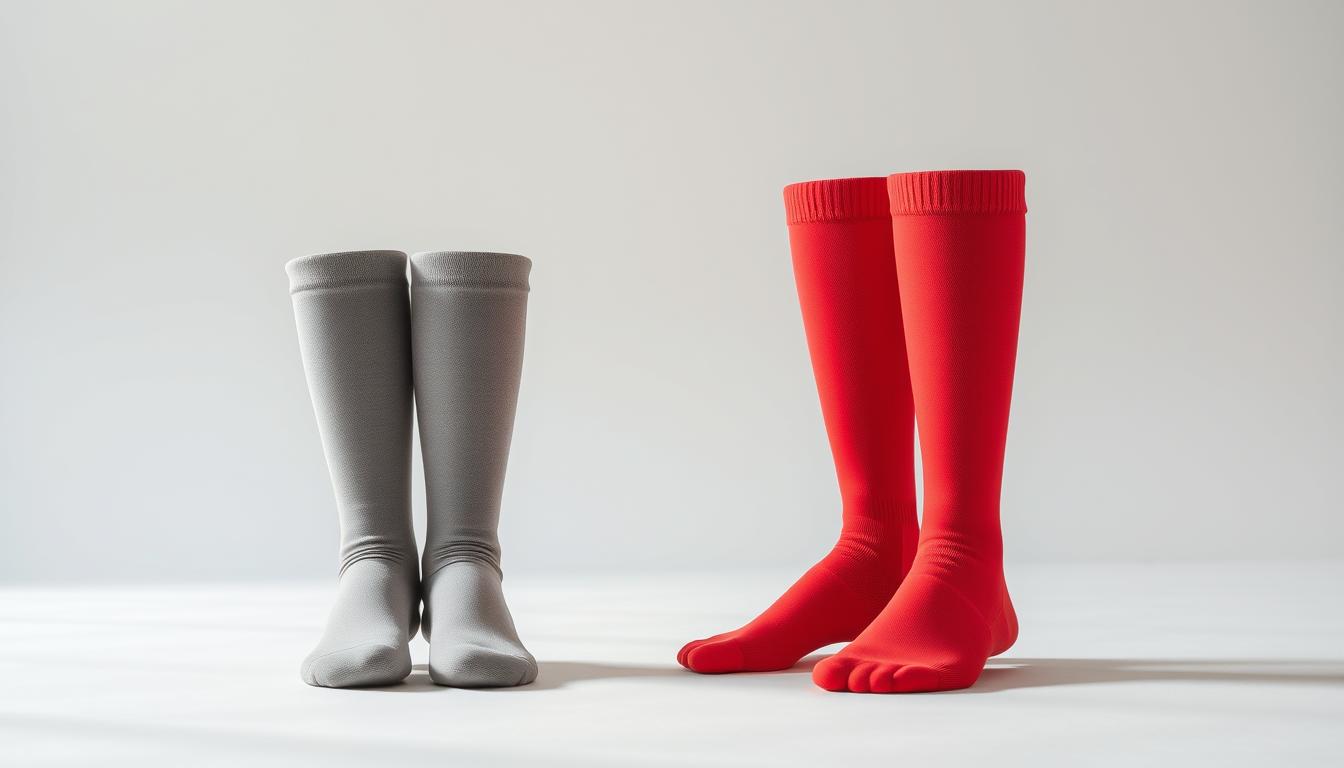
The most noticeable difference between compression socks and knee sleeves is their coverage area. Compression socks typically extend from the foot to just below the knee, providing graduated compression that aids in improving blood circulation. In contrast, knee sleeves focus specifically on the knee joint area, offering uniform compression around the knee.
Primary Functions and Benefits
The primary function of compression socks is to improve circulation and reduce swelling in the lower extremities. On the other hand, knee sleeves are designed to provide joint stability and support during movement. This fundamental difference in their intended use influences their design and the benefits they offer to users.
Materials and Construction
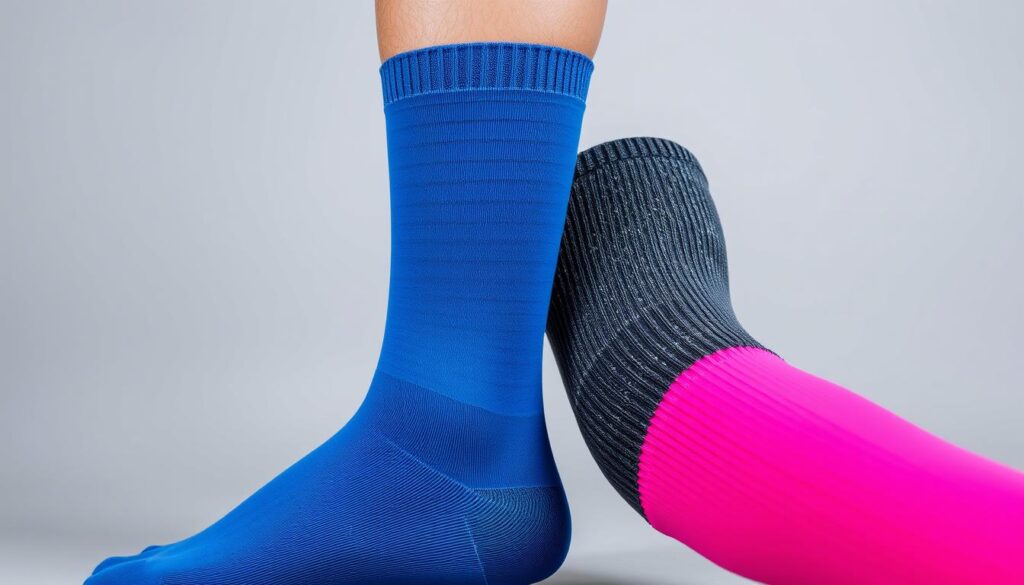
Compression socks are typically made from blends of nylon, cotton, or wool, which provide the necessary elasticity and comfort. In contrast, knee sleeves are often constructed from neoprene or similar elasticized materials that offer the required support and stability for the knee joint. The difference in materials affects the durability, comfort, and specific applications of each garment type.
Benefits of Compression Socks
By applying graduated pressure, compression socks significantly enhance blood circulation in the lower extremities, offering numerous health benefits. This is achieved through a compression mechanism that is strongest at the ankle and gradually decreases as it moves up the leg.
Improved Blood Circulation
Compression socks improve blood flow by applying graduated compression, which helps push blood back towards the heart. This is particularly beneficial for individuals who spend long periods standing or sitting.
- Enhances venous circulation
- Reduces blood pooling in the feet and ankles
- Boosts overall circulatory health
Reduced Swelling and Edema
Improved circulation leads to reduced swelling and edema. This makes compression socks particularly beneficial for people with jobs that involve long periods of standing or sitting.
Prevention of Deep Vein Thrombosis
One of the critical benefits of knee-high compression socks is the prevention of deep vein thrombosis (DVT), especially during long-haul flights or periods of immobility. Graduated compression helps stimulate blood flow, reducing the risk of dangerous blood clots.
Benefits of Knee Sleeves
Knee sleeves offer numerous benefits for individuals engaging in various physical activities. They are designed to provide support and stability to the knee joint, making them an essential accessory for athletes and fitness enthusiasts.
Joint Support and Stability
Knee sleeves provide crucial joint support and stability by compressing the knee area. This compression helps maintain proper tracking of the patella (kneecap) during movement, which is particularly beneficial during activities that place stress on the knee joint, such as weightlifting or running.
Injury Prevention During Exercise
By keeping the joint warm, knee sleeves help prevent injuries like strains and sprains. Increased blood flow to the area keeps the surrounding tissues more pliable and less prone to tears or strains, making them ideal for high-impact exercise routines.
Pain Relief and Recovery
Knee sleeves also offer pain relief benefits by reducing inflammation and providing proprioceptive feedback that helps users maintain better form during exercise. Additionally, they aid in recovery after workouts by reducing swelling and providing continued support to the joint as it repairs itself.
When to Choose Compression Socks
Compression socks are designed to provide graduated compression, which can be beneficial for individuals with certain medical conditions or those who engage in strenuous activities. The graduated compression helps improve blood flow, reducing the risk of various circulatory problems.
Medical Conditions
For individuals with medical conditions such as varicose veins, edema, lymphedema, and deep vein thrombosis, compression socks can be particularly beneficial. They help alleviate symptoms by improving circulation and reducing swelling. Knee-high compression socks are often recommended for these conditions as they provide the necessary support and compression.
Travel and Long Periods of Standing
Travelers, especially those on long-haul flights or road trips, can benefit from wearing compression socks to prevent swelling and reduce the risk of blood clots. Similarly, professionals who stand for long periods, such as nurses and retail workers, can wear compression socks to reduce leg fatigue and prevent circulatory issues. The compression helps improve blood flow, making it easier to stay comfortable during extended periods of immobility or standing.
Athletic Performance and Recovery
Athletes, particularly runners and endurance athletes, can enhance their performance and accelerate recovery by wearing compression socks. The improved blood flow to working muscles can enhance performance, while the reduction in post-exercise swelling can aid in recovery. Additionally, compression socks can be beneficial during travel and for individuals with medical conditions that affect circulation.
| Benefit | Description |
|---|---|
| Improved Circulation | Enhances blood flow to reduce swelling and fatigue |
| Reduced Swelling | Helps alleviate edema and other circulatory issues |
| Enhanced Performance | Improves blood flow to working muscles for better athletic performance |
When to Choose Knee Sleeves
Whether you’re an athlete or just looking for knee support, understanding when to choose knee sleeves is crucial. Knee sleeves are designed to provide support and stability to the knee joint, making them an excellent option for various scenarios.
Weightlifting and High-Impact Sports
Knee sleeves are particularly beneficial for weightlifters and athletes involved in high-impact sports such as basketball, volleyball, and running. They help absorb shock and reduce stress on the knee joint during intense activities like jumping, landing, and quick directional changes. This not only enhances performance but also reduces the risk of injury.
Knee Injury Prevention and Recovery
For individuals recovering from minor knee injuries, knee sleeves can be a valuable asset. They provide warmth and compression, promoting healing while still allowing for movement. This can be particularly beneficial during the recovery process, helping to prevent further injury and support the knee as it heals.
Daily Support for Joint Issues
Individuals with chronic joint issues such as mild arthritis or patellofemoral pain syndrome can also benefit from using knee sleeves daily. They provide comfort and support for everyday activities, helping to alleviate pain and improve mobility.
Here’s a summary of when to choose knee sleeves:
| Activity/Condition | Benefit of Knee Sleeves |
|---|---|
| Weightlifting and High-Impact Sports | Shock absorption and reduced stress on the knee joint |
| Knee Injury Prevention and Recovery | Warmth, compression, and support during healing |
| Daily Support for Joint Issues | Comfort and support for everyday activities |
By understanding the benefits of knee sleeves, individuals can make informed decisions about their use, whether for athletic performance, injury recovery, or daily comfort.
Choosing the Right Compression Level
Compression garments are available in various compression levels, making it essential to understand how to choose the right one. The effectiveness of these garments is largely dependent on the compression level selected.
Understanding mmHg Ratings
The mmHg (millimeters of mercury) rating system measures the pressure exerted by compression garments. The levels range from mild compression (8-15 mmHg) to extra-firm compression (30-40+ mmHg).
Matching Compression to Your Needs
To choose the right compression level, consider your specific needs. For instance, individuals with medical conditions such as deep vein thrombosis or severe varicose veins may require higher levels of compression, typically above 30 mmHg, and should consult a healthcare professional. Knee-high compression socks with firm compression (20-30 mmHg) can be beneficial for those with moderate varicose veins or post-surgical recovery.
Common Misconceptions About Compression Garments
The world of compression garments is filled with myths and misconceptions that need to be addressed to help individuals make informed choices. We often encounter misconceptions that can deter people from benefiting from these garments.
To clarify the benefits and proper use of compression garments, we’ll address some common myths.
Compression Socks Myths Debunked
One common myth is that compression socks are only for elderly people or those with medical conditions. However, they benefit people of all ages and activity levels by improving blood circulation. Another misconception is that tighter compression is always better; in reality, the right level of compression depends on individual needs.
Knee Sleeve Misconceptions
Many believe that knee sleeves and knee braces serve the same purpose. However, knee sleeves are designed for fitness professionals’ routine use, providing support and stability, whereas knee braces are post-injury supportive garments.
| Feature | Compression Socks | Knee Sleeves |
|---|---|---|
| Purpose | Improve blood circulation, reduce swelling | Provide knee support, stability |
| Target Users | Athletes, individuals with circulation issues | Fitness professionals, individuals with knee issues |
| Benefits | Enhanced recovery, reduced muscle soreness | Knee stability, injury prevention |
By understanding the facts and dispelling common misconceptions about compression garments, individuals can make more informed decisions about their use. Whether you’re an athlete looking to improve performance or someone seeking relief from discomfort, knowing the truth about compression socks and knee sleeves can be incredibly beneficial.
Making the Right Choice for Your Needs
Your specific needs and health conditions will dictate whether compression socks or knee sleeves are the better choice. We provide a practical framework for deciding between these two based on your goals and health conditions. For circulation issues, swelling, or venous health, compression socks are likely the better option. If you need joint stability, knee support during exercise, or recovery from knee issues, knee sleeves are more suitable.
In some cases, having both types of compression garments can be beneficial, such as for athletes needing circulation support during recovery and joint support during training. It’s also crucial to consult with healthcare professionals, especially if you have existing medical conditions or are recovering from injuries or surgery. When purchasing, consider material, fit, and durability to maximize the benefits of your investment in compression garments.
FAQ
What is the main difference between compression socks and knee sleeves?
How do I choose the right compression level for my needs?
Can compression garments help with injury recovery?
Are knee sleeves only for athletes?
Can I wear open-toe compression socks?
Do compression socks prevent deep vein thrombosis?
How do I care for my compression garments?