

Knee pain when driving long distances
Have you ever experienced knee pain after a long drive? You’re not alone. Many drivers suffer from knee discomfort during and after trips, especially when they’re behind the wheel for extended periods.
Driving involves sitting in a sedentary position for long periods, with minimal movement of the hands and feet. This can lead to strain on the joints, particularly the knees, causing pain and inflammation. As we explore in this article, the length of the trip is a significant factor in developing knee pain.
For more information on the causes and treatments of knee pain from driving, you can visit our comprehensive guide on knee hurt from driving.
Key Takeaways
- Understand the causes of knee pain during long drives.
- Learn how driving posture contributes to knee discomfort.
- Discover prevention strategies to reduce knee pain.
- Explore treatment options for managing knee pain.
- Find out how to maintain healthy knees despite frequent driving.
Understanding Why Your Knees Hurt While Driving
The repetitive motion of driving can strain the knee joint, leading to pain. This issue is particularly prevalent among long-distance drivers who spend hours on the road.
Common Causes of Driver’s Knee
Limited mobility during driving can cause knee joints to become inflamed. Long-distance drivers, especially truck drivers, may develop patellar tendinitis, also known as jumper’s knee or truck driver’s knee. This condition refers to the inflammation of the patella tendon, which connects the kneecap to the shin.
The repetitive foot motions on the gas, brake, and clutch can strain this tendon, leading to tendinitis. Other factors contributing to knee pain include poor posture while driving and the angle between the foot and knee when operating pedals.
| Cause | Description | Effect on Knee |
|---|---|---|
| Repetitive Motion | Repeatedly pressing pedals | Strain on tendons and ligaments |
| Prolonged Sitting | Sitting in a fixed position | Restricted blood flow, stiffness |
| Improper Driving Position | Incorrect seat height and distance | Increased pressure on knee structures |
How Driving Position Affects Your Knee Health
Maintaining a proper driving position is crucial for knee health. The hips should be aligned with the knees, and the foot should not be at an angle greater than 30 degrees from the knee while using the pedals.
Improper alignment can lead to unnecessary strain on the knee joint, exacerbating pain and discomfort. Adjusting the driving position can help mitigate these causes of knee pain.

Types of Knee Pain When Driving Long Distances
When driving long distances, knee pain can manifest in various forms, each with distinct causes and symptoms. Drivers may experience discomfort due to inflammation, wear and tear, or other conditions affecting the knee joint.
Patellar Tendinitis (Truck Driver’s Knee)
Patellar tendinitis, also known as Truck Driver’s Knee, is an inflammation of the tendon connecting the shin to the knee. This condition arises from repetitive pedal use, leading to pain below the kneecap.
Osteoarthritis from Repetitive Motion
Osteoarthritis can develop in drivers due to the constant stop-and-go motions associated with driving, particularly in urban environments. This repetitive motion gradually wears down the knee cartilage, leading to pain and stiffness.
Chondromalacia Patellae
Chondromalacia Patellae occurs when the cartilage directly underneath the kneecap softens due to repeated knee bending. This condition is characterized by grinding sensations when moving the knee after driving.
| Condition | Cause | Symptoms |
|---|---|---|
| Patellar Tendinitis | Repetitive pedal use | Pain below the kneecap |
| Osteoarthritis | Stop-and-go driving motions | Pain and stiffness in the knee |
| Chondromalacia Patellae | Repeated knee bending | Grinding sensations when moving the knee |
Immediate Relief Strategies for Knee Pain While Driving
Drivers often experience knee pain during long trips, but immediate relief is possible with the right techniques. We will explore several strategies that can help alleviate knee pain while driving.
Taking Strategic Breaks
Taking regular breaks is crucial during long drives. We recommend stopping every 1-2 hours to stretch your legs and reduce knee stiffness. Even brief stops can significantly reduce pain by allowing you to mobilize your joints and stretch your muscles.
Adjusting Your Driving Position
Adjusting your driving position can also provide relief. Ensure your seat is at a proper distance and height, and position your leg in a way that minimizes strain on your knee. When safe to do so, extend your seat back to change your leg angle and alleviate pain temporarily.
The RICE Method for Pain Management
After your drive, consider using the RICE method for pain management, which stands for Rest, Ice, Compression, and Elevation. This effective post-drive treatment strategy can help manage knee pain.
Ergonomic Adjustments to Prevent Knee Pain
Making a few key ergonomic adjustments can greatly reduce the risk of knee pain while driving. By optimizing your driving position and using supportive accessories, you can minimize strain on your knees.
Optimal Seat Positioning
To achieve optimal seat positioning, ensure your knees are over the edge of the seat, allowing for a full range of motion. Adjust the seat height and angle to maintain proper leg alignment and reduce knee strain.
Supportive Accessories for Drivers
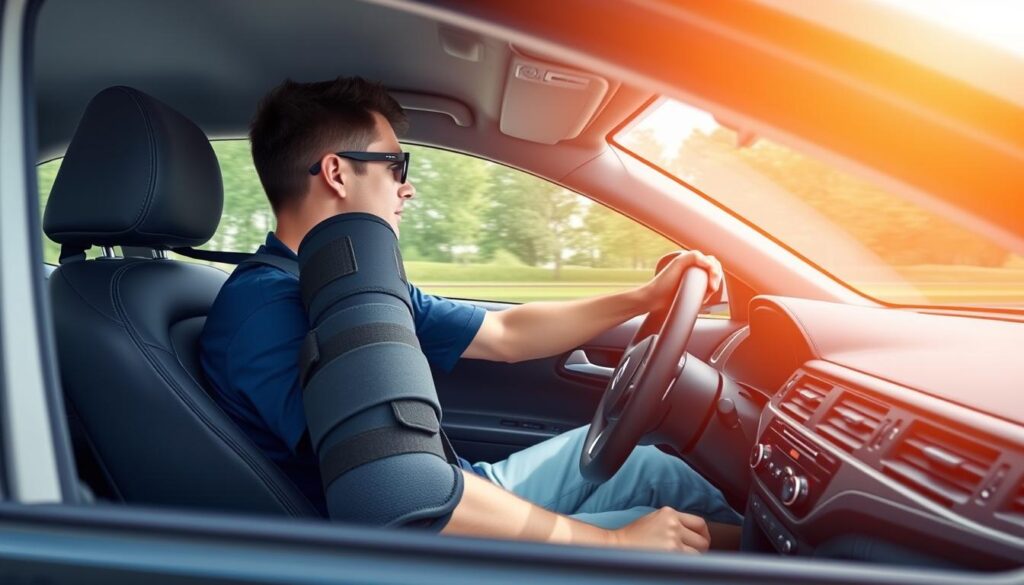
Using supportive accessories like ergonomic seat cushions and knee supports can dramatically improve comfort and reduce joint pressure. These accessories help distribute pressure evenly and provide adequate padding.
Proper Foot Placement on Pedals
Proper foot placement on pedals is crucial to minimize tendon strain and reduce repetitive stress on the knee joint. Ensure your feet are at a comfortable angle and position to avoid unnecessary strain.
By implementing these ergonomic adjustments, drivers can significantly reduce their risk of experiencing knee pain during long drives. Maintaining a healthy weight also contributes to reduced knee strain, as excess weight places additional pressure on knee joints.
Exercises and Stretches for Drivers
Regular exercises and stretches can help drivers prevent knee pain and improve overall comfort during long drives. As a driver, spending extended periods behind the wheel can lead to strain on the knees, but a well-structured exercise routine can mitigate this issue.
Pre-Drive Warm-Up Routines
Before embarking on a long drive, a 5-minute warm-up routine can significantly reduce the risk of knee pain. Simple stretches like touching your toes and holding for ten seconds, or performing a quad stretch in a standing or kneeling position, can prepare your knee joints and surrounding muscles for the long drive ahead.
Rest Stop Stretches
During rest stops, drivers can perform quick stretches to alleviate tension. Swinging each leg in a figure 8 pattern or doing a kneeling calf stretch can help. As “sitting for prolonged periods can lead to stiffness”, these stretches are crucial for maintaining flexibility.
Strengthening Exercises for Long-Term Prevention
Engaging in exercises that target the muscles around the knee, such as bodyweight squats, lunges, and calf raises, can improve knee stability and reduce the risk of future injuries. Gradually increasing the intensity and duration of these exercises will help build resilience in the muscles supporting the knee joint.
When to Seek Professional Help for Driving-Related Knee Pain
When knee pain persists or worsens despite self-care efforts, it’s crucial to seek professional medical attention. Drivers should be aware of warning signs that indicate the need for medical evaluation, such as persistent pain, swelling, instability, or clicking sensations in the knee.
A healthcare professional can perform diagnostic procedures, including physical examinations and imaging studies like X-rays or MRIs, to assess the condition of the knee joint. Physical therapy is often recommended to provide customized exercise programs, manual therapy techniques, and education on proper driving ergonomics.
Other treatment options may include anti-inflammatory medications, cortisone injections, or in severe cases, surgical interventions. Early intervention is key to preventing the progression of conditions like patellar tendinitis or chondromalacia patellae into more serious joint problems.
FAQ
What causes knee pain in drivers who spend a lot of time on the road?
How can I alleviate knee pain while driving?
What is Patellar Tendinitis, and how does it relate to driving?
Can exercises help prevent knee pain while driving?
How can I adjust my vehicle to reduce knee strain?
What are the benefits of using supportive accessories while driving?





One Comment