Knee Proprioception Drills for Athletes
Can specific training exercises significantly reduce the risk of knee injuries in athletes? Knee injuries are a common issue faced by athletes, often resulting from poor training protocols or inadequate preparation.
Athletes and fitness enthusiasts can benefit from evidence-based training that focuses on enhancing sports performance and preventing injuries. Implementing knee proprioception drills is a crucial aspect of athletic training, as it improves overall performance and reduces the risk of debilitating knee issues.
Key Takeaways
- Importance of knee proprioception in athletic performance
- Role of evidence-based training in injury prevention
- Benefits of incorporating proprioception drills into training routines
- Enhancing sports performance through targeted exercises
- Reducing the risk of knee injuries with specific training protocols
What is Knee Proprioception?
The concept of knee proprioception encompasses the complex sensory inputs that inform an athlete about their knee’s position and movement. This sensory information is crucial for effective movement and stability.
Definition and Importance
Knee proprioception is defined as the ability to sense the position, orientation, and movement of the knee joint. This ability is vital for athletes as it influences their performance and susceptibility to injury. Proprioceptive training is a method used to enhance this ability, thereby improving joint stability and reducing the risk of injuries.
Research has shown that proprioceptive training can significantly stabilize joints and improve dynamic neuromuscular control in athletes. This is achieved through various balance drills and exercises designed to challenge and improve the proprioceptive system.
Role in Athletic Performance
In athletic performance, knee proprioception plays a pivotal role. It enables athletes to execute movements with precision and control, contributing to better overall performance. Athletes with superior knee proprioception can change direction quickly, jump higher, and maintain balance more effectively.
The role of proprioception in athletic performance can be further understood by examining its impact on movement. Effective proprioception allows for more efficient and powerful movements, as the body can better coordinate muscle actions.
| Training Method | Improvement in Proprioception | Injury Risk Reduction |
|---|---|---|
| Balance Drills | High | Significant |
| Resistance Band Exercises | Moderate | Moderate |
| Bosu Ball Training | High | Significant |
In conclusion, knee proprioception is a vital component of athletic performance and injury prevention. Through proprioceptive training and specific exercises like balance drills, athletes can significantly enhance their knee proprioception, leading to improved performance and reduced injury risk.
Benefits of Improved Knee Proprioception
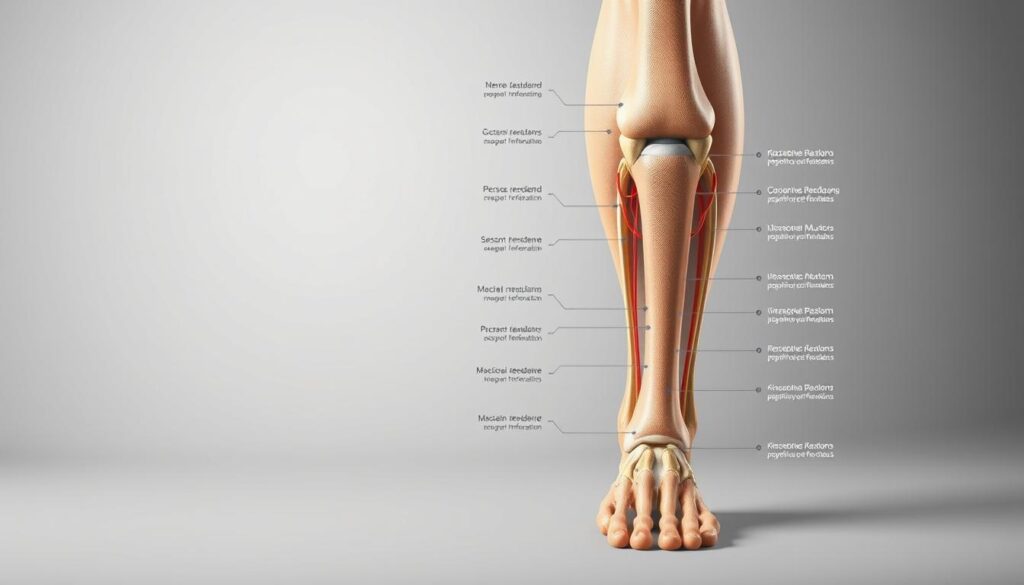
The benefits of improved knee proprioception are multifaceted, impacting injury prevention, balance, and overall strength. By enhancing the body’s ability to sense the position and movement of the knee joint, athletes can significantly improve their overall athletic performance.
Injury Prevention
One of the primary benefits of improved knee proprioception is injury prevention. Effective knee injury prevention programs incorporate a variety of training methods, including neuromuscular and proprioceptive training, dynamic stretching, strength exercises, plyometrics, and balance drills. These components work together to improve joint stability, muscle coordination, and proper movement patterns, thereby reducing the risk of knee injuries.
As noted by sports medicine professionals, “A comprehensive training program that includes proprioceptive exercises can significantly reduce the incidence of knee injuries in athletes.”
Enhanced Balance and Coordination
Improved knee proprioception also leads to enhanced balance and coordination. By having a better sense of knee position and movement, athletes can maintain better balance during complex movements, reducing the likelihood of falls and missteps. This is particularly important in sports that require quick changes of direction or rapid movements.
- Improved reaction times
- Better overall athleticism
- Enhanced ability to adapt to different terrains or surfaces
Increased Strength and Stability
Furthermore, enhanced knee proprioception contributes to increased strength and stability. When the body has a better sense of the knee joint’s position, it can more effectively recruit the necessary muscles to support and stabilize the joint during movement. This results in improved overall strength and reduced fatigue during prolonged activities.
As athletes incorporate proprioception drills into their training, they can expect to see improvements in their strength and stability, leading to better overall sports performance.
Essential Drills for Athletes
Athletes seeking to enhance their performance and reduce the risk of injury should incorporate specific proprioception drills into their training regimen. These exercises are designed to improve knee stability and overall athletic capability.
Single-Leg Balance Drills
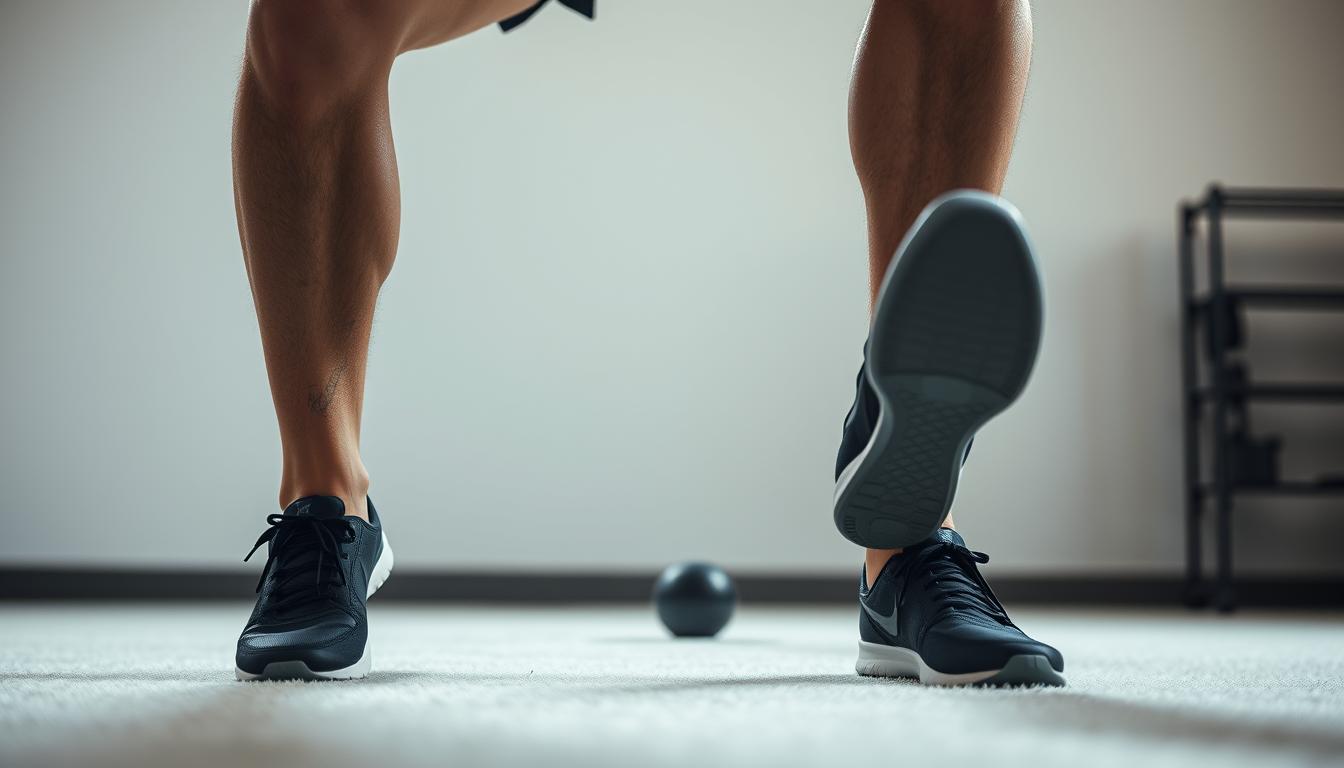
Single-leg balance drills are a fundamental component of proprioceptive training. These exercises challenge the knee joint, enhancing balance and stability. To perform a single-leg balance, stand on one leg, keeping the other foot lifted off the ground. Hold this position for 30 seconds to start, and gradually increase the duration as your balance improves.
T-band Exercises for Knee Stability
T-band exercises are another effective method for improving knee stability. By using resistance bands, athletes can strengthen the muscles around the knee, enhancing proprioception. For example, anchoring a T-band around a stable object and then looping the other end around the ankle allows for various leg movements that challenge knee stability.
Bosu Ball Workouts
Bosu ball workouts offer a dynamic way to improve proprioception. The unstable surface of the Bosu ball requires athletes to engage their stabilizer muscles, thereby enhancing knee stability and overall balance. Exercises such as squats, lunges, and single-leg stands on the Bosu ball are particularly effective.
| Drill | Benefits | Tips for Execution |
|---|---|---|
| Single-Leg Balance | Improves balance and stability | Start with eyes open, progress to eyes closed |
| T-band Exercises | Enhances knee stability and strength | Use appropriate resistance levels, focus on slow movements |
| Bosu Ball Workouts | Challenges stabilizer muscles, improves overall balance | Begin with basic exercises, gradually increase difficulty |
For more comprehensive exercises that can help with knee health, athletes can refer to knee joint pain exercises, which provide additional training options.
Advanced Proprioception Exercises
Advanced proprioception exercises are crucial for athletes seeking to enhance their neuromuscular control and overall sports performance. These exercises are designed to challenge the athlete’s ability to sense the position and movement of their body, thereby improving their agility, reaction time, and overall athletic capability.
Agility Ladder Drills
Agility ladder drills are an effective way to improve foot speed, agility, and overall proprioception. These drills involve performing various footwork patterns through a ladder laid flat on the ground.
- High knees
- Carioca drills
- Lateral shuffles
- Ickey shuffle
These drills not only enhance proprioception but also improve cardiovascular fitness and muscular endurance.
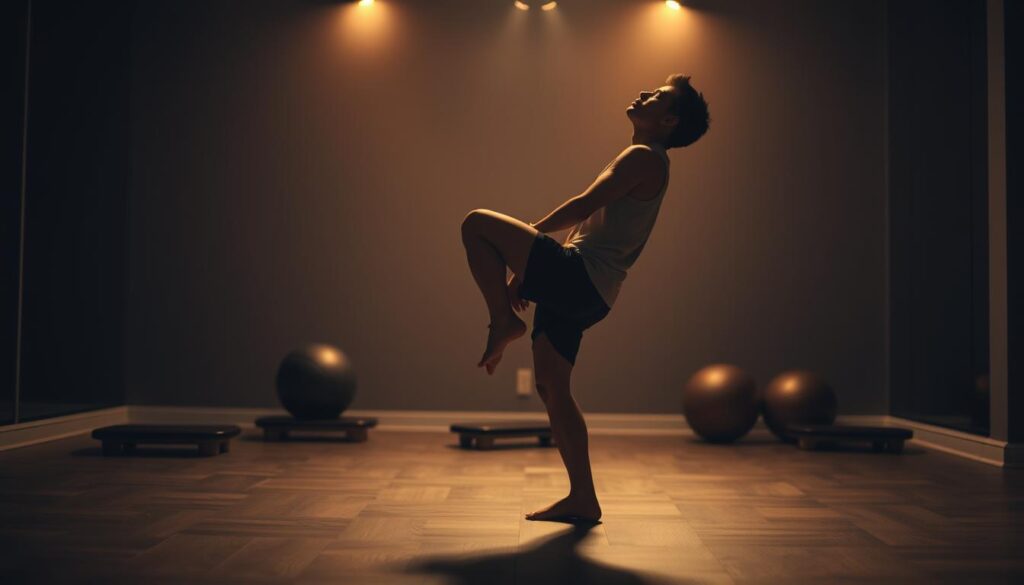
Jumping and Landing Mechanics
Proper jumping and landing mechanics are critical for athletes to prevent injuries and enhance performance. Drills under this category focus on teaching athletes how to jump and land safely and effectively.
- Box jumps
- Depth jumps
- Single-leg hops
These exercises improve the athlete’s ability to absorb force and explosively generate power.
Reaction-Based Challenges
Reaction-based challenges are designed to improve an athlete’s reaction time and ability to respond to different stimuli.
- Reaction sprints
- Agility shuttle runs
- Plyometric exercises with a reaction component
These drills simulate the unpredictable nature of sports, preparing athletes to react quickly and effectively during competition.
By incorporating these advanced proprioception exercises into their training regimen, athletes can significantly enhance their athletic performance and gain a competitive edge.
Tools and Equipment for Training
Proprioception training for athletes involves a range of equipment designed to challenge balance and strength. By incorporating these tools into their training regimen, athletes can significantly enhance their knee stability and overall athletic performance.
Resistance Bands
Resistance bands are a versatile and effective tool for improving knee proprioception. They provide a dynamic form of resistance that challenges the knee joint through various ranges of motion. Athletes can use resistance bands to perform joint stability exercises that strengthen the muscles around the knee, thereby enhancing overall knee stability.
For example, resistance band exercises such as banded leg curls and banded leg presses can be particularly beneficial. These exercises not only improve strength but also enhance neuromuscular control, which is critical for athletic performance.
Balance Boards
Balance boards are another valuable tool for proprioception training. They challenge an athlete’s balance and stability, forcing the body to make subtle adjustments to maintain equilibrium. This is particularly useful for balance drills, as it improves an athlete’s ability to stabilize their knee during dynamic movements.
A study on balance training highlighted that athletes who used balance boards showed significant improvements in knee stability and overall balance compared to those who did not.
“Balance training is crucial for athletes, as it directly impacts their ability to perform complex movements with precision and control.”
Stability Balls
Stability balls, also known as Swiss balls, are large inflatable balls that can be used for a variety of exercises, including those that target knee proprioception. They are particularly useful for strength and conditioning exercises, as they allow athletes to perform movements that challenge their strength, stability, and coordination simultaneously.
| Equipment | Primary Benefit | Example Exercises |
|---|---|---|
| Resistance Bands | Improved knee stability | Banded leg curls, banded leg presses |
| Balance Boards | Enhanced balance and stability | Single-leg stance, balance squats |
| Stability Balls | Increased strength and flexibility | Ball squats, ball lunges |
Incorporating Proprioception Drills into Training
To maximize the benefits of proprioceptive training, athletes must integrate it effectively into their overall athletic training regimen. This involves creating a structured plan that incorporates various drills to enhance knee proprioception.
Sample Weekly Training Schedule
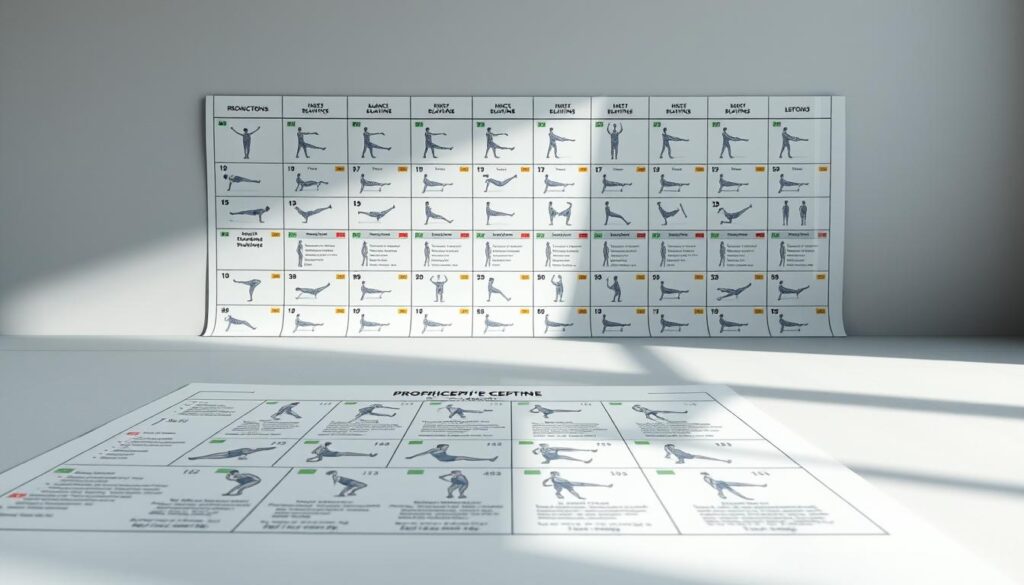
A well-structured training schedule is essential for effective proprioception training. Athletes should allocate specific days for proprioception drills, ensuring that these exercises are integrated with other training activities.
- Monday: Single-leg balance drills
- Wednesday: T-band exercises for knee stability
- Friday: Bosu ball workouts
By following this schedule, athletes can ensure consistent progress and improvement in their proprioceptive abilities.
Setting Realistic Goals
Setting realistic goals is crucial for maintaining motivation and tracking progress in proprioceptive training. Athletes should set specific, measurable, achievable, relevant, and time-bound (SMART) goals.
- Identify current proprioceptive capabilities
- Set specific improvement targets
- Develop a plan to achieve these targets
By setting SMART goals, athletes can stay focused and motivated throughout their training.
Monitoring Progress
Monitoring progress is essential to understanding the effectiveness of proprioception training. Athletes should regularly assess their performance using various metrics, such as balance tests and functional movement assessments.
- Regularly track balance and stability improvements
- Adjust training plans based on progress
- Celebrate achievements to maintain motivation
By continuously monitoring progress, athletes can make informed adjustments to their training regimen, ensuring continued improvement in their proprioceptive abilities.
Common Mistakes to Avoid
To maximize the benefits of proprioception training, it’s crucial to identify and avoid mistakes that can negatively impact injury prevention and strength and conditioning. Athletes often overlook critical aspects of their training that can lead to suboptimal performance and increased risk of injury.
One of the primary mistakes athletes make is neglecting proper form during exercises. This not only reduces the effectiveness of the training but also increases the risk of injury. Ensuring that each exercise is performed with correct technique is vital for achieving the desired outcomes in athletic training.
Neglecting Form
Neglecting proper form is a common mistake that can have significant consequences. When athletes fail to maintain correct form, they put unnecessary stress on their joints and muscles, leading to potential injuries. For instance, during single-leg balance drills, it’s essential to keep the core engaged and the knee aligned with the toes.
Rushing Through Exercises
Rushing through proprioception exercises is another mistake that athletes often make. This can lead to poor technique and reduced effectiveness of the training. It’s essential to focus on slow, controlled movements that challenge the proprioceptive system without compromising form.
Ignoring Recovery Time
Ignoring recovery time is a critical mistake that can undermine the benefits of proprioception training. Adequate recovery allows the body to repair and adapt, making it stronger and more resilient. Insufficient recovery can lead to overtraining, fatigue, and increased risk of injury.
| Common Mistake | Consequence | Correction |
|---|---|---|
| Neglecting Form | Increased risk of injury | Focus on proper technique |
| Rushing Through Exercises | Poor technique and reduced effectiveness | Slow, controlled movements |
| Ignoring Recovery Time | Overtraining and fatigue | Adequate rest and recovery |
By being aware of these common mistakes and taking steps to avoid them, athletes can optimize their proprioception training, enhancing their overall strength and conditioning and reducing the risk of injury.
Proprioception Drills for Specific Sports
The unique demands of various sports necessitate customized proprioception exercises for optimal athletic performance. Different sports require athletes to have specific proprioceptive abilities to excel and minimize the risk of injury.
Soccer Players
Soccer players benefit from proprioception drills that enhance their ability to change direction quickly and maintain balance while kicking or heading the ball. Single-leg squats and balance exercises are particularly beneficial.
Examples include:
- Single-leg deadlifts to improve balance and strength
- Heel-to-toe walks to enhance balance and coordination
- Balance boards or BOSU ball training for stability
Basketball Athletes
Basketball athletes require proprioception drills that focus on jumping and landing mechanics as well as quick changes of direction on the court. Plyometric exercises and agility ladder drills are effective.
Examples include:
- Box jumps to improve explosive jumping ability
- Agility ladder drills for quick footwork and direction changes
- Single-leg hops to enhance strength and stability
Runners
Runners benefit from proprioception exercises that improve their running mechanics and reduce the risk of overuse injuries. Balance and strength exercises for the ankles and knees are particularly beneficial.
Examples include:
- Single-leg balance on a balance board or BOSU ball
- Calf raises on a step to improve ankle strength
- Step-ups to enhance knee strength and stability
Below is a summary of the proprioception drills for different sports:
| Sport | Drills | Benefits |
|---|---|---|
| Soccer | Single-leg squats, balance exercises, single-leg deadlifts | Improved balance, strength, and kicking stability |
| Basketball | Plyometric exercises, agility ladder drills, single-leg hops | Enhanced jumping ability, quick direction changes |
| Running | Single-leg balance, calf raises, step-ups | Improved running mechanics, reduced injury risk |
Staying Motivated in Training
Maintaining motivation is a crucial aspect of a successful proprioception training program. Athletes need to stay engaged and committed to their training regimen to achieve optimal results in athletic training and sports performance.
To help athletes stay on track, several strategies can be employed. One effective method is setting achievable milestones. By breaking down larger goals into smaller, manageable objectives, athletes can track their progress and stay motivated by celebrating their successes along the way.
Setting Achievable Milestones
Setting realistic and achievable milestones is essential for maintaining motivation. For instance, an athlete might set a goal to master a specific proprioceptive training exercise within a certain timeframe. Achieving these milestones not only boosts confidence but also reinforces the athlete’s commitment to their training program.
For more exercises and tips on improving proprioception, athletes can refer to resources such as proprioception exercises on Healthline.
Finding a Training Buddy
Another strategy for staying motivated is finding a training buddy. Training with a partner or group can add a social element to workouts, making them more enjoyable and helping athletes stay accountable. This camaraderie can be a powerful motivator, as athletes encourage and support each other through challenging exercises.
Rewarding Progress
Rewarding progress is also a valuable strategy for maintaining motivation. Recognizing and rewarding achievements, no matter how small, can reinforce positive behaviors and motivate athletes to continue their training. Rewards can be simple, such as extra rest time or a favorite meal, and can be tailored to the individual athlete’s preferences.
As emphasized by sports performance experts, “Consistency and patience are key to improving proprioception.” By incorporating these strategies into their training regimen, athletes can stay motivated and achieve their goals in sports performance and overall athletic development.
Summary and Next Steps
Athletes seeking to improve their knee proprioception can benefit from a well-structured training program that incorporates various drills and exercises. and techniques discussed in this article provide a solid foundation for enhancing proprioceptive abilities.
Revisiting Goals
Regularly revisiting and reassessing goals is crucial in proprioceptive training. Athletes should track their progress, identify areas for improvement, and adjust their training regimen accordingly. This process helps maintain focus and motivation in athletic training.
Continuous Learning
Staying up-to-date with the latest research and advancements in sports medicine is essential for athletes and coaches. Continuous learning enables individuals to refine their training methods and incorporate new techniques, such as those related to proprioceptive training, to optimize performance.
Seeking Professional Guidance
Working with experienced professionals, such as trainers or physical therapists, can provide athletes with personalized guidance and support. These experts can help athletes develop a tailored training program that addresses their specific needs and goals, ensuring effective athletic training.
FAQ
What is knee proprioception and why is it important for athletes?
How do proprioception drills help in injury prevention?
What are some essential proprioception drills for athletes?
How can athletes incorporate proprioception drills into their training regimen?
What are some common mistakes to avoid in proprioception training?
How can athletes stay motivated in proprioception training?
Are there specific proprioception drills for different sports?
What tools and equipment are used for proprioception training?
How often should athletes perform proprioception drills?
Can proprioception training improve athletic performance?