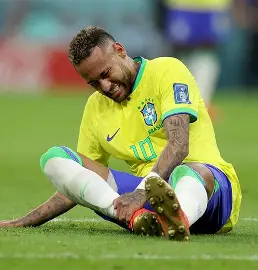
Soccer Knee Pain in World Cup Qualifiers: Causes, Prevention, and Recovery
Soccer knee pain in World Cup qualifiers is one of the most significant medical challenges facing professional athletes competing at the highest international level in 2026. In fact, only 80.1% of professional soccer players who return to the pitch after major knee surgery are able to regain their pre-injury performance levels, making prevention and early treatment more critical than ever for teams aiming to reach the World Cup finals.
Key Takeaways
| Question | Answer |
|---|---|
| Why does soccer knee pain increase during World Cup qualifiers? | The physical demands of qualifying matches, including frequent sprinting, cutting, and jumping, place extreme stress on the knee joint and surrounding ligaments. |
| What are the most common knee injuries in soccer? | ACL tears, meniscus tears, PCL injuries, and patellar tendon injuries are the most frequently reported in competitive soccer at the international level. |
| Can a player with knee pain still play in World Cup qualifiers? | It depends on the severity. Mild knee pain may be managed with bracing and therapy, but serious ligament or meniscus damage typically requires rest or surgery. |
| How long does recovery from a soccer knee injury take? | Recovery ranges from a few weeks for minor strains to 9-12 months for ACL reconstructions, depending on injury type and treatment approach. |
| What preventive measures reduce knee pain risk in soccer? | Proper warm-up routines, neuromuscular training, correct footwear, and the use of supportive knee braces are all proven prevention strategies. |
| Is knee pain in soccer players the same as in amateur players? | The injury types are similar, but professionals face greater physical loads during qualifiers. Our comprehensive guide to understanding and overcoming knee pain covers both levels in detail. |
| Are traumatic knee injuries common in qualifier matches? | Yes. High-stakes games with increased physical aggression make traumatic knee injuries a real risk in World Cup qualifying play. |
Why Soccer Knee Pain in World Cup Qualifiers Is So Common
World Cup qualifying campaigns are notoriously grueling. National teams play multiple matches over compressed schedules, often traveling across different time zones, climates, and pitch conditions.
The knee absorbs enormous forces during soccer. Sprinting at full speed, making sharp directional cuts, tackling, and jumping all generate repeated stress on the knee joint. Over the course of a full qualifying campaign, that cumulative load becomes a primary driver of both acute and chronic knee pain.
In 2026, national team medical staff have reported that the most injury-prone window is mid-qualifying, when players are fatigued from club seasons but still expected to perform at peak international intensity.

The combination of artificial turf, varying weather conditions, and high physical aggression in competitive qualifier matches creates an environment where the knee is particularly vulnerable.
Understanding why soccer knee pain in World Cup qualifiers spikes during these tournaments is the first step toward building effective prevention programs at both the professional and grassroots levels.
The Most Common Knee Injuries Seen in World Cup Qualifier Soccer
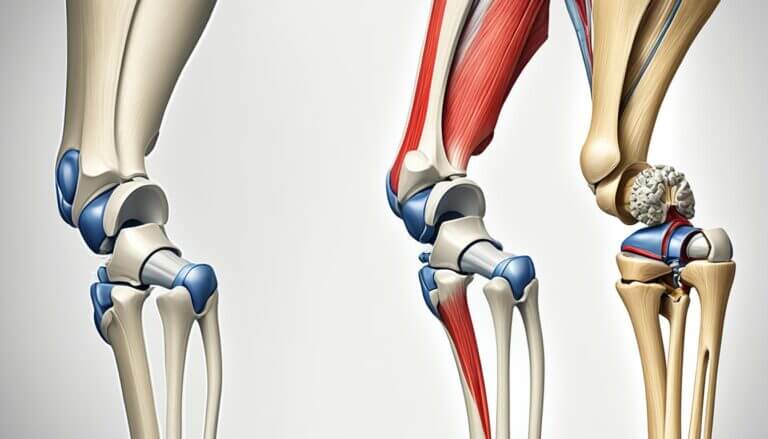
Not all knee injuries are the same. Different structures within the knee can be damaged depending on the mechanism of injury, and recognizing the specific type of damage is critical for proper treatment.
Here are the most frequently occurring knee injuries in soccer at the international qualifying level:
- ACL (Anterior Cruciate Ligament) Tears: One of the most feared injuries in soccer. These typically occur from non-contact pivoting movements or direct impact. Learn more about ACL injuries and knee brace options for recovery.
- PCL (Posterior Cruciate Ligament) Injuries: Less common than ACL tears but serious. These usually result from a direct blow to the front of the knee, such as falling or a collision. Read our full breakdown of PCL knee injuries.
- Meniscus Tears: The meniscus acts as a shock absorber in the knee. Twisting motions during play frequently cause meniscal damage. Explore our detailed guide on torn meniscus injuries.
- Chondromalacia Patella: The softening and breakdown of cartilage under the kneecap, which causes a dull aching knee pain that worsens with activity. Our resource on chondromalacia patella covers this in full detail.
- General Ligament Injuries: Sprains and partial tears of the various knee ligaments are common in contact situations during qualifier matches. See our overview of ligament knee injuries.
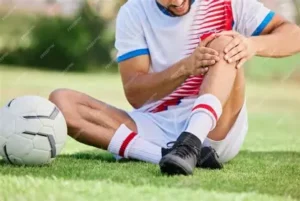
Each of these injuries carries different recovery timelines and treatment requirements, which is why accurate diagnosis is essential before any player returns to international competition.
Understanding Knee Pain: What It Means When Your Knee Hurts During Soccer
When a player says their knee hurt during a match, that statement alone doesn’t tell us much. The location, timing, and type of knee pain all provide critical diagnostic information.
Here is a simple breakdown of what different types of knee pain can indicate in a soccer context:
| Type of Knee Pain | Likely Location | Possible Cause |
|---|---|---|
| Sharp pain at moment of twist | Front or center of knee | ACL or meniscus tear |
| Dull aching pain after activity | Under the kneecap | Chondromalacia patella or overuse |
| Swelling and stiffness overnight | Whole knee joint | Ligament strain or joint inflammation |
| Pain directly after a collision | Posterior (back of knee) | PCL injury |
| Sudden giving way of the knee | Anywhere in the knee | Ligament rupture or patellar instability |
If your knee hurts in any of these ways during or after a match, we strongly recommend seeking a proper clinical evaluation rather than playing through the pain.
Ignoring early warning signs of knee pain is one of the most common reasons players end up with more serious structural damage that requires surgery and months off the pitch.
This infographic highlights the three main causes of knee pain for soccer players in World Cup qualifiers. It also offers practical prevention tips and care considerations.
How Soccer Knee Pain in World Cup Qualifiers Affects Player Performance
The performance impact of knee injuries in World Cup qualifying campaigns extends well beyond the individual player. When a key player is sidelined with knee pain, the entire tactical structure of a national team can change.
Players managing chronic knee pain often show measurable declines in sprint speed, agility, and the ability to change direction, all of which are fundamental attributes in modern soccer.
In 2026, sports medicine teams attached to qualifying nations have made knee injury management a central part of their medical protocols, specifically because of the high stakes involved in each qualifying window.
This statistic matters enormously in the context of World Cup qualifying. A player who returns from knee surgery may still be selected for their national squad, but they may not be the same explosive athlete their team needs in high-pressure qualification matches.
National team coaches and medical staff must weigh short-term availability against long-term player health, a decision that knee pain and injury history makes far more complicated.
Preventing Soccer Knee Pain During World Cup Qualifier Training
Prevention is always more effective than treatment when it comes to soccer knee pain in World Cup qualifiers. The following evidence-based strategies are used by professional teams around the world in 2026.
Neuromuscular Warm-Up Protocols
Programs like the FIFA 11+ warm-up protocol have been shown to significantly reduce knee injury rates in soccer players. These structured routines activate the muscles that protect the knee before any high-intensity activity begins.
Including balance and proprioception exercises trains the body’s nervous system to respond quickly to the sudden movements that frequently cause knee ligament injuries during matches.
Strength and Conditioning
Strong quadriceps, hamstrings, hip abductors, and calf muscles all provide secondary support to the knee joint. Players with well-developed lower-body strength are significantly less likely to experience serious knee damage.
Eccentric hamstring exercises in particular have strong evidence behind them for reducing ACL and hamstring injury rates in competitive soccer players.
Load Management During Qualifying Windows
Managing how much a player trains and plays during intense qualifying windows is a critical but often overlooked prevention strategy. Fatigue is a well-established risk factor for knee injury, and overloaded players are far more likely to experience knee hurt both during and after matches.
National team staff in 2026 use GPS tracking and heart rate data to monitor player load and reduce the risk of injury spikes during multi-match qualifying blocks.
Diagnosing and Treating Knee Pain in Soccer Players Competing in World Cup Qualifiers
When soccer knee pain in World Cup qualifiers is suspected to involve structural damage, a proper diagnostic process is essential. Guessing at the cause of knee pain and self-treating without professional evaluation frequently leads to worsening injuries.
Diagnostic Tools
- Physical examination: An orthopedic specialist or sports medicine physician will assess range of motion, joint stability, and pain location.
- MRI scanning: The gold standard for visualizing soft tissue damage including ligament tears and meniscal injuries.
- Ultrasound: Useful for assessing tendons, including the patellar tendon, in real time.
- X-ray: Primarily used to rule out bone fractures and assess joint spacing.
Treatment Options
Treatment decisions depend entirely on the type, severity, and location of the knee injury. For players competing in qualifying campaigns, the pressure to return quickly must be balanced against the risk of permanent joint damage.
- Conservative management: RICE protocol (rest, ice, compression, elevation), anti-inflammatory medication, physiotherapy, and bracing for mild to moderate injuries.
- Surgical intervention: Required for complete ligament ruptures, significant meniscal tears, and severe chondral damage. ACL reconstruction is the most common surgical procedure for soccer players.
- Rehabilitation: A structured return-to-play program is essential after any significant knee injury to prevent re-injury on the pitch.
For players experiencing traumatic knee injuries from direct contact during qualifier matches, our detailed resource on traumatic knee injuries provides important guidance on immediate management and recovery.
Knee Braces and Supportive Devices for Soccer Players in World Cup Qualifiers
Knee braces play an important role in both injury prevention and return-to-play protocols for soccer players managing knee pain during World Cup qualifying campaigns.
Different types of knee braces serve different purposes, and choosing the right one depends on the specific injury or condition being managed.
Types of Knee Braces Used in Soccer
- Hinged knee braces: Provide structural support for ACL and PCL injuries. These are commonly worn during return-to-play after ligament surgery. Our guide to ACL injury knee braces covers the top options in detail.
- Patellar stabilizing braces: Help reduce knee pain associated with patellar tracking problems and chondromalacia patella.
- Compression sleeves: Provide mild support and proprioceptive feedback, often used for minor knee pain and swelling management during training.
- Functional braces: Designed for players who have had ligament reconstruction and are returning to full competitive play.
It is important to note that a knee brace is not a substitute for proper rehabilitation. Bracing should always be used as part of a broader treatment plan developed with a qualified clinician.
This statistic shows that soccer knee pain is not an issue limited to elite players preparing for World Cup qualifiers. Millions of recreational players worldwide manage the same types of knee conditions every week.
Traumatic Knee Injuries Specific to the World Cup Qualifier Environment
The high-stakes, physically aggressive nature of World Cup qualifying matches creates specific conditions where traumatic knee injuries are more likely to occur.
Tackles from behind, aerial collisions, and awkward landings from headers are among the most common mechanisms that cause sudden, acute knee damage in qualifier matches.
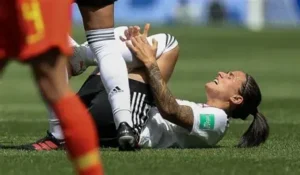
When a player’s knee hurts immediately after a direct collision or awkward fall, the priority must be removing them from the field for immediate assessment. Allowing an injured player to continue playing through acute knee pain significantly increases the risk of compounding the injury.
In 2026, most international federations have implemented strict sideline medical protocols to ensure any player who reports that their knee hurt during play receives immediate evaluation before being allowed to return to the pitch.
Long-Term Knee Health Considerations for Players in Qualifying Campaigns
The physical demands of repeated World Cup qualifying campaigns over a professional career can create long-term knee health challenges for soccer players.
Repeated minor knee injuries, chronic inflammation, and years of high-impact loading all contribute to accelerated cartilage wear, which can eventually develop into knee osteoarthritis.
Players, coaches, and medical staff should understand that managing knee pain appropriately during a player’s career directly affects their long-term joint health and quality of life after soccer.
Our comprehensive guide to understanding, managing, and overcoming knee pain provides detailed information on both short-term treatment and long-term knee health strategies.
Conclusion: Managing Soccer Knee Pain in World Cup Qualifiers Requires a Proactive Approach
Soccer knee pain in World Cup qualifiers is a complex, multi-dimensional issue that affects players at every level of the game in 2026. From acute ligament tears to chronic overuse conditions, the knee remains the most vulnerable joint in competitive soccer.
The key message for players, coaches, and medical staff is that knee pain should never be minimized or played through without proper assessment. Early identification, accurate diagnosis, and structured rehabilitation are the foundations of effective knee injury management.
Whether you are a professional preparing for a qualifier match or a recreational player experiencing similar knee pain on the weekend pitch, the principles of prevention, early treatment, and appropriate recovery apply equally.
We encourage anyone experiencing knee pain in a soccer context to explore our full library of resources, including detailed guides on specific injuries such as ligament knee injuries and torn meniscus, to better understand their condition and make informed decisions about their care.
Soccer knee pain in World Cup qualifiers will continue to be a defining challenge for international teams, but with the right knowledge and medical support, players can minimize their risk and protect their long-term knee health throughout their careers.
Frequently Asked Questions
What are the most common causes of soccer knee pain during World Cup qualifiers?
The most common causes include ACL and PCL ligament injuries, meniscus tears, patellar tendon overuse, and chondromalacia patella. The high-intensity, high-frequency demands of qualifying matches combined with player fatigue make the knee the most injury-prone joint in competitive international soccer.
How do I know if my knee hurt is serious enough to stop playing in a qualifier match?
Any sudden sharp pain, significant swelling, giving way of the knee, or inability to bear weight are warning signs that should prompt immediate medical assessment. Playing through these symptoms without evaluation risks turning a manageable injury into a season-ending one.
Can knee pain from soccer World Cup qualifiers lead to permanent damage?
Yes, if knee injuries are repeatedly ignored or inadequately treated, they can lead to permanent cartilage damage and early-onset osteoarthritis. Proper diagnosis and timely treatment are essential to prevent long-term joint deterioration in players who compete in high-level soccer.
What is the fastest recovery time for a soccer player with knee pain during World Cup qualifiers?
Minor knee strains and mild ligament sprains can recover in two to four weeks with proper rest and physiotherapy. More serious injuries such as meniscus tears or ACL ruptures typically require several months and often surgery, making them likely to end a player’s involvement in a qualifying campaign.
Is it safe for a soccer player to wear a knee brace in a World Cup qualifier match?
Yes, knee braces are widely used in competitive soccer at all levels, including international qualifier matches. They provide additional stability and proprioceptive support for players recovering from ligament injuries, and most governing bodies permit their use during official competition.
Why do soccer players get knee injuries more in World Cup qualifiers than in club soccer?
World Cup qualifiers concentrate multiple high-stakes matches into short windows, leaving players with less recovery time between games. Combined with the physical intensity and tactical aggression of qualifying matches, the cumulative load on the knee joint is substantially higher than in a typical club week.
What knee pain treatment options are available for soccer players competing in 2026 World Cup qualifiers?
Treatment options in 2026 include conservative approaches such as physiotherapy, anti-inflammatory medication, bracing, and load management, as well as surgical interventions for structural injuries. Platelet-rich plasma injections and advanced rehabilitation technology are also increasingly used by national team medical programs to accelerate recovery timelines.