FIFA World Cup ACL Tear Risks 2026: What Players, Fans, and Medical Teams Need to Know
The FIFA World Cup ACL tear risks 2026 are generating serious conversation among sports medicine professionals, team coaches, and fans alike — and for good reason: the average recovery time for a professional soccer player’s ACL tear has increased by 45%, rising from 203 days to 295 days over the last decade, meaning that any player who suffers this injury during the tournament faces a grueling road back to the pitch. Understanding what drives these risks, how knee pain manifests before a full rupture, and what can be done to protect players is essential for everyone who follows the 2026 World Cup.
Key Takeaways
| Question | Key Answer |
|---|---|
| What is an ACL tear? | A rupture of the anterior cruciate ligament inside the knee joint, commonly caused by sudden pivoting, deceleration, or direct contact during football. |
| Why is the 2026 World Cup especially risky? | The expanded 48-team format means more matches, tighter scheduling, and less rest, all of which significantly raise the risk of non-contact ligament knee injuries. |
| How long does ACL recovery take? | Modern medical protocols put average recovery at around 295 days for professional players, making any in-tournament tear effectively season-ending. |
| What other knee injuries are common at the World Cup? | Players also face torn meniscus injuries, PCL sprains, and traumatic knee events, all of which can end a tournament campaign. |
| Can ACL tears be prevented? | Neuromuscular training programs, proper warm-up protocols, and protective equipment such as ACL injury knee braces can meaningfully reduce risk. |
| Are female players at higher risk? | Yes, female soccer players are 2.5 times more likely to sustain an ACL tear than male counterparts, a disparity FIFA’s 2026 health programs actively address. |
| What does knee pain before an ACL tear feel like? | Players often report swelling, instability, and sharp knee pain during cutting movements, warning signs that should trigger immediate medical evaluation. |
Understanding ACL Tears and Why the FIFA World Cup 2026 Creates Unique Risks
The anterior cruciate ligament (ACL) is one of four major ligaments that stabilize the knee joint. It runs diagonally through the center of the knee and controls rotational stability as well as forward movement of the tibia relative to the femur.
When a player plants their foot and twists sharply — a routine movement in football — enormous stress is placed on this ligament. At the FIFA World Cup 2026, that stress accumulates across an entire tournament of 104 matches spanning three host nations: the United States, Canada, and Mexico.
The expanded 48-team format introduced for 2026 is the single biggest structural change in World Cup history. More teams mean more group stage matches, more potential knockout rounds, and critically, shorter rest windows between games.
For medical teams managing player loads, this is where FIFA World Cup ACL tear risks 2026 become most acute. Fatigue in the supporting musculature around the knee — the quadriceps, hamstrings, and calves — means the ligament itself absorbs forces it normally wouldn’t if those muscles were fresh.
The Primary Causes of ACL Tear Risks at the FIFA World Cup 2026
Knowing what causes ACL tears helps us understand why major tournaments are particularly dangerous environments for players’ knees.
- Sudden deceleration: Stopping rapidly from full sprint is one of the most common mechanisms. The knee must absorb the full momentum of the body.
- Pivoting and cutting: Changing direction at speed places rotational torque directly on the ACL. Attacking players and midfielders are most exposed.
- Landing from jumps: Heading duels and aerial challenges that end in awkward landings can cause both contact and non-contact ACL tears.
- Direct contact: Tackles, collisions, and challenges that strike the knee from the side can force the joint into an unnatural position.
- Fatigue-driven biomechanics: As players tire, their movement patterns degrade. A tired player’s knee alignment during a sprint and cut is measurably worse than a rested player’s.
Understanding these causes also helps explain why traumatic knee events are so common in high-intensity tournament football rather than in regular club play alone.
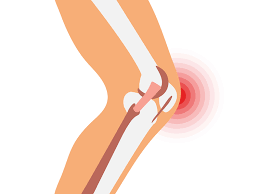
Knee Pain Warning Signs Players Should Never Ignore Before and During the 2026 World Cup
One of the most preventable aspects of ACL tears is the failure to act on early warning signs. Knee pain that presents before a full rupture often includes specific, recognizable symptoms.
Players and medical staff should monitor for the following signs that the knee is under abnormal stress:
- Persistent swelling around the joint, especially after training sessions
- A feeling of instability or “giving way” when changing direction
- Sharp knee pain during cutting movements or landing
- Stiffness in the morning that takes more than 30 minutes to resolve
- Clicking or popping sensations that are accompanied by discomfort
- Decreased range of motion that is new or worsening
Any player reporting that their knee pain matches two or more of these patterns should be evaluated with imaging before the next competitive match.
For fans and casual observers, a player who favors one leg during a run-up, avoids full extension, or flinches on landing is showing visible signs that their knee is hurt. Coaches and physios who recognize these signals early can often prevent a minor strain from becoming a full-thickness tear.
How Fixture Congestion Amplifies FIFA World Cup ACL Tear Risks 2026
The data above is perhaps the most important single figure when evaluating FIFA World Cup ACL tear risks 2026. A 42% increase in non-contact injuries when rest falls below three days is not a marginal finding — it is a structural problem baked into the tournament format.
With the 2026 World Cup expanding to 104 total matches and groups of three teams requiring careful scheduling to avoid long gaps for some nations, several squads will inevitably face back-to-back matches with only 48-72 hours of recovery. For players already carrying sub-clinical knee hurt from a long club season, this is a high-risk window.
Elite club seasons in Europe, South America, and North America conclude just weeks before the World Cup begins in June 2026. Many players arrive at the tournament having already logged 50 or more competitive matches since August 2025.
Cumulative fatigue in the muscles around the knee — particularly the hamstrings and quadriceps — is a leading predictor of non-contact ACL rupture. When those muscles cannot fire fast enough to protect the joint during a cut, the ligament takes the full load.
Playing Surfaces and Their Role in FIFA World Cup ACL Tear Risks 2026
The 2026 World Cup is being played across 16 stadiums in the United States, Canada, and Mexico. Surface type and turf quality vary significantly between venues, and this variation matters for knee safety.
Research consistently shows that artificial turf generates higher rotational traction than natural grass, meaning the foot is more likely to “stick” on the surface during a pivot. This increased grip translates directly into greater rotational stress on the knee joint and a higher risk of ligament injury.
Several of the 2026 host stadiums use artificial or hybrid surfaces. Teams that train predominantly on natural grass may experience adaptation challenges when competing on these surfaces, a factor that medical teams are actively managing heading into the tournament.
Footwear selection also plays a role. Boots with stud configurations optimized for maximum grip on firm ground can paradoxically increase ACL risk on artificial surfaces by generating traction that the knee cannot safely manage. Team physios typically conduct boot testing on match surfaces during training days before competition.
Other Serious Knee Injuries Beyond the ACL at the 2026 World Cup
While ACL tears receive the most attention in sports medicine coverage, the FIFA World Cup ACL tear risks 2026 exist alongside a broader spectrum of serious knee injuries that can end a player’s tournament.
Posterior Cruciate Ligament (PCL) injuries occur most commonly from a direct blow to the front of a bent knee, such as landing hard from a jump or taking a tackle. These are often graded by severity and do not always require surgery, but a Grade III posterior cruciate ligament injury is as career-disrupting as a full ACL tear.
Meniscus tears are another frequent companion injury. The medial and lateral menisci act as shock absorbers inside the knee, and when the joint is forced into abnormal rotation, the cartilage can tear. A torn meniscus may be repaired arthroscopically but still requires weeks of recovery, making it a tournament-ending diagnosis in most cases.
Chondromalacia patellae is a softening of the cartilage under the kneecap that produces chronic knee pain during running and kneeling. While it rarely causes acute match withdrawal, worsening chondromalacia patella during a tournament can limit a player’s effectiveness and contribute to compensatory movement patterns that increase ACL risk.
Prevention Strategies to Reduce FIFA World Cup ACL Tear Risks 2026
The good news in the conversation around FIFA World Cup ACL tear risks 2026 is that substantial evidence supports the effectiveness of targeted prevention programs. Teams that invest in these protocols consistently see lower injury rates.
Neuromuscular warm-up programs like the FIFA 11+ protocol have been shown in multiple studies to reduce ACL injury rates by 50% or more in amateur and professional players. These programs focus on landing mechanics, single-leg stability, and progressive loading of the knee joint under controlled conditions.
Key prevention strategies include:
- Landing mechanics training: Teaching players to land with a flexed knee rather than a straight or hyperextended knee absorbs force more efficiently.
- Hamstring strengthening: Strong hamstrings share the load with the ACL during deceleration, reducing the ligament’s burden significantly.
- Single-leg stability drills: Balance training on unstable surfaces improves proprioception, which is the body’s ability to sense joint position and react protectively.
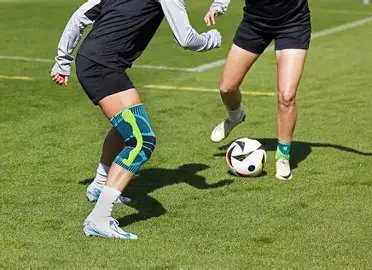
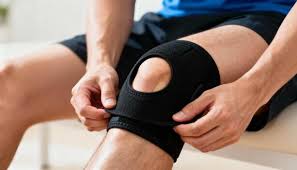
- Wearing protective bracing: For players with a history of knee instability or previous ACL surgery, a properly fitted ACL injury knee brace provides an additional layer of structural support during competition.
- Load monitoring: GPS tracking of sprint distances, high-intensity runs, and total distance per session allows medical teams to identify players who are overloading their knees before injury occurs.
For any player dealing with existing knee hurt, transparent communication with team medical staff before the tournament is far more protective than playing through pain silently.
What Happens When a Player’s Knee Gets Hurt During the 2026 World Cup
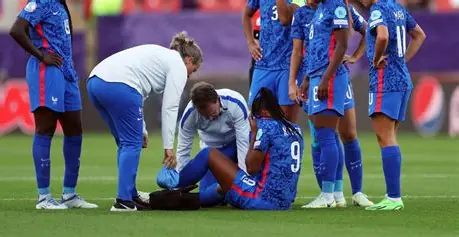
When a player’s knee gets hurt during a World Cup match, the on-field medical team follows a standardized assessment protocol. The immediate priority is to determine whether the player can continue safely or whether removal from the field is necessary.
A sideline evaluation typically includes the Lachman test and the anterior drawer test, both of which assess ACL integrity by checking for abnormal forward movement of the tibia. If the knee is swollen, acutely painful, or shows instability, the player is withdrawn and sent for imaging.
MRI scanning, where available at host city medical facilities, provides definitive imaging of soft tissue damage within hours of injury. FIFA’s 2026 medical standards require each host city to have approved imaging and surgical facilities available to all competing teams throughout the tournament.
For players managing chronic knee pain rather than acute injury, the decision to continue playing is made in close consultation between the player, team doctor, and coaching staff. A comprehensive understanding of knee pain management is essential for making these difficult calls under tournament pressure.
Gender Differences in ACL Tear Risks at the FIFA World Cup 2026
The FIFA World Cup ACL tear risks 2026 do not fall equally across all athletes. A substantial body of evidence confirms that female soccer players face disproportionately higher ACL injury rates than their male counterparts, for reasons that are both anatomical and systemic.
Contributing anatomical factors include a wider pelvis relative to femur length (the Q-angle), smaller ACL cross-sectional area, and hormonal influences on ligament laxity. These factors cannot be changed, but their risk impact can be significantly reduced through targeted training and awareness.
Systemic factors compound the problem. Female players wait an average of 19 days for ACL surgery after injury, more than triple the 6-day average for male professionals. This delay can worsen outcomes and extend total recovery time well beyond 295 days.
FIFA’s medical commission has included gender-specific injury prevention guidelines in its 2026 preparations, with a focus on ensuring that female athletes competing at the highest international level receive the same rapid access to surgical care and rehabilitation that male professionals have historically enjoyed.
Recovery and Rehabilitation After an ACL Tear at the World Cup Level
For any player who sustains a confirmed ACL tear during the 2026 tournament, the rehabilitation journey is long and structured. Modern sports medicine uses a criteria-based return-to-play model rather than a fixed timeline, meaning a player progresses through stages only when they meet specific strength, stability, and functional benchmarks.
A typical ACL reconstruction recovery at the elite level in 2026 follows this general progression:
- Weeks 1-4: Swelling management, range of motion restoration, and early quadriceps activation
- Weeks 4-12: Strength building, closed-chain exercises, and progressive weight-bearing activities
- Months 3-6: Running reintroduction, agility work, and neuromuscular re-education
- Months 6-9: Sport-specific training, return to team training, and psychological readiness assessment
- Month 9+: Gradual return to competitive match play, with protective bracing often recommended for the first full season back
The psychological component of ACL recovery is increasingly recognized as a major factor in outcomes. Fear of re-injury and loss of confidence in the knee are common barriers to full return-to-sport, and elite programs now incorporate sports psychology as a standard part of the rehabilitation process.
Conclusion
The FIFA World Cup ACL tear risks 2026 represent one of the most significant health and performance challenges facing elite football in this tournament cycle. The combination of an expanded format, compressed scheduling, fixture congestion, and players arriving fatigued from a full club season creates conditions where knee injuries are highly probable rather than merely possible.
Understanding the anatomy of the knee, the warning signs of knee pain and instability, and the evidence-based strategies for reducing ACL tear risk is valuable for players, medical teams, coaches, and engaged fans alike. Whether the concern is a male player managing chronic knee hurt from a previous injury or a female athlete navigating the statistically higher ACL risk that comes with her biology, the tools to prevent and manage these injuries are better in 2026 than they have ever been.
From protective ACL knee braces to neuromuscular training programs and improved surgical access for all athletes, the football world is better equipped than ever to protect players’ knees at the highest level. The key is putting that knowledge into practice consistently, both before the tournament begins and throughout the intense six-week competition.
Frequently Asked Questions
What are the biggest FIFA World Cup ACL tear risks 2026 that teams should prepare for?
The biggest FIFA World Cup ACL tear risks 2026 come from fixture congestion, player fatigue after a full club season, and playing surface variations across 16 different host stadiums. Teams that monitor player load carefully and use neuromuscular training protocols are best positioned to protect their squads throughout the tournament.
How long does an ACL tear take to heal for a professional soccer player in 2026?
The current average recovery time for a professional player’s ACL tear is approximately 295 days, a 45% increase over recovery times from a decade ago. This means any player injured during the 2026 World Cup is unlikely to return to competitive football until well into the 2026-27 club season.
Can knee pain before the World Cup signal an upcoming ACL tear?
Yes, certain knee pain patterns — including instability during cutting movements, swelling after training, and sharp discomfort during landing — can indicate the knee is under excessive stress before a full ACL tear occurs. Players experiencing these symptoms should seek imaging and physical assessment before competing at the 2026 World Cup.
Is artificial turf a bigger ACL risk than natural grass at the 2026 World Cup?
Research suggests artificial turf generates higher rotational traction than natural grass, which increases the mechanical stress on the knee during pivoting movements. Several 2026 host stadiums use artificial or hybrid surfaces, making boot selection and surface adaptation training particularly important for competing teams.
Are female players at higher FIFA World Cup ACL tear risk in 2026 than male players?
Female soccer players face ACL tear risks 2.5 times higher than male players during match play, due to anatomical, hormonal, and systemic factors. FIFA’s 2026 medical guidelines include gender-specific prevention protocols to help close this gap and ensure female athletes receive equivalent access to rapid surgical care.
What type of knee brace is best for ACL injury prevention during the World Cup?
Functional ACL knee braces are designed to limit abnormal rotational and anterior forces on the knee during sport-specific movements. For players returning from a previous ACL tear or those with documented knee instability, a custom-fitted functional brace worn during the 2026 World Cup can provide meaningful protection against re-injury.
What other knee injuries beyond ACL tears are common at World Cup tournaments?
Alongside ACL tears, players at the 2026 World Cup are at significant risk of torn meniscus injuries, posterior cruciate ligament (PCL) sprains, traumatic knee events from direct contact, and worsening of pre-existing conditions like chondromalacia patellae. Many of these injuries occur alongside ACL tears rather than independently, making comprehensive knee health monitoring essential for every competing squad.