Spontaneous baby movements have a purpose
Spontaneous, voluntary baby movements promote the development of their sensorimotor systems, according to new research led by the University of Tokyo. Detailed movement recording of newborns and infants was combined with a computer model of the musculoskeletal system, allowing researchers to analyze the communication between muscles and sensations across the body. Researchers found that patterns of muscle interaction developed from infants’ voluntary exploratory behavior, allowing them to perform sequential movements later as infants. A better understanding of how our sensorimotor system develops could help us gain insight into the origins of human movements and earlier diagnosis of developmental disorders.
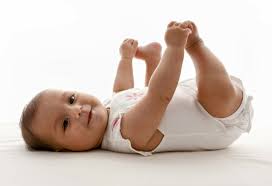
If you’ve spent time with a baby, you’ve probably noticed that he can barely sit still. From birth – and even in the womb – babies begin kicking, wiggling and moving, seemingly without purpose or external stimulation. These are called ‘spontaneous movements’ and researchers believe they play an important role in the development of the sensorimotor system, that is, our ability to control our muscles, movement and coordination. If we can better understand these seemingly random movements and how they are involved in early human development, we may also be able to identify early indicators of certain developmental disorders, such as cerebral palsy.
Currently, there is limited knowledge about how newborns and infants learn to move their bodies. “Previous research on sensorimotor development has focused on kinematic properties, muscular activities that produce movement in a joint or part of the body,” said project assistant professor Hoshinori Kanazawa of the Graduate School of Information Science and Technology. “However, our study focused on muscle activity and sensory input signals for the whole body. By combining a musculoskeletal model and a neuroscientific method, we found that spontaneous movements, which appear to have no explicit task or purpose, contribute to coordinated sensorimotor development. ”
First, the team recorded the joint movements of 12 healthy newborns (less than 10 days old) and 10 young infants (about 3 months old) using motion capture technology. They then estimated the babies’ muscle activity and sensory input signals using a baby-scale whole-body computer model they created. Finally, they used computer algorithms to analyze the spatiotemporal (both space and time) characteristics of the interaction between the input signals and muscle activity.
“We were surprised that infants’ movements ‘wandered’ during spontaneous movements and that they pursued different sensorimotor interactions. We called this phenomenon ‘sensorimotor wandering,'” says Kanazawa. “It is widely believed that the development of the sensorimotor system generally depends on the occurrence of repeated sensorimotor interactions, meaning that the more often you do the same action, the more likely you are to learn and remember it. Our results implied however, that infants develop their own sensorimotor interactions.” system based on exploratory behavior or curiosity, so they repeat not just the same action, but a variety of actions. In addition, our findings provide a conceptual link between early spontaneous movements and spontaneous neuronal activity.”
Previous studies in humans and animals have shown that motor behavior (movement) involves a small number of primitive muscle control patterns. These are patterns typically seen in task-specific or cyclical movements, such as walking or reaching. The results of this latest study support the theory that newborns and infants can acquire sensorimotor modules, that is, synchronized muscle activities and sensory inputs, through spontaneous whole-body movements without an explicit goal or task. Even during sensorimotor wandering, the infants showed an increase in coordinated whole-body movements and in anticipatory movements. The movements performed by the infant group showed more general patterns and sequential movements, compared to the random movements of the newborn group.
Next, Kanazawa wants to look at how sensorimotor wandering influences later development, such as walking and reaching, along with more complex behavior and higher cognitive functions. “My original background is in pediatric rehabilitation. My major goal with my research is to understand the underlying mechanisms of early motor development and to find knowledge that can help promote infant development.”