download 4

Spontaneous baby movements have a purpose


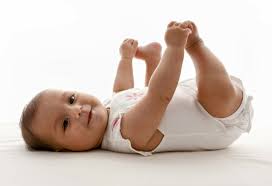
Spontaneous, voluntary baby movements promote the development of their sensorimotor systems, according to new research led by the University of Tokyo. Detailed movement recording of newborns and infants was combined with a computer model of the musculoskeletal system, allowing researchers to analyze the communication between muscles and sensations across the body. Researchers found that patterns of muscle interaction developed from infants’ voluntary exploratory behavior, allowing them to perform sequential movements later as infants. A better understanding of how our sensorimotor system develops could help us gain insight into the origins of human movements and earlier diagnosis of developmental disorders.

If you’ve spent time with a baby, you’ve probably noticed that he can barely sit still. From birth – and even in the womb – babies begin kicking, wiggling and moving, seemingly without purpose or external stimulation. These are called ‘spontaneous movements’ and researchers believe they play an important role in the development of the sensorimotor system, that is, our ability to control our muscles, movement and coordination. If we can better understand these seemingly random movements and how they are involved in early human development, we may also be able to identify early indicators of certain developmental disorders, such as cerebral palsy.

Currently, there is limited knowledge about how newborns and infants learn to move their bodies. “Previous research on sensorimotor development has focused on kinematic properties, muscular activities that produce movement in a joint or part of the body,” said project assistant professor Hoshinori Kanazawa of the Graduate School of Information Science and Technology. “However, our study focused on muscle activity and sensory input signals for the whole body. By combining a musculoskeletal model and a neuroscientific method, we found that spontaneous movements, which appear to have no explicit task or purpose, contribute to coordinated sensorimotor development. ”

First, the team recorded the joint movements of 12 healthy newborns (less than 10 days old) and 10 young infants (about 3 months old) using motion capture technology. They then estimated the babies’ muscle activity and sensory input signals using a baby-scale whole-body computer model they created. Finally, they used computer algorithms to analyze the spatiotemporal (both space and time) characteristics of the interaction between the input signals and muscle activity.

“We were surprised that infants’ movements ‘wandered’ during spontaneous movements and that they pursued different sensorimotor interactions. We called this phenomenon ‘sensorimotor wandering,'” says Kanazawa. “It is widely believed that the development of the sensorimotor system generally depends on the occurrence of repeated sensorimotor interactions, meaning that the more often you do the same action, the more likely you are to learn and remember it. Our results implied however, that infants develop their own sensorimotor interactions.” system based on exploratory behavior or curiosity, so they repeat not just the same action, but a variety of actions. In addition, our findings provide a conceptual link between early spontaneous movements and spontaneous neuronal activity.”

Previous studies in humans and animals have shown that motor behavior (movement) involves a small number of primitive muscle control patterns. These are patterns typically seen in task-specific or cyclical movements, such as walking or reaching. The results of this latest study support the theory that newborns and infants can acquire sensorimotor modules, that is, synchronized muscle activities and sensory inputs, through spontaneous whole-body movements without an explicit goal or task. Even during sensorimotor wandering, the infants showed an increase in coordinated whole-body movements and in anticipatory movements. The movements performed by the infant group showed more general patterns and sequential movements, compared to the random movements of the newborn group.

Next, Kanazawa wants to look at how sensorimotor wandering influences later development, such as walking and reaching, along with more complex behavior and higher cognitive functions. “My original background is in pediatric rehabilitation. My major goal with my research is to understand the underlying mechanisms of early motor development and to find knowledge that can help promote infant development.”

Source link

Similar Posts

  • | |

    What is a patient-reported outcome measure or PROM and the KOOS?

      Image by FatCamera from Canva Pro Are you recovering from a knee injury or knee surgery and are you asked to complete a questionnaire, the so-called Knee Injury and Osteoarthritis Outcome Score (KOOS)? This blog highlights the purpose of these questionnaires and explains what the KOOS is and how it is relevant to you…

  • |

    A deep learning system accurately identifies joint space narrowing and erosions on hand X-rays

    New research at ACR Convergence 2023, the annual meeting of the American College of Rheumatology (ACR), shows that a deep learning system can accurately identify and predict joint space narrowing and erosions in hand x-rays of patients with rheumatoid arthritis (RA) (Abstract #0745) . X-rays are the most commonly used imaging technique for detecting and…

  • Medacta announces the launch of GMK SpheriKA, the world’s first knee implant optimized for kinematic alignment (KA)

      Castel San Pietro, October 30, 2023 – Medacta Group SA (“Medacta”, SIX: MOVE), a Swiss company providing innovative, personalized and sustainable solutions for joint replacement, sports medicine and spine surgery, is pleased to announce the launch of GMK SpheriKA, the world’s first KA-optimized femoral component indicated for total knee replacement. GMK SpheriKA will make…

  • |

    Understanding osteoarthritis: symptoms, causes and treatment options

      Osteoarthritis is painful for many people and affects their daily activities and quality of life. The progression of this degenerative joint disease can be slow and gradual, leading to discomfort and movement limitations. Despite its prevalence, there is still much to learn about osteoarthritis and how to treat it effectively. Our blog article explores…

  • |

    DVT after knee surgery

    What if the biggest threat to your recovery isn’t the orthopedic procedure itself, but a silent complication that can strike without warning? Deep vein thrombosis is a serious medical concern. It affects approximately 600,000 Americans each year. We recognize that undergoing a major joint operation requires careful attention to potential complications. DVT after knee surgery prevention Our goal is to provide a clear guide on managing this specific risk. Understanding how a dangerous clot forms in the leg is the vital first step. This knowledge empowers you during the post-operative period. We emphasize that proactive management of your health is essential. By following expert-led advice, you can take control. This effort minimizes chances of a serious vascular issue and supports a smoother healing journey. Key Takeaways Deep vein thrombosis is a common but serious risk following major orthopedic procedures. Proactive health management is crucial for a safe post-operative period. Understanding how blood clots form is the first step in prevention. Expert guidance can help you minimize dangers and take control of your healing process. A smooth recovery involves being aware of potential complications from the start. Simple, informed actions can significantly reduce your personal risk. Understanding the Risk of DVT After Knee Surgery Why does a procedure focused on improving mobility simultaneously increase the chance of a dangerous blockage? We must explore the nature of the threat and the specific factors a major operation introduces. What is Deep Vein Thrombosis? This condition involves a blood clot forming in a deep vein, usually in the leg. If such a clot breaks free, it can travel to the lungs. This causes a life-threatening pulmonary embolism. We note that approximately 600,000 Americans are affected each year. It is a critical concern following any major joint replacement. deep vein thrombosis risk factors Why Knee Surgery Increases the Clot Risk Several factors converge during a knee replacement. The body’s natural healing response can make blood more likely to clot. Reduced mobility after the procedure slows circulation in the legs. The risk is highest from two to ten days post-operation. Patients remain at risk for about three months. Without preventative care, studies show blood clot rates of 40-60%. Even with modern care, 18-20% of joint replacement patients may still develop a clot. This highlights the need to watch for swelling in the leg. Timeframe Risk Level Key Data Initial High-Risk Period Highest 2 to 10 days after surgery Extended Risk Period Elevated Up to 3 months post-operation Without Prevention Very High 40-60% clot rate in major orthopedic surgery With Modern Protocols Significant 18-20% of knee replacement patients Prevention and Treatment Approaches Managing the threat of post-operative clots involves a dual strategy of medication and mechanical aids. We focus on keeping your circulation strong during the healing phase. This two-part defense significantly lowers your personal danger. Medication and Anti-Clotting Therapies We often prescribe specific drugs to reduce your body’s ability to form dangerous masses. Options include injections like Heparin or daily pills such as Warfarin. Newer direct oral anticoagulants offer convenient pill-based therapy. Your doctor selects the best type based on your health profile. anti clotting medication and compression…

Leave a Reply

Your email address will not be published. Required fields are marked *