Author: Mokhtar

  • Medacta announces the launch of GMK SpheriKA, the world’s first knee implant optimized for kinematic alignment (KA)

    Medacta announces the launch of GMK SpheriKA, the world’s first knee implant optimized for kinematic alignment (KA)

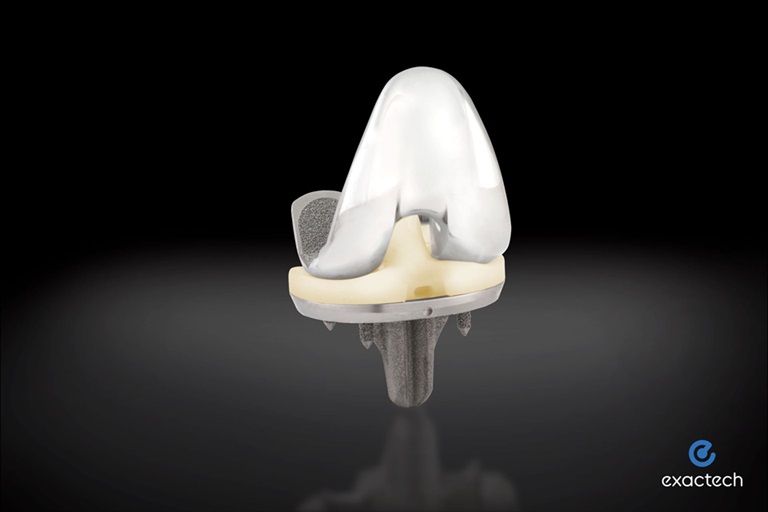
    Castel San Pietro, October 30, 2023 – Medacta Group SA (“Medacta”, SIX: MOVE), a Swiss company providing innovative, personalized and sustainable solutions for joint replacement, sports medicine and spine surgery, is pleased to announce the launch of GMK SpheriKA, the world’s first KA-optimized femoral component indicated for total knee replacement. GMK SpheriKA will make its global debut on November 2 at the American Association of Hip and Knee Surgeons (AAHKS) 2023 Annual Meeting.

    “GMK SpheriKA reinforces Medacta’s commitment to providing surgeons with personalized solutions for each of their patients,” says Francesco Siccardi, Chief Executive Officer of Medacta International.“Working with an international team of expert orthopedic surgeons, we have introduced a product that builds on our clinically proven GMK Sphere and incorporates the foundations of Kinematic Alignment to ensure every patient receives an implant that is suitable for his or her unique anatomy.”

    Medacta’s continued commitment to making a positive impact on patients requiring a total knee procedure has evolved with the development of the concept of Kinematic Alignment, which restores the original pre-arthritic alignment through anatomical resurfacing, making it ligament release is minimized and more natural knee kinematics are enabled. This approach has been shown to improve patient satisfaction compared to more traditional techniques [1-3]. In recent years, clinical studies have shown that GMK Sphere is a particularly suitable implant for kinematic alignment, with the potential to further improve patient outcomes compared to other knee designs [4-6].

    Building on the legacy of the GMK Sphere’s ball-in-socket design, GMK SpheriKA offers patients an implant that potentially feels more natural and stable during daily activities, replicating the movement of the healthy knee.In addition,GMK SpheriKA provides optimized femoral coverage and patellar tracking for kinematic alignment procedures, making it the first implant on the market specifically designed for this technique.

    “I am happy to offer the GMK SpheriKA to my patients,” said surgeon developer and Kinematic Alignment pioneer Stephen Howell, MD.“The implant design provides a personalized option that takes into account each patient’s unique anatomy and patellofemoral kinematics, restoring a more normal-feeling knee and quickly returning motion and daily activities.”

    MyKA, Medacta’s Kinematic Alignment Platform, offers surgeons the most comprehensive solution for performing Kinematic Alignment safely and reproducibly. In addition to GMK SpheriKA, it includes special instruments and a tailor-made education program offered by the MORE Institute, supported by an international network of expert surgeons. In addition, the platform is enhanced by advanced technologies, such as a special planning protocol for the MyKnee 3D printed patient-tailored manuals and NextAR Knee, our Augmented Reality surgical application, which provides unique real-time data to efficiently supplement the surgical workflow. . Both NextAR Knee and MyKnee are part of the MySolutions Personalized Ecosystem, Medacta’s network of advanced digital solutions designed to improve patient outcomes and healthcare efficiency.

    For more information, visit Medacta at AAHKS, Dallas (TX), November 2-5, 2023, at booth #1016, or register at spherika-aahks23.medacta.com to receive updates on GMK’s product developments, resources and events SpheriKA .

    REFERENCES
    [1] Dosset et al. A randomized controlled trial of kinematically and mechanically aligned total knee replacements. Bone Joint J 2014; 96-B: 907–13
    [2] Lee et al. Early results of kinematic alignment in primary total knee arthroplasty: a meta-analysis of the literature, The Journal of Arthroplasty 32 (2017) 2028-2032
    [3] Yaron, Bar Ziv et al. “Patients undergoing staged bilateral knee arthroplasty are less aware of their kinematically aligned knee compared to their mechanical knee.” Journal of Orthopedics vol. 23 155-159. January 20, 2021
    [4] Scott, David F. and Celeste G. Gray. “Results are better with a medially stabilized versus a posteriorly stabilized total knee implanted with kinematic alignment.” The Journal of Arthroplasty 37.8 (2022): S852-S858
    [5] Scott, David F. and Amy A. Hellie. “Midflexion, Anteroposterior Stability of Total Knee Replacement Implanted with Kinematic Alignment: A Randomized, Quantitative, Radiographic Laxity Study with Posteriorly Stabilized and Medially Stabilized Implants.” JBJS 105.1 (2023): 9-19.
    [6] JONES, Brett K.; CARLSON, Brian J.; SCOTT, David F. Better flexion and early recovery with medial stabilized versus single-radius total knee arthroplasty with kinematic alignment: two-year clinical results. The Knee, 2023, 43: 217-223

    Contact
    Medacta International SA
    Gianluca Olgiati
    Senior Director of Global Marketing
    Phone: +41 91 696 60 60
    media@medacta.ch

    ABOUT MEDACTA
    Medacta is an international company specialized in the design, production and distribution of innovative orthopedic products, as well as the development of associated surgical techniques. Founded in 1999 in Switzerland, Medacta is active in the fields of joint replacement, spine surgery and sports medicine. Medacta is committed to improving the care and well-being of patients and has a strong focus on the sustainability of healthcare. Medacta’s innovation, created through close collaboration with surgical experts around the world, started with minimally invasive surgical techniques and has evolved into personalized solutions for every patient. Through the MORE Institute, Medacta supports surgeons with a comprehensive and tailor-made program aimed at advancing medical education. Medacta is headquartered in Castel San Pietro, Switzerland, and operates in more than 50 countries. Follow us on Medacta TV, YouTube, LinkedIn and Twitter.

    RELATED TRADEMARKS
    The trademarks related to Medacta Group are in any case registered in Switzerland. The products and services listed below may not be all-inclusive, and other Medacta products and services not listed below may be covered by one or more trademarks. The products and services listed below may be covered by additional trademarks not listed below. Please note that Swiss trademarks may have foreign counterparts. GMK® SpheriKA, GMK® Sphere, MyKA™, MyKnee®MySolutions™ personalized ecosystem, NextAR™ knee.

    Source link

  • Hiring athletic trainers and strength and conditioning specialists can save you millions

    Hiring athletic trainers and strength and conditioning specialists can save you millions

    Financial impact of embedded injury prevention experts in US Army initial entry training

    Daniel R. Clifton, D. Alan Nelson, Y. Sammy Choi, Daniel Edgeworth, Donald Shell, Patricia A. Deuster. J Athl train 2022; doi: https://doi.org/10.4085/1062-6050-0353.22

    Full text freely available

    Take home message

    By using athletic trainers and certified strength and conditioning specialists in initial entry-level training for the Army, the Army saved at least three times the cost of contracting these professionals, saving $11 to 20 million annually.

    Background

    More than 1 in 4 men and women suffer a musculoskeletal injury during initial training for the US military. The U.S. Army began deploying teams of athletic trainers and strength and conditioning specialists in 2010 to address the problem of early-career musculoskeletal discharges. The military could demonstrate the need for these teams if we knew how much money they saved by preventing injuries and treating them quickly.

    Study objectives

    The author’s purpose was to assess whether built-in injury prevention experts were associated with reduced training costs for soldiers discharged early from service.

    Methods

    The authors conducted a retrospective analysis of 198,166 active-duty soldiers who began training from January 2014 through May 2017. Soldiers who began training at two locations between April 2015 and November 2015 did not have athletic trainers and strength and conditioning specialists on hand. on site due to a lapse in contracts. The authors categorized these soldiers as not coming into contact with injury prevention experts. All other soldiers were categorized as having been exposed to injury prevention experts. The authors estimate soldier training costs based on average basic and advanced training costs from 2014-2017 for an average of six months of training. To be eligible for discharge from active duty, the discharge had to occur within six months of the start of training and due to a musculoskeletal condition.

    Results

    A total of 14,094 soldiers had no contact with injury prevention experts. 2.8% of these soldiers were discharged early due to musculoskeletal injuries. Of the 184,072 soldiers exposed to injury prevention experts, 1.0% were discharged early due to musculoskeletal injuries. The authors calculated that the injury prevention experts saved the Army $11 to $20 million per year in lost training costs due to early career discharges (net of contract costs for the experts).

    Viewpoints

    At a relatively small financial cost (approximately $900,000 per location or $4 million total), the Army reduced the likelihood of early discharge by ~64%. There were also significant savings on lost training costs due to early career medical layoffs. We should also keep in mind that these costs do not include other long-term savings. For example, preventing injuries or treating an injury promptly can reduce the risk of medical discharge later in a person’s life due to chronic pain (e.g., osteoarthritis) or save healthcare costs associated with chronic pain or functional limitations. Furthermore, while the costs help justify hiring these experts, we cannot ignore the other benefits that may accrue, including improved soldier quality of life and function and improved military readiness.

    Clinical implications

    Clinicians and administrators can use this data to advocate for athletic trainers and strength and conditioning specialists in the military and possibly industrial or performing arts fields to demonstrate a 3 to 5x return on investment.

    Written by Mitchell Barnhart
    Reviewed by Jeffrey Driban

    Related posts

    50th SMR Post: A Human Performance and Injury Prevention Program for the Army
    Potential risk factors for long-term opioid use after anterior cruciate ligament reconstruction in a military population
    Most military service members don’t have to worry about CTE

    9 EBP CEU courses

    Source link

  • DISC Surgery Center in Marina del Rey achieves AAAHC accreditation

    DISC Surgery Center in Marina del Rey achieves AAAHC accreditation

    DISC enhances the patient experience in its new, modern surgery center, built for spine care and orthopedics.

    The new, state-of-the-art facility was built to deliver DISC’s unparalleled level of surgical expertise and patient care.

    MARINA DEL REY, Calif., Oct. 30, 2023 /PRNewswire/ — DISC Surgery Center in Marina del Rey is accredited by the Accreditation Association for Ambulatory Health Care (AAAHC). The new next-level facility – an 11,000-square-foot ambulatory surgery center (ASC) with two high-tech operating rooms – has undergone and passed AAAHC’s rigorous inspections and meets nationally recognized standards for delivering quality healthcare, as determined by a independent, external evaluation process. DISC Surgery Center in Marina del Rey has achieved the maximum three-year accreditation.

    Today’s news underscores DISC parent company TriasMD’s commitment to expanding and giving more people access to a successful ASC model built around the highest level of patient care. Now that DISC Surgery Center in Marina del Rey is officially accredited, the ASC can perform outpatient cases with general anesthesia.

    “Now that accreditation is in place, we are actively working with all major insurers to secure in-network contracts for the DISC Surgery Center in Marina del Rey,” said Karen Reiter, TriasMD Vice President of Operations and Payor Management. “We believe that minimally invasive spine surgery, orthopedics and pain management should be more accessible to patients, so we work strategically with payers to ensure our contracts cover the innovative care we provide.”

    Although more than 6,100 ambulatory health care organizations in the United States are accredited by AAAHC, the screening is entirely voluntary and not all ASCs that undergo the rigorous evaluation are accredited. AAAHC’s accreditation process includes a comprehensive self-assessment and on-site survey by expert AAAHC surveyors: physicians, nurses and administrators actively involved in outpatient healthcare. The research is advisory and educational, presenting best practices to help an organization improve its care and services. For more information about AAAHC, visit www.aaahc.org.

    About DISC Surgery Center in Marina del Rey
    DISC Surgery Center in Marina del Rey is a purpose-built outpatient clinic focused on the safest, most advanced minimally invasive spine surgery, orthopedic sports medicine, total joint replacement and pain management. DISC is a subsidiary of Trias Global and a portfolio company of Chicago Pacific Founders. For more information, call 310-912-6170, visit discsurgerycenter.com or follow @DISCMD on Instagram.

    Media contact:
    DISC Surgery Center in Marina del Rey
    310-930-3445
    367705@email4pr.com

    SOURCE DISC Surgery Center in Marina del Rey

    Source link

  • Review strengthens evidence that repeated head impacts can cause CTE

    Review strengthens evidence that repeated head impacts can cause CTE

    Over the past 17 years, there has been a notable increase in scientific research into chronic traumatic encephalopathy (CTE), with researchers at the BU CTE Center leading the way. Although some sporting organizations such as the National Hockey League and World Rugby still claim their sports do not cause CTE, a new review of the evidence by the world’s leading CTE expert strengthens the argument that exposure to repetitive head impact (RHI) is the most important risk factor for the condition.

    CTE became national news in the United States in 2007, but it was not until 2016 that the National Institute of Neurological Disorders and Stroke/National Institute of Biomedical Imaging and Bioengineering (NINDS-NIBIB) criteria for the neuropathological diagnosis of CTE were published. and they were refined in 2021. Rare, isolated case studies that reported abnormal findings or used unaccepted diagnostic criteria have been disproportionately emphasized to cast doubt on the link between RHI and CTE.

    In a review article in the magazine Acta NeuropathologicaAnn McKee, MD, chief of neuropathology at VA Boston Healthcare System and director of the BU CTE Center, emphasizes that more than 600 CTE cases have now been published in the literature from multiple international research groups. And of the more than 600 cases, 97 percent have confirmed exposure to RHI, mainly through contact and collision sports. CTE has been diagnosed in amateur and professional athletes, including athletes from American, Canadian and Australian football, rugby union, rugby league, soccer, ice hockey, bull riding, wrestling, mixed martial arts and boxing.

    Additionally, the study authors revealed that in 82 percent (14 of 17) of alleged CTE cases that occurred without RHI, using current criteria, families were never asked what sports the deceased played.

    According to the researchers, despite global efforts to find CTE in the absence of contact sports participation or exposure to RHI, it appears to be exceedingly rare, if it exists at all. “In community brain bank studies, CTE was seen in 0 to 3 percent of cases, and where information is available, positive cases were exposed to brain injury or RHI. In contrast, CTE is the most common diagnosis of neurodegenerative diseases in contact and collision athletes in brain banks around the world. A strong dose-response relationship is perhaps the strongest evidence that RHI causes CTE in athletes,” she added.

    “The review presents the timeline for the development of neuropathological criteria for the diagnosis of CTE, begun nearly 100 years ago by pathologist Harrison Martland, who introduced the term ‘punch-drunk’ to describe a neurological condition in low-cost carriers, ” explains McKee. author of the study. The review chronologically describes the multiple studies conducted by independent, international groups examining diverse populations that have found CTE pathology from various sources in individuals with a history of RHI.”

    CTE is characterized by a distinctive molecular structural configuration of p-tau fibrils that is different from the changes seen in aging, Alzheimer’s disease, or any other disease caused by tau protein.

    Funding for this study was provided by the National Institute of Neurological Disorders and Stroke (U54NS115266; R01NS119651; U01 NS 086659), National Institute on Aging (P30AG13846; U19AG06875; R01AG062348; RF1AG057902; K01AG070326), Department of Veterans Affairs (10 1 BX002466, 101BX004613, BX004349), the Nick and Lynn Buoniconti Foundation, Andlinger Foundation, National Football League (NFL) and World Wrestling Entertainment (WWE) through unrestricted gifts, the Mac Parkman Foundation and the National Operating Committee on Safety for Sports Equipment (NOCSEA).

    Source link

  • Take a dunk if you want, but don’t expect more

    Take a dunk if you want, but don’t expect more

    Effects of cold water immersion compared to other recovery modalities on athletic performance after acute strenuous exercise in physically active participants: a systematic review, meta-analysis and meta-regression.

    Moore E, Fuller JT, Bellenger CR, Saunders S, Halson SL, Broatch JR, Buckley JD. Sports Med. December 17, 2022. doi: 10.1007/s40279-022-01800-1. E-publishing prior to printing. PMID: 36527593.

    Full text freely available

    Take home message

    During post-exercise recovery, cold water immersion (CWI) provides similar benefits to other recovery methods, including active recovery.

    Background

    Cold water immersion (CWI) is one of several methods intended to speed recovery after training and competition. However, it is unclear whether CWI performs better than other commonly used recovery modalities.

    Study aim

    The researchers conducted a systematic review and meta-analysis to compare CWI with other modalities regarding athletes’ perceptions, physiological changes, and exercise performance outcomes.

    Methods

    The authors identified 28 articles through a comprehensive literature search for articles that met specific criteria: (1) peer-reviewed randomized controlled trials, (2) included physically active participants, (3) used CWI after acute physical activity, (4) included a other recovery intervention, and (5) outcomes include recovery of exercise performance, muscle strength, or physiological or perceptual markers of recovery. They excluded articles if participants received CWI in combination with another intervention or if participants completed more than one exercise session. The authors extracted data from the included articles: publication information, study methodology, participant information, CWI protocol, comparator recovery protocol, and assessment measures. They then assessed the quality of each study using the SIGN Checklist for Randomized Clinical Trials. During analyses, the authors examined follow-up assessments at 1, 24, 48, and 72 hours after treatment. Alternative treatments typically include active recovery, massage, contrast water therapy, warm water immersion, and cryotherapy.

    Results

    Overall, the quality of the included studies was low, with only one considered ‘high quality’ and 24 ‘acceptable quality’. Compared to other recovery methods, the authors found that CWI generally had limited or no effect on the perception of recovery and recovery from 1) delayed-onset muscle soreness, 2) strength performance, 3) strength, 4) flexibility, or 5) physiological problems. markers of muscle damage. Water temperature and treatment duration were not related to the outcomes after KWI.

    Viewpoints

    Cold water immersion is comparable to other recovery modalities, if not slightly better. The exception, however, was aerial cryotherapy, which may outperform CWI, but future studies need to confirm this. Ultimately, CWI is more clinically accessible than air cryotherapy and should be acceptable because it is comparable to other recovery methods. In fact, there was virtually no difference between active recovery and CWI, providing a more practical and easily accessible recovery method for recreationally active people and those without access to CWI. It would have been interesting to know if the results for CWI differed if the person did partial or full body immersion.

    Clinical implications

    Clinicians should be aware that CWI provides no or minimal improvement in recovery compared to alternative recovery methods. They need to communicate these findings to patients so they can make informed treatment decisions about whether to perform CWI, air cryotherapy, or active recovery.

    Questions for discussion

    Under what circumstances do you, as a doctor, prefer CWI over other recovery methods? What feedback have you received from your patients?

    Written by Kyle Harris
    Reviewed by Jeffrey Driban

    related posts

    Cold water immersion for the prevention and treatment of muscle pain after exercise
    Colder may not be cool for recovery
    Delayed onset muscle soreness: freezing or warming?
    Whole body cryotherapy for proprioception and muscle damage

    Evidence-based use of therapeutic modalities - 5 EBP CEUs

    Source link

  • NYU Langone receives $9.8 million to advance pediatrics

    NYU Langone receives $9.8 million to advance pediatrics

    Gift establishes the Sala Elbaum Pediatric Research Scholars Program and the Sala Elbaum Fellowship Endowment Fund.

    NEW YORK , Oct. 30, 2023 /PRNewswire/ — NYU Langone Health’s Department of Pediatrics has received $9.8 million from Trudy Elbaum Gottesman and Robert W. Gottesman, founders of the Sala Institute for Child and Family Centered Care, which has been operating since 2013 profoundly influenced excellence in clinical care at NYU Langone’s Hassenfeld Children’s Hospital.

    “We are proud to support innovations in pediatric research and the career growth of physician-scientists,” said Trudy Elbaum Gottesman. “Our commitment is unwavering and focused on improving outcomes for children everywhere.”

    The Gottesmans’ recent funding will advance innovation in pediatric research, fuel the career development of gifted pediatrician-scientists, prepare pediatric fellows for life-changing careers, and play a critical role in advancing the understanding, prevention, diagnosis, and treatment of childhood diseases. diseases.

    “Providing exceptional care means understanding the unique needs of the patients we see at NYU Langone Health – and often no patient is more vulnerable or resilient than a child,” said Robert I. Grossman, MD, dean of NYU Grossman School of Medicine and CEO of NYU Langone Health. “We are fortunate to have supporters like the Gottesmans, who know this so well and are deeply committed to ensuring that Hassenfeld Children’s Hospital, through the Sala Institute, remains the best place for every parent to care for their child to search. Their latest gift will allow us to continue advancing research, fellowship training and the next generation of pediatricians.”

    Promote clinical research that enables pediatricians to better manage children’s health

    One of the key initiatives supported by Gottesmans’ most recent donation is the establishment of the Sala Elbaum Pediatric Research Scholars Program. To meet the global need for more pediatric physician-scientists, the program provides early career physicians with support and protected time for an intensive, guided career development experience in biomedical, behavioral or clinical research.

    “This type of formalized program is critical to improving research in pediatric health care to ensure progress in the field overall,” said Catherine S. Manno, MD, Pat and John Rosenwald Professor of Pediatrics and chair of the pediatrics department. “The program will strengthen our ability to attract, grow and retain the most talented future leaders in science and clinical care, both from within and across the country at NYU Langone Health and Hassenfeld Children’s Hospital community.”

    The first two Sala Elbaum scientists are Carol Duh-Leong, MD, general pediatrician at Hassenfeld Children’s Hospital, and Kirsty Hillier, MD, pediatric hematology-oncology specialist at Stephen D. Hassenfeld Children’s Center for Cancer and Blood Disorders.

    Sala Elbaum Scholars NYU Langone3
    The first two Sala Elbaum Scholars are Carol Duh-Leong, MD, and
    Kirsty Hillier, MD.

    Over the course of four years, Sala Elbaum Scholars will be supported and trained through this program, and upon completion they will continue to conduct their research independently and competitively through external grants.

    Training the next generation of pediatrician leaders

    In addition, the Gottesmans’ generosity has created the Sala Elbaum Fellowship Endowment Fund, which will ensure the longevity of a rigorous and competitive fellowship program in the Department of Pediatrics. The Department of Pediatrics recruits some of the nation’s most promising young physicians and trains a full roster of fellows in the diagnosis and care of children with complex and chronic conditions. In recognition of Gottesmans’ gift, two fellows from the Department of Pediatrics will be named Sala Elbaum Fellows in major pediatric subspecialties.

    Pediatric subspecialists require an additional two to three years of fellowship training beyond the four years of medical school and three years of residency required to become a general pediatrician.

    “Pediatric specialists are the only physicians uniquely qualified to treat many children with complex conditions,” said Dr. Manno. “This fund will help us continue to provide top-notch training for our pediatric fellows, ensuring more pediatricians have deep experience in child- and family-centered care.”

    About the Gottesmans

    Trudy Elbaum Gottesman and Robert Gottesman are fierce advocates for children’s health and have helped NYU Langone achieve many milestones in pediatric care. Ms. Gottesman has been a trustee of NYU Langone since 2013. She helped found KiDS of NYU Langone in 1991 and currently serves as chair of Sala Circle, a community of supporters who work together to advance the health and well-being of children at Hassenfeld Children’s Hospital. past. Mr. Gottesman is executive chairman, senior managing director, portfolio manager and former CEO of First Manhattan. The Gottesmans helped found and expand the Sala Institute for Child and Family Centered Care – named after Trudy’s late mother, Sala Bierman Elbaum, a Holocaust survivor – to ensure that children and families at Hassenfeld Children’s Hospital can benefit of support services and resilience programs tailored to their needs.

    Visit NYU Langone Giving for more information or to make a donation to the Sala Institute to support children’s health.

    Media questions

    Katie Ullman
    Phone: 646-483-3984
    Kathryn.Ullman@NYUlangone.org

    SOURCE NYU Langone Health System; Hassenfeld Children’s Hospital at NYU Langonert

    Source link

  • Recognizing the risk of bone strain injuries after wearing shoes with carbon fiber plates

    Recognizing the risk of bone strain injuries after wearing shoes with carbon fiber plates

    Millions of endurance runners use shoes with an embedded carbon fiber plate (CFP) in the midsole. Although the performance benefits provided by carbon fiber plated footwear are well documented, little has been published on running injuries associated with the use of this footwear. In a timely opinion piece published in the magazine today Sports medicinethe authors describe five cases in which runners using shoes with carbon fiber plates suffered bone strain injuries.

    “While I understand the excitement, we must consider how to prevent injuries as athletes adopt this new footwear,” said lead author Adam Tenforde, MD, physician in Mass General Brigham’s Sports Medicine program and medical director of the Spaulding National Running Center. “We hope this current opinion will help better recognize potential medical problems associated with CFP shoes, the appropriate use of this new technology, and how to develop methods to use these shoes safely.”

    In their publication, Tenforde and colleagues describe five patient cases, including junior elite track and field athletes in Europe and two athletes in their mid-30s who participated in endurance sports events in North America. All five experienced foot pain after wearing shoes with carbon fiber plates and were later diagnosed with navicular stress injury (BSI).

    “Recognizing possible associations with navicular disease in runners with vague metatarsal or ankle pain wearing CFP shoes may be important to identify this high-risk injury,” the authors write.

    Source link

  • Injury prevention warm-up programs, one size fits some?

    Injury prevention warm-up programs, one size fits some?

    Who doesn’t respond to warm-up programs for injury prevention? A secondary analysis of pilot data from neuromuscular training programs in youth basketball, football, and physical education.

    Anu M. Raisänen, Jean-Michel Galarneau, Carla Van Den Berg, Paul Eliason, Lauren C. Benson, Oluwatoyosi BA Owoeye, Kati Pasanen, Brent Hagel and Carolyn A. Emery. Journal of orthopedic and sports physiotherapy 0 0:0, 1-28

    Full article available for free

    Take home message

    Although neuromuscular training warm-up programs for injury prevention are effective in reducing one’s risk of injury, not everyone reaps the same benefits. Women and youth with a history of injury in the previous year are more likely to not respond to these programs.

    Background

    Preventive neuromuscular training programs can effectively reduce an active person’s risk of injury. However, these programs can be more effective if they are tailored to a person’s physical capabilities and characteristics.

    Study aim

    Räisänen and colleagues conducted a secondary analysis of data from young active individuals (11–18 years old) who performed a neuromuscular training warm-up program during one of four previous clinical trials. They examined whether differences in adherence were associated with non-response to the program (injury) and which factors were associated with non-response.

    Methods

    The authors used data collected across four studies (1793 participants), including high school basketball (18-week intervention), community football (20 weeks), and two separate high school physical education studies (12-14 weeks). The authors examined age, gender, body mass index (BMI), height, weight, lower limb dominance and balance. They also monitored participants throughout the season for injuries, number of warm-up sessions completed, number of weeks of warm-up completed, and sports participation or exposure. The warm-up programs all lasted 15 minutes and were tailored to the sport or class. All warm-ups include an aerobic and balance component. However, basketball included static and dynamic stretches, while the other two used only dynamic stretches. In addition, the soccer and gym classes included various strengthening exercises, and soccer was the only warm-up that included agility.

    Results

    The authors found that women and participants with a history of injury in the previous 12 months were more likely to fail to respond to a neuromuscular training warm-up. Furthermore, greater weekly compliance with warm-up reduced the risk of injury, only in football.

    Viewpoints

    Fifteen-minute neuromuscular training warm-up programs reduce the risk of injury in organized sports activities and general physical education courses. Consistent with existing literature, the authors demonstrated the importance of adherence (performing the program more times per week) in reducing the risk of injury in football players. However, adherence may be less relevant in high school physical education and basketball classes. The authors also found that women and people with a previous injury were more likely to be non-responders than men and people without a previous injury, respectively. We should avoid suggesting that women or people with a history of injury won’t benefit from these programs, because they could – just less so than their peers. Instead, we must find ways to optimize these programs for these populations. We should also note that the authors examined all injuries, not just lower extremity injuries, as these programs are typically designed. So it is possible that a ‘non-responder’ in the study was a ‘lower extremity responder’ if he or she had suffered an upper extremity or other injury.

    Clinical implications

    Clinicians should encourage the use of neuromuscular training programs and consider how these can be better tailored to women or those with a history of injury.

    Questions for discussion

    Would an ‘a la carte’ approach work for those identified as high risk? This means that a general warm-up can be created with a few additional movements added specifically to the participants and considered high risk?

    Written by Shelly Fetchen DiCesaro
    Reviewed by Jeffrey Driban

    related posts

    Coach the coach, make ACL injury prevention programs stick!|
    Back-to-school injury prevention programs
    Forget about 7 minutes of Abs. What about the 10-minute lower extremity injury prevention program?

    Source link

  • Psychological stress hinders performance, even for Olympic athletes

    Psychological stress hinders performance, even for Olympic athletes

    The 2020 Tokyo Olympics were unique not only because they took place during the COVID-19 pandemic, but also because they were the first athletics event to measure and broadcast competitors’ heart rates as world-class archers made a bid for Olympic gold. Analysis of these biometric data by Yunfeng Lu (Nanjing University) and Songfa Zhong (National University of Singapore, New York University Abu Dhabi) in Psychological Science provides empirical support for something sports fans have long suspected: when athletes feel the pressure, their performance suffers.

    “We found that high non-contact real-time heart rate is associated with poor performance,” Lu and Zhong said in an interview. “This suggests that even the best professional athletes are negatively affected by psychological stress, even though they are generally well trained to deal with pressure.”

    Olympic archery includes several types of individual and team-based competitions, but for this study, Lu and Zhong focused on individual competitions within the gender for which heart rate data was available. During these competitions, the heartbeats of 122 male and female archers were broadcast as they completed 2,247 shots. The World Archery Federation, in collaboration with Panasonic, measured athletes’ heart rates using high frame rate cameras designed to detect skin reflection and can determine a person’s heart rate 96% as accurately as a pulse oximeter or electrocardiogram.

    During each competition, individual archers shot a certain number of arrows at a target, with a time limit of 20 seconds for each shot. Archers could earn a maximum of 10 points for a perfect bull’s-eye, with the number of points decreasing the further an arrow landed from the center of the target.

    Lu and Zhong found that athletes whose heart rates were higher before taking a shot consistently scored lower on those shots. Although the age and gender of the archers did not appear to significantly influence the relationship between stress and performance, a number of factors related to the nature of the competition did.

    Higher heart rates are more likely to reduce the performance of lower-ranked archers and of any archers who shot second in a match or who had a lower score than their opponent at that point in the match. There was also a stronger relationship between stress and performance closer to the end of each competition, possibly due to the increase in pressure as athletes progressed through the competition, the authors wrote.

    “Elite athletes typically receive training to cope with psychological stress, but our results suggest that they are still subject to the influence of psychological stress,” Lu and Zhong wrote.

    This study not only provides evidence for the link between stress and real-world performance, but also shows that heart rate captured by high frame rate cameras can serve as a reliable source of biometric data, Lu and Zhong said. in situations such as the COVID-19 pandemic where researchers and participants may not be able to meet in person.

    “This method could become increasingly important in diverse settings ranging from sports and business to mental health and medicine,” the researchers wrote. “In this regard, our study can be seen as a proof of concept by showing that non-contact real-time heart rate induced psychological stress.”

    In future work, this technology could be used to observe how psychological stress affects athletic performance in different sports, Lu and Zhong said. The researchers also want to further investigate how contactless real-time heart rate can be incorporated into behavioral studies in laboratory and field settings.

    Source link

  • PGY-2 Orthopedic Surgery Resident vacancy starting July 1, 2024 at UPMC (Pittsburgh, PA)

    The Orthopedic Surgery Residency Program at UPMC Medical Education Program (Pittsburgh, PA) has an unexpected opening for an ACGME-approved PGY-2 resident position starting July 1, 2024. To be eligible, applicants must have completed a clinical orthopedic surgery PGY-1 internship year at an ACGME-accredited program before this date.

    Interested/qualified applicants can email the following in one email Unpleasant This email address is being protected from spambots. You need JavaScript enabled to view it.

    *NO phone calls or faxes please.

    • Cover letter explaining your interest in this position
    • Current Curriculum Vitae
    • USMLE Transcript
    • Score report(s) of the Orthopedic In-Training Exam (OITE) – if applicable
    • List of all clinical rotations completed to date
    • Letters of Recommendation (2-4)
    • Letter of support from current program director/chair

    Applications are currently being accepted via November 30, 2023.

    Source link