Category: kenee Management and treatments

  • Why did I lose my muscles after ACL surgery?  Video

    Why did I lose my muscles after ACL surgery? Video

    How long exactly does it take to regain muscle mass after ACL surgery? It may take up to 1 year after your ACL surgery to regain your muscle mass! This sounds like a very long time, but there are some very important reasons why this is the case. Muscle loss, also called muscle atrophy, is normal after ACL surgery. Read this blog for more information about muscle loss after ACL surgery.

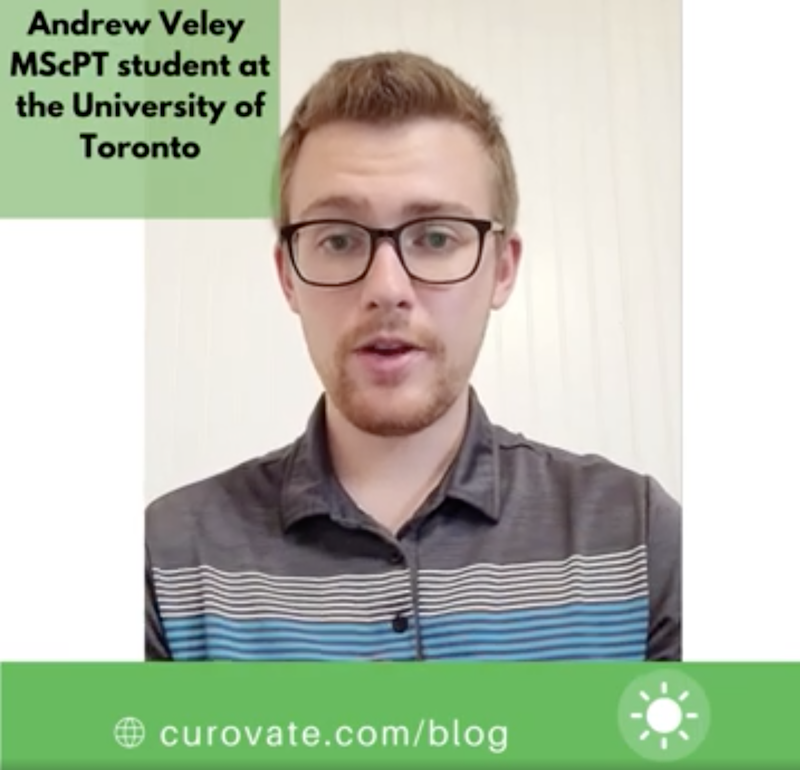
    Listen to Andrew Veley, a physiotherapist, talk about the reasons why it can take up to a year to regain your muscles after ACL surgery in the video below.

    Andrew Veley, physiotherapist, talks about the reasons why it can take so long to regain your muscle mass after ACL surgery.

    Want to find a way to quantify your muscle loss? Or better understand the difference between your surgical ACL leg and your non-surgical leg? Read this blog about how to measure the difference between your two legs by simply measuring your thigh circumference. If you need a video explanation of what thigh circumference measurements are and how they can be used to track your progress, watch this short video.

    Here is Andrew’s full blog on muscle loss after ACL surgery.

    Read all 6 Andrew’s blogs here!

    If you are recovering from an ACL injury or ACL surgery, download our Curovate physiotherapy app from the links below. Curovate offers daily video-guided exercises, the ability to measure knee range of motion, in-app chat with a physiotherapist to answer your questions, and educational blogs and webinars.

    If you need more tailored help during your ACL recovery, check out our Virtual Physiotherapy page to book your 1-on-1 video session with a physiotherapist.


    acl knee physical therapy 1080x1080 2
    Download it on Google Play


    Other blogs related to ACL surgery and rehabilitation

    References

    1. Gerber JP, Marcus RL, Dibble LE, Greis PE, Burks RT, LaStayo PC. Effects of early progressive eccentric exercises on muscle size and function after anterior cruciate ligament reconstruction: a 1-year follow-up study of a randomized clinical trial. Phys Ther. 2009;89(1):51-59. doi:10.2522/ptj.20070189

    2. Erskine RM, Fletcher G, Folland JP. The contribution of muscle hypertrophy to strength changes after resistance training. Eur J Appl Physiol. 2014;114(6):1239-1249. doi:10.1007/s00421-014-2855-4

    3. Suchomel TJ, Nimphius S, Stone MH. The importance of muscle strength in athletic performance. Sports Med. 2016;46(10):1419-1449. doi:10.1007/s40279-016-0486-0

    4. DeFreitas JM, Beck TW, Stock MS, Dillon MA, Kasishke PR. An investigation of the time course of training-induced skeletal muscle hypertrophy. Eur J Appl Physiol. 2011;111(11):2785-2790. doi:10.1007/s00421-011-1905-4

    5. Thomas AC, Wojtys EM, Brandon C, Palmieri-Smith RM. Muscle atrophy contributes to quadriceps weakness after anterior cruciate ligament reconstruction. J Sci Med Sports. 2016;19(1):7-11. doi:10.1016/j.jsams.2014.12.009

    6. Bryant AL, Kelly J, Hohmann E. Neuromuscular adaptations and correlates of knee functionality after ACL reconstruction. J Orthop Res. 2008;26(1):126-135. doi:10.1002/jor.20472

    7. Lepley LK, Davi SM, Burland JP, Lepley AS. Muscle atrophy after ACL injury: implications for clinical practice. Sports Health. 2020;12(6):579-586. doi:10.1177/1941738120944256

    8. Fowler Kennedy. Physiotherapy according to the ACL reconstruction protocol. 2015. http://fowlerkennedy.com/wp-content/uploads/2015/11/PHYSIOTHERAPY-FOLLOWING-ACL-RECONSTRUCTION-PROTOCOL-November-2015.pdf. Accessed July 18, 2021.

    9. van Melick N, van Cingel REH, Brooijmans F, et al. Evidence-based clinical practice update: practice guidelines for anterior cruciate ligament rehabilitation, based on a systematic review and multidisciplinary consensus. Br J Sports Med. 2016;50(24):1506-1515. doi:10.1136/bjsports-2015-095898
     

    Source link

  • Exercise and Safe Movement – Bone Talk

    Exercise and Safe Movement – Bone Talk

    shutterstock 520248565 1

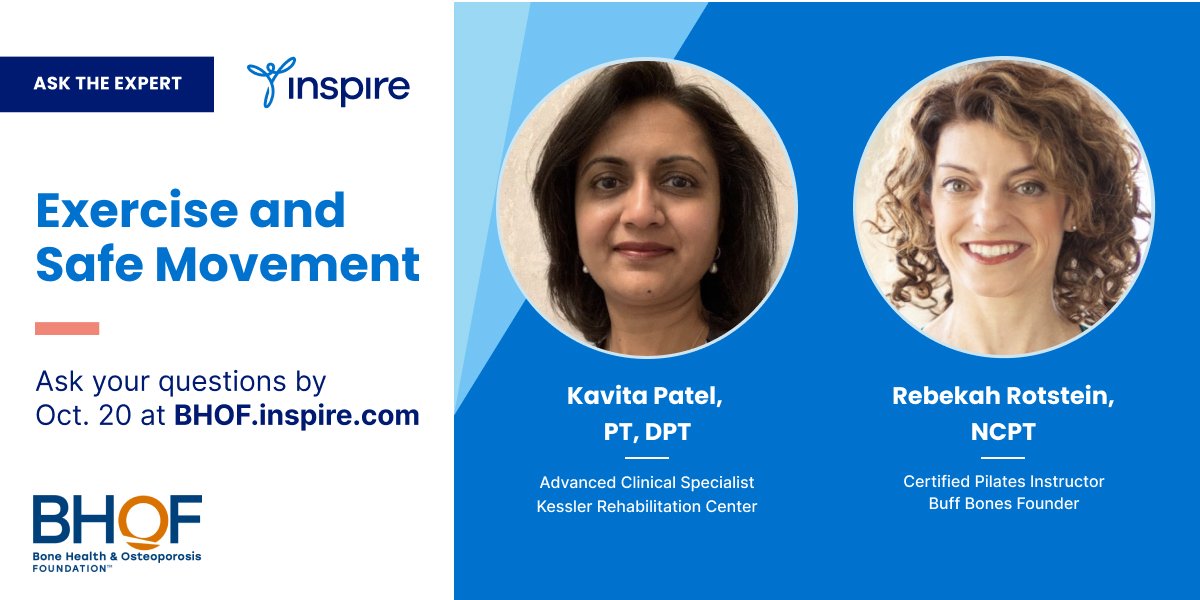
    Visit the BHOF online support community, hosted by Inspire, to post your questions about exercise and safe exercise. Your questions will be answered Monday, October 16 through Friday, October 20, 2023 by KavitaPatel, PT, DPT, a physical therapist and Master Trainer for BHOF’s BoneFit USA Exercise Training Program for exercise specialists and healthcare professionals, and Rebekah Rotstein, NCPT, a certified Pilates instructor, creator of Buff Bones® and member of BHOF’s Ambassador Leadership Council.

    We encourage you to ask your questions now. Make sure you follow the post and look for comments!

    How to participate:

    • Your questions: we invite you to this post your questions in the answers section of the discussion on the BHOF Online Community Page.

      • If you prefer to ask your question anonymously, send TeamInspire a private message with the subject line “Ask the Expert – Bone Health” and they will post it to this discussion on your behalf.

      • Keep in mind that: we will NOT answer questions posted outside of this Ask the Expert post.

    • Answers: Starting Monday, October 16, we will post answers as an aggregated response to your questions in the answers section of this discussion. We can also respond to a group of similar questions with one answer.

    • End of event / restrictions: The event ends on Friday, October 20 at 11:00 PM EST. Please understand if we cannot answer your question due to time or subject limitations.

    Visit the profiles of each of our experts and read their bio to learn more!

    Kavita Patel, DPT: https://www.inspire.com/m/KavitaPatel_DPT/about
    Rebekah Rotstein, NCPT:
    https://www.inspire.com/m/RebekahRotstein/about

    Source link

  • Osteoarthritis: what you need to know

    Osteoarthritis: what you need to know


    By means of Jordan Brocker PT, DPT, CSSS | Foothills of Queen Creek

    Osteoarthritis is a normal physical condition caused by wear and tear on the body, leading to deterioration of the articular cartilage. This leaves the bones unprotected and eventually the deterioration of the joint can become so extreme that the bone rubs against the bone. The synovial fluid that helps lubricate the joint for normal, smooth function also deteriorates, leading to resistance to movement and often audible noises during movement. Both factors play a role in the pain and limitation of the affected joints.

    Unfortunately, there are no means to completely reverse arthritis that has already developed. But, and more importantly, there is something you can do about it. Research and my professional experience have shown that physiotherapy can help relieve the pain and discomfort caused by osteoarthritis, so that your recovery is more than adequate and you can continue to do the activities you enjoy.

    Osteoarthritis: important factors to address

    • Weakness and flexibility in muscles related to affected joints
    • Stability of associated joints
    • Specific joint movement and mobility
    • Body mechanics affected by different joints
    • Balance and proprioception for the joints of the lower extremities
    • Muscle endurance

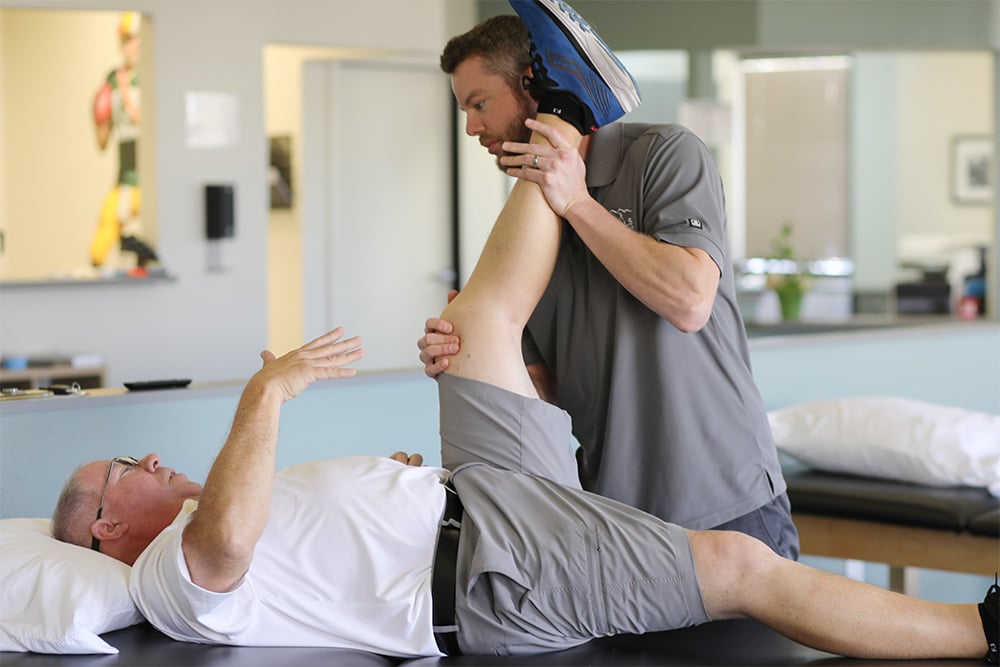
    Patient with osteoarthritis is stretched by physiotherapist.

    How physiotherapy can treat osteoarthritis

    Physical therapy reduces the limitations caused by a person’s arthritis by addressing each of the above factors appropriately and uniquely for each individual. Everyone will have different causative factors that change how their arthritis is experienced and how it progresses. Your physical therapist should address these issues appropriately so that you can get the greatest benefit from treatment. Physiotherapy will allow optimal function of the arthritic joint to prevent further deterioration and promote its current integrity.

    For example, a widely arthritic joint is the knee. Often, degeneration of the lateral (outer) aspect of the knee can occur at a higher level than the medial (inner) joint due to more force being placed on the outside of the knee during weight-bearing activities. The knee position that causes this is known as genu valum and is seen when the knee is positioned towards the center of the body, not towards the hip. The culprits responsible for this positioning are often weak hip and ankle muscles. Therefore, targeting the weaknesses in these muscle groups and incorporating them into activities (such as walking or bending/squatting) could help reduce abnormal forces on the knee, reducing irritation.

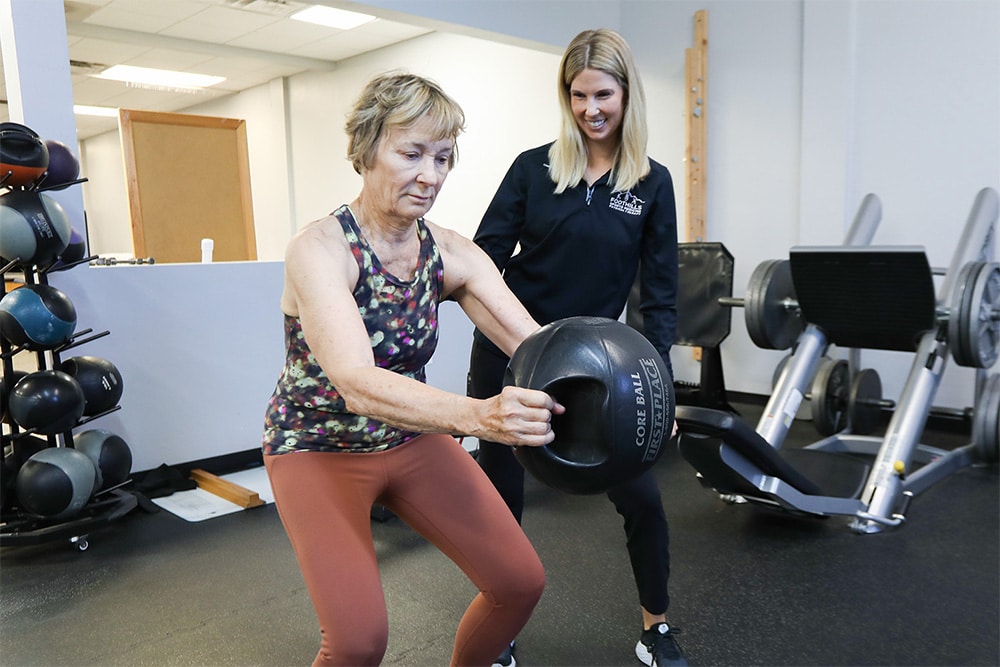
    Physiotherapist helps patient build strength with osteoarthritis.

    Tailor-made exercise program for the treatment of osteoarthritis

    As physiotherapists, we observe local joints and the entire body to assess possible areas of disability and then improve an individual’s body mechanics. Based on our evaluation process, we create a program of specific exercises to best meet each person’s needs. We work to create independence with a home exercise program that allows them to continue the exercises. With a good understanding of the concepts behind the exercises for continued rehabilitation.

    Many factors can determine the effectiveness of osteoarthritis treatment. Such as the severity of the problem, current or previous level of function, joint deformity or other bone diseases. If these factors are present, it does not mean that a person cannot do anything about their arthritis. However, it can affect the amount of improvement that can occur and how long it takes to improve. Ultimately, doing something about osteoarthritis will be much more helpful than sitting still and allowing the process to continue. The amount of improvement you can achieve could change your life if you take action!

    Foothills Sports Medicine Physical Therapy is committed to providing hands-on, individualized care to people of all ages with numerous conditions. Our physiotherapists are committed to your complete recovery. Schedule a free assessment with highly trained staff, or contact one of our many locations throughout the valley.

    The post Osteoarthritis: What You Need to Know appeared first on Foothills Physical Therapy & Sports Medicine – Phoenix Metro.

    Source link