Famous NFL ACL Tears 2026 Analysis: Careers, Recoveries, and What Every Fan Should Know
In the 2025 season, 13 high-profile skill position players, including Patrick Mahomes and Tyreek Hill, suffered season-ending ACL tears, making famous NFL ACL tears 2026 analysis one of the most searched and discussed topics in professional football today. These devastating knee injuries do not just sideline athletes for months; they reshape rosters, alter playoff races, and raise serious questions about long-term athlete health.
Key Takeaways
| Question | Answer |
|---|---|
| What is an ACL tear? | It is a rupture of the anterior cruciate ligament inside the knee, typically caused by sudden cutting, pivoting, or contact forces. Learn more about ACL injuries and knee brace options. |
| How long does NFL ACL recovery take? | Most players require 9 to 12 months of rehabilitation before returning to competitive play. |
| Which NFL position suffers ACL tears most often? | Running backs, wide receivers, and linebackers face the highest risk due to constant cutting and contact. |
| Can NFL players fully return after an ACL tear? | Most do, though performance metrics often dip in the first season back. Ligament knee injuries carry long-term implications that vary by individual. |
| Does an ACL tear cause lasting knee pain? | Yes. Many players experience chronic knee pain and secondary issues like meniscus damage after returning to play. |
| What other injuries occur alongside ACL tears? | Meniscus tears, PCL damage, and cartilage degradation are common companions to ACL ruptures in NFL athletes. |
| Why does ACL injury analysis matter in 2026? | With a record number of elite players affected in the previous season, teams and medical staff are actively revising prevention protocols heading into the 2026 season. |
This infographic previews the five most notable NFL ACL tears. It highlights when they occurred and their impact on teams and players.
Understanding the ACL and Why NFL Players Knee Injuries Are So Devastating
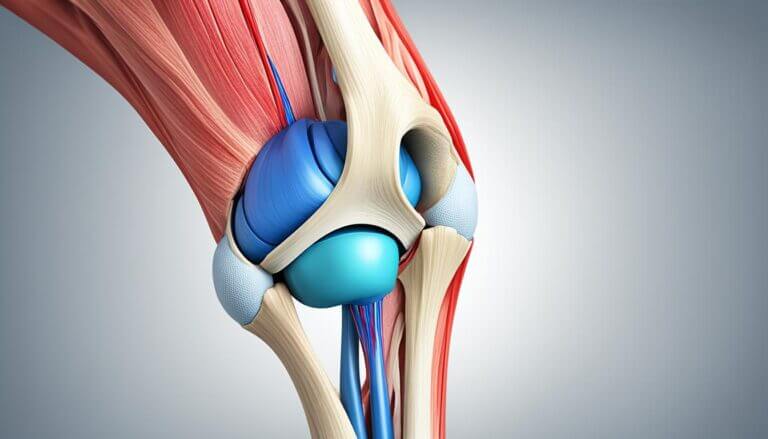
The anterior cruciate ligament sits deep inside the knee joint, connecting the femur to the tibia. It stabilizes the joint during rotational movement, making it absolutely critical for any athlete who runs, cuts, or changes direction at speed.
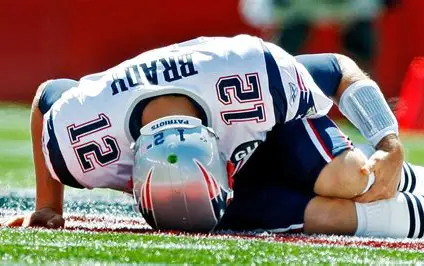
NFL players perform these actions hundreds of times per game. When the ACL tears, the resulting knee instability is immediate and severe. The player typically hears or feels a pop, followed by rapid swelling and the complete inability to continue competing.
What makes these injuries particularly difficult is the layers of damage that often accompany the primary tear. Cartilage, meniscus tissue, and surrounding ligaments frequently suffer collateral damage in the same moment. Understanding traumatic knee events at this level requires looking beyond the ACL itself.
Famous NFL ACL Tears 2026 Analysis: The Players Who Defined a Generation of Injuries
Conducting a thorough famous NFL ACL tears 2026 analysis requires revisiting the injuries that had the greatest ripple effects across the league. These are not just medical events; they are turning points in football history.
Patrick Mahomes (Kansas City Chiefs)
The injury to Mahomes in the 2025 season sent shockwaves through the NFL. As a three-time Super Bowl champion and the face of the league, his absence fundamentally changed the playoff picture. His recovery timeline and return status remain one of the most closely watched stories heading into 2026.
Mahomes’s situation illustrates how even elite athletes with exceptional physical conditioning are not immune to knee trauma on the field.
Tyreek Hill (Miami Dolphins)
Hill’s ACL tear in 2025 was equally stunning. As one of the fastest players in NFL history, the prospect of him fully regaining pre-injury speed after reconstruction raised serious questions. Speed-dependent receivers historically face a longer functional recovery than other positions.
His case highlights how knee pain and reduced mobility can particularly affect players whose entire skill set depends on explosive movement.
Historical Context: Adrian Peterson (2011, Minnesota Vikings)
No famous NFL ACL tears 2026 analysis is complete without acknowledging Adrian Peterson’s legendary 2011 injury. He tore his ACL in December of that year and returned just nine months later to rush for 2,097 yards, nearly breaking the all-time single-season record. His comeback reset expectations league-wide for what recovery could look like.
Odell Beckham Jr. (2017 and 2020)
Beckham suffered multiple major knee injuries across his career. His 2017 ACL tear with the Giants and his 2020 injury during Super Bowl LVI participation altered the trajectory of a career that many expected to reach historic receiver numbers. His experience shows that repeat knee hurt events compound recovery difficulty significantly.
Robert Griffin III (2012-2013, Washington)
RG3’s ACL tear, suffered during a 2012 playoff game, became one of the most discussed injuries of that era. Medical observers noted that he had re-entered the game after showing signs of distress, raising questions about how sideline decisions are made when a player’s knee hurt is visibly apparent.
The Medical Reality: What an ACL Tear Does to the Knee
When an NFL player tears their ACL, the surgical and rehabilitation process is extensive. The most common procedure is ACL reconstruction, where the torn ligament is replaced using a graft taken from the patient’s own body (autograft) or from a donor (allograft).
After surgery, the knee requires months of controlled progressive loading. Physical therapists work through inflammation management, range of motion restoration, and eventually sport-specific movement retraining.
For players experiencing knee pain after surgery, complications like scar tissue formation, graft failure, or secondary cartilage breakdown are real concerns. Understanding chondromalacia patella and related knee conditions helps explain why some players never quite return to their original form.
Many athletes also deal with a torn meniscus at the same time as their ACL injury. Understanding torn meniscus causes and treatment options is essential for anyone trying to understand the full scope of these combined injuries.
Famous NFL ACL Tears 2026 Analysis: How Injuries Compare Across Positions
Not all ACL tears carry the same career implications. The position a player occupies on the field determines how quickly and fully they can return to elite performance.
- Quarterbacks: Benefit from the highest return-to-play rates. The position demands less lateral cutting and high-speed contact after the snap compared to other roles.
- Running Backs: Face the greatest functional challenge post-ACL surgery. Their position demands explosive short-area movements, which are exactly what the reconstructed knee struggles with in early return.
- Wide Receivers: Speed and route-running precision are immediately impacted. Players like Tyreek Hill face the difficult question of whether elite top-end speed can be fully recovered.
- Linebackers and Defensive Backs: High contact frequency makes re-injury risk elevated. These players often experience recurring knee hurt episodes even after successful surgical recovery.
For any athlete dealing with ligament damage, a comprehensive resource on ligament knee injuries and recovery provides valuable context for understanding the full treatment journey.
The PCL Connection: Injuries That Often Accompany ACL Tears
A less-discussed aspect of famous NFL ACL tear case studies is the role of the posterior cruciate ligament (PCL). In high-impact collisions, both cruciate ligaments can be damaged simultaneously, creating a multi-ligament injury that dramatically complicates recovery.
The PCL provides rear stability to the knee joint. When it is compromised alongside the ACL, the recovery protocol becomes far more complex and the timeline significantly longer. Understanding PCL knee injuries and their management is an important part of any complete analysis of serious NFL knee trauma.
Several historically notable NFL ACL cases involved concurrent PCL damage. These players typically faced extended timelines and, in some instances, never returned to their pre-injury production levels.
Knee Pain Management During NFL Recovery: What the Science Says
Managing knee pain during ACL recovery is not a passive process. Elite NFL medical teams use a combination of physical therapy protocols, anti-inflammatory interventions, and progressive strength training to keep pain manageable and prevent compensatory injuries elsewhere in the kinetic chain.
Players frequently develop secondary pain patterns during recovery. Compensating for a healing knee by overloading the opposite leg or altering gait mechanics can lead to hip, ankle, and lower back issues. Recognizing and addressing comprehensive knee pain patterns early in recovery prevents these cascading problems.
For anyone seeking a comprehensive framework for addressing knee pain from injury through rehabilitation, our complete guide to understanding and overcoming knee pain covers the full spectrum of treatment approaches used at every level of athletic competition.
Famous NFL ACL Tears 2026 Analysis: Prevention Strategies Teams Are Prioritizing
One of the most important outputs of any serious famous NFL ACL tears 2026 analysis is the shift in how franchises are approaching injury prevention. Data from recent seasons has prompted measurable changes in training philosophy across the league.
Teams are now investing heavily in the following prevention strategies:
- Neuromuscular Training Programs: Teaching athletes to land, cut, and decelerate in biomechanically safer positions to reduce ACL stress.
- Load Monitoring Technology: GPS and accelerometer data helps coaching staffs identify when a player’s training volume is entering dangerous territory.
- Turf Surface Analysis: Research consistently links certain artificial turf surfaces to higher ACL tear rates. Several stadiums are revisiting field surface decisions in 2026.
- Pre-season Screening: Movement quality screenings identify athletes with mechanical risk factors before the season begins.
- Bracing Protocols: Prophylactic knee bracing for high-risk positions is being reconsidered in light of new evidence.
For players and fans wanting to understand how bracing fits into ACL injury management, reviewing information on ACL injury and knee brace use provides a clear picture of current recommendations.
The Long-Term Toll: Traumatic Knee Events and Career Longevity
A single ACL tear is a major event. Multiple knee surgeries across a career create a fundamentally different physiological challenge. Many of the players featured in any famous NFL ACL tears 2026 analysis faced decisions about whether to continue playing at all after repeated traumatic events.
The cumulative effect of traumatic knee events can include early-onset arthritis, persistent instability, and chronic pain that outlasts a player’s career by decades. Understanding the full scope of traumatic knee injuries and their long-term management is essential for athletes, coaches, and medical professionals making these career decisions.
Former players like Reggie Bush and Willis McGahee, who suffered catastrophic knee injuries during their careers, have spoken publicly about the permanent knee pain they manage in retirement. These testimonials add a human dimension to the statistical analysis.
What the 2026 NFL Season Tells Us About the ACL Landscape Going Forward
As we move through 2026, the NFL is in an active state of response to the injury data accumulated over the past several seasons. Rule changes around blocking, kickoff formations, and practice contact limits are all being evaluated through the lens of player safety.
Medical technology is advancing in parallel. Biological augmentation techniques, improved graft materials, and more precise rehabilitation robotics are changing what recovery looks like for players who knee hurt events would have ended careers a decade ago.
The famous NFL ACL tears 2026 analysis is not just a retrospective exercise. It is an active, evolving conversation that shapes how the sport protects its athletes going forward.
Conclusion
A thorough famous NFL ACL tears 2026 analysis reveals a sport at a crossroads: extraordinary athleticism producing extraordinary injury risk, met by extraordinary advances in medical understanding and prevention. From Adrian Peterson’s legendary comeback to the 2025 season’s wave of elite talent lost to knee injury, these events collectively push the NFL toward better science, better protocols, and better outcomes.
Whether you follow the NFL for its competitive drama or care deeply about athlete welfare, understanding ACL injuries at this level matters. The knee is one of the most complex joints in the human body, and when it knee hurt at the level these athletes experience, the consequences extend far beyond a single season.
For anyone looking to understand knee pain from any cause, whether sport-related or otherwise, our resources on understanding, managing, and overcoming knee pain provide the comprehensive educational foundation every reader deserves.
Frequently Asked Questions
What are the most famous NFL ACL tears in league history?
The most discussed famous NFL ACL tears include Adrian Peterson (2011), Odell Beckham Jr. (2017 and 2020), Robert Griffin III (2012), and more recently Patrick Mahomes and Tyreek Hill in the 2025 season. Any complete famous NFL ACL tears 2026 analysis must include all of these cases to understand how recovery expectations have evolved over time.
How long does it take an NFL player to recover from an ACL tear in 2026?
The standard recovery window remains 9 to 12 months for most players in 2026, though advances in rehabilitation mean some return closer to the 8-month mark. Quarterbacks tend to return fastest, while running backs and wide receivers often need the full 12 months to regain position-specific performance capabilities.
Do NFL players experience permanent knee pain after ACL surgery?
Many do. Chronic knee pain after ACL reconstruction is common, particularly when the injury involved secondary damage to the meniscus or cartilage. Long-term studies show that a significant portion of former NFL players live with persistent knee pain well into retirement.
Which NFL position has the highest ACL tear rate?
Running backs and linebackers statistically suffer ACL tears at higher rates than other positions due to the constant cutting and contact demands of their roles. Quarterbacks, by contrast, have a 92.9% return-to-play rate after surgery, the highest of any position in the NFL.
Is it possible for an NFL player to return to elite performance after an ACL tear?
Yes, many do. Adrian Peterson’s 2012 return is the most famous example of a full performance recovery after an ACL tear. However, research shows that on average, players perform at slightly reduced levels in their first season back, with most regaining pre-injury form by their second season if no re-injury occurs.
What other knee injuries commonly occur at the same time as an ACL tear?
Torn meniscus injuries, PCL damage, and cartilage degradation frequently accompany ACL ruptures in NFL players. These compound injuries extend recovery timelines and increase the risk of long-term knee instability and arthritis.
How is the NFL changing its approach to ACL injury prevention in 2026?
In 2026, the NFL is actively revising field surface standards, expanding neuromuscular training requirements, and using load monitoring technology to reduce ACL injury rates. The famous NFL ACL tears 2026 analysis conducted by team medical staffs across the league is directly informing these changes to protect players throughout the season.