
Are you experiencing knee pain without any apparent reason?
We often focus on the knee itself when dealing with knee pain, but what if the real issue lies elsewhere? Tight hip flexors can be a surprising culprit behind knee pain.
The connection between hip flexor dysfunction and knee pain is often overlooked. Altered biomechanics and movement patterns due to tight hip flexors can lead to knee pain.
We will explore this intricate relationship and discuss the importance of recognizing this connection for proper diagnosis and treatment.
Key Takeaways
- Understanding the link between tight hip flexors and knee pain.
- Recognizing the role of hip flexor dysfunction in knee pain.
- Importance of proper diagnosis and treatment.
- Causes and symptoms of knee pain from tight hip flexors.
- Effective solutions for addressing knee pain.
Understanding Hip Flexors and Their Function
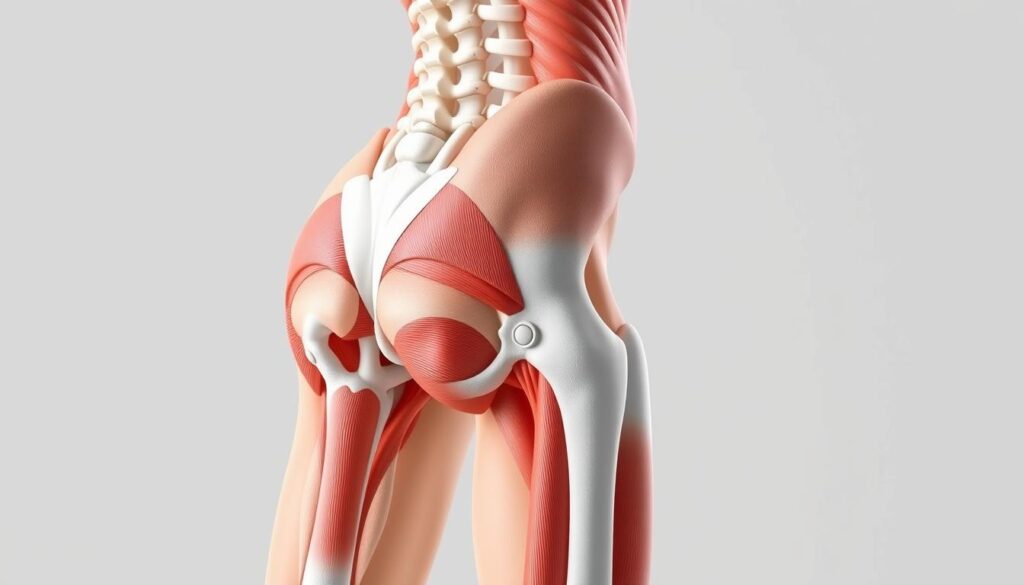
Understanding the function of hip flexors is vital for appreciating their impact on our overall musculoskeletal health. Hip flexors are a group of muscles that are crucial for various bodily movements and maintaining proper posture.
What Are Hip Flexors?
Hip flexor muscles are responsible for bringing the leg towards the spine upon contraction and allowing the leg to move behind the body when they lengthen. This action is known as flexing the hip. The primary hip flexor muscles include the iliacus, psoas major, and rectus femoris, among others. These muscles work together to facilitate movement and stabilize the body during various activities.
The Role of Hip Flexors in Movement and Posture
Hip flexors play a pivotal role in numerous everyday movements, including walking, running, climbing stairs, and sitting down. They are essential for initiating the swing phase of the gait cycle during walking and running, thereby facilitating locomotion. Moreover, hip flexors contribute significantly to maintaining proper posture by stabilizing the pelvis and lower back.
| Movement/Activity | Role of Hip Flexors |
|---|---|
| Walking | Initiate swing phase, facilitate forward movement |
| Running | Enhance stride length and efficiency |
| Climbing Stairs | Assist in lifting the leg to the next step |
| Sitting Down | Control the descent and stabilize the body |
Proper hip flexor function is crucial for overall movement efficiency. Dysfunction in these muscles can lead to compensatory patterns throughout the body, potentially resulting in issues such as knee pain. By understanding the role of hip flexors, we can better appreciate their importance in maintaining not just mobility but also overall musculoskeletal health.
The Connection Between Tight Hip Flexors and Knee Pain
Understanding the connection between tight hip flexors and knee pain is crucial for developing effective treatment and prevention strategies. We will explore how tight hip flexors can lead to knee pain through their impact on the biomechanics of the hip and knee joint.
Biomechanical Relationship Between Hips and Knees
The biomechanical relationship between the hips and knees is complex and interdependent. Tight hip flexors can lead to an anterior pelvic tilt, altering the alignment of the femur and affecting patellofemoral tracking. This misalignment can cause increased stress on the knee joint, potentially leading to patellofemoral pain syndrome. The quadriceps muscles, which are responsible for knee extension, can be affected by the altered biomechanics of the hip, further contributing to knee pain.
How Hip Dysfunction Affects Knee Joint Mechanics
Hip dysfunction, including tight hip flexors, can significantly affect knee joint mechanics. Limited hip extension due to tight flexors forces the knee to compensate during the gait cycle, potentially causing increased loading on knee structures. Moreover, hip flexor tightness can lead to internal femoral rotation, resulting in knee valgus (inward collapse) and increased strain on the medial knee. Over time, these mechanical changes can contribute to various knee pathologies, including patellofemoral pain, IT band syndrome, and issues with the meniscus and ligaments.
Common Causes of Tight Hip Flexors
Understanding the causes of tight hip flexors is crucial for addressing the associated discomfort and preventing further complications. Tight hip flexors can result from a variety of factors, including lifestyle choices, physical activities, and postural imbalances.
Sedentary Lifestyle and Prolonged Sitting
A sedentary lifestyle characterized by prolonged periods of sitting is a significant contributor to tight hip flexors. When we sit for extended periods, our hip flexor muscles remain in a shortened position, leading to muscle imbalances and tightness. This is particularly common among individuals with desk jobs or those who spend a lot of time driving or watching TV.
To mitigate the effects of a sedentary lifestyle, it’s essential to incorporate regular breaks and stretching exercises into your daily routine. Simple actions like standing up, stretching, and moving around can help reduce muscle tightness and improve overall posture.
Athletic Activities That Strain Hip Flexors
Certain athletic activities can significantly strain the hip flexor muscles, leading to tightness and potential injury. Sports that involve repetitive hip flexion, such as running, cycling, and gymnastics, can cause overuse and strain on the hip flexor muscles. Athletes participating in these activities should ensure they have a proper warm-up and cool-down routine to minimize the risk of developing tight hip flexors.
Additionally, incorporating strength training exercises that target the hip flexors and their antagonists (such as the glutes and hamstrings) can help maintain muscle balance and reduce the risk of strain.
Postural Imbalances and Alignment Issues
Postural imbalances and alignment issues can also contribute to tight hip flexors. Conditions such as anterior pelvic tilt and lower crossed syndrome can lead to an overactive hip flexor muscle, resulting in tightness and discomfort. Furthermore, issues like leg length discrepancies can cause compensatory patterns that stress the hip flexors on one side more than the other, affecting the overall position and function of the hip.
- Anterior pelvic tilt and lumbar hyperlordosis can exacerbate hip flexor tightness.
- Muscle imbalances between hip flexors and their antagonists play a key role in developing hip flexor issues.
- Alignment problems in the feet and ankles can affect hip positioning and function.
Recognizing Symptoms of Knee Pain from Tight Hip Flexors
Understanding the symptoms associated with knee pain from tight hip flexors is essential for proper management. Tight hip flexors can cause a variety of issues that affect not just the hip but also the knee, leading to pain and discomfort.
Pain Patterns and Locations
Pain from tight hip flexors can manifest in different ways. Common symptoms include pain when walking or running, and increasing pain when bending the leg toward the chest. Other symptoms are muscle spasms or cramping, tenderness in the hips, groin, or thigh, and pain when stretching the thigh or hip muscles. Additionally, individuals may experience muscle tightness after a period of rest and swelling or bruising at the pain site.
Movement Limitations and Functional Impacts
Tight hip flexors can lead to significant movement limitations. Individuals may experience difficulty achieving a full stride length while walking or running, impacting their overall mobility. Daily activities such as getting in and out of cars, climbing stairs, and rising from seated positions can become challenging. As people try to avoid pain, they may develop movement compensations, potentially leading to additional problems in other areas of the body. Characteristic morning stiffness and pain after periods of inactivity are key indicators of this condition. If left unaddressed, these functional limitations can progress, leading to chronic movement adaptations.
Diagnosing Hip Flexor-Related Knee Pain
A precise diagnosis of knee pain originating from tight hip flexors is achieved through a blend of physical assessment techniques and cutting-edge diagnostic tools. We use a comprehensive diagnostic approach to understand the root cause of knee pain.
Physical Assessment Techniques
Physical assessment techniques play a crucial role in diagnosing hip flexor-related knee pain. We use various assessment techniques to evaluate the knee joint position and joint position sense. This includes tests that measure the accuracy of reproducing specific knee joint angles, which can be affected by tight hip flexors.
A customized program was used to calculate the accuracy of the reproduction of each knee joint angle, represented as a constant error. This measurement helps in understanding the deviation from the target angle and assessing the severity of the condition.
Some of the specialized assessment tools we utilize include dynamometers, goniometers, and motion analysis systems. These tools provide objective measurements of hip and knee function, helping us identify any abnormalities in movement patterns.
Medical Imaging and Other Diagnostic Tools
While physical assessment is crucial, medical imaging techniques such as X-ray, MRI, and ultrasound are also employed to rule out structural issues within the knee joint itself. However, it’s worth noting that many cases of knee pain from tight hip flexors show normal knee structures on imaging despite significant pain.
Emerging diagnostic approaches, including dynamic ultrasound and 3D motion capture technologies, are becoming increasingly important in capturing the relationship between hip function and knee pain. These advanced tools help in providing a more detailed understanding of the biomechanical relationship between the hips and knees.
| Diagnostic Tool | Purpose | Benefits |
|---|---|---|
| Dynamometers | Measure muscle strength | Objective assessment of hip and knee function |
| Goniometers | Measure joint range of motion | Helps in identifying movement limitations |
| Motion Analysis Systems | Analyze movement patterns | Reveals compensations not visible during static tests |
Effective Stretching Techniques for Tight Hip Flexors
The quest for effective stretching techniques to alleviate tight hip flexors has led to a variety of methods being developed and studied. We will explore the most commonly used stretching techniques, including dynamic stretching and Hold-Relax Proprioceptive Neuromuscular Facilitation (HR-PNF), and compare their effectiveness.
Dynamic Stretching Methods
Dynamic stretching involves active movements that stretch the hip flexor muscles. This technique is particularly beneficial for athletes or individuals who engage in high-intensity activities. Dynamic stretching can help improve range of motion and reduce muscle stiffness. Examples include leg swings and high knees. Research indicates that dynamic stretching can be effective in improving hip extension range of motion (ROM), although it may not be as effective as other methods like HR-PNF in some cases.
Hold-Relax Proprioceptive Neuromuscular Facilitation (HR-PNF)
HR-PNF is a more advanced stretching technique that involves contracting and then relaxing the muscle to be stretched. This method can be particularly effective for improving flexibility and reducing muscle tension. Studies have shown that HR-PNF can lead to significant improvements in hip extension ROM, often more so than dynamic stretching. The technique requires a partner or a resistance band and involves holding the muscle in a stretched position for a period, then contracting it against resistance before relaxing into a deeper stretch.
Comparing Effectiveness of Different Stretching Approaches
When comparing different stretching techniques for tight hip flexors, research suggests that both dynamic stretching and HR-PNF can be effective, but they have different outcomes. Our analysis of current research findings indicates that there was a significant effect of time on hip extension ROM in both groups (p
By understanding the benefits and limitations of different stretching techniques, individuals can make informed decisions about the most appropriate approach for their specific needs. Combining different stretching methods may also offer a comprehensive approach to managing tight hip flexors and associated knee pain.
Comprehensive Treatment Options for Knee Pain from Tight Hip Flexors
Managing knee pain caused by tight hip flexors requires a multifaceted approach that addresses both the symptoms and underlying causes. We will explore various treatment strategies to help alleviate discomfort and improve mobility.
The RICE Method for Immediate Relief
The RICE method, standing for Rest, Ice, Compression, and Elevation, is a widely recognized first-line treatment for acute injuries, including those causing knee pain from tight hip flexors. By giving the affected area rest, applying ice to reduce inflammation, using compression to support the area, and elevating the leg to decrease swelling, individuals can experience immediate relief from pain.
Physical Therapy Interventions
Physical therapy plays a crucial role in treating knee pain caused by tight hip flexors. Therapists can design personalized exercise programs that focus on strengthening the hip flexors and surrounding muscles, improving flexibility, and enhancing knee joint mechanics. Techniques such as manual therapy and therapeutic exercises can significantly reduce pain and improve function.
Self-Massage and Myofascial Release Techniques
Self-massage and myofascial release are effective techniques for managing tight hip flexors. By applying gentle, sustained pressure to the affected muscles, individuals can release tension and reduce pain. Regular practice of these techniques can lead to improved flexibility and reduced discomfort in the knee area.
Medications and Medical Interventions
For managing pain associated with tight hip flexors, various medication options are available. Over-the-counter pain relievers such as acetaminophen, ibuprofen, or naproxen sodium can provide temporary relief. In more severe cases, medical interventions like corticosteroid injections or regenerative medicine approaches may be considered. It’s essential to consult with a healthcare provider to determine the best course of treatment and to discuss potential side effects and interactions with other medications. In rare cases where there’s a severe injury, such as a grade-three tear, surgery may be necessary to repair the muscle or surrounding tendons and ligaments.
Understanding the range of treatment options available is crucial for effectively managing knee pain from tight hip flexors. By combining these approaches, individuals can develop a comprehensive plan to alleviate pain, improve mobility, and prevent future injury.
Prevention Strategies for Hip Flexor-Related Knee Issues
To mitigate the risk of knee pain stemming from tight hip flexors, it’s essential to adopt prevention strategies that encompass ergonomic improvements, tailored exercise programs, and effective warm-up and cool-down practices. By integrating these approaches into daily life, individuals can significantly reduce the likelihood of developing knee pain associated with tight hip flexors.
Workplace Ergonomics and Posture Improvements
Improving workplace ergonomics is crucial for preventing hip flexor tightness. This can be achieved by ensuring that workstations are set up to promote good posture, with monitors at eye level and chairs adjusted to support the natural curve of the lower back. Regular breaks should be taken to stand, stretch, and move around, reducing the risk of muscle imbalances that can lead to knee pain.
Balanced Exercise Programs for Hip Health
A well-rounded exercise program that includes strengthening exercises for the hip flexors and surrounding muscle groups, as well as flexibility exercises, can help maintain optimal hip function. Incorporating exercises that target the quadriceps and other supporting muscles can also contribute to knee stability and overall lower limb health. It’s essential to balance high-intensity activities with lower-intensity exercises to avoid overstraining the hip flexor group.
Proper Warm-up and Cool-down Routines
Engaging in proper warm-up and cool-down routines is vital for preventing hip flexor strain during physical activity. A dynamic warm-up that includes stretching and mobilization exercises can prepare the muscles for more intense activities. Conversely, a cool-down routine that involves static stretching can help improve flexibility and reduce muscle soreness after exercise. The specific warm-up and cool-down needs may vary depending on the type of activity being performed, such as running, cycling, or strength training.
Living Pain-Free: Long-Term Management of Hip and Knee Health
To live pain-free, it’s essential to adopt a sustainable long-term strategy for hip and knee health that evolves with your changing needs. This involves developing a comprehensive approach that incorporates exercise, posture correction, and lifestyle adjustments to prevent the recurrence of knee pain caused by tight hip flexors.
One key factor is movement variability, which helps prevent overuse patterns that can lead to hip flexor tightness and subsequent knee pain. Regularly reassessing your movement patterns and making necessary adjustments is crucial for maintaining healthy hips and knees over time. This may involve modifying your exercise routine as you age or experience changes in weight or activity level.
Additionally, being mindful of the psychological aspects of pain management is vital. Developing a positive relationship with movement and avoiding fear-avoidance behaviors can significantly impact your long-term hip and knee health. Periodic check-ins with healthcare providers, even when pain-free, can help identify potential issues before they become major problems, ensuring effective management of your knee health.
By adopting these strategies and maintaining a proactive approach, you can enjoy long-term hip and knee health, reducing the likelihood of pain and improving your overall quality of life.
Leave a Reply