Mercy Medical Center Persona IQ Zimmer Biomet4b
|

Mercy Medical Center now offers a new smart implant for the knee with benefits for patient and surgeon


BALTIMORE , Oct. 26, 2023 /PRNewswire-PRWeb/ — Orthopedic surgeons Marc W. Hungerford, MD, Chief of Orthopedics at Mercy Medical Center, and Philip Neubauer, R.Ph., MD, Orthopedics and Joint Replacement at Mercy, are among the first surgeons in Maryland that offered “smart implant” technology during knee replacement surgeries.

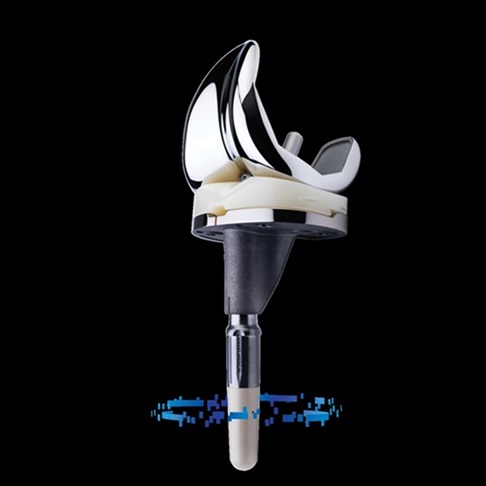
Developed by ZIMMER BIOMET, the Persona IQ® has a small “smart” stem extension attached to the lower portion of the implant. This stem contains sensors that record patient-specific movement data throughout the day, analyze it overnight and present it for assessment the next day.

“Essentially, it is a joint replacement that uses a prosthesis equipped with a smart device that can monitor the patient’s progress,” said Dr. Hungerford.

Surgeons and care teams can remotely access key postoperative metrics throughout their patient’s surgical journey, allowing them to monitor post-TKA (Total Knee Arthroplasty) activity levels between office visits.

The smart knee implant records relevant gait data, including:

  • Functional range of motion of the knee (ROM)
  • Qualified step count
  • Walking speed
  • Cadence
  • Traveled distance
  • Stride length

The smart knee implants provide a direct view of patient-specific data for at least 10 years, allowing surgeons to monitor their patients’ activity levels between visits. In this way, they can remain connected during the patient’s postoperative total knee arthroplasty care.

Additionally, being able to track their postoperative data can help patients feel more connected throughout their recovery journey, promoting greater patient interaction.

“Thanks to this new technology, there is greater patient involvement and surgeons can remotely monitor a patient’s progress. This means better management of postoperative care,” said Dr. Hungerford.

“With the Persona IQ, as a doctor I can no longer just estimate how well a patient’s joint is working after surgery; I have the data to determine how my patient is really doing,” said Dr. Neubauer.

“Mercy is always looking for ways to improve our patients’ experiences and treatment outcomes,” said Dr. Hungerford, “whether it be an emphasis on pre-surgical education, improvements to surgical pathways or advances in techniques and equipment. The smart implants offer real benefits for post-operative care, and we look forward to sharing them with patients.”

Founded in 1874 by The Sisters of Mercy, Mercy is home to the renowned Weinberg Center for Women’s Health & Medicine and the $400+ million, twenty-story Mary Catherine Bunting Center. Mercy is a university-affiliated teaching hospital and is nationally recognized with Magnet status for nursing excellence and named one of America’s 100 Best Hospitals for Orthopedic Surgery by Healthgrades. For more information about Mercy, visit http://www.mdmercy.com, MDMercyMedia on Facebook and Twitter(X), @MDMercy on Youtube, or call 1-800-MD-Mercy.

Media contact

Dan Collins, Mercy Medical Center, 4103329714, dcollins@mdmercy.com

SOURCE Mercy Medical Center

Source link

Similar Posts

  • Stop Your Knee From Giving Out: The 5 Best Hinged Knee Braces for ACL Support in 2026

    Recent data indicates that even in 2026, 54.9% of surgeons still prefer using a postoperative brace after primary ACL reconstruction to ensure joint stability during the early stages of healing. Understanding which brace provides the best protection is essential for your recovery and long-term joint health. Key Takeaways Topic Guidance for 2026 Best Overall Support…

  • The story of chronic traumatic encephalopathy is not as simple as it seems

    Neuropathological and clinical findings in young contact athletes exposed to repetitive head impacts McKee AC, Mez J, Abdulmohammad B, et al. JAMA Neurology. Published online 2023. doi:10.1001/jamaneurol.2023.2907 Full article available for free Take home message Less than half of young adults exposed to repetitive head impacts through sports and who suffered from mental health and…

  • |

    Flying after knee replacement

    What if the freedom to travel by air after major joint surgery isn’t as far off as you think? We understand this is a common concern. Many people who have undergone this significant orthopedic procedure worry about their next trip. flying after knee replacement Research shows that managing mobility after an operation is crucial. For instance, data indicates 3-4% of total hip arthroplasty patients develop symptomatic blood clots within three months. Our guide provides essential information for navigating air travel following a successful procedure. We aim to help you feel confident and prepared for your journey. You may wonder when it is safe to resume your plans. We explore how to manage your healing while looking ahead. By following expert-backed advice, you can minimize potential issues. Our focus is on helping you enjoy your restored mobility with peace of mind. Key Takeaways Air travel is a major concern for individuals recovering from joint surgery. Proper planning is essential for a safe and comfortable journey post-operation. Understanding the risks, like blood clots (VTE), is a critical part of preparation. Timing your trip correctly is a key milestone in the overall recovery process. Expert guidance can help reduce complications and build confidence. The goal is to regain freedom of movement and enjoy travel without worry. Understanding the Risks and Benefits of Flying after Knee Replacement The decision to fly after a major joint procedure requires a careful look at safety data and personal mobility gains. We break down the key factors to consider. Assessing Venous Thromboembolism (VTE) Risk A primary concern is venous thromboembolism, which includes deep vein thrombosis (DVT). Research shows the risk of symptomatic VTE after long flights is 1.9 to 5.2 per million person-days. For individuals who have had joint surgery, this risk is heightened. Studies indicate 3-4% of patients develop symptomatic clots within three months of a procedure like total hip arthroplasty. Balancing Recovery and Mobility Benefits The significant improvement in movement is a major positive outcome. However, balancing this benefit with the inherent dangers of blood clots requires medical guidance. Understanding these risks empowers people to make informed choices about travel timing. For comprehensive safety tips, see our detailed guide on flying after knee replacement. Pre-Flight Preparation for Knee Replacement Patients A successful journey begins long before you reach the airport, especially following a significant orthopedic operation. Proper groundwork is essential for safety and comfort. This phase involves close collaboration with your medical team. It also requires a tailored strategy for your specific needs. Consulting with Your Surgeon and Healthcare Team Your first step is to get clear guidance from your orthopedic surgeon. They understand your unique situation best. Dr. Nathan Cafferky of The Steadman Clinic recommends a two-week recovery period near the surgical site before returning home. This allows for immediate post-operative care and monitoring. consulting surgeon for knee surgery travel plan We advise creating a personalized plan with your doctor. This consultation is vital for setting a safe timeline. Creating a Personalized Recovery and Travel Plan Dr. Cafferky also suggests avoiding nonessential trips for six weeks post-surgery. This waiting time helps ensure full healing. Your plan should coordinate support from your entire care team. Focus on rehabilitation during the initial weeks. This approach minimizes risks and builds a solid foundation for future mobility. A thoughtful strategy makes the transition back to daily life much smoother. Planning Your Travel Itinerary and Navigating Airline Requirements Understanding specific carrier policies can make or break your travel plans post-surgery. We guide you through this essential step. Your itinerary must account for unique airline rules. These rules directly impact individuals recovering from an operation. Reviewing Airline Policies and Certification Requirements Research reveals varied carrier stances. A UK study found five airlines restrict flying following arthroplasty. Seven carriers mandate a medical certificate from your doctor. One even requires a 14-day waiting period post-procedure. Always verify your airline’s specific policy before booking. This is a critical precaution for all patients. Policy Type Medical Certificate Required Typical Waiting Period Restricted (No travel allowed) N/A…

  • Effective Dislocated Knee Treatment Options

    Dislocated knee, also known as knee dislocation, occurs when the patella bone is forced out of its normal position. It is a common injury that often occurs during activities that require sudden changes in direction, such as sports or dancing. The symptoms of a dislocated knee can vary depending on the severity of the injury,…

  • Avoiding Copyright Infringement in PT Videos

    Did you know that copyright infringement in physical therapy videos is a growing concern with serious legal implications? As the popularity of online video content continues to rise, it is crucial for physical therapy professionals to understand the importance of respecting copyright laws and protecting their intellectual property. In this article, we will explore the…

One Comment

Leave a Reply

Your email address will not be published. Required fields are marked *