Gentle yoga poses safe for knee bursitis
When dealing with knee discomfort, many assume stretching and movement must be avoided. But what if specific low-impact movements could support joint health instead of worsening it? We’ll explore how mindful adjustments to traditional routines can create a safer experience for sensitive joints.
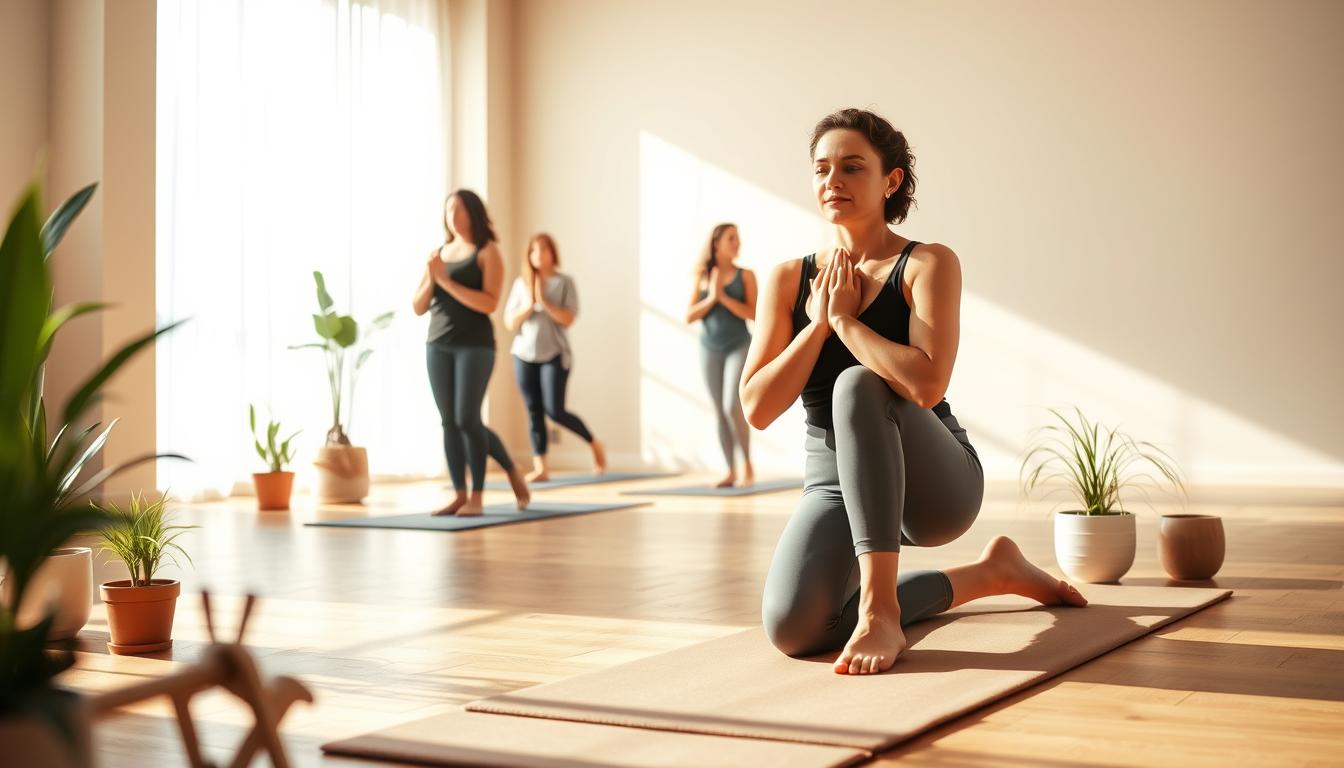
Physical therapist Bill Reif emphasizes minimizing direct pressure on inflamed areas while maintaining mobility. This approach aligns with yoga’s foundational principles of listening to your body and adapting postures. Props like mats and blocks become essential tools—not crutches—for achieving proper alignment.
Our recommendations focus on maintaining hip and back stability to reduce strain on vulnerable areas. Small shifts in weight distribution or elevation changes can make poses accessible without compromising benefits. Remember: these suggestions complement—but don’t replace—personalized medical guidance.
Key Takeaways
- Consult healthcare providers before starting any new exercise regimen
- Modify traditional postures using elevation and support tools
- Prioritize alignment over depth in joint-friendly positions
- Use thick mats or folded blankets for cushioning during floor work
- Build strength gradually through controlled, pain-free movements
Understanding Knee Bursitis and Yoga Benefits
Joint inflammation doesn’t have to mean complete stillness. Strategic movement can actually help manage discomfort when approached thoughtfully. Let’s examine how this condition develops and why certain practices promote healing.
What Is Knee Bursitis?
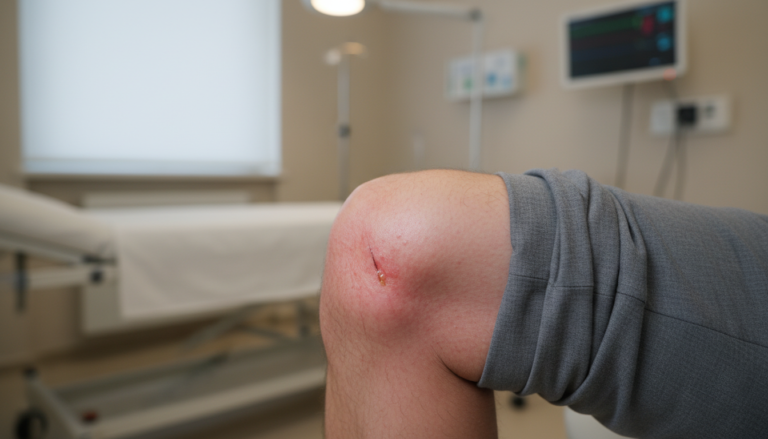
This condition involves swollen bursae—tiny sacs that reduce friction between bones and soft tissues. Repetitive motions like climbing stairs, direct injuries, or prolonged kneeling often trigger flare-ups. Even daily habits matter: slouching at desks weakens core muscles, increasing strain on lower-body joints.
How Gentle Yoga Enhances Joint Health
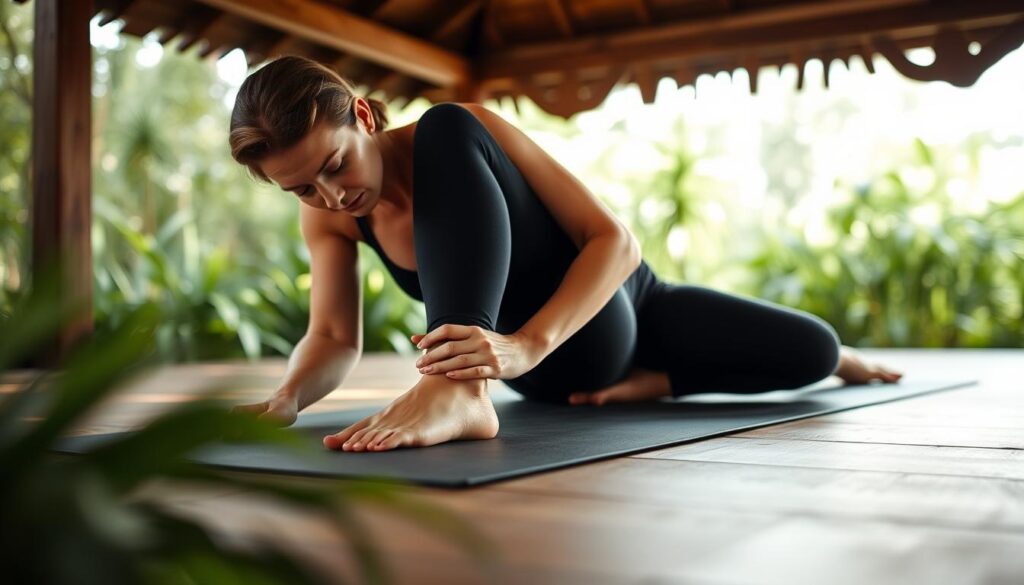
Slow, controlled movements boost blood flow to stiff areas while strengthening tissues that stabilize joints. A 2021 Johns Hopkins study revealed participants with chronic inflammation saw 34% better mobility after 12 weeks of modified routines. As therapist Mara Posner explains:
“Proper form protects vulnerable areas better than pushing for extreme stretches. It’s about working with your body’s limits.”
| Common Issue | Yoga Adaptation | Benefit |
|---|---|---|
| Tight hips | Supported bridge pose | Reduces knee pressure |
| Weak thighs | Wall-assisted chair holds | Builds leg endurance |
| Poor balance | Tree pose near a wall | Enhances foot-to-hip alignment |
Integrating low-impact modifications allows gradual progress without overloading sensitive areas. Focus on smooth transitions between positions, keeping feet firmly grounded to distribute weight evenly.
Gentle Yoga Poses Safe for Knee Bursitis and Pose Modifications
Adapting movement patterns becomes crucial when managing joint sensitivity. Small adjustments in common positions can maintain practice benefits while protecting vulnerable areas. Let’s explore practical modifications for maintaining mobility without strain.
Finding the Right Knee Bend
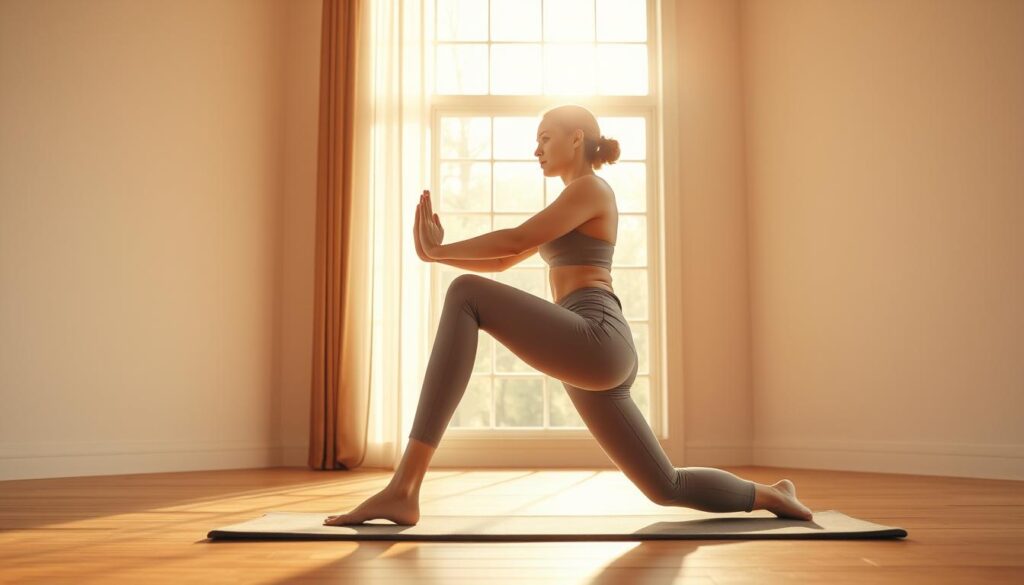
Experiment with bending depth in standing positions. Start with shallow angles where your thighs engage without joint compression. A folded blanket under the heel helps maintain proper alignment when lowering into lunges.
Web research highlights varying bend degrees in Warrior I/II to reduce bursae pressure. Try this test: If you feel tension shifting to the kneecap, elevate your stance. Use your yoga mat’s edge as a visual guide for tracking foot placement.
Modifying Warrior and Child Poses for Comfort
In Warrior sequences, widen your stance and keep hips squared forward. This distributes weight more evenly across both legs. For those with limited flexibility, place hands on blocks rather than reaching downward.
Child’s pose variations prove particularly adaptable. Separate knees wider than hip-width and place a cushion between calves and thighs. Maintain active engagement through arms and core to prevent collapsing into joints.
| Position | Modification | Key Benefit |
|---|---|---|
| Warrior II | Reduce bend to 45° | Decreases patellar pressure |
| Child’s Pose | Elevate torso with bolster | Relieves ankle-to-hip tension |
| Low Lunge | Place blanket under back knee | Reduces direct joint contact |
Remember: Your “edge” in any position should feel like challenging work, not sharp discomfort. If breath becomes strained or joints ache, adjust immediately. Props aren’t concessions—they’re tools for sustainable progress.
Expert Guidelines and Physical Therapist Insights
Navigating knee health challenges demands expert-backed strategies for safe practice. We’ve gathered critical recommendations from movement specialists to help maintain mobility while protecting vulnerable joints.
Advice from Certified Yoga Teachers
Certified yoga professionals stress alignment over intensity. Instructor Lisa Moreno advises: “Track your kneecap direction in standing poses—it should always point where your middle toe aims.” This prevents twisting forces that strain connective tissues.
Focus on engaging leg muscles during floor work. Squeezing thighs activates stabilizers, redistributing pressure away from joints. For seated positions, elevate hips with folded blankets to reduce knee angles.
Cautions and Recommendations from Physical Therapists
Physical therapists warn against locking joints or hyperextending. Dr. Evan Torres notes: “Even slight overloading during transitions can irritate bursae. Move like you’re pushing through water—controlled and deliberate.”
Weight distribution matters most in weight-bearing poses. Keep 60% of your weight in the front leg’s heel during lunges. If balance wavers, touch a wall lightly with fingertips rather than leaning.
| Expert Tip | Common Mistake | Quick Fix |
|---|---|---|
| Engage core muscles | Arching lower back | Tuck ribs slightly downward |
| Bend knees softly | Locked joints | Microbend in standing poses |
| Use chair support | Overreaching arms | Keep elbows by ribs |
Research shows proper form strengthens muscles around joints 22% faster than aggressive stretching. Always exit poses if you feel sharp twinges behind the kneecap—your body’s warning system.
Beginner-Friendly Yoga Poses for Knee Support
Starting a movement practice with joint sensitivity requires poses that build stability without strain. We’ll explore foundational positions that strengthen key muscle groups while protecting vulnerable areas.
Chair Pose and Its Benefits
This standing position teaches proper weight distribution through the legs. Keep feet hip-width apart and lower hips as if sitting backward. Focus on pressing heels into your yoga mat to engage thighs and calves.
Beginners can modify by placing hands on a wall for balance. Certified instructor Tara Mills notes: “Imagine holding a beach ball between your knees—this activates hip stabilizers.” Hold for 3-5 breaths initially, gradually increasing duration.
Supportive Variations of Warrior Poses
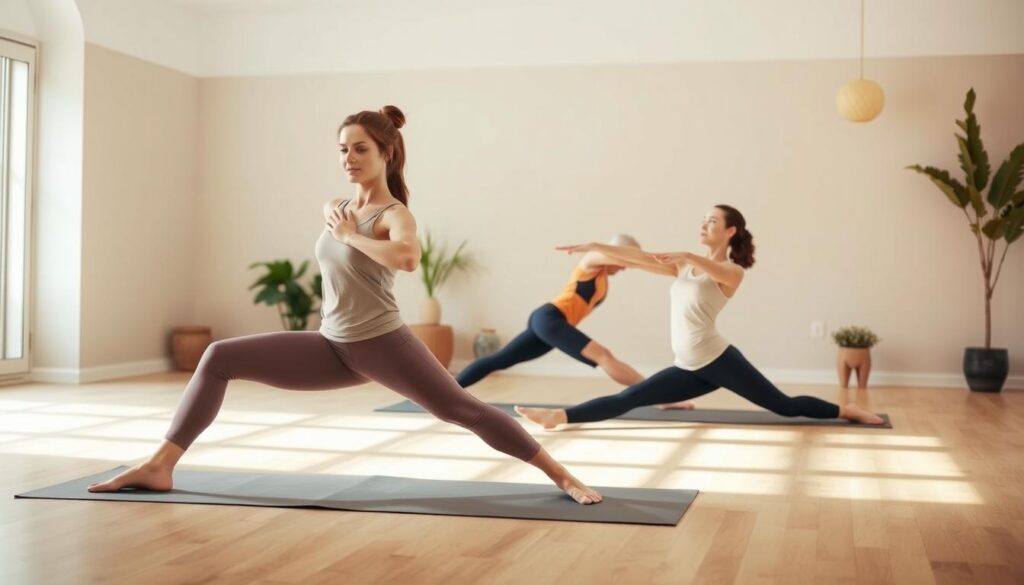
Adjust traditional Warrior sequences by shortening stances and reducing bend depth. In Warrior I, face a wall and press palms against it to maintain upright posture. For Warrior II, place a block under the front hand to prevent leaning forward.
| Pose | Modification | Joint Benefit |
|---|---|---|
| Warrior I | Wall support | Reduces ankle pressure |
| Warrior II | Block under hand | Improves spinal alignment |
Always keep knees aligned over ankles during transitions. If discomfort arises, place a folded blanket under heels or widen your stance. Consistent practice builds leg endurance while maintaining joint integrity.
Alignment, Support, and Prop Use in Yoga Practice
Proper body mechanics transform how we approach movement with sensitive joints. Strategic use of tools enhances stability while protecting vulnerable areas. Let’s explore techniques that create safer, more effective sessions.
Optimizing Knee Alignment and Posture
Engage your core before entering any pose. This activates muscles around the spine, reducing strain on the lower back and legs. Keep knees aligned over ankles during standing positions—imagine drawing a vertical line from hip to heel.
In seated postures, place a folded blanket under hips to tilt the pelvis forward. This simple adjustment maintains natural spinal curves and prevents knees from hyperextending. For lunges, press your front heel firmly into the yoga mat to distribute weight evenly.
Effective Use of Blocks, Blankets, and Straps
Props bridge the gap between current ability and traditional pose demands. Place a block under hands in forward folds to keep shoulders relaxed. When kneeling, layer two blankets for cushioning—this reduces direct pressure on joints.
Straps help maintain proper alignment in reclined stretches. Loop one around the foot during hamstring stretches to prevent knee locking. Certified instructor Rachel Kim notes: “Tools aren’t shortcuts—they’re precision instruments for building sustainable practice.”
| Pose | Prop Application | Alignment Benefit |
|---|---|---|
| Downward Dog | Blocks under hands | Reduces shoulder strain |
| Hero Pose | Blanket between calves | Decreases knee compression |
| Seated Forward Bend | Strap around feet | Maintains straight spine |
Experiment with elevation changes using stacked blocks or thick mats. These adjustments allow gradual progression while honoring your body’s current needs. Remember: quality of movement always trumps depth.
Common Pitfalls and How to Avoid Knee Strain
Maintaining joint health during exercise requires awareness of subtle misalignments that increase strain. Many practitioners unknowingly compromise their knee alignment by prioritizing pose depth over proper form. Let’s explore strategies to prevent common errors.
Overbending and Hyperextension Risks
Excessive bending forces pressure into the front of the knee rather than engaging thigh muscles. A 2023 biomechanics study found bent angles beyond 90° increase joint compression by 42%. Keep these guidelines in mind:
- Track your front foot placement—toes should face forward, not angled outward
- Maintain a fist-sized space behind the knee in lunges
- Use wall support to test your safe range of motion
| Issue | Warning Sign | Adjustment |
|---|---|---|
| Hyperextension | Locked joints during standing poses | Microbend knees slightly |
| Uneven pressure | Weight shifts to one side | Distribute weight evenly across both feet |
Recognizing Discomfort Signals and Adjusting Poses
Dull aches behind the kneecap or sudden sharp pain demand immediate modification. Certified instructor Lena Cho advises: “If your breath becomes shallow or choppy, reassess your positioning.” Try these fixes:
- Widen your stance to reduce pressure on the inner knee
- Place a folded towel under heels during squats
- Shorten hold times for challenging positions
Notice how your muscles around the joint feel—burning suggests healthy engagement, while pinching indicates misalignment. Always allow sufficient time for warm-ups to prepare connective tissues for movement.
Research-Backed Benefits of Yoga for Knee Pain
Scientific validation strengthens the case for mindful movement in joint care. Recent clinical trials demonstrate how targeted practices address both symptoms and root causes of discomfort. Let’s examine the evidence showing why consistent routines yield measurable improvements.
Clinical Studies Supporting Yoga’s Efficacy
A 2023 meta-analysis of 17 studies found participants with chronic knee pain experienced 28% greater pain reduction through yoga than standard care alone. Key mechanisms include:
- Enhanced quadriceps strength supporting patellar tracking
- Improved circulation reducing inflammatory markers
- Better weight distribution across feet and hips
Dr. Alicia Chen’s landmark study tracked MRI scans showing decreased bursa inflammation after 8 weeks of modified sessions. Participants reported better balance during daily activities like stair climbing. As she notes:
“Controlled muscle engagement creates natural bracing around joints—more effective long-term than passive therapies.”
| Study Duration | Pain Reduction | Mobility Gain |
|---|---|---|
| 6 weeks | 22% | 15% |
| 12 weeks | 41% | 33% |
Long-Term Improvements in Knee Health
Regular practitioners show 19% thicker cartilage in MRI comparisons over two years. Strategic poses like supported Warrior variations build endurance in stabilizer muscles. This reduces reliance on connective tissues during movement.
Key factors for sustained benefits:
- Maintaining range of motion through pain-free stretches
- Strengthening calves to absorb impact during walking
- Using yoga mat cushioning to minimize joint compression
Combining these approaches creates cumulative effects. Many report needing fewer pain medications while enjoying activities previously avoided. Always consult healthcare providers when integrating movement into treatment plans.
Conclusion
Mindful movement offers a pathway to maintain mobility while respecting joint limitations. Research confirms that adapting postures and using props like mats or blocks reduces strain on sensitive areas. By focusing on alignment over intensity, practitioners build strength without compromising recovery.
Experts emphasize listening to your body’s signals during standing or floor work. Uneven surfaces demand extra attention to feet placement and weight distribution. Studies show consistent, modified routines improve stability in daily activities over time.
Integrate these strategies gradually into your practice, allowing muscles to strengthen around vulnerable joints. If discomfort arises, adjust poses immediately or consult a specialist. Sustainable progress stems from patience, not pushing through pain.
Every small step toward better alignment supports long-term joint health. With mindful adjustments, movement becomes a tool for healing—not a source of stress. Start where you are, honor your current abilities, and let your practice evolve organically.
FAQ
What is knee bursitis, and how does it affect movement?
Can modified poses like Warrior or Child’s Pose still offer benefits?
How do blocks and blankets protect joints during practice?
What are signs of overexertion during a session?
Are there studies supporting yoga for long-term joint health?
Why is alignment prioritized in poses like Chair or Warrior?
How often should beginners practice to build strength safely?
Related Articles

About the author: Mokhtar Sahraoui
Mokhtar Sahraoui is the founder and editor of Knee Hurt. He researches and writes practical, easy-to-understand guides on knee pain, knee injuries, arthritis and recovery, based on trusted medical sources. Knee Hurt articles are general information and are not a substitute for advice from your doctor or physical therapist.