NFL Lineman Meniscus Tear Rehab: The Complete Recovery Guide for Big Men on the Line
NFL lineman meniscus tear rehab is one of the most demanding recovery processes in professional sports, combining the complexity of cartilage healing with the unique physical requirements of men who routinely weigh over 300 pounds. Did you know that 20% of NFL Scouting Combine participants already have a history of prior meniscus injury before they even enter the league? That staggering figure tells us how much pressure the knee endures across years of elite-level football, and why getting rehabilitation right is so critical for linemen who want to return to peak performance.
Key Takeaways
| Question | Answer |
|---|---|
| How long does NFL lineman meniscus tear rehab take? | Recovery typically ranges from 4-6 weeks for a partial meniscectomy to 4-6 months for a full meniscus repair, depending on tear severity and body weight. |
| Can an NFL lineman play through a meniscus tear? | Some partial tears allow limited play with pain management, but untreated tears worsen over time and increase the risk of further ligament and knee injuries. |
| What are the main goals of meniscus rehab? | Restoring full range of motion, rebuilding quadricep and hamstring strength, reducing knee pain, and safely returning to football-specific movement patterns. |
| What type of surgery do most NFL linemen choose? | Many opt for partial meniscectomy over repair because it allows a faster return to play, though it carries long-term cartilage consequences. |
| Is knee pain normal during meniscus rehab? | Mild knee pain and soreness are expected, especially in early rehab phases, but sharp or worsening pain signals the need to modify the program immediately. |
| What other knee injuries do linemen commonly sustain? | Linemen also frequently deal with ACL injuries, PCL injuries, and traumatic knee events from blocking and tackling collisions. |
| What is the return-to-play rate after meniscus surgery? | Most NFL players return to play after meniscus surgery, but fewer than half return to their exact pre-injury performance level, particularly after lateral meniscus procedures. |
Understanding the Meniscus: Why NFL Linemen Are at High Risk for Knee Injury
The meniscus is a C-shaped piece of cartilage that sits between the femur (thigh bone) and tibia (shin bone) inside the knee joint. Each knee has two of them: the medial meniscus on the inside and the lateral meniscus on the outside.
Their job is to absorb shock, distribute load, and stabilize the knee during movement. For an NFL offensive or defensive lineman, who absorbs repeated high-force collisions at the line of scrimmage every single play, these structures are under tremendous and relentless stress.
When a lineman fires out of a three-point stance and drives into a 300-pound opponent, the compressive and rotational forces passing through the knee can exceed what the meniscus tissue can tolerate. This is how a tear occurs, and it is why a torn meniscus is one of the most common diagnoses in professional football.

Body weight also plays a major role. A 330-pound lineman places significantly more compressive load through his knee with every step compared to a 185-pound cornerback. This means the meniscus in a lineman’s knee experiences more wear per play, per practice, and per season.
Understanding this context is essential before diving into how NFL lineman meniscus tear rehab is structured and why it differs from rehabilitation programs designed for lighter or less powerful athletes.
Conservative vs. Surgical Treatment in NFL Lineman Meniscus Tear Rehab
Once a meniscus tear is diagnosed, the treatment decision shapes the entire rehab timeline. For NFL linemen, the choice generally falls between three options: conservative (non-surgical) management, partial meniscectomy, or meniscus repair.
Conservative rehab involves physical therapy, anti-inflammatory protocols, and activity modification. This approach works best for small, stable tears in the outer (vascular) zone of the meniscus that are not causing mechanical symptoms like locking or giving way.
Partial meniscectomy involves arthroscopically trimming the torn portion of the meniscus. It carries a faster recovery timeline (typically 4-8 weeks to return to play) and is a common choice for in-season injuries. However, removing meniscal tissue reduces the knee’s shock-absorbing capacity and increases long-term risk of knee joint degradation.
Meniscus repair aims to stitch the torn tissue back together. It preserves more natural joint function but requires a much longer protection period (often 4-6 months) and carries a notably higher reoperation risk in high-demand athletes.
This data helps explain why NFL teams and their medical staff often lean toward meniscectomy during the season: the priority is getting the player back on the field with a predictable timeline. Off-season tears may be approached more conservatively with repair, giving the athlete more time to heal properly.
The Four Phases of NFL Lineman Meniscus Tear Rehab
Effective NFL lineman meniscus tear rehab follows a phased approach that matches exercise intensity to tissue healing stages. Rushing through phases is one of the most common and costly mistakes in recovery.
Phase 1: Acute Management (Days 1-14)
The first priority after surgery or initial injury is controlling inflammation and protecting the healing tissue. Knee pain and swelling are significant at this stage, and the focus is on pain-free range of motion.
- Ice and compression to manage swelling
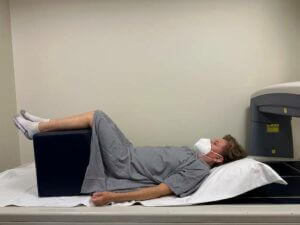
- Elevation of the leg when resting
- Quad sets (muscle activation without movement)
- Straight leg raises to maintain quadricep tone
- Heel slides to gently restore knee flexion
- Non-weight-bearing or partial weight-bearing depending on surgical protocol
Phase 2: Strength and Mobility Restoration (Weeks 2-6)
As knee pain decreases and swelling subsides, the focus shifts to rebuilding the muscular strength and range of motion that supports the knee joint. For a lineman, this means working toward full flexion and extension.
- Mini squats with chair support
- Leg press at controlled depth
- Hip strengthening exercises (side leg lifts, clamshells)
- Step-ups onto low platforms
- Stationary bike at low resistance
- Pool walking or hydrotherapy if available
Phase 3: Functional and Sport-Specific Training (Weeks 6-16)
This phase begins once the athlete demonstrates adequate strength and full range of motion without significant knee pain. For NFL linemen, functional training must replicate the demands of their position.
- Full squats and deadlifts with progressive loading
- Lateral band walks and multi-directional movements
- Balance and proprioception training (single-leg standing, wobble board work)
- Sled pushes at reduced weight, progressing to full load
- Jogging, then running, then direction changes
- Blocking stance repetitions with controlled resistance
Phase 4: Return-to-Play Preparation (Weeks 16 Onward for Repair)
The final phase before return to full team practice involves contact-simulation drills, positional testing, and performance benchmarking. The knee must demonstrate symmetric strength, stability, and pain-free function under football-specific loads.
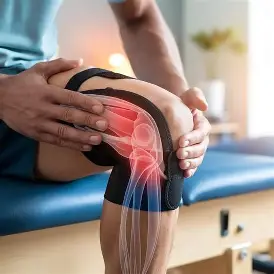
A visual guide outlining the five essential rehab steps after a meniscus tear for NFL linemen. Practical tips to speed recovery and safely return to the field.
Managing Knee Pain and Swelling Throughout NFL Lineman Meniscus Tear Rehab
Knee pain management is not just about comfort. Persistent pain and swelling during rehab are signals from the body that healing tissue is being stressed beyond its current capacity.
NFL team medical staffs use several tools to manage knee pain effectively during recovery. These include ice application after sessions, compression wrapping, non-steroidal anti-inflammatory medications (NSAIDs) in the early phases, and in some cases corticosteroid or platelet-rich plasma (PRP) injections to support tissue healing.
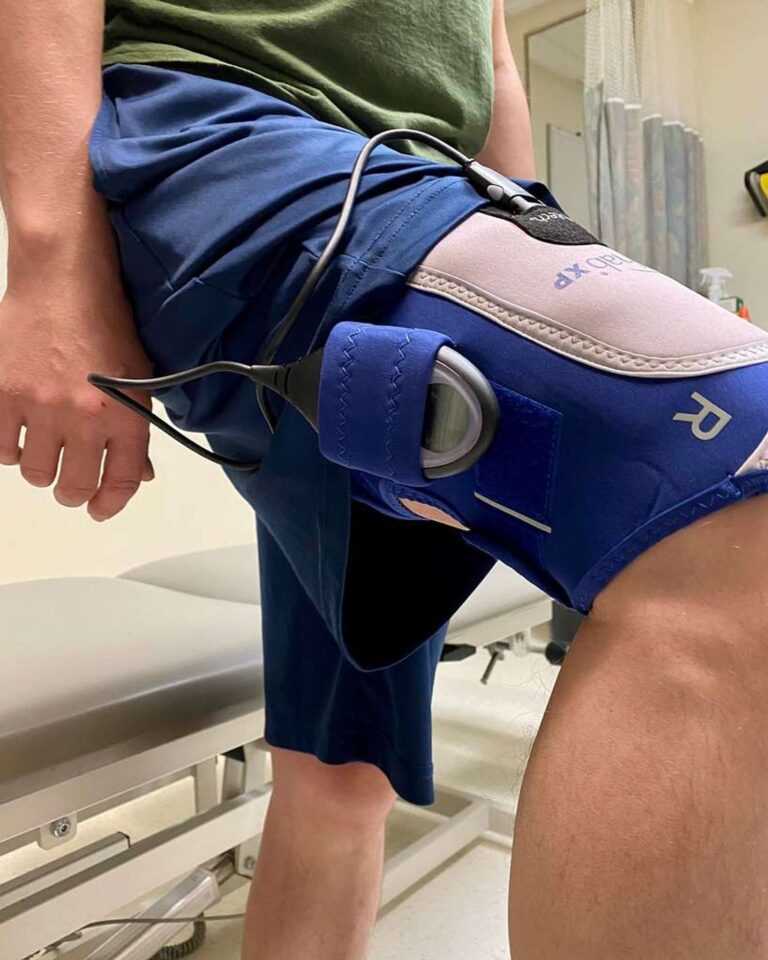
Bracing is another commonly used strategy. A well-fitted hinged knee brace can offload pressure on the healing meniscus during early weight-bearing activities, reducing knee pain while still allowing controlled movement. For linemen, custom braces are generally preferred because standard sizes often do not accommodate larger thighs and calves.
If you are managing ongoing knee pain during your own recovery, understanding the source of the discomfort guides the best response. For a deeper look at knee pain across multiple diagnoses, our comprehensive guide to understanding and overcoming knee pain covers treatment principles that apply well beyond professional athletes.
One important note: some athletes attempt to push through pain in early rehab because they underestimate the swelling response. Doing so in NFL lineman meniscus tear rehab can delay healing by weeks and in some cases leads to complications requiring revision surgery.
NFL Lineman Meniscus Tear Rehab: The Role of Proprioception and Neuromuscular Training
Strength is only part of the equation. A lineman who has full quad strength but poor joint position sense (proprioception) will be at elevated risk for re-injury the moment they return to the line of scrimmage.
The meniscus contains sensory nerve fibers that help the brain understand where the knee is in space. When the meniscus is torn or trimmed, some of this neural input is lost. Proprioceptive retraining works to compensate for this deficit by teaching the surrounding muscles to respond faster and more accurately to joint stress.
Effective neuromuscular training for NFL linemen in meniscus rehab includes:
- Single-leg balance drills on progressively unstable surfaces (foam pad, wobble board, BOSU ball)
- Perturbation training, where a therapist introduces unexpected disturbances while the athlete balances on the injured leg
- Reactive cutting drills at controlled speeds, gradually increasing unpredictability
- Stance-and-shoot footwork drills that mimic the first step of a blocking assignment
This phase of NFL lineman meniscus tear rehab is often underemphasized, but it is one of the strongest predictors of a safe return to full contact practice. For more context on how structural knee issues interact with neuromuscular control, our coverage of chondromalacia patella explores how cartilage conditions affect joint mechanics in similar ways.
Return-to-Play Criteria After NFL Lineman Meniscus Tear Rehab
No athlete should return to full practice based purely on calendar time. The return-to-play decision for an NFL lineman following meniscus rehab must be based on objective criteria, not urgency from coaches or self-reported readiness from the player.
Standard return-to-play benchmarks include:
- Quadricep strength at least 90% of the uninjured leg on isokinetic testing
- Full, pain-free range of motion in the knee joint
- No effusion (swelling) in the knee after functional activity
- Successful completion of sport-specific agility and cutting tests without knee pain
- Psychological readiness (confidence in the knee under contact conditions)
For linemen specifically, the ability to absorb and generate high force in a low, bent-knee stance is the defining test. A player who cannot maintain a proper blocking stance without compensating or experiencing knee pain is not ready for full contact, regardless of how their straight-line running looks.
Teams in 2026 increasingly use force plate testing and motion capture analysis during rehab to generate objective data on limb symmetry and movement quality. This technology reduces the subjectivity of return-to-play decisions and helps identify compensation patterns before they cause secondary traumatic knee events on the field.
Co-Existing Knee Injuries That Complicate NFL Lineman Meniscus Tear Rehab
A meniscus tear rarely occurs in isolation for NFL linemen. The same high-force mechanisms that damage meniscal cartilage often stress surrounding structures at the same time.
Commonly co-existing injuries include:
- ACL damage: The meniscus and ACL frequently tear together, particularly in twisting mechanisms. Our dedicated page on ACL injury and knee bracing explains how these two structures interact.
- PCL involvement: Posterior force impacts (common in offensive line blocks) can load the PCL alongside the meniscus. Learn more through our overview of PCL knee injuries.
- Cartilage damage: Articular cartilage on the femur or tibia can be bruised or damaged during the same event that tears the meniscus, complicating the healing timeline.
- Collateral ligament sprains: MCL and LCL sprains often accompany meniscal injuries from lateral-force impacts.
When multiple structures are involved, NFL lineman meniscus tear rehab must be coordinated carefully to address all damaged tissues without overstressing any single one. This is where the expertise of an NFL-level sports medicine team becomes indispensable.
For a broader look at how ligament damage affects rehabilitation planning, our page on ligament knee injuries provides useful foundational context.
Long-Term Knee Health After NFL Lineman Meniscus Tear Rehab
Completing rehab and returning to play is not the end of the story. The long-term joint health of a lineman who has undergone meniscus surgery, particularly a meniscectomy, requires ongoing management throughout and after their playing career.
Loss of meniscal tissue accelerates cartilage wear. For a player who already places enormous compressive loads through his knee, this acceleration is meaningful. Many retired NFL linemen deal with significant knee pain and early-onset osteoarthritis in their 30s and 40s as a direct consequence of accumulated meniscal and cartilage damage.
Strategies to protect long-term knee health include:
- Maintaining a healthy body weight after retirement to reduce joint loading
- Continuing low-impact strengthening exercise (cycling, swimming, resistance training)
- Regular monitoring for signs of early osteoarthritis
- Using knee bracing during high-demand activities to reduce stress on the remaining meniscal tissue
- Considering viscosupplementation or PRP injections to support cartilage health
For players managing ongoing joint discomfort after their professional career ends, our guide to understanding, managing, and overcoming knee pain provides practical strategies that work well beyond the playing field.
Nutrition and Recovery: Supporting NFL Lineman Meniscus Tear Rehab From the Inside
Physical therapy drives the structural side of recovery, but nutrition is the foundation that makes tissue healing possible. NFL teams in 2026 increasingly integrate sports dietitians directly into their medical and rehab teams to optimize recovery timelines.
Key nutritional priorities during meniscus rehab include:
- Adequate protein intake: Muscle tissue atrophies rapidly during immobilization. Protein targets of 1.8-2.2 grams per kilogram of body weight help preserve muscle mass and support tissue repair.
- Anti-inflammatory nutrients: Omega-3 fatty acids (from fish, flaxseed, or supplements), turmeric, and tart cherry have evidence supporting reduced inflammatory responses in joint tissue.
- Collagen and Vitamin C: Collagen peptides combined with Vitamin C have been shown to support cartilage and tendon repair when taken before rehabilitation sessions.
- Hydration: Cartilage is largely avascular and depends on adequate hydration to receive nutrients through osmotic pressure. Staying well hydrated is particularly important for meniscal healing.
For a lineman weighing 300 or more pounds, calorie management also matters. Maintaining a slightly lower caloric intake during the non-weight-bearing phase reduces unnecessary joint loading once weight-bearing resumes, without compromising protein availability for tissue repair.
Conclusion
NFL lineman meniscus tear rehab is a multi-phase, high-complexity process that demands equal attention to surgical decisions, phased exercise progression, pain management, proprioceptive retraining, and long-term joint health planning. The physical demands placed on an offensive or defensive lineman are unlike those of any other position, which means generic rehab protocols designed for lighter athletes are rarely sufficient.
Whether the path involves conservative management, partial meniscectomy, or full meniscus repair, the principles remain the same: protect the healing tissue, rebuild strength systematically, restore neuromuscular control, and do not rush return-to-play. The structured meniscus tear rehab principles outlined here apply both in elite professional settings and for recreational athletes managing similar knee injuries.
If you are currently dealing with knee pain, knee swelling, or a diagnosed meniscus tear, our comprehensive resources including our overview of torn meniscus conditions and our guide on coping with meniscus tear pain are good starting points for understanding your options and building a recovery plan with your medical team.
Frequently Asked Questions
How long does NFL lineman meniscus tear rehab take to complete?
NFL lineman meniscus tear rehab typically takes 4-8 weeks following a partial meniscectomy and 4-6 months following a surgical repair. Larger athletes like linemen often take slightly longer due to the increased compressive load on the healing tissue during early weight-bearing activities.
Can an NFL lineman play with a torn meniscus without surgery?
Some stable, partial meniscus tears can be managed conservatively with physical therapy, bracing, and anti-inflammatory treatment, allowing limited continued play. However, the decision depends on tear type, location, and the degree of knee pain and functional limitation the tear causes during football-specific movements.
What exercises are most important in NFL lineman meniscus tear rehab?
The most important exercises progress from quad sets and heel slides in early phases to leg press, step-ups, and mini squats in mid-phases, and then to sled work, balance training, and blocking stance drills in the functional phase. Proprioceptive exercises are especially critical for reducing re-injury risk in NFL lineman meniscus tear rehab.
Is knee pain normal during meniscus rehab for football players?
Mild knee pain and aching during early rehabilitation is expected and considered a normal part of the recovery process. Sharp, worsening, or swelling-associated knee pain is a warning sign that the exercise intensity or volume exceeds what the healing tissue can currently tolerate and should prompt a program modification.
What is the return-to-play rate for NFL linemen after meniscus surgery in 2026?
The majority of NFL players do return to play after meniscus surgery, but return to the exact pre-injury performance level is achieved by fewer than half of those undergoing lateral meniscus procedures. In 2026, improved rehabilitation protocols and better surgical techniques are gradually improving these outcomes, but position demands still make full recovery challenging for linemen.
Does body weight affect how long meniscus rehab takes for NFL linemen?
Yes, body weight is a significant factor in NFL lineman meniscus tear rehab timelines. Greater body weight means more compressive force through the healing meniscus with every step, which requires more caution in progressing weight-bearing activities and typically extends overall recovery time compared to smaller athletes.
What other knee injuries should NFL linemen watch for during meniscus rehab?
During NFL lineman meniscus tear rehab, athletes should be monitored for co-existing ligament injuries (ACL, PCL, MCL), articular cartilage damage, and patellar tendon stress. Compensation patterns adopted to protect the healing meniscus can also place unusual stress on other knee structures, which is why comprehensive screening throughout recovery is important.