World Cup Athlete Knee Conditioning: A Complete Guide for Elite Performance
World Cup athlete knee conditioning is one of the most demanding and important aspects of preparation for elite soccer competition. Research published by the National Library of Medicine in 2026 reveals that 67% of ACL ruptures in elite soccer occur during the first 45 minutes of a match, with 26.2% happening in the first 15 minutes, which means the knee is under its greatest structural threat not from fatigue, but from explosive, high-intensity demands right from the opening whistle. For players and coaches preparing for the world’s biggest stage, understanding how to condition, protect, and rehabilitate the knee is not optional — it is fundamental to staying on the field.
Key Takeaways
| Question | Answer |
|---|---|
| What is World Cup athlete knee conditioning? | It is a structured program of strength, neuromuscular, and mobility training designed to protect and optimize knee function during elite competition. |
| What injuries most commonly cause knee pain in World Cup athletes? | ACL tears, PCL injuries, meniscus tears, and ligament knee injuries are the most frequently reported. |
| Can knee pain be prevented through conditioning? | Yes. Evidence-based programs that include neuromuscular training, strength work, and movement mechanics significantly reduce knee injury rates. |
| How does knee conditioning differ from general fitness training? | Knee conditioning specifically targets the muscles, tendons, and ligaments surrounding the knee joint, focusing on stability, load tolerance, and injury prevention. |
| When should an athlete seek help if their knee hurt? | Any time an athlete experiences swelling, locking, sharp knee pain, or instability, they should seek immediate professional evaluation. |
| What role does ACL rehab play in World Cup preparation? | ACL rehab, including ACL injury knee brace support, is critical for safe return-to-sport after rupture. |
| Is criteria-based recovery now preferred for knee injuries? | Yes. In 2026, sports medicine professionals widely favor criteria-based recovery over time-based protocols for knee injury rehabilitation. |
Why Knee Conditioning Is Essential for World Cup Athletes
The knee is the most complex and load-bearing joint in the human body. During a 90-minute World Cup match, a soccer player can cover between 10 and 13 kilometers, repeatedly sprinting, cutting, decelerating, jumping, and landing at high speed.
Every one of those movements places enormous stress on the knee joint. Without dedicated World Cup athlete knee conditioning, the structures inside the joint, including ligaments, cartilage, and tendons, simply cannot absorb those forces safely.
A player whose knee hurt mid-tournament is not just at risk of missing that game. They risk a career-altering injury if the underlying structures are not adequately conditioned before competition begins.
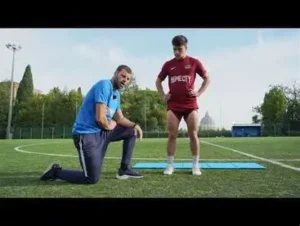
World Cup squads employ dedicated sports medicine staff whose primary role is managing knee health. But the athlete’s own conditioning routine is the first line of defense against breakdown.
Understanding Knee Anatomy and Knee Pain in Elite Soccer
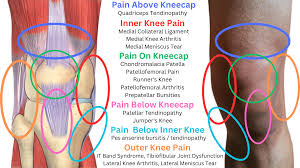
Before designing any conditioning program, we need to understand exactly what structures we are protecting. The knee joint consists of four primary ligaments (ACL, PCL, MCL, LCL), two menisci, articular cartilage, the patellar tendon, and a complex network of muscles including the quadriceps and hamstrings.
Each of these structures plays a role in providing stability and enabling the explosive movements required at the World Cup level. When any single structure is compromised, knee pain and dysfunction follow quickly.
The most important structures for World Cup athlete knee conditioning include:
- Anterior Cruciate Ligament (ACL): Controls rotational stability and prevents forward tibial translation
- Posterior Cruciate Ligament (PCL): Resists backward tibial movement, critical during deceleration
- Medial and Lateral Collateral Ligaments (MCL/LCL): Provide medial and lateral stability during side-to-side movements
- Menisci: Act as shock absorbers and help distribute load across the joint
- Patellar Tendon: Transfers quadriceps force to the tibia, enabling jumping and kicking
- Quadriceps and Hamstrings: The primary dynamic stabilizers of the knee during sport
Understanding these structures helps athletes and coaches appreciate why a one-dimensional approach to training, such as only focusing on sprint speed, leaves the knee vulnerable. A full understanding of managing knee health is required for elite performance.
Common Injuries That Cause Knee Pain in World Cup Players
World Cup athlete knee conditioning programs are built around the injuries we know are most likely to occur. Knowing which injuries are most common helps prioritize what to condition against.
ACL Tears
ACL tears are arguably the most feared injury in World Cup soccer. They typically occur during non-contact movements such as planting and cutting, landing from a jump, or rapid deceleration.
Athletes who experience an ACL tear face months of rehab and risk missing major tournaments. Proper ACL injury management and knee brace support is a core part of both prevention and recovery.
PCL Injuries
PCL injuries are less common than ACL tears but occur frequently in high-contact sports situations such as direct blows to the knee or falls. Understanding posterior cruciate ligament knee injury mechanics helps conditioning coaches build defensive movement patterns that reduce risk.
Torn Meniscus
Meniscal injuries can occur acutely during twisting movements or develop gradually from repetitive loading. A torn meniscus causes significant knee pain and swelling, often requiring surgical intervention if left unmanaged.
Chondromalacia Patella
Chondromalacia patella, or softening of the cartilage under the kneecap, produces a dull, aching knee pain during prolonged running or squatting. World Cup athletes who train with high mileage are particularly susceptible to this condition. Learn more about chondromalacia patella of the knees and how it affects athletic performance.
Traumatic Knee Injuries
High-speed collisions on the field can result in acute traumatic knee injuries that require immediate medical assessment. Conditioning programs that build muscle mass and joint resilience around the knee help absorb these impact forces more effectively.
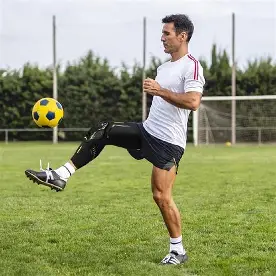
World Cup Athlete Knee Conditioning: Core Training Principles
Effective World Cup athlete knee conditioning is built on a set of core principles that address the specific mechanical demands of soccer at the highest level. These principles are not guesswork — they are backed by sports science research and applied daily by elite teams in 2026.
1. Progressive Strength Loading
Quadriceps and hamstring strength is the foundation of knee health. Research consistently shows that a strength imbalance between these muscle groups significantly increases injury risk. We prioritize exercises such as the Nordic hamstring curl, single-leg squat, Bulgarian split squat, and Romanian deadlift to build balanced strength around the knee.
2. Neuromuscular Control Training
World Cup soccer requires split-second changes in direction. Neuromuscular training teaches the body to stabilize the knee automatically during these movements. This includes balance drills, perturbation training, and plyometric progressions that challenge the knee under controlled loads.
3. Landing Mechanics
Poor landing technique is one of the leading contributors to non-contact ACL tears. Conditioning programs train athletes to land with hip and knee flexion, avoiding the stiff-legged, valgus knee positions that dramatically increase ligament stress.
4. Hip and Glute Integration
Weak hip abductors and external rotators allow the knee to collapse inward during landing and cutting movements. This is a direct precursor to injury. Incorporating hip strengthening into knee conditioning programs is a non-negotiable element of World Cup preparation.
5. Ankle and Foot Mobility
Restricted ankle dorsiflexion forces compensatory movement at the knee, increasing valgus stress. World Cup conditioning programs routinely address ankle mobility as part of a complete knee health strategy.
For a detailed look at how prevention strategies for knee ligament injuries are applied in practice, we recommend reviewing structured protocols used in elite sports settings.
Recognizing Knee Pain Warning Signs in World Cup Training
Not every moment of knee discomfort signals a serious problem. But certain types of knee pain in high-performance athletes should never be ignored. Part of effective World Cup athlete knee conditioning is educating players to recognize warning signs early.
Warning signs that require prompt evaluation include:
- Sudden, severe knee pain with or without a pop during play
- Rapid swelling of the knee joint within the first few hours after activity
- A feeling that the knee gave way or feels unstable
- Locking or clicking sensations inside the knee
- Persistent knee pain that does not improve with rest after 48 to 72 hours
- Pain that radiates from the back of the knee into the lower leg
When a player’s knee hurt in any of these ways, the team medical staff must perform a thorough physical examination. Delaying evaluation risks turning a manageable issue into a season-ending injury.
Comprehensive knee pain assessment is the starting point for any decision about returning an athlete to full training or competition.
Athletes dealing with ongoing discomfort should also consult our comprehensive guide to understanding and overcoming knee pain, which covers assessment, treatment options, and long-term management.
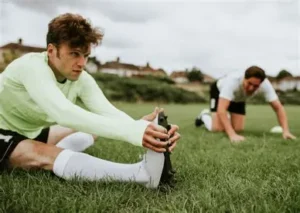
World Cup Athlete Knee Conditioning Through Structured Injury Prevention Programs
In 2026, FIFA-sanctioned injury prevention programs remain a cornerstone of World Cup athlete knee conditioning for national squads. These programs are delivered as structured warm-up protocols that replace generic stretching routines with targeted neuromuscular activation sequences.
The most widely implemented programs include exercises across three phases:
- Running mechanics phase: Straight-line running with attention to posture, foot strike, and hip position
- Strength phase: Nordic hamstring curls, single-leg squats, calf raises, and hip bridges
- Plyometric phase: Box jumps, lateral hops, bounding, and agility ladder drills with a focus on landing quality
Studies consistently show that teams who implement structured knee injury prevention programs reduce their ACL injury rates by 50% or more compared to teams that do not. For World Cup competitors, this is not a minor statistical footnote — it is the difference between a full squad and a depleted one by the knockout rounds.
“The most successful World Cup programs in 2026 treat knee conditioning as a year-round priority, not something athletes focus on only during tournament preparation.”
Understanding the full spectrum of knee ligament injuries helps coaches design prevention programs that address every major structural risk, not just the most headline-grabbing ones.
Recovery and Rehabilitation When the Knee Hurt
Even with the best conditioning programs in place, injuries still occur. When a World Cup athlete’s knee hurt due to an acute incident, the rehabilitation pathway becomes as important as the original conditioning work.
In 2026, the gold standard for return-to-sport after knee injury is criteria-based recovery. This approach replaces fixed time frames with objective milestones that the athlete must meet before advancing to higher-intensity training and eventually full competition.
Key criteria used in elite knee rehabilitation include:
- Limb symmetry index (LSI) of 90% or greater on strength testing
- Full, pain-free range of motion in the knee
- No swelling or joint effusion at rest or after activity
- Successful completion of sport-specific movement drills at full intensity
- Psychological readiness and confidence for return to contact training
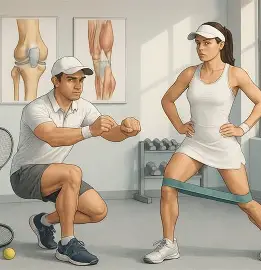
Physical therapy is a central component of this process. A well-structured PT program rebuilds the strength, proprioception, and movement quality the knee needs to perform at World Cup level. We encourage athletes to explore how physical therapy can help relieve knee pain and accelerate return to sport.
Load Management and Nutrition for Knee Health in Elite Athletes
World Cup athlete knee conditioning extends beyond the training pitch. How athletes manage their overall training load and what they eat directly affects the health and resilience of their knee joints.
Load Management
Training load spikes are one of the most consistent predictors of soft tissue injury. When an athlete dramatically increases training volume or intensity without adequate recovery time, the knee structures do not have enough time to adapt. This is sometimes called the “acute on chronic workload ratio” problem.
Elite World Cup conditioning staff monitor weekly training loads using GPS data, session RPE scores, and wellness questionnaires. Any sharp spike in load triggers reduced intensity days to allow the knee to recover before the next high-demand session.
Nutrition for Knee Resilience
Key nutritional strategies for World Cup knee health include:
- Collagen and Vitamin C: Consuming collagen peptides with Vitamin C around training supports tendon and ligament synthesis
- Omega-3 Fatty Acids: Reduce systemic inflammation that contributes to chronic knee pain
- Adequate Protein: Supports muscle repair and hypertrophy in the quadriceps and hamstrings
- Calcium and Vitamin D: Essential for bone density and structural integrity of the bones that form the knee joint
- Hydration: Cartilage is largely water-dependent; dehydration accelerates cartilage breakdown under load
Many World Cup athletes also work with registered dietitians who specialize in musculoskeletal health to ensure their nutritional strategies support long-term knee durability alongside peak performance.
Protective Equipment and Bracing as Part of World Cup Knee Conditioning
Bracing and protective equipment play a supporting role in World Cup athlete knee conditioning, particularly for athletes returning from injury or those with known structural vulnerabilities.
Knee braces used in elite soccer fall into three broad categories:
- Prophylactic braces: Worn to prevent injury in athletes without existing structural damage
- Functional braces: Used by athletes who have experienced ligament injury and need additional external support during return to sport
- Rehabilitative braces: Prescribed post-surgery to control range of motion during healing phases
Functional bracing is particularly relevant for athletes who have experienced ACL injuries and require knee brace support during their return to competitive play.
Athletes who have experienced PCL knee injuries may also benefit from functional bracing to manage joint laxity during high-speed movements and tackles.
It is important to note that bracing alone is never a substitute for proper conditioning. A brace supports a joint that has already been prepared through strength and neuromuscular training — it does not replace that preparation.
Psychological Readiness and the Return-to-Sport Decision
One dimension of World Cup athlete knee conditioning that is frequently underestimated is psychological readiness. An athlete whose knee hurt due to a significant injury may achieve full physical criteria for return to sport while still experiencing fear of re-injury that affects their movement patterns.
Fear-avoidance behaviors, such as unconsciously protecting the knee during cutting movements, paradoxically increase injury risk by altering normal biomechanics. In 2026, leading sports medicine programs integrate psychological readiness assessments alongside physical criteria before clearing an athlete for full competition.
Tools such as the ACL-Return to Sport after Injury (ACL-RSI) scale help quantify an athlete’s psychological readiness and identify those who may benefit from additional mental skills coaching before returning to the World Cup environment.
Athletes dealing with injury-related anxiety alongside persistent knee pain are encouraged to work with both physical therapists and sport psychologists as part of a complete return-to-sport program.
Different Types of Knee Injuries World Cup Athletes Must Be Aware Of
A complete World Cup knee conditioning program accounts for the full spectrum of knee injuries an elite athlete may face. Understanding the different types of traumatic knee injuries helps athletes, coaches, and medical staff respond appropriately when something goes wrong.
Below is a summary of the primary knee injury categories relevant to World Cup competition:
| Injury Type | Primary Cause | Key Symptom | Conditioning Focus |
|---|---|---|---|
| ACL Tear | Plant-and-cut, deceleration | Pop, swelling, instability | Neuromuscular training, landing mechanics |
| PCL Injury | Direct blow to anterior tibia | Posterior knee pain, laxity | Hamstring strength, deceleration control |
| Meniscus Tear | Twisting under load | Joint line pain, locking | Load management, quadriceps strengthening |
| Chondromalacia Patella | Overuse, malalignment | Anterior knee pain, grinding | VMO activation, patellar tracking |
| Patellar Tendinopathy | Repetitive jumping/landing | Inferior patella pain | Eccentric loading, load monitoring |
For athletes managing existing conditions or recovering from prior injury, a thorough review of how to manage and overcome knee pain comprehensively provides a strong foundation for safe return to elite training.
Conclusion: World Cup Athlete Knee Conditioning Is a Year-Round Commitment
World Cup athlete knee conditioning is not a pre-tournament checklist item. It is a continuous, science-based practice that begins months before competition and carries through recovery, rehabilitation, and long-term athletic development.
The knee is simultaneously the most powerful and most vulnerable joint in a soccer player’s body. When conditioned correctly, it enables the explosive, high-speed movements that define World Cup soccer. When neglected, it becomes the reason players miss tournaments, undergo surgeries, and in some cases, end careers prematurely.
We have covered the anatomy, the most common injuries that cause knee pain, the core conditioning principles, load management, nutrition, bracing, and psychological readiness. Each of these elements contributes to a complete picture of what elite knee health looks like in 2026.
Whether a player’s knee hurt from an acute traumatic incident or gradual overuse, the pathway back to World Cup performance follows the same evidence-based principles: identify the problem accurately, rehabilitate systematically, condition progressively, and return to sport only when all criteria are met.
For any athlete, coach, or medical professional looking to go deeper on any aspect of knee health covered in this guide, we recommend starting with our detailed overview of knee pain causes and solutions and our dedicated resources on every major knee injury type referenced throughout this article.
Frequently Asked Questions
What does World Cup athlete knee conditioning actually involve on a daily basis?
Daily World Cup athlete knee conditioning typically includes a structured warm-up with neuromuscular activation, followed by strength training targeting the quadriceps, hamstrings, and hip stabilizers. It also includes movement quality work such as landing mechanics and cutting drills, plus cool-down mobility exercises to maintain full knee range of motion.
Why does my knee hurt more during high-intensity soccer training than during matches?
Knee pain during training often signals tissue overload from cumulative training volume rather than a single traumatic event. This is particularly common with patellar tendon issues and early chondromalacia. Reviewing your load management strategy and incorporating targeted strength work usually addresses this pattern effectively.
How long does it take to return to World Cup level soccer after an ACL injury in 2026?
In 2026, the return timeline for ACL injuries at the elite level is typically 9 to 12 months using criteria-based recovery protocols, though some athletes return earlier or later depending on their individual progress. The key is meeting all physical and psychological readiness criteria before returning to full competition, not simply reaching a specific time point post-surgery.
Is knee conditioning different for female World Cup athletes compared to male athletes?
Yes, female athletes have a significantly higher baseline risk of ACL injury compared to male athletes, due to a combination of anatomical, hormonal, and neuromuscular factors. World Cup knee conditioning programs for female athletes place greater emphasis on landing mechanics, hip abductor strength, and neuromuscular control to address these heightened risk factors specifically.
Can you prevent knee pain in soccer without surgery or medication?
For many types of knee pain common in soccer players, including patellar tendinopathy, minor ligament sprains, and chondromalacia, structured conditioning, load management, and physical therapy are highly effective without surgical or pharmacological intervention. Prevention programs shown to reduce ACL injury rates by 50% or more are entirely exercise-based and require no medication.
What is the best knee exercise program for a soccer player preparing for a World Cup qualifier?
The most evidence-supported programs for World Cup preparation combine Nordic hamstring curls, single-leg squats, hip abductor strengthening, lateral band walks, plyometric jump-landing progressions, and sport-specific agility drills. These exercises should be progressed over a 6 to 12 week period under guidance from a qualified sports physiotherapist familiar with elite soccer demands.
Should a soccer player use a knee brace during World Cup matches if they have had a previous knee injury?
The decision to use a functional knee brace during competition depends on the nature of the prior injury, the degree of residual joint laxity, and the athlete’s individual comfort and movement quality. Many athletes with previous ACL or PCL injuries do compete at World Cup level with functional bracing as part of their knee management strategy, though brace use should always be combined with, not substituted for, ongoing strength and conditioning work.