World Cup 2026 Knee Injury Prevention: The Complete Player and Fan Guide
World Cup 2026 Knee Injury Prevention is one of the most critical topics in football right now, and for good reason. The average return-to-play time after an ACL reconstruction in professional soccer has increased to 295.1 days in the 2022-2026 period, a staggering 45% increase from previous years, meaning a single knee injury can end a player’s entire World Cup campaign before it begins.
With the 2026 tournament expanding to 48 teams and being hosted across the United States, Canada, and Mexico, the physical demands on players are higher than ever. Understanding how to protect the knee from serious injury is no longer optional for coaches, medical staff, or athletes competing at any level.
Key Takeaways
| Topic | Key Point |
|---|---|
| Most common injury | ACL tears are the most career-threatening knee injury in soccer, with recovery exceeding 9 months in 2026. |
| Injury burden | Knee pain and injuries account for 40% of total soccer injury burden despite representing only 13% of all injuries. |
| Best prevention program | FIFA 11+ is the gold-standard warm-up protocol proven to reduce lower limb injuries by 30-50%. |
| Key ligaments at risk | The ACL, PCL, and medial collateral ligaments are most vulnerable during high-speed direction changes. |
| Training vs. match risk | Injury risk is 6.1x higher during matches than in training, making match-day protocols essential. |
| Protective gear | Functional ACL knee braces provide measurable support for players returning from previous injuries. |
| Recovery guidance | Early identification of knee pain symptoms dramatically improves treatment outcomes. |

Why World Cup 2026 Knee Injury Prevention Matters More Than Ever
The 2026 FIFA World Cup features a larger tournament format, more matches per team, and tighter scheduling windows compared to previous editions. This directly increases cumulative stress on every player’s knee joint, tendons, and surrounding muscles.
Knee injuries account for 13% of total soccer injuries overall, but they represent a disproportionate 40% of the total injury burden due to their long recovery timelines. A player who suffers a torn meniscus or a ligament injury early in the group stage may not return to competitive play for months, or even the rest of the calendar year.
Proactive World Cup 2026 knee injury prevention is not just about protecting elite professionals. Youth players, amateur clubs, and recreational footballers watching and imitating the World Cup’s intensity are equally at risk of knee pain if they do not follow proper protocols.
Understanding the anatomy of the knee and the specific mechanisms that cause injuries during soccer is the first step toward keeping players healthy throughout the tournament and beyond.
The Most Common Knee Injuries in Soccer Players at World Cup 2026
Several specific injuries dominate the injury reports in professional soccer. Knowing each one helps coaches, players, and medical teams build targeted World Cup 2026 knee injury prevention strategies.
ACL Tears
The anterior cruciate ligament (ACL) is the most frequently torn ligament in soccer, typically occurring during sudden deceleration, pivoting, or cutting movements. An ACL injury requiring a knee brace or surgery can sideline a player for up to a year or longer under current conservative protocols.
ACL tears are often non-contact injuries, meaning they can be significantly reduced with proper neuromuscular training and warm-up routines.
PCL Injuries
The posterior cruciate ligament (PCL) injury typically results from a direct blow to the front of the knee, such as a goalkeeper diving or a player falling directly onto a bent knee. PCL injuries are less common than ACL tears but still carry significant recovery timelines.
Understanding PCL anatomy and prevention protocols is an important part of a complete World Cup 2026 knee injury prevention plan.
Torn Meniscus
The meniscus acts as a shock absorber inside the knee joint. Soccer players frequently sustain torn meniscus injuries during deep squatting, twisting, or heavy tackle impacts.
Meniscal tears cause immediate knee pain, swelling, and restricted movement, often requiring surgical intervention in professional athletes aiming for a quick return to competition.
Ligament Knee Injuries (MCL and LCL)
Beyond the ACL and PCL, the medial and lateral collateral ligaments are also frequently damaged in soccer through direct contact and valgus force. A comprehensive look at knee ligament injuries shows that these injuries often occur alongside meniscal damage, creating complex recovery challenges.
Chondromalacia Patella
Chondromalacia patella, or “runner’s knee,” involves the softening and deterioration of cartilage on the underside of the kneecap. It is a common overuse injury in soccer players who log heavy training mileage leading up to a tournament.
Traumatic Knee Injuries
High-speed collisions and falls during competitive matches can result in traumatic knee injuries including fractures, dislocations, and multi-ligament damage. These injuries require immediate medical assessment and are among the most serious a player can face at a World Cup.
World Cup 2026 Knee Injury Prevention: The FIFA 11+ Program
The FIFA 11+ warm-up program is widely regarded as the single most effective intervention for World Cup 2026 knee injury prevention. It is a structured 20-minute warm-up protocol specifically designed for soccer players that targets neuromuscular control, balance, and lower limb strength.
The program consists of three main parts: running exercises at slow speed, strength and balance exercises, and running exercises at high speed. Each component directly addresses the biomechanical risk factors that lead to knee injuries in competitive soccer.
The key to unlocking these results is consistent implementation. Teams that only use the FIFA 11+ program occasionally do not see the same reduction in knee injuries as those who apply it before every training session and every match.
National teams preparing for 2026 are advised to begin incorporating the full FIFA 11+ protocol at least 8-12 weeks before the tournament starts to allow players’ neuromuscular systems to fully adapt.
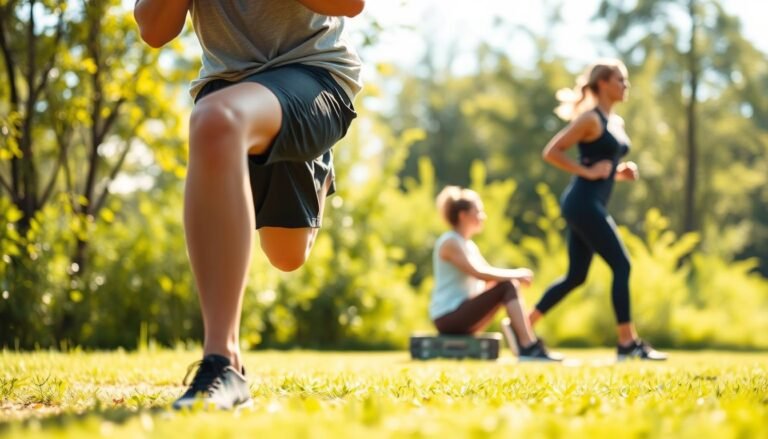
A concise 3-step knee injury prevention process designed for players heading into World Cup 2026. Includes warm-ups, strengthening drills, and recovery tips to reduce knee injury risk.
Strengthening Exercises Fundamental to World Cup 2026 Knee Injury Prevention
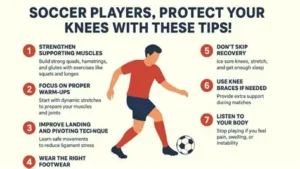
Strength training for the muscles surrounding the knee is one of the most evidence-backed strategies in World Cup 2026 knee injury prevention. The quadriceps, hamstrings, glutes, and hip abductors all play a role in stabilizing the knee joint during the explosive movements soccer demands.
The following exercises form the foundation of any effective pre-tournament knee protection program.
- Nordic Hamstring Curls: Proven to reduce hamstring and ACL injury rates by improving eccentric hamstring strength. Teams that include this exercise 2-3 times per week show measurably lower rates of knee injuries.
- Single-Leg Squats: Improve quad strength and knee alignment, directly reducing the valgus collapse that causes ACL tears during landing.
- Hip Abductor Strengthening: Weak hip abductors are a key risk factor for knee pain in female soccer players particularly. Lateral band walks and clamshells address this effectively.
- Plyometric Jump Training: Teaching players to land with proper knee mechanics (soft knees, hip-dominant) is one of the most effective non-contact ACL prevention strategies available.
- Balance and Proprioception Drills: Single-leg stance exercises on unstable surfaces train the nervous system to protect the knee during unexpected changes in terrain or direction.
These exercises should be programmed progressively, beginning with lower volumes and intensities before moving to sport-specific, high-speed applications closer to tournament time.
Recognizing Knee Pain Before It Becomes a World Cup 2026 Emergency
One of the most overlooked aspects of World Cup 2026 knee injury prevention is the early identification of knee pain symptoms. Players often push through discomfort during high-stakes tournaments, turning a manageable issue into a season-ending injury.
Understanding the anatomy and causes of knee pain allows athletes and medical staff to intervene before a problem escalates. Common warning signs that should never be ignored include:
- Persistent knee pain that does not resolve within 24-48 hours of rest
- Swelling or warmth around the knee joint
- A feeling of the knee giving way or buckling during normal activity
- A popping or clicking sensation during movement
- Stiffness that limits full range of motion, especially when bending or straightening the leg
- Pain that worsens when climbing stairs, squatting, or running
If a player experiences any of these symptoms, they should not simply “play through” them. A medical evaluation and imaging are essential to rule out structural damage.
We recommend reviewing our comprehensive guide to understanding, managing, and overcoming knee pain for a full breakdown of diagnosis pathways and treatment options.
Knee Bracing and Protective Equipment for World Cup 2026
For players with a history of knee injuries, protective bracing is a practical component of World Cup 2026 knee injury prevention. Functional knee braces are specifically designed to provide support to unstable or previously injured ligaments without significantly restricting movement on the pitch.
There are several categories of knee bracing relevant to soccer players in 2026:
- Prophylactic braces: Worn to prevent injury in players with no existing damage but a high positional risk (central defenders, goalkeepers).
- Functional braces: Used post-ACL or PCL reconstruction to support the ligament during return-to-play phases. Our detailed resource on ACL injury knee bracing options covers the full range of protective solutions available in 2026.
- Rehabilitation braces: Worn immediately post-surgery to control range of motion and protect the repair during the early recovery phase.
Choosing the correct brace requires a proper assessment by a sports medicine physician or physiotherapist. A poorly fitted brace can create a false sense of security and may even alter movement mechanics in ways that increase injury risk.
Players should also pay attention to footwear. Cleats that do not match the surface type (natural grass, artificial turf, or indoor courts) can dramatically increase rotational stress through the knee joint.
World Cup 2026 Knee Injury Prevention: Match Day Protocols
Given that elite soccer players face an injury risk 6.1 times higher during matches than during training sessions, match day preparation is one of the highest-leverage areas in World Cup 2026 knee injury prevention.
Players must treat every match with the same physical preparation discipline they apply to training. Cutting corners on warm-up before a knockout stage game because of nerves or adrenaline is a significant risk factor.
A comprehensive match day knee protection routine includes the following steps:
- 15-20 minute FIFA 11+ warm-up: This should not be abbreviated regardless of game time pressure.
- Surface assessment: Players and staff should evaluate pitch conditions and adjust cleat selection to minimize uncontrolled rotational forces through the knee.
- Brace application: Players with prior knee injuries should apply their prescribed brace before warm-up, not after.
- Hydration: Dehydration has been linked to reduced neuromuscular function, which increases the risk of knee injuries during late-game fatigue phases.
- Post-match recovery protocol: Ice, compression, and elevation (ICE) applied within 20 minutes of the final whistle can significantly reduce post-match inflammation in the knee joint.
Recovery Strategies When the Knee Does Get Hurt
Even with the best prevention strategies in place, some injuries will still occur. When a player does get knee hurt, the speed and quality of the initial response makes a significant difference in the eventual recovery timeline.
The key principles for immediate injury management are:
- Remove the player from activity immediately: Continuing to play on a damaged knee almost always worsens the injury and extends recovery time.
- Apply PRICE: Protection, Rest, Ice, Compression, Elevation within the first 48-72 hours.
- Seek imaging: MRI is the gold standard for identifying the extent of ligament, meniscal, or cartilage damage. X-rays alone are insufficient for soft tissue injuries.
- Engage a sports physiotherapist early: Early physiotherapy intervention, including range-of-motion exercises and muscle activation work, accelerates recovery even for surgical cases.
For players managing ongoing knee hurt from previous injuries, monitoring biomechanics during recovery is critical to avoid compensatory patterns that stress other joints. A graded return-to-sport protocol should always be followed before a player is cleared to compete at the intensity of a World Cup match.
World Cup 2026 Knee Injury Prevention for Youth and Amateur Players
The World Cup 2026 will inspire millions of young players to intensify their training and participation in grassroots soccer. This is a wonderful outcome of the tournament, but it comes with real knee pain risks if young players do not have access to proper coaching and prevention education.
Youth players are particularly vulnerable to growth plate injuries around the knee, as well as Osgood-Schlatter disease, which causes localized knee pain just below the kneecap during periods of rapid growth. These conditions require age-appropriate load management rather than simple rest.
For coaches working with youth teams inspired by World Cup 2026, we strongly recommend:
- Implementing a simplified version of the FIFA 11+ Kids program, which has been adapted for players under 14.
- Limiting single-sport specialization and ensuring athletes participate in diverse movement patterns to build well-rounded muscular support around the knee.
- Teaching correct landing mechanics from an early age using jump-landing drills.
- Educating parents and young athletes that playing through knee hurt is never acceptable without a proper medical assessment.
The long-term knee health of the next generation of soccer players depends on the habits they form during youth development. World Cup 2026 presents a unique opportunity to make knee injury prevention education part of the global football conversation.
Nutrition and Lifestyle Factors That Support Knee Health in 2026
Physical training and protective equipment are only part of the equation for World Cup 2026 knee injury prevention. Nutrition and lifestyle choices play a meaningful role in tissue resilience, recovery speed, and injury risk reduction.
Key nutritional factors that support knee health in soccer players include:
- Collagen and Vitamin C: Collagen synthesis is essential for ligament and tendon health. Vitamin C is a required co-factor in this process and should be consumed consistently through whole foods or supplementation.
- Omega-3 Fatty Acids: Found in oily fish, flaxseed, and walnuts, omega-3s reduce systemic inflammation and may lower the baseline inflammatory burden in the knee joint.
- Adequate Caloric Intake: Under-fueling during high-volume training phases is a significant risk factor for injury, as it impairs tissue repair and neuromuscular function.
- Hydration: Synovial fluid in the knee joint requires adequate hydration to function as an effective lubricant and shock absorber.
- Sleep Quality: Poor sleep dramatically increases injury risk across all body regions, including the knee, by impairing reaction time and neuromuscular coordination.
Teams that invest in nutritional support and recovery science alongside physical training will enter the 2026 World Cup with a clear advantage in knee injury prevention and overall player availability.
Conclusion
World Cup 2026 Knee Injury Prevention is a multifaceted challenge requiring coordinated effort from players, coaches, medical staff, and governing bodies. The 2026 tournament’s expanded format and high-intensity schedule make proactive knee care more important than ever before.
From implementing the FIFA 11+ program and building targeted strength in the muscles surrounding the knee, to recognizing early signs of knee pain and using appropriate protective equipment, every layer of prevention adds up to meaningful risk reduction. When a player does experience knee hurt, the speed and quality of the response determines how quickly they can safely return to competition.
We encourage every player, coach, and supporter invested in the 2026 World Cup to explore the detailed resources available on this site, including our guides on knee ligament injuries, PCL injuries, and traumatic knee injury management, to build the most comprehensive prevention strategy possible.
Healthy knees are the foundation of a successful tournament. Use this guide as a starting point, consult with qualified medical professionals, and take World Cup 2026 knee injury prevention seriously from day one of pre-season preparation.
Frequently Asked Questions
What are the most common knee injuries in soccer at World Cup 2026?
The most common knee injuries in soccer include ACL tears, PCL injuries, torn meniscus, and medial collateral ligament sprains. At World Cup 2026, the high match intensity and expanded tournament format increase the risk of all of these conditions, making structured knee injury prevention essential for every squad.
How does the FIFA 11+ program help with World Cup 2026 knee injury prevention?
The FIFA 11+ is a structured 20-minute warm-up protocol that has been proven to reduce lower limb injuries by 30-50% in soccer players who follow it consistently before every session. It directly targets the neuromuscular and biomechanical risk factors that cause knee injuries during the explosive movements typical of World Cup matches.
What should I do if my knee hurts during or after a soccer match?
If your knee hurts during or after a match, you should stop activity immediately, apply ice and compression, elevate the limb, and seek a medical evaluation within 24-48 hours if symptoms do not resolve. Continuing to play through knee pain risks turning a minor issue into a significant structural injury requiring surgery.
Is knee bracing worth using for World Cup 2026 players with previous injuries?
Yes, functional knee bracing is a well-supported component of return-to-play protocols for players who have previously suffered ACL or PCL injuries. A properly fitted brace provides additional joint stability during high-intensity match situations and is widely used at the elite level in 2026.
How long does it take to recover from an ACL tear in 2026?
As of 2026, the average return-to-play time following ACL reconstruction in professional soccer has increased to approximately 295 days under more conservative rehabilitation protocols. This means any player who suffers an ACL tear during the early stages of the World Cup 2026 is unlikely to return during that same tournament cycle.
What exercises are best for knee injury prevention before World Cup 2026?
The most effective exercises for World Cup 2026 knee injury prevention include Nordic hamstring curls, single-leg squats, hip abductor strengthening, plyometric jump-landing drills with correct mechanics, and proprioception training on unstable surfaces. These should be programmed progressively over an 8-12 week preparation phase before the tournament begins.
Can youth players use the same knee injury prevention strategies as professional players?
Youth players can and should use age-appropriate versions of the same prevention strategies, including the FIFA 11+ Kids program and correct landing mechanics training. Coaches should also monitor load carefully in growing players to avoid overuse knee pain conditions such as Osgood-Schlatter disease, which are more common in young athletes inspired by the World Cup 2026 to increase their training volume.