Category: Blog

Your blog category

  • Mercy Medical Center now offers a new smart implant for the knee with benefits for patient and surgeon

    Mercy Medical Center now offers a new smart implant for the knee with benefits for patient and surgeon


    BALTIMORE , Oct. 26, 2023 /PRNewswire-PRWeb/ — Orthopedic surgeons Marc W. Hungerford, MD, Chief of Orthopedics at Mercy Medical Center, and Philip Neubauer, R.Ph., MD, Orthopedics and Joint Replacement at Mercy, are among the first surgeons in Maryland that offered “smart implant” technology during knee replacement surgeries.

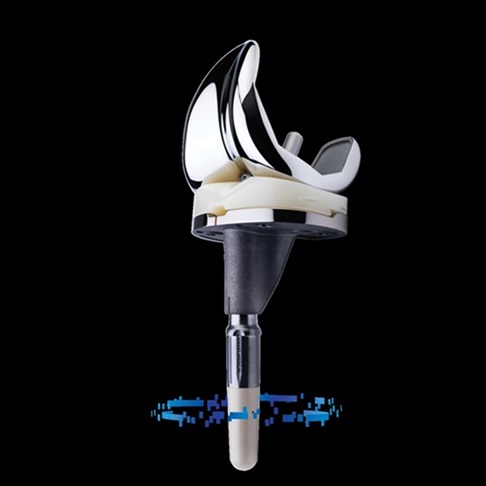
    Developed by ZIMMER BIOMET, the Persona IQ® has a small “smart” stem extension attached to the lower portion of the implant. This stem contains sensors that record patient-specific movement data throughout the day, analyze it overnight and present it for assessment the next day.

    “Essentially, it is a joint replacement that uses a prosthesis equipped with a smart device that can monitor the patient’s progress,” said Dr. Hungerford.

    Surgeons and care teams can remotely access key postoperative metrics throughout their patient’s surgical journey, allowing them to monitor post-TKA (Total Knee Arthroplasty) activity levels between office visits.

    The smart knee implant records relevant gait data, including:

    • Functional range of motion of the knee (ROM)
    • Qualified step count
    • Walking speed
    • Cadence
    • Traveled distance
    • Stride length

    The smart knee implants provide a direct view of patient-specific data for at least 10 years, allowing surgeons to monitor their patients’ activity levels between visits. In this way, they can remain connected during the patient’s postoperative total knee arthroplasty care.

    Additionally, being able to track their postoperative data can help patients feel more connected throughout their recovery journey, promoting greater patient interaction.

    “Thanks to this new technology, there is greater patient involvement and surgeons can remotely monitor a patient’s progress. This means better management of postoperative care,” said Dr. Hungerford.

    “With the Persona IQ, as a doctor I can no longer just estimate how well a patient’s joint is working after surgery; I have the data to determine how my patient is really doing,” said Dr. Neubauer.

    “Mercy is always looking for ways to improve our patients’ experiences and treatment outcomes,” said Dr. Hungerford, “whether it be an emphasis on pre-surgical education, improvements to surgical pathways or advances in techniques and equipment. The smart implants offer real benefits for post-operative care, and we look forward to sharing them with patients.”

    Founded in 1874 by The Sisters of Mercy, Mercy is home to the renowned Weinberg Center for Women’s Health & Medicine and the $400+ million, twenty-story Mary Catherine Bunting Center. Mercy is a university-affiliated teaching hospital and is nationally recognized with Magnet status for nursing excellence and named one of America’s 100 Best Hospitals for Orthopedic Surgery by Healthgrades. For more information about Mercy, visit http://www.mdmercy.com, MDMercyMedia on Facebook and Twitter(X), @MDMercy on Youtube, or call 1-800-MD-Mercy.

    Media contact

    Dan Collins, Mercy Medical Center, 4103329714, dcollins@mdmercy.com

    SOURCE Mercy Medical Center
    Source link

  • Cutting Edge Spine Announces Notice of Issuance by the United States Patent and Trademark Office of Patent No. US 11,771,482 B2: IMPLANTS FOR TISSUE FIXATION AND FUSION

    Cutting Edge Spine Announces Notice of Issuance by the United States Patent and Trademark Office of Patent No. US 11,771,482 B2: IMPLANTS FOR TISSUE FIXATION AND FUSION


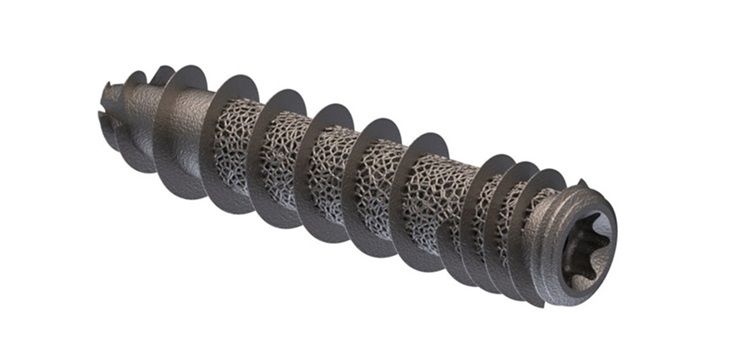
    Orthopedic trabecular fixation screw

    This patent release further strengthens Cutting Edge Spine as the market leader in the field of trabecular fixation for orthopedic applications.

    MINERAL SPRINGS, NC, October 26, 2023 / OrthoSpineNews / – Cutting Edge Spine (http://www.cuttingedgespine.com), a leader in the organic development and commercialization of “passively smart” spinal technologies, today announced the Notice of issuance of the United States Patent and Trademark Office relating to Patent No. US 11,771,482 B2: IMPLANTS FOR TISSUE FIXATION AND FUSION.

    This third patent issue covering trabecular screws for all orthopedic fixations gives Cutting Edge Spine an exceptionally strong position in the market compared to the transformational fixation technology offerings that are trabecular in nature.

    “Our patent position gives us the opportunity to freely develop a broad portfolio of patented trabecular fixation devices for all orthopedic applications, while at the same time confidently protecting our current and future market position.” said Randy Roof-President & CEO; Founder of Cutting Edge Spine. “Our first such 510(k) cleared spine system, the T-FIX™3DSI Joint Fusion System, was introduced to the market in late spring of this year and has quickly positioned Cutting Edge Spine as a leader in the fast-growing SI sector. fixation market.”

    About the advanced spine
    Founded in 2009, Cutting Edge Spine (CES) is a privately held medical device organization headquartered in Mineral Springs, NC. The company is committed to developing and commercializing patented “passive smart” orthopedic technologies that are transformative relative to clinical benefit to the patient, without driving up the cost of care.

    Media contact
    Randy Dak
    Cutting Edge Spine LLC,
    1 704-839-1916
    r.roof@cuttingedgespine.com, www.cuttingedgespine.com

    LinkedIn

    SOURCE Cutting Edge Spine, LLCrt

    Source link

  • Researchers find that drugs that reduce infant mortality could lead to long-term health problems

    Researchers find that drugs that reduce infant mortality could lead to long-term health problems


    Steroids commonly offered to pregnant people at increased risk of preterm birth may be unnecessary and could lead to long-term health problems for the infants, according to new research led by McMaster University.

    The research, published in The BMJ on August 2 analyzed data from 1.6 million babies and found that about 40 percent of babies with early corticosteroid exposure — defined as exposure at 34 weeks’ gestation or earlier — were born at term. The full-term babies had an increased risk of both short- and long-term health problems, including admission to the neonatal intensive care unit, breathing and growth problems and an adverse neurological outcome, the researchers found.

    Corticosteroids are used to increase the chances of survival of very premature babies and reduce health problems. However, the effects on long-term child health are not well understood, especially in infants who exceed expectations and are born on term. The research shows that many babies exposed to steroids avoid preterm birth, but new risks arise for other future health complications.

    “Preterm birth is very difficult to predict; we need better prediction models to prevent overexposure to interventions such as steroids because there is a potential risk,” said Sarah McDonald, senior author of the study and professor in the Department of Obstetrics and Gynecology at the McMaster University.

    To conduct the study, researchers conducted a systematic review and meta-analysis of data from seven randomized controlled trials and ten population-based studies involving 1.6 million babies born since 2000.

    More than half of infants exposed early to corticosteroids were born together at term (37 weeks or longer) and late preterm (34-36 weeks), and researchers found similar results in this combined group. For very preterm infants, antenatal steroids can potentially save lives and reduce serious morbidity, but as pregnancy progresses, the benefits shift to risks.

    “Antenatal steroids are a double-edged sword: highly beneficial for babies born very preterm, and potentially harmful for babies born at term,” says McDonald, Canada Research Chair in Maternal and Child Disease Prevention and Intervention.

    The authors say more research with long-term follow-up in randomized controlled trials is crucial. They also warn against a less liberal approach to steroid use during pregnancy.

    The study was supported by the Canada Research Chairs program.

    Source link

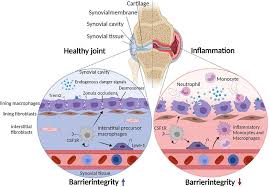
  • Fibroblast multiplicity in RA: a synovial state of the art

    Fibroblast multiplicity in RA: a synovial state of the art


    • Zhang, F. et al. Defining inflammatory cell states in rheumatoid arthritis synovial tissues by integrating single-cell transcriptomics and mass cytometry. Wet. Immunol. 20928–942 (2019).

      Article PubMed PubMed Central Google Scholar

    • Smith, MH et al. Drivers of heterogeneity in synovial fibroblasts in rheumatoid arthritis. Wet. Immunol. https://doi.org/10.1038/s41590-023-01527-9 (2023).

      Article PubMed PubMed Central Google Scholar

    • Nygaard, G. & Firestein, G.S. Restoring synovial homeostasis in rheumatoid arthritis by targeting fibroblast-like synoviocytes. Wet. Rev. Rheumatoid. 16316–333 (2020).

      Article PubMed PubMed Central Google Scholar

    • Müller-Ladner, U. et al. Synovial fibroblasts from patients with rheumatoid arthritis adhere to and invade normal human cartilage when grafted into SCID mice. Ben. J. Pathol. 1491607–1615 (1996).

      PubMed PubMed Central Google Scholar

    • Ainsworth, RI et al. Systems biology analysis of fibroblast-like synoviocytes in rheumatoid arthritis implicates cell lineage-specific transcription factor function. Wet. Just. 136221 (2022).

      Article CAS PubMed PubMed Central Google Scholar

    • Yan, M. et al. ETS1 regulates pathological tissue remodeling programs in disease-associated fibroblasts. Wet. Immunol. 231330–1341 (2022).

      Article CAS PubMed Google Scholar

    • Wei, K. et al. Notch signaling drives synovial fibroblast identity and arthritis pathology. Nature 582259–264 (2020).

      Article CAS PubMed PubMed Central Google Scholar

    • Boyle, DL et al. Enhancement of transcriptome fidelity after synovial tissue disaggregation. Front side. Of. 9919748 (2022).

      Article Google Scholar

    • Firestein, GS Invasive fibroblast-like synoviocytes in rheumatoid arthritis. Passive responders or transformed aggressors? Arthritis Rheumatism. 391781–1790 (1996).

      Article CAS PubMed Google Scholar

    Source link

  • We need a better understanding of how COVID-19 has affected our athletes

    We need a better understanding of how COVID-19 has affected our athletes


    Self-reported mental health measures among incoming collegiate student-athletes who had SARS-COVID-19

    Anderson MN, Gallo CA, Passalugo SW, Nimeh JM, Buckley TA. J Athl train. 2023 [published online ahead of print, 2023 May 26]10.4085/1062-6050-0554.22.

    Full text freely available

    Take home message

    Athletes with a history of COVID-19 infection may report slightly worse depression and anxiety scores than peers without a history of COVID-19.

    Background

    More than 75% of people have cognitive problems after a COVID-19 infection, and about one in three experience persistent neuropsychological effects such as depression and anxiety. It remains unclear whether athletes with a history of COVID-19 infection experience more depression or anxiety than athletes without a history of COVID-19.

    Study objectives

    The authors compared patient-reported anxiety and depression between incoming collegiate athletes with or without a history of COVID-19.

    Methods

    Participants were freshmen or transfer student-athletes in a more comprehensive concussion study that answered a question about their history of COVID-19 and any mental health measures. Participants reported on their mental health using the Satisfaction with Life Scale, Hospital Anxiety and Depression Scale, and State-trait Anxiety Inventory.

    Results

    The authors examined 79 athletes with a history of COVID-19 and 99 without a history of COVID-19. Overall, those with a history of COVID-19 had worse depression and anxiety scores, especially among women. However, these differences were small – often less than a one-point difference. When the authors examined how many student-athletes met clinical cutoffs for depression or anxiety, almost everyone in each group (>94%) did not meet clinical cutoffs for depression or anxiety, regardless of their history of COVID-19.

    Viewpoints

    Patients with a history of COVID-19 may have worse mental health outcomes than patients without a history of COVID-19. However, because many of the patients scored within normal limits, the clinical applicability of the difference may be questionable. It would have been interesting to know if the time since having COVID-19 or its severity influenced mental health outcomes among student-athletes. This type of analysis would require more student-athletes.

    Clinical implications

    The authors suggested that clinicians should be aware that student-athletes with a history of COVID-19 could be at greater risk for mental health problems if another event (e.g., concussion, joint injury) occurs.

    Questions for discussion

    Why do you think there was such a negligible effect on athletes’ mental health after COVID-19 infection? Do you think we should be concerned about the mental health effects in athletes after COVID-19 infection?

    Related posts

    We must break the stigma of seeking mental health care among student-athletes
    Addressing the Mental Health Needs of NCAA Student-Athletes of Color: Fundamental Concepts from the NCAA Summit on the Mental Health and Well-Being of Diverse Student-Athletes
    Adolescent mental health, not football, is a reason for mental health problems in adulthood

    Written by Mitchell Barnhart
    Reviewed by Jeffrey Driban

    9 EBP CEU courses

    Source link

  • Silony Medical completes the acquisition of Centinel Spine’s Global Fusion Business

    Silony Medical completes the acquisition of Centinel Spine’s Global Fusion Business


    silony centinel3
    • The completed transaction includes all cervical and lumbar fusion products, including the STALIF® technology platform
    • This acquisition makes Silony an important entry into the American market and significantly strengthens its range of stand-alone cages
    • Silony Medical will change its name to “Silony Spine” to underline its focus on spine fusion technology

    FRAUENFELD, Switzerland, Oct. 19, 2023 /PRNewswire/ — Silony Medical International AG (the Company), a growing challenger to “big medtech” in the global spinal fusion market, has completed the acquisition of Centinel Spine’s Global Fusion Business. This combines Silony’s Verticale® posterior screw and rod fusion platform, its Roccia® and Favo® Interbody Fusion (IBF) systems with the STALIF® technology platform to deliver a premier occiput-to-sacrum, posterior, lateral and anterior spinal fusion portfolio create for open and minimally invasive spinal fusion cases.

    Silony has been active in the US market since late 2018 – with this acquisition, Silony will leverage the Centinel Fusion Portfolio’s great team and distribution network to strengthen its position in the North American spine market and provide best-in-class surgeons and their teams offer spine fusion solutions that provide flexibility and freedom.

    In the coming days and months, Silony will change its name to Silony Spine to underline its 100% commitment and focus on technological solutions for spine fusion. At the same time, we will begin a refresh of the STALIF platform to drive further adoption among the spine surgeon community. Shortly afterwards we will launch our next generation of technology instruments.

    About Silony Medical, soon Silony Spine

    Founded in 2013 by the internationally renowned hospital group Schön Clinic in Germany, Silony Spine is a market disruptor that aims to change the status quo of how product manufacturers collaborate with hospital systems. Silony Spine manages and designs spine hardware and devices that provide surgeons and hospitals with high-quality product solutions that are highly compatible with assistive technologies.

    For more information, please visit the company’s website at www.silonyspine.com or contact:

    Silony Medical International AG

    Constantine Schön
    Director
    Bahnhofplatz 76a, 8500 Frauenfeld Switzerland
    Phone: +49 711 78 25 25 21
    Email: cschoen@silony-medical.com & info.schweiz@silony-medical.com

    SOURCE Silony Medical

    rt

    Source link

  • Coriander Coleslaw |  GF, DF

    Coriander Coleslaw | GF, DF


    Looking for a tasty way to add more vegetables to your meals?

    This is it!

    Our recipe for coriander coleslaw is the perfect side dish. The naturally sweet and spicy dressing is light, fresh and a delicious addition to the crispy cabbage.

    Plus, this slaw is rich in vitamin K, calcium and magnesium, all crucial nutrients for building and maintaining strong bones.

    Combine this dish with your favorite protein source and you have a balanced, bone-strengthening lunch or dinner.

    Try our Cilantro Cabbage Slaw this week!

    Bone Coach Recipes | Coriander Coleslaw | Bone loss Bone Healthy diet Nutrients Osteoporosis

    Coriander Coleslaw | GF, DF | BoneCoach™ Recipes

    SERVES: 4

    TOTAL TIME: 15 minutes

    Ingredients

    400 g shredded green and purple cabbage (you can use a pre-packed coleslaw mix!)

    1/2 small red onion, finely chopped

    1/2 cup (125 ml) cilantro, finely chopped

    1/4 cup (62 ml) freshly pressed extra virgin olive oil

    1/4 cup (62 ml) freshly squeezed lime juice

    1 tablespoon (15 ml) honey

    1/2 teaspoon (2 ml) sea salt

    Directions

    1) Mix all ingredients in a bowl. Mix to combine and chill in the refrigerator for 2 hours or overnight before serving!

    Recipe created by BoneCoach™ Team Dietitian Amanda Natividad-Li, RD & Chef.

    Medical disclaimer

    The information shared above is for informational purposes only and is not intended as medical or nutritional therapy advice; it does not diagnose, treat or cure any disease or condition; it should not be used as a substitute or substitute for medical advice from physicians and trained medical professionals. If you are under the care of a healthcare professional or are currently taking prescription medications, you should discuss any changes in your diet and lifestyle or possible use of nutritional supplements with your doctor. You should not stop taking prescribed medications without first consulting your doctor.

    Source link

  • Most forms of exercise are overwhelmingly safe, but don’t ignore the dangers

    Most forms of exercise are overwhelmingly safe, but don’t ignore the dangers


    The risks of serious injury from most sports and exercise are surprisingly small, according to the results of a five-year study led by researchers at the University of Bath in Britain.

    The research, funded by the British Medical Association, shows that even forms of sport sometimes considered risky by the public, such as cycling, are generally safe, suggesting that the benefits of taking part in fitness activities far outweigh the hazards.

    This is the first time in England and Wales that researchers have attempted to describe and quantify the relative risks of trauma from sport or other physical activity. It is hoped that the results of the study will make it easier for both participants and activity organizers to make their activities even safer.

    Data for the new study – published today in the journal Injury preventionpublished by BMJ – came from rural hospitals, where participants in sports and exercise showed extensive trauma.

    The researchers found that between 2012 and 2017, a total of 11,702 trauma injuries resulted from sports and exercise.

    Dr. Sean Williams, researcher at the Department for Health and the Center for Health and Injury and Illness Prevention at the University of Bath, and lead researcher on the study, said: “This work shows that practicing fitness activities is generally a safe and way is to exercise. useful pursuit.

    “While no physical activity is completely without risk, the risk of serious injury is extremely low compared to the numerous health and wellness benefits gained from staying active.”

    The study examined 61 sports and other physical activities undertaken nationally, regardless of their popularity, and provided a comparable estimate of the risks to participants.

    Perhaps unsurprisingly, fitness activities (such as running, golf, dance classes and gym sessions) are the least likely to lead to injury. Running results in 0.70 injuries, golf 1.25 injuries and fitness classes only 0.10 per 100,000 participants/year.

    Of the sports with the highest participation, football had the highest incidence of injuries (6.56 injuries/100,000 participants/year), although this is also relatively small.

    Motor sports, equestrian sports and gliding (paragliding and hang gliding) were by far the riskiest activities of those surveyed, with motor sports causing 532 injuries, equestrian sports 235 and gliding 191 injuries per 100,000 participants.

    The incidence in men (6.4 injuries/100,000 participants/year) was higher than in women (3.3 injuries/100,000 participants/year).

    Why is exercise becoming riskier?

    Perhaps worryingly, the risk of injury in popular sports and other physical activities is increasing internationally. In Victoria, Australia, for example, the annual number of hospital-treated sports injuries increased by 24% between 2004 and 2010, with an incidence of sports-related major trauma or death of 12.2 per 100,000 participants/year.

    This trend is mirrored in Britain. This is highlighted by data from a regional trauma and spine unit, which has found an almost 500% increase in the incidence of serious motorsport accidents in the five years to 2015.

    Dr. Madi Davies, lead author of the study and a former postdoctoral researcher at the University of Bath, said: “When I looked at the injuries recorded in 2012 – the year the study started – it was clear that the risks were significantly lower. than in later years of study.”

    She called for further research, ‘in real time’, to understand exactly how and why more people are being injured.

    She said: “While the finding that more people are being injured may be multi-faceted – trauma data recording has improved during the study, meaning more injuries are now being recorded – it is important that any increase in burden is responded to, and that this data is used to make activities safer.”

    Serious injury is a clear burden on hospitalized participants, their families and the NHS. The aim of this research is to reduce these burdens by identifying the injury risk of each activity and then coordinating action.

    “Many sports and recreational injuries are preventable,” says Dr. Williams. “Whether that’s through protective equipment, rule or law changes or education, once we identify how and where injuries occur, we can start thinking about ways to prevent them in every sport.”

    It is hoped that this work will lead to the development of a national registry with real-time data analysis capabilities. The register would standardize the recording of serious injuries resulting from sport and physical activity, so that trends or patterns of risk can be quickly identified and responded to.

    An example where this has already happened concerns trampoline safety. Sales of garden trampolines boomed in 2005 and by 2014 up to 250,000 had been sold in Britain. The Royal Society for the Prevention of Accidents (RoSPA), working with the Royal College of Emergency Medicine, has identified a spike in trampoline-related injuries and made recommendations to improve safety, which range from limiting trampolining to one person at a time, keeping children under the age of six off trampolines and purchasing models that are enclosed in a safety net.

    In addition, trampoline manufacturers were supported to meet safety standards, for example by adding padding around trampolines. Commercial partners were also involved to improve safety at trampoline parks.

    As a result of the RoSPA directive, serious accidents have fallen significantly.

    Source link

  • Expanding Innovations, Inc.  Announces Commercial Launch of X-PAC Expandable Lateral Cage System

    Expanding Innovations, Inc. Announces Commercial Launch of X-PAC Expandable Lateral Cage System


    LOS ANGELES, Oct. 19, 2023 /PRNewswire/ — Expanding Innovations, Inc. (EI), an emerging technology leader in the expandable interbody cage sector of the spine industry, has announced the full commercial launch of the X-PAC Expandable Lateral Cage System (X-PAC LLIF).

    Some of the first procedures using the cage were performed by Dr. Brandon K. Strenge of the Orthopedic Institute of Western Kentucky. Dr. Strenge noted, “The X-PAC Expandable Lateral Cage design incorporates the fundamental lateral interbody fusion principles of indirect decompression and bridging bone fusion. The maximal posterior expansion of X-PAC helps restore foraminal height, facilitating indirect decompression. In addition, the large open architecture and streamlined post-packing instrumentation create an ideal endplate-to-endplate fusion column.”

  • Osteoporosis and hormones with Dr.Deborah Matthew + BoneCoach™

    Osteoporosis and hormones with Dr.Deborah Matthew + BoneCoach™


    Ever thought about the crucial role hormones play for your health?

    It may surprise you, but the very strength of your bones and your heart health are closely linked to these hormones.

    As we age and are affected by other factors, our hormone levels can drop, putting us at greater risk for osteoporosis, sarcopenia and cardiovascular disease.

    Do you want to learn or Bioidentical hormone replacement therapy is the breakthrough solution your body needs and in what situations is it NOT suitable?

    Join me in this episode as I sit down Dr. Deborah Matthew, MDalso known as The happy hormone doctor. Together we navigate through the fascinating world of hormoneswith emphasis on them profound impact on bone health and shed light on the promising field of bioidentical hormone replacement therapy.

    Episode timeline

    0:00 – Episode begins

    1:22 – Meet our guest, Dr. Deborah Matthew, MD

    2:02 – Dr. Matthew’s journey to hormone health and bioidentical hormone replacement therapy (BHRT)

    5:07 – Understanding hormone balance

    8:32 – Traditional vs. Dr.’s approach Matthew: Emphasis on the importance of hormones in women’s bone health

    15:04 – The role of hormones in men’s health: preventing osteoporosis with testosterone and estrogen

    19:51 – Research natural remedies before considering BHRT

    26:08 – Deep dive into BHRT: its benefits, considerations and potential risks

    33:33 – Assessment of suitability of BHRT for men

    34:48 – Different forms of BHRT

    37:11 – How to connect with Dr. Matthew and her services

    38:53 – Closing thoughts and takeaways

    Sources mentioned

    **Show notes @ https://bonecoach.com/signaturewellness-dr-deborah-matthew-hormones-osteoporose

    Below you will find resources from Dr. Deborah!

    >> Click here to get your FREE copy of “This is NOT Normal! A Busy Women’s Guide to Symptoms of Hormonal Imbalance.”

    >> Click here to visit Dr.’s main website. to visit Deborah

    What can you do to support your bone health and this podcast?

    1. Press the “Subscribe” button on your respective podcast player (i.e. Apple, Google, Spotify, Stitcher, iHeart Radio and TuneIn). Never miss an episode that can help improve your bone health.

    2. Leave a review. The more positive ratings and reviews and the more subscribers we have, the more people can find us and get the answers to the questions they need. Thank you! 🙂

    3. Tell a friend about The Bone Coach Podcast or share via text, email or social. Do you know of a Facebook group where people can benefit from this information? Feel free to click any of the share buttons below.

    About Dr. Deborah Matthew, MD:

    Dr. Deb Matthew MD, The Happy Hormones Doctor, is a bestselling author, international speaker, educator, wife and mother of four boys. After years of suffering from fatigue and irritability due to hormonal imbalances, her search for a solution for her personal health led her to change everything about her medical practice. She has been featured on national podcasts, radio and broadcasts including NBC, ABC, CBS and FOX.

    Medical disclaimer

    The information shared above is for informational purposes only and is not intended as medical or nutritional therapy advice; it does not diagnose, treat or cure any disease or condition; it should not be used as a substitute or substitute for medical advice from physicians and trained medical professionals. If you are under the care of a healthcare professional or are currently taking prescription medications, you should discuss any changes in your diet and lifestyle or possible use of nutritional supplements with your doctor. You should not stop taking prescribed medications without first consulting your doctor.

    Source link