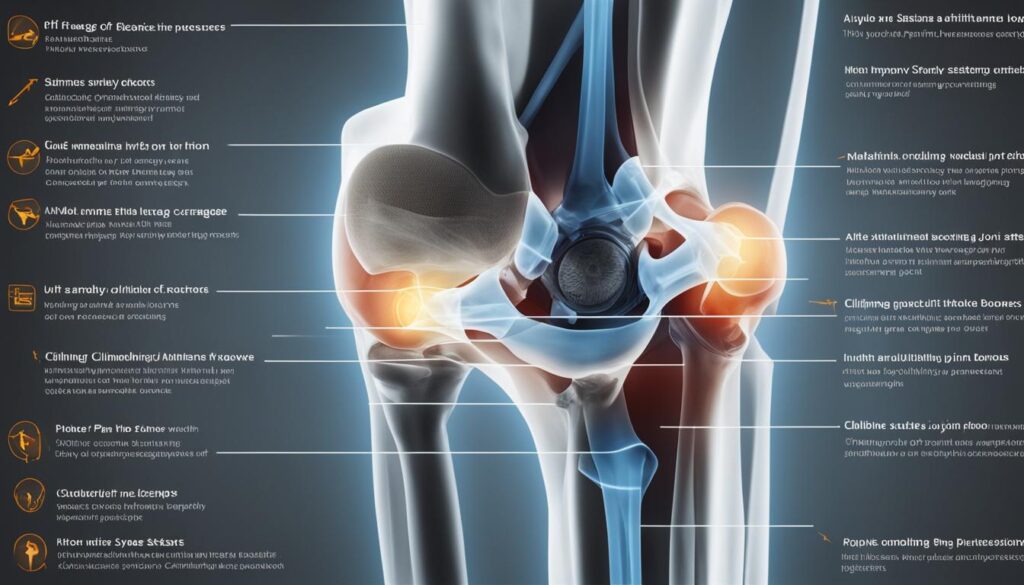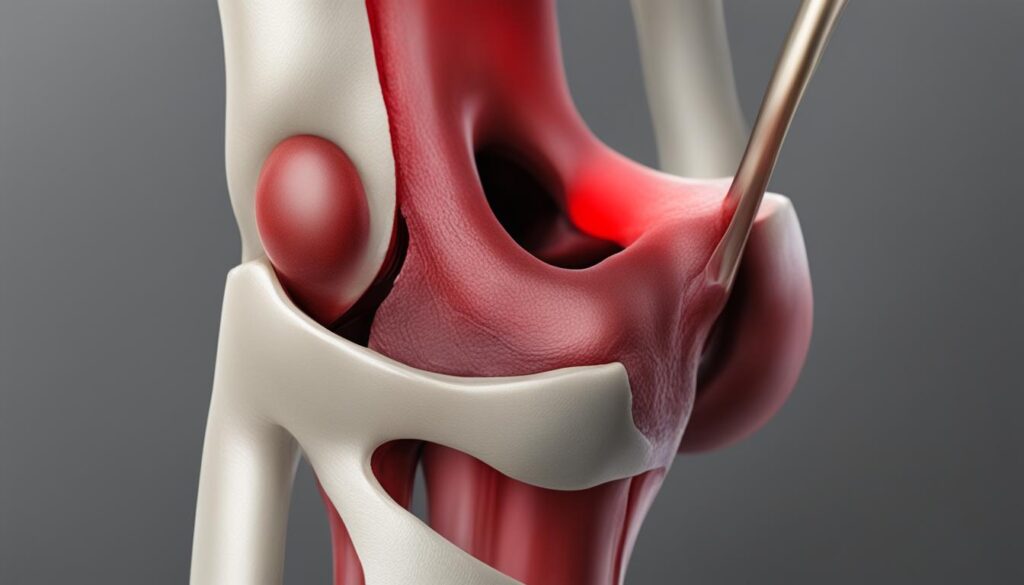
Are you experiencing creaking knees when climbing stairs? Do you feel knee pain when going upstairs or hear your knees cracking while ascending steps? You’re not alone. Creaking knees, also known as crepitus, can be bothersome and uncomfortable, but there are effective solutions and remedies to alleviate this issue and strengthen your knees for stair climbing.
Key Takeaways:
- Creaking knees, or crepitus, can be caused by various factors such as osteoarthritis, patellofemoral pain syndrome, and torn cartilage.
- Understanding the underlying causes of creaking knees is essential for effective management on stairs.
- Treating creaking knees can involve lifestyle changes, physical therapy exercises, medications, and in severe cases, surgery.
- Exercises that strengthen the knees, such as squats and lunges, can help reduce creaking sound and discomfort while climbing stairs.
- Protecting and supporting knee health through proper footwear, warm-up exercises, maintaining a healthy weight, and engaging in leg-strengthening activities.
Understanding Creaking Knees and Its Causes
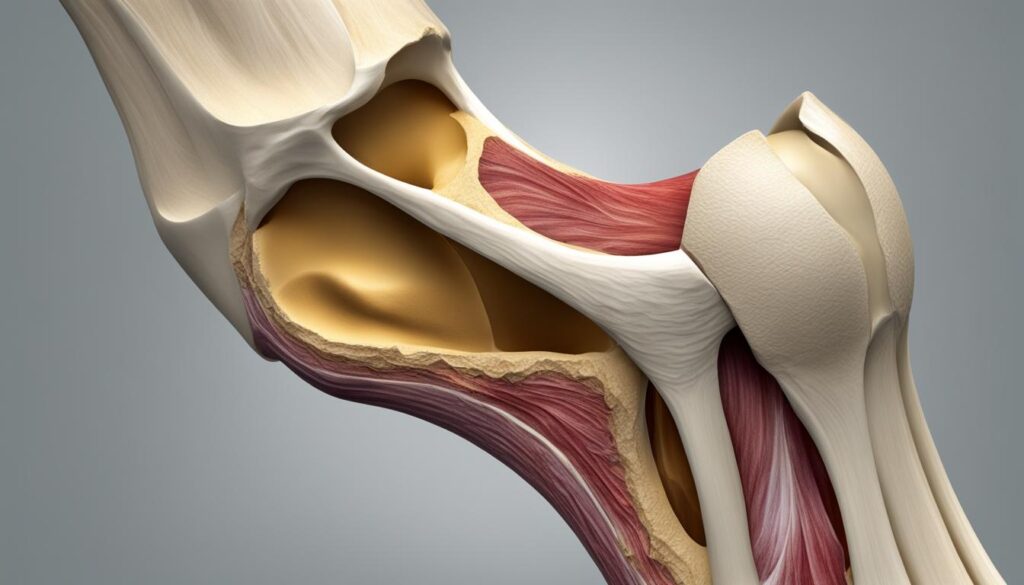
Creaking knees, or crepitus, can be a source of discomfort and concern, especially when climbing stairs. It is important to understand the causes of this condition in order to effectively manage and alleviate knee discomfort on stairs. Creaking knees can be attributed to various factors, including:
- Air bubbles: When air gets trapped in the joints, it can cause popping or cracking sounds when the knees move. While this is generally harmless, it can be a cause of concern for some individuals.
- Damage to the knee joint: Previous injuries, such as ligament tears or meniscus damage, can contribute to creaking knees on stairs.
- Patellofemoral pain syndrome: This condition involves pain and discomfort around the kneecap. Creaking knees can be a symptom of this syndrome.
- Torn cartilage: When the cartilage in the knee is damaged or torn, it can result in creaking sounds and knee discomfort. This is commonly seen in individuals with osteoarthritis.
- Osteoarthritis: This degenerative joint disease can cause the cartilage in the knee to wear down, leading to creaking knees and pain.
As individuals age, creaking knees become more common and can affect one or both knees. While crepitus is often harmless, it is important to seek medical attention if creaking knees occur after trauma or are accompanied by pain and swelling. Proper diagnosis and understanding of the underlying causes are essential for effectively managing creaking knees on stairs.

“Understanding the causes of creaking knees is crucial for implementing the right strategies to manage and alleviate knee discomfort on stairs.”
Management and Treatment for Creaking Knees
Managing and treating creaking knees on stairs involves a comprehensive approach to alleviate discomfort and promote knee health. By implementing lifestyle changes, exercises, medications, and other treatments, individuals can effectively manage creaking knees and prevent knee pain while going upstairs.
One of the key strategies for preventing knee pain while going upstairs is weight management. Maintaining a healthy body weight helps reduce stress on the knees, minimizing discomfort and creaking sounds. In addition to weight management, regular exercise is crucial to strengthen the muscles around the knee and improve joint stability.
Physical therapy exercises play an essential role in managing creaking knees on stairs. These exercises focus on strengthening the quadriceps, hamstrings, and other muscles that support the knee joint. By improving muscle strength and flexibility, individuals can enhance knee stability and reduce the risk of pain and knee noise during stair climbing.
Aside from lifestyle changes and exercises, there are various remedies and treatments available to alleviate creaking knees. Anti-inflammatory drugs, such as over-the-counter pain relievers like ibuprofen, can help reduce knee inflammation and provide temporary relief. Additionally, non-surgical treatments, such as corticosteroid injections and viscosupplementation, may be recommended by healthcare professionals to manage knee discomfort.
In severe cases where conservative treatments are not effective, surgery may be necessary. Surgical interventions for creaking knees on stairs include arthroscopic procedures to repair or remove damaged cartilage, realignment surgeries to correct alignment issues, or joint replacement surgeries for advanced osteoarthritis.
“Proper management and treatment of creaking knees can significantly improve quality of life and enable individuals to climb stairs without discomfort or noise.” – Dr. Emily Johnson, Orthopedic Specialist
To summarize, managing creaking knees on stairs involves a multifaceted approach. By incorporating weight management, regular exercise, physical therapy exercises, and appropriate medical treatments, individuals can effectively prevent knee pain while going upstairs and manage creaking knees. Consultation with a healthcare professional is recommended for personalized treatment plans based on the severity of the condition.
Management and Treatment Approaches for Creaking Knees
| Lifestyle Changes | Exercises | Medications and Treatments | Surgical Interventions |
|---|---|---|---|
| Weight management | Quadriceps-strengthening exercises | Anti-inflammatory drugs | Arthroscopic procedures |
| Regular exercise | Hamstring and hip muscle exercises | Corticosteroid injections | Realignment surgeries |
| Balance and stability exercises | Viscosupplementation | Joint replacement surgeries |

Exercises to Strengthen Knees for Climbing Stairs
When it comes to alleviating creaking knees and knee discomfort while climbing stairs, targeted exercises can play a crucial role in strengthening the knees and improving overall knee health. These exercises focus on various muscle groups that support the knee joint and help reduce stress on the patellofemoral joint.
One of the most effective exercises for strengthening the knees is squats. Squats target the quadriceps muscles, which play a significant role in knee stability. To perform squats, stand with your feet shoulder-width apart, engage your core muscles, and slowly lower your body like you’re sitting into a chair. Make sure to keep your knees aligned with your ankles and avoid letting them go past your toes. Repeat this exercise for a few sets of 10-12 reps.
Lunges are another excellent exercise for strengthening the knees for stair climbing. Lunges not only target the quadriceps but also engage the glutes and hamstrings, further enhancing knee stability. Start by standing with your feet hip-width apart. Take a step forward with one leg, lower your body until both knees are bent at a 90-degree angle, and then push back to the starting position. Alternate legs and perform 10-12 reps on each side for a few sets.
In addition to the quadriceps, it’s essential to strengthen the hip muscles and the muscles of the inner thighs to support knee health. Exercises like side-lying leg lifts and clamshells target these muscle groups and contribute to overall knee stability. To perform side-lying leg lifts, lie on your side with your legs stacked on top of each other. Lift the top leg towards the ceiling, keeping it straight, and lower it back down. Repeat this exercise for a few sets of 10-12 reps on each side. For clamshells, lie on your side with your knees bent and feet together. Keeping your feet together, open your knees like a clamshell, then bring them back together. Perform 10-12 reps on each side for a few sets.
Summary:
Exercises targeting the quadriceps, such as squats and lunges, are key in strengthening the knees for climbing stairs. Additionally, exercises that engage the hip muscles and the muscles of the inner thighs contribute to better knee health and reduce creaking sound and discomfort. Incorporating these exercises into a regular workout routine can provide significant benefits for those experiencing creaking knees when climbing stairs.
| Exercise | Muscle Groups Targeted | Repetitions |
|---|---|---|
| Squats | Quadriceps | 10-12 reps, few sets |
| Lunges | Quadriceps, glutes, hamstrings | 10-12 reps on each side, few sets |
| Side-Lying Leg Lifts | Hip muscles | 10-12 reps on each side, few sets |
| Clamshells | Muscles of the inner thighs | 10-12 reps on each side, few sets |
Protecting and Supporting Knee Health
In addition to exercises, there are other measures we can take to protect and support knee health. Here are some tips:
- Wear Proper Shoes: Choosing suitable footwear that provides sufficient support and cushioning is crucial for preventing knee pain while going upstairs. Opt for shoes with good arch support and shock-absorbing soles.
- Warm-Up and Stretch: Before engaging in any physical activity, take the time to warm up your muscles and joints. This can include light cardiovascular exercises and dynamic stretches to prepare your body for the upcoming activity. Afterward, perform static stretches to increase flexibility and reduce the risk of knee pain.
- Maintain a Healthy Body Weight: Excess weight puts additional stress on your knees, increasing the likelihood of knee pain and discomfort. By maintaining a healthy body weight through a balanced diet and regular exercise, you can reduce the strain on your knees and prevent knee pain while going upstairs.
- Engage in Low-Impact Activities: Activities like walking and swimming are gentle on the knees while still providing effective cardiovascular and muscle-strengthening benefits. Incorporating these low-impact exercises into your routine can help strengthen the leg muscles and promote better knee health.
Tip:
Remember, prevention is key when it comes to protecting your knees. Implementing these measures in your daily life can go a long way in preventing knee pain while going upstairs and maintaining healthy knees.
By following these tips and incorporating exercises to strengthen your knees for climbing steps into your fitness routine, you can significantly reduce the risk of knee pain and discomfort. Taking care of your knees is essential for maintaining a pain-free and active lifestyle.
| Exercise | Description |
|---|---|
| Squats | Squat down as if you are sitting back into a chair, making sure to keep your knees aligned with your toes. Repeat for a set number of repetitions. |
| Lunges | Step forward with one leg and lower your body until your front knee is bent at a 90-degree angle. Return to the starting position and repeat with the other leg. |
| Step-Ups | Step onto a platform or step with one leg, driving through the heel and lifting your body up. Step back down and repeat with the other leg. |
| Leg Press | Sit in a leg press machine with your feet shoulder-width apart. Push the platform away from your body by extending your knees and hips, then return to the starting position. |
Remember to consult with a healthcare professional before starting any new exercise program, especially if you have pre-existing knee conditions or concerns.
Conclusion
The creaking knees when climbing stairs can be a common issue, especially as we get older. However, with proper management and treatment, we can alleviate knee discomfort and strengthen our knees for stair climbing. By understanding the causes of creaking knees and implementing targeted exercises and lifestyle changes, we can make a significant difference in reducing pain and improving knee health.
One of the key solutions for creaking knees when climbing steps is to engage in exercises that specifically strengthen the muscles around the knees. Squats and lunges, for example, can help improve knee stability and reduce the load on the patellofemoral joint. Additionally, focusing on strengthening the hip muscles and the muscles of the inner thighs can contribute to better knee health and reduce creaking sound and discomfort while climbing stairs.
Aside from exercises, there are other measures we can take to protect and support our knee health. Wearing suitable shoes that provide proper support and cushioning is essential. We should also make it a habit to warm up before exercise and stretch afterward to reduce the risk of knee pain. Maintaining a healthy body weight is crucial in reducing stress on the knees, and engaging in activities like walking and swimming can strengthen leg muscles and promote better knee health.
In conclusion, creaking knees when climbing stairs can be bothersome, but we have solutions at our disposal. By implementing targeted exercises, taking care of our overall knee health, and making lifestyle adjustments, we can enjoy climbing stairs without the discomfort of creaking knees. Let’s take proactive steps towards stronger knees and a better quality of life.
FAQ
What causes creaking knees when climbing stairs?
Creaking knees, or crepitus, can be caused by factors such as osteoarthritis, patellofemoral pain syndrome, torn cartilage, and damage to the knee joint. It is more common as people get older.
Is creaking knees on stairs a serious issue?
Creaking knees on stairs are often harmless. However, if it occurs after trauma or is accompanied by pain and swelling, medical attention may be required.
How can I manage creaking knees on stairs?
Managing creaking knees on stairs involves a multifaceted approach. Lifestyle changes, such as weight management and regular exercise, along with physical therapy exercises to strengthen the knee muscles, can help alleviate discomfort.
What exercises can I do to strengthen my knees for climbing stairs?
Exercises that focus on the quadriceps, such as squats and lunges, can improve knee stability. Strengthening the hip muscles and inner thighs also contributes to better knee health.
How can I protect and support my knee health when climbing stairs?
Wearing suitable shoes, warming up before exercise, stretching afterward, maintaining a healthy body weight, and engaging in activities like walking and swimming can protect and support knee health.
What are the solutions for creaking knees when climbing stairs?
Solutions for creaking knees when climbing stairs include understanding the causes and implementing targeted exercises and lifestyle changes to reduce pain and improve knee health.