Category: Knee injury

  • How to recover from your ACL injury like a professional athlete

    How to recover from your ACL injury like a professional athlete

    Last winter I connected with another NFL player who was going through an ACL recovery.

    Before meeting him, he had been working as hard as he could to recover efficiently from the ACL injury. But he had just been to his doctor, who had taken him through several to test to determine how well his recovery was going.

    The score on the test wasn’t pretty. So much so that his head coach later told me it caused him to have a panic attack in the parking lot. Despite doing everything possible to keep this player’s recovery on track, they were… well behind.

    Fortunately, the player received a referral to call Accelerate ACL. After just a few training sessions with our team and technology, he started seeing steady progress.

    After a few weeks he went back to the doctor for further follow-up to test again. His score doubled. The head coach was relieved and sent me a text saying, “I believe his scores have gone up in large part because of your work with him.”

    Today, that player is on track to return to the field for the start of the NFL season. During a recent workout at his home, another player was visiting him, and I told him that the technology used in Accelerate ACL workouts is similar to his “cheat code.”

    Had this player settled and not sought additional help, his recovery likely would have been delayed, putting his 2021 season in jeopardy. Instead, he’s back on the field and eager to make an impact… we can’t wait to see how it turns out.

    Source link

  • Lowering C-reactive protein levels can protect your heart and bones

    Lowering C-reactive protein levels can protect your heart and bones

    Did you know that heart disease and osteoporosis are closely linked – to the extent that it is suggested that people with heart disease should be screened for osteoporosis and vice versa? According to emerging science, the two conditions are linked by one key factor: inflammation.

    That’s why, for February’s Heart Health Month, I recommend getting one simple blood test that can detect runaway inflammation and the associated antioxidant deficiency: the C-Reactive Protein (CRP) test. Some authorities even suggest that the high-sensitivity CRP test could predict the risk of developing serious heart disease (and other chronic diseases) years in advance (He et al. 2010; Li et al. 2017).

    What is C-reactive protein?

    C-reactive protein (CRP) is produced in the liver in response to inflammation; its job in the body is to attach itself to phosphocholine (a chemical produced by both microbes and dying cells) to ‘mark’ the unwanted cells so the immune system can remove them.

    If there is actually an infection or injury, inflammation and the resulting high CRP are not so bad. You want your immune system to be activated so it can find and eliminate bacteria or dead and injured tissue. But in heart disease and other chronic diseases, the high CRP level indicates ongoing inflammation that does not go away.

    You may remember a 2004 TIME Magazine cover story that alerted the public to the clear link between inflammation and heart disease. That was when elevated CRP was first understood for its role in the development of chronic inflammation (Rifai and Ridker 2001). It was linked not only to heart disease, but also to diabetes, stroke, metabolic syndrome and many other serious, long-term diseases, including osteoporosis.

    There are dozens of studies that have looked at CRP levels in individuals with low bone density and osteoporosis and have found a clear relationship between high CRP and weak or thin bones (Ganesan et al. 2005; de Pablo et al. 2012). Interestingly, there was a greater relationship between bone weakness and CRP than bone density. One study (Schett et al. 2006) concluded that “hs-CRP level is a significant and independent risk predictor of non-traumatic fractures. This finding is consistent with the hypothesis of a close interaction between low-grade inflammation and bone turnover.” And where osteoporosis coexists with other inflammatory conditions, such as emphysema, CRP highlights that connection as well (Samaria and Bhatia 2015).

    C-reactive protein is such an important marker that I even include it in my medical tests for osteoporosis that I give to all my clients. You can learn more about these tests and their significance in my online course Osteo Lab Tests.

    Decreasing elevated CRP levels

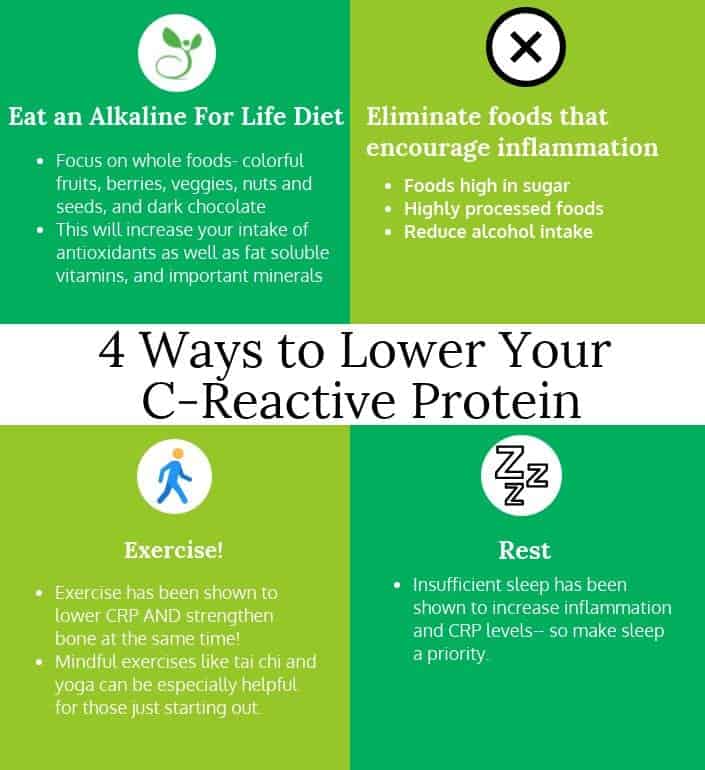
    • So now that we know that elevated CRP is a red flag for both your bone and cardiovascular health, what can we do about it? Fortunately, many of the recommendations I make for bone health also help reduce inflammation and lower CRP.
    • Eat an Alkaline for Life diet focused on whole foods and filled with colorful fruits, berries, vegetables, nuts and seeds – and dark chocolate. By doing this, you increase your intake of antioxidants, such as vitamin C, quercetin dihydrate, alpha lipoic acid, selenium and curcumin, as well as the fat-soluble vitamins A, D, E and K, and important minerals. such as magnesium.
    • Eliminate sugar, fried and processed foods, and reduce alcohol – all of which promote inflammation.
    • Exercise has been found to lower CRP levels while strengthening bone. Mindfulness exercises such as tai chi and yoga can be helpful for people just starting out – and they help reduce stress levels, which are unsurprisingly also associated with higher CRP and inflammation.
    • Rest! Insufficient sleep has been shown to increase inflammation and CRP levels. (And no, there’s no point in taking a nap. You need your eight hours at night.)

    I encourage you to learn more about keeping your heart and bones healthy, including the amazing benefits that vitamin K2 provides your heart and bones. Read my blog — Is vitamin K2 your body’s best friend? – for more.

    4 ways to lower CRP

    References

    Barbour, KE, et al. 2012. Inflammatory markers and the risk of hip fracture: the Women’s Health Initiative. J Bone Mineral Res. 27(5):1167-1176.

    de Pablo, P., M. S. Cooper and C. D. Buckley. 2012. Association between bone mineral density and C-reactive protein in a large population-based sample. Arthritis Rheumatism. 64(8):2624–2631.

    Ganesan, K., et al. 2005. Association between C-reactive protein and bone mineral density in community-dwelling older women. J Natl Med Assoc. 97(3):329–333.

    He, LP, et al. 2010. Early C-reactive protein in the prediction of long-term outcomes after acute coronary syndromes: a meta-analysis of longitudinal studies. Heart 96(5):339–346.

    Jaffe, R. and J. Mani. 2014. Predictive biomarkers in personalized laboratory diagnosis and evidence-based best practices for outcome monitoring. Townsend letter, January 2014.

    Li, YW, et al. 2017. Hs-CRP and all-cause mortality risk, cardiovascular disease, and cancer: a meta-analysis. Atherosclerosis. 259:75-82.

    Rifai, N., and P. M. Ridker. 2001. High-sensitivity C-reactive protein: a new and promising marker of coronary heart disease. Clin Chem. 47(3):403-411.

    Samaria, J. K. and M. Bhatia. 2015. Elevated CRP levels associated with osteoporosis in patients with COPD. Am J Respir Crit Care Med. 191:A5716.

    Schett, G., et al. 2006. High-sensitivity C-reactive protein and risk of non-traumatic fractures in the Bruneck study. Arch Intern Med. 166(22):2495-2501.

    Xu, WX, et al. 2015. High-sensitivity CRP: possible link between work stress and atherosclerosis. Ben J Ind Med. 58(7):773-779.

    Dr. Susan BrownI am Dr. Susan E. Brown. I am a clinical nutritionist, medical anthropologist, writer and motivational person speaker. Learn my proven 6-step natural approach to bone health in my online courses.

    Source link

  • Neurological consequences of ACL injuries with Terry Grindstaff

    Neurological consequences of ACL injuries with Terry Grindstaff


    We know that after a lower extremity injury, such as an ACL tear, joint-related symptoms often occur, such as swelling, loss of motion and instability. But as we learn more about these injuries, there also appear to be several neuromuscular consequences.

    In this episode, I talk to Terry Grindstaff of Creighton University about his research into these neuromuscular sequelae after an ACL injury, and how this could impact our initial rehabilitation, return to sport progressions, and even long-term outcomes years later.

    Show notes

    Terry Grindstaff is a physical therapist and athletic trainer with more than 20 years of clinical experience. He has a PhD in Kinesiology and is a professor in the Department of Physical Therapy at Creighton University. His research examines the neuromuscular consequences of lower extremity joint injuries and rehabilitation management to improve function. He provides clinical services in the athletic training room at Creighton University and is a member of the volunteer medical pool for USA Wrestling.

    Social tools for COS:
    –Twitter: @grindstafftl
    – Instagram: @grindstafftl

    Source link

  • Regain mobility and comfort with joint replacement surgery

    Regain mobility and comfort with joint replacement surgery


    Joint pain Arthritis and tendon problems Chronic pain and joint instability can significantly affect your quality of life. Joint replacement surgery may be the answer when physical therapy and non-surgical treatment options fail to provide relief. Bone & Joint Specialists Orthopedic Center, with four convenient locations in Indiana, offers comprehensive joint replacement solutions to help you regain an active, pain-free lifestyle.

    What is joint replacement surgery?

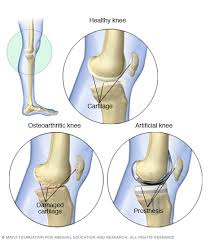
    Joint replacement surgery involves replacing damaged or arthritic joint parts with a biocompatible ceramic, plastic, or metal prosthesis. The purpose of the prosthesis is to imitate the natural motion and movement of the joint. Common joint replacements include knees and hips, but the surgery can also be performed on the elbow, shoulder, wrist and ankle.

    Who is an ideal candidate for joint replacement surgery?

    Joint replacement surgery often becomes necessary when nonsurgical treatments, such as activity changes, medications, and physical therapy, have failed to provide adequate relief and mobility. Your orthopedic specialist will discuss your condition, medical history, and relevant health factors to determine if joint replacement surgery is right for you.

    Risks and benefits of joint replacement surgery

    There are risks associated with joint replacement surgery, such as:

    • Infection
    • Bleed
    • Nerve damage
    • Blood clots

    Although there are risks, the benefits usually far outweigh these risks. Most patients experience significant improvements in comfort and mobility, with the new joint achieving nearly 100 percent of its range of motion.

    The joint replacement surgery procedure explained

    Joint replacement surgeries are usually performed on an outpatient basis under general anesthesia. The surgeon will replace the damaged bone and cartilage with the correct prosthesis. Before surgery, your doctor will provide details about the procedure, including the locations of the incision and the expected duration of the surgery.

    Recovery and aftercare for joint replacement surgeries

    Recovery from joint replacement surgery usually takes four to six weeks. Shortly after the operation you will start walking short distances, initially with a walker or walking stick. You will eventually walk without assistance as you progress through your physical therapy program. Physical therapy begins as early as the day after surgery and should be continued between therapy sessions as your therapist recommends. A follow-up visit with your surgeon will take place six weeks after the procedure.

    Schedule a consultation

    If you are experiencing joint pain and conservative treatments do not provide relief, contact Bone & Joint Specialists Orthopedic Center at 219.795.3360. We proudly serve patients in Highland, Hobart, Merrillville and Valparaiso, IN.

    Source link

  • If you’re looking for “a little more” in your ACL recovery…

    If you’re looking for “a little more” in your ACL recovery…

    A few months ago, a woman who had recently torn her ACL scheduled a time on my calendar for a phone call (you can do the same here). She initially said she just wanted to know more about the program and its costs, but when I got her on the phone it was clear she was looking for something else…

    She didn’t know exactly what she was looking for, but knew she wanted something MORE in her ACL recovery.

    Surprisingly (or maybe not?) we hear this often. An active, competitive person is normally not satisfied with the “status quo” of ACL recovery. Physiotherapy 2-3x/week, relatively simple exercises at home… is this really all there is to ensuring your recovery is as efficient as possible?

    Anyway, this particular woman had even taken the time to read our blog and implement the exercises we recommended on top of her at-home physical therapy routine (you can do the same through the links below. Just make sure you do so) approved by a PT or doctor).

    The ACL exercises she added to her routine

    • Mastering the isometric wall squat after ACL surgery
    • How to straighten your knee after ACL surgery
    • How to get the most out of your quad sets

    Back to the story…

    She said the exercises had helped tremendously, but she STILL felt like she could do more. The exercises definitely expanded her range of motion, but the next morning she felt like she had to start all over again because the knee was super stiff when she got out of bed. When I dug a little deeper, I realized it Why she was determined to make her recovery as efficient as possible.

    Her ultimate goal was to compete for Team USA in the international skydiving competition, and that was just it 3 months away.

    After talking to her about the Accelerate ACL program and technology, she joined in – feeling like this could be something to really take her recovery to the next level.

    During the 30 days we worked together, we saw progress every day. In the morning, she made a habit of measuring her own range of motion (pretty cool, right?) to determine if the program had been effective for her. On day 1, her range of motion was 118 degrees of flexion. On day 30 it was 155 degrees!!

    She felt like she made enough progress over those 30 days that she could handle the rest of the recovery from that point on her own (with the help of her PT and doctor) – we were so proud of her!

    Then last week I received the following email:

    The e-mail

    “I just got back from Russia and I’ve been jumping all the time. One of my teammates got Covid the day before we left, so she couldn’t go. So at that moment I was no longer a substitute. I hated it for her, but it was good for me. 🙂 I had no problems and just slid in on my butt with each landing. :)”

    We were PUMPED. This is exactly the kind of impact we envisioned when we started Accelerate ACL, and we’re excited to see it happen every time.

    Anyway, I just wanted to share that story, along with the articles she found super helpful (above).

    I know there are many people like you who are looking for “a little more” in their ACL recovery. It’s probably hard to put your finger on what exactly that “something more” is. Keep searching and keep trying. Remember that ultimately YOU are your biggest fan and advocate. Don’t settle for anything less than finding the best.

    I hope this story inspires you and that the information in the articles above is useful. Feel free to check out everything on the blog… and let us know if you’d like to see us write about other topics.

    mock 00058
    Free white paper
    If you’re going to optimize the ACL repair process, you need to know what you’re dealing with.

    If you read to the end of this article, we know that you are highly motivated to optimize the ACL recovery process. As a reward, you’ve received free access to this report on how the Accelerate ACL Proven Process is specifically designed to overcome the top seven challenges in ACL repair. Just click download to claim yours.

    Download ➜

    The post If you’re looking for “a little more” in your ACL recovery… appeared first on Accelerate ACL.

    Source link

  • September 2023 Schedule — Bone Talk

    September 2023 Schedule — Bone Talk

    shutterstock 2149320159

    Bone Buddies Virtual Support Group: September 2023 schedule

    Join the Bone Buddies Online Virtual Support Group this September! Weekly sessions cover topics ranging from diet, exercise, treatment and more!

    • Saturday, September 16 at 10am CT: Bone Buddies presentation on epigenetics and low bone density

    • Thursday, September 21 at 2:00 PM CT: Healthy Eating Session

    • Saturday, September 23: Practice session at 10am CT; Open Forum/Best Practices at 11am CT

    • Wednesday, September 27 at 5:30 PM CT: Review of September’s Bone Buddies presentation on epigenetics and low bone density

    • Saturday, September 30: Practice session at 10am CT; Review of the Bone Buddies presentation on epigenetics and low bone density at 11am CT

    If you would like to join one of the sessions, please email Elaine Henderson at eshenderson214@gmail.com for the Zoom links. Feel free to share the meeting information with others who may be interested in attending!

    About Bone Buddies

    The Bone Buddies virtual online support group is open to everyone and typically meets on the second Saturday of every month at 10 a.m. Central Time on Zoom. On weeks when there is no support group meeting, the group usually meets on Zoom on all other Saturdays at 10 a.m. Central Time for free practice sessions.

    A discussion about healthy eating also takes place every third Thursday at 2:00 PM Central Time on Zoom. You can submit questions to a registered dietitian. She will then receive an overview of the questions. She will also answer your questions if you attend the meeting.

    Group meetings are a fun, relaxing way to learn new information about bone health and managing osteoporosis. It can also be a great way to meet others dealing with low bone density.

    Send an email to Elaine Henderson at eshenderson214@gmail.com for the Zoom links. Feel free to share the meeting information with others who may be interested in attending!

    Source link

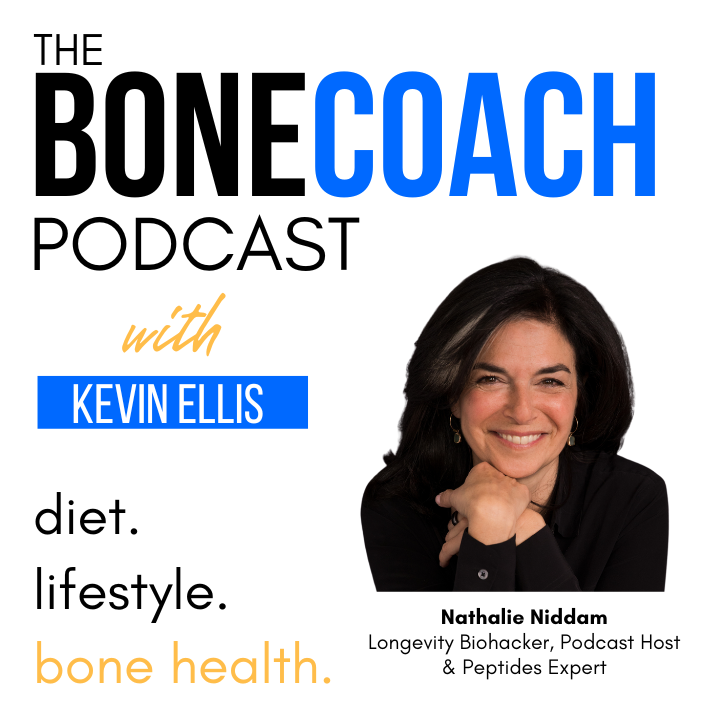
  • Peptides, bone health and prolonging your health with Nathalie Niddam + BoneCoach™ Osteoporosis and osteopenia – BoneCoach™

    Peptides, bone health and prolonging your health with Nathalie Niddam + BoneCoach™ Osteoporosis and osteopenia – BoneCoach™


    Have you come across the terms ‘peptides‘ And ‘bioregulators‘, but not sure what they mean for your health?

    Are you curious about how these miracles can support you in your… osteoporosis trip?

    What if there was a way? not just to add years to your life, but life to your years?

    Dive into this insightful episode for answers!

    Come with me as I sit down Nathalie Niddam, a podcast host, a lifelong biohacker, a holistic nutritionist, a human resource, and an epigenetic coach. Together we unravel the mysteries of peptides and bioregulators and shed light on them revolutionary potential for improving bone health and redefining what it means to age gracefully. Come with us the science, evidence, and real-world applications that might just be the game-changer you’ve been waiting for.

    Episode timeline

    0:00 – Episode begins

    1:20 – Introduction of guest Nathalie Niddam

    2:39 – Nathalie’s journey to health, longevity, biohacking and peptides

    7:01 – Understanding what peptides are

    11:27 – Exploring the nature of bioregulators

    16:05 – Beneficial peptides and bioregulators for the 50 to 70+ age group, with an emphasis on osteoporosis and bone health

    20:48 – Pineal and thymus bioregulators: improving quality of life and bone density

    23:02 – Discussion of evidence, human studies and recipe questions

    27:35 – Other important bioregulators to know about

    32:52 – Acquiring and administering peptides in the US and Canada

    40:23 – The role of peptides in bone healing and their relationship to growth hormones

    46:09 – Comparing stem cells and peptides

    48:46 – Key takeaways for the audience

    51:10 – Connecting with Nathalie Niddam

    Sources mentioned

    **Show notes @ https://bonecoach.com/natniddam-peptides-osteoporosis-superhuman-performance

    Below you will find Nathalie Niddam’s sources!

    >> Join her Facebook community – The Optimizing Superhuman Performance Group – HERE

    >> Click here to watch the Biohacking Superhuman Performance Podcast

    >> Connect with Nathalie on her website

    What can you do to support your bone health and this podcast?

    1. Press the “Subscribe” button on your respective podcast player (i.e. Apple, Google, Spotify, Stitcher, iHeart Radio and TuneIn). Never miss an episode that can help improve your bone health.

    2. Leave a review. The more positive ratings and reviews and the more subscribers we have, the more people can find us and get the answers to the questions they need. Thank you! 🙂

    3. Tell a friend about The Bone Coach Podcast or share via text, email or social. Do you know of a Facebook group where people can benefit from this information? Feel free to hit any of the share buttons below.

    About Nathalie Niddam:

    Nathalie Niddam is a podcast host, Longevity Biohacker, holistic nutritionist, human potential and epigenetic coach, and a self-proclaimed science nerd with a passion for human health.

    A few years ago she came across peptides at a health optimization conference. She was fascinated by the potential these small proteins seemed to offer. This became the catalyst for the launch of her large and growing Facebook community – the Optimizing Superhuman Performance Group – to fuel the growing interest in these incredible connections. A year later, she launched the Biohacking Superhuman Performance Podcast, which is now rated as a top 100 podcast in its category in the US and Canada.

    Nat’s passion is looking at longevity through the lens of everything we can do in every area of ​​our lives to promote vibrant health, boundless energy focused on a healthy mind and body! She works one-on-one with clients, manages two large and growing communities, and regularly speaks at international conferences on the regenerative powers of peptides and peptide bioregulators.

    Medical disclaimer

    The information shared above is for informational purposes only and is not intended as medical or nutritional therapy advice; it does not diagnose, treat or cure any disease or condition; it should not be used as a substitute or substitute for medical advice from physicians and trained medical professionals. If you are under the care of a healthcare professional or are currently taking prescription medications, you should discuss any changes in your diet and lifestyle or possible use of nutritional supplements with your doctor. You should not stop prescribed medications without first consulting your doctor.

    Source link

  • Which sports have Which sports have the most ACL tears??

    Which sports have Which sports have the most ACL tears??


    Image by South_agency from Getty Images Signature from Canva Pro

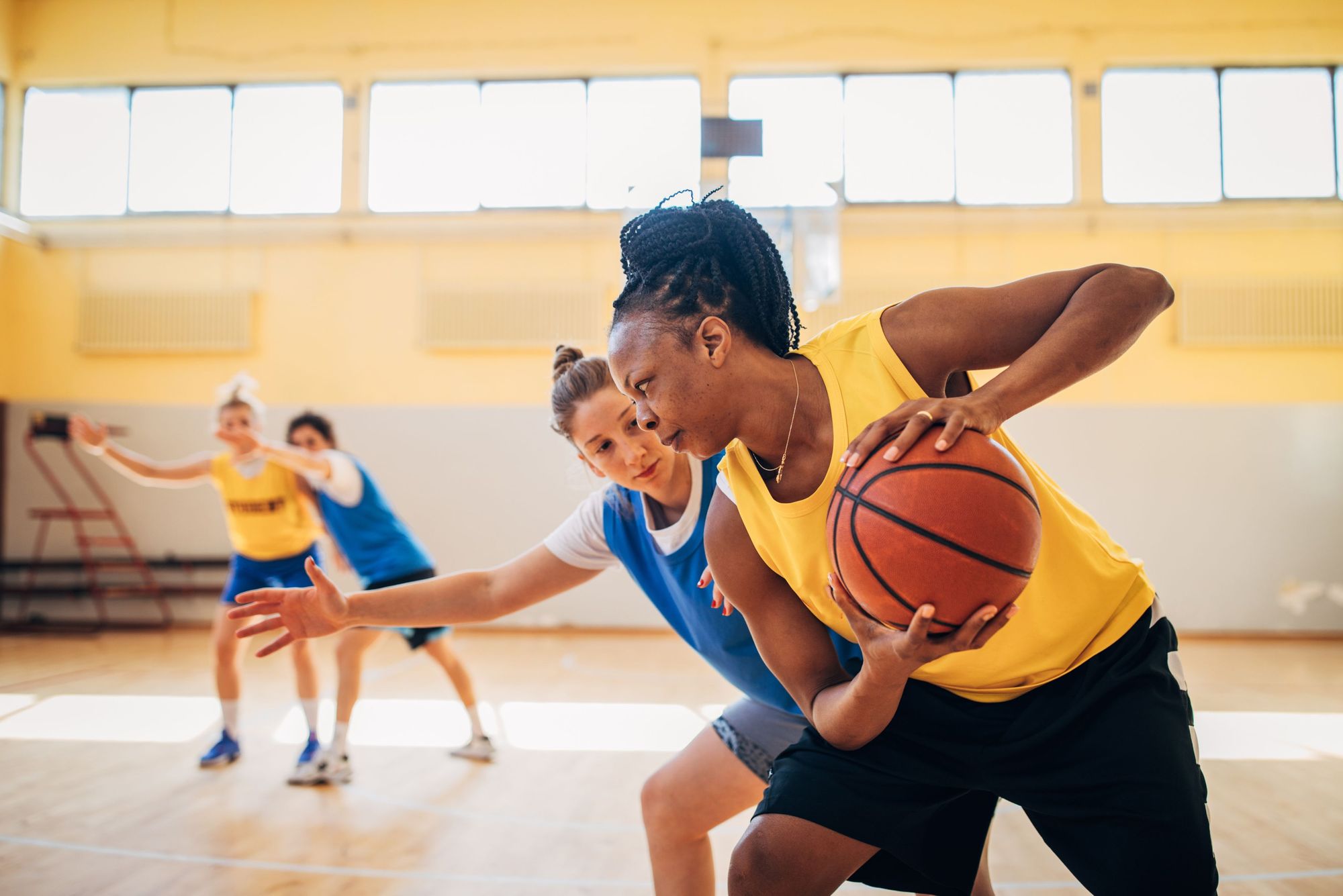
    The greatest risk of anterior cruciate ligament injuries or ACL injuries is for people who participate in sports that involve a lot of changing direction, twisting and jumping.1 Females are 2-8 times more likely to injure their ACL compared to males. Read this blog to learn more about the issue that makes women more likely to tear their ACL. Most ACL injuries occur between the ages of 15 and 45.1

    In which sports do most ACL injuries occur?

    Studies consistently report basketball and football as sports that cause ACL injuries.1,2 However, it is possible to injure the ACL in other sports that require a lot of twisting, cutting (changing direction quickly), jumping and contact sports.1 Female athletes are generally more at risk for ACL injuries.1

    Using data from the National Collegiate Athletics Association (NCAA) Injury Surveillance System (ISS), 5,000 ACL injuries were recorded between 1988 and 2004. Based on this data, sports are ranked below based on the number of ACL injuries. The left side of this table shows the number of ACL injuries that have occurred as a percentage compared to all other injuries in a sport. On the right side of this table the number of ACL injuries registered per 1000 matches and training (also called exposures).

    ACL injuries as a percentage compared to all injuries3 Injury rate per 1000 exposures3
    1. Women’s Basketball (tie) 1. Men’s Spring Football (tie)
    1. Women’s gymnastics (tie) 1. Women’s gymnastics (tie)
    2. Women’s Lacrosse 2. Women’s football
    3. Women’s football 3. Women’s basketball
    4. Men’s Spring Football 4. Men’s football
    5. Men’s football 5. Men’s football
    6. Women’s Softball 6. Men’s wrestling
    7. Women’s volleyball 7. Men’s wrestling
    8. Women’s hockey 8. Men’s football
    9. Men’s wrestling 9. Women’s volleyball
    10. Men’s Basketball 10. Women’s Softball
    11. Men’s football 11. Women’s hockey
    12. Men’s Ice Hockey 12. Men’s Basketball
    13. Women’s Ice Hockey 13. Men’s Ice Hockey
    14. Men’s Baseball 14. Women’s Ice Hockey

    If you have suffered an ACL tear from playing any of the above sports, there is an app, Curovate, to help you with your daily recovery. Curovate offers recovery exercises for ACL injuries and ACL surgery to help you return to the sport you love. Curovate provides your daily physiotherapy exercises, tracks your daily training progress, has in-app chat with a physiotherapist to answer your questions and allows you to measure your knee range of motion with the app. Download Curovate via the links below.

    If you need more tailored help during your ACL injury or ACL surgery, check out our Virtual Physiotherapy page to book your 1-on-1 video session with a physiotherapist.

    acl knee physical therapy 1080x1080 2
    Download it on Google Play

    Other blogs related to ACL injuries:

    References

    Source link

  • Are you at risk of vulnerability?  New study offers hope for older adults

    Are you at risk of vulnerability? New study offers hope for older adults

    A meta-analysis published in 2021 provides compelling evidence that physical activity interventions positively impact the health and well-being of frail and pre-frail older adults.

    Frailty is a somewhat loosely defined condition, which complicates research into effective interventions. In general, it describes a state of increased fragility that can accompany aging.

    Today we delve into these complexities to better understand how we can prevent frailty and the associated negative health consequences of aging.

    Defining vulnerability and pre-vulnerability

    Frailty is a clinically diagnosable condition in which an older adult is at increased risk for poor health outcomes, including falls, hospitalization, and mortality. Although frailty is clinically recognized, there is no universally accepted measure for its diagnosis.

    In 2001, a group of researchers from the Center on Aging and Health at the John Hopkins Medical Institution proposed that to be considered frail, a patient must meet three of five diagnostic criteria: low grip strength, low energy, slowed walking speed, low physical condition. activity and/or unintentional weight loss.1

    Pre-frailty refers to a condition in which a person is at risk of developing frailty. An older adult who meets only one or two of the diagnostic criteria listed above may be considered pre-frail.

    A peer-reviewed scientific article published in the Cork Open Research Archive in 2021 provided a consensus statement from 23 experts on pre-frailty. These experts agreed that pre-frailty can be caused by physical, cognitive, nutritional, social and socio-economic factors.2

    They agreed that pre-frailty is both preventable and reversible, and emphasized the need for health professionals to monitor patients and recommend timely interventions.

    Short content

    Frailty is a condition in which older adults are at increased risk for poor health outcomes, including falls, hospitalizations, and mortality. Diagnostic criteria include low energy, slowed walking speed, low physical activity, and/or unintentional weight loss. Pre-frailty is a state in which one is at risk of developing frailty. Experts agree that pre-frailty is both preventable and reversible with timely interventions.

    How to prevent or reverse vulnerability

    A meta-analysis published in 2021 analyzed 26 studies involving 8,022 pre-frail and frail older adults. Each of the studies measured the impact of a physical activity intervention on participants’ health outcomes.3

    The reviewers included studies that measured different types of physical activities, including muscle strengthening, aerobics, mobilization and rehabilitation, and combinations of aerobic and strengthening exercises.

    The researchers noted that only a few studies used frailty as an outcome, and that the inconsistent application of these methods made the study results inconclusive. Despite that uncertainty, the study authors observed positive effects on participants’ health outcomes after physical activity interventions.

    The researchers included the following in the conclusion of their article:

    “Our study demonstrated a significant benefit of several types of physical activity interventions on selected outcomes, including mobility, ADLs, cognitive functioning, quality of life and frailty, compared to control groups in frail adults aged 65 years or older. Effect sizes ranged from small to large, with low to moderate certainty of evidence. When we looked at all physical activity interventions together, there was a large effect on frailty, a medium effect on quality of life, ADLs and mobility, and a small effect on cognitive functioning.”3

    The main conclusion is that interventions involving physical activity can positively influence several health outcomes, including frailty.

    Short content

    A meta-analysis of 26 studies found that physical activity had a positive impact on a variety of health outcomes among older frail and pre-frail research participants.

    Frailty, pre-fragility and bone health

    Frailty has a direct relationship with bone health. Outcomes of frailty, such as increased risk of falls, decreased physical function, and sarcopenia, threaten bone health. Sarcopenia is the loss of muscle mass. It harms the body’s ability to build new bone because bone adds mass in response to the tension exerted by the muscles.

    Pre-frailty may carry the same risks. Fortunately, prevention and reversal are possible, according to the 2021 consensus statement on pre-frailty. These experts stated:

    “Pre-frailty can be reversed or mitigated through targeted interventions, including physical activity, nutritional interventions, healthy lifestyle and social participation, tailored to the individual.”2

    These intervention strategies will sound familiar to Savers, as they form the pillars of the Osteoporosis Reversal Program. The overlap strengthens confidence in the Save Institute and illustrates the links between frailty, pre-frailty and bone health.

    It’s also great news for those already using the ORP to pursue healthier bones; The same interventions that the ORP uses to build strong bones will help prevent or reverse the components of frailty and pre-frailty.

    Short content

    The consequences of frailty threaten bone health, including the risk of falls, reduced physical function and muscle loss (sarcopenia). Pre-frailty is a predictor of the same risks, but experts agree it can be reversed and prevented through interventions such as physical activity, diet and lifestyle changes. These are the main strategies used by the Osteoporosis Reversal Program.

    What this means for you

    Regular physical activity is essential, both for preventing frailty and building strong and healthy bones.

    The Save Institute responded to the need for accessible, adaptable, and easy to maintain exercise programs by creating SaveTrainer. SaveTrainer is a digital platform for creating your ideal set of physical activities, guided by professional trainers and tailored to your exact needs and abilities.

    Whether you’re interested in yoga flows, strength training, guided meditations, aerobic workouts or a combination of these: SaveTrainer offers all this and more. Because it’s all online, it’s available to you anywhere, anytime, without restrictions.

    You have the power to adopt healthy activity habits that will keep your body, mind, and bones strong and long-lasting. Embrace your power and live your life to the fullest.

    References

    1 https://pubmed.ncbi.nlm.nih.gov/11253156/

    2 https://cora.ucc.ie/server/api/core/bitstreams/6dd8443a-1f49-4744-9727-04169dfd768b/content

    3 https://www.ncbi.nlm.nih.gov/pmc/articles/PMC8315283/
     

    Source link

  • Researchers suggest a new approach to testing treatments for osteoarthritis

    Researchers suggest a new approach to testing treatments for osteoarthritis


    Osteoarthritis (OA) is the most common form of arthritis and is one of the top 10 conditions that contribute to the number of years lived with a disability – a measure that reflects the impact a disease has on quality of life before it disappears or leads to death. To date, no treatments have been approved that slow the progression of the disease. The development of treatments has been frustrating in part because animal models of disease caused by joint trauma poorly reflect the human disease, which usually occurs over many years and without prior trauma.

    Researchers from Boston University Chobanian & Avedisian School of Medicine now propose to study individuals after they suffer knee trauma, such as anterior cruciate ligament (ACL) tears.

    “Given the repeated, expensive, and discouraging past failures in developing effective treatments for osteoarthritis, a new approach is needed that focuses research for effective treatments on people with early disease,” said corresponding author David T. Felson , MD, MPH, professor of medicine and epidemiology at the School of Medicine and Boston University School of Public Health.

    While most patients recover after sustaining a serious joint injury, such as an ACL tear, some experience persistent pain and develop osteoarthritis. Felson suggests that sufficient numbers of such patients exist and can be identified in advance to form a risk group in which treatments to prevent disease can be tested.

    Current treatment options that reduce joint pain, such as nonsteroidal anti-inflammatory drugs (NSAIDs), are successful in some patients, but their use is limited by their toxicity. Exercise or weight loss are effective, but long-term compliance is poor. The number of total knee replacement surgeries is rising rapidly, indicating that nonsurgical treatments have not successfully alleviated patients’ pain and disability.

    Researchers from BU and Cleveland Clinic reviewed data from the MOON (Multicenter Orthopedic Outcomes Network) cohort, a group of 2,340 individuals who underwent ACL reconstruction (ACLR) after traumatic tears. The MOON researchers reported that 26% of ACL reconstruction patients who responded had at least moderate knee pain with daily activities, especially climbing stairs and walking. They also found that 16.6% had a KOOS (Knee Injury and Osteoarthritis Outcome Score) pain score of less than 80 (scale 0-100 with 100 being no pain), indicating that mild to moderate pain is not rare after ACLR.

    By using the MOON risk factors – which include pain and structural changes in all joint tissues, especially cartilage loss – to select individuals at high risk for subsequent pain, they were able to create a cohort at high risk for substantial post-ACLR pain . “This approach offers the potential to prevent disease and is especially valuable in targeting young adults who, following a knee injury, may have significant joint pain and disability for years before they are considered for joint replacement,” he adds.

    These findings appear online in the Annals of the rheumatic diseases.

    Funding for this study was provided by the Arthritis Foundation and by the National Institutes of Health (NIH P30 AR072571).

    Source link