
2023 crystal ball blog

Dr. Brown’s crystal ball predictions for 2023

Muscle testing will become as important as bone density testing as doctors understand the intertwined aging loss of both bone and muscle.

  1. “Everything is energy” will become a well-known concept and the popularity of energy medicines will increase enormously. You’ll see more homeopathy, acupuncture, Qi Gong, Reiki and many other treatments including Chakra balancing and even alignment of the invisible energy fields around the body.
  2. Researchers will discover how to turn sound into bone by identifying the vibrational frequency capable of converting stem cells into osteoblast bone-building cells.
  3. Globally, there will be a push for universal vitamin D testing as the world absorbs the lessons from the recent flu epidemic.
  4. Government subsidies to the fossil fuel industry will be converted into subsidies for local fruit and vegetable production programs.
  5. The limitations of bone density testing by the current DEXA X-Ray system will become increasingly apparent, fueling a search for better ways to assess bone strength.
    The use of the new Italian ultrasound device for testing bone fragility will gain popularity in Europe. However, in the US, the medical industry will not embrace radiation-free ultrasound examination of bone, but will promote bone examination with CAT scans, despite the radiation exposure.
  6. In the world of bone drug therapy, this is the abbreviation NNT (Number needed to address) will be the question you ask. By popular demand, the marketing of pharmaceutical products will have to make the NNT public, that is, they will have to report the number of people treated to obtain one positive result.
    For example, they will have to report that 21 high-risk women need to be treated with Prolia for 3 years to prevent 1 vertebral fracture, and that 230 high-risk women need to be treated for 3 years to prevent 1 hip fracture.
  7. Scientists will highlight the link between the dangerous acidification of our environment (oceans, rivers, soils and air) and the health-threatening acidification of the human body.
  8. Bone health will be seen as both an indicator and a predictor of overall body health.
  9. “May I become as smart as my body” will become the new mantra as science explains to the public the great intelligence within each of us.
  10. Measuring the pH of urine the first morning will become as common as brushing your teeth as it becomes known that this simple measurement can reveal whether you are getting enough minerals or not.

The message Dr. Brown’s Crystal Ball Predictions for 2023 appeared first on Better Bones, Better Body.

Source link

Medical disclaimer: This article is for general information only and is not medical advice, diagnosis or treatment. Always talk to your doctor or a qualified health professional about knee pain or an injury. Get urgent care for severe pain, a knee you cannot put weight on, sudden major swelling, or a hot, red knee with fever. Read our full disclaimer.
Mokhtar Sahraoui

About the author: Mokhtar Sahraoui

Mokhtar Sahraoui is the founder and editor of Knee Hurt. He researches and writes practical, easy-to-understand guides on knee pain, knee injuries, arthritis and recovery, based on trusted medical sources. Knee Hurt articles are general information and are not a substitute for advice from your doctor or physical therapist.
Similar Posts

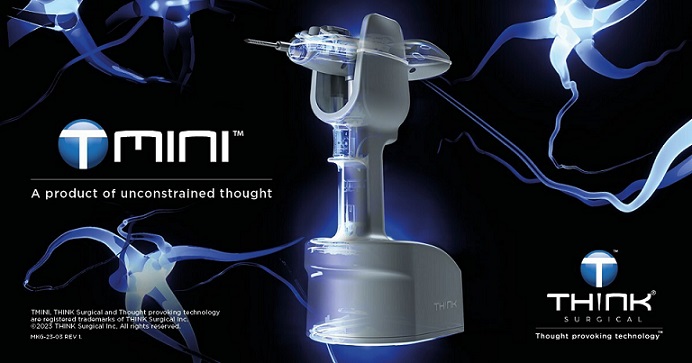
  • THINK Surgical’s TMINI System Receives Special 510(k) Clearance from the FDA for Use with Complementary Implants

    FREMONT, Calif., Oct. 23, 2023 /PRNewswire/ — THINK Surgical, Inc., an innovator in orthopedic surgical robots, today announced that its TMINI™ Miniature Robotic System has received special 510(k) clearance from the U.S. Food and Drug Administration (FDA) for use with implants from three additional implant manufacturers. The TMINI system includes a wireless robotic handpiece that…

  • |

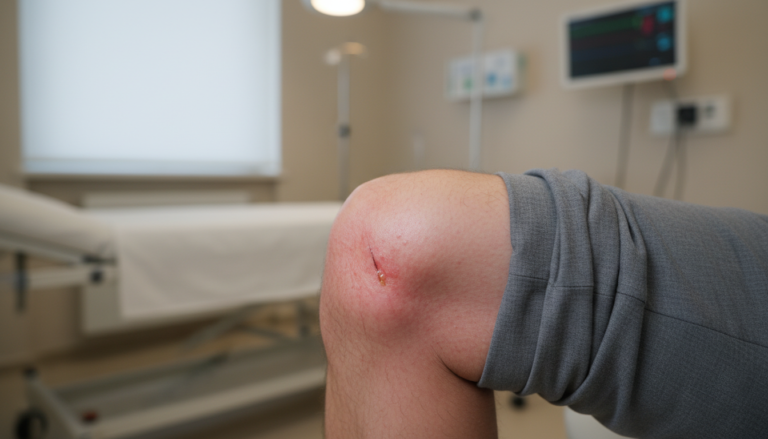
    Knee replacement infection signs

    What if the biggest threat to your new joint isn’t the surgery itself, but something that can surface weeks or even years later? Being aware of Knee replacement infection signs is crucial. Total hip and knee arthroplasties are among the most common elective operations. For most people, they are a resounding success. Yet, data shows about 1 in 100 patients will face a serious complication after their procedure. monitoring knee replacement healing We recognize that a successful outcome relies on two things: the surgical skill and your long-term vigilance. Our goal is to empower you with knowledge. By learning to monitor your recovery, you can protect your investment in a pain-free life. This guide helps you distinguish between normal healing and the early warning signals of a problem. Understanding these signs allows you to seek timely medical attention for a joint replacement. Understanding the Knee replacement infection signs can make a significant difference in your recovery journey. Key Takeaways While highly successful, about 1% of joint replacement patients develop an infection. Early detection of complications is critical for protecting your surgical results. Patient awareness during the recovery process is as important as the initial procedure. Knowing the difference between normal healing and potential warning signs is key. Common indicators include increased pain, new swelling, warmth, redness, or fever. Prompt action and communication with your healthcare team are essential. Long-term joint health requires ongoing attention and care. Overview of Knee Replacement Surgery and Infection Risks With millions of Americans opting for this surgery each year, understanding its scope and associated risks is fundamental. This procedure is a cornerstone of modern orthopedics, offering renewed mobility to those with severe joint conditions. knee replacement surgery overview Introduction to Knee Replacement Procedures Medical projections suggest that by 2030, the number of these operations performed annually in the United States will reach 3.48 million. This type of intervention is highly common and successful. It involves replacing damaged joint surfaces with artificial components. Why Infections Occur Around Implants Bacteria are abundant on our skin and in our bodies. They can enter during surgery or later through the bloodstream. Once they reach the artificial joint, they can form a sticky biofilm. This biofilm makes it extremely difficult for the body’s natural defenses to clear the germs. Implants are made of metal and plastic, which are non-organic materials. The immune system struggles to fight bacteria that colonize these surfaces. Such complications can occur in the surgical wound or deep around the implant itself. Understanding these underlying conditions is the first step in prevention. Knee Replacement Infection Signs: What to Watch For Your vigilance in the weeks and months following the procedure is your first line of defense against potential problems. We empower you to become an expert in your own recovery. Knowing what to expect makes it easier to spot when something is wrong. Common Symptoms and Warning Signals Certain symptoms should prompt immediate contact with your care team. A fever above 100°F (37.8°C) is a classic red flag. Chills or night sweats often accompany it. Pay close attention to the surgical wound. Any foul-smelling or grey liquid drainage is not normal. Increased pain or stiffness that doesn’t improve after several weeks is a concern. A deep joint infection might make walking painful long after your expected recovery period. We remind you that these issues can surface months or years later. knee replacement infection…

  • | |

    7 things I want my daughter to know within 24 hours of tearing an ACL

      As my daughter continues to process the injury, I would do my best to gauge where she is mentally. Is she still focused on the injury itself, or has she opened a window to talk about the recovery process? If I feel like a window has opened to talk about the recovery process, here’s…

  • Activity affected urinary incontinence; Let’s talk about it!

      Prevalence and normalization of stress urinary incontinence in female strength athletes. Mahoney K, Heidel RE, and Olewinski LJ Good luck Cond2023 [epub ahead of print]. Full text freely available Take home message Seven in ten female strength training athletes report stress urinary incontinence (SUI) in some aspect of their lives. However, fewer than 2…

  • |

    Foods to avoid with knee arthritis

    What if the key to managing your joint pain isn’t found in a medicine cabinet, but in your kitchen? Recent health data shows about 1 in 5 adults in the United States live with arthritis. This chronic condition affects daily life in profound ways. Dr. Ajul Shah, a board-certified surgeon, notes that arthritis can make simple tasks like climbing stairs a significant challenge for patients. We believe the connection between what you eat and how you feel is powerful. Your daily diet directly impacts your overall health and long-term quality of life. knee arthritis diet Managing your nutrition is a foundational step for anyone seeking better joint function and comfort. This guide provides actionable information. Our goal is to help you make smarter nutritional choices to support your mobility. Key Takeaways Arthritis is a common condition that significantly impacts daily activities and mobility. Diet plays a crucial role in managing inflammation and joint health. Simple daily tasks can become challenging for people with chronic joint pain. Proactive nutritional choices are a key part of improving long-term quality of life. Understanding which dietary items may worsen symptoms is an empowering step for patients. A targeted approach to eating can help regain control over physical comfort. Introduction The journey to easing joint stiffness often begins with a closer look at what’s on your plate. We see nutrition as a foundational element for managing chronic conditions. Dr. Ajul Shah, a board-certified surgeon, provides a key insight. While there is no cure for most types of arthritis, diet remains a powerful tool for managing symptoms. This perspective shifts the focus. It empowers individuals to take an active role in their comfort. Overview of Joint Pain and Diet What you consume directly influences the pain and stiffness many people experience. Specific items can trigger inflammatory responses in the body. Understanding this link is essential. It allows for smarter daily choices that minimize discomfort. overview of joint pain and diet connection Our approach examines how certain selections can either worsen or soothe persistent joint issues. Small, consistent changes in your routine lead to significant improvements in well-being. The table below outlines common dietary factors and their general effects. Dietary Factor Potential Impact on Joints Practical Management Tip Highly Processed Foods May increase systemic inflammation Opt for whole, single-ingredient items Sugary Snacks and Drinks Can promote stiffness and swelling Choose fruits for natural sweetness High-Fat Dairy Products Might aggravate pain for some individuals Experiment with plant-based alternatives We provide insights into turning knowledge into action. The goal is better mobility and a higher quality of life through informed eating. Understanding Knee Arthritis and Inflammation Think of inflammation not just as swelling, but as a key biological signal that directly dictates your mobility and comfort. Dr. Ajul Shah notes this process is a primary factor in joint damage and the resulting pain for many patients. understanding knee arthritis and inflammation Chronic inflammation within the body acts like a constant alarm. It restricts movement and can accelerate the progression of this joint disease. How Inflammation Affects Joint Mobility Your immune system’s response to certain triggers leads to swelling and stiffness. This is a hallmark of arthritis symptoms….

  • Take a dunk if you want, but don’t expect more

      Effects of cold water immersion compared to other recovery modalities on athletic performance after acute strenuous exercise in physically active participants: a systematic review, meta-analysis and meta-regression. Moore E, Fuller JT, Bellenger CR, Saunders S, Halson SL, Broatch JR, Buckley JD. Sports Med. December 17, 2022. doi: 10.1007/s40279-022-01800-1. E-publishing prior to printing. PMID: 36527593….

One Comment

Leave a Reply

Your email address will not be published. Required fields are marked *