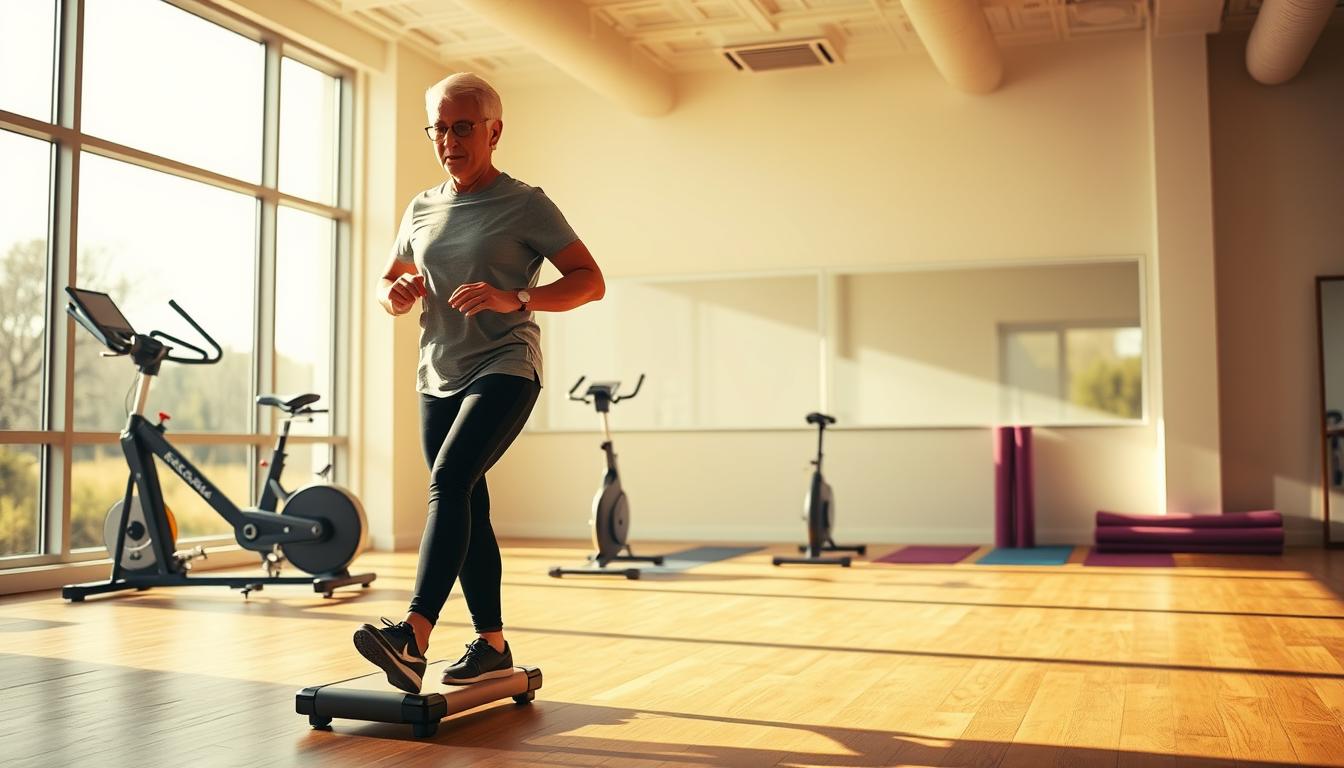
Are you tired of sacrificing intense workouts for the sake of your knee health? We often face a dilemma: push through the pain or give up on our fitness goals altogether.
We understand that traditional HIIT workouts can be tough on the knees, but what if you could enjoy the benefits of high-intensity training without the strain? Low-impact modifications can make all the difference, allowing you to boost your cardio and burn calories without exacerbating knee issues.
Our comprehensive guide explores how to adapt HIIT for knee health, providing you with effective, low-impact exercises and tips for a sustainable routine.
Key Takeaways
- Discover how to modify HIIT workouts for knee health
- Learn effective low-impact exercises for cardio improvement
- Understand the benefits of knee-friendly HIIT workouts
- Find tips for building a sustainable exercise routine
- Explore workout suggestions that accommodate joint issues or previous injuries
Why Low-Impact HIIT Benefits Your Knees
Low-impact HIIT workouts offer a revolutionary approach to fitness that prioritizes knee health without sacrificing intensity. We understand that high-impact exercises can be detrimental to knee health, especially for individuals with pre-existing knee issues.
The Science Behind Knee-Safe Exercise
Low-impact HIIT reduces the stress on knee joints by avoiding high-impact movements like jumping and heavy landing. This is achieved through modified exercises that maintain cardiovascular intensity without the harsh impact. Studies have shown that low-impact exercises can be just as effective as high-impact ones for improving cardiovascular health and strengthening muscles.
| Exercise Type | Impact on Knees | Cardiovascular Benefit |
|---|---|---|
| High-Impact HIIT | High Stress | High Benefit |
| Low-Impact HIIT | Low Stress | High Benefit |
Who Should Choose Modified HIIT Workouts
Individuals who would benefit most from knee-friendly HIIT include those with previous knee injuries, osteoarthritis, or other joint conditions. Aging athletes can transition to these workouts to extend their fitness journey while protecting long-term joint health. Beginners can use these modified routines as an entry point to HIIT training.
26 Knee-friendly HIIT Workouts You Can Try Today
Get ready to try 26 innovative HIIT workouts designed to minimize knee stress while maximizing your workout efficiency. We have curated a selection of exercises that are not only effective for weight loss but also gentle on the knees.
Standing Cardio Moves Without Jumping
These exercises are perfect for getting your heart rate up without putting excessive strain on your knees. Examples include standing leg swings and high knees without jumping. Such moves can be done in a 20-30 minute full-body circuit, making them ideal for those with limited time.
Modified Strength Exercises for Knee Protection
We’ve modified traditional strength exercises to protect your knees while still targeting key muscle groups. For instance, you can do wall sits to engage your quadriceps and glute bridges to work your glutes without stressing your knee joint.
Full-Body HIIT Without Squats or Lunges
Our full-body HIIT workouts avoid squats and lunges, instead incorporating exercises like planks, push-ups, and burpees without the jump. These workouts are designed to be completed with minimal equipment, making them accessible for home workouts.

| Workout Type | Duration | Equipment Needed |
|---|---|---|
| Standing Cardio | 20-30 minutes | None |
| Modified Strength | 20-30 minutes | Resistance bands |
| Full-Body HIIT | 20-30 minutes | Minimal (e.g., yoga mat) |
How to Modify Common HIIT Exercises
We can transform high-impact HIIT moves into low-impact versions that are easier on the knees. Modifying exercises is crucial for individuals who want to enjoy the benefits of HIIT without exacerbating knee issues. This involves understanding how to adjust the intensity and impact of various exercises.
Transforming High-Impact Moves to Low-Impact
To make HIIT more knee-friendly, we can substitute high-impact moves with low-impact alternatives. For example, instead of jumping jacks, we can do standing cardio moves that don’t involve jumping. Resistance bands can be used to create tension without impact, making them ideal for knee-friendly HIIT.
- Replace jumping with stepping or marching in place.
- Use adjustable step platforms at lower heights to reduce the range of motion.
- Incorporate suspension trainers to offload body weight during certain movements.
Equipment That Supports Knee Health
The right equipment can make a significant difference in knee-friendly HIIT workouts. Cushioned mats can reduce the impact on joints during floor exercises. Supportive footwear is also essential for minimizing stress on the knees. Additionally, using appropriate weights for strength exercises within HIIT circuits is crucial for knee health.
- Select weights that allow for proper form and don’t put excessive strain on the knees.
- Consider using stability tools to enhance balance and reduce knee stress.
Building Your Sustainable HIIT Practice
As we conclude our exploration of knee-friendly HIIT workouts, it’s essential to focus on building a sustainable practice that prioritizes knee health. To achieve this, we recommend creating a progressive knee-friendly HIIT program that can be sustained for months and years without causing joint deterioration.
A well-structured weekly workout schedule that balances intensity with recovery is crucial for promoting both fitness gains and joint health over time. It’s also important to monitor your body’s response to these workouts, recognizing the difference between productive muscle fatigue and problematic joint pain.
To prevent plateaus while maintaining joint safety, incorporate variety into your knee-friendly HIIT routine by rotating between standing cardio, modified strength, and full-body workouts. Proper warm-up and cool-down protocols specifically designed for joint protection are also essential when performing HIIT workouts at home.
By focusing on increasing workout density and resistance rather than impact or joint stress, you can ensure a long-term progression that supports your overall fitness goals.
Leave a Reply