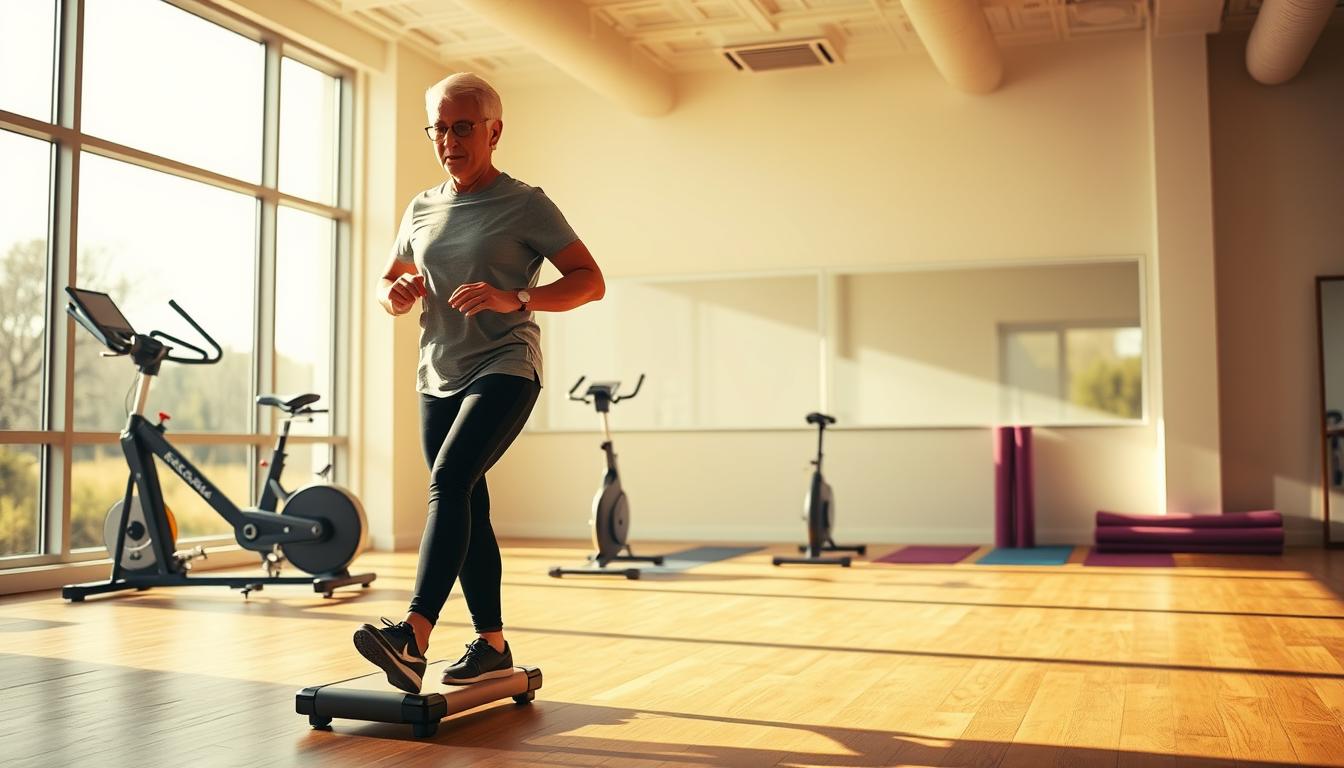
26. Knee-friendly HIIT workouts

Knee-friendly HIIT workouts

Are you tired of sacrificing intense workouts for the sake of your knee health? We often face a dilemma: push through the pain or give up on our fitness goals altogether.

We understand that traditional HIIT workouts can be tough on the knees, but what if you could enjoy the benefits of high-intensity training without the strain? Low-impact modifications can make all the difference, allowing you to boost your cardio and burn calories without exacerbating knee issues.

Our comprehensive guide explores how to adapt HIIT for knee health, providing you with effective, low-impact exercises and tips for a sustainable routine.

Key Takeaways

  • Discover how to modify HIIT workouts for knee health
  • Learn effective low-impact exercises for cardio improvement
  • Understand the benefits of knee-friendly HIIT workouts
  • Find tips for building a sustainable exercise routine
  • Explore workout suggestions that accommodate joint issues or previous injuries

Why Low-Impact HIIT Benefits Your Knees

Low-impact HIIT workouts offer a revolutionary approach to fitness that prioritizes knee health without sacrificing intensity. We understand that high-impact exercises can be detrimental to knee health, especially for individuals with pre-existing knee issues.

The Science Behind Knee-Safe Exercise

Low-impact HIIT reduces the stress on knee joints by avoiding high-impact movements like jumping and heavy landing. This is achieved through modified exercises that maintain cardiovascular intensity without the harsh impact. Studies have shown that low-impact exercises can be just as effective as high-impact ones for improving cardiovascular health and strengthening muscles.

Exercise Type Impact on Knees Cardiovascular Benefit
High-Impact HIIT High Stress High Benefit
Low-Impact HIIT Low Stress High Benefit

Who Should Choose Modified HIIT Workouts

Individuals who would benefit most from knee-friendly HIIT include those with previous knee injuries, osteoarthritis, or other joint conditions. Aging athletes can transition to these workouts to extend their fitness journey while protecting long-term joint health. Beginners can use these modified routines as an entry point to HIIT training.

26 Knee-friendly HIIT Workouts You Can Try Today

Get ready to try 26 innovative HIIT workouts designed to minimize knee stress while maximizing your workout efficiency. We have curated a selection of exercises that are not only effective for weight loss but also gentle on the knees.

Standing Cardio Moves Without Jumping

These exercises are perfect for getting your heart rate up without putting excessive strain on your knees. Examples include standing leg swings and high knees without jumping. Such moves can be done in a 20-30 minute full-body circuit, making them ideal for those with limited time.

Modified Strength Exercises for Knee Protection

We’ve modified traditional strength exercises to protect your knees while still targeting key muscle groups. For instance, you can do wall sits to engage your quadriceps and glute bridges to work your glutes without stressing your knee joint.

Full-Body HIIT Without Squats or Lunges

Our full-body HIIT workouts avoid squats and lunges, instead incorporating exercises like planks, push-ups, and burpees without the jump. These workouts are designed to be completed with minimal equipment, making them accessible for home workouts.

A dynamic, knee-friendly HIIT workout scene featuring a diverse group of fitness enthusiasts performing various exercises with proper form. In the foreground, a person doing low-impact jumping jacks, while others in the middle ground concentrate on squats, lunges, and core-strengthening planks. The background showcases a well-equipped home gym with motivational wall art and natural lighting filtering in through large windows. The overall atmosphere is upbeat, inclusive, and focused on joint-conscious high-intensity training. Crisp, clean visuals with a sense of energy and movement capture the essence of the "26 Knee-friendly HIIT Workouts You Can Try Today" section.

Workout Type Duration Equipment Needed
Standing Cardio 20-30 minutes None
Modified Strength 20-30 minutes Resistance bands
Full-Body HIIT 20-30 minutes Minimal (e.g., yoga mat)

How to Modify Common HIIT Exercises

We can transform high-impact HIIT moves into low-impact versions that are easier on the knees. Modifying exercises is crucial for individuals who want to enjoy the benefits of HIIT without exacerbating knee issues. This involves understanding how to adjust the intensity and impact of various exercises.

Transforming High-Impact Moves to Low-Impact

To make HIIT more knee-friendly, we can substitute high-impact moves with low-impact alternatives. For example, instead of jumping jacks, we can do standing cardio moves that don’t involve jumping. Resistance bands can be used to create tension without impact, making them ideal for knee-friendly HIIT.

  • Replace jumping with stepping or marching in place.
  • Use adjustable step platforms at lower heights to reduce the range of motion.
  • Incorporate suspension trainers to offload body weight during certain movements.

Equipment That Supports Knee Health

The right equipment can make a significant difference in knee-friendly HIIT workouts. Cushioned mats can reduce the impact on joints during floor exercises. Supportive footwear is also essential for minimizing stress on the knees. Additionally, using appropriate weights for strength exercises within HIIT circuits is crucial for knee health.

  • Select weights that allow for proper form and don’t put excessive strain on the knees.
  • Consider using stability tools to enhance balance and reduce knee stress.

Building Your Sustainable HIIT Practice

As we conclude our exploration of knee-friendly HIIT workouts, it’s essential to focus on building a sustainable practice that prioritizes knee health. To achieve this, we recommend creating a progressive knee-friendly HIIT program that can be sustained for months and years without causing joint deterioration.

A well-structured weekly workout schedule that balances intensity with recovery is crucial for promoting both fitness gains and joint health over time. It’s also important to monitor your body’s response to these workouts, recognizing the difference between productive muscle fatigue and problematic joint pain.

To prevent plateaus while maintaining joint safety, incorporate variety into your knee-friendly HIIT routine by rotating between standing cardio, modified strength, and full-body workouts. Proper warm-up and cool-down protocols specifically designed for joint protection are also essential when performing HIIT workouts at home.

By focusing on increasing workout density and resistance rather than impact or joint stress, you can ensure a long-term progression that supports your overall fitness goals.

FAQ

What is a low-impact HIIT workout?

A low-impact HIIT workout is a modified version of High-Intensity Interval Training that reduces stress on our joints, particularly our knees, by avoiding high-impact exercises like jumping and squats.

Can I still lose weight with knee-friendly exercises?

Yes, we can achieve weight loss with knee-friendly exercises by incorporating modified strength training and cardio moves that are easy on our knees, such as standing cardio and full-body exercises using weights.

Are bodyweight exercises effective for a HIIT workout?

Absolutely, bodyweight exercises can be an effective way to do a HIIT workout at home without any equipment, and we can modify them to be knee-friendly by avoiding high-impact movements.

How can I protect my knees during a HIIT workout?

We can protect our knees during a HIIT workout by choosing low-impact exercises, using supportive equipment, and modifying high-impact moves to reduce stress on our knee joints.

Can I do HIIT workouts with knee problems?

Yes, we can still do HIIT workouts with knee problems by selecting knee-friendly exercises and modifying our routine to avoid exacerbating the issue, and it’s always best to consult with a healthcare professional first.

How long should a low-impact HIIT workout last?

A low-impact HIIT workout can be as short as a few minutes, typically ranging from 4 to 20 minutes, depending on our fitness level and goals, and can be done in short intervals with rest periods in between.


Similar Posts

  • |

    Best Bone Health Supplements with Cr. McCormick

      Hello friends of bones: I am pleased to present my interview on bone supplements with Dr. McCormick. We discussed his full line of bone supplements that are a key ingredient for healthy bones and why calcium in lower doses is important. A number of attendees indicated that they could not participate in the zoom…

  • |

    Running and physiotherapy; Why runners should seek the expertise of a PT

      by Danielle Dupont, PT, DPT, RRS, NASM-CNC – North Central Phoenix Whether you’re a seasoned marathon runner or just starting your fitness journey, running and physical therapy can play a crucial role in optimizing your performance. PT can also help prevent injuries and promote overall well-being. Top 10 Reasons Why Runners Should Seek a…

  • |

    Foods to avoid with knee arthritis

    What if the key to managing your joint pain isn’t found in a medicine cabinet, but in your kitchen? Recent health data shows about 1 in 5 adults in the United States live with arthritis. This chronic condition affects daily life in profound ways. Dr. Ajul Shah, a board-certified surgeon, notes that arthritis can make simple tasks like climbing stairs a significant challenge for patients. We believe the connection between what you eat and how you feel is powerful. Your daily diet directly impacts your overall health and long-term quality of life. knee arthritis diet Managing your nutrition is a foundational step for anyone seeking better joint function and comfort. This guide provides actionable information. Our goal is to help you make smarter nutritional choices to support your mobility. Key Takeaways Arthritis is a common condition that significantly impacts daily activities and mobility. Diet plays a crucial role in managing inflammation and joint health. Simple daily tasks can become challenging for people with chronic joint pain. Proactive nutritional choices are a key part of improving long-term quality of life. Understanding which dietary items may worsen symptoms is an empowering step for patients. A targeted approach to eating can help regain control over physical comfort. Introduction The journey to easing joint stiffness often begins with a closer look at what’s on your plate. We see nutrition as a foundational element for managing chronic conditions. Dr. Ajul Shah, a board-certified surgeon, provides a key insight. While there is no cure for most types of arthritis, diet remains a powerful tool for managing symptoms. This perspective shifts the focus. It empowers individuals to take an active role in their comfort. Overview of Joint Pain and Diet What you consume directly influences the pain and stiffness many people experience. Specific items can trigger inflammatory responses in the body. Understanding this link is essential. It allows for smarter daily choices that minimize discomfort. overview of joint pain and diet connection Our approach examines how certain selections can either worsen or soothe persistent joint issues. Small, consistent changes in your routine lead to significant improvements in well-being. The table below outlines common dietary factors and their general effects. Dietary Factor Potential Impact on Joints Practical Management Tip Highly Processed Foods May increase systemic inflammation Opt for whole, single-ingredient items Sugary Snacks and Drinks Can promote stiffness and swelling Choose fruits for natural sweetness High-Fat Dairy Products Might aggravate pain for some individuals Experiment with plant-based alternatives We provide insights into turning knowledge into action. The goal is better mobility and a higher quality of life through informed eating. Understanding Knee Arthritis and Inflammation Think of inflammation not just as swelling, but as a key biological signal that directly dictates your mobility and comfort. Dr. Ajul Shah notes this process is a primary factor in joint damage and the resulting pain for many patients. understanding knee arthritis and inflammation Chronic inflammation within the body acts like a constant alarm. It restricts movement and can accelerate the progression of this joint disease. How Inflammation Affects Joint Mobility Your immune system’s response to certain triggers leads to swelling and stiffness. This is a hallmark of arthritis symptoms….

  • | |

    Shin Splints Causes, Symptoms and Physical Therapy Treatment

    Medial tibial stress syndrome is one of the most common athletic injuries, especially among those who participate in high-impact activities. However, there are other risk factors for shin splints, and not all patients who complain of the characteristic pain along the shin are athletes. MTSS is a condition that often resolves on its own. Physical…

  • Why you should turn to physical therapy first

      Through Mike Basten PT, DPT, MTC Over the past two decades, more and more states have provided patients with pain with direct access to physical therapy without a physician referral. Although the state of Arizona has offered this type of access for several years, insurance companies have only recently begun paying for physical therapy…

  • Knee Braces and Supports

    Considerations for Selection Intended Use Consider how you plan to use the brace. For example, prophylactic braces simply provide general stabilization for vulnerable knees during activities. Functional braces offer more serious dynamic support following ACL/PCL injury. Unloader braces treat unicompartmental knee arthritis pain by reducing pressure on the damaged section. Your needs influence ideal brace…

Leave a Reply

Your email address will not be published. Required fields are marked *