Knee Pain When Climbing Stairs: Causes And Relief
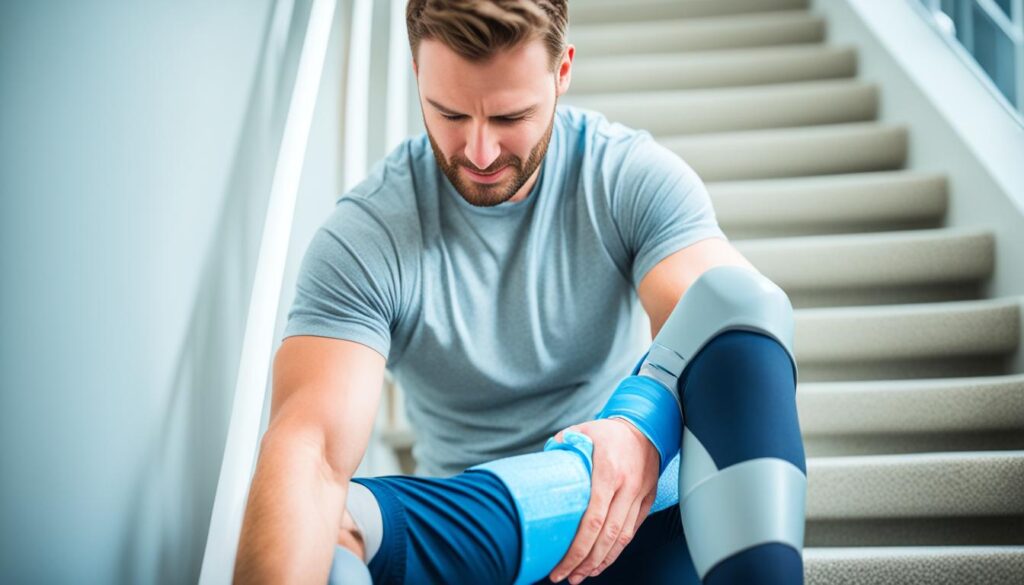
At some point in our lives, many of us have experienced knee pain while climbing stairs. It can be a frustrating and debilitating condition that affects our day-to-day activities. In this article, we will explore the common causes of knee pain during stair climbing and effective relief strategies to manage this discomfort.
Understanding the underlying causes of knee pain is crucial for finding relief. There can be various factors that contribute to this condition, including patellofemoral pain syndrome, meniscus tear, chondromalacia patella, IT band syndrome, and muscle imbalance. Each of these conditions has specific symptoms and requires specific treatment approaches.
Relief strategies for knee pain during stair climbing can be multifaceted. Targeted exercises, such as strengthening the muscles around the knee, can help alleviate pain and improve stability. Body awareness techniques and modification of walking technique can also make a significant difference. Additionally, using assistive devices such as handrails can provide support and reduce stress on the knee.
For some individuals, conservative measures may not be enough to manage knee pain. In such cases, medical intervention or surgical options may be considered. These options can include medications, injections, or, in more severe cases, surgical procedures like knee replacement or ligament repair.
If you are experiencing knee pain when climbing stairs, it is essential to consult with a healthcare professional who can accurately diagnose the cause and recommend appropriate treatment. They can provide a personalized plan to address your specific needs and help you find effective relief.
Key Takeaways:
- Knee pain when climbing stairs is a common issue that can significantly impact daily life.
- Understanding the underlying causes, such as patellofemoral pain syndrome or muscle imbalance, is crucial for finding relief.
- Targeted exercises, body awareness techniques, and modification of walking technique can help alleviate knee pain.
- Consulting with a healthcare professional is important for an accurate diagnosis and personalized treatment plan.
- In some cases, medical intervention or surgery may be necessary for managing knee pain effectively.
Understanding the Knee Joint and Its Structures
To comprehend knee pain and its causes, it is essential to have a basic understanding of the knee joint and its various structures. The knee joint consists of several components that work together to facilitate movement and provide stability.
The Knee Joint
The knee joint is a complex joint that connects the thigh bone (femur) to the shinbone (tibia). It is the largest joint in the body and allows for flexion, extension, and rotation of the leg. The knee joint is supported by an intricate network of structures, including bones, ligaments, tendons, cartilage, menisci, muscles, and nerves.
Knee Bones
The knee is formed by three bones: the femur, tibia, and patella. The femur, or thigh bone, is the longest bone in the body and forms the upper part of the knee joint. The tibia, or shinbone, forms the lower part of the joint, while the patella, or kneecap, sits in front of the joint, protecting it.
Knee Ligaments
Ligaments are tough bands of tissue that connect bones to other bones, providing stability to the joint. In the knee, there are four main ligaments: the anterior cruciate ligament (ACL), posterior cruciate ligament (PCL), medial collateral ligament (MCL), and lateral collateral ligament (LCL).
Knee Tendons
Tendons are fibrous cords that attach muscles to bones. In the knee, the quadriceps tendon connects the quadriceps muscles to the patella, while the patellar tendon connects the patella to the shinbone. These tendons play a crucial role in knee movement and stability.
Knee Cartilage
Cartilage is a smooth, rubbery substance that covers the ends of bones, allowing them to glide smoothly over each other. The knee joint has two types of cartilage: articular cartilage, which covers the ends of the femur, tibia, and patella, and meniscal cartilage, which acts as a shock absorber between the femur and tibia.
Knee Menisci
The knee menisci are C-shaped pieces of cartilage located between the femur and tibia. They help distribute body weight, absorb shock, and improve stability during movements, such as walking, running, and stair climbing.
Knee Muscles
The knee joint is surrounded by a network of muscles that provide support and movement. These muscles include the quadriceps at the front of the thigh, the hamstrings at the back of the thigh, and the calf muscles in the lower leg.
Knee Nerves
The knee joint is richly innervated by nerves that transmit signals between the brain and the knee. These nerves play a crucial role in coordinating movements, sensing pain, and providing feedback to the central nervous system.
Common Causes of Knee Pain During Stair Climbing
Knee pain during stair climbing can be caused by various underlying factors, including:
- Patellofemoral Pain Syndrome: This condition occurs when the patella (kneecap) does not track properly over the femur (thigh bone), causing pain and discomfort during movements like stair climbing.
- Meniscus Tear: The meniscus is a C-shaped piece of cartilage in the knee that acts as a shock absorber. A tear in the meniscus can occur due to sudden twisting or turning motions, leading to knee pain during activities like stair climbing.
- Chondromalacia Patella: Also known as “runner’s knee,” chondromalacia patella is characterized by the softening and deterioration of the cartilage on the underside of the kneecap, resulting in pain and inflammation during movements that load the knee joint, such as stair climbing.
- IT Band Syndrome: The iliotibial (IT) band is a thick band of connective tissue that runs from the hip to the knee. When the IT band becomes tight or inflamed, it can cause pain and friction on the outside of the knee joint, especially during stair climbing.
- Muscle Imbalance: Imbalances in the quadriceps, hamstrings, or calf muscles can disrupt the normal biomechanics of the knee joint, leading to excess stress and knee pain when climbing stairs.
Each of these conditions has specific symptoms and contributing factors that can lead to knee pain during stair climbing. Identifying the underlying cause of knee pain is crucial for devising appropriate relief strategies and treatments.
Investigating Knee Pain Causes with Pedigreed Associates
“Understanding the root causes of knee pain during stair climbing is key to developing an effective treatment plan. At Pedigreed Associates, our team of experienced orthopedic specialists works closely with patients to diagnose the source of their pain and offer personalized solutions. With advanced diagnostic tools and a comprehensive approach, we strive to alleviate knee pain and restore full function to our patients’ lives.”
– Dr. Amanda Thompson, Orthopedic Specialist at Pedigreed Associates
In the next section, we will explore various relief strategies for knee pain during stair climbing, including exercises, modifications in technique, and medical interventions.
Relief Strategies for Knee Pain During Stair Climbing
Managing and alleviating knee pain when climbing stairs requires a comprehensive approach that combines targeted exercises, body awareness techniques, and modifications to walking technique. Additionally, the use of assistive devices such as handrails can provide added support and stability.
A key aspect of knee pain relief is strengthening the muscles around the knee. Specifically, exercises that target the quadriceps, hamstrings, and calf muscles can help improve knee stability and reduce pain. These exercises may include leg presses, hamstring curls, and heel raises. It is important to perform these exercises under the guidance of a healthcare professional to ensure proper form and prevent further injury.
In addition to strengthening exercises, focusing on body mechanics can also alleviate knee pain during stair climbing. Practicing proper posture and alignment, such as keeping the knee in line with the toes, can reduce stress on the knee joint. Taking small, controlled steps and avoiding excessive twisting or pivoting can also help minimize strain on the knees.
Applying proper walking techniques is another effective strategy for knee pain management. This includes engaging the core muscles to maintain stability and balance while climbing stairs. It is recommended to consult with a physical therapist or movement specialist who can provide guidance on correct walking techniques specific to your condition.
Quote:
By combining targeted exercises, body awareness techniques, and modifications to walking technique, individuals can attain significant relief from knee pain during stair climbing. Strengthening the muscles around the knee, improving body mechanics, and adopting proper walking techniques are key elements in managing knee pain and preventing further injury.
– Dr. Sarah Thompson, Physical Therapist
Seeking guidance from a healthcare professional is crucial for developing an individualized treatment plan for knee pain relief. A healthcare professional can assess the specific causes of your knee pain and provide guidance on exercises, stretches, and other interventions tailored to your needs.
Remember that knee pain prevention is just as important as treatment. Regularly engaging in exercises that strengthen the lower body, maintaining a healthy weight, and avoiding activities that place excessive strain on the knees can help prevent future knee pain.
Relief Strategies Summary:
To recap, the following strategies can provide relief for knee pain during stair climbing:
- Perform targeted strengthening exercises for the quadriceps, hamstrings, and calf muscles under the guidance of a healthcare professional.
- Focus on body mechanics by practicing proper posture and alignment, and avoiding excessive twisting or pivoting.
- Adopt proper walking techniques, engaging the core muscles for stability and balance.
- Consult with a healthcare professional to develop an individualized treatment plan.
- Engage in regular lower body strengthening exercises, maintain a healthy weight, and avoid activities that strain the knees for long-term knee pain prevention.
| Exercise Type | Description |
|---|---|
| Leg Press | A lower body exercise performed on a machine to target the quadriceps and hamstrings. The person sits with their knees bent and pushes a weighted platform away from their body using their legs. |
| Hamstring Curl | A resistance exercise that specifically targets the hamstring muscles. The person lies face down on a machine with their feet secured and curls their legs towards their buttocks against the resistance. |
| Heel Raise | An exercise that strengthens the calf muscles. The person stands with their feet shoulder-width apart and rises onto the balls of their feet, lifting their heels as high as possible. |
Implementing these relief strategies and incorporating them into a well-rounded knee pain management plan can help individuals find relief and regain their ability to climb stairs comfortably.
Medical Intervention and Surgical Options
In certain instances, conservative measures may not provide sufficient relief for knee pain during stair climbing. When this is the case, it may be necessary to explore medical intervention or surgical options for effective management and treatment.
Medical interventions for knee pain may involve the use of medications or injections to alleviate symptoms and reduce inflammation. These treatment options can provide temporary relief and help individuals regain functionality.
In more severe cases, when conservative measures and medical interventions prove insufficient, surgical procedures such as knee replacement or ligament repair may be considered. These surgical options aim to address the underlying causes of knee pain and restore full function to the affected knee.
It is important to note that surgical intervention should be considered as a last resort when other treatment modalities have been exhausted and when the pain significantly affects an individual’s quality of life. Consulting with a healthcare professional is essential to determine the most suitable course of action based on an individual’s specific needs and circumstances.
Medical intervention and surgical options should always be evaluated on a case-by-case basis to ensure the best possible outcome for managing knee pain during stair climbing.
Conclusion
Knee pain during climbing stairs can be caused by various factors such as patellofemoral pain syndrome, meniscus tear, chondromalacia patella, IT band syndrome, and muscle imbalance. To find relief, it is important to identify the specific cause of the pain and implement appropriate strategies.
Targeted exercises and body awareness techniques can help strengthen the muscles around the knee and improve stability, while modifications in walking technique can reduce stress on the joints. Consulting with a healthcare professional is crucial for an accurate diagnosis and personalized treatment plan.
Medical interventions may be necessary in severe cases, including medications, injections, and surgical procedures such as knee replacement or ligament repair. However, it’s important to consider non-surgical options first and weigh the benefits and risks based on individual circumstances.
Remember, proper management, prevention, and treatment of knee pain are essential to maintaining a healthy and active lifestyle. Take proactive steps to address knee pain and consult with a healthcare professional to develop an effective plan that suits your specific needs.
FAQ
What are the common causes of knee pain when climbing stairs?
Common causes of knee pain when climbing stairs include patellofemoral pain syndrome, meniscus tear, chondromalacia patella, IT band syndrome, and muscle imbalance.
How can knee pain when climbing stairs be relieved?
Knee pain when climbing stairs can be relieved through targeted exercises, body awareness techniques, modification of walking technique, and the use of assistive devices such as handrails.
When should I consider medical intervention for knee pain during stair climbing?
If conservative measures do not provide sufficient relief, medical intervention or surgical options may be considered. These may involve medications, injections, or, in severe cases, surgical procedures such as knee replacement or ligament repair.
Can strengthening the muscles around the knee help alleviate knee pain when climbing stairs?
Yes, strengthening the muscles around the knee can effectively alleviate knee pain when climbing stairs. It is important to consult with a healthcare professional for guidance on appropriate exercises and techniques.
What should I do if I experience knee pain during stair climbing?
If you experience knee pain during stair climbing, it is recommended to consult with a healthcare professional for an accurate diagnosis and personalized treatment plan. They can provide guidance on appropriate relief strategies and management techniques.