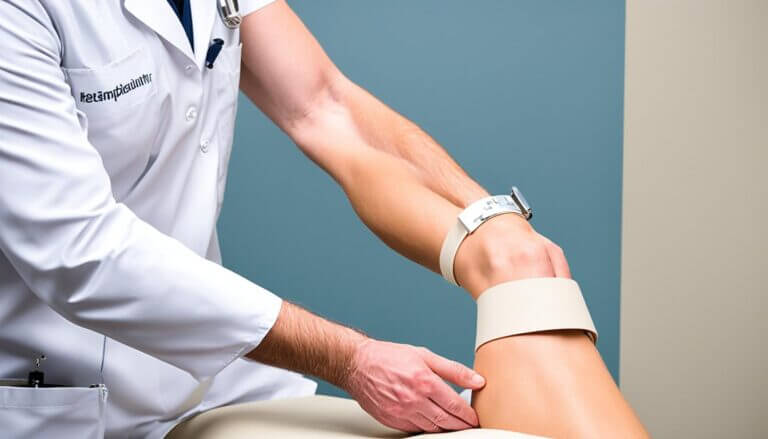
Knee Pain Climbing Stairs? Find Relief Now.
If you’re experiencing knee pain, especially under the kneecap, when climbing stairs, you’re not alone. Knee pain is a common issue that can be caused by various factors such as chondromalacia patella, osteoarthritis, ligament injuries, or cartilage damage. Understanding the underlying causes of your knee pain when climbing stairs is key to finding relief and improving your mobility.
Key Takeaways:
- Common causes of knee pain when climbing stairs include patellofemoral pain syndrome, meniscus tear, chondromalacia patella, IT band syndrome, and muscle imbalance.
- Treatment options for knee pain include targeted exercises, physical therapy, rest and activity modification, over-the-counter pain relievers, and surgical intervention in severe cases.
- Preventive measures for knee pain when climbing stairs include maintaining a healthy weight, engaging in low-impact exercises, using knee pads for protection, wearing proper footwear with arch support, strengthening leg muscles, and incorporating warm-up and cool-down exercises.
- If self-care measures don’t alleviate your knee pain, seek professional guidance from a physical therapist or orthopedic specialist for a proper diagnosis and tailored treatment plan.
- Understanding the causes, seeking appropriate treatment, and adopting preventive measures can help you find relief, manage knee pain, and continue stair climbing with greater comfort and mobility.
Understanding Knee Anatomy and Function
The knee joint is a fascinating and intricate structure that enables us to perform a wide range of movements, such as walking, running, and climbing stairs. To fully grasp the complexities of knee pain during stair climbing, it’s crucial to understand the anatomy and function of this joint.
Bones in the Knee: The knee is formed by three major bones: the patella (kneecap), femur (thighbone), and tibia (shinbone). These bones work together to provide stability and support during weight-bearing activities.
Ligaments in the Knee: Ligaments are strong bands of connective tissue that hold the knee joint together and provide stability. The knee is supported by collateral ligaments on the sides and cruciate ligaments inside the joint.
Tendons in the Knee: Tendons are fibrous tissues that connect muscles to bones. In the knee, tendons play a vital role in transmitting forces from the muscles to the bones, allowing for movements like bending and straightening the leg.
Cartilage in the Knee: Cartilage is a smooth, slippery tissue that covers the ends of the bones, reducing friction and providing cushioning. It helps with shock absorption and enables the bones to glide smoothly during movement.
Menisci in the Knee: The knee joint contains two menisci, which are crescent-shaped cartilage structures. They act as shock absorbers and help distribute body weight evenly across the joint.
Muscles in the Knee: The knee is surrounded by a network of muscles, including the quadriceps at the front and the hamstrings at the back. These muscles provide strength and control for knee movements.
Nerves in the Knee: Nerves located around the knee carry sensory information from the joint to the brain and help control muscle function. They play a crucial role in maintaining coordination and balance during movement.
Understanding the intricate interplay between the knee joint structure, bones, ligaments, tendons, cartilage, menisci, muscles, and nerves is essential for identifying potential sources of pain during stair climbing. By gaining insights into the complex mechanisms at work, we can develop effective strategies for managing and preventing knee pain.
| Component | Function |
|---|---|
| Bones | Provide support and stability |
| Ligaments | Hold the knee joint together and provide stability |
| Tendons | Connect muscles to bones and enable movement |
| Cartilage | Reduce friction, provide cushioning, and absorb shock |
| Menisci | Act as shock absorbers and distribute body weight evenly |
| Muscles | Provide strength and control for knee movements |
| Nerves | Transmit sensory information and control muscle function |
Common Causes of Knee Pain When Climbing Stairs
Knee pain when climbing stairs can be attributed to several common conditions. These include:
1. Patellofemoral Pain Syndrome (Runner’s Knee)
Patellofemoral pain syndrome, also known as runner’s knee, causes pain in the front of the knee. It is often triggered by overuse or a sudden increase in physical activity. Individuals with this condition may experience discomfort when going up or down stairs.
2. Meniscus Tear
A meniscus tear can occur due to a twisting motion or as a result of age-related changes. This injury can cause pain on the inner or outer aspect of the knee. Climbing stairs may exacerbate the pain associated with a meniscus tear.
3. Chondromalacia Patella
Chondromalacia patella refers to the softening and deterioration of the cartilage underneath the kneecap. This condition can cause a dull ache in the kneecap area. Individuals with chondromalacia patella may experience increased discomfort when climbing stairs.
4. IT Band Syndrome
IT band syndrome causes pain on the outside of the knee. This condition is particularly noticeable when going down stairs. The iliotibial band, or IT band, connects the hip to the knee and can become inflamed or irritated, leading to knee pain.
5. Muscle Imbalance
Muscle imbalance, specifically quad dominance, can contribute to knee pain when climbing stairs. When the quadriceps muscles overpower the hamstrings and other supporting muscles, it can cause imbalances in the knee joint, leading to discomfort during stair climbing.
| Common Causes of Knee Pain When Climbing Stairs | Description |
|---|---|
| Patellofemoral Pain Syndrome (Runner’s Knee) | Pain in the front of the knee due to overuse or sudden increase in physical activity. |
| Meniscus Tear | Tearing of the meniscus, often caused by twisting or age-related changes. |
| Chondromalacia Patella | Softening and deterioration of the cartilage underneath the kneecap. |
| IT Band Syndrome | Pain on the outside of the knee, especially when going down stairs. |
| Muscle Imbalance | Imbalance in the quadriceps and other supporting muscles of the knee. |
Treatment and Management of Knee Pain When Climbing Stairs
When it comes to managing knee pain while climbing stairs, there are various treatment options available. It’s important to find a comprehensive approach that addresses the underlying causes and provides effective relief. Here, we explore some of the main strategies to help you overcome knee pain and regain mobility.
Targeted Exercises
Targeted exercises that focus on strengthening the muscles around the knee can be highly beneficial. These exercises help improve stability and reduce strain on the knee joint. Examples of targeted exercises include hip flexor stretches, single-leg lifts, and hamstring curls. Incorporating these exercises into your routine can alleviate knee pain and enhance overall knee function.
Body Awareness and Modifying Walking Technique
Developing body awareness and modifying your walking technique can also make a significant difference in managing knee pain. Pay attention to your posture and gait while climbing stairs. Maintain an upright posture, engage your core muscles, and distribute your weight evenly. Be mindful of any compensatory movements or habits that may be contributing to knee pain and modify your technique accordingly.
Physical Therapy
Physical therapy is a valuable approach for treating and managing knee pain. A skilled physical therapist can create a customized exercise program tailored to your specific needs. Physical therapy focuses on strengthening the muscles surrounding the knee, improving flexibility, and enhancing overall alignment. Additionally, physical therapists can also provide manual therapy techniques and guidance on proper body mechanics during activities.
Rest and Activity Modification
Rest and activity modification are essential aspects of managing knee pain. It’s important to allow your knee sufficient time to heal and recover. Avoid activities that exacerbate pain and inflammation. Gradually reintroduce physical activities while paying attention to your body’s response. By balancing rest and activity, you can promote healing and prevent further damage.
Over-the-Counter Pain Relievers
Over-the-counter pain relievers, such as nonsteroidal anti-inflammatory drugs (NSAIDs), can help alleviate knee pain and reduce inflammation. However, it’s important to use these medications as directed and consult with a healthcare professional if you have any underlying medical conditions or concerns.
Assistive Devices
Assistive devices, such as knee braces or crutches, can provide additional support and stability for the knee. These devices can help distribute weight appropriately and reduce stress on the joint. Consult with a healthcare professional to determine the most suitable assistive device for your specific condition and needs.
Surgical Intervention
In severe cases where conservative approaches fail to provide relief, surgical intervention may be necessary. Surgical procedures for knee pain can range from repairing damaged structures, such as torn ligaments or cartilage, to joint replacement surgeries. The decision for surgical intervention is made on an individual basis, considering factors such as the extent of damage, overall health, and the patient’s goals and preferences.

When it comes to managing knee pain when climbing stairs, a comprehensive approach that combines targeted exercises, body awareness, modification of walking technique, physical therapy, rest and activity modification, over-the-counter pain relievers, assistive devices, and surgical intervention can provide the best outcomes. By addressing the underlying causes and implementing appropriate treatments, you can find relief and regain your mobility.
Preventing Knee Pain When Climbing Stairs
When it comes to preventing knee pain when climbing stairs, there are several key measures you can take to reduce the risk of discomfort and injury. By implementing these strategies, you can maintain healthier knees and enjoy pain-free stair climbing.
- Maintaining a healthy weight: Excess weight can put added stress on your knees, increasing the likelihood of pain and discomfort. By maintaining a healthy weight through proper diet and regular exercise, you can alleviate some of this pressure and support overall knee joint health.
- Engaging in low-impact exercises: High-impact activities can be hard on the knees, especially when climbing stairs. Instead, incorporate low-impact exercises like cycling, swimming, or using an elliptical machine to strengthen your leg muscles without placing excessive strain on your knees.
- Using knee pads for protection: If you frequently engage in activities that put strain on your knees, such as kneeling or crawling, consider using knee pads for added cushioning and protection. This can help prevent bruising, impact-related injuries, and reduce discomfort.
- Wearing proper footwear and arch support: Choosing the right footwear is essential for maintaining proper knee alignment and reducing stress on the joints. Opt for shoes with good arch support and cushioning to absorb impact and promote optimal knee function.
- Strengthening leg muscles: Strengthening the muscles around your knees can help provide better stability and support to the joint. Incorporate exercises like squats, lunges, and leg presses into your fitness routine to improve knee strength and minimize the risk of pain and injury.
- Warm-up and cool-down exercises: Before engaging in any physical activity, it’s crucial to warm up your muscles and joints. This prepares them for the upcoming movement and helps reduce the risk of strain or injury. Similarly, incorporating cool-down exercises after your workout can aid in muscle recovery and minimize post-exercise soreness.
The Importance of Prevention
The old saying, “Prevention is better than cure,” certainly holds true when it comes to knee pain. By adopting these preventive measures, you can reduce the risk of developing knee pain when climbing stairs and maintain overall knee health.
| Preventive Measures | Benefits |
|---|---|
| Maintaining a healthy weight | – Alleviates stress on the knees – Supports overall knee joint health |
| Engaging in low-impact exercises | – Strengthens leg muscles without excessive strain – Reduces impact on the knees during physical activity |
| Using knee pads for protection | – Provides cushioning during activities that impact the knees – Reduces the risk of bruising and impact-related injuries |
| Wearing proper footwear and arch support | – Promotes proper knee alignment – Reduces knee joint stress during movement |
| Strengthening leg muscles | – Enhances knee stability and support – Minimizes the risk of pain and injury |
| Warm-up and cool-down exercises | – Prepares muscles and joints for activity – Aids in muscle recovery and reduces post-exercise soreness |
Seeking Professional Guidance for Knee Pain Relief
If you’ve been experiencing persistent or worsening knee pain despite your self-care efforts, it is crucial to seek professional guidance for an accurate diagnosis and a tailored treatment plan. While self-care measures can provide temporary relief, addressing the root cause of your knee pain requires the expertise of healthcare professionals.
One of the recommended approaches for managing knee pain is physical therapy. Physical therapists specialize in evaluating and treating musculoskeletal conditions, including knee pain. Through targeted exercises, manual therapy techniques, and personalized treatment plans, they can help alleviate your knee pain, improve mobility, and enhance your overall quality of life.
Consulting with an orthopedic specialist is another essential step in seeking professional guidance for knee pain relief. Orthopedic doctors specialize in diagnosing and treating conditions related to the musculoskeletal system, including knee injuries and disorders. They can conduct comprehensive evaluations, order diagnostic tests, and recommend appropriate treatments, including surgical intervention if necessary.
Orthopedic care may involve nonsurgical treatments such as medications, injections, or assistive devices, as well as surgical procedures to repair damaged structures or address underlying issues. An orthopedic specialist will assess your specific condition and recommend the most suitable treatment option based on your individual needs and goals.
Remember, seeking professional guidance is crucial for effective knee pain relief. Physical therapy, orthopedic care, and surgical intervention are valuable tools in the management and treatment of knee pain. Don’t hesitate to reach out to healthcare professionals who can provide the expertise and support you need.
Conclusion
Managing knee pain when climbing stairs is crucial for improving daily activities and overall quality of life. By understanding the underlying causes of knee pain, individuals can take the necessary steps to find relief and prevent future discomfort. Whether through targeted exercises, physical therapy, or surgical intervention, various treatment options are available to address knee pain and restore mobility.
Engaging in exercises that strengthen the muscles around the knee can provide relief and support knee health. Physical therapy offers personalized treatment plans that focus on strengthening, flexibility, and improved alignment. In more severe cases, surgical intervention may be necessary to repair damaged structures or replace the knee joint. It’s important to seek professional guidance to receive a proper diagnosis and tailored treatment plan.
Prevention plays a key role in managing knee pain when climbing stairs. Maintaining a healthy weight, engaging in low-impact exercises, using knee pads for protection, wearing proper footwear with arch support, and strengthening leg muscles are effective preventive measures. Incorporating warm-up and cool-down exercises before and after physical activity can also help reduce the risk of knee pain.
By prioritizing knee pain relief, prevention, and management strategies, individuals can continue to enjoy stair climbing and other daily activities with greater comfort and mobility. Remember to consult with healthcare professionals for personalized advice based on your specific condition and needs.
FAQ
What causes knee pain when climbing stairs?
Knee pain when climbing stairs can be caused by various factors such as chondromalacia patella, osteoarthritis, ligament injuries, or cartilage damage.
How can I treat knee pain when climbing stairs?
Treatment options for knee pain when climbing stairs include targeted exercises, physical therapy, rest and activity modification, over-the-counter pain relievers, assistive devices, and in severe cases, surgical intervention.
What can I do to prevent knee pain when climbing stairs?
Preventive measures to reduce the risk of knee pain when climbing stairs include maintaining a healthy weight, engaging in low-impact exercises, using knee pads for protection, wearing proper footwear with arch support, strengthening leg muscles, and incorporating warm-up and cool-down exercises.
When should I seek professional guidance for knee pain?
If knee pain persists or worsens despite self-care measures, it is recommended to seek professional guidance from a physical therapist or orthopedic specialist for a proper diagnosis and tailored treatment plan.