

Ladder Safety for Arthritic Knees
Can people with arthritic knees safely use ladders? As we age or face conditions like arthritis, simple tasks become big challenges. Arthritis greatly affects our mobility and balance, making every step on a ladder risky.
We know how important it is to stay independent and do tasks safely. Our aim is to help you avoid falls and stay safe on the ladder. We’ll look at how arthritis impacts our movement and share practical tips for ladder safety.
Key Takeaways
- Understanding how arthritis affects mobility and balance.
- Practical tips for safely using a ladder with arthritic knees.
- Alternative solutions for ladder use.
- Precautions to prevent falls.
- Empowering independence through safe practices.
Understanding the Impact of Arthritis on Mobility

For people with arthritis, using ladders safely is more complex. Arthritis is not just one disease. It’s over 100 different conditions that affect joints and tissues.
What is Arthritis?
Arthritis causes inflammation and pain in the joints. It leads to stiffness, swelling, and less mobility. Knowing your type of arthritis is key because each type needs a unique approach to manage symptoms and keep mobility.
How Arthritis Affects Balance
Arthritis can greatly impact balance by weakening and stiffening joints, especially in the knees. This can make climbing ladders unsafe. The pain and stiffness from arthritis can make it hard to keep balance, raising the risk of falls.
Common Symptoms to Consider
Arthritis symptoms include pain when climbing or going down, stiffness that hinders balance, and swelling that affects knee stability. Recognizing these symptoms is the first step to reducing ladder use risks. By understanding how arthritis affects mobility and balance, we can take steps to stay safe.
By recognizing the challenges of arthritis, we can find knee-friendly ladder tips and follow ladder safety guidelines for arthritis to lower risks. This knowledge helps us control our safety and make smart choices when using ladders.
Preparing for Ladder Use with Arthritic Knees
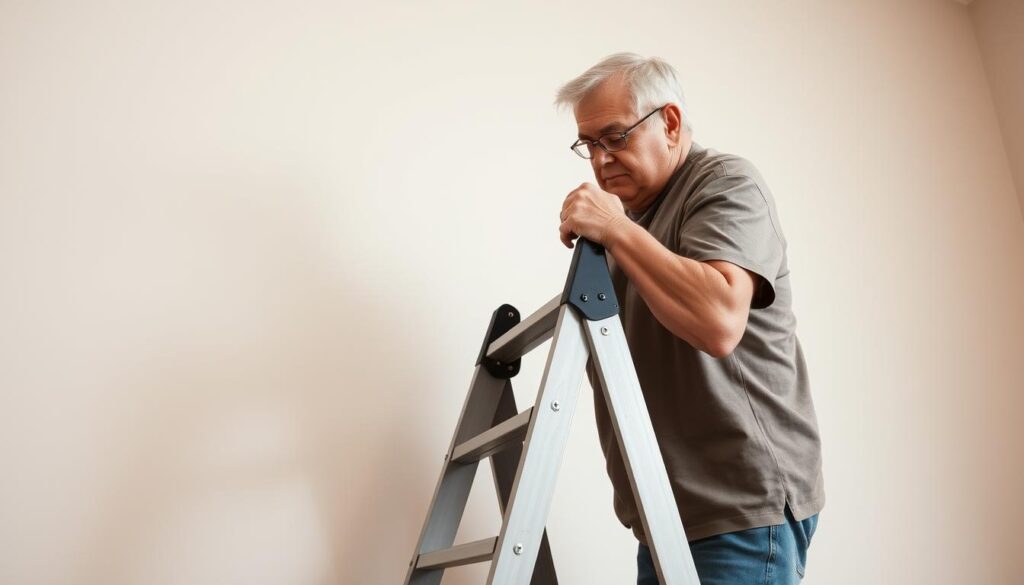
Getting ready for ladder use is key to avoiding injuries, especially for those with arthritis. Proper preparation greatly lowers the chance of accidents. This includes several important steps to ensure our safety.
Choosing the Right Ladder Type
Finding the right ladder is the first step in ladder safety. For those with arthritic knees, a ladder with a sturdy base, wide steps, and a comfortable height is best. Look for ladders with non-slip feet and secure locks to prevent falls.
Essential Gear for Safety
Using the right safety gear is also important. This includes non-slip mats for the ladder feet, gloves for better grip, and a ladder stabilizer for extra stability. This gear helps keep us safe while climbing.
Assessing the Work Environment
Checking the work area is also crucial. Make sure the ladder stands on a level and firm surface. Clearing the area of obstacles or hazards is also essential. This helps us spot and avoid risks before they happen.
By choosing the right ladder, using safety gear, and checking the work area, we can greatly improve our safety. This careful approach is vital for preventing ladder injuries with arthritis.
Techniques for Safe Ladder Climbing

For those with arthritic knees, ladder safety is key. It begins with learning the right climbing techniques. We’ll look at the main methods to lower injury risks when climbing ladders.
Proper Foot Placement
Proper foot placement is vital for safe ladder climbing. Make sure each foot is on the step and the ladder is steady before moving. Wear shoes with a good grip and avoid loose clothes that could get caught.
Always keep three points of contact with the ladder. This could be two hands and one foot or two feet and one hand.
Maintaining Balance While Climbing
To maintain balance, keep your body centered between the side rails. Always climb facing the ladder. Make sure your body’s center of gravity is between the rails.
This might mean adjusting the ladder’s position instead of stretching to reach far areas.
Taking Breaks to Reduce Strain
It’s wise to take regular breaks to ease knee strain. Rest on a stable platform or step down to a safe spot to stretch. This helps relieve pressure on the knee joints.
By using these techniques, people with arthritic knees can reduce ladder climbing risks. It’s about being aware of our limits and taking steps to stay safe.
Alternative Solutions to Ladder Use
For those with arthritic knees, finding ladder-free ways to work or live is safer. It lowers injury risks and makes environments more sustainable and safe.
Collaboration for Safe Solutions
Working with others can lessen the need for ladders. A partner or family member can share the load of tasks that need heights. This eases the burden on those with arthritic knees.
Teamwork makes tasks more efficient and safe. It’s especially helpful for rare or complex tasks that need special gear.
Assistive Technologies and Tools
Many tools and technologies can cut down on ladder use. Reachers, grabbers, and ergonomic tools let people reach high spots without climbing.
- Reachers and grabbers for accessing high shelves
- Long-handled tools for tasks that require reaching
- Adjustable workbenches for comfortable working heights
Hiring Professionals When Necessary
At times, the best choice is to hire experts for height-related tasks. This is true for jobs that are too hard or uncomfortable for one to do.
| Task Type | Professional Service | Benefits |
|---|---|---|
| High ceiling maintenance | Contracting a professional maintenance service | Safety, efficiency, and quality workmanship |
| Tree trimming | Hiring a certified arborist | Expertise, safety, and compliance with regulations |
Exploring these alternatives can greatly lower injury risks for those with arthritic knees. It also keeps them able to do the tasks they need to.
Continuing Safety Education and Awareness
To live safely and independently, people with arthritic knees need to know the latest about ladder safety. We can do this by using different resources and being proactive.
Staying Updated on Ladder Safety
We should follow new technologies and guidelines for ladder safety, especially for those with arthritic knees. This helps us stay safe by adapting our methods as needed.
Support for Arthritis Management
There are many resources for arthritis support. They offer tips on managing the condition and its effects on daily life, including using ladders. These resources help us understand how to handle the challenges of arthritic knees.
Community Engagement
Joining community workshops on ladder safety is a great way to learn from experts and share our own experiences. It helps us stay independent while keeping safety as our top priority.
FAQ
What are some knee-friendly ladder tips for individuals with arthritis?
How can I prevent ladder injuries with arthritis?
What are some ladder safety guidelines for individuals with arthritis?
Are there any specific ladder safety precautions for arthritic knees?
How can I safely climb a ladder with knee pain?
What are some alternative solutions to ladder use for individuals with arthritis?
Where can I find resources for arthritis support and ladder safety education?




One Comment