Blog

  • Knee Pain Symptoms and Causes: The Complete Guide to What’s Hurting You and Why

    Knee Pain Symptoms and Causes: The Complete Guide to What’s Hurting You and Why

    Understanding knee pain symptoms and causes is the first step toward taking back control of your life, and the urgency is real. More than 50% of individuals as young as 33 years old already show early signs of knee joint damage on MRI scans, often before any symptoms appear at all. If your knee is giving you trouble, you are not alone, and more importantly, you deserve clear answers about what is happening inside that joint.

    Blog illustration

    Key Takeaways

    Question Quick Answer
    What are the most common knee pain symptoms? Swelling, stiffness, sharp or dull aching, popping sensations, warmth, and instability when bearing weight.
    What causes knee pain? The most common causes include ligament injuries, meniscus tears, osteoarthritis, tendinitis, and traumatic impact injuries.
    Can knee hurt without an obvious injury? Yes. Overuse, arthritis, nutritional deficiencies, and misalignment can all cause significant knee pain without a single traumatic event.
    When should I see a doctor for knee pain? Seek care if you experience severe swelling, inability to bear weight, a “popping” sound at injury, or pain that lasts more than a few days.
    Is knee pain a sign of arthritis? It can be. Knee pain with morning stiffness, grinding sensations, and gradual worsening over time is a common arthritis pattern.
    Can knee pain symptoms be treated without surgery? Absolutely. Physical therapy, compression support, exercise, and lifestyle changes resolve the majority of cases without going near an operating room.
    What is the best starting resource for knee pain? Our ultimate guide to understanding and managing knee pain covers causes, treatments, and prevention all in one place.

    What Is Knee Pain? Understanding the Basics

    The knee is the largest joint in the human body, and it takes an enormous amount of punishment every single day. Every time you walk, climb stairs, sit down, or stand back up, your knee absorbs forces that can equal multiple times your body weight.

    It is no surprise then that knee pain is one of the most reported musculoskeletal complaints seen by healthcare providers in 2026. The joint is a complex network of bones, cartilage, ligaments, tendons, and fluid-filled sacs (called bursae), and any one of these structures can become injured or inflamed.

    When we talk about knee pain symptoms and causes, we are really talking about a wide spectrum of conditions. Some people feel a sharp, stabbing sensation on the inside of the knee. Others experience a dull, grinding ache that never quite goes away.


    Understanding what type of pain you have, and where it is located, can go a long way toward figuring out what is actually wrong. That is exactly what this guide is for.


    Blog illustration

    Common Knee Pain Symptoms and Causes: The Warning Signs

    Recognizing the warning signs early is critical. Your body is always trying to communicate with you, and knee pain symptoms are its way of waving a red flag before things get worse.

    Here are the most important symptoms to pay attention to:

    • Swelling and puffiness around the joint – This usually signals inflammation or fluid build-up.

    • Stiffness, especially in the morning – A telltale sign of arthritis-related changes inside the joint.

    • Warmth and redness – Indicates active inflammation, possibly from an infection or inflammatory arthritis.

    • A grinding, clicking, or popping sensation – Often associated with cartilage wear or a torn meniscus.

    • Instability or “giving way” – The feeling that your knee might buckle under you, often linked to ligament damage.

    • Sharp, localized pain – Pain in a very specific spot that worsens with certain movements.

    • Dull, aching pain – A constant background ache that is often linked to overuse or arthritis.

    • Pain behind the kneecap – Commonly caused by patellofemoral syndrome or chondromalacia.

    • Pain when climbing stairs or squatting – A classic pattern in patella-related conditions.

    • Inability to fully straighten or bend the knee – Can indicate a torn meniscus or severe swelling.

    It is worth noting that the location of your pain matters enormously. Pain on the inner side of the knee often points to a different problem than pain on the outer side or directly under the kneecap.

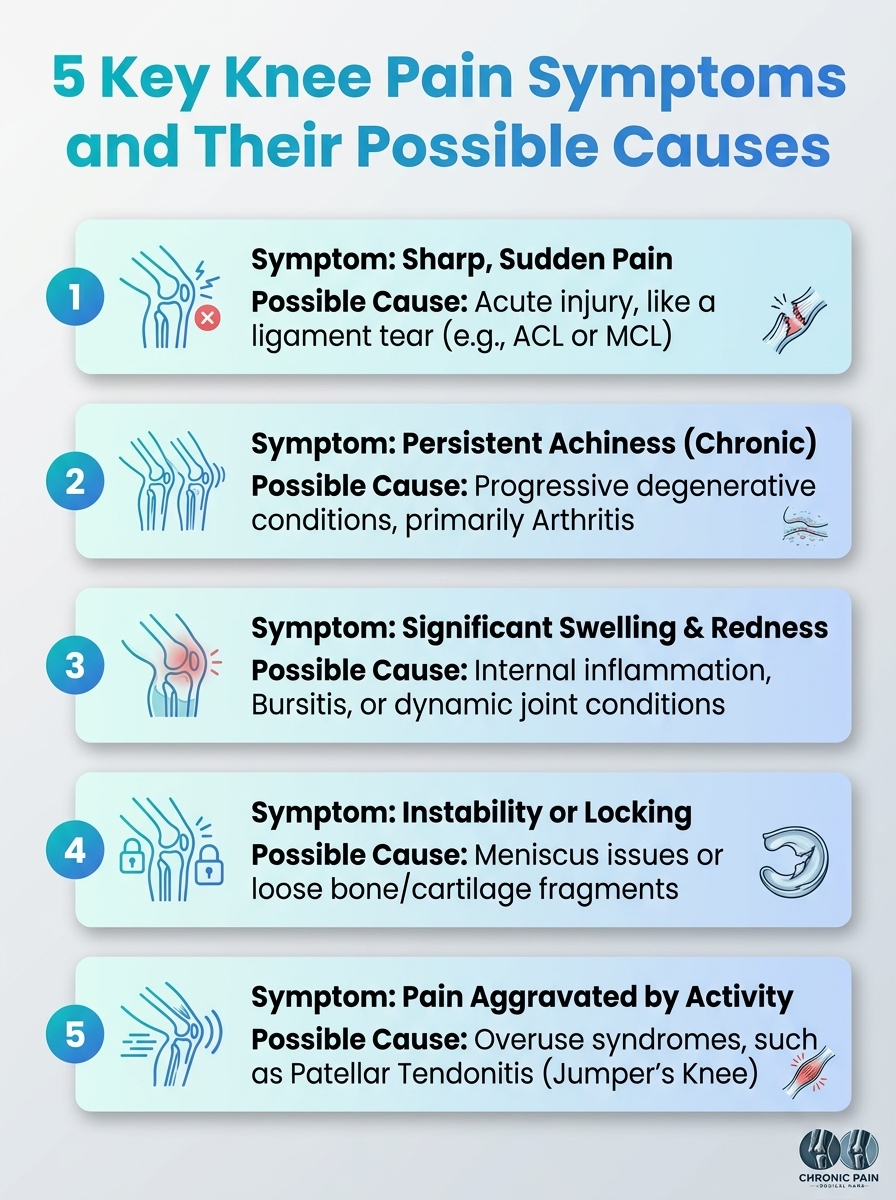
    Infographic showing knee pain symptoms and causes, highlighting 5 key knee pain symptoms and their possible causes.

    Shows the five main knee pain symptoms and their possible causes. A quick reference for understanding when to seek care.


    The Top Causes of Knee Pain: Injuries, Overuse, and Disease

    Knee pain symptoms and causes fall into three broad categories: acute injuries, chronic overuse conditions, and systemic diseases like arthritis. Understanding which category applies to you is the foundation of any effective treatment plan.

    Acute injuries happen suddenly. You twist your knee on the basketball court, take a hard fall, or absorb a direct blow. These injuries often produce immediate, intense pain alongside rapid swelling.

    Overuse conditions develop gradually. They creep up on you after weeks or months of repetitive activity, poor biomechanics, or inadequate recovery time. The pain starts mild, then gets harder and harder to ignore.

    Systemic diseases like osteoarthritis and rheumatoid arthritis cause progressive joint damage. They are not caused by a single event but rather by long-term biological and structural processes inside the joint.


    For a deeper look at traumatic events that cause immediate joint damage, visit our dedicated page on traumatic knee injuries to understand what happens to the joint during high-impact incidents.

    Did You Know?

    Losing just 1 pound of body weight results in a 4-pound reduction in pressure on the knee joint during daily activities.

    Source: World Health Organization


    Blog illustration

    Ligament Injuries: A Leading Cause of Knee Hurt

    Ligament injuries are among the most common and most painful causes of acute knee hurt. The knee has four main ligaments that hold the joint together, and tearing any one of them can be devastating.

    The Anterior Cruciate Ligament (ACL) is the most commonly torn ligament in the knee. ACL tears often happen during sports that involve sudden stops, changes of direction, or landing from a jump. The hallmark symptom is a loud “pop” at the moment of injury, followed immediately by intense pain and rapid swelling.

    Anterior Cruciate Ligament ACL Injury

    The Posterior Cruciate Ligament (PCL) is less commonly injured but equally disruptive. PCL injuries typically occur from a direct blow to the front of the knee, such as hitting the dashboard in a car accident.

    Other ligaments, including the medial collateral ligament (MCL) and lateral collateral ligament (LCL), can also be sprained or torn, causing significant instability and pain along the sides of the knee.

    Posterior Cruciate Ligament Injury


    Meniscus Tears and Cartilage Damage: Key Knee Pain Symptoms and Causes

    Between the bones of your knee, two C-shaped pads of cartilage called menisci act as shock absorbers. When these tear, the result is significant pain, swelling, and often a locking or catching sensation inside the joint.

    Meniscus tears are extremely common, affecting athletes and non-athletes alike. A sudden twisting motion with the foot planted is a classic mechanism of injury. But meniscus tears also occur gradually in older adults as the cartilage becomes more brittle and less resilient over time.


    Cartilage damage beneath the kneecap, a condition known as chondromalacia patella, is another source of chronic knee pain. It produces a characteristic dull ache under and around the kneecap, which tends to worsen when you sit for long periods, climb stairs, or squat.


    Arthritis and Knee Pain Symptoms and Causes: What You Need to Know

    Arthritis is one of the leading long-term causes of knee pain symptoms and causes, and it comes in more than one form. The two most relevant types for the knee are osteoarthritis and rheumatoid arthritis.

    Osteoarthritis (OA) is by far the more common of the two. It occurs when the protective cartilage inside the knee joint gradually wears down, allowing bone to grind against bone. The hallmark symptoms include:

    • A deep, aching pain that worsens with activity and eases with rest

    • Morning stiffness that loosens up after 20 to 30 minutes of movement

    • Grating or grinding sensations inside the joint

    • Gradual loss of range of motion

    • Visible swelling and a feeling of warmth around the joint

    Rheumatoid Arthritis (RA) is an autoimmune disease, meaning the body’s immune system attacks the joint lining. RA typically affects both knees simultaneously and is accompanied by systemic symptoms like fatigue and fever.

    In 2026, osteoarthritis remains one of the most undertreated conditions globally, largely because many people assume their knee hurt is simply “part of getting older.” It is not something you have to accept without taking action.

    Knee injuries and causes comprehensive guide


    Blog illustration

    When Knee Hurt Becomes Daily: Overuse and Tendon-Related Causes

    Not all knee pain symptoms and causes involve a dramatic injury. Some of the most persistent and frustrating cases of knee hurt come from overuse, repetitive strain, and tendon problems that build up silently over time.

    The most common overuse conditions affecting the knee include:

    Condition Main Symptom Who It Affects Most
    Runner’s Knee (Patellofemoral Syndrome) Aching pain around and under the kneecap Runners, cyclists, hikers
    Jumper’s Knee (Patellar Tendinitis) Sharp pain just below the kneecap Basketball players, volleyball players
    IT Band Syndrome Burning pain on the outer knee Long-distance runners, cyclists
    Bursitis Swelling and tenderness at the front of the knee People who kneel frequently
    Pes Anserine Bursitis Pain and swelling on the inner side of the knee People with obesity, OA patients

    These conditions respond very well to targeted exercise, compression support, and changes in training habits. They do not require surgery, and they are very manageable once properly identified.


    Risk Factors That Make Knee Pain Symptoms Worse

    Certain factors significantly increase your likelihood of developing knee pain or worsening symptoms that are already present. Knowing your personal risk factors gives you the power to make changes before things escalate.

    • Excess body weight. Every extra pound of body weight translates to several additional pounds of pressure on the knee joint during walking. This accelerates cartilage wear dramatically.

    • Age. Cartilage naturally becomes less resilient over time, making older adults more susceptible to degenerative knee pain symptoms and causes.

    • Previous knee injury. A prior ACL tear, fracture, or meniscus injury significantly raises the risk of future problems, including osteoarthritis.

    • Muscle weakness. Weak quadriceps and hamstrings force the knee to absorb more impact than it should, increasing wear and tear.

    • Improper footwear. High heels increase peak pressure on the knee joint by approximately 26%, accelerating degeneration over years of use.

    • Sedentary lifestyle. Lack of movement stiffens the joint and weakens the surrounding muscles that normally provide crucial support.

    • High-impact sports participation. Repetitive jumping, pivoting, and heavy loading stress the joint structures beyond their natural capacity.

    • Vitamin D deficiency. Research in 2026 continues to link low Vitamin D levels to increased knee pain severity and joint inflammation.


    Blog illustration

    How Knee Pain Is Diagnosed: Tests and Physical Examination

    Getting the right diagnosis is non-negotiable if you want to treat your knee pain correctly. There is no such thing as a one-size-fits-all approach, and what works for a meniscus tear is completely different from what works for arthritis.

    A thorough diagnosis typically includes several key steps:

    1. Physical Examination. A clinician will visually inspect the knee for swelling, bruising, and deformity. They will gently press around the joint to identify tender spots and test your range of motion.

    2. Special Orthopedic Tests. Specific maneuvers (like the Lachman test for ACL integrity or McMurray’s test for meniscus tears) help pinpoint which structures are damaged.

    3. X-rays. Excellent for identifying bone fractures, joint space narrowing (a sign of cartilage loss), and bone spurs associated with osteoarthritis.

    4. MRI Scans. The gold standard for visualizing soft tissue damage, including ligament tears, meniscus injuries, and cartilage defects that do not show up on X-ray.

    5. Ultrasound. Useful for assessing tendons, bursae, and soft tissue in real-time, particularly for tendinitis and bursitis diagnoses.

    6. Blood Tests. Ordered when an inflammatory or autoimmune cause (such as rheumatoid arthritis or gout) is suspected.

    A new blood biomarker test can even predict the development of knee osteoarthritis up to 8 years before it is visible on an X-ray, with 85% accuracy. Early diagnosis means early action, and early action saves knees.


    Treatment and Relief for Knee Pain Symptoms and Causes

    The good news is this: the majority of knee pain symptoms and causes respond well to conservative, non-surgical treatment. You do not have to jump straight to the operating table, and in most cases, doing so would be premature.

    Here is what the evidence actually supports in 2026:

    Conservative (Non-Surgical) Treatments

    • RICE Protocol (Rest, Ice, Compression, Elevation). The foundational first-response treatment for acute injuries and flare-ups.

    • Physical Therapy. Targeted strengthening and mobility exercises that rebuild the support system around the knee. This is one of the most powerful tools available for long-term relief.

    • Compression Sleeves and Knee Braces. Provide external support, reduce swelling, and improve proprioception (your joint’s awareness of its own position). An excellent adjunct to any treatment plan.

    • Weight Management. Even modest reductions in body weight produce dramatic reductions in joint load and knee pain severity.

    • Anti-inflammatory Medications. Short-term use of NSAIDs can reduce pain and swelling, allowing you to participate in rehabilitation exercises more effectively.

    • Corticosteroid or Hyaluronic Acid Injections. For moderate-to-severe osteoarthritis, these injections can provide months of meaningful relief.

    Surgical Options (When Truly Necessary)

    • Arthroscopy. A minimally invasive procedure used to repair or trim torn meniscus tissue and address certain cartilage defects.

    • ACL Reconstruction. A surgical procedure to rebuild a completely torn anterior cruciate ligament, typically using a tissue graft.

    • Total Knee Replacement. Reserved for severe, end-stage osteoarthritis that has not responded to all other treatments.

    Did You Know?

    Physical therapy can reduce the need for knee surgery by 40% in patients with degenerative knee conditions.

    Source: WifiTalents 2026

    Think about that number for a moment. Four out of ten people scheduled for knee surgery could potentially avoid the operating room entirely with the right rehabilitation program. That is not a small statistic. That is a life-changing one.


    Blog illustration

    Preventing Knee Pain: Protecting Your Joints for the Long Term

    Prevention is always more effective than treatment when it comes to joint health. The steps you take today directly influence how your knee feels five, ten, and twenty years from now.

    Here are the most evidence-supported prevention strategies for 2026:

    • Maintain a healthy body weight. Reducing excess load is the single most impactful thing most people can do for their knee joints.

    • Strengthen the muscles around the knee. The quadriceps, hamstrings, hip abductors, and calf muscles all play a role in protecting the joint.

    • Warm up before exercise. A proper warm-up increases blood flow to joint structures and prepares tissues for loading.

    • Choose appropriate footwear. Supportive, low-heeled shoes reduce mechanical stress on the knee during every step.

    • Listen to your body. Pain during exercise is a signal, not a challenge to push through. Rest and modify activity when pain flares.

    • Use compression support proactively. For people with a history of knee hurt or high activity levels, a well-fitted knee sleeve during exercise provides valuable proprioceptive feedback and reduces swelling.

    • Address nutritional gaps. Adequate Vitamin D, calcium, and anti-inflammatory nutrients support joint tissue health from the inside out.

    For a complete, resource-rich guide to every aspect of managing your joint health, we highly recommend reading through our comprehensive guide to understanding, managing, and overcoming knee pain.


    Conclusion: Taking Control of Knee Pain Symptoms and Causes

    Knee pain symptoms and causes are not a mystery. They follow patterns. They respond to evidence-based treatment. And they are far more manageable than most people realize, even when they have been hurting for years.

    Whether your knee pain comes from a torn ligament, worn-down cartilage, arthritis, or years of repetitive strain, understanding what is happening inside your joint is the most empowering first step you can take. Knowledge turns confusion into a clear action plan.

    The key facts to carry forward are straightforward. Recognize your symptoms early. Understand which cause category fits your experience. Take conservative treatment seriously before considering surgical options. And protect your joint proactively with the right support, movement habits, and body weight management.

    Your knee does an extraordinary amount of work every single day. It deserves the same level of attention and care. Stop accepting pain as inevitable, and start treating it as the solvable problem it actually is.

    “Getting out of bed should not feel like a workout. Understanding the cause of your knee pain is the first step to making sure it does not have to.”

    Explore our full library of condition-specific resources below to find the information most relevant to your exact situation:


  • Knee Pain Causes: The Complete Guide to What’s Really Hurting Your Knee

    Understanding knee pain causes is the first step toward reclaiming your mobility, and the numbers make this urgency clear: 1 in 2 people will develop symptomatic knee osteoarthritis by the age of 85, making knee health one of the most important aspects of long-term physical wellbeing. Whether you experience a sharp twinge when climbing stairs, a persistent ache after a run, or a sudden onset of swelling after a fall, identifying the root cause of your knee hurt is essential to finding the right path forward.

    Blog illustration

    Key Takeaways

    Question Answer
    What are the most common knee pain causes? ACL tears, torn meniscus, osteoarthritis, patellofemoral pain syndrome (PFPS), and ligament injuries are the leading causes of knee pain in 2026.
    Can knee pain be caused by lifestyle factors? Yes. Excess body weight, poor footwear, smoking, and lack of muscle conditioning are all documented contributors to chronic knee hurt.
    Is a torn meniscus always treated with surgery? Not always. Learn more about your options in our torn meniscus guide, which covers both conservative and surgical approaches.
    What is the difference between an ACL and a PCL injury? The ACL is at the front of the knee and controls rotational stability, while the PCL sits at the back and prevents the shin from sliding backward.
    What age does knee pain typically start? Traumatic causes can affect any age, but degenerative knee pain, particularly from osteoarthritis, typically becomes more common after age 45.
    Can knee pain be prevented? Many causes of knee pain are preventable through weight management, proper exercise technique, and wearing appropriate footwear.
    Where can I find a comprehensive overview of all knee conditions? Our ultimate guide to understanding and managing knee pain covers causes, treatments, and prevention in full detail.

    1. Understanding the Anatomy Behind Knee Pain Causes

    The knee is the largest and most complex joint in the human body, designed to bear enormous loads while enabling a wide range of movement. It connects the femur (thigh bone), the tibia (shinbone), and the patella (kneecap), all held together by a network of ligaments, tendons, cartilage, and fluid-filled sacs called bursae.

    When any one of these components is stressed, damaged, or degenerates over time, the result is knee pain that can range from mild discomfort to debilitating agony. Understanding this anatomy helps explain why so many different conditions can produce knee hurt, and why accurate diagnosis matters so much before starting any treatment.

    knee injuries and causes

    The four major ligaments of the knee, the ACL, PCL, MCL, and LCL, each play distinct roles in stabilizing the joint during movement. Cartilage, particularly the menisci and articular cartilage, acts as shock absorption and lubrication between bones.

    When we talk about knee pain causes, we’re really talking about which of these structures has been compromised, and by what mechanism.

    Blog illustration

    2. The Most Common Knee Pain Causes You Should Know

    Across millions of patients seen in 2026, several conditions account for the overwhelming majority of knee pain diagnoses. These range from acute traumatic injuries to slow-developing degenerative diseases, and each has its own distinct pattern of symptoms, risk factors, and treatment needs.

    Here is a summary of the most prevalent knee pain causes:

    • Osteoarthritis (OA) – Gradual breakdown of cartilage, most common in adults over 55

    • ACL tear – Rupture of the anterior cruciate ligament, often from sports

    • Torn meniscus – Damage to the cartilage pads that cushion the knee joint

    • Patellofemoral pain syndrome (PFPS) – Pain around the kneecap, common in runners

    • PCL injury – Posterior cruciate ligament damage from direct impact

    • Ligament sprains – MCL or LCL injuries from sideways force or twisting

    • Chondromalacia patella – Softening and deterioration of cartilage under the kneecap

    • Bursitis – Inflammation of fluid sacs within the knee joint

    • Tendinitis – Overuse-related inflammation of the patellar tendon

    Each of these conditions can range from mild and manageable to severe and life-limiting. Identifying which cause is behind your knee hurt is where effective treatment begins.

    3. ACL Injuries: One of the Most Serious Knee Pain Causes

    Anterior Cruciate Ligament

    An ACL (anterior cruciate ligament) tear is one of the most well-known and feared knee pain causes, particularly among athletes and active individuals. The ACL is a key stabilizer that controls the rotational movement and forward sliding of the tibia relative to the femur.

    ACL injuries most commonly occur during activities that involve sudden stops, pivoting, or changes in direction, such as basketball, soccer, skiing, and football. You may hear or feel a distinct “pop” at the moment of injury, followed quickly by swelling, instability, and significant pain.

    “The ACL is a key stabilizer in your knee, and understanding its role is the first step toward recovery.”

    Youth ACL injuries have doubled between 2021 and 2025, largely due to early sports specialization and high training intensity, making this a growing concern for young athletes and their families.

    Treatment for an ACL injury ranges from bracing and physical therapy for partial tears to full surgical reconstruction for complete ruptures. Read our detailed breakdown of ACL injury and knee brace options to understand what recovery looks like at every stage.

    Did You Know?

    Women are 3 times more likely to suffer an ACL tear than men, and twice as likely to develop patellofemoral pain syndrome.

    Source: livhospital.com

    Blog illustration

    4. Torn Meniscus: A Frequently Misunderstood Cause of Knee Pain


    The meniscus is a C-shaped piece of cartilage that acts as a shock absorber between your femur and tibia. A torn meniscus is among the most common causes of knee pain, affecting both athletes and older adults whose cartilage has degenerated over time.

    In younger people, meniscus tears typically result from twisting the knee while bearing weight, such as during a sharp pivot in sport. In older adults, even simple movements like kneeling or getting up from a chair can cause a tear in already-thinned cartilage.

    • Pain along the inner or outer edge of the knee

    • Swelling that develops over 24-48 hours

    • A catching or locking sensation when moving the knee

    • Stiffness and difficulty fully straightening the leg

    A torn meniscus doesn’t always require surgery; the latest evidence supports non-invasive options for many patients. Explore our comprehensive torn meniscus causes, symptoms, and treatment guide to understand which approach is right for your situation.

    5. Chondromalacia Patella: A Common Knee Pain Cause in Active People


    Chondromalacia patella, often called “runner’s knee,” is more common than you might think, particularly among young athletes, cyclists, and people who spend long periods on their feet. It refers to the softening and breakdown of the cartilage on the underside of the kneecap.

    This condition develops when the patella doesn’t track smoothly in its groove on the femur, creating friction that gradually erodes cartilage. Contributing factors include muscle imbalances, flat feet, overuse, and direct injury to the kneecap.

    Symptoms typically include a dull, aching knee pain around or behind the kneecap that worsens when sitting for long periods, climbing stairs, or squatting. The characteristic grinding or grating sensation you may feel is cartilage surfaces rubbing against each other.

    Our dedicated resource on chondromalacia patella and its effect on the knees provides a thorough walkthrough of diagnosis, targeted exercises, and recovery strategies.

    6. Ligament Injuries: Multiple Causes of Knee Hurt in One Category


    The knee relies on four major ligaments for stability, and an injury to any one of them can produce pain, instability, and significant functional loss. The four ligaments are the ACL, PCL, MCL (medial collateral ligament), and LCL (lateral collateral ligament).

    Each ligament has a different mechanism of injury and a distinct pattern of symptoms. Understanding the difference between a ligament strain and a ligament tear is vital for your treatment plan, as the approaches vary significantly.

    Ligament Common Cause Key Symptom
    ACL Sudden pivot or landing Pop sound, instability, rapid swelling
    PCL Direct impact (dashboard injury) Posterior knee pain, difficulty walking
    MCL Force to the outside of the knee Inner knee pain, swelling, bruising
    LCL Force to the inside of the knee Outer knee pain, instability, weakness

    Our full resource on ligament knee injuries and how they affect your knee covers each ligament in detail, from anatomy to recovery timelines.

    Blog illustration

    7. PCL Injuries: An Often Overlooked Cause of Knee Pain

    Posterior Cruciate Ligament

    The PCL (posterior cruciate ligament) is actually stronger than the ACL, but it can still be torn under the right conditions. Because it sits at the back of the knee and is harder to see on a standard physical exam, PCL injuries are frequently underdiagnosed.

    The most common mechanism is a direct blow to the front of the bent knee, such as hitting the dashboard in a car accident or falling onto a bent knee in sport. Hyperextension of the knee can also damage the PCL.

    Unlike ACL injuries, many PCL knee pain cases respond well to conservative management, including bracing, structured physical therapy, and anti-inflammatory medication. Surgical reconstruction is reserved for complete ruptures or cases involving multiple ligament damage.

    Read everything you need to know about PCL knee injury: anatomy, diagnosis, and treatment to make sense of this often-overlooked but important condition.

    8. Traumatic Knee Injuries: Sudden and Severe Causes of Knee Hurt


    Traumatic knee injuries cover a broad spectrum of conditions caused by a sudden, forceful event rather than gradual wear and tear. These can include fractures of the patella, femur, or tibia, as well as dislocations, multiple ligament tears, or severe tendon ruptures.

    Traumatic knee pain causes are most common in high-impact sports, motor vehicle accidents, and falls from height. In 2026, we see these injuries particularly prevalent in contact sports and extreme activities where joint protection is often overlooked.

    • Patellar fracture – Direct impact to the kneecap, often from a fall

    • Knee dislocation – High-energy trauma displacing the joint

    • Quadriceps tendon rupture – Sudden powerful contraction or direct impact

    • Multi-ligament knee injury – Multiple ligaments torn simultaneously

    • Tibial plateau fracture – Compression fracture at the top of the shinbone

    We’ve analyzed the most common traumatic knee injuries to help you navigate your diagnosis. Explore our full guide on traumatic knee injuries and their management for a detailed breakdown of each condition.

    Did You Know?

    Physical therapy can reduce the need for knee surgery by up to 40% in some patient groups, making early intervention a critical step in your recovery plan.

    Source: utah.edu

    Blog illustration

    9. Lifestyle and Weight: Surprising Everyday Knee Pain Causes


    Not all knee pain causes stem from dramatic injuries or inherited conditions. Many of the most damaging contributors to knee health are everyday lifestyle choices that accumulate damage quietly over years.

    One of the most impactful is body weight. Every extra pound of body weight adds approximately 4 pounds of pressure to the knee joint during walking. This mechanical stress accelerates cartilage wear and dramatically increases your long-term risk of developing osteoarthritis.

    Other significant lifestyle-based knee pain causes include:

    • Wearing high heels – Increases knee joint pressure by approximately 26%

    • Smoking – Associated with a 2-fold increase in cartilage loss in the knee joint

    • Sedentary behavior – Weak thigh muscles fail to absorb load, shifting stress to the joint

    • Improper exercise technique – Poor squatting, jumping, or landing mechanics

    • Occupational strain – Jobs requiring prolonged kneeling, squatting, or heavy lifting

    The good news is that these are among the most actionable knee pain causes to address. Small, consistent changes to your daily habits can produce meaningful reductions in knee hurt over time.

    Our broad overview of knee pain and what drives it explores both the clinical and lifestyle dimensions of this common problem.

    Infographic of 5 common knee pain causes with symptoms and prevention tips

    This infographic highlights 5 common knee pain causes. Learn quick tips for relief and prevention.

    10. Diagnosing the Root Cause of Your Knee Pain: What to Expect

    Knowing your knee pain causes is not something you can fully determine on your own. Accurate diagnosis requires a combination of physical examination, imaging studies, and in some cases, laboratory tests to rule out inflammatory or autoimmune conditions.

    Here is what the diagnostic process typically involves:

    1. Medical history and symptom review – When the pain started, how it behaves, and what makes it better or worse

    2. Physical examination – Range of motion testing, palpation of key structures, and special orthopedic tests

    3. X-ray – Identifies bone fractures, joint space narrowing, and signs of arthritis

    4. MRI (Magnetic Resonance Imaging) – The gold standard for soft tissue evaluation, including ligaments, menisci, and cartilage

    5. Ultrasound – Useful for evaluating tendons and bursae in real time

    6. Blood tests – Ordered when rheumatoid arthritis or gout is suspected

    7. Arthroscopy – A minimally invasive procedure used both to diagnose and treat certain conditions

    Getting the right diagnosis early matters enormously. Treating the wrong condition can delay recovery, mask a more serious underlying issue, or even make knee hurt worse over time.

    If you are unsure where to start, our guide to knee ligament injury symptoms and treatment provides a solid foundation for understanding what your symptoms might indicate.

    Blog illustration

    11. Treatment Options Matched to Specific Knee Pain Causes

    Once the cause of your knee pain is identified, treatment can be tailored precisely to your condition. Evidence-based strategies are the foundation of every guide we publish, and that principle extends to matching the right treatment to the right diagnosis.

    Here is a summary of condition-specific approaches:

    Condition First-Line Treatment When Surgery is Considered
    ACL Tear Bracing, physical therapy Complete tear, active/athletic lifestyle
    Torn Meniscus RICE, NSAIDs, physical therapy Locking, failed conservative care
    Osteoarthritis Weight loss, exercise, joint injections Severe pain, loss of function
    PFPS Strengthening, activity modification Rarely required
    PCL Injury Bracing, physical therapy Complete rupture with instability
    Chondromalacia Quad strengthening, patellar taping Persistent severe cases

    Don’t just manage the pain — learn how to overcome it and reclaim your mobility. Our full, in-depth resource covers all of this and more: understanding, managing, and overcoming knee pain: your comprehensive guide.

    Conclusion

    Knee pain causes are wide-ranging, from sudden traumatic injuries like ACL tears and meniscus damage to gradual conditions like osteoarthritis and chondromalacia patella. Whether your knee hurt started yesterday or has been building for years, understanding what’s behind it is the single most important step you can take toward effective treatment and lasting relief.

    The knee is a resilient joint, but it needs the right care, the right diagnosis, and the right treatment plan to heal properly. In 2026, we have more evidence-based tools and non-surgical options than ever before to help you recover without unnecessary intervention.

    We’ve covered the most significant knee pain conditions in this guide, from ACL and PCL injuries to lifestyle-driven causes and traumatic events. Use these resources to advocate for your own health, understand your diagnosis more deeply, and take action.

    Start your journey to better knee health today. Explore the full range of topics at our knee pain causes resource hub, and remember: your future self will thank you for taking this seriously now.

  • Swollen Knee Treatment: The Complete Guide to Relief, Recovery, and Long-Term Health

    If you are dealing with a swollen knee, you are far from alone. Only 12% of patients with confirmed knee osteoarthritis are currently seeking medical care for the condition, which means millions of people are quietly managing pain, stiffness, and inflammation without proper swollen knee treatment. Whether your swelling came on suddenly from an injury or has been building gradually over time, understanding your options is the first real step toward getting your life back.

    This guide covers everything you need to know, from what is actually happening inside your knee to the most effective treatments available in 2026.

    Blog illustration

    Key Takeaways

    Question Answer
    What is the fastest swollen knee treatment at home? The RICE method (Rest, Ice, Compression, Elevation) is the most widely recommended first-response approach for acute swelling and knee pain.
    How long does a swollen knee take to heal? Minor sprains typically recover in 2 to 4 weeks with proper care. More serious injuries may require several months of structured rehabilitation.
    Should I see a doctor for a swollen knee? Yes, if the swelling is severe, came on after an injury, does not improve in 48 to 72 hours, or is accompanied by significant knee pain, a medical evaluation is recommended.
    Can a torn meniscus cause knee swelling? Yes. A torn meniscus is one of the most common structural causes of a swollen knee, often accompanied by stiffness and a clicking sensation.
    Does weight affect knee swelling? Significantly. Every extra pound of body weight adds roughly four pounds of pressure to the knee joint with each step, directly worsening inflammation.
    Are knee braces helpful for swollen knee treatment? Yes. Braces and compression sleeves provide structural support, reduce joint loading, and help manage swelling in both acute and chronic cases.
    When is surgery necessary for a swollen knee? Surgery is typically considered only after conservative treatments like physical therapy and bracing have been tried for an adequate period without sufficient improvement.

    What Causes a Swollen Knee? Understanding the Root Problem

    A swollen knee, medically called a knee effusion, happens when excess fluid builds up in or around the knee joint. This fluid accumulation is your body’s inflammatory response to an injury, irritation, or disease process happening inside the joint.

    The most common causes include traumatic injuries, degenerative conditions, and structural damage. Understanding which category your swelling falls into is critical, because the right swollen knee treatment depends entirely on what is driving the inflammation.


    Common causes of knee swelling include:

    • Ligament injuries, including ACL and PCL tears

    • Meniscus tears, which damage the cartilage cushioning the joint

    • Osteoarthritis, causing progressive cartilage breakdown

    • Bursitis, inflammation of the fluid-filled sacs around the knee

    • Gout or pseudogout, crystal deposits triggering acute inflammation

    • Infections inside the joint (septic arthritis), which require urgent medical attention

    • Overuse injuries from repetitive activity or sudden changes in training load

    Identifying your specific cause is the foundation of effective swollen knee treatment. Without knowing the source, you are just guessing.


    Blog illustration

    Warning Signs Your Swollen Knee Treatment Needs a Doctor Immediately

    Not all knee swelling is equal. Some cases can be managed safely at home, but others are medical emergencies that require professional assessment without delay.

    Seek immediate medical attention if you notice any of the following alongside your swollen knee:

    • The knee is hot, red, and intensely painful (possible infection)

    • Swelling appeared suddenly after a direct blow or fall

    • You cannot bear any weight on the leg

    • The knee looks visibly deformed or out of alignment

    • You have a fever alongside the swelling

    • The swelling does not reduce at all after 72 hours of home care


    A proper diagnosis from a physician or physiotherapist will include a physical examination, imaging (X-ray or MRI), and in some cases, a procedure called arthrocentesis (draining the fluid) to both relieve pressure and analyze what is actually in the joint.

    Getting the right diagnosis early is not about being cautious. It is about making sure your swollen knee treatment actually targets the real problem.


    The RICE Method: Your First-Line Swollen Knee Treatment at Home

    For most acute cases of a swollen knee, the RICE method remains the gold-standard starting point. It is simple, effective, and backed by decades of clinical evidence for reducing inflammation and knee pain in the early stages.

    5-step process for swollen knee treatment infographic showing diagnosis, home care, rest, ice, compression, elevation.

    A concise 5-step guide to treating a swollen knee, from assessment to at-home care. Learn when to seek medical help and how to prevent future swelling.

    Here is how to apply the RICE method correctly for swollen knee treatment:

    1. Rest: Reduce or stop the activities that aggravate the knee. This does not mean complete immobilization. Gentle movement is often still beneficial, but avoid loading the joint under stress.

    2. Ice: Apply an ice pack wrapped in a cloth for 15 to 20 minutes at a time, every 2 to 4 hours during the first 48 to 72 hours. Never apply ice directly to the skin.

    3. Compression: Wrap the knee snugly (not tightly) with a compression bandage or sleeve. This helps limit swelling and provides light support to the joint.

    4. Elevation: Prop the leg up above the level of your heart when resting. This uses gravity to help drain excess fluid away from the joint.

    “Recovery for minor knee sprains typically takes 2 to 4 weeks when using the RICE method consistently and correctly.”

    The RICE method works best for acute injuries. If your knee swelling is chronic or related to arthritis, you will need a more comprehensive swollen knee treatment plan beyond RICE alone.

    Did You Know?

    Physical therapy reduces the need for knee surgery by 40% in some patient populations.

    Source: acrabstracts.org


    Medications and Injections Used in Swollen Knee Treatment

    When home care is not enough to control swelling and knee pain, medications are the next step in the treatment ladder. These range from simple over-the-counter options to specialist-administered injections.


    Over-the-counter medications for knee swelling include:

    • NSAIDs (Non-Steroidal Anti-Inflammatory Drugs) such as ibuprofen or naproxen sodium, which reduce both pain and inflammation

    • Acetaminophen for pain relief, though it has less effect on the inflammation itself

    • Topical anti-inflammatory gels applied directly to the knee, which can provide localized relief with fewer systemic side effects

    Prescription and injectable options for more persistent knee swelling include:

    • Corticosteroid injections: Provide effective short-term relief, but it is important to know that the anti-inflammatory effect typically lasts only 6 to 12 weeks. They are not a long-term solution.

    • Hyaluronic acid (viscosupplementation) injections: Lubricate the joint and are particularly useful for osteoarthritis-related swelling.

    • Platelet-Rich Plasma (PRP) injections: An emerging treatment showing significant improvement in 60 to 70% of mild osteoarthritis patients, offering a more regenerative approach to managing knee swelling.

    One important note: glucosamine supplements, despite their widespread popularity, show no significant improvement over placebo in 75% of clinical trials. Save your money and invest in approaches that have stronger evidence behind them.


    Blog illustration

    Physical Therapy: The Most Effective Long-Term Swollen Knee Treatment

    Here is the truth about swollen knee treatment that most people overlook: reducing swelling is only half the job. The other half is building the muscular support around the knee so it does not keep getting inflamed in the first place.

    Physical therapy does exactly that. It rebuilds strength in the quadriceps, hamstrings, glutes, and calf muscles, reducing the mechanical load on the knee joint itself. Exercise-based treatment programs reduce knee pain scores by an average of 25%, making structured movement one of the most reliable tools available in 2026.

    Knee injuries and causes

    A well-structured physical therapy program for a swollen knee typically includes:

    • Range-of-motion exercises to restore joint flexibility without stressing the inflamed tissue

    • Strengthening exercises focused on the hip, thigh, and calf to offload the joint

    • Balance and proprioception training to improve neuromuscular control around the knee

    • Gait retraining to correct movement patterns that increase joint stress

    • Manual therapy to address joint stiffness and improve mobility

    If you want to read our comprehensive take on understanding, managing, and overcoming knee pain, we cover the full picture of what drives chronic knee problems and how to address them systematically.


    Knee Braces and Compression Sleeves for Swollen Knee Treatment

    Braces are not just for post-surgery recovery. Used correctly, they are a powerful, non-invasive tool in any swollen knee treatment plan, providing structural support, reducing joint loading, and keeping swelling in check during daily activity.

    In fact, knee braces were ranked as the most effective non-drug therapy for alleviating osteoarthritis symptoms in a meta-analysis of 10,000 patients. That is a remarkable result for something that costs a fraction of a single injection appointment.

    Anterior Cruciate Ligament Knee Brace

    Types of knee braces for swollen knee treatment:

    • Compression sleeves: Best for mild to moderate swelling and general knee pain support. Options like the Copper Fit Freedom Knee Sleeve ($20-25) and the Copper Compression Recovery Sleeve ($25-30) offer accessible, everyday support.

    • Hinged knee braces: Provide ligament support and are particularly useful after ACL or ligament injuries where the joint needs stability during movement.

    • Unloader braces: Designed for osteoarthritis, these shift weight away from the most damaged compartment of the knee.

    • Patella tracking braces: Helpful for conditions like chondromalacia where the kneecap tracks incorrectly and causes irritation.

    Wearing a compression sleeve during activity can meaningfully reduce joint loading and provide the consistent support your knee needs to move without constantly re-triggering inflammation.


    Blog illustration

    Common Knee Conditions That Cause Swelling and Knee Hurt

    A swollen knee is a symptom, not a diagnosis. Several distinct conditions can produce joint swelling, and each one calls for a slightly different approach to treatment. Knowing which condition you are dealing with is what makes the difference between managing it and actually resolving it.


    Here are the most common conditions associated with knee swelling and ongoing knee hurt:

    • Torn Meniscus: The meniscus is the C-shaped cartilage that cushions the knee joint. A tear causes immediate swelling, stiffness, and often a locking or clicking sensation. Read more about torn meniscus treatment and recovery.

    • ACL and PCL Injuries: Cruciate ligament tears cause acute swelling, instability, and significant knee pain. These are common sports injuries but also occur in everyday falls and accidents. Learn more about PCL knee injuries and how they are managed.

    • Chondromalacia Patella: This condition involves softening and breakdown of the cartilage on the underside of the kneecap, causing front-of-knee pain and swelling. Our guide on chondromalacia patella explains the causes and treatment options in detail.

    • Ligament Sprains: Partial or complete tears of the collateral or cruciate ligaments cause acute swelling and instability. Explore our full resource on ligament knee injuries for a complete breakdown.

    • Traumatic Knee Injuries: Direct impacts, falls, or collisions can fracture bone, damage cartilage, or rupture multiple structures simultaneously. Our page on traumatic knee injuries covers the full spectrum of acute trauma.

    • Osteoarthritis: Gradual cartilage loss leads to chronic, recurring knee swelling, stiffness, and persistent knee pain, particularly after periods of inactivity or heavy use.

    Did You Know?

    Every 1 pound of weight loss results in a 4-pound reduction in knee joint pressure per step.

    Source: sciencedaily.com


    Exercise and Movement for Recovering From a Swollen Knee

    One of the most common mistakes people make with swollen knee treatment is resting too much for too long. Complete immobilization weakens the muscles that support the knee, which ultimately makes the problem worse.

    Controlled, progressive movement is not just safe during recovery. It is essential. The key is working within your pain-free range and gradually increasing load as the joint heals.

    Knee Pain Exercise

    Effective exercises for a swollen knee (performed within pain-free limits) include:

    • Straight leg raises: Strengthen the quadriceps without bending the knee joint

    • Heel slides: Gently restore range of motion in a controlled, low-load position

    • Glute bridges: Activate the glutes and hamstrings to reduce the load transferred to the knee

    • Mini squats: Begin with a small range and progress gradually as swelling reduces

    • Clamshells and lateral band walks: Strengthen the hip abductors, which play a critical role in controlling knee alignment

    • Seated calf raises: Maintain lower leg strength without knee joint stress

    The goal during swollen knee treatment is not to push through pain. It is to find the movement windows that build strength without provoking more inflammation. For our full guide on managing knee pain through movement and lifestyle, we break down the exercises that work at each stage of recovery.


    Blog illustration

    Nutrition and Weight Management as Part of Swollen Knee Treatment

    What you eat and how much you weigh directly affects how much your knee swells and how quickly it recovers. This is not about appearance. It is pure biomechanics and biochemistry.

    Every extra pound you carry multiplies the force going through your knee joint with every step. Losing even a modest amount of weight can have a dramatic effect on both knee pain and chronic inflammation levels.

    Anti-inflammatory foods to include in your diet during swollen knee treatment:

    • Fatty fish (salmon, mackerel, sardines) rich in omega-3 fatty acids

    • Leafy green vegetables (spinach, kale, broccoli) loaded with antioxidants

    • Berries (blueberries, strawberries, cherries) which contain powerful anti-inflammatory compounds

    • Turmeric and ginger, both of which have well-documented anti-inflammatory properties

    • Nuts and seeds for healthy fats and vitamin E

    • Bone broth for collagen and joint-supporting nutrients

    Foods to reduce or avoid when dealing with knee swelling:

    • Processed sugars and refined carbohydrates, which promote systemic inflammation

    • Trans fats found in processed and fried foods

    • Excess alcohol, which impairs tissue repair and increases inflammation

    • High-sodium foods, which can worsen fluid retention

    Adequate hydration is equally important. Joint cartilage is approximately 70 to 80% water. Staying well hydrated supports synovial fluid production, which lubricates and protects the knee during movement.


    Advanced Swollen Knee Treatment Options Available in 2026

    For cases where conservative swollen knee treatment has not delivered adequate results, several advanced options are now available that go beyond traditional approaches.

    Posterior Cruciate Ligament Knee Treatment

    Advanced interventions include:

    • Platelet-Rich Plasma (PRP) therapy: Your own blood is processed to concentrate growth factors, which are then injected directly into the knee to promote healing and reduce inflammation from within the joint.

    • Stem cell therapy: An emerging regenerative treatment that currently maintains a 75% patient satisfaction rate after one year. It is expensive but shows genuine promise for structural repair.

    • Prolotherapy: Injections of irritant solutions that stimulate the body’s natural healing response in chronically loose or damaged ligaments.

    • Arthroscopic debridement: A minimally invasive surgical procedure to remove damaged tissue or debris from inside the joint that is driving persistent inflammation.

    • Knee replacement surgery: Reserved for end-stage joint disease, this replaces the damaged joint surfaces with artificial components to eliminate bone-on-bone contact.

    In 2026, regenerative medicine approaches like PRP and stem cell therapy are increasingly being recommended before jumping to surgical options, given their lower risk profile and meaningful clinical outcomes.


    When Surgery Becomes Necessary and What to Expect From Recovery

    Surgery is not the first answer to a swollen knee. It is typically the last resort, pursued only after a structured program of physical therapy, bracing, medications, and lifestyle modifications has been given a genuine opportunity to work.

    That said, some injuries do require surgical intervention. A completely ruptured ACL in an active individual, a bucket-handle meniscus tear locking the joint, or advanced cartilage damage may all ultimately need surgical treatment to restore proper function.

    ACL Knee Brace Recovery

    Post-surgical swollen knee treatment follows a structured rehabilitation progression:

    1. Phase 1 (weeks 1-2): Control swelling, protect the repair, restore basic range of motion

    2. Phase 2 (weeks 3-6): Begin weight-bearing, restore muscle activation, continue reducing swelling

    3. Phase 3 (weeks 7-12): Progressive strengthening, balance training, and functional movement patterns

    4. Phase 4 (months 3-6): Return-to-sport or full activity preparation, with ongoing monitoring

    Swelling after surgery is normal and expected. Managing it consistently through elevation, compression, icing, and progressive exercise is what separates a smooth recovery from a prolonged one.

    The mindset that gets people through surgical recovery is the same one that gets people through any hard knee rehabilitation: consistency beats intensity every single time.


    Blog illustration

    Preventing Future Knee Swelling: Long-Term Strategies That Work

    The best swollen knee treatment is the one you never need again. Once your acute swelling is under control and your knee pain has reduced, building long-term resilience into the joint is the most valuable investment you can make.

    Prevention is not about avoiding movement. It is about preparing your body to handle movement well.

    Practical long-term prevention strategies include:

    • Maintain a healthy body weight to minimize compressive forces on the joint with every step

    • Build strong glutes and hips so your knee does not absorb disproportionate force during walking, running, and climbing

    • Wear appropriate footwear that provides adequate cushioning and support for your foot type

    • Warm up properly before exercise and cool down with gentle stretching afterwards

    • Progress training load gradually, following the 10% rule: never increase volume or intensity by more than 10% per week

    • Address movement imbalances early, particularly hip weakness, ankle stiffness, and poor landing mechanics

    • Use a compression sleeve during high-demand activities to provide consistent joint support

    Your knee does not need to be fragile. With the right foundation, it can be one of the most resilient joints in your body.


    Conclusion: Taking Control of Your Swollen Knee Treatment

    A swollen knee does not have to define your days. With the right swollen knee treatment approach, whether that is the RICE method in the early stages, a structured physical therapy program, the right brace, or targeted medical intervention, there is a clear path from where you are now to where you want to be.

    The most important thing to understand is this: knee pain and swelling are almost always mechanical problems with mechanical solutions. You are not stuck. Your knee is not broken beyond repair. It needs the right support, the right loading strategy, and the right time to respond.

    If you are dealing with recurring knee hurt or are trying to understand the specific condition driving your swelling, explore our detailed guides on related conditions:

    Your best days of movement are still ahead of you. Start with what you know today, get the right help where you need it, and take back control of your knee health one informed step at a time.

  • When to See a Doctor for Knee Pain: Warning Signs You Should Never Ignore

    When to See a Doctor for Knee Pain: Warning Signs You Should Never Ignore

    Knowing when to see a doctor for knee pain is one of the most important health decisions you can make, yet only 12% of individuals with knee osteoarthritis are currently seeking medical care for their condition, despite many having severe disease. Knee pain is one of the most common complaints we hear from people of all ages, and understanding the difference between minor discomfort and a problem that needs professional attention can protect your mobility for life.

    Blog illustration

    Key Takeaways

    Question Answer
    When should I see a doctor for knee pain immediately? If your knee is severely swollen, deformed, or you cannot bear weight, seek emergency care right away.
    How long should I wait before seeing a doctor for knee pain? If knee pain lasts more than 3 days without improvement, or is severe from the start, book an appointment promptly.
    Can knee pain go away on its own? Minor knee pain from overuse can resolve with rest and ice, but persistent or severe pain rarely improves without treatment.
    What type of doctor treats knee pain? Your GP is the first point of contact. They may refer you to an orthopedic specialist or sports medicine physician.
    Is knee pain always serious? Not always, but certain symptoms like instability, locking, or swelling always warrant a professional evaluation.
    What are common conditions behind knee hurt? ACL tears, meniscus damage, chondromalacia patella, ligament injuries, and osteoarthritis are among the most frequent causes.
    Can I make knee pain worse by ignoring it? Yes. Delaying care can lead to joint damage, muscle atrophy, and in some cases, the need for surgery that could have been avoided.

    1. Understanding Knee Pain: What Is Normal and What Is Not

    Most of us have felt a twinge or stiffness in our knee after a long walk or a tough workout. That kind of mild, temporary discomfort is part of daily life and usually settles down with rest.

    However, knee pain that disrupts your sleep, limits your movement, or appears alongside swelling and instability is a different story entirely. Learning to read those signals is the first step toward protecting your joint health.

    Knee Pain

    The knee is the largest and most complex joint in the human body. It bears the full weight of your frame with every step, so it is no surprise that it is vulnerable to both sudden injury and long-term wear.

    For a comprehensive overview of the causes, management strategies, and recovery paths for knee pain, visit our ultimate guide to understanding, managing, and overcoming knee pain.

    Blog illustration

    2. When to See a Doctor for Knee Pain After an Injury

    A sudden injury is one of the clearest triggers for asking when to see a doctor for knee pain. If you heard a popping sound at the moment of impact, or if your knee immediately swelled, that is a medical emergency, not a “wait and see” situation.

    Sports injuries, falls, and direct impacts to the knee can damage ligaments, tendons, cartilage, or bone. These structures do not heal correctly on their own without a proper diagnosis.


    Common post-injury situations that require prompt evaluation include:

    • A loud pop at the time of the injury

    • Immediate and significant swelling

    • Inability to straighten or fully bend the knee

    • A feeling that the knee “gave way” or is unstable

    • Visible deformity of the joint

    • Numbness or tingling below the knee

    If you are dealing with a traumatic incident, our detailed guide on traumatic knee injuries covers what to expect from diagnosis to recovery.

    3. Warning Signs That Mean You Need Medical Attention for Knee Pain Right Now

    Some symptoms demand an urgent doctor visit rather than home care. These are the red flags that tell you when to see a doctor for knee pain without any delay.

    Seek same-day or emergency care if you experience any of the following:

    • Your knee is hot, red, and extremely tender (possible infection or gout)

    • You cannot put any weight on the leg at all

    • You have a fever alongside knee swelling

    • The knee looks visibly out of place or deformed

    • You sustained a high-impact injury in a car accident or a fall from height

    Ignoring these signs does not make them disappear. In many cases, waiting makes the structural damage worse and extends your recovery time significantly.

    Did You Know?

    Patients who receive rehabilitation within the first 15 days of a knee pain diagnosis are 42% less likely to require surgery later on.

    Source: advisory.com

    Blog illustration

    4. Common Knee Conditions That Require a Doctor’s Diagnosis

    Not every case of knee hurt comes from a single dramatic event. Many serious conditions develop gradually, and patients often dismiss the early signs as “just aging” or “a bit of soreness.”

    Here are the conditions we see most often that require professional diagnosis and treatment:

    ACL and PCL Ligament Injuries

    The anterior and posterior cruciate ligaments provide critical stability to the knee joint. Tears to these structures cause intense pain, rapid swelling, and a feeling that the knee is “loose.”

    You can read more about ACL injuries and appropriate knee brace support or explore our guide on PCL knee injuries to understand the differences and treatment paths.

    Anterior Cruciate Ligament

    Torn Meniscus

    The meniscus is the cartilage that cushions your knee joint. A tear causes pain, swelling, stiffness, and a locking or catching sensation in the joint.

    If you suspect a meniscus problem, our comprehensive resource on torn meniscus injuries explains what to expect from your evaluation and treatment options.


    Chondromalacia Patella

    This condition involves the softening and breakdown of cartilage on the underside of the kneecap. It causes a dull, aching pain that is particularly noticeable when climbing stairs or sitting for long periods.

    Our page on chondromalacia patella walks through the causes, risk factors, and treatment approaches in plain language.

    Ligament Sprains and Tears

    Beyond the ACL and PCL, the knee has several other ligaments that can be strained or torn. A full picture of the range of ligament knee injuries helps you understand which structure may be affected based on your symptoms.


    5. When to See a Doctor for Knee Pain That Won’t Go Away

    Chronic knee pain that lingers for weeks or months is one of the most underreported health concerns in 2026. Many people normalize the ache, adjusting their lives around it rather than addressing the source.

    We recommend seeing a doctor for knee pain if:

    1. Pain has persisted for more than 3 days without improvement

    2. You are regularly taking over-the-counter pain relief just to function

    3. The pain wakes you up at night

    4. You have begun avoiding activities you used to enjoy

    5. You notice a gradual increase in pain intensity over weeks or months

    6. Stiffness is present every morning and takes more than 30 minutes to ease

    Chronic knee hurt rarely resolves on its own. In most cases, the underlying cause, whether it is arthritis, a cartilage issue, or a tendon problem, requires guided intervention to improve.

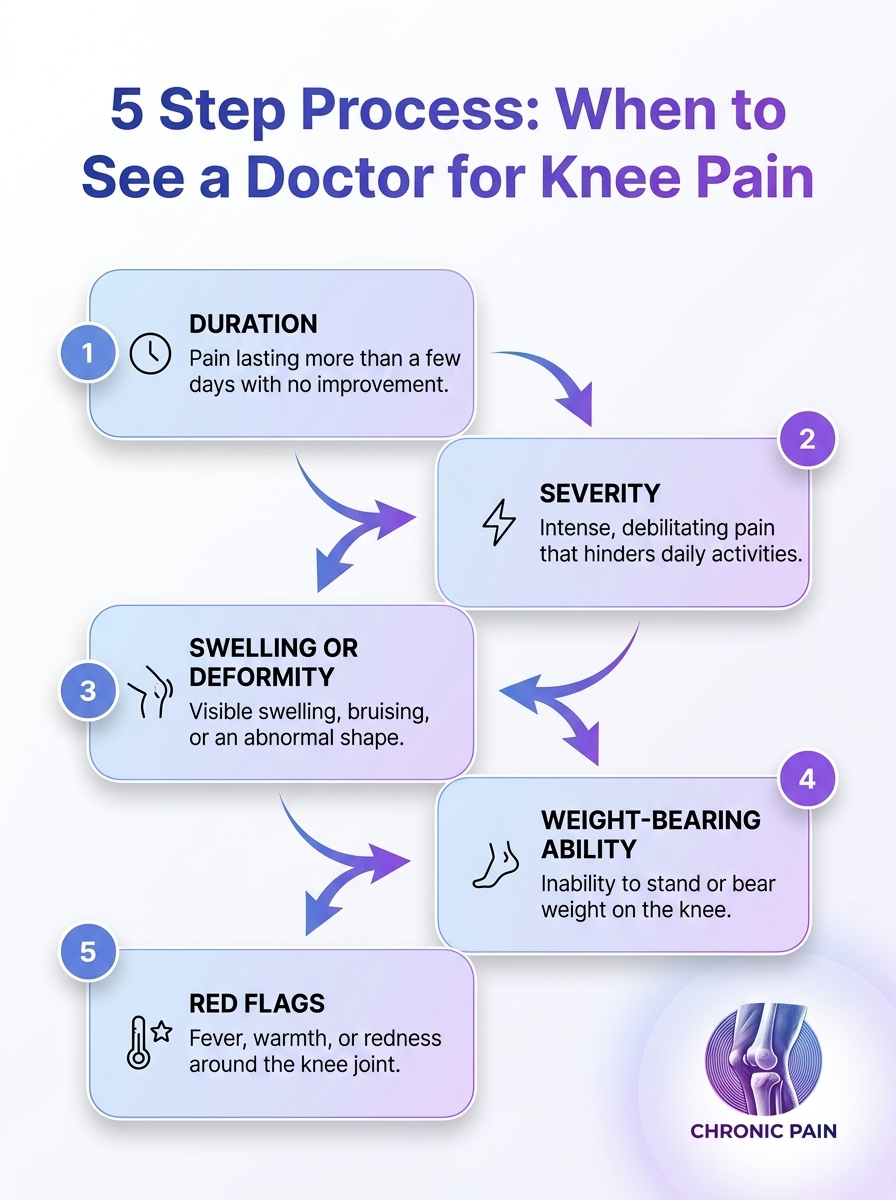
    Knee PainInfographic: 5-step process for when to see a doctor for knee pain.

    A concise 5-step guide to help readers decide when to seek medical care for knee pain. Learn which symptoms warrant a professional evaluation.

    Blog illustration

    6. When to See a Doctor for Knee Pain With Swelling or Instability

    Two specific symptoms deserve their own section because they are frequently misunderstood: swelling and instability.

    Swelling inside the joint (a condition known as an effusion) is a sign that something is actively wrong. The body is producing excess fluid in response to injury or inflammation, and that process does not stop without treatment.

    Instability, or the feeling that your knee might buckle or give way, indicates a structural problem with the ligaments or cartilage that support the joint. Walking on an unstable knee risks further damage with every step.

    “If your knee swells up overnight without an obvious reason, that is your body telling you something is wrong. Do not wait for it to ‘go down on its own’ for weeks. See a professional.”

    Both of these symptoms, swelling and instability, are clear indicators of when to see a doctor for knee pain as soon as possible rather than self-treating at home.

    7. The Real Risks of Delaying Care for Knee Pain

    One of the most important messages we want to share is that delay has consequences. The body has a limited window in which certain knee structures can heal or be rehabilitated before permanent changes occur.

    When you push through knee hurt without getting a diagnosis, several things can happen:

    • Muscle atrophy: The muscles around the knee weaken rapidly when you reduce activity to avoid pain, making the joint less stable over time.

    • Compensatory injury: You begin to offload the painful knee by adjusting your gait, which places abnormal stress on your hip, ankle, and lower back.

    • Cartilage deterioration: Untreated inflammation breaks down cartilage progressively, moving a manageable condition toward a need for surgical intervention.

    • Psychological impact: Chronic knee pain is not just a physical battle. It affects sleep, mood, and mental health in ways that compound over time.

    knee injuries and causes

    Did You Know?

    Delaying physical therapy by 9 to 12 months from initial diagnosis increases the risk of chronic opioid use by 1.65 to 2.5 times.

    Source: National Institutes of Health (NIH)

    Blog illustration

    8. Specific Groups Who Should Be Especially Proactive About Knee Pain

    While when to see a doctor for knee pain is relevant to everyone, certain groups face higher risks and should act at the first sign of a problem rather than waiting.

    Group Why They Are at Higher Risk Recommended Action
    Athletes and active individuals High repetitive stress on the joint; risk of ACL, meniscus, and ligament injuries See a doctor within 24 hours of any significant injury
    Adults over 50 Higher risk of osteoarthritis, cartilage thinning, and slower healing rates Schedule regular check-ups; don’t normalize morning stiffness
    Women Roughly twice as likely to report frequent knee pain compared to men Be especially alert to early symptoms; seek evaluation sooner
    Those with excess body weight Every extra pound adds 4 pounds of pressure to the knee joint per step Consult a doctor for both weight management and joint assessment
    People with a family history of arthritis Genetic predisposition increases lifetime risk of knee joint disease Establish a care plan early, even before symptoms become severe

    9. What to Expect at Your Doctor’s Appointment for Knee Pain

    Many people avoid booking an appointment because they are unsure what the process involves. We want to remove that barrier by walking you through what typically happens when you seek care for knee pain.

    Step 1 – Medical history: Your doctor will ask about when the pain started, what makes it better or worse, whether there was a triggering event, and what your activity level is.

    Step 2 – Physical examination: The doctor will examine the knee visually and manually, testing its range of motion, stability, and areas of tenderness.

    Step 3 – Imaging: Depending on the findings, you may be referred for an X-ray to check for bone damage or an MRI to assess soft tissue structures including cartilage, tendons, and ligaments.

    Step 4 – Diagnosis: With that information, your doctor can identify the specific cause of your knee hurt and recommend an appropriate care plan.

    Step 5 – Treatment plan: This may include physical therapy, medication, a supportive brace, lifestyle changes, injections, or in some cases a surgical referral.

    Posterior Cruciate LigamentBlog illustration

    10. How to Prepare Before Seeing a Doctor for Knee Pain

    Going to your appointment prepared helps you get more out of the consultation and ensures your doctor has all the information they need to make an accurate diagnosis.

    Here is a simple checklist to complete before your visit:

    • Write down when the pain started and whether it came on suddenly or gradually

    • Note the exact location of the pain (front, back, inside, or outside of the knee)

    • Describe the character of the pain: sharp, dull, burning, throbbing, or stabbing

    • Track what triggers it: climbing stairs, sitting, walking, resting, or exercise

    • List all medications and supplements you currently take

    • Note any previous knee injuries or surgeries, even from years ago

    • Bring any imaging you already have, such as old X-rays or MRI reports

    The more detail you can provide, the faster your doctor can move toward an accurate diagnosis and an effective treatment plan for your knee problem.


    Conclusion

    Understanding when to see a doctor for knee pain is not about being overly cautious. It is about protecting one of the most important joints in your body before minor problems become major ones.

    In 2026, access to orthopedic and sports medicine care is better than ever, and early intervention consistently leads to better outcomes, faster recovery, and a lower risk of surgery. Whether you are dealing with a sudden injury, persistent knee hurt that will not clear up, or warning signs like swelling, instability, or locking, the right move is to get a professional evaluation promptly.

    Do not normalize knee pain. Do not assume it will resolve itself. And do not wait until it stops you in your tracks completely before seeking the care you deserve. Your knee supports everything you do, and investing in its health today pays dividends for decades to come.

    If you are ready to take the next step, start with our complete knee pain resource to explore your symptoms further, or dive deeper into any of the specific conditions we have covered throughout this article.

  • What Causes Knee Pain? 10 Common Reasons Your Knees Hurt (and What to Do)

    What Causes Knee Pain? 10 Common Reasons Your Knees Hurt (and What to Do)

    If you’ve ever wondered what causes knee pain, you are far from alone. A staggering 1 in 4 adults worldwide suffers from chronic knee pain, making it one of the most widespread and debilitating musculoskeletal complaints affecting people of all ages in 2026. Whether you’re noticing a sharp ache when climbing stairs, a dull throb after a run, or persistent stiffness first thing in the morning, understanding the root cause is the first essential step toward lasting relief.

    Blog illustration

    Key Takeaways

    Question Answer
    What are the most common causes of knee pain? Ligament injuries, meniscus tears, arthritis, overuse, and traumatic impact are the leading causes of knee pain across all age groups.
    Can knee pain be caused by everyday activities? Yes. Repetitive movements, poor posture, and even prolonged sitting can cause knee hurt over time.
    Is knee pain always related to injury? No. Conditions like chondromalacia patella and arthritis can cause significant pain without any single traumatic event.
    Who is most at risk for chronic knee pain? Women, older adults, athletes, people with high BMI, and those with previous knee injuries carry the highest risk.
    When should I see a doctor for knee hurt? Seek medical advice for sudden severe swelling, an inability to bear weight, locking of the joint, or pain that persists longer than a few days.
    Can weight affect knee pain? Absolutely. Every extra pound places roughly 4 pounds of additional pressure on the knee joint, making body weight a major modifiable factor.
    Where can I learn more about managing knee pain? Our comprehensive guide to understanding and managing knee pain covers causes, treatments, and prevention in full detail.


    Understanding What Causes Knee Pain: The Anatomy Behind the Ache

    Before we can answer what causes knee pain, it helps to understand what the knee actually is. The knee is the largest and most complex joint in the human body, connecting the thigh bone (femur), the shin bone (tibia), and the kneecap (patella).

    It is held together by a network of ligaments, cartilage, tendons, and fluid-filled sacs called bursae. When any one of these structures is stressed, damaged, or degenerating, the result is knee hurt.

    • Cartilage acts as a cushion between bones

    • Ligaments hold bones together and provide stability

    • Menisci are shock-absorbing discs between the thigh and shin bones

    • Tendons connect muscles to the bones to enable movement

    • Bursae reduce friction between moving structures

    When any of these components is under pressure, you feel it. Knee pain is your body’s alert system telling you something needs attention.

    Infographic showing 5 common causes of knee pain

    Explore the five common causes of knee pain. Learn how understanding these causes can guide prevention and treatment.

    Blog illustration

    What Causes Knee Pain from Ligament Injuries: ACL and PCL Damage

    Ligament injuries are among the most well-known and dramatic causes of knee pain. The two most commonly injured ligaments are the Anterior Cruciate Ligament (ACL) and the Posterior Cruciate Ligament (PCL), both of which run through the center of the knee.

    An ACL injury typically occurs during sudden stops, direction changes, or awkward landings, particularly in sports like football, basketball, and skiing. You may hear or feel a distinct “pop” followed by immediate swelling and instability.

    Anterior Cruciate LigamentPosterior Cruciate Ligament

    A PCL knee injury is less common but equally serious. It is usually caused by a direct blow to the front of the bent knee, such as hitting the dashboard in a car accident or falling hard onto a bent leg.

    Both injuries cause significant knee hurt, swelling, and reduced range of motion. Without proper treatment, ligament knee injuries can result in long-term instability and accelerated joint degeneration.

    “If you feel a sharp pinch or a ‘pop’ in your knee during physical activity, stop immediately. Your body is sending you a signal that shouldn’t be ignored.”

    Meniscus Tears: One of the Most Common Causes of Knee Pain

    A torn meniscus is one of the most frequent causes of knee pain, affecting athletes and non-athletes alike. Each knee has two C-shaped pieces of cartilage called menisci, which act as shock absorbers between the thighbone and shinbone.

    Meniscus tears often occur when you twist or rotate your knee under load, but they can also develop gradually from the wear and tear of aging.


    The symptoms of a meniscus tear include:

    • A popping sensation at the time of injury

    • Swelling that develops over 24 to 72 hours

    • Pain, particularly when twisting or rotating the leg

    • A feeling that the knee is “locked” or unable to fully straighten

    • Difficulty bearing weight on the affected leg

    Degenerative meniscus tears are particularly common in adults over 40. More than 50% of adults as young as 30 already show early signs of joint damage, often without any obvious symptoms, making early awareness critical.

    Did You Know?

    Obesity increases the risk of developing knee osteoarthritis by 3.9 to 4 times, making excess body weight one of the most significant and modifiable causes of knee pain.

    Source: healthandme.com

    Blog illustration

    Arthritis: What Causes Long-Term Knee Pain in Older Adults

    When people ask what causes knee pain that just won’t go away, arthritis is very often the answer. There are several types of arthritis that affect the knee, but osteoarthritis is by far the most prevalent in 2026.

    Osteoarthritis occurs when the protective cartilage on the ends of the bones gradually wears down over time. With less cushioning, bones begin to rub against each other, causing pain, swelling, and stiffness that can range from mild to completely debilitating.

    Other forms of arthritis that cause knee hurt include:

    1. Rheumatoid Arthritis: An autoimmune condition where the body attacks its own joint lining

    2. Post-traumatic Arthritis: Develops after an injury such as a fracture or ligament tear

    3. Gout: Caused by a buildup of uric acid crystals in the joint

    4. Pseudogout: Similar to gout, but caused by calcium pyrophosphate crystals

    Statistically, 1 in 2 people will develop symptomatic knee osteoarthritis by the age of 85. For most people, some degree of arthritis-related knee pain is not a question of if but when.

    knee injuries and causes

    Chondromalacia Patella: When the Kneecap Is the Cause of Knee Hurt

    Chondromalacia patella is one of those conditions that sounds complicated but is straightforward to understand. Think of it as the softening and deterioration of the cartilage on the underside of the kneecap.

    When this cartilage breaks down, the kneecap no longer glides smoothly over the end of the thigh bone. The result is a grinding, aching pain felt behind or around the kneecap, particularly during activities like climbing stairs, squatting, or sitting for extended periods.

    Chondromalacia

    This condition is particularly common in:

    • Young athletes, especially runners and cyclists

    • Women, who are roughly twice as likely as men to develop knee osteoarthritis and related cartilage issues

    • People with misaligned kneecaps or flat feet

    • Those who have recently increased the intensity of their exercise routine

    Chondromalacia patella is often called “runner’s knee,” though it is not exclusive to runners. It is a very manageable condition when addressed early with the right exercises and load management strategies.

    Traumatic Knee Injuries: What Causes Sudden, Severe Knee Pain

    Sometimes the answer to what causes knee pain is simple: a direct trauma. Traumatic knee injuries happen suddenly and are usually the result of accidents, sports impacts, or falls.

    These injuries include fractures, dislocations, and combined structural damage where multiple components of the knee are injured at the same time.

    Traumatic Knee

    Common traumatic knee injuries include:

    • Kneecap fracture: Often from a direct blow or fall onto a hard surface

    • Tibial plateau fracture: A break in the top of the shinbone, usually from high-impact collisions

    • Knee dislocation: Where the joint is forced out of alignment, often damaging multiple ligaments simultaneously

    • Bone contusions: Deep bone bruises that cause persistent, aching knee hurt

    Traumatic injuries require prompt medical evaluation. Attempting to “walk off” severe knee pain after a high-impact event can cause significantly more long-term damage.

    Blog illustration

    Overuse and Repetitive Strain: A Frequently Overlooked Cause of Knee Pain

    Not all knee hurt comes from a single dramatic moment. Overuse injuries develop gradually when repetitive movements place cumulative stress on the joint and surrounding structures.

    This is particularly common in people who suddenly increase the frequency, duration, or intensity of exercise without giving the body time to adapt. Knee pain prevalence has increased by 65% over the past 20 years, even when adjusting for age and weight, suggesting that modern activity patterns and training habits are a growing factor.

    Common overuse conditions that cause knee pain include:

    • Patellar tendinopathy (Jumper’s knee): Inflammation of the tendon connecting the kneecap to the shinbone, common in basketball and volleyball players

    • Iliotibial (IT) band syndrome: Friction of the IT band against the outer knee, very common in long-distance runners

    • Pes anserine bursitis: Inflammation of a fluid-filled sac on the inner side of the knee, often seen in overweight individuals and runners

    • Patellofemoral Pain Syndrome (PFPS): A broad term for pain at the front of the knee caused by excess stress on the joint

    “High-intensity physical activity exceeding recommended guidelines increases the risk of knee osteoarthritis by 18 to 26%. Being ‘too active’ can be just as damaging as being sedentary if the body isn’t given adequate recovery time.”

    Did You Know?

    50% of patients who suffer an ACL tear will develop osteoarthritis within 10 to 20 years of the injury, meaning a sports injury in your 20s can become a primary source of chronic knee pain in your 40s.

    Source: careplusvn.com

    Weight, Posture, and Lifestyle Factors That Cause Knee Pain

    Some of the most significant contributors to knee pain are the everyday choices we make without realizing their cumulative impact on the joint. Body weight, posture, footwear, and activity levels all play a direct role in how much stress the knee must bear.

    For every pound of extra body weight, the knee absorbs approximately 4 pounds of additional force during walking, and up to 8 pounds during stair climbing. This is why even modest weight reduction can produce a meaningful reduction in knee hurt.

    Key lifestyle factors that cause or worsen knee pain include:

    Factor How It Affects the Knee
    Excess body weight Increases joint load dramatically, accelerating cartilage breakdown
    Muscle weakness Weak quads and glutes force the knee joint to absorb impacts the muscles should handle
    Poor footwear Flat soles or high heels alter gait mechanics and increase stress on the knee
    Prolonged sitting Tightens hip flexors and weakens stabilizing muscles, indirectly increasing knee pain
    Weight fluctuations Repeated yo-yo weight changes independently increase the risk of knee pain progression

    The good news is that lifestyle-related causes of knee pain are among the most responsive to intervention. Targeted strengthening exercises, sensible weight management, and footwear adjustments can make a real difference.

    Blog illustration

    Age and Gender: Who Is Most Affected by Knee Pain

    Understanding who is most at risk helps clarify what causes knee pain in specific populations. While knee hurt can affect anyone at any age, certain groups face considerably higher risk.

    Age is the single most consistent risk factor for degenerative knee conditions. As we age, cartilage thins, muscles weaken, tendons lose elasticity, and the cumulative effects of decades of use begin to show. However, knee pain is no longer purely an aging issue. In 2026, we are seeing more people in their 30s and 40s presenting with significant knee symptoms, driven by previous sports injuries, high-impact lifestyles, and rising obesity rates.

    Gender also plays a meaningful role. Women are roughly twice as likely as men to develop knee osteoarthritis and report knee pain overall. Hormonal changes during menopause, naturally wider hip anatomy that alters knee alignment, and differences in muscle mass and ligament laxity all contribute to this disparity.

    Other demographic risk factors include:

    • A history of previous knee injuries or surgeries

    • Family history of arthritis or joint disease

    • Occupations requiring heavy lifting, kneeling, or prolonged standing

    • Participation in high-impact sports without adequate conditioning

    Symptoms That Signal You Need to Act on Your Knee Pain

    Knowing what causes knee pain is only part of the picture. Recognizing which symptoms require prompt medical attention is equally important for protecting the long-term health of your joint.

    Some knee hurt is normal after exercise or a long day on your feet. Other symptoms, however, suggest something more serious that needs professional evaluation.

    See a doctor promptly if you experience:

    • Severe swelling that develops rapidly after an injury

    • Inability to fully straighten or bend the knee

    • A visible deformity or the sensation that the knee “gave out”

    • Fever accompanying knee swelling (which may indicate infection)

    • Persistent knee pain that does not improve after several days of rest

    • Pain that wakes you from sleep on a regular basis

    For acute knee pain without alarming symptoms, the standard first-line approach is the RICE method: Rest, Ice, Compression, and Elevation. This reduces swelling and gives the joint initial protection while you assess what to do next.

    For a detailed breakdown of symptoms mapped to specific causes, take a look at our full overview of knee pain conditions and what they mean for your daily life and recovery options.

    Anterior Cruciate Ligament Injury IllustrationBlog illustration

    Diagnosing What Causes Your Specific Knee Pain

    Because so many different conditions produce similar symptoms, an accurate diagnosis is critical before beginning any treatment. A healthcare provider will typically use a combination of the following approaches to identify the root cause of your knee pain.

    Physical Examination: The doctor will assess swelling, range of motion, tenderness location, and structural stability. Specific maneuvers help isolate whether ligaments, menisci, or other structures are involved.

    Imaging Tests:

    • X-ray: Best for identifying bone fractures and assessing joint space narrowing from arthritis

    • MRI (Magnetic Resonance Imaging): The gold standard for evaluating soft tissue damage, including ligament and meniscus tears

    • Ultrasound: Useful for real-time assessment of tendons, bursae, and soft tissue structures

    • CT Scan: Provides detailed images of complex fractures and bone structure

    Blood Tests: When inflammatory arthritis, gout, or infection is suspected, blood tests help rule in or out these systemic causes of knee hurt.

    Getting the diagnosis right matters enormously. The treatment for a meniscus tear is different from the treatment for chondromalacia patella, which is different again from the approach needed for an ACL injury. A precise understanding of what causes your knee pain is the foundation of an effective recovery plan.

    Conclusion: Understanding What Causes Knee Pain Is the First Step to Feeling Better

    Knee pain is one of the most common health complaints affecting adults worldwide in 2026, but it is far from inevitable or untreatable. Understanding what causes knee pain in your specific situation gives you a clear path forward, whether the culprit is a ligament injury, a worn meniscus, arthritis, overuse, or a lifestyle factor within your control to change.

    We want you to know that every small step toward understanding your knee is a step toward protecting your mobility. You are not alone in this, and the right information makes all the difference.

    Here is a quick summary of the major causes we covered:

    • Ligament injuries (ACL and PCL tears) from sudden movements or direct impact

    • Meniscus tears from twisting forces or age-related wear

    • Osteoarthritis and other forms of arthritis causing progressive joint degeneration

    • Chondromalacia patella from kneecap cartilage breakdown

    • Traumatic injuries including fractures and dislocations

    • Overuse and repetitive strain from training load errors

    • Weight, posture, and lifestyle factors that place excess stress on the joint

    • Age and gender as underlying risk factors

    For a comprehensive look at all of these causes, treatments, and proven prevention strategies, explore our full resource: The Ultimate Guide to Understanding and Managing Knee Pain. We provide the tools and knowledge. You provide the consistency. Together, we can manage this.

  • Best Compression Sleeves for Osteoarthritis Knee Pain in 2026 (Top Picks & What Actually Works)

    Best Compression Sleeves for Osteoarthritis Knee Pain in 2026 (Top Picks & What Actually Works)

    Did you know that in early knee osteoarthritis, wearing a simple compression sleeve can reduce joint loading by up to 14% during walking? That small mechanical change can make a real difference when your knee hurt starts interfering with daily life.

    Blog illustration

    Key Takeaways

    Question Answer
    Do compression sleeves help knee pain? Yes, they improve circulation, reduce swelling, and provide stability for osteoarthritis-related knee pain.
    Which sleeve is best for daily wear? Lightweight copper or neoprene sleeves work well for all-day comfort and mild support.
    Are sleeves better than braces? Sleeves are ideal for mild to moderate pain, while braces are better for structural instability.
    Can sleeves prevent worsening pain? They can help manage symptoms, especially when combined with guidance from our comprehensive knee pain guide.
    When should I consider other conditions? If pain persists, explore causes like meniscus injuries or ligament damage.
    What if my knee hurts with movement? Review common causes and symptoms on our knee pain resource page.

    Understanding Osteoarthritis Knee Pain

    Osteoarthritis is one of the most common causes of knee pain, especially as we age. It develops when cartilage wears down, leading to stiffness, swelling, and discomfort.

    Many people notice their knee hurt more during walking, climbing stairs, or after long periods of inactivity. Early support can help prevent symptoms from worsening.

    Compression sleeves are often recommended because they provide gentle support without restricting movement. They are easy to wear and suitable for daily use.


    Anterior Cruciate LigamentACL support


    Blog illustration

    How Compression Sleeves Help Knee Pain

    Compression sleeves apply consistent pressure around the knee joint. This helps reduce swelling and improves blood flow.

    They also enhance proprioception, which means your body becomes more aware of joint position. That added awareness can improve movement control.

    For osteoarthritis, this combination often leads to better mobility and reduced discomfort during daily activities.

    • Improves circulation

    • Reduces swelling

    • Supports joint stability

    • Enhances movement control


    Chondromalacia kneeknee joint pain


    Best Compression Sleeve Types in 2026

    In 2026, compression sleeves come in several designs tailored to different levels of knee pain. Choosing the right type depends on your symptoms and activity level.

    Some sleeves focus on light support for everyday wear, while others provide targeted compression for more active users.

    Type Best For
    Neoprene sleeves Warmth and moderate support
    Copper-infused sleeves Daily wear and odor control
    Patella-cutout sleeves Targeted kneecap support

    Infographic: 5 key benefits of Best Compression Sleeves for Managing Osteoarthritis Knee Pain.

    This infographic highlights five key benefits of compression sleeves for knee osteoarthritis. It explains how compression can aid pain relief, stability, and daily mobility.


    knee painknee hurt walking


    Did You Know?

    A 2025 study found that pain scores improved within weeks when using compression knee sleeves, even though different designs showed similar results overall.

    Source: Arch Rheumatol

    Blog illustration

    Copper Compression Sleeves: Popular Picks

    Copper sleeves remain one of the most popular options for managing knee pain. They combine compression with moisture-wicking and odor control.

    Many users prefer them for daily wear because they are lightweight and comfortable.

    • Copper Fit Freedom Knee Sleeve: $20-25

    • Copper Compression Recovery Sleeve: $25-30

    • Copper Fit Pro Series: $24-30

    These sleeves are especially helpful if your knee hurt during long periods of standing or walking.


    ligament knee injuryknee ligament pain


    Neoprene Sleeves for Stability and Warmth

    Neoprene sleeves provide thicker material and better insulation. This helps keep the joint warm and reduces stiffness.

    They are a strong option if your knee pain increases in colder environments. Athletes also use them for added support.

    However, they can feel bulky for all-day wear, so consider your comfort level before choosing.


    PCL kneeknee support brace


    Blog illustration

    When to Choose a Compression Sleeve vs Brace

    Compression sleeves are ideal for mild to moderate osteoarthritis symptoms. They provide support without restricting movement.

    If your knee feels unstable or you have a more serious injury, a brace may be more appropriate. Learn more about options like an ACL injury knee brace.

    We recommend matching your support level to your symptoms for the best results.


    meniscus tearknee injury meniscus


    Did You Know?

    In 2026 testing, up to 75% of compression garments failed to deliver the intended pressure, highlighting the importance of choosing a well-fitted sleeve.

    Source: MDPI Textiles

    How to Choose the Right Compression Sleeve

    Choosing the right sleeve depends on fit, material, and compression level. A poor fit can reduce effectiveness.

    Look for breathable fabric, proper sizing, and durability. Comfort is key if you plan to wear it daily.

    • Measure your knee circumference

    • Choose the right compression level

    • Check fabric quality


    traumatic kneeknee trauma


    Blog illustration

    Combining Sleeves with Other Treatments

    Compression sleeves work best as part of a broader plan. This may include exercise, weight management, and physical therapy.

    Explore additional strategies like those outlined in non-surgical knee pain treatments.

    Combining approaches often leads to better long-term results.


    runner knee painfoam rolling knee


    Common Mistakes When Using Knee Sleeves

    Some people expect instant results or wear sleeves incorrectly. This can limit their effectiveness.

    Avoid sleeves that are too tight or too loose. Both can reduce support and comfort.

    Listen to your body. If your knee pain worsens, adjust your approach or seek professional advice.


    exercise kneestretch knee


    Blog illustration

    Who Should Use Compression Sleeves?

    Compression sleeves are suitable for many people dealing with knee pain from osteoarthritis. They are especially helpful for those with mild to moderate symptoms.

    If your knee hurt during daily activities but you still want mobility, sleeves are a practical option.

    They are also useful for active individuals looking to prevent flare-ups.


    mobility exercisestrengthening knee


    Conclusion

    Compression sleeves are a simple, effective way to manage osteoarthritis knee pain in 2026. They offer support, improve circulation, and help you stay active.

    The best choice depends on your needs, comfort, and lifestyle. When used consistently and combined with other strategies, they can make a meaningful difference in how your knee feels each day.

    Your knees carry you through life, they deserve consistent care and attention.

  • Top 5 Hinged Knee Braces for ACL Support in 2026 (Expert Picks for Stability and Knee Pain Relief)

    Top 5 Hinged Knee Braces for ACL Support in 2026 (Expert Picks for Stability and Knee Pain Relief)

    Did you know that recent 2025 research found pain reduction from knee bracing after ACL reconstruction was nearly negligible, with a difference of just 0.08 on the pain scale? This highlights an important truth in 2026, the right hinged knee brace is less about quick pain relief and more about stability, confidence, and proper knee support.

    Blog illustration

    Key Takeaways

    Question Answer
    What is the best hinged knee brace for ACL support? High-quality hinged braces like DonJoy Armor and Mueller Hinged Brace provide strong ligament stability for ACL injuries.
    Do knee braces help knee pain? They can reduce instability and support healing, especially when combined with proper care from guides like this knee pain resource.
    When should you wear a hinged knee brace? During activity, recovery, or when experiencing instability, especially after traumatic knee injuries.
    Are hinged braces good for ligament injuries? Yes, they are commonly recommended for knee ligament injuries including ACL and PCL tears.
    Can a brace help meniscus or cartilage issues? Yes, especially when combined with care strategies for torn meniscus or chondromalacia patella.
    Do braces prevent reinjury? They can reduce strain, but full prevention depends on rehab and strength training.

    Understanding ACL Injuries and Knee Stability

    The ACL is one of the key ligaments that keeps your knee stable during movement. When it is injured, many people experience knee pain, instability, and a feeling that the knee might give out.

    We often see that proper support during recovery can help people stay active safely. Hinged knee braces are designed to limit harmful motion while allowing controlled movement.


    ACL Knee BraceAnterior Cruciate Ligament


    Blog illustration

    What Makes Hinged Knee Braces Effective for ACL Support

    Hinged braces use metal or reinforced supports on each side of the knee. These hinges guide motion and prevent excessive twisting that can worsen injury.

    In 2026, many designs focus on combining mobility with protection. This allows users to move naturally without increasing knee hurt or instability.

    • Side hinges for stability

    • Adjustable straps for compression

    • Open or closed patella design


    ACL support brace


    Top 5 Hinged Knee Braces for ACL Support in 2026

    We selected these braces based on support level, comfort, and suitability for ACL recovery. Each option addresses different needs, from mild instability to post-surgical recovery.

    1. DonJoy Armor Knee Brace

    A high-performance brace designed for athletes and active users. It features anti-rotation straps and rigid support.

    2. Mueller Hinged Knee Brace

    A more affordable option with strong support for everyday use. It is commonly used for moderate knee pain and ligament injuries.

    3. DonJoy FullForce ACL Brace

    Lightweight yet supportive, ideal for sports and movement. It balances stability and flexibility.

    4. Ossur Hinged Knee Brace

    Known for comfort and anatomical fit. Suitable for long-term wear during recovery.

    5. Shock Doctor Hinged Knee Brace

    Provides compression and support for mild to moderate instability. Often used during activity.

    Infographic comparing top 5 hinged knee braces for ACL support 2026: features, sizes, and suitability.

    A quick visual guide comparing the top 5 hinged knee braces for ACL support in 2026, highlighting features and ideal uses.


    Knee supportLigament injury knee


    Did You Know?

    Biomechanical data shows hinged knee bracing can reduce rotatory loads and ACL strain under specific conditions.

    Source: Polamalu et al. (2025)

    Blog illustration

    How to Choose the Right Hinged Knee Brace

    Choosing the right brace depends on your specific condition and activity level. Not every brace works the same for every knee.

    We recommend considering the following:

    • Severity of ACL injury

    • Activity level

    • Comfort and fit

    • Doctor recommendations


    FAQ knee injuryPCL injury


    When to Use a Hinged Knee Brace for Knee Pain

    Hinged braces are most useful during movement and recovery phases. They are commonly used after ACL injuries or surgery.

    They can also help when knee hurt occurs during walking, running, or sports. However, they should be part of a broader recovery plan.


    PCL brace supportMeniscus injury


    Blog illustration

    Benefits and Limitations of Hinged Knee Braces

    Hinged braces provide structure and support, but they are not a complete solution. Understanding both benefits and limits helps set realistic expectations.

    • Improved stability

    • Reduced risk of sudden movement

    • Support during activity

    Limitations include limited impact on long-term strength or healing without proper rehab.


    Meniscus recoveryTraumatic knee injury


    Did You Know?

    Knee braces do not significantly affect thigh strength or range of motion up to 2 years after ACL reconstruction.

    Source: Chen et al. (2025)

    Blog illustration

    Common Knee Conditions That Benefit from Hinged Braces

    Hinged braces are not limited to ACL injuries. They are also helpful in other knee conditions that affect stability.

    • Ligament injuries

    • Meniscus tears

    • Post-surgical recovery

    Each condition may require a slightly different brace design and fit.


    Knee trauma supportChondromalacia patella


    Tips for Wearing a Hinged Knee Brace Safely

    Wearing your brace correctly is essential for getting the benefits. Poor fit or overuse can reduce effectiveness.

    • Ensure proper sizing

    • Avoid over-tightening

    • Follow medical advice

    We always recommend consulting a healthcare professional if knee pain persists.


    Knee cartilage damageRunner knee pain


    Blog illustration

    Hinged Knee Braces vs Other Knee Supports

    Not all knee braces provide the same level of support. Hinged braces are typically used for more serious instability.

    Brace Type Best For
    Hinged Brace ACL and ligament injuries
    Sleeve Mild knee pain
    Patellar Brace Kneecap alignment


    Exercise knee rehabMobility exercises knee


    Conclusion

    In 2026, hinged knee braces remain an important tool for managing ACL injuries and reducing knee pain during recovery. They provide stability and confidence, especially during movement.

    At the same time, they work best when combined with proper rehabilitation and medical guidance. If your knee hurt persists or worsens, seeking professional advice is always the safest next step.

    Our goal is to help you make informed decisions so you can support your knee health and return to daily activities with confidence.

  • ACL Recovery and Bracing in 2026: What Actually Works for Faster, Safer Knee Healing

    ACL Recovery and Bracing in 2026: What Actually Works for Faster, Safer Knee Healing

    Did you know that about 80.4% of people return to sport after ACL reconstruction, but only 54.6% reach their pre-injury level? Understanding ACL recovery and bracing is essential if your knee hurt or instability is holding you back.

    Blog illustration

    Key Takeaways

    Question Answer
    What is ACL recovery? A structured process involving rest, rehab, and sometimes surgery to restore knee stability. Learn more in our ACL injury guide.
    Do you need a knee brace after ACL surgery? Not always, but bracing can support healing and reduce knee pain in early stages.
    How long does recovery take? Typically 6–12 months depending on severity and rehab consistency.
    What other injuries affect recovery? Conditions like torn meniscus or PCL injuries can delay progress.
    Why does my knee still hurt? Ongoing knee pain may come from weakness, swelling, or improper rehab.
    Where can I learn full knee recovery strategies? See our complete knee pain guide.

    Understanding ACL Injuries and Why the Knee Hurts

    The ACL is one of the four major ligaments that stabilize the knee joint. When it tears, the knee becomes unstable, painful, and difficult to trust during movement.

    ACL injuries often happen during sports that involve sudden direction changes. Many people feel a pop followed by swelling and immediate knee pain.

    If untreated, instability can lead to long-term damage. This is why early diagnosis and proper recovery planning matter.


    Anterior Cruciate LigamentACL injury visualization


    Blog illustration

    Common Symptoms During ACL Recovery

    After injury or surgery, symptoms vary but often include swelling, stiffness, and reduced mobility. Many patients report that their knee hurt most during bending or weight-bearing.

    Other signs include instability and difficulty returning to normal activities. These symptoms can overlap with other ligament injuries.

    We often compare ACL symptoms with broader knee ligament injuries to better understand recovery challenges.


    Knee pain exampleKnee discomfort


    Phases of ACL Recovery Explained

    Recovery typically progresses through stages, starting with swelling control and ending with return to sport. Each phase builds strength and stability in the knee.

    Early rehab focuses on regaining motion. Later phases emphasize strength, balance, and confidence.

    • Phase 1: Pain and swelling control

    • Phase 2: Range of motion

    • Phase 3: Strength rebuilding

    • Phase 4: Functional training

    Infographic on ACL recovery and bracing

    Explore five essential facts about ACL recovery and bracing.


    Knee trauma recovery


    Blog illustration

    Do You Really Need a Knee Brace After ACL Surgery?

    Knee braces are commonly used after ACL surgery to provide stability and protect the joint. However, not every patient needs one for the entire recovery period.

    Some individuals benefit more from targeted rehab than prolonged bracing. The decision depends on your injury severity and activity level.

    Did You Know?

    Brace-free rehabilitation after ACL reconstruction showed similar outcomes to brace-based rehab at 1 year.

    Source: Journal of Clinical Medicine

    Chondromalacia kneeKnee cartilage damage


    Types of Knee Braces Used in ACL Recovery

    Different braces serve different purposes during recovery. Choosing the right one is essential for reducing knee pain and improving mobility.

    Brace Type Purpose
    Hinged brace Provides maximum stability
    Compression sleeve Reduces swelling
    Post-op brace Limits movement early on

    We guide patients based on their condition and recovery stage. Proper selection improves comfort and confidence.


    Ligament injury kneeKnee ligament anatomy


    Blog illustration

    How Long Should You Wear a Knee Brace?

    Brace duration varies depending on your recovery progress. Some patients use braces for a few weeks, while others need months.

    We recommend gradually reducing brace use as strength improves. This helps your knee adapt naturally.

    Gradual reduction prevents dependency and promotes long-term stability.


    PCL injury kneePCL recovery


    Exercises That Support ACL Recovery

    Rehabilitation exercises are essential for restoring knee strength. They also reduce the chance of reinjury.

    Common exercises include:

    • Quadriceps strengthening

    • Hamstring curls

    • Balance training

    • Controlled squats


    Foam rolling techniqueHip strengthening exercise


    Blog illustration

    Preventing Reinjury After ACL Recovery

    Returning to activity too early increases reinjury risk. Strength and control must be fully restored before high-impact movements.

    We emphasize proper movement patterns and gradual progression. Prevention is as important as recovery.

    Did You Know?

    Delaying return to sport beyond nine months significantly reduces the risk of ACL reinjury.

    Source: AANA

    Torn meniscus kneeMeniscus injury


    Advanced Surgical Support in ACL Recovery

    Modern ACL surgery often uses bioabsorbable screws. These help secure the graft while gradually dissolving over time.

    This approach reduces the need for hardware removal. It also supports long-term healing of the knee joint.


    Bioabsorbable screws comparisonACL reconstruction screws


    Blog illustration

    When to Seek Help for Ongoing Knee Pain

    If your knee hurt persists beyond expected recovery time, it may signal complications. Swelling, instability, or sharp pain should not be ignored.

    We recommend early evaluation to prevent long-term damage. Addressing issues quickly improves outcomes.


    Runner knee painMobility exercise


    Conclusion

    ACL recovery and bracing require a balanced approach that combines protection, rehabilitation, and gradual return to activity. While braces can support healing, they are only one part of a complete recovery plan.

    We encourage a structured rehab program, proper guidance, and patience. With the right strategy, most people can regain strength, reduce knee pain, and return to the activities they enjoy.

  • Quad-Plus ACL Reconstruction Standard 2026: What It Means for Faster Recovery and Less Knee Pain

    Quad-Plus ACL Reconstruction Standard 2026: What It Means for Faster Recovery and Less Knee Pain

    In 2026, ACL surgery continues to evolve rapidly, and research shows that only about 2 re-ruptures occurred among 299 patients within one year across graft types, highlighting how far surgical outcomes have improved.

    Blog illustration

    Key Takeaways

    Question Answer
    What is Quad-Plus ACL reconstruction? A modern surgical approach focusing on quadriceps tendon grafts, precision placement, and structured rehab.
    Does it reduce knee pain? Yes, many patients report improved stability and reduced knee hurt during recovery.
    Who benefits most? Athletes and active individuals with ligament damage or knee ligament injuries.
    Is it better than traditional ACL surgery? It offers comparable or improved outcomes depending on patient profile.
    What about recovery support? Bracing and rehab guidance like ACL knee brace solutions play a key role.
    Can it help chronic knee issues? It may help alongside care for conditions like chondromalacia patella.
    Where can I learn more? Visit our full knee pain guide for detailed insights.

    1. What Is the Quad-Plus ACL Reconstruction Standard 2026?

    The Quad-Plus standard represents a refined approach to ACL reconstruction using quadriceps tendon grafts and advanced surgical precision.

    We focus on restoring knee stability while minimizing long-term knee pain and complications.

    This method combines surgical innovation with structured rehabilitation for better outcomes.

    It also emphasizes patient-specific planning, which helps reduce persistent knee hurt after surgery.


    Anterior Cruciate LigamentAnterior Cruciate Ligament Injury Illustration


    Blog illustration

    2. Why Quadriceps Tendon Grafts Are Gaining Attention

    The quadriceps tendon graft is central to the Quad-Plus approach.

    It offers strong structural support and may reduce donor site discomfort compared to other grafts.

    Patients often experience improved knee function with fewer anterior knee pain complaints.

    This is especially important for individuals returning to sports or active lifestyles.


    ChondromalaciaChondromalacia illustration


    3. Comparing Quad-Plus With Traditional ACL Techniques

    Traditional ACL reconstruction often uses patellar or hamstring tendon grafts.

    Quad-Plus shifts the focus toward balanced strength and reduced knee stress.

    Here is a simple comparison:

    • Quadriceps tendon: strong, less anterior knee pain

    • Patellar tendon: high stability but more discomfort

    • Hamstring tendon: flexible but may have higher revision risk

    Quad-Plus ACL Reconstruction Standard 2026 — 4-step process infographic

    A concise visual of the Quad-Plus ACL Reconstruction Standard 2026, outlining the four-step process from preparation to rehabilitation. This infographic provides a quick reference for clinicians and patients.

    Did You Know?

    QT vs BPTB: 4-year revision risk not significantly different (hazard ratio HR 1.06; 95% CI 0.60–1.89).

    Source: Yang et al., Am J Sports Med

    Knee PainKnee Pain FAQ


    Blog illustration

    4. Surgical Precision and Modern Fixation Methods

    Quad-Plus techniques emphasize accurate graft placement and secure fixation.

    This reduces instability and helps prevent future knee injury.

    Modern fixation methods, including bioabsorbable screws, support healing without long-term hardware concerns.

    This contributes to a smoother recovery experience.


    Ligament Knee InjuryLigament Injury Illustration


    5. Rehabilitation Protocols in 2026

    Rehabilitation is a core part of the Quad-Plus standard.

    We focus on progressive strengthening and mobility to reduce knee pain.

    Key rehab elements include:

    • Early controlled movement

    • Strength training for quadriceps and hips

    • Balance and coordination exercises


    Posterior Cruciate LigamentPCL Injury Illustration


    Blog illustration

    6. Managing Knee Pain After ACL Reconstruction

    Knee pain after surgery is common but manageable.

    We guide patients through safe strategies to reduce discomfort.

    Common causes include swelling, stiffness, or muscle weakness.

    Proper rehab and monitoring help address these issues effectively.


    Torn MeniscusMeniscus Injury


    7. Addressing Complex Knee Injuries Alongside ACL Tears

    Many ACL injuries occur with other knee conditions.

    These include meniscus tears and traumatic knee damage.

    Understanding combined injuries helps improve surgical planning.

    It also reduces long-term knee hurt and instability.

    Did You Know?

    Systematic review (2025) shows no increased complication rate with quadriceps tendon autografts, with overall complication rate around 6% and graft failure about 3%.

    Source: Khalefa et al.

    Traumatic KneeKnee Trauma Illustration


    Blog illustration

    8. Strength Training and Functional Recovery

    Strengthening the surrounding muscles is essential for recovery.

    We emphasize hip and quadriceps strength to support the knee.

    Functional exercises help restore confidence in movement.

    This reduces the risk of reinjury and ongoing knee pain.


    Runner knee painHip strengthening exercise


    9. Preventing Future Knee Injuries After Surgery

    Prevention is a key part of long-term success.

    We guide patients in maintaining knee health beyond recovery.

    Helpful strategies include:

    • Regular strength training

    • Proper warm-up routines

    • Listening to early signs of knee pain


    Foam rolling techniqueDynamic mobility exercise


    Blog illustration

    10. Who Should Consider Quad-Plus ACL Reconstruction?

    This approach is suitable for a wide range of patients.

    It is especially beneficial for active individuals and athletes.

    Those experiencing repeated knee instability or chronic knee hurt may also benefit.

    A personalized evaluation is essential to determine the best option.


    Foam rolling incorrectStretching knee


    Conclusion

    The Quad-Plus ACL Reconstruction Standard 2026 reflects a meaningful step forward in knee care.

    By combining surgical precision, strong graft selection, and structured rehabilitation, we can help reduce knee pain and improve long-term stability.

    As always, the information provided here is for educational purposes only.

    We recommend consulting a qualified healthcare professional for personalized advice on your knee condition and treatment options.

  • Best Compression Sleeves for Osteoarthritis Knee Pain Relief in 2026 (What Actually Works)

    Best Compression Sleeves for Osteoarthritis Knee Pain Relief in 2026 (What Actually Works)

    Knee osteoarthritis affects millions of people, and studies show that knee braces and sleeves rank as the top non-drug therapy for managing pain and function in 2026. If your knee hurt limits your daily movement, the right compression sleeve can provide measurable relief and support.

    Blog illustration

    Key Takeaways

    Question Answer
    Do compression sleeves help knee pain? Yes, they improve circulation, reduce swelling, and support joint stability for osteoarthritis.
    What is the best sleeve type for OA? Elastic or copper-infused compression sleeves designed for daily wear and mild-to-moderate support.
    Can I wear a sleeve all day? Yes, most sleeves are designed for extended use, but remove them if discomfort occurs.
    Are sleeves better than braces? Sleeves are best for mild OA, while structured braces are better for instability.
    Where can I learn more about knee conditions? Visit our comprehensive knee pain guide or explore common knee pain causes.
    What if my knee pain is injury-related? Review traumatic knee injuries and ligament damage before choosing support.

    What Is a Compression Sleeve for Osteoarthritis Knee Pain?

    A compression sleeve is a flexible, stretchable garment that fits snugly around your knee. It provides gentle pressure that improves blood flow and reduces swelling.

    For osteoarthritis, this support helps reduce stiffness and improves movement during daily activities. It is a simple, non-invasive way to manage knee pain.

    We often recommend sleeves as a first step before moving to more rigid braces. They are easy to wear and suitable for long-term use.


    Anterior Cruciate LigamentACL knee support


    Blog illustration

    How Compression Sleeves Help Reduce Knee Pain

    Compression works by applying consistent pressure around the joint. This improves circulation and reduces inflammation.

    Better blood flow helps deliver oxygen to tissues and removes waste products. This process can ease stiffness and reduce pain.

    Many people notice improved confidence while walking or standing. That added stability matters when your knee hurt interferes with daily life.


    Chondromalacia kneeKnee cartilage condition


    Top Features to Look for in the Best Knee Compression Sleeves

    Not all sleeves are equal, and choosing the right one affects your results. Focus on comfort, fit, and durability.

    • Compression level: Mild for daily use, moderate for activity

    • Material: Breathable fabric or copper-infused fibers

    • Fit: Snug but not restrictive

    • Support zones: Reinforced areas around the kneecap

    A good sleeve should feel supportive without limiting movement. If it slips or feels tight, it is not the right fit.

    Best Compression Sleeves for Managing Osteoarthritis Knee Pain: 3 key benefits—pain relief, knee support, and improved mobility.

    This infographic highlights three key benefits of using compression sleeves for knee osteoarthritis. It covers pain relief, knee support, and improved mobility.


    Knee pain exampleKnee pain support


    Did You Know?

    Visual Analog Scale pain scores dropped significantly after wearing knee sleeves in clinical testing (P = .002 and .005).

    Source: Archives of Rheumatology

    Blog illustration

    Best Copper Compression Sleeves for Knee Support

    Copper sleeves are widely used for osteoarthritis because they combine compression with antimicrobial properties. They are comfortable for daily wear.

    Top Options in 2026

    • Copper Fit Freedom Knee Sleeve: $20–25, lightweight and ideal for mild knee pain

    • Copper Compression Recovery Sleeve: $25–30, stronger compression for recovery

    These sleeves are a practical starting point if your knee hurt is consistent but manageable. They balance affordability and function.


    Ligament injury kneeKnee ligament support


    Compression Sleeves vs Knee Braces for Osteoarthritis

    Compression sleeves and braces serve different purposes. Sleeves offer flexibility, while braces provide structure.

    Feature Compression Sleeve Knee Brace
    Support Light Moderate to high
    Mobility High Reduced
    Best for Mild OA Advanced OA or instability

    If your condition includes instability, consider learning about PCL-related knee issues before choosing.


    PCL injuryPCL support


    Blog illustration

    When to Use a Compression Sleeve for Knee Pain

    Compression sleeves are most effective during activity. Walking, standing, or light exercise are ideal times to wear them.

    They also help reduce stiffness after periods of inactivity. Many users wear them throughout the day for consistent support.

    If you have structural damage, such as a torn meniscus, you may need additional support beyond a sleeve.


    Meniscus tearMeniscus injury support


    Benefits of Daily Use for Osteoarthritis Knee

    Consistent use is key to getting results. Wearing a sleeve daily supports joint alignment and reduces swelling.

    Over time, this can improve your mobility and reduce flare-ups. Small improvements add up in daily comfort.

    We encourage combining sleeves with exercise and weight management. This supports long-term knee health.

    Did You Know?

    A 2026 trial with 466 participants showed knee bracing improved outcomes, with a KOOS-5 score increase of 3.39 points at six months.

    Source: BMJ PROP OA Trial

    Traumatic kneeKnee trauma support


    Blog illustration

    Common Mistakes When Choosing a Knee Sleeve

    Many people choose sleeves that are too tight or too loose. Both reduce effectiveness and comfort.

    Another mistake is expecting instant results without consistent use. Compression works best over time.

    • Choosing style over function

    • Ignoring sizing charts

    • Using sleeves for severe instability


    Runner knee painFoam rolling knee


    How to Choose the Right Size and Fit

    Measure your knee circumference before buying a sleeve. Most brands provide clear sizing charts.

    A proper fit should feel snug without cutting off circulation. You should be able to move freely.

    If swelling fluctuates, consider adjustable options. Comfort should always come first.


    Exercise knee rehabStretching knee


    Blog illustration

    Are Compression Sleeves Safe for Long-Term Use?

    Compression sleeves are generally safe for long-term use. They are widely used in both clinical and athletic settings.

    However, you should monitor skin irritation or discomfort. Remove the sleeve if symptoms worsen.

    Consult a professional if your knee pain persists or worsens. Persistent pain may indicate a deeper issue.


    Mobility exercise kneeStrength exercise knee


    Conclusion

    Compression sleeves are one of the simplest and most effective tools for managing osteoarthritis knee pain in 2026. They provide support, reduce swelling, and help you stay active.

    Your knees carry you through life, and they deserve proper care and attention. Choose a sleeve that fits well, use it consistently, and seek help if your knee hurt does not improve.