Dr Hamid Abbasi held an educational Trans Kambin OLLIF Cadaver Lab5

Renowned spine surgeon, Dr. Abbasi, unveils revolutionary OLLIF technique at MISSABCON in India, eye expansion amid rapid growth


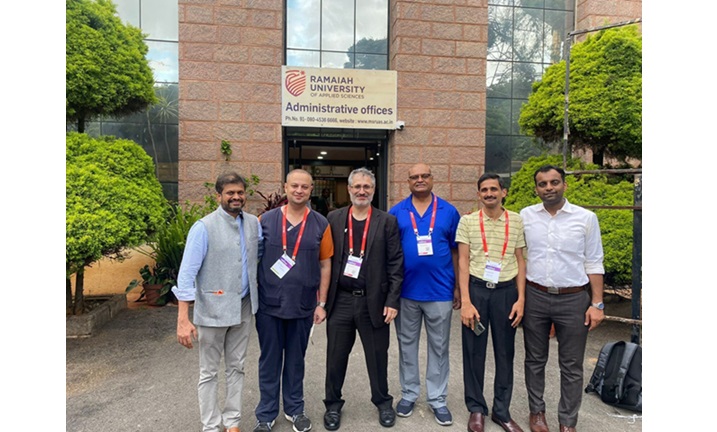
Dr. Hamid Abbasi conducted an educational Trans Kambin OLLIF Cadaver Lab while in India. Pictured here with the faculty and organizational staff. More than 30 employees and surgeons visited the laboratory.

BURNSVILLE, Minn., Nov. 15, 2023 /PRNewswire/ — Leading spine surgeon, Dr. Hamid Abbasi, CMO of Inspired Spine, was invited to India to demonstrate his groundbreaking Oblique Lateral Lumbar Interbody Fusion (OLLIF) technique at the prestigious Minimally Invasive Spine Conference of the Surgical Association of Bharat (India) (MISSABCON). Dr.’s visit Abbasi not only marks a significant contribution to the advancement of spine surgery in the country, but also signals his intention to expand his innovative approach to spine interventions in India.

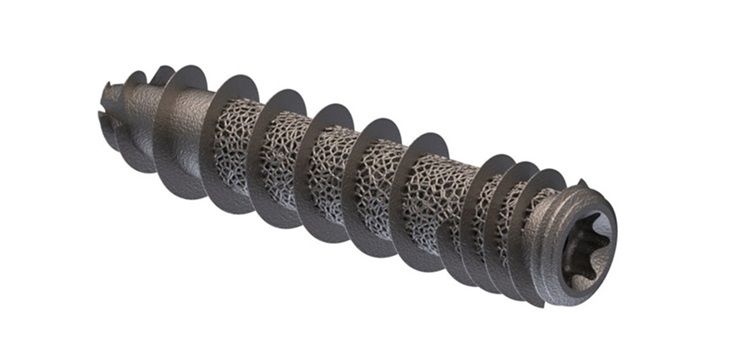
The MISSABCON conference provides a unique platform for spine surgeons in India to witness Dr. OLLIF technique. Abbasi in action. Known for its minimally invasive nature and exceptional patient outcomes, the OLLIF technique has attracted the attention of the global medical community. Dr. Abbasi’s presentation and hands-on cadaver laboratory at MISSABCON aim to share valuable insights and expertise with Indian physicians, promoting collaboration and knowledge exchange.

Impressed by the rapid growth and evolution of the medical and technological landscape in India, Dr. Abbasi expresses his enthusiasm for his contribution to the country’s healthcare sector. “India is experiencing remarkable growth in the field of medicine, and I am thrilled to be part of this vibrant community. The invitation to present at MISSABCON reflects a shared commitment to advancing spine surgery techniques and improving patient care. Witnessing the dynamic developments in India has inspired me to explore opportunities for expansion and collaboration within this rapidly growing healthcare environment,” said Dr. Abbasi.

Known for its precision and effectiveness in the treatment of lumbar spine conditions, the OLLIF technique meets the evolving needs of patients seeking minimally invasive solutions for spine conditions. Dr. Abbasi is considering establishing a presence in India, with plans for partnerships, training programs and collaborations with local medical institutions.

“As a spine surgeon committed to pushing the boundaries of innovation, I see tremendous potential in contributing to the Indian healthcare landscape. My goal is to make advanced spine care more accessible to patients across the country, and I am exploring opportunities for long-term partnerships that will facilitate the integration of the OLLIF technique into the Indian healthcare system,” added Dr. Abbasi to.

Dr.’s visit Abbasi to India not only underlines his commitment to advancing global spine care, but also emphasizes the growing importance of international cooperation in the medical field. While sharing his expertise at MISSABCON, Dr. Abbasi looks forward to laying the foundation for a lasting impact on the practice of spine surgery in India.

For media inquiries, please contact Amanda Armagost at aarmagost@islife.us

SOURCE Inspired Spine

(PRNewsfoto/Inspired Spine)

Source link

Similar Posts

  • |

    Tennis Elbow: What It Is and How to Treat It | Foothills Physical Therapy and Sports Medicine

      by Adam Halseth PT, DPT, SCS | Northeast Scottsdale Tennis elbow or golfer’s elbow is an uncommon condition. It just has an impact about 1 to 3 percent of adults every year. But your chances of developing it increase as you get older. Although the name suggests it is a condition exclusive to these…

  • | |

    How are corticosteroids administered? – Bone and joint specialists

      Do you suffer from joint pain? Corticosteroids may be helpful if you have joint pain. These medications reduce inflammation in the body and come in different forms. You can take them orally, nasally, topically or by injection. Specifically for joint pain relief, injections are the most successful approach. Injection administration method The drug is…

  • |

    You don’t look sick – Living with rheumatoid arthritis: VEGAN PAN DINNER

      I made a vegan pan dinner. It has tofu, green beans and Japanese sweet potatoes. You season everything and throw it in a pan and put it in the oven. It’s a very easy dinner and it made so much that I will be eating it for a few days.   My friend’s kid…

  • We have to do better. Recognizing and treating anxiety among student-athletes

      Factors influencing anxiety-related symptoms, diagnosis, and treatment among college student-athletes in the National College Health Assessment. Edwards B and Froehle AW. J Athl training. 2023, [epub ahead of print]. doi: 10.4085/1062-6050-0334.22. Full text freely available Take home message Eight in 10 student-athletes report feeling overwhelmed, and nearly half report overwhelming anxiety. Yet fewer than…

  • |

    Nutrition for better performance

      Through jeff bloom AT, CSCS Ahwatukee FAST I often get asked by athletes, “What should I eat?” That’s a pretty vague question, and there really isn’t just one answer. However, there are some simple nutritional guidelines that can help an athlete achieve better performance. In general, athletes should eat a diet that is high…

  • |

    Knee replacement rehab timeline

    What if the most critical part of your joint procedure happens after you leave the operating room? We understand that navigating the path to healing can feel overwhelming. Our guide is here to provide the clarity you need for a successful journey. knee replacement rehab timeline Data shows that movement often starts very quickly. Physical therapy typically begins within 24 hours after your procedure. This early step is vital for promoting faster healing and restoring mobility. For most people, the complete process of regaining strength spans several months. It’s a journey from the initial post-operative phase to full recovery, often taking between six and twelve months. We aim to help you manage expectations about the time required to return to the activities you love. While every patient’s experience is unique, understanding the general phases can significantly reduce anxiety. By following a structured plan, you can improve function and regain the independence you enjoyed before joint pain began. Your commitment to rehabilitation directly influences the long-term success of your new joint and overall health. Key Takeaways Physical activity often starts within a day of your procedure to aid healing. The full recovery process generally takes between six months and a year. Your personal journey is unique, but knowing common stages reduces worry. A structured plan is crucial for regaining function and independence. Your dedication to the process directly impacts your long-term results. This guide provides clarity to navigate each stage with confidence. Understanding Knee Replacement Surgery We believe informed patients are empowered patients, starting with the details of the operation itself. Knowing which procedure is right for you is a crucial first step in preparing for your healing journey. Differences Between Total and Partial Knee Replacement A total knee replacement involves resurfacing the entire joint with an artificial structure. Surgeons cut away worn cartilage and bone to create a new surface. In contrast, a partial knee replacement focuses only on the damaged compartment. This targeted approach often leads to a quicker recovery process with less discomfort. What to Expect During Surgery and Initial Recovery During your replacement surgery, the medical team precisely aligns the new components. This careful work is done to restore smooth movement and function. Your personal recovery timeline is influenced by factors like your age and general health. Understanding these differences helps you set realistic goals for after your knee surgery. The ultimate goal of this joint procedure is to provide lasting relief from chronic pain and improve your mobility. Immediate Post-Surgery Recovery The journey to regain your mobility starts the moment you wake from anesthesia. Your active participation is vital from these first hours. immediate post surgery recovery We emphasize that structured support begins almost immediately. This early phase sets the foundation for your entire healing process. Day 1: Initiating Rehabilitation and Mobility Physical therapy often starts within 24 hours of your procedure. Your physical therapist will help you take those first, crucial steps. They guide you in standing and walking with a walker or crutches. These initial sessions focus on basic, safe movements. You’ll practice sitting at the bedside and transferring your weight. This early activity promotes circulation and helps prevent complications. Transitioning from Hospital to Home Your medical team must see you meet specific safety criteria before discharge. You need to manage pain well and demonstrate independent movement. Key goals include standing from a chair and using the bathroom alone. Navigating a short flight of stairs is also a common requirement. Some individuals may leave the hospital on the same day as their operation. This is possible if all safety boxes are checked. Your care team will provide clear instructions for protecting your new joint. They will also give you simple exercises to continue at home. The First Week: Early Rehabilitation Steps Navigating the initial week after your operation requires a clear focus on gentle movement and symptom management. We guide you through this period where your routine prioritizes restoring a natural walking pattern and improving joint flexibility. early rehabilitation steps Guided Physical Therapy Exercises for Range of Motion During the first 48 hours, the primary goal is achieving full extension and increasing flexion. Your physical therapist will recommend specific movements to help. These early exercises are designed to prevent stiffness and promote circulation. Your daily routine is crucial for maintaining flexibility in this joint. Managing Pain, Swelling, and Initial Activity Controlling discomfort is a priority. Your doctor may advise using ice packs, elevating your leg, and taking medication as directed. You must monitor your incision site closely. The American Association of Hip and Knee Surgeons suggests waiting 5 to 7 days before showering if non-waterproof dressings are used. We encourage gentle activity, like using a stationary bike. This helps the area regain strength without overexertion. If you experience severe pain or excessive swelling, stop and consult your physical therapist or surgeon immediately. Following a structured rehabilitation timeline is key for a successful recovery….

Leave a Reply

Your email address will not be published. Required fields are marked *