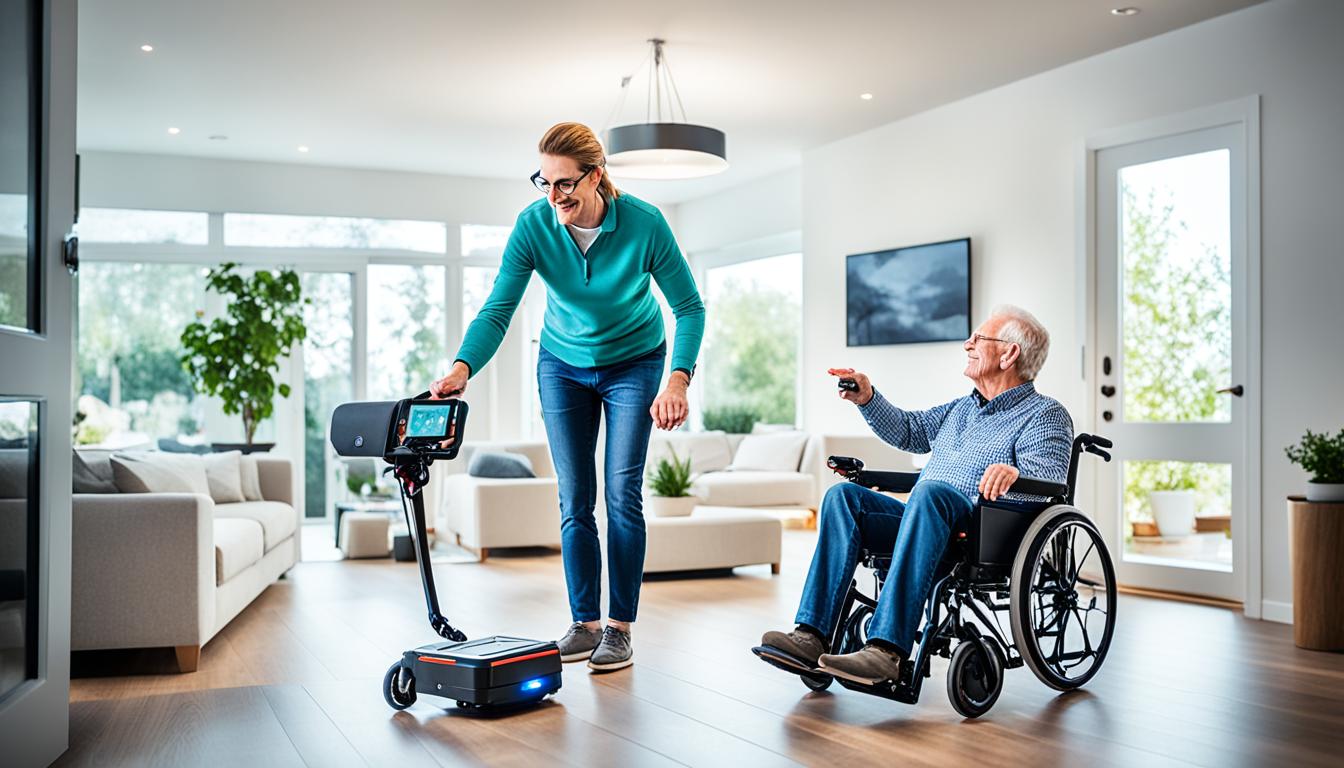
Smart home technology has revolutionized the way we interact with our living spaces, offering convenience, improved accessibility, and a higher quality of life. For individuals with mobility challenges, setting up a smart home can greatly enhance their independence and comfort. In this article, we will explore 11 must-have smart home devices designed specifically for people with disabilities, addressing the challenges they face at home.
Key Takeaways:
- Automated home systems provide solutions for mobility issues.
- Smart home technology offers improved accessibility for people with limited mobility.
- Assistive technology enhances home accessibility and independence.
- Inclusive home automation addresses the needs of individuals with mobility issues.
- Smart home devices can greatly improve the quality of life for those facing mobility challenges.
Challenges Faced By Disabled Individuals
Living with disabilities presents various challenges that require customized solutions. Common disabilities include learning difficulties, hearing impairments, and limited mobility. These challenges can impact daily activities and often require constant support and care from caregivers, family, and friends.
For example, individuals with limited eyesight may struggle to operate traditional home appliances, such as upright vacuums, which can pose safety risks.
Smart vacuum cleaners that can navigate the room and automatically vacuum and mop the floor can greatly enhance the living environment for individuals with limited mobility.
Overall, smart home technology assists people with physical challenges in improving safety, accessibility, and overall quality of life, empowering them to be more self-sufficient.
| Common Disabilities | Challenges Faced |
|---|---|
| Learning difficulties | Difficulties in performing daily tasks, reading, and learning new information. |
| Hearing impairments | Communication barriers, difficulty with auditory information. |
| Limited mobility | Dependency on others for physical tasks, restricted access to certain areas. |
Smart home technology offers customized solutions for these challenges by providing smart home devices that cater to specific needs. By incorporating smart vacuums and other intelligent devices, individuals with disabilities can enjoy an enhanced living environment that promotes safety, accessibility, and improved quality of life.
“Living with disabilities presents various challenges that require customized solutions. Smart home technology assists people with physical challenges in improving safety, accessibility, and overall quality of life, empowering them to be more self-sufficient.” – Smart Home Solutions for Mobility Challenges
Smart Vacuum Cleaners For Disabled
Robotic vacuum cleaners, also known as smart vacuum cleaners, are particularly user-friendly for individuals with disabilities. These devices offer numerous benefits such as smart navigation, allowing them to efficiently clean the room by navigating obstacles and recognizing debris.
Voice control capabilities make it easy for individuals with limited mobility to activate the cleaning procedure without the need for manual intervention. The self-operating feature of robotic vacuum cleaners allows them to navigate the space, clean the floor, and return to the docking station for automatic charging. Setting cleaning schedules can enhance safety by preventing tripping hazards.
Smart vacuum cleaners also feature an efficient filtration system to improve air quality by capturing dust, allergens, and pet hair. Their lightweight and wireless design further enhance usability and prevent accidents such as tripping over cables.
| Benefits of Smart Vacuum Cleaners for Disabled |
|---|
| Smart navigation |
| Voice control capabilities |
| Self-operating and automatic charging |
| Set cleaning schedules |
| Efficient filtration system |
| Lightweight and wireless design |
Smart vacuum cleaners for disabled individuals provide convenience, allowing them to maintain a clean and tidy living space without the physical strain of traditional vacuuming methods. With their user-friendly features and advanced technology, these devices offer improved accessibility, enhanced independence, and a higher quality of life for individuals with disabilities.
Other Smart Home Devices For Individuals With Disabilities
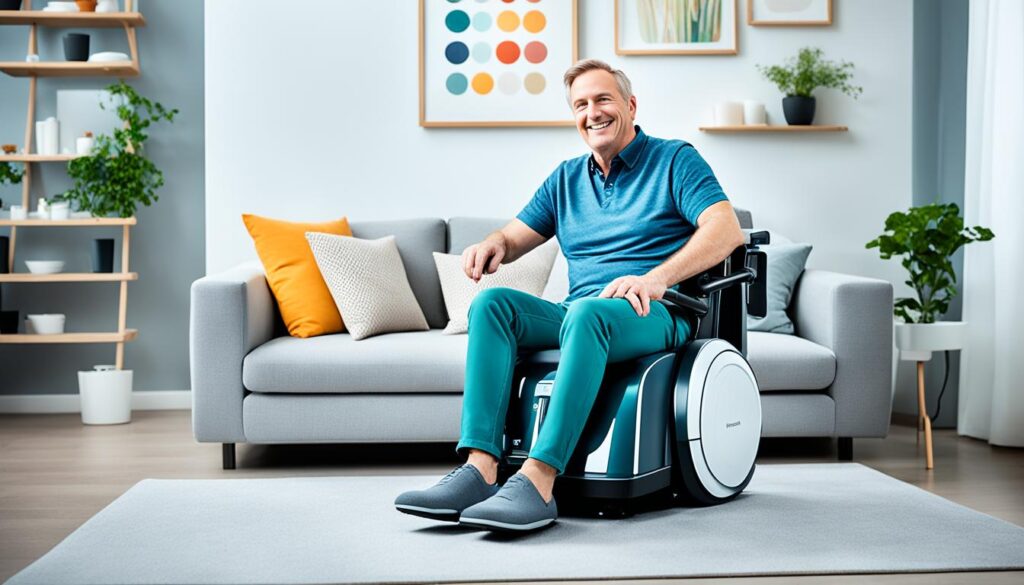
In addition to smart vacuum cleaners, there are various other smart home devices that can greatly benefit individuals with disabilities. From enhancing accessibility to improving safety and convenience, these devices empower individuals to live more independently and comfortably. Let’s explore some of the key smart home devices that are specifically designed to cater to the needs of individuals with disabilities.
1. Smart Voice Assistants
Smart voice assistants, such as Amazon Echo with Alexa and Google Home with Google Assistant, are revolutionizing the way individuals with disabilities interact with their homes. These voice-controlled devices allow users to perform various tasks simply by giving voice commands. From adjusting the room temperature to playing music or even ordering groceries, smart voice assistants provide a hands-free and convenient way to control smart home devices, promoting independence and ease of use.
2. Smart Hubs
Smart hubs act as the central control center for all smart devices in the home. They offer seamless integration and enable users to remotely control and monitor various smart home devices from a single interface. By providing easy access and management of devices such as smart lights, thermostats, and security cameras, smart hubs empower individuals with disabilities to effortlessly customize their living environment according to their needs and preferences.
3. Smart Smoke Detectors
Smart smoke detectors are essential for ensuring the safety of individuals with disabilities. These devices go beyond traditional smoke detectors by offering additional features such as smartphone notifications, voice alerts, and integration with other smart home devices. By providing real-time alerts and remote monitoring capabilities, smart smoke detectors allow individuals to quickly respond to potential fire hazards, ensuring their safety and well-being.
4. Smart Lighting with Motion Sensors
Smart lighting with motion sensors is a game-changer for individuals with disabilities, offering convenience and energy efficiency. These lights automatically turn on when motion is detected, eliminating the need for manual switches. With customizable settings, individuals can adjust the brightness and color temperature to create a comfortable and accessible living environment that meets their specific needs.
5. Motorized Blinds & Curtains
Motorized blinds and curtains provide improved accessibility and convenience for individuals with disabilities. These smart devices can be controlled through apps or integrated with other smart home systems, allowing users to remotely open, close, or adjust the blinds and curtains. With the touch of a button or a voice command, individuals can effortlessly control the natural light and privacy in their living space, enhancing their comfort and independence.
6. Smart Door Locks with Keyless Entry
Smart door locks with keyless entry offer a secure and convenient solution for individuals with disabilities. These locks eliminate the need for physical keys and allow users to unlock and lock their doors using a smartphone, keypad, or voice command. With features like temporary access codes and remote access control, individuals can grant entry to caregivers, family members, or friends, even when they are not at home, enhancing safety and accessibility.
7. Smart Door Sensors
Smart door sensors provide an additional layer of security for individuals with disabilities. These sensors detect when a door is opened or closed and send alerts to the user’s smartphone or other smart devices. By providing real-time notifications, individuals can monitor their home’s entry points and ensure their safety, granting peace of mind and promoting independent living.
8. Smart Thermostats
Smart thermostats offer enhanced control over the home’s heating and cooling systems, improving both comfort and energy efficiency. These devices learn the user’s preferences and automatically adjust the temperature accordingly. With features like remote control, scheduling, and integration with voice assistants, individuals can easily manage their home’s climate and create a comfortable environment optimized for their needs.
9. Smart Home Cameras
Smart home cameras provide individuals with disabilities with an extra layer of security and peace of mind. These devices enable remote monitoring of the home, allowing users to check in and view live video feeds from their smartphones or other smart devices. With features like motion detection and two-way audio, individuals can keep an eye on their home, communicate with visitors, and ensure their safety, even when they are away.
10. Smart Appliance Attachments
Smart appliance attachments transform traditional appliances into smart devices, enhancing accessibility and convenience. These attachments can be connected to existing appliances, such as washing machines or ovens, allowing individuals to control and monitor them remotely. By providing features like timers, alerts, and integration with voice assistants, individuals can easily manage their appliances and simplify daily tasks, improving their independence and quality of life.
11. Smart Medical Alerts
Smart medical alerts are crucial for individuals with disabilities, providing them with an added layer of safety and peace of mind. These devices allow users to call for help in case of emergencies, such as falls or medical incidents, with the press of a button. By automatically alerting designated contacts or emergency services, smart medical alerts ensure prompt assistance and enable individuals to maintain their independence while staying connected to a network of support.
By incorporating these smart home devices into their living spaces, individuals with disabilities can experience increased independence, enhanced accessibility, and improved quality of life. These devices can be easily controlled through smartphone apps, voice commands, or other smart devices, empowering individuals to create a customized and inclusive living environment that caters to their specific needs and preferences.
The Evolution of Smart Home Technology
The concept of the smart home has undergone significant changes and improvements over the years. From the earliest home automation systems to the advanced technologies we have today, the evolution of smart home technology has revolutionized the way we live. Let’s take a look at how it all began and how it has developed into what it is today.
The Early Days: Home Automation Systems
In the early days, home automation systems were primarily used in luxury homes and were large and expensive. These systems offered limited functionality and were not accessible or affordable for the average homeowner. They were mainly controlled through personal computers, which were still in their infancy.
However, with the rise of the personal computer and the Internet in the 1980s, the possibilities for home automation expanded. More advanced and affordable systems began to emerge, allowing homeowners to control various aspects of their homes remotely.
The Era of Smartphone Technology
It wasn’t until the early 2000s, with the widespread adoption of smartphone technology, that smart home systems truly became user-friendly and accessible to the masses. The integration of smartphones with home automation systems brought a whole new level of convenience and control.
Smartphones allowed users to control their smart home devices from anywhere, providing an unprecedented level of convenience. Homeowners could now adjust their thermostats, turn lights on and off, and even monitor their security cameras, all with a tap of their finger.
A Wider Range of Devices and Appliances
As smart home technology continued to evolve, it started integrating with a broader range of devices and appliances. Today, we have smart lighting systems, smart thermostats, smart security systems, smart kitchen appliances, and even smart voice assistants that can control all these devices with simple voice commands.
This wider range of devices and appliances has made smart homes more practical and appealing to a broader audience. With these advancements, homeowners can now automate various aspects of their lives, from controlling their home’s temperature to managing their kitchen appliances, all through one centralized system.
Overall, the evolution of smart home technology has been driven by innovations in personal computer, Internet, and smartphone technology. This has led to the development of more user-friendly and accessible home automation systems, offering a wider range of devices and appliances that can be controlled and automated. As smart home technology continues to advance, we can expect even more exciting developments to come, making our homes more efficient, convenient, and comfortable than ever before.
Smart Home Benefits People with Learning Disabilities
Smart home technology offers a wide range of benefits for individuals with learning disabilities. By leveraging enhanced accessibility features and automation, smart homes empower people with learning disabilities to live more independently and confidently. From simplifying daily tasks and routines to enhancing safety and connectivity, here are some key advantages:
- Enhanced Accessibility: Voice-controlled doors and appliances improve mobility within the home, making it easier for individuals with learning disabilities to navigate their surroundings.
- Independence: Smart home technology allows individuals with learning disabilities to manage their homes and perform tasks independently. By automating processes and providing user-friendly interfaces, smart homes promote self-sufficiency and confidence.
- Safety and Security: Smart smoke detectors and medication reminders enhance safety for individuals with learning disabilities. By providing alerts and notifications, smart homes help safeguard against potential hazards and ensure peace of mind.
- Quality of Life: The simplicity of daily tasks and routines is achieved through automation and reminders. Smart homes streamline activities, such as setting schedules and managing household chores, making life easier for individuals with learning disabilities.
- Socialization and Connectivity: Smart home technology fosters socialization and connectivity through features like video conferencing and social media interaction. Individuals with learning disabilities can easily connect with others, promoting a sense of belonging and community.
By harnessing the power of smart home technology, individuals with learning disabilities can experience improved accessibility, independence, safety and security, quality of life, simplicity in daily tasks and routines, reminders and alerts, as well as enhanced socialization and connectivity.
In the next section, we will explore the evolution of smart home technology and how it has transformed the way we interact with our living spaces.
Conclusion
Smart home technology offers a revolutionary solution for individuals with mobility issues, empowering them with independence, convenience, and improved accessibility. By embracing automated home systems, individuals with limited mobility can transform their living spaces and enhance their overall quality of life.
From smart vacuum cleaners to voice-controlled assistants, smart home technology provides a wide range of solutions tailored to the unique needs of individuals with disabilities. These devices automate household tasks, making daily routines easier and more manageable. By reducing the physical exertion required for various activities, smart home technology offers individuals with mobility issues the freedom to focus on other aspects of their lives.
Additionally, smart home technology enhances convenience by enabling individuals to control their living environments with simple voice commands or through smartphone apps. This level of control allows individuals with limited mobility to adjust lighting, temperature, and other aspects of their homes without physical effort, providing them with a newfound sense of independence and comfort.
In conclusion, integrating smart home technology into the lives of individuals with mobility issues can significantly improve their quality of life. By embracing the features and benefits of automated home systems, individuals can experience a new level of independence, convenience, and accessibility in their daily lives.
FAQ
What are some challenges faced by disabled individuals?
Disabled individuals may face challenges such as learning difficulties, hearing impairments, and limited mobility, which can impact their daily activities and require customized solutions.
How can smart vacuum cleaners benefit disabled individuals?
Smart vacuum cleaners, also known as robotic vacuum cleaners, offer user-friendly features such as smart navigation and voice control, making them particularly useful for individuals with disabilities. These devices can efficiently clean the room, navigate obstacles, and recognize debris, promoting a safer and cleaner living environment.
What other smart home devices are available for individuals with disabilities?
Besides smart vacuum cleaners, there are various other smart home devices that can greatly benefit individuals with disabilities. These include smart voice assistants, smart hubs, smart smoke detectors, smart lighting with motion sensors, motorized blinds and curtains, smart door locks with keyless entry, smart door sensors, smart thermostats, smart home cameras, smart appliance attachments, and smart medical alerts. These devices enhance accessibility, safety, and convenience within the home.
How has smart home technology evolved over time?
The concept of the smart home has evolved significantly over time. Initially, home automation systems were large and expensive, primarily used in luxury homes. The development of personal computers and the Internet led to the creation of more advanced and affordable home automation systems. With the proliferation of smartphone technology, user-friendly home automation systems integrated with a wider range of devices and appliances became accessible to a broader audience.
How does smart home technology benefit people with learning disabilities?
Smart home technology offers enhanced accessibility features such as voice-controlled doors and appliances, making daily tasks easier for individuals with learning disabilities. It promotes independence by allowing them to manage their homes and perform tasks independently. Smart home technology also enhances safety, simplifies daily routines, and improves socialization and connectivity, benefiting overall quality of life for individuals with learning disabilities.
How can smart home technology benefit individuals with mobility issues?
Smart home technology offers a wide range of solutions for individuals with mobility issues. From smart vacuum cleaners to voice-controlled assistants, these devices can automate tasks, improve accessibility, and enhance overall quality of life. By embracing and integrating smart home technology, individuals with mobility challenges can transform their living spaces and experience a newfound level of independence and convenience.
Leave a Reply